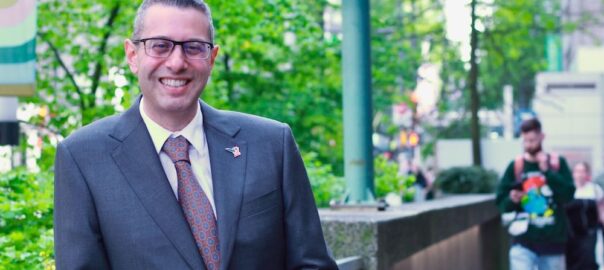
Kareem Allam, 47, Vancouver Liberals’ Mayoral candidate | Photo credit: Katie Hyslop, The Tyee
For over two decades, Kareem Allam has been the man behind the curtain in Canadian politics.
Kareem Allam is a typical Vancouver story. Parents who immigrated to Canada, a career in public service and policy, and a belief in our ability to make our communities better.
Watch part 1: pic.twitter.com/sLy1UpJIbb— Vancouver Liberals (@vanliberals) October 16, 2025
Kareem is a self-described “policy nerd” and a master campaign strategist who has navigated the highest corridors of municipal, provincial, and federal power.
Yet, for all his time spent steering others to victory, in 2026 Kareem Allam has stepped out from the shadows of backroom strategy to mount his own campaign.
Vancouver deserves a more accountable and representative City Hall.
The Vancouver Liberals will hold a referendum on a ward system in the following election, after the recommendations of a citizens’ assembly. pic.twitter.com/rSCFFH5FvX
— Kareem Allam (@kareemformayor) April 7, 2026
As the founder, leader, and Mayoral candidate for the newly formed municipal party, the Vancouver Liberals, Kareem Allam is running a well-funded, high-stakes campaign to unseat Mayor Ken Sim, in the October 2026 civic election.
Investing in parks, libraries, and community spaces is how we reduce crime.
That’s why we’re committing 400 new frontline workers and a historic $1.35B investment in parks, recreation, and pools. pic.twitter.com/Q1mgs6SGAJ
— Kareem Allam (@kareemformayor) April 3, 2026
Kareem Allam’s transition from kingmaker to candidate marks a massive shift in Vancouver’s civic landscape.
View this post on Instagram
In 2022, Kareem Allam was the mastermind who successfully guided Ken Sim and the ABC Vancouver party to a historic sweep of City Hall, the Park Board, and the School Board. After steering ABC Vancouver to a sweeping majority at all three levels of civic government, he served briefly as Mayor Sim’s Chief of Staff before a highly publicized falling-out led to his departure in February 2023.
@jessforvancouverWe are still in a housing crisis – but we have a real solution to get Vancouver out of crisis mode. #vanpoli @vancouverliberals♬ original sound – jessforvancouver
Now, disillusioned by what he views as a broken social contract and a deeply divided city, Kareem Allam has built a political vehicle of his own.
With a platform focused on a massive infrastructure injection, an aggressive front line service plan, and a return to consensus-driven, big-tent governance, Kareem Allam aims to execute an activist civic agenda not seen since the 1970s.
Upbringing, Roots, and the Great Canadian Social Contract
To understand Kareem Allam’s political philosophy, one must look to his family history, which he frequently cites as the bedrock of his world view.
Born in Vancouver and raised in Richmond, Kareem is the son of an Egyptian colonel — who spent 11 months as an Israeli prisoner of war — and a Sudanese mother whose family was expropriated during a revolution. His mother spent two grueling years living in a refugee camp in Lebanon before arriving in Canada.
View this post on Instagram
Though his father, Mahmoud Allam, would eventually return to Egypt to manage the Al Ahly football club, the family’s formative years in the Lower Mainland left an indelible mark on Kareem.
Speaking with reporter Katie Hyslop for an extensive feature profile in The Tyee, Kareem Allam reflected on how Vancouver served as a safe harbour where his family could heal, plant roots, and ultimately thrive:
“My family history defines a lot of how I perceive this place… [Vancouver] was a welcoming place, a place of refuge and a place where they were able to thrive, raise their children. It wasn’t always prosperous. But over the arc of time, the family has done well.”
This personal history forged Allam’s deep belief in what he terms the “great Canadian social contract” — the idea that a booming economy must directly fund world-class social programming, and that each generation bears a strict responsibility to build winning conditions for the next.
Happy Canada Day! @vanliberals @kareemformayor pic.twitter.com/PLdV7E7eRr
— Mark Halyk (@mark4Vanparks) July 1, 2026
Kareem Allam’s formal education took him away from the West Coast for high school and graduate studies, including a stint in Ottawa where he cut his political teeth working on Parliament Hill for the federal Canadian Alliance party.
But the pull of Vancouver was permanent.
View this post on Instagram
Outside of politics, his career spanned public, private, and non-profit sectors. He served as the Director of Public Policy for the Vancouver Board of Trade, sat on the Fraser Health Authority’s Board of Directors, worked with major energy corporations like TransCanada and FortisBC, and served on the TransLink screening panel and the College of Massage Therapists of B.C.
View this post on Instagram
Professionally, his primary focus for the last two decades has been as a partner at Richardson Strategy Group (formerly Richardson Strategies), working closely alongside prominent Indigenous leaders like Haida nation leader Miles Richardson on complex title, rights, and economic development negotiations.
The Campaign Veteran: 40 Races and the Road to Kingmaker
Before launching his own mayoral bid, Kareem Allam compiled a legendary résumé as a political strategist, managing or advising on roughly 40 political campaigns across the ideological spectrum.
Kareem specializes in taking complex policy ideas and distilling them into simple, powerful promises that resonate with everyday voters.
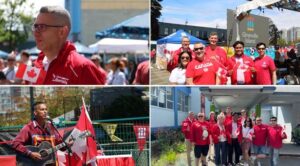
His track record as a backroom general is elite:
- The 2005 Surrey Municipal Race: He helped guide Dianne Watts to an upset victory as Mayor of Surrey, reshaping the politics of BC’s fastest-growing city;
- Federal Conservative Leadership (2020): Kareem Allam played a critical role in successfully securing the federal Conservative Party leadership for Erin O’Toole, navigating a complex, multi-ballot ranked voting system.;
- Provincial BC Liberal Leadership (2022): He served as the campaign manager who secured the leadership of the provincial Liberal party (later renamed BC United) for Kevin Falcon;
- ABC Vancouver Municipal Sweep (2022): In his most (in)famous local victory, Mr. Allam masterminded Ken Sim’s mayoral campaign. He engineered the easily digestible pledge to hire “100 police officers and 100 nurses,” a message that fundamentally shifted public safety discourse and handed ABC a total majority.
However, Kareem Allam’s political alignment experienced a dramatic shift.
Vancouver’s Values Matter. pic.twitter.com/IzTt1a6tSP
— Kareem Allam (@kareemformayor) February 28, 2026
In the 2024 British Columbia provincial election, the lifelong conservative strategist publicly broke ranks to endorse and re-organize and energize the BC NDP campaign — steering the party and their moribund campaign for re-election, from an almost certain defeat to majority status — stating to The Tyee’s Katie Hyslop that the modern center-right movement had abandoned its traditional values of climate action, reconciliation, and social cohesion, veering instead toward populism.
“I’m not sure that I left the center-right movement,” Kareem Allam observed. “I think the center-right movement left me.”
The Vancouver Liberals and the Fight for a Council Majority

The Vancouver Liberal Electors Association — commonly known as the Vancouver Liberals — was officially founded on July 3, 2025. The Vancouver Liberals are a strictly municipal political party, entirely independent of both the federal Liberal Party of Canada and the former provincial B.C. Liberals.
Some time off the campaign trail today…. pic.twitter.com/DvVyV1Ddw2
— Kareem Allam (@kareemformayor) June 21, 2026
Kareem Allam’s strategy for the 2026 election hinges on building a true coalition party that rejects extreme polarization. He has intentionally recruited high-profile candidates from across the political spectrum to build a team capable of seizing a majority on the 11-member Vancouver City Council.
Vancouver Liberals 2026 Civic Team (Key Figures)
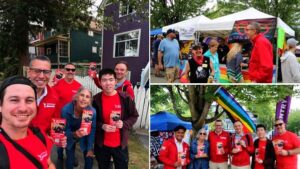
├── Mayoral Candidate: Kareem Allam
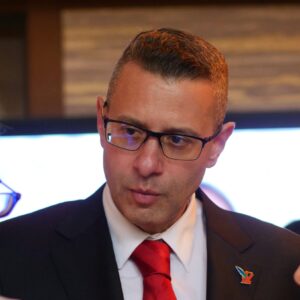
City Council Candidates:
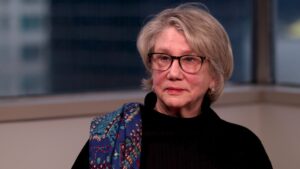 Dr. Moira Stilwell, a Vancouver Liberals Council candidate, one of VanRamblings two favourites in 2026
│ ├── Dr. Moira Stilwell (Physician; former B.C. provincial cabinet minister)
│ ├── Jessica Walton (Front line government worker, socialist, NDP stalwart)
│ ├── Michael Wu (30-year entrepreneur & former RCMP Auxiliary Constable)
│ ├── Devin Clemens (UBC Graduate Programs Manager, School of Economics)
│ └── Armor Valor (South Vancouver community advocate, front line worker)
│ ├── Victoria Jung (current Vancouver School Board Chair)
└── Park Board Candidates:
Welcome to the team, Shayla Bird. pic.twitter.com/xhilSD8zgW
— Kareem Allam (@kareemformayor) May 20, 2026
Shayla Bird, Vancouver Liberals candidate for Vancouver Park Board
├── Brennan Bastyovanszky (Sitting Park Board Commissioner)
├── Scott Jensen (Sitting Park Board Commissioner; first Indigenous Chair)
├── Mark Halyk (transformed Park Boards concession services for the better)
└── Shayla Bird (Educator, consultant, Black public Historian)
By bringing over sitting heavyweights like Victoria Jung, Scott Jensen, and Brennan Bastyovanszky — who actively opposed Ken Sim’s efforts to dismantle the democratically elected Park Board — Kareem Allam has positioned the Vancouver Liberals as protectors of civic democracy and neighbourhood infrastructure.
The Mayoral Platform: From Infrastructure to Pest Control
Kareem Allam’s platform represents a highly activist approach to municipal government. Rather than scaling back, Kareem proposes using the city’s financial levers to aggressively address long-ignored public deficits.
Service to the People of Vancouver: Rebuilding Civic Infrastructure
The centre-left anchor of Kareem Allam’s platform is a monumental $1.35 billion capital fund commitment aimed at thoroughly renovating 11 Vancouver community centres.
These facilities were explicitly flagged by City Auditor General Mike McDonnell as being in an advanced state of disrepair. Kareem Allam argues that by neglecting neighbourhood pools, libraries, and community hubs, the current administration is eroding the literal spaces where social cohesion is formed.
From the beginning the Vancouver Liberals have been fighting for students, seniors, small business, and families. The whole other time Ken Sim has been fighting for his friends and crypto cronies. pic.twitter.com/czXtReahyp
— Kareem Allam (@kareemformayor) June 23, 2026
As part of this infrastructure push, Kareem Allam has rejected “half-measures,” pledging to build brand-new hockey rinks and aquatic facilities — headlined by a premium 50-meter Olympic-standard swimming pool designed to train future Canadian athletes, rather than standard 25-meter alternatives.
Ridding Vancouver of Rats That Are Infecting Every Neighbourhood
View this post on Instagram
On the public works front, Kareem Allam has targeted a quality-of-life crisis that many politicians avoid: the city’s exploding rodent population.
With regional data frequently placing Vancouver among the most rat-infested cities in Canada, Kareem Allam has made a firm mayoral commitment to implement coordinated, science-based eradication strategies across all city neighborhoods, treating pest control as a core public health responsibility of City Hall.
Core Policy Positions: Decentralization, Compassion, and Anti-Laundering
View this post on Instagram
Kareem Allam has carved out distinct, highly detailed policy positions on the most polarizing crises facing Vancouver today:
Homelessness and the Downtown Eastside (DTES)
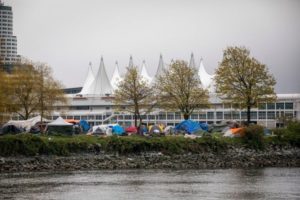
Kareem Allam has been a vocal critic of the encampment clearances on East Hastings Street executed by the current administration.
In an interview with CBC, Kareem Allam publicly apologized for his own past role as Chief of Staff during the early stages of those policy discussions, noting that the final execution violated a fundamental commitment to not decamp vulnerable residents without providing adequate, permanent housing.
View this post on Instagram
From the beginning the Vancouver Liberals have been fighting for students, seniors, small business, and families. The whole other time Ken Sim has been fighting for his friends and crypto cronies. pic.twitter.com/czXtReahyp
— Kareem Allam (@kareemformayor) June 23, 2026
Kareem Allam argues that forced decampments simply push the crisis into surrounding neighborhoods and sever the vital connections between unhoused individuals and healthcare workers. His strategy shifts away from displacement, focusing instead on collaborating with non-profits and utilizing surplus city land to build supportive housing networks.
Mr. Allam’s deep ties to the front lines are underscored by his volunteer work on the Board of the Overdose Prevention Society (OPS) in the Downtown Eastside.
Countering Our City’s Food Security Crisis | Kareem’s Civic Food Strategy
View this post on Instagram
To counter the food security crisis, Kareem Allam has proposed a municipal food strategy modeled directly after the UBC Food Hub.
Rather than using taxpayer funds to purchase commercial grocery stores, Kareem Allam’s plan involves donating unused city buildings and surplus municipal land to non-profit organizations to distribute low-cost, high-quality groceries directly into underserved communities.
Crypto, Bitcoin, and Money Laundering
Kareem Allam has positioned the Vancouver Liberals firmly against alternative financial systems that complicate public safety.
Labeling money laundering as the financial engine of international drug cartels operating out of luxury downtown penthouses, Kareem Allam’s platform includes an outright ban on Bitcoin ATMs across Vancouver.
His policy pledges to gradually eliminate unchecked private currency exchanges and actively replace predatory payday loan shops with trusted, community-focused institutions like Pigeon Park Savings.
Furthermore, Kareem Allam has explicitly mocked what he terms “ridiculous, tech-bro ideas” championed by political opponents, such as attempting to heat public swimming pools using commercial Bitcoin servers, arguing that public spaces must remain focused entirely on community utility.
Prose Poetry: A Fit for Activist Office | The Architect of Change
To look upon Kareem Allam is to see a man forged in the crucible of institutional statecraft, an operative whose life has been an extended masterclass in the levers, gears, and quiet pulleys of Canadian governance.
Kareem Allam does not approach City Hall as a starry-eyed idealist or a corporate outsider fluent only in the language of balance sheets; he arrives as an architect who knows exactly where the foundational pillars are buried.
His decades spent navigating the fierce currents of federal ministries, provincial cabinets, and complex Indigenous title negotiations have granted him a rare, battle-tested wisdom. He understands a city is not a business to be managed down to the lowest dividend, but a profound, living trust that must be fiercely protected.
Should Kareem Allam emerge as Mayor on the evening of October 17th, Vancouver will witness its most radical, activist executive since Art Phillips and the TEAM movement revolutionized local politics in the 1970s.
Like Art Phillips — who created the south False Creek neighbourhood of co-operative and social housing, watefront parks and pedestrian pathways; introduced neighbourhood planning and advisory committees, public consultation, and community involvement in major planning decisions; protected parks and public waterfronts; restructured municipal governance by making elected officials — not unelected administrators—the primary drivers of policy, Kareem Allam possesses the rare, panoramic vision required to build a grand coalition from a fractured electorate, drawing voices from the left, the right, and the forgotten centre into a unified civic project.
Kareem Allam is the only Mayoral candidate in the current Vancouver civic election, who recognizes that true strength lies not in top-down edicts or institutional closures, but in rebuilding the public squares — the community centres, the Olympic pools, the local libraries — where citizens of every race, age, and economic station cross paths and recognize their shared humanity.
Kareem Allam stands uniquely equipped to wield the power of City Hall as an instrument of profound social repair.
Kareem Allam is a leader who wakes up hungry for the complex, grinding work of structural reform, ready to deploy a billion-dollar capital fund with the precise, sweeping ambition of a true city-builder.
In an era defined by division and retreat, Kareem Allam’s Mayoral bid represents an audacious return to bold, interventionist municipal leadership — a promise to restore the fracturing social contract and ensure that Vancouver remains, above all else, a sanctuary where future generations can truly belong.
For the remainder of the summer through until Labour Day, VanRamblings will publish Mondays and Thursdays only — unless there is breaking news demanding our attention — and on Fridays, Saturdays and Sundays on an occasional basis.
Enjoy your summer!
#BCPoli | Humane, Innovative Housing Policy Delivered by British Columbia and Ottawa
Prime Minister Mark Carney held a press conference in Vancouver alongside British Columbia Premier David Eby on June 25, announcing innovative measures to create affordable housing in B.C.
The June 25th announcement by Mark Carney on behalf of the federal government, and British Columbia Premier David Eby should have been a triumph.
Instead, it became a communications debacle.
When Prime Minister Mark Carney stood alongside federal Housing Minister Gregor Robertson, B.C. Premier David Eby and B.C. Housing Minister Christine Boyle to announce that the federal and provincial governments would work together to purchase approximately 2,200 unsold condominiums and convert them into rent-to-own housing, the promise was immediately overshadowed by confusion.
The questions that came were entirely predictable.
- Where were these condominiums?
- Who owned them?
- Would taxpayers be paying full market value?
- Would they be located in Metro Vancouver, where housing shortages are most acute?
Neither Mr. Carney nor Mr. Eby provided answers during their announcement.
Instead of controlling the narrative, the governments allowed a vacuum to develop, one that was quickly filled by speculation, criticism and political attacks. Journalists demanded details that were not forthcoming, while federal Conservative leader Pierre Poilievre seized upon the uncertainty as evidence that the announcement was little more than political theatre.
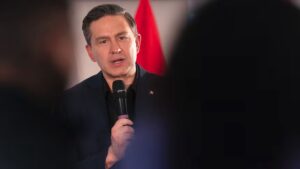
Federal Conservative Party Leader Pierre Poilievre speaks out against the federal government’s proposal to purchase vacant condos, during a town hall meeting in Duncan, B.C.
It was, without question, one of the poorest communications roll-outs either the Carney government or the Eby government has experienced.
And yet, buried beneath the muddled messaging was an idea that deserves considerably more attention than it has received.
In the days following the announcement, Mr. Eby provided the missing details.
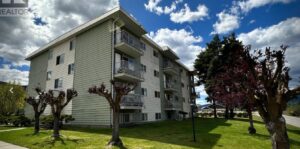
Contrary to widespread assumptions, the condominiums would not be concentrated in Metro Vancouver, or even in British Columbia’s largest urban centres. Rather, they would largely be acquired in smaller communities throughout the province where residential developments have stalled or failed altogether.
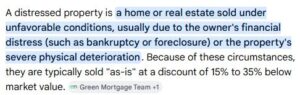
Many of these homes would be what the real estate industry describes as “distressed properties.”
These are condominiums sold under unfavourable financial circumstances because developers have encountered severe financial difficulties, entered receivership, declared bankruptcy or been forced into foreclosure, with licensed insolvency trustees disposing of assets well below their original market value.
Such circumstances create unusual opportunities for public acquisition.
Rather than paying retail prices, governments can often acquire these units at discounts ranging from 15% to 35% below market value.
Communities such as Grand Forks, and other smaller centres throughout the Okanagan, the Kootenays and Vancouver Island — including Duncan, Port Alberni and Campbell River — contain developments that fit this description.
These are not speculative purchases. They are existing homes. Completed homes. Vacant homes. Homes waiting for occupants.
That distinction matters enormously.
Governments have become accustomed to announcing ambitious affordable housing projects that require years of planning, environmental reviews, permitting, financing and construction before a family receives keys to a front door.
Typically, that timeline stretches three to four years, often longer.
Premier David Eby has argued that purchasing distressed condominium developments offers a dramatically different proposition.
- The homes already exist;
- The infrastructure is already built;
- Water, sewer, electrical service and roads are already in place;
- Families could move in almost immediately;
- The economics are equally compelling.
Constructing affordable rental housing has become extraordinarily expensive. Labour shortages, escalating material costs, financing expenses and municipal development charges have pushed construction costs to unprecedented levels.
Acquiring completed condominiums at significant discounts represents substantially better value for taxpayers while simultaneously rescuing developments that otherwise risk remaining empty for years.
The most important aspect of this initiative has received the least attention.
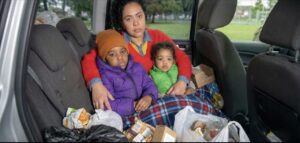
Behind every vacant condominium sits the possibility of a family whose life could be transformed. Not every homeless family sleeps on sidewalks. Many spend months couch surfing between relatives and friends. Some move weekly from one borrowed bedroom to another. Others sleep in aging recreational vehicles parked wherever municipal bylaws permit. Still others live in automobiles, desperately trying to shield children from the instability surrounding them.
For these families, housing is not merely shelter. Housing restores routine. It restores childhood. It restores educational stability, better physical health and improved mental health. It restores dignity.
The proposed rent-to-own model carries particular promise because it offers something beyond secure tenancy. It offers ownership.
Families who have spent years believing home ownership had become permanently unattainable may finally possess a realistic pathway toward building equity and long-term financial security. That possibility should not be underestimated.
If governments can purchase distressed condo developments substantially below replacement cost, rapidly convert them into affordable rent-to-own housing, and provide stable homes for thousands of families who otherwise face years of uncertainty, then taxpayers receive genuine value, while vulnerable British Columbians receive something infinitely more important than political messaging.
They receive hope.
In an age when political discourse increasingly rewards outrage over solutions, this initiative reminds us that governing still matters. It reminds us that budgets are, ultimately, moral documents reflecting the choices society makes about who deserves opportunity and who deserves security. Governments exist not merely to balance ledgers or score partisan victories, but to solve problems that markets alone cannot resolve. Housing is one of those problems.
We live in anxious times, when too many families have begun to wonder whether stability itself has become a luxury. Against uncertainty, both the B.C. and federal governments are attempting — however imperfectly — to meet the moment.
If vacant homes become places where children sleep safely, parents regain hope, and families begin building lives instead of merely surviving them, then history will remember not the fumbling announcement, but the quiet dignity of thousands of front doors opening onto a better future.
#VanPoli | Homelessness + Housing | A Series | Part 4
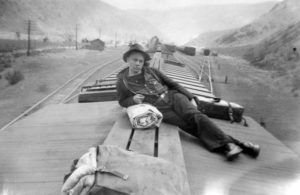
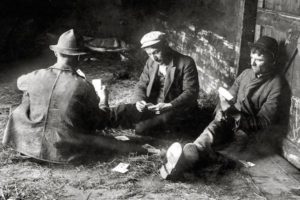
All of 13 years of age, in 1930 my father left his family farm in Saskatchewan, leaving behind his mother and five siblings — his father had died when he was three years of age — set to ride the rails for the next 9 years, alighting in the Annapolis Valley in the later summer to pick apples, working in every province across Canada, for no more than a meal and a roof over his head at night sleeping in a barn, more often than not taking shelter in a hobo camp somewhere adjacent to the railway tracks that span our nation, undernourished always, starving at other times, my father having joined a homeless generation of Canadian youth scrambling to stay alive in the midst of the Dirty 30s, doing the best that they could.
Until, as my father told me one autumn afternoon, sitting at his kitchen table …
“In early September of 1939, I was living in a hobo camp on the outskirts of Revelstoke, on my way to the Okanagan to pick apples. There was talk in the camp that something was up in Europe, that the German Army had invaded Poland. On September 10th, I was in town looking for food out back of a restaurant when I heard a bunch of kids, saw them running down the street, screaming into the air, “We’re going to war. There’s a war. We’re going to fight those dirty …
Next thing I knew, there was a hand on my shoulder, a man in a uniform. “Son,” he said to me, “we’re at war now, saw it comin’. I’m with the Army recruitment office just down the street. Why don’t you come with me, and we’ll get you all signed up. Three squares a day, a nice clean uniform, and you’ll get to see the world. No more living in hobo camps for you.
So, I did, I went with him, signed up. For the first time in almost a decade, things were looking up. After I signed my name on the dotted line, the sergeant handed me an army uniform, saying, “Find a place to put this on.” I ran back to the hobo camp, more excited than I’d been in I don’t know how long. There was a pond nearby the camp, I stripped off my tattered old clothes, jumped in the pond, got myself nice and wet, dried myself with my old clothes, and set about to get dressed up in my spanking new uniform. I don’t think I’d ever felt better in my whole life.”
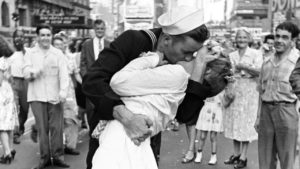
In 1945, returning members of our armed services were more than a little excited to be returning homeMy father remained a private in the army for the next six years — having a Grade 1 education, and being unable to read tends to inhibit one’s advancement — before returning home with all of the other troops in the late summer of 1945, arriving in the port of Halifax, from whence he’d set off to fight the war six years previous.
My father, Jack, had heard much about life in Vancouver from those he’d served with overseas, so chose to make his way out west to build a life for himself.
Prior to the outbreak of World War II, 83% of Canadians lived in the rural areas of Canada, mostly as members of farming families, leaving only 17% of the population to reside in hub cities like Montréal, Toronto and Vancouver, with much lesser populations in the prairie cities, and provincial capitals. On the Lower Mainland, Richmond was called Lulu Island, and was largely a farming community, as was the case in what we now call the suburbs: Coquitlam, Surrey, and Maple Ridge,
Almost overnight after the war ended, the rural-urban mix in Canada was reversed.
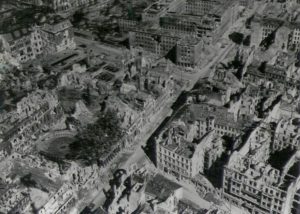
Berlin, post WWII: Statisticians calculated for every inhabitant there was 30 cubic metres of rubbleFollowing the end of the conflict overseas, with the industrial heartland of Germany, not to mention a great swath of Europe, and the production capitals of Japan leveled by the ravages of war, North America soon became the industrial heartland, and the bread basket, for the world. There were jobs aplenty across the North American landscape, as the U.S. & Canada became industrial powerhouses.
Most soldiers arriving home from Europe, rather than choosing to return to the farming communities from whence they had come prior to the outbreak of the conflicts in Europe and Japan, moved to the cities to make their fortune, many of them choosing to marry. Thus began the much vaunted baby boom, of which this writer is a member, born in 1950, and modern society as we still know it today.
Prior to the 1930s, most rural towns and cities across North America had within their midst indigent, homeless populations, but these were folks who were generally well known in their communities, boys who became men, men who’d lost their way and turned to alcohol to numb their pain. The homeless in these towns, and even in our cities, were well cared for by their contemporaries, who’d gone to school with these men many years prior, knew them from the time they were boys.
In every society throughout history, dating back centuries, there has always been 4% of the population who find themselves locked out of conventional society, women and men alone and without resources, perhaps suffering from some mental health disability, mostly uneducated, alone, without family or resources, and as conventional society would state, without the “spunk” that would help them to lead productive lives of meaning, to be part of the conventional work-a-day world.
The Raymur Housing Project, just south of Raymur and East Hastings — social housing in Vancouver.In the 1950s, in perhaps a more empathetic time, when we actually cared for one another, provincial government social planners spanning the nation, in concert with their federal government counterparts, set about to house the homeless by creating “urban social housing complexes” to house the provinces’ poorest citizens, who would be brought to the city. In doing so, Canadian provinces adopted the multiple family dwelling, or “apartment”, model as the housing form to shelter the indigent population. In U.S. cities like Detroit, we are much more apt to call these “urban social housing complexes” by a more colloquial name: ghettos.
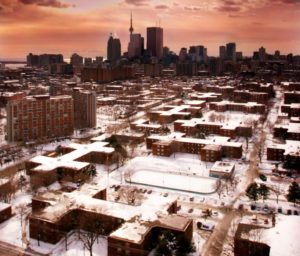
The Regent Park social housing community in Toronto, which expanded from the south Cabbagetown community in the Toronto of the 1930s, long one of the city’s worst slums, targeted by Toronto city planners for a grand urban renewal in the 1950s and 60s, which became known as Regent Park South.As above, in Vancouver, the new community to house the poor was named The Raymur Project, where residents from across British Columbia were brought to Vancouver to live in the newly-conceived urban social housing complex.
Such projects, whether in Canada or the United States — in Toronto, Vancouver, Chicago, and New Orleans — proved abject, crime-ridden encampment failures.
Still and all, the homeless were off the streets, with a roof over their heads, pretty much hidden away from the eyes of conventional society, a forgotten population most people didn’t want to see, acknowledge or engage with on any level.
And so it remained through until the early 1980s, as we wrote on Tuesday.
An interview with Premier-in-Waiting David Eby, conducted by CBC Early Edition host, Stephen QuinnThus far on VanRamblings’ four-part series on homelessness + housing, we’ve tracked the history of homelessness in B.C., from the 1930s forward until now.
We have touched on a modular housing model as a temporary “fix” for our current homeless crisis, and suggested that homelessness is a national issue of critical importance that requires the intervention of the federal government, working with the provinces, to address the ongoing issue of human misery on our streets.
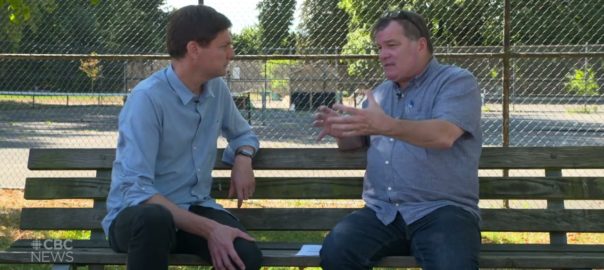
In the interview with Premier-in-Waiting, David Eby, Stephen Quinn holds Mr. Eby’s feet to the fire, questioning him on the resolution to homelessness in our city and province. Mr. Eby is forthcoming about what he feels is necessary: build social housing, lots of it, transitioning our homeless / barely housed population out of sub-standard, one room single occupancy resident accommodation, or temporary shelters, into livable, one-bedroom furnished apartments — with a bed, kitchen, bathroom and living room, TV, internet and all the amenities — this housing to be located in every neighbourhood across our city, what yesterday we referred to yesterday as the “Finnish model” in Wednesday’s VanRamblings’ column.
On the day VanRamblings attended David Eby’s campaign launch to become British Columbia’s 37th Premier, the event held at the Kitsilano Neighbourhood House —where Mr. Eby gave one of the best, most moving and humane political speeches we’ve ever heard — we wondered how Mr. Eby was going to position himself in order that he might retain power when the next B.C. election is called.
In 1996, BC New Democratic Pary leader Glen Clark positioned himself as a working man, a boy who grew up on the east side of Vancouver, who had fought all his life for better for all of us. A working class hero. Mr. Eby, whose father practiced law in Ontario as a partner in a prestigious law firm, and whose mother was a school principal could hardly pull off the Glen Clark’s “pulled myself up with my bootstraps” man of the people working class hero approach. What then for Mr. Eby?
“ICBC is dumpster fire.” “Money laundering in B.C. is artificially inflating housing prices.” “B.C. car insurance rates are too high … we’ll convert to no fault insurance, lower insurance rates, and provide a $400 rebate cheque to all B.C. motorists.”
David Eby, British Columbia’s Premier-in-Waiting Man of Action, ready to fix B.C. homelessness crisis
VanRamblings believes that British Columbia’s new “man of action” Premier, 45 years-young David Robert Patrick Eby will upon assuming the office of Premier of British Columbia declare a homelessness crisis emergency in our city and province.
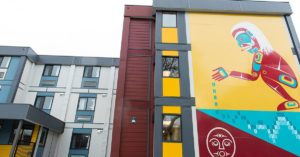
220 Terminal Avenue, the first temporary modular housing building constructed on City-owned landIn declaring a homelessness crisis emergency Mr. Eby will, as a temporary measure, order the construction of 1500 units of modular housing, to be built on city and provincial Crown land with all possible haste, on suitable sites across Vancouver, those modular housing sites to be occupied no later than the autumn of 2023.
Premier Eby will then appoint a Commission with the mandate of reforming the multi-billion service model that allegedly provides succour to those resident on the DTES, “a broken system,” Mr. Eby has said, that ill serves those in need.
A tent encampment at Vancouver’s CRAB Park, which has maintained for two years. (Ben Nelms/CBC)As a next order of business, VanRamblings believes that a Premier Eby will expedite the construction of social and affordable housing on city-owned (Vancouver is a creature of the provincial government), provincial Crown land, and in a co-operative agreement, on federally-owned Crown land, on a 66-or-99 year leasehold basis, ordering that the city of Vancouver will charge no development permit, or related fees, and that the approval process for construction of the social and affordable housing will occur sans City Hall red tape, and any measure of undue delay or intransigence on the part of the Planning, Urban Design and Development Services Department, lest the office of the Premier assume full responsibility for every aspect of the approval and construction of this necessary new housing.
#VanPoli | Homelessness + Housing | A Series | Part 3
British Columbia, should candidate to lead the BC NDP become our province’s 37th Premier, David Robert Patrick Eby — and the City of Vancouver, as well, should TEAM … for a Livable Vancouver Mayoral candidate Colleen Hardwick be elected as Vancouver Mayor this upcoming October 15th — may be on the verge of adopting a revolutionary new approach to the provision of care for, and provision of housing for, our province’s homeless population, once and for all eliminating the scourge of a homelessness crisis that has for so long bedevilled our city, and our province.
In 2008, the Vancouver Police Department released a 56-page prescriptive visioning report titled Lost in Transition: How a Lack of Capacity in the Mental Health System is Failing Vancouver’s Mentally Ill and Draining Police Resources, that cogently argued for a near revolutionary reformation of the service model the VPD felt must be adopted to better provide for the necessary care for all those persons in need who are resident in the square mile around Main and Hastings, a report compiled and written by a particularly illustrious and celebrated cabal of PhD holding Vancouver police officers, long in the employ of the Vancouver Police Department.
In essence, the Lost in Transition report argued for the provincial appointment of a czar to oversee the provision of social services on the DTES. When the Lost in Transition report was updated in 2013, the world czar was replaced with the phrase, “the provincial appointment of an individual with the authority of a Deputy Minister”, and in the 2018 update of the Lost in Transition report, that individual was now called a Commissioner, a provincial appointee who would be given the authority to oversee a radical reformation of the DTES social services model.
In 2012, Charles Campbell — a former editor of The Georgia Straight — was commissioned by Vancouver Coastal Health to author a report on the provision of services on the DTES. Mr. Campbell’s report, Working With Health Agencies and Partners On Vancouver’s Downtown Eastside [PDF}, identified 277 social agencies providing services to those in need who were resident on the downtown eastside.
Arising out of the publication of both the Lost in Transition and Partners reports, a serious-minded and goal-oriented discussion on a reformation of the social services model that had long been in place on the DTES commenced in earnest.
This past weekend, TEAM … for a Livable Vancouver Mayoral candidate Colleen Hardwick apprised VanRamblings of a discussion she’d had with Chief Constable of the Vancouver Police Department, Adam Palmer, where the two touched on what might constitute a radical reformation of the social services model provided to habitués of the DTES, in order that those in need might receive better and more appropriate care, and how — working with the province — a plan might be developed that could eliminate homelessness across the city of Vancouver.
VanRamblings believes — based on what David Eby told The Vancouver Sun’s Katie DeRosa last Friday, and may also have arisen from TEAM … for a Livable Vancouver Mayoral candidate Colleen Hardwick’s discussion with VPD Chief Adam Palmer — the following aspects of a revisioning of the social services model for the DTES may be on the table …
- As David Eby told Ms. DeRosa last week, “There really hasn’t been a co-ordinated strategy or a plan about how we get out of the problems of the Downtown Eastside. I think … putting an invisible fence around the neighbourhood and saying ‘this is the best we can do’ and just hope that things work out, it’s a strategy that will no longer carry us forward.” Eby said if he’s successful in his bid to replace Premier John Horgan … he’ll co-ordinate a long-term response to the issues in the Downtown Eastside with help from the federal government, the city & concerned groups;
- In 2008, discussion surrounding the publication of the Lost in Transition report touched on / recommended consideration of the following: merging the 277 social services agencies on the DTES into 30 umbrella organizations. Each of the 277 social agencies employs an Executive Director, Director of Finance, Director of Human Resources, Manager of Supported Housing, among other senior administrative staff — each earning up to $325,000 annually — a duplication of services and administration funded by the province, at a cost of almost $1 billion dollars, annually. The initial 2008 VPD Lost in Transition report questioned if such duplication of services properly served the interests of those who are resident, and cared for, on the DTES;
- There was also discussion upon the publication of the Lost in Transition report, and a recommendation within the report, that argued for the provincial appointment of a Commissioner who would oversee the reformation of the provision of services on the DTES, a person with the authority of a Deputy Minister who would report only to a provincially appointed Board of Directors who would oversee the transition of the current service model, reporting as well as to the office of the Premier.
For a great long while, there has been much talk about the DTES on the perpetuation of a “poverty pimp industry” within the community, an “industry” that pays well upwards of a billion dollars annually to fund a social services administrative structure on the downtown eastside that better serves the interests of those highly paid administrators over those persons who our society is truly meant to care for.
At present, as well, and impeding change are the various unions representing their members: there are 10,000 union employees who work on the DTES, represented by the BCGEU, HEU, CUPE and the Health Sciences Association, whose members fill union coffers with 2.7% of their gross pay each and every two week pay period.
At one social services agency where VanRamblings was employed, senior staff worked fewer — and were available on site for fewer — than 30 weeks a year. Each time an administrator traveled to Nova Scotia, or some other locale, for a 3-day conference — air fare, accommodation and expenses provided by the employer (that’d be you and me) — each day away meant the banking of two days in compensatory “vacation pay”, or more than one week of paid time off. Same thing for attending evening meetings, and working “overtime”, wherein the administrator banked more paid days off. Nice work if you can get, paid for at taxpayer expense.
And don’t get us started on the absenteeism rate for employees working on the DTES, averaging 6 paid days off per month, despite what the union contract says, replaced by on-call staff who generally work more hours than full-time employees.
As a final note today on VanRamblings’ four-part series on homelessness and housing: Premier-to-be (let’s face it, come December, we all know who will become British Columbia’s 37th Premier) David Eby has made a commitment to moving away from a corrupted and wholly unsuitable SRO (Single Resident Occupancy) housing model providing shelter for B.C.’s homeless population, while moving towards something akin to Finland’s ‘Housing First’ concept, where those who are affected by homelessness are provided with a self-contained apartment — with their own bathroom, bedroom / sleep area, kitchen / dining room, fully furnished with amenities provided for — and counseling, without any preconditions.
Four out of five of those previously affected homeless persons, in time, make their way back into a stable life, re-joining our society as productively happy citizens.
All this represents a responsible, fiscally sound model of service provision to those in need, so much better than accepting homelessness, and perpetuating an administratively corrupt model that has for far too long ill-served indigent persons.