Tag Archives: mark carney

#BCPoli | Humane, Innovative Housing Policy Delivered by British Columbia and Ottawa

Prime Minister Mark Carney held a press conference in Vancouver alongside British Columbia Premier David Eby on June 25, announcing innovative measures to create affordable housing in B.C.  

The June 25th announcement by Mark Carney on behalf of the federal government, and British Columbia Premier David Eby should have been a triumph.

Instead, it became a communications debacle.

When Prime Minister Mark Carney stood alongside federal Housing Minister Gregor Robertson, B.C. Premier David Eby and B.C. Housing Minister Christine Boyle to announce that the federal and provincial governments would work together to purchase approximately 2,200 unsold condominiums and convert them into rent-to-own housing, the promise was immediately overshadowed by confusion.

The questions that came were entirely predictable.

  • Where were these condominiums?
  • Who owned them?
  • Would taxpayers be paying full market value?
  • Would they be located in Metro Vancouver, where housing shortages are most acute?

Neither Mr. Carney nor Mr. Eby provided answers during their announcement.

Instead of controlling the narrative, the governments allowed a vacuum to develop, one that was quickly filled by speculation, criticism and political attacks. Journalists demanded details that were not forthcoming, while federal Conservative leader Pierre Poilievre seized upon the uncertainty as evidence that the announcement was little more than political theatre.
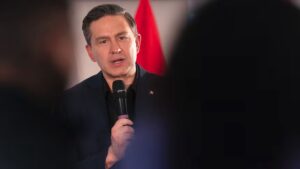
Federal Conservative Party Leader Pierre Poilievre speaks out against the federal government’s proposal to purchase vacant condos, during a town hall meeting in Duncan, B.C.  

It was, without question, one of the poorest communications roll-outs either the Carney government or the Eby government has experienced.

And yet, buried beneath the muddled messaging was an idea that deserves considerably more attention than it has received.

In the days following the announcement, Mr. Eby provided the missing details.

Contrary to widespread assumptions, the condominiums would not be concentrated in Metro Vancouver, or even in British Columbia’s largest urban centres. Rather, they would largely be acquired in smaller communities throughout the province where residential developments have stalled or failed altogether.

Many of these homes would be what the real estate industry describes as “distressed properties.”
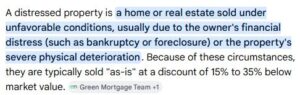
These are condominiums sold under unfavourable financial circumstances because developers have encountered severe financial difficulties, entered receivership, declared bankruptcy or been forced into foreclosure, with licensed insolvency trustees disposing of assets well below their original market value.

Such circumstances create unusual opportunities for public acquisition.

Rather than paying retail prices, governments can often acquire these units at discounts ranging from 15% to 35% below market value.

Completed, distressed vacant condo building ready for sale below market value in Grand Forks, B.C.

Communities such as Grand Forks, and other smaller centres throughout the Okanagan, the Kootenays and Vancouver Island — including Duncan, Port Alberni and Campbell River — contain developments that fit this description.

These are not speculative purchases. They are existing homes. Completed homes. Vacant homes. Homes waiting for occupants.

That distinction matters enormously.

A typical condo construction timeline spans 2.5 to 5 years from initial sales launch to final move-in, a timeline that can stretch even longer due to complex excavation, permitting, and labour demands.

Governments have become accustomed to announcing ambitious affordable housing projects that require years of planning, environmental reviews, permitting, financing and construction before a family receives keys to a front door.

Typically, that timeline stretches three to four years, often longer.

Premier David Eby has argued that purchasing distressed condominium developments offers a dramatically different proposition.

  • The homes already exist;
  • The infrastructure is already built;
  • Water, sewer, electrical service and roads are already in place;
  • Families could move in almost immediately;
  • The economics are equally compelling.

Constructing affordable rental housing has become extraordinarily expensive. Labour shortages, escalating material costs, financing expenses and municipal development charges have pushed construction costs to unprecedented levels.

Acquiring completed condominiums at significant discounts represents substantially better value for taxpayers while simultaneously rescuing developments that otherwise risk remaining empty for years.
The most important aspect of this initiative has received the least attention.

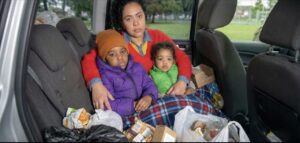
Behind every vacant condominium sits the possibility of a family whose life could be transformed. Not every homeless family sleeps on sidewalks. Many spend months couch surfing between relatives and friends. Some move weekly from one borrowed bedroom to another. Others sleep in aging recreational vehicles parked wherever municipal bylaws permit. Still others live in automobiles, desperately trying to shield children from the instability surrounding them.

For these families, housing is not merely shelter. Housing restores routine. It restores childhood. It restores educational stability, better physical health and improved mental health. It restores dignity.

The proposed rent-to-own model carries particular promise because it offers something beyond secure tenancy. It offers ownership.

Families who have spent years believing home ownership had become permanently unattainable may finally possess a realistic pathway toward building equity and long-term financial security. That possibility should not be underestimated.

If governments can purchase distressed condo developments substantially below replacement cost, rapidly convert them into affordable rent-to-own housing, and provide stable homes for thousands of families who otherwise face years of uncertainty, then taxpayers receive genuine value, while vulnerable British Columbians receive something infinitely more important than political messaging.

They receive hope.

In an age when political discourse increasingly rewards outrage over solutions, this initiative reminds us that governing still matters. It reminds us that budgets are, ultimately, moral documents reflecting the choices society makes about who deserves opportunity and who deserves security. Governments exist not merely to balance ledgers or score partisan victories, but to solve problems that markets alone cannot resolve. Housing is one of those problems.

We live in anxious times, when too many families have begun to wonder whether stability itself has become a luxury. Against uncertainty, both the B.C. and federal governments are attempting — however imperfectly — to meet the moment.

If vacant homes become places where children sleep safely, parents regain hope, and families begin building lives instead of merely surviving them, then history will remember not the fumbling announcement, but the quiet dignity of thousands of front doors opening onto a better future.
#CDNPoli | The Curse of Politics | Chronicling Politics for Canadians


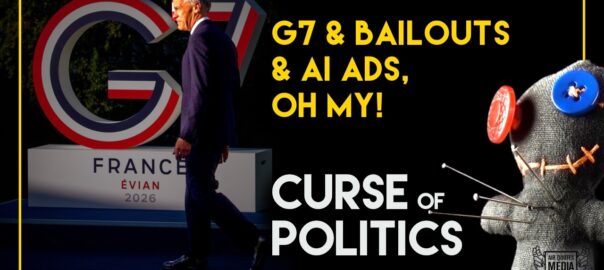
The Curse of Politics podcast, Canada’s pre-eminent must-listen-to political podcast hosted by political strategist and pollster David Herle with panelists Scott Reid, Jordan Leichnitz and Kory Teneycke

The Curse of Politics: Three Backroom Boys and One Backroom Woman Operative, and the Podcast That Has Become Essential Canadian Listening

Launched in August 2021, David Herle’s The Curse of Politics, each and every week for the past five years has provided unfiltered, unmuzzled insider perspectives from four of Canada’s most prominent backroom strategists, pollsters, and operatives, the collective in-depth analysis of the four hosts covering Canadian federal and provincial politics, election polling, and strategic political developments.

When Canadian politics entered the strange, socially distanced world of the COVID-19 pandemic, a curious thing happened. The formal press conferences, scripted talking points, and carefully stage-managed political events that had long dominated public discourse began to feel increasingly inadequate. Canadians wanted something else. They wanted context. They wanted candour. They wanted to know what was really happening behind the curtain.

In August 2021, just as Canada was entering another federal election campaign, that appetite found a home in The Curse of Politics, the political podcast launched by Air Quotes Media and hosted by veteran Liberal strategist David Herle alongside fellow political operatives Scott Reid, Jordan Leichnitz and Kory Teneycke.

What began as a pandemic-era experiment quickly evolved into one of the country’s most influential political podcasts, attracting an audience that includes journalists, politicians, campaign workers, public servants, lobbyists, and politically engaged Canadians from coast to coast — which clearly includes you!

The Curse of Politics podcast’s success rests on a simple premise.

Rather than treating politics as theatre, the hosts discuss it as practitioners. These are not academics or detached commentators. They are campaign veterans who have lived through leadership races, election victories, crushing defeats, cabinet crises, and war-room battles. They know where the bodies are buried because, in some cases, they helped bury them.

At the centre of the panel sits David Herle, the show’s ringmaster and perhaps one of the most influential Liberal strategists of the past generation.

A Saskatchewan native, Mr. Herle cut his political teeth working in the 1980s with future federal Liberal cabinet minister and Saskatchewan Liberal leader Ralph Goodale, before becoming a key adviser to former Prime Minister Paul Martin.

During Mr. Martin’s rise to prominence and political power, David Herle emerged as one of the most respected strategic minds in Liberal politics.

Known for his blunt speaking style and encyclopedic knowledge of political history, Mr. Herle later became a commentator on the CBC and launched the popular Herle Burly interview podcast. Today he remains a partner at Rubicon Strategy, and one of the country’s most sought-after political consultants.

Among Mr. Herle’s many political accomplishments, none may be more impressive than how he transformed Kathleen Wynne from an underdog Premier into the leader of a majority government in Ontario’s 2014 provincial election.

When Ms. Wynne became leader of the Ontario Liberal Party in January 2013, succeeding Dalton McGuinty, the Liberals appeared exhausted after a decade in power. Polls frequently showed the party trailing Tim Hudak’s Progressive Conservatives by double digits, with some surveys placing the Liberals as much as 15 points behind.

David Herle set about to craft a compelling campaign narrative, an engaging and thought provoking message that positioned Ms. Wynne as a  change agent, a progressive reformer with a bold vision for Ontario’s future. Mr. Herle’s strategy focused on defining the election as a choice between investment and austerity.

At the centre of the Liberal platform was an ambitious plan to expand public transit through a dedicated infrastructure fund, financed in part through pension reform and asset sales.

The campaign also emphasized education, public services, retirement security, and economic growth through government investment rather than spending cuts — constituent elements of, perhaps, the most progressive election campaign ever waged in Canada. While critics attacked the proposals developed by Mr. Herle as fiscally irresponsible, he recognized that many Ontarians were weary of austerity politics following the global financial crisis.

Equally important was Kathleen Wynne herself.

David Herle encouraged a campaign that highlighted her authenticity, optimism, and willingness to engage directly with voters. As Ontario’s first female premier and the first openly gay Premier in Canadian history, Ms. Wynne represented a significant break from traditional political leadership. Rather than downplaying those qualities, the campaign embraced them.

By election night, June 12, 2014, the political landscape had been transformed. The Liberals captured a majority government with 58 seats, while Tim Hudak’s Progressive Conservatives fell well short of expectations. The 2014 Ontario election campaign remains one of the most remarkable campaign turnarounds in modern Canadian political history, and a testament to David Herle’s strategic brilliance.

Scott Reid brings a similarly deep Liberal pedigree, though one forged in a somewhat different mould. Reid served as communications director and senior adviser to Paul Martin during the latter’s tenure as Prime Minister. Smart, combative, outspoken and often — with a twinkle in his eye — delightfully profane and contrarian, Mr. Reid possesses a rare ability to dissect political messaging with surgical precision. His sharp wit has made him a favourite among listeners, particularly when discussions drift into campaign strategy, advertising, and voter psychology. While Mr. Herle often plays the role of storyteller, Scott Reid is the analyst, forever searching for the hidden logic — or illogic — behind political decisions.

If David Herle and Scott Reid represent the Liberal tradition, Kory Teneycke embodies modern Conservative politics. Teneycke emerged as one of the most formidable conservative communicators of his generation while serving as Director of Communications to former Prime Minister Stephen Harper.

Later, he became a central architect of Ontario Progressive Conservative leader and Premier Doug Ford’s electoral successes, managing multiple winning campaigns. Mr. Teneycke’s style is unapologetically aggressive, deeply strategic, and occasionally provocative. He has long embraced the notion that politics is a contact sport.

Recently, Mr. Teneckye took a break from The Curse of Politics, moving to British Columbia  to help Caroline Elliott secure the leadership of the Conservative Party of British Columbia. Sadly, despite Mr. Teneycke and his team’s best efforts, Ms. Elliott fell just short, securing 49% of the vote to Kerry-Lynne Findlay’s 51%

One of the most fascinating developments in recent years has been Mr. Teneycke’s willingness to criticize his own side when he believes it is making mistakes.

During the 2025 federal election campaign, he became one of the most prominent Conservative insiders to publicly question the strategy being pursued by federal Conservative leader Pierre Poilievre. As Liberal leader and future Prime Minister Mark Carney gained momentum amid economic uncertainty and growing concerns about relations with the United States, Kory Teneycke argued that the Conservatives were squandering a commanding lead in public opinion polls, describing the campaign’s failures in remarkably blunt terms, warning that it would be remembered as a case study in campaign malpractice.

The criticism generated headlines across the country and underscored one of the podcast’s defining strengths: intellectual honesty. The hosts may have partisan backgrounds, but they are rarely partisan cheerleaders. Their loyalty lies more with effective politics than with any particular party.

Completing the quartet is Jordan Leichnitz, arguably the least publicly known member of the panel but, in many ways, the secret ingredient that gives the show its balance.

Ms. Leichnitz built her career in political strategy and public affairs, working extensively within NDP circles, particularly with the late Jack Layton during his extended term as the federal party lead, prior to his untimely death on August 22. 2011, at the age of 61, just weeks after the 2011 federal election campaign.

While developing a reputation as a sophisticated campaign thinker and communicator, and decidedly less theatrical and histrionic than her colleagues on The Curse of Politics, Ms. Leichnitz often serves as the voice of moderation and practical political judgment. When debates become heated on the podcast —as frequently they do, or at least that was once the case — Ms. Leichnitz is often the one grounding the conversation in electoral realities.

Together, the three male panelists and Ms. Leichnitz have created something unusual in Canadian media.

The chemistry feels less like a panel show than an ongoing conversation among old friends who have spent decades fighting one another on campaign battlefields. They interrupt, tease, challenge, and occasionally exasperate one another. Yet beneath the banter lies a remarkable reservoir of political knowledge.

The Curse of Politics podcast’s influence has grown steadily because it offers something increasingly rare: expertise without excessive self-importance.

Listeners hear discussions about polling, campaign mechanics, advertising strategy, leadership performance, voter behaviour, and media relations from people who have actually done the work. The hosts frequently explain not merely what happened but why political actors behaved as they did.

That insider perspective has made The Curse of Politics required listening for journalists and political staffers. It is not uncommon for themes raised on the podcast to migrate into newspaper columns, television panels, and broader political discussions. In an era dominated by social-media outrage and performative partisanship, The Curse of Politics offers a more substantive, if often profane, alternative.

The title of the podcast itself contains a measure of truth.

Politics is a curse of sorts. It attracts idealists and cynics alike. It promises power while demanding sacrifice. It rewards ambition while punishing miscalculation. Few people understand those contradictions better than Messrs. Herle, Reid and Teneycke, and increasingly the voice of wisdom and ruminative introspection on The Curse of Politics podcast, the estimable Jordan Leichnitz.

Five years after its launch, The Curse of Politics has become far more than a podcast. It is an institution within Canada’s political culture, a place where practitioners gather to explain the game to those watching from the stands. The hosts have disagreed on nearly every major issue of the day, but that disagreement is precisely the point. Democracy is not built upon consensus. It is built upon argument.

Interestingly, some longtime listeners have suggested that the name evolved from the show’s conversational, discursive style before settling on The Curse of Politics, a title that better captured the hosts’ love-hate relationship with political life.

In that sense, the title is both humourous and autobiographical. The hosts understand politics better than most people because they have lived it — and because, despite all its frustrations, they have never really escaped its pull. That enduring attraction, equal parts passion and affliction, is the curse they discuss every week.

The podcast’s official description explains the idea this way:

“Politics. It’s a blessing and a curse. On good days, it’s about your friends in the foxhole with you. On bad ones, it’s the mountain of votes that went the other way. Either way, it pulls you back in, again, and again.”

And every week, around a virtual table crowded with stories, scars, and strategic insight, four veterans of Canada’s political wars remind listeners politics is rarely as simple as it looks — and infinitely more interesting than most people imagine.

VanRamblings Makes Its Triumphant Return


Two year old Elliott, on my bed with Teague the dog
December 2025

Following 7½ months of excruciating pain subsequent to my radical prostatectomy (prostate cancer surgery) on October 31, 2025, after all these months the pain has lessened to the extent that I can sit in a chair, in front of my computer, for an extended period of time. Thus, the re-emergence of VanRamblings.

Given what is going on municipally — particularly in Vancouver, with a record number of high profile candidates seeking to become Mayor post October 17th — provincially (with the deepening problems for Premier David Eby, and the provincial New Democrats, not to mention the ascendance of a far right leader of the BC Conservative Party) and federally, with a decided move to the right by Prime Minister Mark Carney, and his federal Liberal Party, as has been the case for many months, I am desirous of weighing in on all things political.

Although I had thought that I might take a different tack on how VanRamblings would approach covering the upcoming municipal election, perhaps emerging as a kinder, more thoughtful force for good in the writing you’ll be reading daily on this 22-year-young blog, I have of late arrived at the opinion that such change is unlikely to occur, that VanRamblings will continue to be what it has always been: an honest, straight forward, brutally entertaining,  and engaging reportorial accounting on all the “people in the game”, which is to say, those persons who have chosen to enter the political fray by offering themselves for public office.

Monday to Thursday, you can expect to read my analysis of the political scene, Fridays will provide coverage of cinema, Saturdays will be given over to Stories of a Life — long a staple on VanRamblings — and Sundays to the music I love.

All that begins tomorrow.

A great family: the absolutely tremendous Alasdair, Fergus, Meaghan and Elliott

Central to my recovery — not yet complete, but progressing —has been the support of the four persons you see pictured above, rugby and (British) football phenom Alasdair, now 7-year-old Fergus who I cared for during the pandemic and beyond (along with my neighbour, Heather, who I will write about in the months to come) — when Fergus’ child care centre closed down and he required care while his parents were at work — and wife, mom, librarian and friend extraordinaire, Meaghan, whose very existence gives my life meaning, and  on the right, 3-year-old Elliott — her name given to her by her brother — who is nothing short of a delight, both Fergus and Elliott, the most zen children I have ever known.

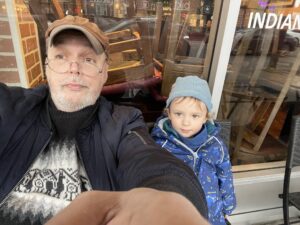
Raymond and Fergus, on a post pandemic walk, when Meaghan asked for a selfie

In the photo at the top of today’s column, Elliott in the bottom left hand corner of my bed, and lying by my side, as he did for three months, Teague the dog. At the foot of the bed, and outside the frame of the photo, my friend and personal health saviour, Kelly Ryan, and the aforementioned Heather and Meaghan, all three of whom,  together, have provided care and kindness, working collectively to save my life over the course of the past 7½ unimaginably challenging months.

At one point, Elliott — mature and far beyond her maturational markers — turned to Kelly (with whom I share Teague), and said to Kelly …

“I have a cat. I want a dog. But I have a cat. I have asked my mom and dad for a dog, but they said, ‘Not right now. Some day.’

I have a cat. I like the cat, but I want a dog.”

And with that, Elliott turned to pet Teague, as Kelly, Heather and Meaghan resumed their conversation.

The old, Movable Type VanRamblings header (above) which Mike Klassen — VanRamblings’ webmaster, and current Vancouver City Councillor — sadly,  was unable to recreate when VanRamblings’ Movable Type platform collapsed. Working for 48 non-stop hours, the supremely skilled Mr. Klassen was able to convert this blog he first created in late 2003 leading to its February 2004 début into a WordPress blog

Tomorrow and Thursday, I will begin writing about politics, likely employing the 3rd person — mixing in the 1st person where it seems necessary and appropriate — focusing on the eight well-funded candidates for Mayor of the City of Vancouver, providing a somewhat brutal analysis of their respective candidacies.

Take my word for it, you won’t want to miss tomorrow’s and Thursday’s columns.