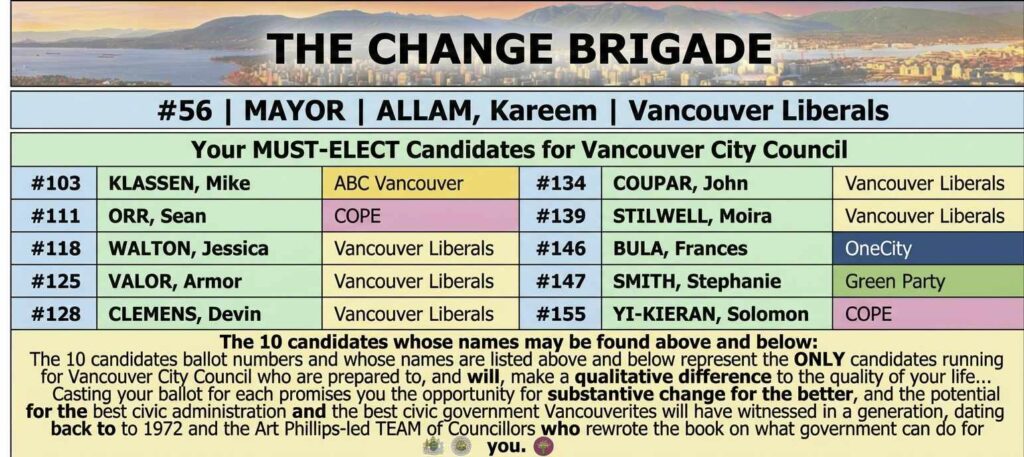
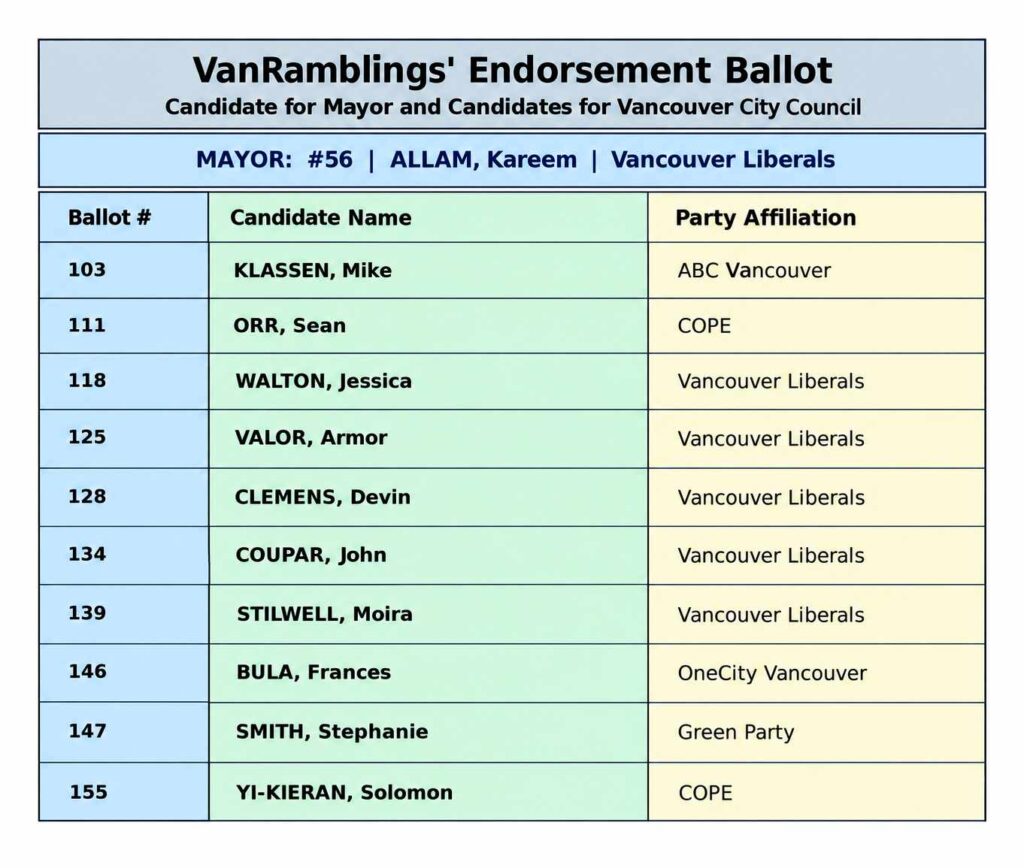
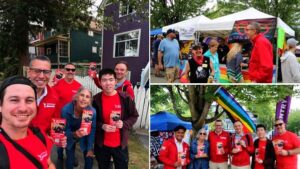
Kareem Allam as the Vancouver Liberals Mayoral candidate, and the 10 Vancouver City Council candidates whose names appear above represent Vancouver’s only hope for better; for an action-oriented government that will relieve your tax burden; build our city’s parks and recreation system; downsize the “managers managing managers” bloated bureaucracy at Vancouver City Hall; establish a blue ribbon panel to address the pestilence of the rat problem that bedevils our city, that is of so much concerns to residents in every neighbourhood across Vancouver; address street disorder and an out-of-control drug problem on the DTES in a humane, yet efficient and effective manner; spend money on our sidewalks that makes life difficult for seniors and persons with disabilities to traverse, and so very much more that is on the agenda of THE CHANGE BRIGADE asking for your vote.
Thinking of voting for Pete Fry for Mayor? Expect the same old, same old do nothing government that has defined every Vancouver civic administration this century. Rebecca Bligh. Same thing. Won’t achieve any more than a high single digit come Election Day. Colleen Hardwick. Puh-leeze. In a word, nightmare. Ken Sim. Undeserved second term.
You know what the difference is between Kareem Allam, and the 10 Councillors endorsed by VanRamblings? Every other person running for Council — although they might believe what they’re saying — are driven by ego, and what’s good for them, and not us.
The members of The Change Brigade are the only candidates for Vancouver City Council seeking a Council seat, because they believe in the good, that collectively as members of a Vancouver City Council committed to a civic administration of reconciliation that there is much good to be achieved.
In other words, The Change Brigade is in it for us, not for themselves.
Only the collaborative, achingly brilliant, ready to hit the ground running, man of vision who is a natural leader, Kareem Allam, possesses the wisdom and experience to be the best Mayor of Vancouver since the days of the Art Phillips.
Vancouver’s Government of Municipal Reconciliation Working for You
The 10 candidates whose names are listed above, the Vancouver Liberals’achingly bright Kareem For Mayor and the 10 Council candidates endorsed by VanRamblings represent the 𝗮𝗴𝗲𝗻𝘁𝘀 𝗼𝗳 𝗰𝗵𝗮𝗻𝗴𝗲 we have waited more than 25 years for, the ‘can do’ Zohran Mamdani crew who mean to make a difference …
The Change Brigade — Policy Priorities
• Remove pay stations from parks, beaches and in front of and nearby community centres, pools and hockey rinks, which means that the City of Vancouver will — with The Change Brigadein charge — finally get around to spending some of those billions of dollars that languish in the capital budget, monies that we approved in referendums in 2008, 2011, 2014, 2018 and 2022, election after election as the money just sits in the capital budget unspent, instead of being spent on us;
• Broken Promises and Rising FOI Fees, means transparency and accountability is needed at City Hall. Vancouverites are facing rising Freedom of Information fees while trust in City Hall continues to decline;
• Reinstate the Livable Wage Programme at City Hall, that mandates suppliers of goods and services to the City must pay their workers a livable wage (approximately $28 today), that doesn’t cost the city a penny, but helps workers;
•Renew Vancouver’s 24 community centres, most of all, the 11 community centres identified by Vancouver Auditor General Mike Macdonell in his scathing report to Council on the “severe state of disrepair” of 11 of those community centres;
• Cancel Ken’s $800m Second City Hall, wherein Ken Sim and ABC want to spend $800 million just to build more office space for managers;
• Build community pools in neighbourhoods across the city, water parks and hockey rinks;
Luxury Yacht Tax (40ft+), to protect essential services without burdening everyday Vancouverites, The Change Brigade will implement a tax on luxury yachts over 40 feet;
• Faster, Cheaper Housing Construction, because Vancouver is the only city in BC with its own building code — an unnecessary extra step for people seeking to build more housing in our city. The Change Brigade, led by Kareem Allam and the Vancouver Liberals — working in concert with COPE’s Sean Orr and Solomon Yi-Kieran, One City’s Frances Bula, and the Greens’ Stephanie Smith — will remove the Vancouver Building Code and align our city with the rest of the province, simplifying the process for housing construction;
• Hold developers feet to the fire, by insisting Wesgroup finally get around to building the community centre they are contracted to build in the River District, or QuadReal to build their contracted Oakridge Park community centre, or Concert Properties, to build a much needed SE False Creek community centre they said they’d build ages ago;
Build affordable housing, focusing on democratically run housing co-ops, built on City land, working with Thom Armstrong, Executive Director of both BC’s Co-operative Housing Federation and the Community Land Trust, with child care centres built into the newly-constructed co-ops;
Protect Good Jobs and Industrial Land, because Vancouver needs more good-paying jobs, not policies that put them at risk. Ken Sim’s plan to eliminate the city’s remaining industrial land threatens to push businesses and well-paying jobs out of Vancouver;
• A Ward System for Vancouver, because Vancouver’s current at-large voting system makes campaigns expensive and leaves many neighbourhoods without direct representation at City Hall. The Change Brigade support exploring a ward system that would divide the city into local districts, each electing their own dedicated Councillor;
• Ban Bitcoin cryptocurrency ATMs on the DTES and take the fight to the drug dealers, not the street-level drug dealers, but their suppliers;
•Work to rid our city of the pestilence of rats, that are of concern to residents in every neighbourhood across our city;
• Address homelessness in a humane and caring manner, consistent with the values of the vast majority of us who call Vancouver home;
• The Change Brigade Noise Policy, because we’re tired of noisy hot rods and motorcycles revving up at 3 a.m. in our neighbourhoods. So are the members of The Change Brigade;
• Downsize a bloated middle management bureaucracy, at Vancouver City Hall, because do we really need 95 people working in Vancouver’s communications department, or employ more middle managers in our development services and planning departments than on the ground CUPE workers — like plan checkers — who do the real work?;
• Reduce Taxes on Medical Clinics, because The Change Brigade means to cut property taxes in half for family doctors and walk-in clinics in the City of Vancouver;
• Build UBC-style Food Hubs across our city, to address food insecurity;
Build More Public Bathrooms, because Vancouver’s chronic lack of public washrooms not only fails to provide basic facilities to residents but could cause even bigger public health problems;
• Build Supportive Housing for Seniors & Veterans, because supportive housing is a lifeline for seniors, veterans, and those with disabilities. On Day One, The Change Brigade will reverse Ken Sim’s cruel ban on supportive housing and ensure that our most-vulnerable citizens receive the supports that they need;
• Restore strong fiscal management, at City Hall;
• Stop the Sale of Vancouver Parks, because Ken Sim and ABC’s Councillors who tried to eliminate the Park Board, Sim who is all about putting Vancouver’s parks up for sale. The Change Brigade strongly supports our elected Park Board, a democratic institution that protects our parks from being chopped up and sold off;
• Develop a methamphetamine strategy — the leading cause of violent incidents that puts people at risk — just like Premier Wab Kinew has done in Manitoba (a plan that is working!);
• Establish an Industrial Land Reserve, because keeping jobs in the city and surrounding them with affordable housing so that people can build their careers and keep their families in our city;
• Protect local businesses during transit expansion, by reducing property taxes by 50% for the duration of construction;
Build more public washrooms, including within our parks (I mean, when the kids have gotta pee, they’ve gotta pee);
• Support taxation on land value, by capturing the land-owner windfalls caused by proximity to public amenities, speculation, and zoning;
• Reinstate library funding and hours, cut by a heartless and cruel Ken Sim administration that have so weakened these vital public spaces and community services;
• Bring back the Renters Office, with teeth this time to give tenants an advocate who is empowered to fight for them;
• Better Front-Line Services, which means across the board, city services are failing: more potholes, missed garbage pickups, dirty streets, and so much more.
• Identify why progress towards city goals of affordability, families, renters, and climate has stalled or reversed under Ken Sim, and get back on course;
• Fight for campaign finance reform, to close the loopholes the wealthy can use to, effectively, buy politicians and elections;
• Fight for a fast and free public transit system in Vancouver, and take steps on that path immediately;
• Bring in a municipal lobbying registry, because the public deserves to know how and when the wealthy are influencing decisions made by the city government;
•Half of bus stops in Vancouver have no bus shelters or benches, so work toward changing that circumstance.
• Expand VanWifi across the city, to allow for more free and open internet access, prioritizing currently under-served areas;
•Train and hire lifeguards and swim instructors, because we need to keep pools open and staffed, stop line-ups, offer swimming lessons to meet demand, and keep people safe at Vancouver’s beaches.
Vancouver: A City We Can Build Together, Because Together We Can
A city is, in the end, more than streets and towers, more than budgets and bylaws, more than the endless arguments that consume the chambers of City Hall.
A city is its people. It is the child riding a bicycle to school, the senior waiting for a bus beneath a cold November sky, the newcomer learning the streets of a new country, the renter wondering whether next year’s rent will finally push them out of the neighbourhood they have called home. It is the nurse finishing a shift, the small-business owner unlocking the door at dawn, the family lining up at a community pool, the young couple wondering whether they will ever be able to afford a home of their own. These are the people for whom a city exists. And these are the people for whom government must work.
There is something almost beautiful in the idea that ordinary people, working collectively and putting aside the divisions that too often separate us, can change the direction of the place they call home. The Change Brigade finds itself in a unique position to make that change possible — to bring together people from across Vancouver, from every neighbourhood and every walk of life, and to insist that prosperity means something more than rising property values and increasingly expensive glass towers.
Prosperity should mean that a family can afford to live here. That a young person can find a home here. That a senior can remain in the neighbourhood where they raised their children. That newcomers can put down roots. That workers can earn a decent living and still have enough left at the end of the month to enjoy the city they help sustain.
That is why affordability cannot be treated as an afterthought.
Affordable housing, sensible economic policy, strong public services, thriving neighbourhoods, parks, libraries, pools, community centres and accessible transportation are not competing pieces of a city — they are the architecture of a city that works.
The Vancouver worth fighting for is one in which the success of one neighbourhood does not require the neglect of another, where public investment serves the many rather than the few, and where government understands that fiscal responsibility and compassion are not opposing ideas. We can balance the books while building homes. We can support business while protecting working people. We can grow the economy while preserving the places and institutions that make Vancouver worth living in.
And perhaps that is the most hopeful thing of all.
Vancouver does not have to accept that the future has already been written. It does not have to become a city where only the wealthy can afford to stay, where renters are an afterthought, where families are pushed farther and farther from the communities they love, or where the promise of this extraordinary place is measured only in dollars.
The Change Brigade has an opportunity — a rare opportunity — to help turn the page: to bring people together, to listen to the aspirations of every Vancouverite, and to build a city that belongs to all of us. No matter where we were born. No matter what language our parents spoke. No matter our ethnicity, our country of origin, the size of our bank account, or the circumstances into which we were born.
We are all Vancouverites. And if we choose to work together, with courage, imagination and a belief in one another, there is no reason we cannot build a Vancouver that is fairer, more inclusive, more affordable and more just — a city worthy of the people who call it home.
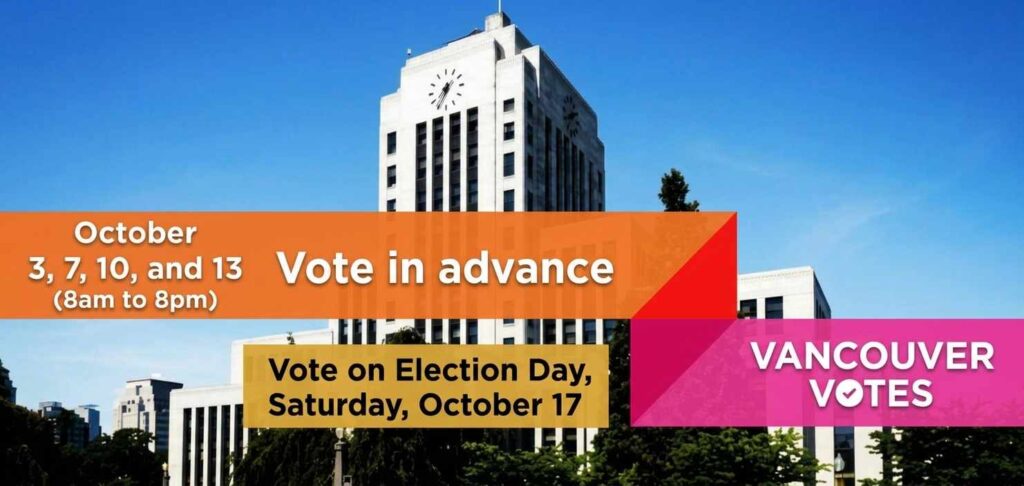
At the Advance Polls and on Election Day, VOTE for the members of The Change Brigade.
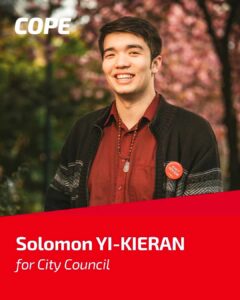
At a time when municipal politics can sometimes look like an old person’s game, Solomon Yi-Kieran represents something Vancouver badly needs: a younger generation prepared not merely to complain about politics, but to enter the arena and try to change it.
Power structures across the country are often dominated by older cohorts, leaving younger residents feeling that the issues directly shaping their futures — from soaring living costs to climate resilience — are addressed with passive incrementalism rather than urgency. It is precisely why having young leaders come forward to run for elected office is so critical.
Young candidates bring a essential perspective to local government. They carry the lived experience of navigating today’s acute housing crisis, reliance on public transit, and the precarity of the modern economy. Rather than viewing policies through abstract statistics, young representatives experience the direct impact of municipal decisions every day.
At 20 years old, Yi-Kieran — who identifies as they/them — represents a rising generation of community organizers who refuse to wait on the sidelines.
Stepping up to bring that exact energy and perspective to local government is Solomon Yi-Kieran is running for Vancouver City Council with the The Coalition of Progressive Electors (COPE) in the October 17 municipal election. Still in their early 20s, they are among the youngest candidates seeking a seat on Council — and their résumé is already unusually substantial for someone so young.
Yi-Kieran graduated from Glenlyon Norfolk School in Victoria in 2023. While still in high school, they were accepted into Oxford University’s history and politics programme, but ultimately chose to attend the University of British Columbia.
At the University of British Columbia, Yi-Kieran is an Arts student studying History and Linguistics, with a particular interest in history and education. They have said their long-term ambition is to become a high-school history teacher.
Their political education, however, has taken place as much outside the classroom as inside it.
Despite their young age, Yi-Kieran already boasts a track record as a public advocate and student leader. Yi-Kieran has been deeply involved in UBC student politics, serving as a student senator and, more recently, as Vice-President External Affairs of the Alma Mater Society, representing more than 61,000 undergraduate and graduate students.
Yi-Kieran has advocated for improved accessibility and academic accommodations, recorded lectures, affordable student housing, greater financial assistance and more transparent university governance.
Their activism extends beyond campus.
Yi-Kieran has worked with the BC NDP, participated in campaigns involving affordable sexual-health services and humanitarian assistance, and organized advocacy for a federal Youth Climate Corps. That campaign ultimately helped secure $40 million for youth climate employment.
Yi-Kieran’s background in activism is rooted in tangible, grassroots organizers’ campaigns:
Public Transit Expansion:As AMS VP External, they spearheaded the high-profile campaign to extend the Millennium Line SkyTrain route directly to UBC, organizing rallies and leading a petition that gathered over 15,000 signatures to press provincial and municipal governments into action.
Student & Tenant Advocacy:They have consistently organized around tenant rights, pushing for tenant protections in student residence housing and lobbying for increased non-market and below-market housing options in the University Endowment Lands.
Climate & Youth Empowerment:Through coalition work with student unions across British Columbia, Yi-Kieran campaigned for the establishment of a national Youth Climate Corps.
Running on the progressive COPEplatform, Yi-Kieran’s Council campaign focuses on systemic challenges:
Housing Affordability & Tenant Protection:Expanding non-market, social, and co-op housing, alongside strong rent-control protections to keep renters from being priced out of Vancouver.
Public Transit & Infrastructure:Accelerating major regional transit extensions like the UBC SkyTrain corridor and ensuring accessible, frequent municipal transit options.
Climate Action & Green Jobs:Supporting local climate initiatives, including clean energy transitions and workforce opportunities for young people in sustainability.
Labour & Accessibility Reforms:Championing worker rights, accessibility accommodations, and transparent civic governance that invites broader public participation.
Yi-Kieran’s campaign offers Vancouver voters a chance to bring a fresh, community-driven voice to Vancouver City Hall — one that understands the pressing realities facing the city’s youth, renters, and working residents.
Perhaps their most visible campaign has been the fight for a SkyTrain extension to UBC. As AMS vice-president external, Yi-Kieran spearheaded a petition that gathered more than 10,000 signatures and pressed provincial and federal governments to move forward on the long-promised project.
Now Yi-Kieran wants to take that activism to Vancouver City Hall.
There is a tendency on the left to approach issues on a macro scale, to fight for systemic change that makes a difference for the better in the lives of groups of our disenfranchised population, whose voices are neither heard nor respected.
Sometimes in such a circumstance, there is a tendency to lose touch with the individual needs of members of the community, of families, of Vancouver’s new immigrant or ethnic populations, of individual seniors and students.
From VanRamblings’ personal experience, we are here to tell you that in addition to working on a macro scale for systemic change, Solomon Yi-Kieran also connects — really connects — on a micro scale, that is, they see you, feel you, empathize with you, hear your concerns, and will work with you one-on-one to make the conditions of your life better, to work with you to resolve your issues of concern.
Something else to mention about Solomon Yi-Kieran, for which again we have first hand salutary experience: Solomon is kind.
Sadly, a commodity in short supply in politics.
In an era where political discourse is often dominated by divisiveness, hostility, and polarization, the concept of kindness might seem quaint or naïve.
When we examine the foundational purpose of politics — the organization of society for the common good — kindness emerges as a practical and necessary value.
At its core, kindness represents empathy, respect, and a genuine concern for others. When woven into the fabric of political practices, kindness fosters collaboration, promotes inclusivity, and enables the pursuit of justice and equality.
When you cast your ballot for Solomon Yi-Kieran this October, and when they are elected to Vancouver City Council, you will come to find that there is no stronger advocate for you on City Council than Solomon Yi-Kieran, whose boundless energy, heartbreaking intelligence, inspiring presence in your life, and dedication to improving the conditions of your life will always be the driving force and central feature of their time in municipal governance at Vancouver City Hall.
Their platform emphasizes affordable housing, rents, better and eventually free public transit, government transparency and accountability, and making Vancouver a city in which young people can afford to build a life. They have called for reviving the City’s Renters Office, and establishing a climate defense strategy.
Solomon has emerged as one of COPE’s leading voices opposing proposed artificial-intelligence data centres in Vancouver, calling for a moratorium until their environmental, water, electricity, employment and privacy implications are properly understood.
But Yi-Kieran’s candidacy is about more than any particular policy.
Canadian politics — and especially municipal politics — can become dominated by people who have been around for decades. Experience matters, certainly. But so does having people in government who will live with the consequences of today’s decisions for another 50 or 60 years.
Young politicians bring a different perspective. They experience the housing crisis as renters rather than homeowners. They depend upon public transit. They confront the realities of precarious employment, student debt, climate change and an increasingly digital economy firsthand.
Yi-Kieran’s campaign offers Vancouver voters a chance to bring a fresh, community-driven voice to City Hall — one that understands the pressing realities facing the city’s youth, renters, and working residents.
They also bring something politics desperately needs: a sense of urgency.
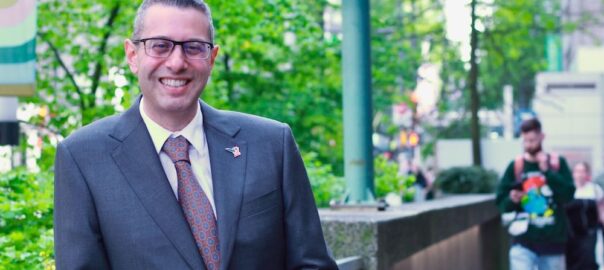
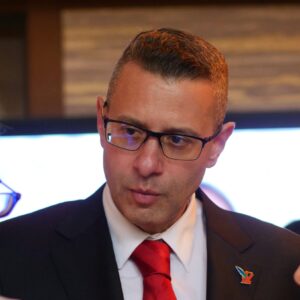
Kareem Allam, 47, Vancouver Liberals’ Mayoral candidate | Photo credit: Katie Hyslop, The Tyee
For over two decades, Kareem Allam has been the man behind the curtain in Canadian politics.
Kareem Allam is a typical Vancouver story. Parents who immigrated to Canada, a career in public service and policy, and a belief in our ability to make our communities better.
Watch part 1: pic.twitter.com/sLy1UpJIbb
Kareem is a self-described “policy nerd” and a master campaign strategist who has navigated the highest corridors of municipal, provincial, and federal power.
Yet, for all his time spent steering others to victory, in 2026 Kareem Allam has stepped out from the shadows of backroom strategy to mount his own campaign.
Vancouver deserves a more accountable and representative City Hall.
The Vancouver Liberals will hold a referendum on a ward system in the following election, after the recommendations of a citizens’ assembly. pic.twitter.com/rSCFFH5FvX
As the founder, leader, and Mayoral candidate for the newly formed municipal party, the Vancouver Liberals, Kareem Allam is running a well-funded, high-stakes campaign to unseat Mayor Ken Sim, in the October 2026 civic election.
Investing in parks, libraries, and community spaces is how we reduce crime.
That’s why we’re committing 400 new frontline workers and a historic $1.35B investment in parks, recreation, and pools. pic.twitter.com/Q1mgs6SGAJ
In 2022, Kareem Allam was the mastermind who successfully guided Ken Sim and the ABC Vancouver party to a historic sweep of City Hall, the Park Board, and the School Board. After steering ABC Vancouver to a sweeping majority at all three levels of civic government, he served briefly as Mayor Sim’s Chief of Staff before a highly publicized falling-out led to his departure in February 2023.
Now, disillusioned by what he views as a broken social contractand a deeply divided city, Kareem Allam has built a political vehicle of his own.
With a platform focused on a massive infrastructure injection, an aggressive front line service plan, and a return to consensus-driven, big-tent governance, Kareem Allam aims to execute an activist civic agenda not seen since the 1970s.
Upbringing, Roots, and the Great Canadian Social Contract
To understand Kareem Allam’s political philosophy, one must look to his family history, which he frequently cites as the bedrock of his world view.
Born in Vancouver and raised in Richmond, Kareem is the son of an Egyptian colonel — who spent 11 months as an Israeli prisoner of war — and a Sudanese mother whose family was expropriated during a revolution. His mother spent two grueling years living in a refugee camp in Lebanon before arriving in Canada.
Though his father, Mahmoud Allam, would eventually return to Egypt to manage the Al Ahly football club, the family’s formative years in the Lower Mainland left an indelible mark on Kareem.
Speaking with reporter Katie Hyslop for an extensive feature profilein The Tyee, Kareem Allam reflected on how Vancouver served as a safe harbour where his family could heal, plant roots, and ultimately thrive:
“My family history defines a lot of how I perceive this place… [Vancouver] was a welcoming place, a place of refuge and a place where they were able to thrive, raise their children. It wasn’t always prosperous. But over the arc of time, the family has done well.”
This personal history forged Allam’s deep belief in what he terms the “great Canadian social contract” — the idea that a booming economy must directly fund world-class social programming, and that each generation bears a strict responsibility to build winning conditions for the next.
Kareem Allam’s formal education took him away from the West Coast for high school and graduate studies, including a stint in Ottawa where he cut his political teeth working on Parliament Hill for the federal Canadian Alliance party.
Outside of politics, his career spanned public, private, and non-profit sectors. He served as the Director of Public Policy for the Vancouver Board of Trade, sat on the Fraser Health Authority’s Board of Directors, worked with major energy corporations like TransCanada and FortisBC, and served on the TransLinkscreening panel and the College of Massage Therapists of B.C.
Professionally, his primary focus for the last two decades has been as a partner at Richardson Strategy Group (formerly Richardson Strategies), working closely alongside prominent Indigenous leaders like Haida nation leader Miles Richardson on complex title, rights, and economic development negotiations.
The Campaign Veteran: 40 Races and the Road to Kingmaker
Before launching his own mayoral bid, Kareem Allam compiled a legendary résumé as a political strategist, managing or advising on roughly 40 political campaigns across the ideological spectrum.
Kareem specializes in taking complex policy ideas and distilling them into simple, powerful promises that resonate with everyday voters.
His track record as a backroom general is elite:
The 2005 Surrey Municipal Race: He helped guide Dianne Watts to an upset victory as Mayor of Surrey, reshaping the politics of BC’s fastest-growing city;
Federal Conservative Leadership (2020): Kareem Allam played a critical role in successfully securing the federal Conservative Party leadership for Erin O’Toole, navigating a complex, multi-ballot ranked voting system.;
Provincial BC Liberal Leadership (2022): He served as the campaign manager who secured the leadership of the provincial Liberal party (later renamed BC United) for Kevin Falcon;
ABC Vancouver Municipal Sweep (2022): In his most (in)famous local victory, Mr. Allam masterminded Ken Sim’s mayoral campaign. He engineered the easily digestible pledge to hire “100 police officers and 100 nurses,” a message that fundamentally shifted public safety discourse and handed ABC a total majority.
However, Kareem Allam’s political alignment experienced a dramatic shift.
In the 2024 British Columbia provincial election, the lifelong conservative strategist publicly broke ranks to endorse and re-organize and energize the BC NDP campaign — steering the party and their moribund campaign for re-election, from an almost certain defeat to majority status — stating to The Tyee’s Katie Hyslop that the modern center-right movement had abandoned its traditional values of climate action, reconciliation, and social cohesion, veering instead toward populism.
“I’m not sure that I left the center-right movement,” Kareem Allam observed. “I think the center-right movement left me.”
The Vancouver Liberals and the Fight for a Council Majority
The Vancouver Liberal Electors Association — commonly known as the Vancouver Liberals — was officially founded on July 3, 2025. The Vancouver Liberals are a strictly municipal political party, entirely independent of both the federal Liberal Party of Canada and the former provincial B.C. Liberals.
Kareem Allam’s strategy for the 2026 election hinges on building a true coalition party that rejects extreme polarization. He has intentionally recruited high-profile candidates from across the political spectrum to build a team capable of seizing a majority on the 11-member Vancouver City Council.
Vancouver Liberals 2026 Civic Team (Key Figures)
├── Mayoral Candidate: Kareem Allam
City Council Candidates:
Dr. Moira Stilwell, a Vancouver Liberals Council candidate, one of VanRamblings two favourites in 2026
│ ├── Dr. Moira Stilwell (Physician; former B.C. provincial cabinet minister)
│ ├── Jessica Walton (Front line government worker, socialist, NDP stalwart)
│ ├── Michael Wu (30-year entrepreneur & former RCMP Auxiliary Constable)
│ ├── Devin Clemens (UBC Graduate Programs Manager, School of Economics)
│ └── Armor Valor (South Vancouver community advocate, front line worker)
│ ├── Victoria Jung (current Vancouver School Board Chair)
Shayla Bird, Vancouver Liberals candidate for Vancouver Park Board
├── Brennan Bastyovanszky (Sitting Park Board Commissioner)
├── Scott Jensen (Sitting Park Board Commissioner; first Indigenous Chair)
├── Mark Halyk (transformed Park Boards concession services for the better)
└── Shayla Bird (Educator, consultant, Black public Historian)
By bringing over sitting heavyweights like Victoria Jung, Scott Jensen, and Brennan Bastyovanszky — who actively opposed Ken Sim’s efforts to dismantle the democratically elected Park Board — Kareem Allam has positioned the Vancouver Liberals as protectors of civic democracy and neighbourhood infrastructure.
The Mayoral Platform: From Infrastructure to Pest Control
Kareem Allam’s platform represents a highly activist approach to municipal government. Rather than scaling back, Kareem proposes using the city’s financial levers to aggressively address long-ignored public deficits.
Service to the People of Vancouver: Rebuilding Civic Infrastructure
The centre-left anchor of Kareem Allam’s platform is a monumental $1.35 billion capital fund commitment aimed at thoroughly renovating 11 Vancouver community centres.
These facilities were explicitly flagged by City Auditor General Mike McDonnell as being in an advanced state of disrepair. Kareem Allam argues that by neglecting neighbourhood pools, libraries, and community hubs, the current administration is eroding the literal spaces where social cohesion is formed.
From the beginning the Vancouver Liberals have been fighting for students, seniors, small business, and families. The whole other time Ken Sim has been fighting for his friends and crypto cronies. pic.twitter.com/czXtReahyp
As part of this infrastructure push, Kareem Allam has rejected “half-measures,” pledging to build brand-new hockey rinks and aquatic facilities — headlined by a premium 50-meter Olympic-standard swimming pool designed to train future Canadian athletes, rather than standard 25-meter alternatives.
Ridding Vancouver of Rats That Are Infecting Every Neighbourhood
On the public works front, Kareem Allam has targeted a quality-of-life crisis that many politicians avoid: the city’s exploding rodent population.
With regional data frequently placing Vancouver among the most rat-infested cities in Canada, Kareem Allam has made a firm mayoral commitment to implement coordinated, science-based eradication strategies across all city neighborhoods, treating pest control as a core public health responsibility of City Hall.
Core Policy Positions: Decentralization, Compassion, and Anti-Laundering
Kareem Allam has carved out distinct, highly detailed policy positions on the most polarizing crises facing Vancouver today:
Homelessness and the Downtown Eastside (DTES)
Kareem Allam has been a vocal critic of the encampment clearances on East Hastings Street executed by the current administration.
In an interview with CBC, Kareem Allam publicly apologized for his own past role as Chief of Staff during the early stages of those policy discussions, noting that the final execution violated a fundamental commitment to not decamp vulnerable residents without providing adequate, permanent housing.
From the beginning the Vancouver Liberals have been fighting for students, seniors, small business, and families. The whole other time Ken Sim has been fighting for his friends and crypto cronies. pic.twitter.com/czXtReahyp
Kareem Allam argues that forced decampments simply push the crisis into surrounding neighborhoods and sever the vital connections between unhoused individuals and healthcare workers. His strategy shifts away from displacement, focusing instead on collaborating with non-profits and utilizing surplus city land to build supportive housing networks.
Mr. Allam’s deep ties to the front lines are underscored by his volunteer work on the Board of the Overdose Prevention Society (OPS) in the Downtown Eastside.
To counter the food security crisis, Kareem Allam has proposed a municipal food strategy modeled directly after the UBC Food Hub.
Rather than using taxpayer funds to purchase commercial grocery stores, Kareem Allam’s plan involves donating unused city buildings and surplus municipal land to non-profit organizations to distribute low-cost, high-quality groceries directly into underserved communities.
Crypto, Bitcoin, and Money Laundering
Kareem Allam has positioned the Vancouver Liberals firmly against alternative financial systems that complicate public safety.
Labeling money laundering as the financial engine of international drug cartels operating out of luxury downtown penthouses, Kareem Allam’s platform includes an outright ban on Bitcoin ATMs across Vancouver.
His policy pledges to gradually eliminate unchecked private currency exchanges and actively replace predatory payday loan shops with trusted, community-focused institutions like Pigeon Park Savings.
Furthermore, Kareem Allam has explicitly mocked what he terms “ridiculous, tech-bro ideas” championed by political opponents, such as attempting to heat public swimming pools using commercial Bitcoin servers, arguing that public spaces must remain focused entirely on community utility.
Prose Poetry: A Fit for Activist Office | The Architect of Change
To look upon Kareem Allam is to see a man forged in the crucible of institutional statecraft, an operative whose life has been an extended masterclass in the levers, gears, and quiet pulleys of Canadian governance.
Kareem Allam does not approach City Hall as a starry-eyed idealist or a corporate outsider fluent only in the language of balance sheets; he arrives as an architect who knows exactly where the foundational pillars are buried.
His decades spent navigating the fierce currents of federal ministries, provincial cabinets, and complex Indigenous title negotiations have granted him a rare, battle-tested wisdom. He understands a city is not a business to be managed down to the lowest dividend, but a profound, living trust that must be fiercely protected.
Should Kareem Allam emerge as Mayor on the evening of October 17th, Vancouver will witness its most radical, activist executive since Art Phillips and the TEAM movement revolutionized local politics in the 1970s.
Like Art Phillips — who created the south False Creek neighbourhood of co-operative and social housing, watefront parks and pedestrian pathways; introduced neighbourhood planning and advisory committees, public consultation, and community involvement in major planning decisions; protected parks and public waterfronts; restructured municipal governance by making elected officials — not unelected administrators—the primary drivers of policy, Kareem Allam possesses the rare, panoramic vision required to build a grand coalition from a fractured electorate, drawing voices from the left, the right, and the forgotten centre into a unified civic project.
Kareem Allam is the only Mayoral candidate in the current Vancouver civic election, who recognizes that true strength lies not in top-down edicts or institutional closures, but in rebuilding the public squares — the community centres, the Olympic pools, the local libraries — where citizens of every race, age, and economic station cross paths and recognize their shared humanity.
Kareem Allam stands uniquely equipped to wield the power of City Hall as an instrument of profound social repair.
Kareem Allam is a leader who wakes up hungry for the complex, grinding work of structural reform, ready to deploy a billion-dollar capital fund with the precise, sweeping ambition of a true city-builder.
In an era defined by division and retreat, Kareem Allam’s Mayoral bid represents an audacious return to bold, interventionist municipal leadership — a promise to restore the fracturing social contract and ensure that Vancouver remains, above all else, a sanctuary where future generations can truly belong.
For the remainder of the summer through until Labour Day, VanRamblings will publish Mondays and Thursdays only — unless there is breaking news demanding our attention — and on Fridays, Saturdays and Sundays on an occasional basis.
Prime Minister Mark Carney held a press conference in Vancouver alongside British Columbia Premier David Eby on June 25, announcing innovative measures to create affordable housing in B.C.
The June 25th announcement by Mark Carney on behalf of the federal government, and British Columbia Premier David Eby should have been a triumph.
Instead, it became a communications debacle.
When Prime Minister Mark Carney stood alongside federal Housing Minister Gregor Robertson, B.C. Premier David Eby and B.C. Housing Minister Christine Boyle to announce that the federal and provincial governments would work together to purchase approximately 2,200 unsold condominiums and convert them into rent-to-own housing, the promise was immediately overshadowed by confusion.
The questions that came were entirely predictable.
Where were these condominiums?
Who owned them?
Would taxpayers be paying full market value?
Would they be located in Metro Vancouver, where housing shortages are most acute?
Neither Mr. Carney nor Mr. Eby provided answers during their announcement.
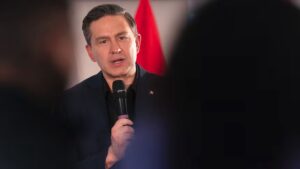
Instead of controlling the narrative, the governments allowed a vacuum to develop, one that was quickly filled by speculation, criticism and political attacks. Journalists demanded details that were not forthcoming, while federal Conservative leader Pierre Poilievre seized upon the uncertainty as evidence that the announcement was little more than political theatre.
Federal Conservative Party Leader Pierre Poilievre speaks out against the federal government’s proposal to purchase vacant condos, during a town hall meeting in Duncan, B.C.
It was, without question, one of the poorest communications roll-outs either the Carney government or the Eby government has experienced.
And yet, buried beneath the muddled messaging was an idea that deserves considerably more attention than it has received.
In the days following the announcement, Mr. Eby provided the missing details.
Contrary to widespread assumptions, the condominiums would not be concentrated in Metro Vancouver, or even in British Columbia’s largest urban centres. Rather, they would largely be acquired in smaller communities throughout the province where residential developments have stalled or failed altogether.
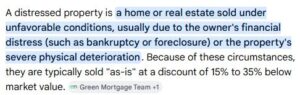
Many of these homes would be what the real estate industry describes as “distressed properties.”
These are condominiums sold under unfavourable financial circumstances because developers have encountered severe financial difficulties, entered receivership, declared bankruptcy or been forced into foreclosure, with licensed insolvency trustees disposing of assets well below their original market value.
Such circumstances create unusual opportunities for public acquisition.
Rather than paying retail prices, governments can often acquire these units at discounts ranging from 15% to 35% below market value.
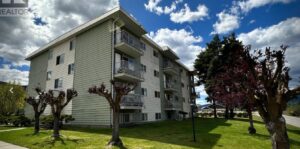
Completed, distressed vacant condo building ready for sale below market value in Grand Forks, B.C.
Communities such as Grand Forks, and other smaller centres throughout the Okanagan, the Kootenays and Vancouver Island — including Duncan, Port Alberni and Campbell River — contain developments that fit this description.
These are not speculative purchases. They are existing homes. Completed homes. Vacant homes. Homes waiting for occupants.
That distinction matters enormously.
A typical condo construction timeline spans 2.5 to 5 years from initial sales launch to final move-in, a timeline that can stretch even longer due to complex excavation, permitting, and labour demands.
Governments have become accustomed to announcing ambitious affordable housing projects that require years of planning, environmental reviews, permitting, financing and construction before a family receives keys to a front door.
Typically, that timeline stretches three to four years, often longer.
Premier David Eby has argued that purchasing distressed condominium developments offers a dramatically different proposition.
The homes already exist;
The infrastructure is already built;
Water, sewer, electrical service and roads are already in place;
Families could move in almost immediately;
The economics are equally compelling.
Constructing affordable rental housing has become extraordinarily expensive. Labour shortages, escalating material costs, financing expenses and municipal development charges have pushed construction costs to unprecedented levels.
Acquiring completed condominiums at significant discounts represents substantially better value for taxpayers while simultaneously rescuing developments that otherwise risk remaining empty for years.
The most important aspect of this initiative has received the least attention.
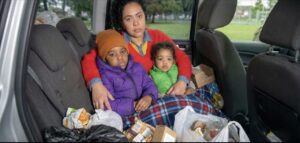
Behind every vacant condominium sits the possibility of a family whose life could be transformed. Not every homeless family sleeps on sidewalks. Many spend months couch surfing between relatives and friends. Some move weekly from one borrowed bedroom to another. Others sleep in aging recreational vehicles parked wherever municipal bylaws permit. Still others live in automobiles, desperately trying to shield children from the instability surrounding them.
For these families, housing is not merely shelter. Housing restores routine. It restores childhood. It restores educational stability, better physical health and improved mental health. It restores dignity.
The proposed rent-to-own model carries particular promise because it offers something beyond secure tenancy. It offers ownership.
Families who have spent years believing home ownership had become permanently unattainable may finally possess a realistic pathway toward building equity and long-term financial security. That possibility should not be underestimated.
If governments can purchase distressed condo developments substantially below replacement cost, rapidly convert them into affordable rent-to-own housing, and provide stable homes for thousands of families who otherwise face years of uncertainty, then taxpayers receive genuine value, while vulnerable British Columbians receive something infinitely more important than political messaging.
They receive hope.
In an age when political discourse increasingly rewards outrage over solutions, this initiative reminds us that governing still matters. It reminds us that budgets are, ultimately, moral documents reflecting the choices society makes about who deserves opportunity and who deserves security. Governments exist not merely to balance ledgers or score partisan victories, but to solve problems that markets alone cannot resolve. Housing is one of those problems.
We live in anxious times, when too many families have begun to wonder whether stability itself has become a luxury. Against uncertainty, both the B.C. and federal governments are attempting — however imperfectly — to meet the moment.
If vacant homes become places where children sleep safely, parents regain hope, and families begin building lives instead of merely surviving them, then history will remember not the fumbling announcement, but the quiet dignity of thousands of front doors opening onto a better future.