Category Archives: VIFF 2026

#VIFF45 | #NYFF65 | When New York Comes to Vancouver For 11 Days

There is a certain romance to New York in the fall.

The leaves begin to turn. The evenings come earlier. The city seems to acquire an extra layer of electricity. Manhattan becomes, for a few glorious weeks, the cinematic capital of the world as filmmakers, critics, actors, programmers, cineastes and assorted movie obsessives descend upon Lincoln Center for the New York Film Festival.

And then there is Vancouver.

Which, if you are lucky enough to be here during the Vancouver International Film Festival, is not such a bad place to be.

In fact, this year, it may be one of the best places in the world.

For 45 years — essentially from the beginning of VIFF in 1981 — Vancouver and New York have shared films, creating an extraordinary transcontinental cinematic conversation. The relationship was once considerably more complicated than it is today. In the 1990s, when movies arrived in enormous metal film cans, a shared NYFF/VIFF title could become a logistical ballet worthy of its own documentary.

A film might screen in New York on Sunday evening. Almost before the audience had left the theatre, its precious reels would be hustled away for shipment north. Victoria Shipping, then deeply involved in distributing film cans to cinemas throughout British Columbia, would get the reels moving toward Vancouver. By Monday evening, the same movie might be flickering on a VIFF screen.

And then, remarkably, the process would reverse.

The reels would be rushed back to New York for a Tuesday screening.

For VIFF staffers such as the late Cathy Evans and Selina Crammond —the latter who would later become director of Vancouver’s DOXA Documentary Film Festival — this was not romantic at all. It was a logistical nightmare.

Today, thankfully, the movies travel rather more elegantly.

The film can has largely disappeared, replaced by the Digital Cinema Package — those encrypted files residing on a CRU hard drive — and, increasingly, by the instantaneous movement of cinema through high-speed fibre or satellite transmission.

But something more important has remained.

The connection.

And this year, the connection is extraordinary.

A small correction before we begin: the 2026 New York Film Festival is the 64th edition, not the 65th; VIFF 2026 is indeed celebrating its 45th anniversary edition. And what a 45th it is. New York and Vancouver are sharing 23 films, an unusually rich cross-border exchange that makes VIFF 45 feel, in a very real sense, like a West Coast extension of the great New York cinematic conversation.

So, cinéastes of Vancouver, take note.

You don’t have to fly to New York.

This year, New York is coming to you.

THE LONELIEST MAN IN TOWN

Tizza Covi and Rainer Frimmel’s quietly devastating portrait of Austrian blues musician Al Cook is one of those films that seems to have wandered into the festival from another, more tactile age of cinema. Cook, playing a fictionalized version of himself, faces eviction from the apartment that has become an archive of his life — VHS tapes, records, photographs, newspapers, memories. The filmmakers turn the threatened demolition of a building into something larger: a meditation on disappearing cultures, ageing and the terrifying realization that the physical world we knew is being erased around us. The film won the Giuseppe Becce Award and a Special Mention from the Guild of German Arthouse Cinemas at Berlin.

PAPER TIGER

James Gray returns to New York — his spiritual home as a filmmaker — with an atmospheric crime drama starring Adam Driver, Miles Teller and Scarlett Johansson. Set in 1986 Queens and Brooklyn, it begins with an apparently ordinary middle-class family becoming entangled with Russian criminals through an ill-advised business scheme. But Gray, as always, is less interested in crime than in family, loyalty, ambition and the terrible consequences of wanting a better life. NYFF chose it as its Opening Night film, and the festival calls it a “brilliant New York thriller.” Vancouver gets to see why.

ALL OF A SUDDEN

Ryûsuke Hamaguchi, the Oscar-winning director of Drive My Car, has made a 196-minute film about care, mortality, friendship and the strange intimacy that develops between people who might otherwise never have met. Virginie Efira and Tao Okamoto shared the Best Actress prize at Cannes, playing an eldercare director and a terminally ill Japanese playwright. Hamaguchi’s great gift is making conversation feel like action and silence feel like dialogue. All of a Sudden is patient, humane and quietly immense — exactly the kind of film for which festivals were invented.

BEHEMOTH!

Tony Gilroy, director of Michael Clayton and creator of Andor, steps away from political espionage for a surprisingly personal drama about music. Pedro Pascal plays Alex, a brilliant cellist whose career and personal life have come apart, forcing him back toward family, memory and the unfinished business of his past. NYFF selected Behemoth! as its Centerpiece and describes Pascal’s performance as the best of his career. The film’s nine-composer musical collective gives the picture an unusually rich sonic architecture. It is a movie about music that understands something crucial: sometimes the score isn’t accompanying the emotion. The score is the emotion.

MINOTAUR

Andrey Zvyagintsev’s return is one of the major events of the festival year. The Russian master — now living in exile — won the Grand Prix at Cannes for this dark, mordantly funny tale of corruption, patriarchy and political power. Set in Russia in 2022, Minotaur follows a wealthy businessman whose suspicion that his wife is having an affair collides with an increasingly ominous political reality. Zvyagintsev invokes Claude Chabrol, but the film’s moral atmosphere is unmistakably his own: chilly, elegant, furious. After Leviathan and Loveless, this is another devastating anatomy of a society eating itself alive.

EVERYTIME

Sandra Wollner’s Everytime won the Un Certain Regard Prize at Cannes, and it is one of those films whose description cannot prepare you for its emotional effect. Following a mother, younger daughter and boyfriend after a shocking accident, Wollner creates a suspended world in which grief seems to dissolve the boundaries between memory, reality and dream. The film eventually travels to Tenerife, where the past and present become almost indistinguishable. Gregory Oke’s cinematography is breathtaking, but the real achievement is tonal: Everytime feels like grief itself — beautiful, disorienting, tender and impossible to escape.

POSSIBLE LOVE

Lee Chang-dong’s first film since Burning is already one of the year’s essential Korean films. Two couples from radically different economic circumstances become connected when a wealthy documentary filmmaker turns her camera toward a working-class couple whose lives have been shattered by a factory layoff. The result is part relationship drama, part class critique, part inquiry into the ethics of documentary filmmaking. It won the Silver Lion at Venice and is South Korea’s submission for the 2027 Academy Awards. Lee has always understood that social inequality becomes most powerful when it enters the bedroom, the dining room and the intimate spaces of ordinary lives.

CLUB KID

Jordan Firstman’s feature début is one of the year’s great surprises: a wildly funny, sometimes outrageous New York comedy that gradually reveals a surprisingly tender heart. Firstman plays Peter, a washed-up thirtysomething club promoter whose hedonistic existence is interrupted by the arrival of the 10-year-old son he never knew he had. Suddenly, the professional party boy is responsible for another human being. NYFF calls it “wildly funny and remarkably assured,” and that seems exactly right. Club Kid begins as satire and ends somewhere much more affecting: as a story about the possibility that growing up can happen very, very late.

FATHERLAND

Paweł Pawlikowski’s Fatherland is one of those films that makes black-and-white cinematography feel less like a stylistic choice than a moral necessity. Set in 1949, it follows Nobel laureate Thomas Mann and his daughter Erika traveling through a Germany still physically and morally shattered by the war. Sandra Hüller is extraordinary as Erika, simultaneously daughter, conscience and prosecutor. Pawlikowski won Best Director at Cannes, while Łukasz Żal’s austere images recall Ida and Cold War. Poland’s Oscar submission, Fatherland is a miniature — just 82 minutes — that somehow contains an entire country’s struggle with memory and guilt.

DAO

Alain Gomis’ Dao is cinema as ritual. Two ceremonies — a mourning gathering in Guinea-Bissau and a wedding in Paris — become intertwined in a formally adventurous film that moves between documentary and fiction, memory and performance, grief and celebration. Gomis’ camera observes Black French women speaking about identity and history before plunging us into ceremonies where life and death, tradition and modernity, performance and reality become inseparable. At 192 minutes, Dao asks for patience, but rewards it with something increasingly rare: the sensation of discovering a cinematic language rather than merely watching a movie.

ONCE UPON A TIME IN HARLEM

This may be the most precious piece of cinema in the entire 23-film exchange. In 1972, legendary filmmaker William Greaves assembled luminaries of the Harlem Renaissance at Duke Ellington’s townhouse and filmed their extraordinary conversation. More than half a century later, his son David Greaves has transformed that footage into a living archive of Black American intellectual and artistic life. The film has already won the Library of Congress Lavine/Ken Burns Prize for Film, worth $200,000. It is not simply a documentary. It is time travel — an invitation to sit in a room with people history has taught us to revere.

ROSE

Sandra Hüller is having one of those years actors dream about. In Rose, she plays a 17th-century woman who disguises herself as a male soldier after the Thirty Years’ War and attempts to build an entirely new life. Markus Schleinzer’s austere, beautifully composed historical fable won Hüller the Silver Bear for Best Leading Performance at Berlin and became Austria’s Oscar submission. The film is about gender, faith and intolerance, but also about the intoxicating possibility of becoming someone society has told you that you cannot be. Hüller gives the role an extraordinary mixture of severity, vulnerability and defiance.

CLARISSA

Virginia Woolf’s Mrs. Dalloway travels to contemporary Nigeria in this ambitious, tender adaptation from twin filmmakers Arie and Chuko Esiri. Sophie Okonedo plays Clarissa, preparing for an elaborate party while memories of old loves and unresolved emotions rise to the surface. The parallel story of a traumatized soldier brings Woolf’s exploration of interiority into the contemporary realities of Nigeria. It is an audacious transplantation: rather than treating Woolf as sacred literary property, the Esiris discover the universality underneath the geography. The result is intimate, political and unexpectedly moving.

FJORD

Cristian Mungiu has done it again. The Romanian master won his second Palme d’Or at Cannes for this searing drama about a Romanian family who immigrates to Norway and finds itself under suspicion after an allegation of child abuse. Sebastian Stan and Renate Reinsve give performances of remarkable restraint as parents trapped between cultures, religious belief and the increasingly judgmental gaze of their adopted community. Mungiu refuses easy answers. What begins as a question of parental responsibility becomes a much more disturbing examination of prejudice, cultural difference and the moment when care becomes control. This is precisely the kind of morally uncomfortable cinema that stays with you long after the lights come up.

THE DREAMED ADVENTURE

Valeska Grisebach’s The Dreamed Adventure won the Jury Prize at Cannes and begins like one kind of film before quietly becoming another. An archaeologist returns to a Bulgarian border town searching for a vanished former lover. Gradually, the story slides into the territory of crime, masculinity and violence. Grisebach’s great achievement is the way she combines vérité observation with genre filmmaking. Like her acclaimed Western, the movie understands that borders are never simply geographical. They are emotional, cultural and psychological. At 170 minutes, it is deliberately immersive — a film that asks you to cross the border with it.

TENDER LOVING CARE

Mike Leigh may be approaching the end of his extraordinary filmmaking career, but Tender Loving Care suggests that his gaze remains as humane and penetrating as ever. Set in post-Brexit England, the film follows social workers Amy and Rosie as they struggle to care for people abandoned by increasingly fragile institutions. Leigh avoids easy political preaching, instead constructing a mosaic of lives — funny, desperate, stubborn, loving. The performances are superb, the humour wonderfully dry, and the compassion never sentimental. It is, perhaps, a fitting film for a filmmaker who has spent decades insisting that ordinary people are every bit as worthy of our attention as kings, politicians and movie stars.

BITTER CHRISTMAS

Pedro Almodóvar turns the cinema of autofiction inside out in Bitter Christmas, a deliciously complicated hall of mirrors about artists stealing from life — and then discovering that life may have been stealing from them all along. Bárbara Lennie and Leonardo Sbaraglia play filmmakers whose work becomes increasingly entangled with the lives of their friends and collaborators. The result is simultaneously comedy, melodrama, self-parody and confession. NYFF describes it as a meditation on the artist’s relationship with fiction and reality; VIFF calls it a “mischievously meta mea culpa.” Both are right. Almodóvar has spent five decades turning emotional chaos into cinematic colour, and he remains magnificently himself.

THE ONLY LIVING PICKPOCKET IN NEW YORK

There could scarcely be a more New York movie in this collection. John Turturro plays Harry Lehman, an ageing Bronx pickpocket whose profession has become almost obsolete in a cashless, digital city. When a theft goes wrong, Harry finds himself racing through the boroughs trying to repair the damage. Noah Segan’s film is both crime story and elegy — for an older New York, an older kind of movie and an older kind of human connection. NYFF calls it an “elegant love letter to New York.” RogerEbert.com calls it a film attempting to conjure the spirit of an era. It succeeds beautifully.

THE DEBUT

Jesse Eisenberg’s The Debut — VIFF 45’s Opening Gala — gives Julianne Moore the kind of role actors live for. She plays Mona, an overlooked middle-aged housewife who impulsively auditions for a community musical and finds herself transformed by the stage. Paul Giamatti plays the theatre director who may be mentor, bully, genius or all three. Eisenberg walks a remarkable line between satire and genuine affection, skewering community theatre while celebrating the strange liberation that can happen when ordinary people suddenly find themselves illuminated by a spotlight. The result is funny, uncomfortable, unexpectedly moving — and a terrific way to open a festival.

NOWHERE TO LAY MY EYES

Hong Sangsoo’s 35th feature is another of those deceptively simple films in which almost nothing happens — and everything happens. A filmmaker returns to Jeju Island to visit her estranged mother, encountering a new stepfamily and the uncomfortable emotional geography of old wounds. Hong’s stripped-down visual style allows the smallest shifts in conversation to become revelations. The film won Best Direction at Locarno, while Kim Min-hee took the festival’s Best Performance prize. At only 72 minutes, it is a miniature Hong Sangsoo masterpiece: awkward, funny, melancholy and quietly profound.

9 TEMPLES TO HEAVEN

Sompot Chidgasornpongse’s feature début takes a simple premise and turns it into a spiritual road movie. After a fortune teller warns that his elderly mother may soon die, Sakol gathers his family and sets out on a pilgrimage to nine Buddhist temples in a single day. The film combines family squabbling, Thai architecture, ritual and mortality with the patient observational style associated with the filmmaker’s mentor, Apichatpong Weerasethakul. Selected for Cannes’ Directors’ Fortnight and Thailand’s Oscar submission, it is less a conventional narrative than a journey into the sacred and the everyday. A film about death that is, paradoxically, deeply alive.

THE DIARY OF A CHAMBERMAID

Radu Jude’s modern reimagining of Octave Mirbeau’s The Diary of a Chambermaid is quintessential Jude: political, mischievous, self-aware and quietly furious. Ana Dumitrașcu plays Gianina, a young Romanian woman working for a wealthy French family while yearning to return to her daughter in Romania. The great twist is that Gianina is also rehearsing the role of a chambermaid in an amateur theatrical adaptation of the very novel whose world she inhabits. Jude turns class resentment into comedy, then lets the comedy curdle. With a 94% critics’ score on Rotten Tomatoes, it is among his more warmly received recent films.

LA GRADIVA

Marine Atlan’s feature debut is one of the great discoveries of Cannes 2026. A school trip takes a group of French teenagers to Naples and Pompeii, where the ancient landscape becomes the backdrop for a contemporary eruption of desire, jealousy, class anxiety and adolescent cruelty. Atlan, working as her own cinematographer, won the Grand Prize at Critics’ Week, and the film’s precision is astonishing. Every glance, gesture and silence seems deliberately placed. What begins as a school trip becomes something closer to a coming-of-age fever dream, in which the ruins of Pompeii become a metaphor for young people discovering that desire can be as dangerous as Vesuvius.


TWO CITIES. ONE CINEMA.

There is something wonderfully old-fashioned about this relationship between New York and Vancouver.

Before streaming. Before the infinite libraries of films available at the touch of a button. Before a movie could cross an ocean without anybody physically touching a film can. There was simply the movie, the screen, the audience — and the people desperately trying to get the movie from one city to another.

New York would see something first.

Vancouver would wait.

Then the reels would arrive, battered and precious, carrying with them the faint romance of another city: Manhattan streets after midnight, Lincoln Center reflected in rain, the conversations in Greenwich Village cafés, the arguments among critics outside a theatre, the whispered conviction that this movie — this particular movie — might be the one everyone remembers.

And now, 45 years after VIFF began, the miracle is that we don’t need to cross the continent to experience that feeling.

The cinema comes here.

It arrives at the Vancouver Playhouse, the Park, the Rio, International Village, the Fifth Avenue, SFU Woodwards, the VIFF Centre. It arrives in the darkness, carried not in steel canisters but in streams of data, transformed once again by the oldest technology of all: a room full of strangers staring together at a rectangle of light.

That is the real romance of VIFF.

New York may have the skyline.

It may have Lincoln Center.

It may have the autumn leaves and the taxis and the midnight screenings and the feeling that somewhere around the corner, Martin Scorsese or Paul Schrader or some impossibly elegant European filmmaker might be sitting at the next table.

But Vancouver has the mountains.

Vancouver has the rain.

And, for eleven days in October, Vancouver has New York.

More precisely, it has the cinema that New York has chosen to embrace.

Twenty-three films crossing the continent. Twenty-three little acts of cinematic diplomacy. Twenty-three reminders that movies have always been travelers, moving from country to country, festival to festival, audience to audience — carrying stories with them like passports.

Once upon a time, those stories traveled in film cans.

Today they travel through fibre-optic cables.

But when the lights go down, nothing has really changed.

There is still a screen.

There is still darkness.

There is still the extraordinary hush that falls over an audience just before the first image appears.

And somewhere, thousands of kilometres away, another audience may be watching the very same image.

New York.

Vancouver.

Two cities separated by a continent, joined by a beam of light.

And for a few glorious weeks each autumn, if you listen carefully enough, you can almost hear Manhattan breathing through the speakers of a Vancouver cinema.

You don’t have to go to New York.

New York has already come to you.


#VIFF2026 | Two More Oustanding, Must-See Films Screening at the 45th Annual Vancouver International Film Festival

Andrey Zvyagintsev’s Minotaur

Minotaur: Andrey Zvyagintsev’s Chilling Russian Masterpiece

There are filmmakers who make movies. And then there are filmmakers who seem to stare directly into the soul of a country and, with an almost unbearable patience, wait for its darkest secrets to reveal themselves.

Andrey Zvyagintsev is one of the latter.

With Minotaur, winner of the Grand Prix at this year’s Cannes Film Festival, the Russian master has created another unmistakably political, bleak and methodical work — a film that holds you in its grip from beginning to end.

At first glance, Minotaur appears to be a domestic thriller.

Gleb (Dmitriy Mazurov), a wealthy logistics-company owner living in provincial Russia, is under mounting professional pressure as the war in Ukraine reaches into every corner of civilian life. Local authorities demand that he provide 14 employees for military service. Unwilling to sacrifice his existing workforce, Gleb recruits unsuspecting truck drivers with promises of lucrative employment, knowing full well that they will soon be sent to war.

At the same time, Gleb discovers — or believes he has discovered — that his wife Galina (Iris Lebedeva) is having an affair. Suddenly, the pressures of business, marriage, family and war collide.

And that is where Zvyagintsev’s genius becomes apparent.

Because Minotaur is not really about choosing between a political thriller and an erotic thriller. It is about recognizing that, in a morally diseased society, there is no such choice. The personal is political. The political is personal. And, most damningly, we can never deal with one crisis at a time.

Mazurov is extraordinary as Gleb, a man whose outward confidence masks an almost bottomless moral vacancy. Lebedeva is equally remarkable as Galina, giving the film a quietly devastating emotional centre. Together they inhabit a marriage that feels less like a relationship than a sealed chamber in which privilege, resentment, desire and fear have been slowly accumulating for years.

Zvyagintsev’s filmmaking is icily exacting. His camera waits. And waits. And waits some more. Minotaur is morbidly humorous at times, but its humour only makes the surrounding dread more unsettling. Shot with extraordinary patience, the film allows latent anxieties to creep gradually to the surface.

The film’s midway turning point is especially bracing. What initially appears to be one more ugly consequence of Gleb’s private predicament suddenly becomes something much larger — an eruption of violence that propels the narrative forward while exposing the corruption at the heart of the Russian state.

This is an urgent film, yet remarkably restrained.

Searingly political yet controlled and understated, Minotaur is a denunciation of the Russian state that is never spelled out in so many words, but expressed through intricate layers of irony. Russia under Vladimir Putin is not merely criticized; it is rendered as an amoral ecosystem in which ordinary people have learned to accommodate corruption, violence and complicity.

Zvyagintsev had to make the film outside Russia. Unable to shoot in his homeland, he filmed in Latvia, using a Latvian town to stand in for provincial Russia. Given the film’s subject matter and its uncompromising portrait of Putin-era Russia, it is difficult to imagine the Kremlin permitting such a production to be made there.

The audacity of Minotaur lies in its oscillating sprawl.

Against the backdrop of a war that has blotted out almost everything else, Zvyagintsev somehow makes room for a bourgeois love triangle, corporate venality, family dysfunction, murder and the machinery of state violence.

The result is a thriller about corruption that becomes a thriller about corruption of the soul.

Zvyagintsev sets his own deliciously ink-black stamp on Claude Chabrol’s La Femme Infidèle, the 1969 erotic thriller on which the film is loosely based. Yet he deliberately flattens both the eroticism and the thrills for much of Minotaur, a carefully judged gambit that makes the eventual nudity and violence land with considerably greater force.

This is Zvyagintsev at his most devastating: patient, furious, darkly funny and morally clear.

Minotaur doesn’t roar.

It waits.

And then it strikes.

VanRamblings Grade: A. A quietly devastating and lacerating look inside Putin’s corrupt Russian state, told as a personal — yet still political —  story of betrayal.

There are two more scheduled screenings of Minotaur at VIFF 45, this upcoming Friday at 8:30 PM, at the Lindsay Family Stage at Granville Island.

And, Sunday October 11th, 2:30 PM, at the Vancouver Playhouse.

Peter Farrelly’s I Play Rocky


Sometimes you walk out of a movie knowing you have just seen a good film.

And sometimes you walk out knowing you have just seen a hit.

I Play Rocky is a hit.

Not merely a respectable little biographical drama about the making of Rocky, not simply another Hollywood movie about Hollywood, but the kind of genuine crowd-pleaser that sends audiences out of the theatre grinning, talking, arguing over their favourite scenes — and, inevitably, telling everyone they know that they absolutely have to see it.

Word of mouth is going to send I Play Rocky into the stratosphere!

Directed by Oscar-winner Peter Farrelly (Green Book), this wonderfully entertaining film tells the improbable story behind the making of Rocky: how a struggling young actor named Sylvester Stallone, repeatedly told no by Hollywood, refuses to surrender either his screenplay or his insistence that he play Rocky Balboa himself.

It is, in other words, the ultimate underdog story about the making of the ultimate underdog movie.

And Farrelly knows exactly what he has.

The brilliance of I Play Rocky is that we already know the ending. We know Rocky will get made. We know Stallone will become a star. We know the movie will become a cultural landmark. We know what is coming.

And yet Farrelly makes us care desperately about every seemingly impossible obstacle along the way.

Anthony Ippolito is sensational as Stallone. This is a career-defining performance — not an impersonation, but an extraordinarily charismatic recreation of a young man possessed by the belief that his life is waiting for him on the other side of one more locked door. Ippolito captures Stallone’s physicality, voice, vulnerability and sheer stubbornness with astonishing precision.

AnnaSophia Robb is superb as Sasha, Stallone’s girlfriend and eventual wife, giving the movie its emotional heartbeat. Sasha believes in him with all her heart, even when almost everyone else believes he is deluding himself. Robb brings warmth, intelligence and genuine emotional force to a role that could easily have been reduced to supportive-girlfriend shorthand.

Then there is Matt Dillon, almost unrecognizable as Stallone’s father, Frank Sr., whose crazed, unsupportive presence gives the film another layer of tension. Tracy Letts, meanwhile, is once again terrific as the kind of obstacle — half villain, half immovable force of Hollywood reality — that every great underdog movie requires.

And Canadian actor Stephan James as Carl Weathers? Fantastic.

There is palpable magic here.

I Play Rocky captures the chaos, setbacks and unlikely collaborations behind an independent production that somehow became one of the defining movies of the 20th century. But more importantly, it understands what made Rocky so beloved in the first place: hope, ingenuity, persistence and the almost irrational belief that you might just be able to change your life if you refuse to give up.

Stallone is a man battling homelessness, rejection and obscurity, a man who finds love and writes his way into a cultural phenomenon. The parallels are almost too perfect. Yet Farrelly never allows the story to become syrupy. There is a ton of wit and charm here, along with an infectious sense of movie-loving joy.

This is the feel-good film of the year.

And yes, I am going to go out on a limb: come January, when the Academy announces its Oscar nominations, don’t be surprised if I Play Rocky is sitting there with multiple nominations — Best Picture, perhaps Best Original Screenplay, potentially Best Director for Farrelly, and acting recognition for Robb, Dillon, Ippolito and James.

The film has that has that rare quality audiences recognize immediately.

It makes you feel good about movies.

Little wonder its November theatrical release is positioned to carry the film into the holiday season, when word of mouth can turn a sleeper into a phenomenon. The film already finished as first runner-up for the 2026 TIFF People’s Choice Award, an encouraging sign of exactly the audience affection it is likely to generate.

I Play Rocky is a resounding success — funny, touching, exuberant and enormously entertaining.

It doesn’t just tell us how Rocky was made.

It reminds us why we go to the movies in the first place.

And that, in a year desperately in need of a little cinematic optimism, may be the most wonderful thing of all.

VanRamblings Grade: A+. The feel good film of 2026 that is not a cheat, but a genuinely inspirational story that reminds us: we can create the conditions of our own lives.

There in one final screening of I Play Rocky, this upcoming Sunday, October 11th, 6:15 PM, at The Rio Theatre. You are going to want to arrive early.

#VIFF2026 | Two Outstanding Films That Took Cannes by Storm, Now Screening at VIFF

Fjord

Fjord — A Moral Avalanche at the End of the World

There are films that win the Palme d’Or, and then there are films like Cristian Mungiu’s Fjord, movies that seem almost preordained to carry the weight of such a prize.

This is filmmaking of extraordinary moral ambition: riveting, nuanced, cathartic and profoundly unsettling, a slow-burning epic that burrows beneath the skin until its questions become our questions, its anxieties our anxieties, its moral dilemmas impossible to shake.

Set in a remote Norwegian fjord, Fjord follows a devout Romanian Norwegian couple, Mihai and Lisbet Gheorghiu, who relocate to a small community where their children form a friendship with the children of their neighbours. When adolescent Elia arrives at school bearing bruises, however, the community begins asking increasingly uncomfortable questions about the Gheorghius’ parenting, their religious beliefs and the boundaries between cultural difference and unacceptable behaviour.

And Mungiu — whose 4 Months, 3 Weeks and 2 Days remains one of the great Palme d’Or winners of the modern era — is having none of the easy answers.

Instead, Fjord becomes a gripping moral and social quandary, a film that refuses to tell us where sympathy should end and judgment begin. What constitutes good parenting? When does intervention become persecution? How much cultural difference can a liberal society accommodate before its commitment to tolerance begins colliding with its responsibility to protect children? And who gets to decide?

These are thorny questions, and Mungiu grapples with them with an almost unnerving patience.

Shot in icy widescreen compositions against the stark beauty — and terrifying avalanches — of Norwegian precipices, Fjord is a brilliant epic of landscape and conscience. The mountains are magnificent, but they are hardly comforting. They loom over the characters like indifferent gods while Mungiu meticulously piles one ethical complication upon another. The film sustains nail-biting tension across its 146-minute running time through meticulous pacing, confirming the Palme d’Or laureate as one of contemporary cinema’s sharpest moral observers.

The central performances by an outstanding Sebastian Stan and an absolutely riveting and revelatory Renate Reinsve  are extraordinary precisely because nobody is reduced to a position in an argument.

Mungiu allows everyone their humanity, their contradictions, their fears and their blind spots. Variety called the result “riveting,” praising the ensemble’s careworn nuance, while The Telegraph described the film as a “slow-burn provocation” that confronts the contradictions of multiculturalism and public-sector institutions with unflinching seriousness.

What makes Fjord so powerful is that it never settles for the obvious culture-war narrative. It becomes a richly compelling and provocative culture war drama precisely because it understands that real culture wars are rarely about heroes and villains. They are about frightened people, competing obligations, incompatible understandings of responsibility and the terrifying possibility that everybody involved may believe they are doing the right thing.

There is something almost spiritual about the film, too.

Fjord is a triumphant work that tugs at the spiritual and soulful in all of us — regardless of nation, creed, faith, or the rejection of all three. Its tragic examination of the boundaries of acceptable behaviour, and of caregiving itself, unfolds as a meditation on what happens when private belief collides with public responsibility.

This is cinema that refuses complacency.

It watches. It waits. It tightens the screws.

And then, like an avalanche descending from those magnificent Norwegian heights, it leaves you wondering whether society can ever distinguish between protecting the vulnerable and protecting itself.

Fjord is not merely a Palme d’Or winner.

It is a moral earthquake.

Grade: A | A harrowing, provocative and controversial — yet always humane and moving — epic for the modern age, this Palme d’Or winner delivers in spades.

Fjord has one more screening at VIFF, on Wednesday, October 7th at 9 PM, at the Vancouver Playhouse.

Club Kid

Club Kid — Jordan Firstman Finds the Heart Beneath the Glitter

Jordan Firstman has spent years cultivating an online persona built on irony, provocation, bitchiness and the gleeful absurdity of internet culture. Then he went to Cannes with Club Kid and did something genuinely unexpected: he grew a heart.

Written, directed by and starring Firstman, Club Kid is a crowdpleasing queer family drama that somehow transforms the debris of New York’s hedonistic gay nightlife — drugs, parties, bad decisions, emotional wreckage and spectacularly questionable behaviour — into something earnest, heartwarming and surprisingly moving.

Firstman plays Peter, a washed-up New York party promoter whose carefully constructed life of perpetual nightlife is detonated by the arrival of a 10-year-old son he never knew he had. What follows is Peter’s fumbling, frequently hilarious and occasionally heartbreaking journey toward fatherhood.

And somehow, it works.

Indeed, it works gloriously.

Club Kid is an acidic, spikily funny portrait of the city’s hedonistic gay scene, but beneath all the bitchy humour is a celebration of empathy, community and the unconditional love between a father and his son. Firstman finally shirks the ironic pose he has taken online for years to emerge as a sincere storyteller with heart as much as humour. IndieWire specifically praised this transformation, describing a filmmaker who moves beyond his online persona to reveal himself as a storyteller of genuine sincerity.

The movie promises — and absolutely delivers — scenes of copious drug taking, gross-out comedy, chaotic nightlife and the sort of behaviour that makes responsible parenting manuals spontaneously combust. Yet Firstman understands the most important trick in the cinematic playbook: make us laugh first, then make us care.

By the third act, the emotional payoff is both well-earned and devastating.

Firstman’s performance is particularly bracing. There are moments when the armour falls away and Peter becomes vulnerable, frightened and utterly human. That vulnerability gives Club Kid its emotional force. AwardsWatch praised Firstman’s ability to strip away his persona for moments of “bracing vulnerability,” while The Film Stage singled out the film’s third-act payoff as devastating.

The supporting cast adds further pleasure. Cara Delevingne, used sparingly and effectively, plays Peter’s cutting business partner, while The Night Manager’s Diego Calva is wonderfully sympathetic as an extremely obliging social worker. Together with Firstman’s wonderfully chaotic ensemble, they make Club Kid nothing if not easy to like.

And then there is the film’s unabashed sweetness.

That may be Club Kid’s greatest surprise.

This is a bracing, vulnerable, redemptive movie alive with warmth. It is a celebration of unconventional lifestyles without pretending that unconventional lives are uncomplicated. It offers a vivacious look at the realities of parenting — especially parenting when you have absolutely no idea what you are doing — while insisting that love can arrive late, messily and from the least expected direction.

There is something wonderfully old-fashioned about its emotional generosity.

Club Kid wants us to believe people can change.

More importantly, it wants us to believe that they can love one another while they are changing.

And by the time Peter finally begins to understand what being a father might mean, Firstman has pulled off something considerably more difficult than a joke.

He has made us feel.

VanRamblings’ Grade: A– | A moving, tender drama set in New York’s trans & queer community, unprecedented in scope. A film that surprises while warming the heart.

Club Kid has one more screening at VIFF, this upcoming Monday, October 5th, 9:15 PM, at The Park Theatre on Cambie Street.

#VIFF2026: Vancouver’s 11-Day Passport to the World

There is something faintly ridiculous about living in Vancouver and complaining that “there’s nothing to do.”

Nothing to do?

For 11 days every October, Vancouver becomes one of the great movie cities of North America. More than 160 films descend upon theatres scattered across the city.

Filmmakers arrive from around the world. Actors, critics, programmers, students, obsessives and people who simply love sitting in a dark room while somebody else’s story unfolds gather together.

And then, 11 days later, we go back to pretending that Vancouver is a city where nothing ever happens.

Enough of that.

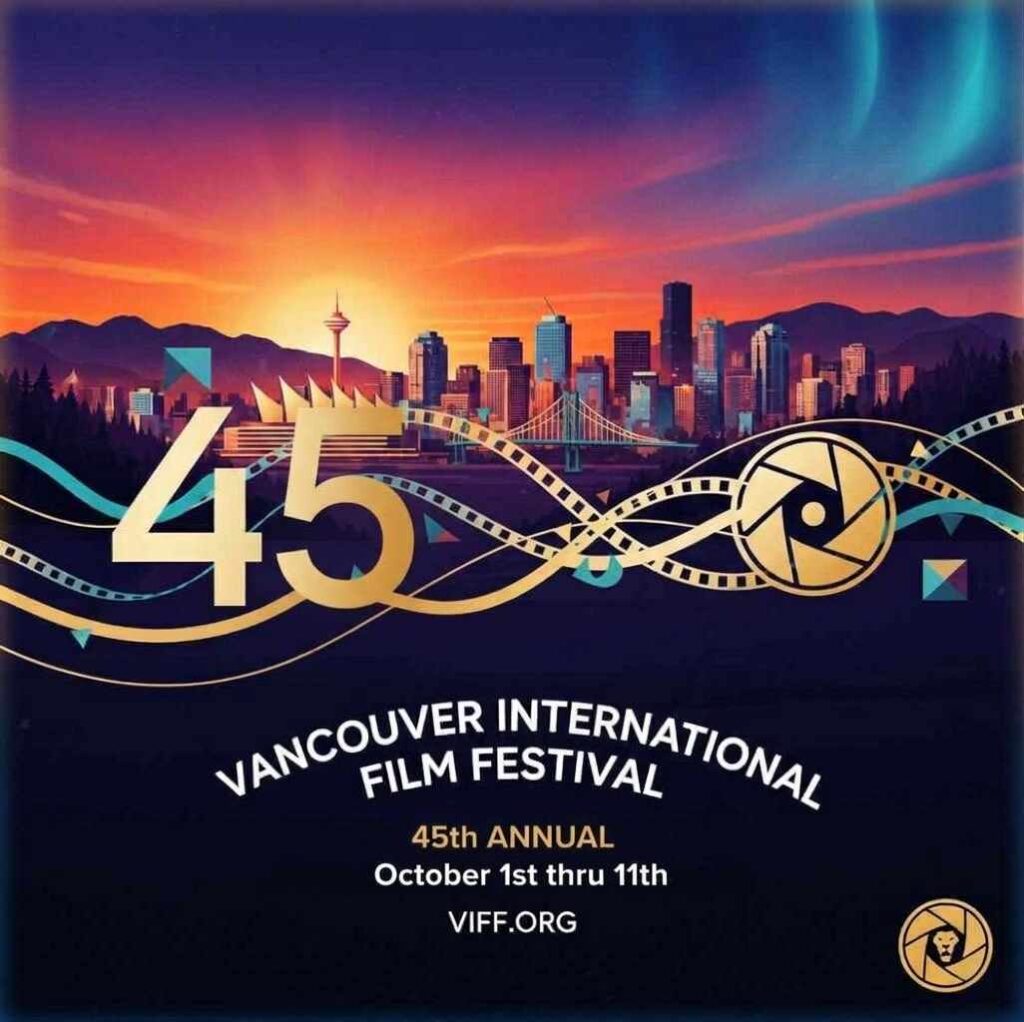
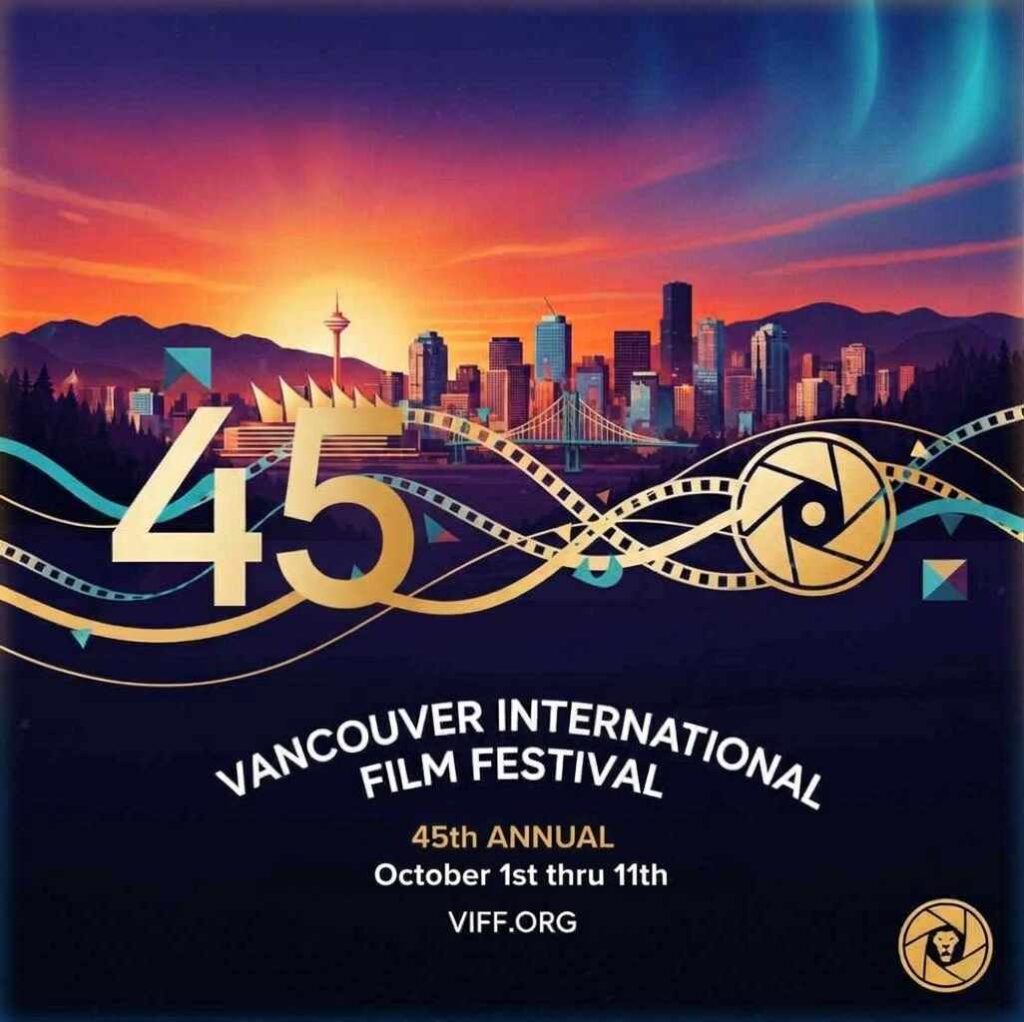
The 45th annual Vancouver International Film Festival, running October 1st through October 11th, is back — and this year’s edition is shaping up to be one of those festivals where the problem isn’t finding something worth seeing.

The problem is deciding what you can possibly miss.

VIFF’s 2026 programme brings together more than 160 features and dozens of shorts, alongside VIFF Talks, live performances, special events, industry programming and conversations with some of the people actually making the movies and television that shape our culture. VIFF itself describes the festival as a showcase of exceptional cinema from around the globe, and the breadth of the programme makes that description difficult, near impossible, to dispute.

But let’s start where any serious cinephile should start:

The Galas and Special Presentations

This is the section where VIFF essentially says: Here are the movies everybody will be talking about.

And, frankly, it has put together a hell of a list.

THE PALME D’OR COMES TO VANCOUVER

Cristian Mungiu’s Fjord is the obvious place to begin.

The Romanian filmmaker — already a Palme d’Or winner for 4 Months, 3 Weeks and 2 Days — returns with another morally complicated drama, this time about a conservative family confronting the progressive values of a Norwegian community.

Sebastian Stan and Renate Reinsve lead the cast, and the film’s central conflict concerns parenting, religion, state scrutiny and the increasingly uncomfortable question of where tolerance ends.

This isn’t the sort of movie that tells you who the good guys are.

Thank God.

Mungiu is interested in the uncomfortable grey territory where decent people make questionable decisions and societies convinced of their own righteousness discover that tolerance can become a very complicated thing indeed.

Fjord won the Palme d’Or at Cannes. It is exactly the kind of movie that makes a film festival matter.

And, yes, this is one of the films VanRamblings would put very high on the “see it before everybody starts talking about the Oscars” list.

THEN THINGS GET DARK

If Fjord is morally knotty, Andrey Zvyagintsev’s Minotaur is downright ominous.

Set against the fallout from Russia’s invasion of Ukraine, the film follows a corporate executive attempting to keep the consequences of war outside his home — until his wife’s infidelity sends his carefully constructed life crashing down.

Zvyagintsev won the Grand Prix at Cannes, and Minotaur has the kind of icy, mythic quality that makes a domestic thriller feel considerably larger than the marriage at its centre.

This is a movie about betrayal.

But it is also about power.

And corruption.

And a political culture in which violence doesn’t remain outside the front door simply because the protagonist would prefer it to.

If Minotaur sounds bleak, well, Zvyagintsev isn’t exactly known for making Paddington.

But he is one of contemporary cinema’s great observers of what happens when private lives collide with rotten political systems.

VIFF gives Vancouver audiences three opportunities to see it, including screenings at The Park Theatre, Granville Island and the Vancouver Playhouse.

PAWLIKOWSKI’S POSTWAR EUROPE

Then there’s Fatherland, from Paweł Pawlikowski.

Pawlikowski won the Oscar for Ida, received three Academy Award nominations for Cold War, and has established himself as one of the most visually distinctive filmmakers working today.

Fatherland may be his most explicitly historical film.

Nobel laureate Thomas Mann returns to postwar Germany with his daughter Erika, confronting the moral wreckage of a country struggling to understand what it has become.

Shot in exquisite black and white, Fatherland won Pawlikowski the Best Director prize at Cannes.

The subject is Germany.

But the questions are universal:

What does it mean to return home?

What does it mean to be complicit?

Can a country reckon with its past without rewriting it?

And can a family?

Sandra Hüller, one of European cinema’s most extraordinary actors, is here too.

Put this one on your calendar.

CANNES ALSO GAVE US CLUB KID

Then, thankfully, VIFF gives us Club Kid, Jordan Firstman’s audacious début.

A hedonistic New York club promoter suddenly discovers that he has a 10-year-old son he never knew existed.

Cue chaos.

The premise sounds like the setup for a Hollywood comedy.

Firstman has something considerably stranger in mind.

Club Kid mixes queer New York nightlife, comedy, parenthood, redemption and unexpected tenderness. It is exuberant without being empty, funny without being disposable.

Cannes embraced it.

VanRamblings suspects Vancouver will too.

And this is where the great pleasure of VIFF begins.

You come for the Palme d’Or winner.

You stay because some filmmaker you’ve never heard of knocks you sideways.

MIKE LEIGH’S POSSIBLE FAREWELL

There is another film in this year’s Special Presentations that carries an entirely different kind of weight.

Tender Loving Care, from Mike Leigh.

Leigh is one of the great humanist filmmakers of the last half-century. His films have always been interested in people who don’t necessarily command headlines but whose lives contain entire universes.

Here he follows Amy and Rosie, best friends and social workers caring for some of society’s most dispossessed people.

Funny.

Sad.

Tender.

Sometimes all three at once.

And perhaps most significantly, this may be Leigh’s final film.

If so, Tender Loving Care becomes more than another Special Presentation. It becomes a farewell from one of British cinema’s essential chroniclers of ordinary human beings.

VIFF is giving audiences several opportunities to see it.

HELLO, OSCARS

And now we arrive at the annual VIFF parlor game:

Which of these films will we be talking about when the Academy Award nominations are announced?

The answer, of course, is that nobody knows.

But that doesn’t stop us from having fun.

Jesse Eisenberg’s The Début, starring Julianne Moore and Paul Giamatti, opens VIFF with an Invitation-Only Gala at the Vancouver Playhouse, followed by public screenings.

Moore plays Mona, a meek woman who gets cast in a community musical and gradually becomes consumed by the character she is playing.

It sounds funny.

It also sounds increasingly unhinged.

And Julianne Moore doing psychologically complicated, emotionally vulnerable, slightly dangerous is exactly the sort of thing that can get an Academy voter’s attention.

VanRamblings is not predicting an Oscar nomination.

We’re just saying watch Julianne Moore.

There is a difference.

Then there’s James Gray’s Paper Tiger, starring Adam Driver, Scarlett Johansson and Miles Teller.

1986 Queens.

Two brothers.

A Russian criminal syndicate.

Family.

Loyalty.

Ambition.

And the inevitable realization that American dreams have a nasty habit of becoming American nightmares.

Gray has spent his career making intimate crime stories that are really family dramas. Little Odessa, The Yards, We Own the Night, The Immigrant — his films understand that crime isn’t really about guns and money.

It’s about what people will do to the people they love.

Paper Tiger looks like classic Gray territory.

And that is very good news indeed.

DON’T IGNORE THE FILMS MADE HERE

Then comes Vancouver’s own Mina Shum with Whatcha Want.

A wealthy Hong Kong trophy wife discovers her husband’s infidelity and begins rediscovering her passion for dance.

Shum, whose Meditation Park was another beautifully observed portrait of Asian-Canadian life, returns with a hip-hop-infused film that is unmistakably Vancouver while reaching far beyond Vancouver.

This is precisely why VIFF matters to this city.

We are not merely importing movies from the rest of the world.

We are making movies that belong to the world.

Whatcha Want is one of them.

AND THEN THERE ARE ALL THE OTHER MOVIES

Here’s the thing.

We could keep going.

And going.

And going.

Because the Special Presentations are only one part of VIFF.

There is All of a Sudden, Ryûsuke Hamaguchi’s nearly three-hour meditation on mortality, care and human connection.

There is Pedro Almodóvar’s Bitter Christmas, a mischievous comedy about autofiction and the dangers of filmmakers stealing their friends’ lives for art.

There is Your Mother Your Mother Your Mother, with Mahershala Ali and John Cho, an action thriller involving an assassin, single parenthood and a far-right religious militia.

There is I Play Rocky, Peter Farrelly’s account of Sylvester Stallone betting everything on the screenplay that became Rocky.

There is The Liberation, starring Carrie Coon and Lily James.

There is Kore-eda Hirokazu’s tender Look Back.

There is Lukas Dhont’s Coward.

And there is Andrew Haigh’s A Long Winter, set in the Rockies in the 1950s.

That is before we even leave the Gala section.

Beyond it, VIFF spreads into Showcase, Panorama, Focus, Vanguard, Northern Lights, Insights, Spectrum, Portraits, Altered States, Leading Lights, Short Forum and MODES.

In other words:

Bring comfortable shoes.

DON’T FORGET THE SHORTS

And please, for the love of cinema, don’t treat the shorts as filler.

VIFF Short Forum offers programmes with titles such as The Scarier One, Anthropomaxx, Workers of the World, Immanence: A Life, Somewhere Else, Archive Lives!, War at Home, Queer Magic and Big Time Sensuality.

These are not cinematic leftovers.

They are where filmmakers take risks because they don’t need 120 minutes to justify them.

One Short Forum programme, Workers of the World, brings together films exploring working-class life and a system that has betrayed its promises.

Archive Lives! examines the relationship between memory and what eventually becomes history.

Queer Magic asks, rather wonderfully, whether magic is something we might actually believe in.

This is the stuff you discover at festivals — films you didn’t know existed, filmmakers whose names mean nothing to you at breakfast and everything to you by dinner.

AND VIFF IS MORE THAN MOVIES

Carrie Coon is this year’s recipient of the VIFF Luminary Award

One of the things that has increasingly distinguished VIFF is that it understands film culture isn’t confined to the screen.

The VIFF Talks series brings directors, writers, producers, showrunners, composers and other craftspeople into conversation with audiences.

This year’s programme includes Carrie Coon, recipient of a VIFF Luminary Award, and a conversation with composer and DEVO co-founder Mark Mothersbaugh, whose work has ranged from Rushmore and The Royal Tenenbaums to Thor: Ragnarok.

And then there is VIFF Live, which this year explores what the festival describes as “reworlding” — bringing music, electronic performance, comedy and other forms of live culture into the cinematic experience.

Among the offerings is an evening with composer Cristóbal Tapia de Veer and Derrick Gee’s Radio Hour.

This is a film festival refusing to pretend that cinema exists in isolation.

It doesn’t.

Cinema is music.

Cinema is performance.

Cinema is politics, architecture, photography, costume, editing, sound, history and memory.

Cinema is culture.

HOW TO SURVIVE VIFF

Now for the boring but necessary part.

Tickets are on sale now.

A regular adult ticket is $22, seniors are $20, students/youth $19 and accessible tickets $17, before GST.

Six-ticket packs are $126; 10-ticket packs are $200.

The Festival Pass and Senior Festival Pass are currently sold out, while the Platinum Pass is $1,300.

The VIFF Centre is at 1181 Seymour Street, but during the festival every VIFF theatre serves as a box office.

That is important.

You don’t have to trek back downtown every time you need a ticket.

The theatres open their box offices 30 minutes before the first screening of the day; the Vancouver Playhouse opens 45 minutes beforehand. Most venues are cashless.

And don’t panic when a film says Sold Out.

VIFF releases additional ticket allotments closer to screenings when available, and there are standby lines.

The festival’s advice is essentially simple: get there early.

VanRamblings’ advice is even simpler:

Don’t arrive at 7:58 for an 8:00 movie on the other side of town.

Vancouver traffic has no respect for cinema.

WHERE TO GO

A full VIFF audience in attendance at the Vancouver Playhouse, one of VIFF’s première venues

VIFF’s venues stretch from the Vancouver Playhouse and VIFF Centre to The Cinematheque, International Village, The Rio, The Park Theatre, Fifth Avenue Cinemas, Granville Island, SFU Woodward’s and Alliance Française.

Some venues are 19+ — notably The Rio, Park and Fifth Avenue — so check before taking the kids.

The geographic spread is actually part of the fun.

International Village means Chinatown is downstairs and around the corner.

The Rio puts you in the middle of Commercial Drive.

The Park gives you Cambie.

Granville Island gives you, well, Granville Island.

The Cinematheque puts you downtown.

The VIFF Centre gives you the closest thing to festival headquarters.

And all of these neighbourhoods offer food.

Lots of it.

So don’t think of the gap between films as dead time.

It is the festival.

Go for dim sum.

Grab coffee.

Have dinner.

Argue about whether the ending worked.

Then go back into another theatre and discover that the film you thought you were seeing at 9 p.m. has absolutely nothing to do with the film you just spent two hours discussing.

That’s the point.

Transit is also your friend. VIFF directs audiences to TransLink for routes and schedules, and with venues spread across Vancouver, public transportation is generally preferable to attempting to drive and park between multiple screenings.

Accessibility is another important part of the festival. VIFF cinemas have hearing-assistance systems, selected screenings offer closed captions, and the festival provides accessibility information for individual venues.

THE REAL REASON TO GO

You can attend VIFF because Fjord won Cannes.

You can attend because Pawlikowski won Best Director.

You can attend because Julianne Moore might be in the Oscar conversation.

You can attend because Adam Driver, Scarlett Johansson and Miles Teller are in Paper Tiger.

You can attend because Mike Leigh may be saying goodbye.

You can attend because Mina Shum is bringing Vancouver to the world.

But those aren’t really the reasons to go.

You go because you don’t know what you’re going to discover.

A film festival is one of the last places in modern life where discovery still happens without an algorithm telling you what you are supposed to like.

Netflix knows what it thinks you want.

YouTube knows what it thinks you want.

Spotify knows what it thinks you want.

VIFF doesn’t care.

VIFF says:

Here. Watch this.

And sometimes the movie is magnificent.

Sometimes it’s infuriating.

Sometimes it’s boring.

Sometimes you walk out wondering what the hell you just watched.

And occasionally — gloriously — you walk out knowing you have just seen something you will remember for the rest of your life.

That’s why the 45th Vancouver International Film Festival matters.

Because for eleven days, Vancouver becomes something more than a city of glass towers, mountains and expensive real estate.

It becomes a meeting place.

A Romanian filmmaker meets a Vancouver audience.

A Japanese filmmaker meets a Canadian family.

A Palestinian story meets somebody who has never been anywhere near Palestine.

A Russian film asks uncomfortable questions about power.

A Korean film makes us laugh.

A Norwegian story makes us reconsider tolerance.

A Vancouver filmmaker tells a Hong Kong story.

A stranger sitting beside us laughs at precisely the same moment we do.

Someone cries.

Someone applauds.

Someone hates the movie.

Someone else thinks it is the greatest thing they’ve ever seen.

And for those two hours, none of that matters.

The lights go down.

The world comes in.

We sit together in the dark.

Borders disappear.

Languages cease to be barriers.

The lives of people we have never met become, briefly, our lives.

That is the extraordinary, almost old-fashioned magic of cinema.

And that is the real gift of VIFF.

It isn’t simply that Vancouver gets to see the world.

It is that, for eleven days, the world gets to remind Vancouver that we are part of it.

So forget the rain.

Forget the traffic.

Forget the usual Vancouver complaint that there’s nothing to do.

Buy a ticket, or two or three, or a pass.

Take the SkyTrain.

Walk into a theatre.

Sit down beside a stranger.

And let the lights go down.

For a little while, in the darkness, we are all watching the same world.

And maybe — just maybe — we will walk back out into it seeing one another a little differently.