After four years of Ken Sim and ABC Vancouver, Vancouver voters have an extraordinary opportunity on October 17 to restore compassion, competence, accountability and ambition to municipal government — and to elect a City Council capable of making this city more affordable, more inclusive and more livable for everyone.
There are moments in the life of a city when an election becomes about something much larger than the names on a ballot. It becomes a referendum on the kind of community its citizens wish to inhabit, on the values they expect their government to uphold, and on whether the people entrusted with public office understand that governing is, at its heart, an act of service.
For Vancouver, October 17, 2026, represents precisely such a moment.
The question confronting Vancouver voters is not simply whether Mayor Ken Sim and his ABC Vancouver colleagues deserve another four years at City Hall. It is whether Vancouver can afford another four years of a municipal administration that, in the view of VanRamblings, has too often confused political theatre with leadership, publicity without accomplishment, and the exercise of power with the responsibility to serve.
In our October 5 editorial, The Cruel and Corrupt Administration of Ken Sim, and His ABC Vancouver Colleagues, VanRamblings made a forceful argument: the Sim administration has presided over a troubling erosion of the compassion, civic responsibility and public accountability that ought to define municipal government.
Those are serious criticisms. They deserve to be examined through the administration’s decisions, its priorities, and the consequences those decisions have had for the people who live, work and struggle to make a life in Vancouver.
But this election is about more than rejecting a morally corrupt administration. It is about what comes next.
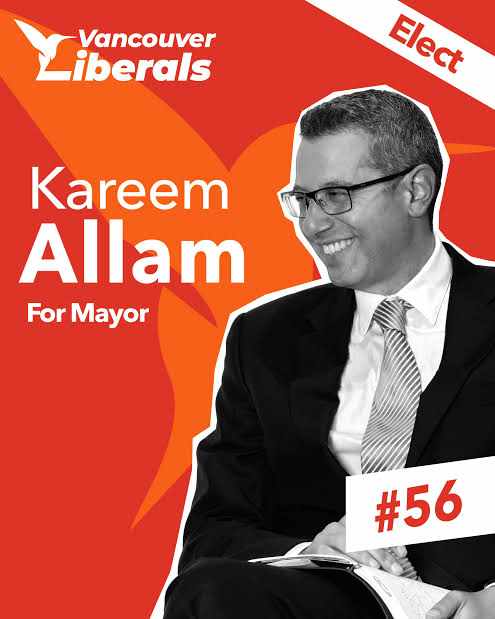
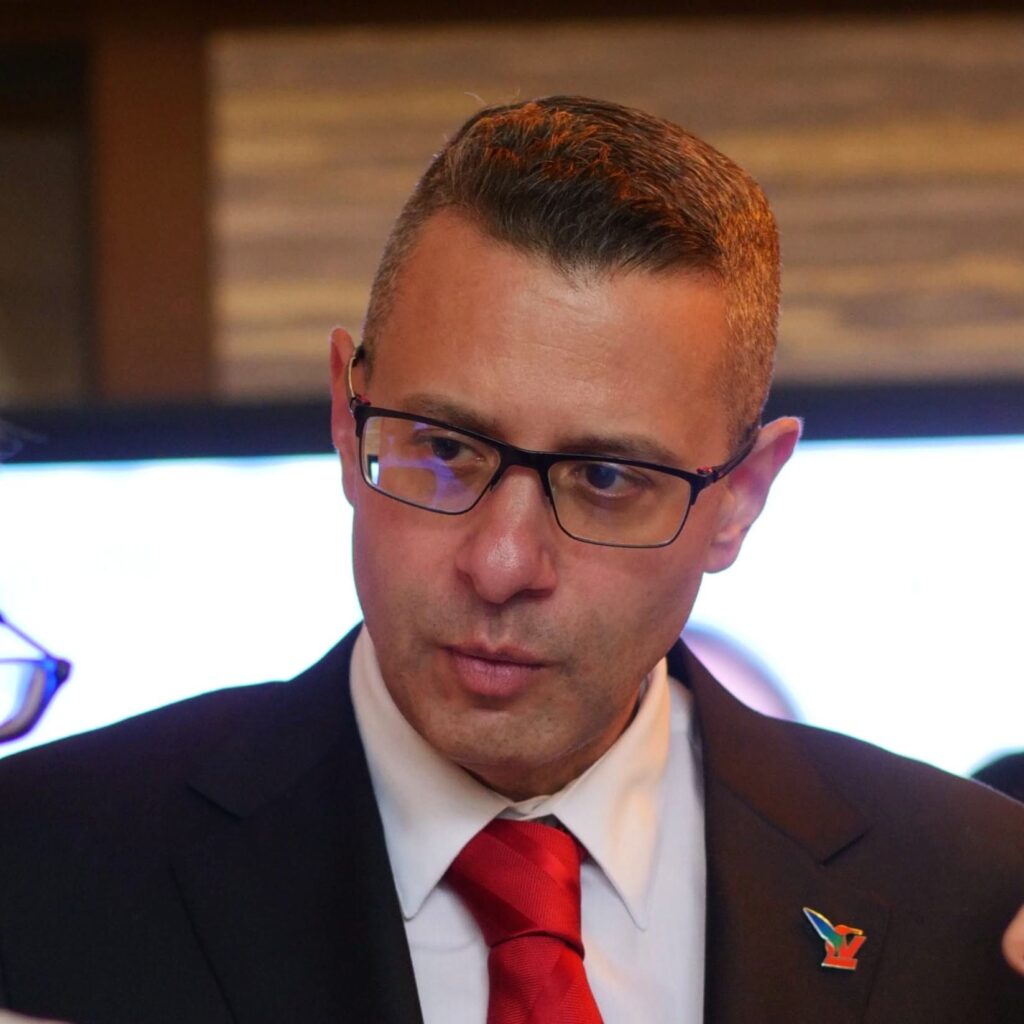
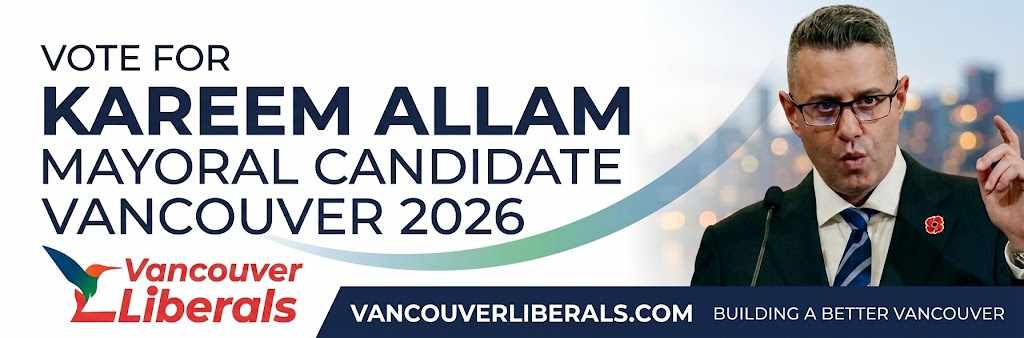
On October 12, VanRamblings formally endorsed Kareem Allam, the Vancouver Liberals’ candidate for Mayor, arguing that his combination of government experience, policy knowledge, political sophistication and commitment to practical problem-solving offers Vancouver an exceptional opportunity for generational leadership.
And this time, the opportunity extends beyond the Mayor’s office.
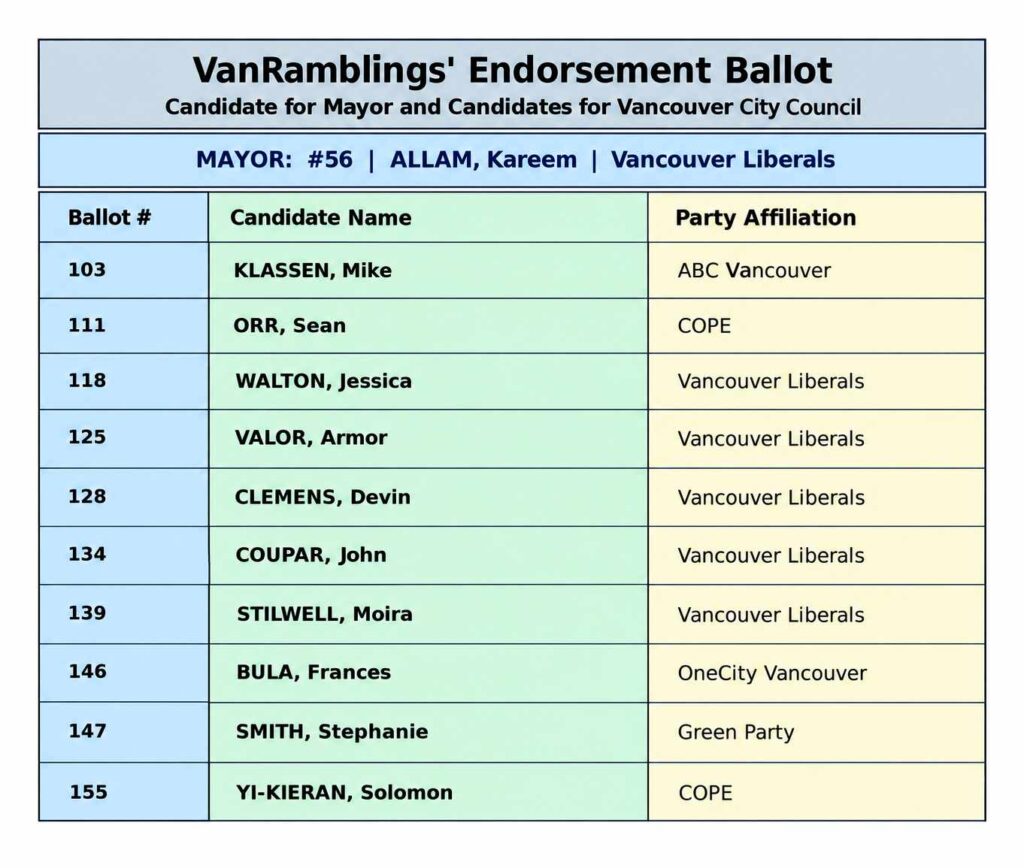
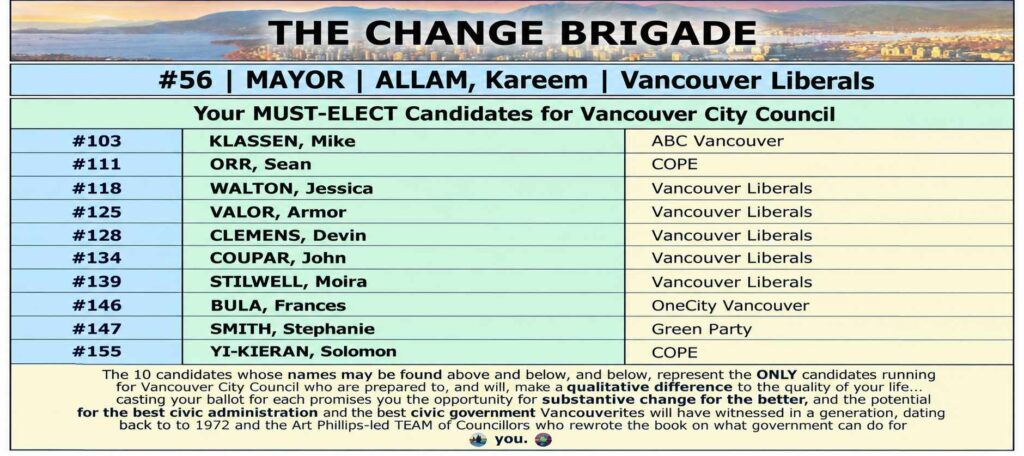
Across the political spectrum, VanRamblings has identified 10 candidates for Vancouver City Council whose different experiences, political traditions, professional achievements and commitments to public service could, together, help rebuild a city government that has lost its way.
We call them The Change Brigade.
They are not a uniform political caucus. They do not agree on every issue, nor should they. What unites them is the potential to bring experience, energy, empathy, accountability and a renewed sense of civic purpose to a Council that desperately needs all five.
Our endorsements are an invitation to Vancouver voters to imagine something better — and then to go to the polls and make it happen.
I. The Mayoralty: Kareem Allam and the restoration of responsible government: Ken Sim and the cost of losing sight of the public good
There is an old understanding of municipal politics that ought never to have become controversial: a city government is judged by how it treats its people, particularly those with the least money, the least influence and the fewest avenues through which to make their voices heard.
By that measure, Ken Sim’s administration has failed Vancouver in ways that extend well beyond an argument over budgets, zoning or development approvals.
Consider the record.
One of the administration’s earliest decisions was to abandon the City’s Livable Wage Programme, withdrawing a commitment that required qualifying City suppliers to pay workers a living wage. The programme’s defenders understood something fundamental about public procurement: the City should not be indifferent to the working conditions of the people whose labour helps deliver public services.
Then came the closure of the City’s Renter’s Office, an especially troubling decision in a city where renters make up approximately 54 per cent of residents. At a time when housing insecurity and unaffordable rents are central concerns of everyday life, removing a dedicated source of municipal assistance sent a dispiriting message about whose needs mattered at City Hall.
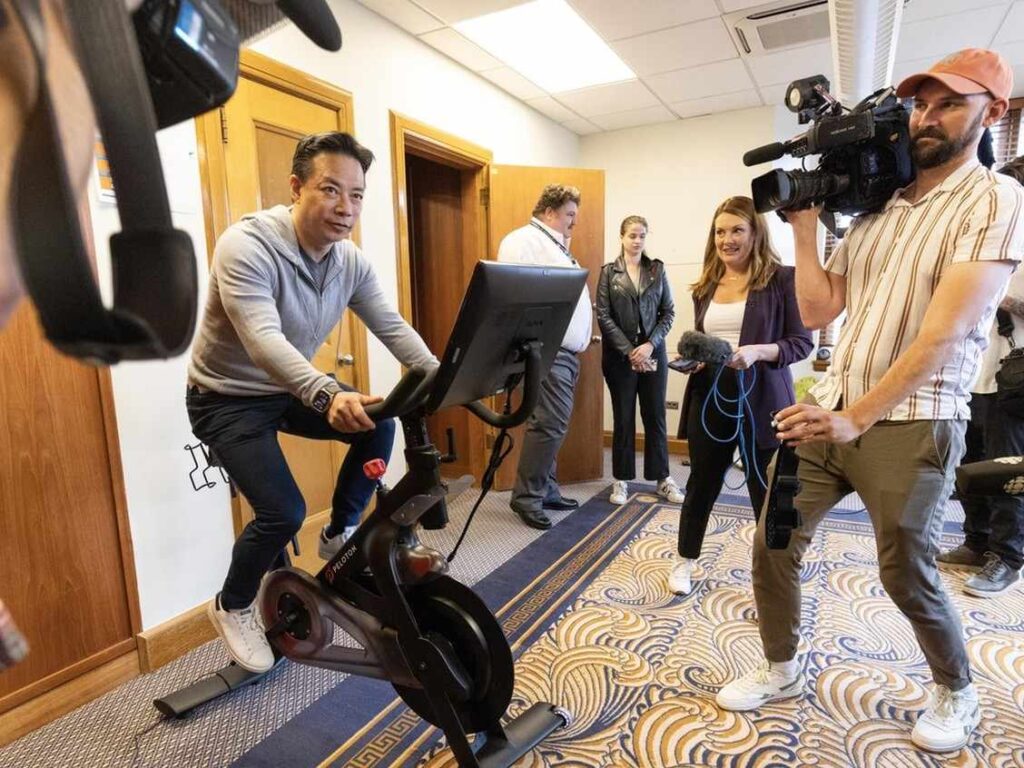
There was the conversion of an Advisory Committee meeting room into a personal gym for the Mayor, a decision that prompted questions about priorities and the appropriate use of civic space. There was the widely criticized beer-shotgunning spectacle at Khatsalano Days, where the Mayor’s conduct raised entirely reasonable questions about judgment at a public festival attended by families.
There were persistent concerns about the Mayor’s attendance and participation in civic business, including his relationship with Metro Vancouver, where regional decisions affect transportation, housing, water, waste management and the long-term future of the entire metropolitan region.
And there was the treatment of political opponents.
The most disturbing example involved COPE Councillor Sean Orr.
As VanRamblings documented, Sim publicly associated Orr with allegations of handing out illegal drugs on the Downtown Eastside. The allegation was subsequently shown to be unfounded, and the matter led to an official sanction by the City’s Integrity Commissioner. Orr has maintained that he was away visiting friends and family on the Sunshine Coast during the period in question.
A Mayor is entitled to disagree with a Councillor. A Mayor is entitled to challenge a policy, criticize a vote and defend an administration’s record. But the power of the Mayoralty brings with it an obligation to exercise that power responsibly. Attacking an elected opponent with a damaging, unsubstantiated allegation crosses a line that should never be blurred by the heat of political combat.
Then there is the question of public investment.
VanRamblings has repeatedly criticized the administration’s decision to commit $13.4 million to FIFA hospitality packages while essential community services have faced difficult funding decisions. The City has argued that the packages were assets that could be resold to offset World Cup costs. That explanation deserves to be acknowledged. But it does not erase the larger question: what should Vancouver’s priorities be when its libraries, pools, community centres and other neighbourhood facilities need sustained investment?
The contrast becomes even more troubling when considered alongside the failure to provide the necessary urgency and funding for suicide-prevention barriers on the Granville Street Bridge, an issue with profound human consequences.
These are not unrelated complaints. Together, they raise a question about the values that guide a government.
When a municipality can find money for prestige and promotion but struggles to protect essential services, residents are entitled to ask whether its priorities have become detached from their daily lives.
When a government closes an office serving renters, withdraws a living-wage commitment and allows neighbourhood services to deteriorate, the consequences are not borne equally. They fall hardest on working families, people living on fixed incomes, students, low-wage workers and those already struggling to remain in the city.
And when political disagreement is answered with personal attacks rather than substantive argument, the damage extends beyond the individuals targeted. It weakens public confidence in the democratic process itself.
VanRamblings believes that Vancouver deserves better. We believe that municipal government must be capable of disagreement without vindictiveness, fiscal discipline without indifference, and ambition without neglecting the everyday needs of its citizens.
Most of all, we believe that kindness and competence are not competing values. They are the foundation of good government.
Why Kareem Allam represents a generational opportunity
Into this moment comes Kareem Allam, whose candidacy offers Vancouver voters the opportunity to replace political antagonism with practical leadership.
As VanRamblings outlined in its October 12 endorsement, Allam brings more than 25 years of experience working around government, public policy, public institutions, political campaigns and government relations. His background includes work with Fraser Health, public-policy leadership at the Vancouver Board of Trade, and experience in areas including health care, transportation, infrastructure and Indigenous relations.
Kareem Allam understands how the machinery of a municipal campaign operates, how public policy is developed, and how decisions made inside government can either improve people’s lives or fail them.
But experience alone is not enough. What matters is what a candidate intends to do with it.
The Vancouver Liberals’ programme puts affordability, frontline services, neighbourhood infrastructure, public safety, accountability and practical problem-solving at the centre of its agenda.
Allam has proposed limiting annual property-tax increases to inflation or less, adding 400 frontline workers, improving essential city services and increasing transparency in municipal spending. The party has also advanced a food-hub concept intended to improve access to affordable groceries and culturally diverse foods. These are campaign commitments, not completed achievements; the responsibility will be to implement them and demonstrate results.
That emphasis on implementation is important.
Vancouver does not need another administration that mistakes a press conference for a solution. It needs a Mayor who understands that an announcement about housing is not a home, a commitment to improve services is not a functioning library, and a promise to revitalize recreation is meaningless unless children can actually get into a pool, families can access a community centre, and neighbourhoods can depend on the facilities that make urban life worth living.
Allam’s proposed approach to food security also reflects a useful understanding of affordability. Hunger is not confined to the unemployed or those living in extreme poverty. It affects working families, students, seniors and people whose paycheques no longer stretch to the end of the month. A municipal government cannot solve every cause of food insecurity, but it can help build partnerships and neighbourhood institutions that make nutritious food more accessible.
The same practical thinking must extend to housing, childcare, public spaces and the preservation of community facilities.
Allam’s promise is not that every problem will disappear overnight. No responsible candidate should make that claim. His promise is that City Hall can become more focused, more competent, more transparent and more responsive to the people who pay for it.
VanRamblings believes Kareem Allam deserves the opportunity to prove it.
On October 17, we urge Vancouver voters to elect Kareem Allam as Mayor.
But a new Mayor cannot rebuild City Hall alone. The quality of the next Council will determine whether the promise of a new administration becomes a reality.
That is why our 10 Council endorsements matter.
II. The Change Brigade
10 candidates who can help rebuild Vancouver
Each endorsement below reflects VanRamblings’ editorial judgment about the candidate’s record, experience and potential contribution to City Council.
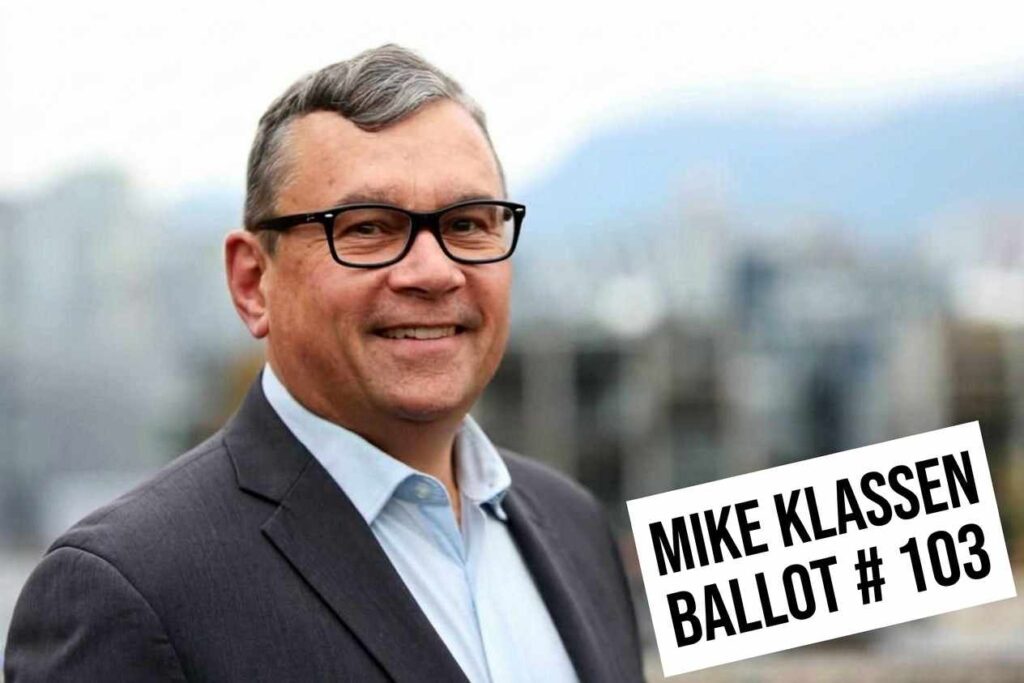
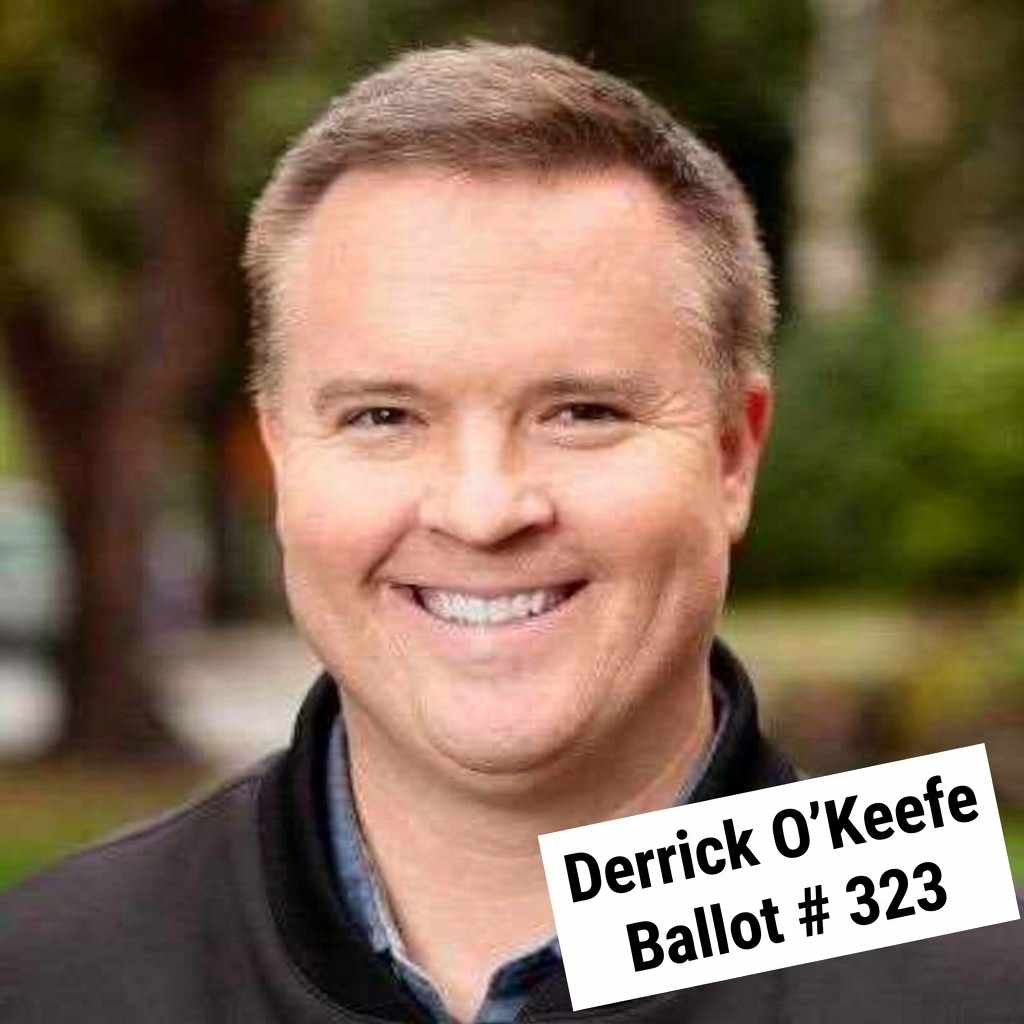
Mike Klassen occupies a particularly personal place in the history of VanRamblings. Over Christmas 2003, Mike created the website that would make its début in February 2004. Since then, he has served as VanRamblings’ webmaster, helping sustain a publication that has spent more than two decades examining Vancouver politics, culture and civic life. My friendship with Mike stretches back 35 years. That is a long time to know someone, to share experiences, to disagree, to learn, and to understand the qualities that define a person’s character. It is also a friendship that gives me a perspective on Mike that extends well beyond his public profile. In public life, Klassen has served on Vancouver City Council and as chair of the PNE Board of Directors. His work alongside fellow ABC Councillor Lisa Dominato to champion the integration of childcare centres into new developments approved by Council speaks to a practical understanding of the pressures facing young families. Childcare is not an optional extra in a livable city. It is essential infrastructure, as important to working parents as transportation, schools and safe public spaces. Mike’s professional experience in communications and civic affairs is an asset in understanding how institutions function and how public decisions are conveyed to residents. My endorsement of Mike is not an endorsement of every ABC Vancouver decision made during this Council term. VanRamblings has been unsparing in its criticism of Mayor Sim’s administration, and that criticism stands. But voters should evaluate candidates on their own records, their contributions and their willingness to work constructively. I know Mike’s commitment to the work he undertakes, and I believe Vancouver can benefit from that experience. His challenge, and his opportunity, is to help ensure that the next Council puts the needs of neighbourhoods ahead of partisan loyalty.
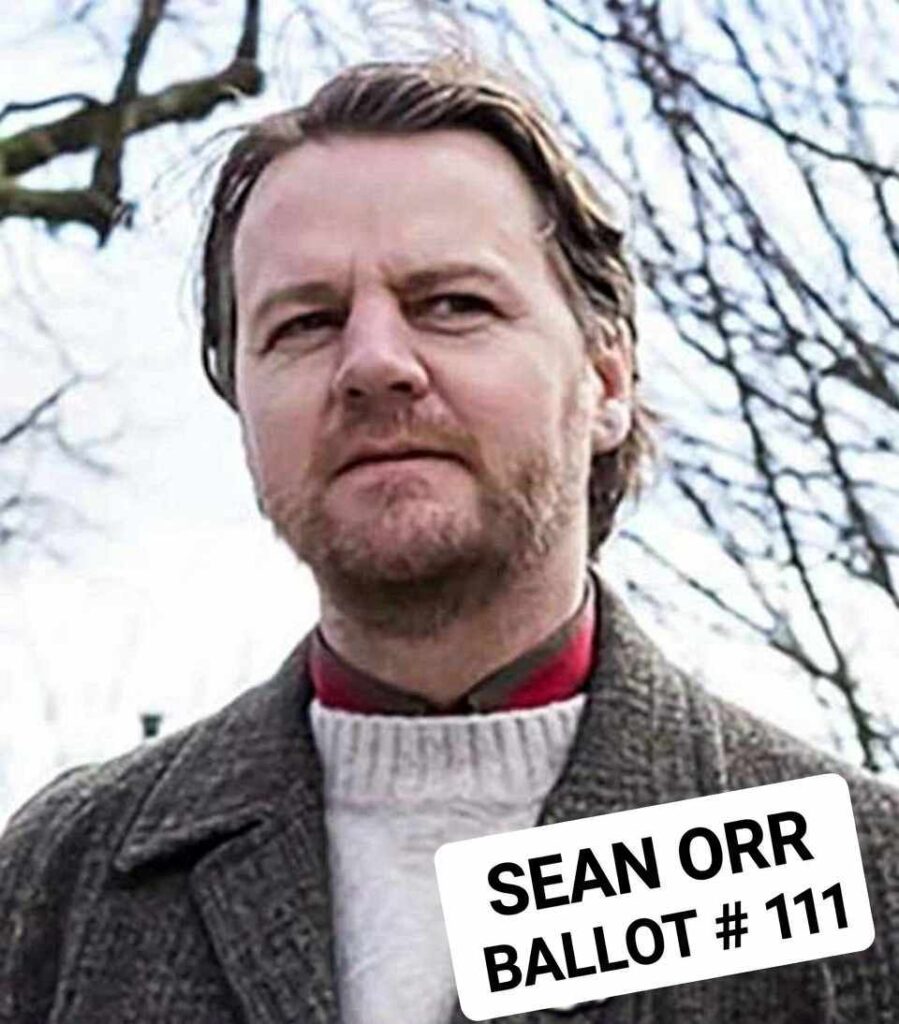
Some Councillors arrive at City Hall already fluent in the language of political compromise. Others arrive carrying the experiences of people who have spent years feeling that City Hall does not speak their language at all. Sean Orr belongs to the latter tradition, and Vancouver needs Sean’s voice. A poverty and housing activist before his election, Orr has built his political identity around renters, working people and residents whose circumstances rarely feature prominently in the glossy presentations of civic power. His victory in the April 2025 by-election, when he topped the poll with 34,448 votes, demonstrated that a substantial number of Vancouverites wanted an outspoken advocate who would challenge the assumptions of the political establishment. On Council, Sean Orr has continued to press for practical improvements in residents’ lives. He has advocated restoring Vancouver Public Library funding and working toward seven-day-a-week library service, recognizing that libraries are much more than book-lending facilities. They are places where children study, seniors find companionship, newcomers access information, and people without adequate space at home can participate in public life. Sean’s approach to public safety also challenges the false choice between compassion and order. A city can take public disorder seriously while acknowledging that homelessness, addiction and poverty require more than slogans and punitive gestures. The repeated attacks directed at Orr by Mayor Ken Sim have made his role all the more important. The unfounded drug-related allegations documented by VanRamblings were a serious assault on Orr’s reputation. Yet Orr has continued to focus on the work of representing Vancouver residents rather than allowing personal provocation to define his public service. That resilience matters. Council should be a place where a Councillor’s arguments are answered with evidence and reason, not personal vilification. VanRamblings heartily endorses Sean Orr because Vancouver needs a Councillor who remembers that democracy must include people who cannot purchase influence, hire lobbyists or command the attention of powerful interests. Sean Orr’s voice is necessary to a more humane, accountable and representative Council.
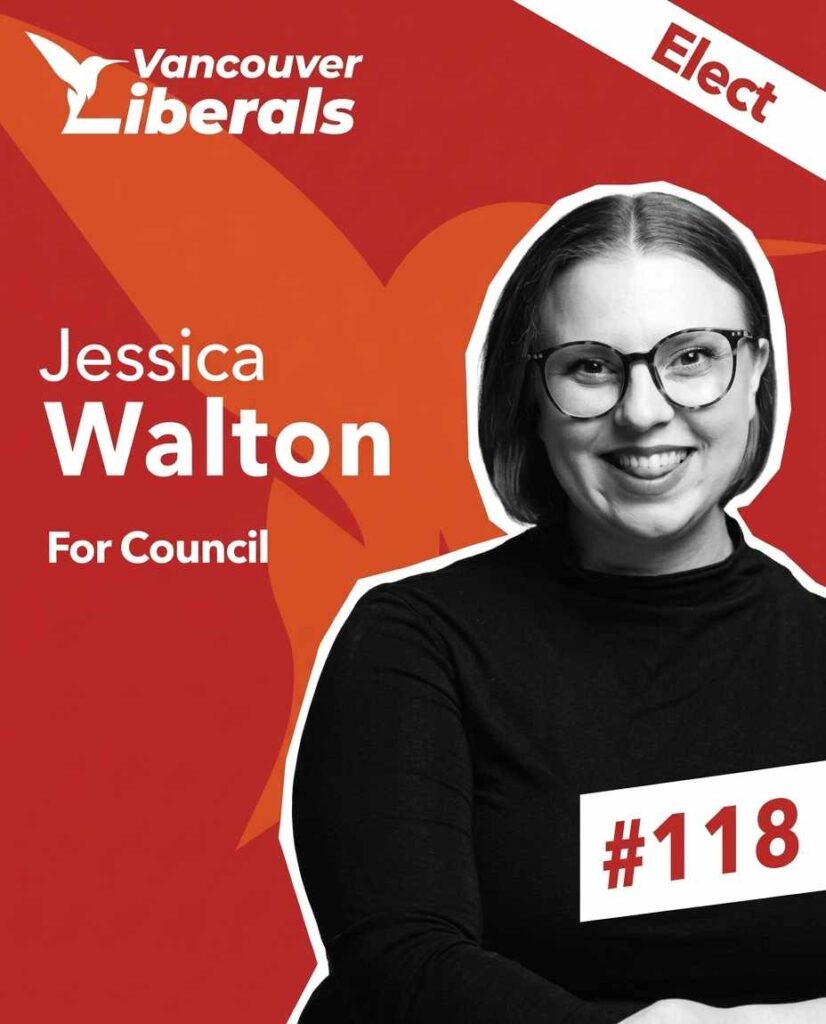
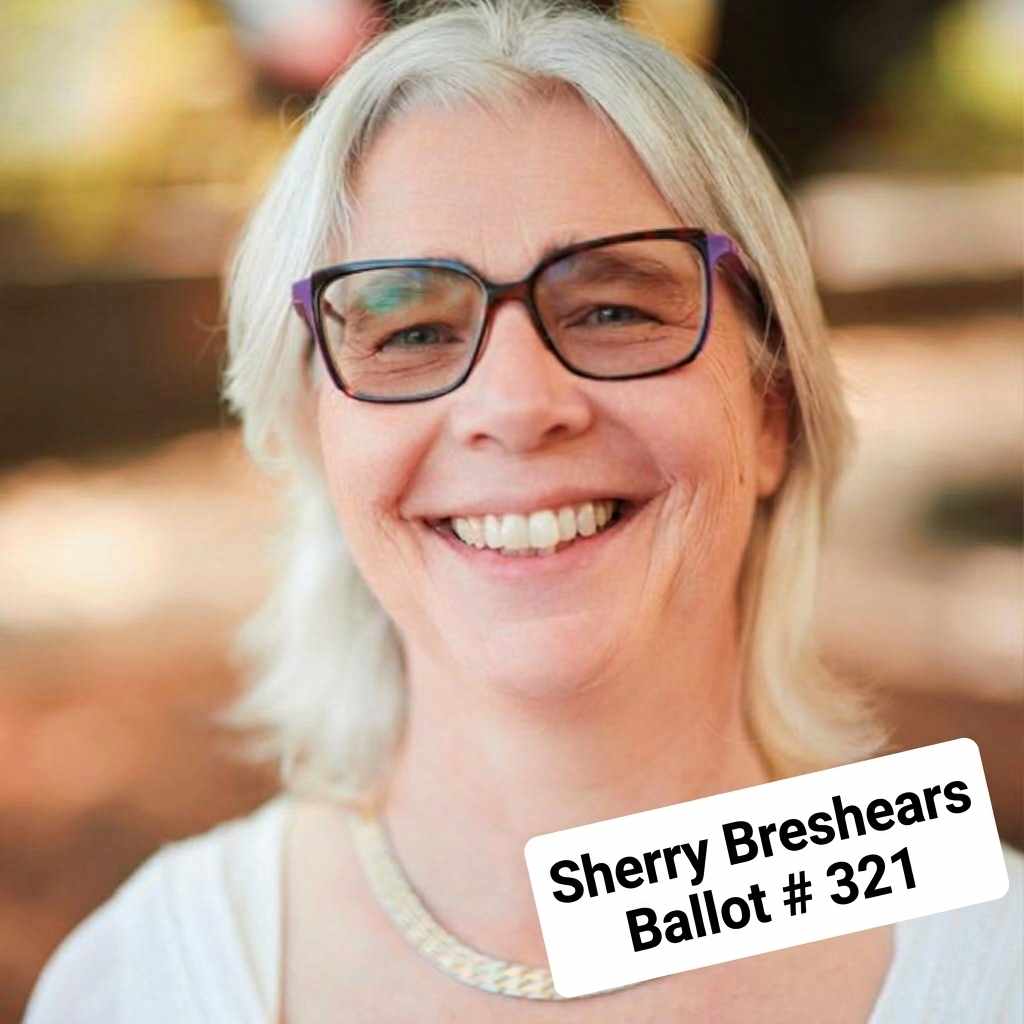
Jessica Walton is one of the most compelling candidates in the 2026 Council race because her understanding of economic insecurity is grounded in lived experience rather than abstract political theory. Jessica began working at 15, taking retail jobs to help support a family member living in poverty. Her early activism emerged from the student, environmental and feminist movements, where she became increasingly concerned about unequal access to education, the scarcity of affordable housing, the decline in well-paying employment and the rising cost of food. Jessica went on to lead a province-wide student lobbying organization, pressing municipal, provincial and federal governments to address the barriers confronting young people. Jessica Walton has worked on the front lines of government service, helping people navigate systems that can be difficult to understand and even harder to access. That is precisely the kind of experience that should inform municipal decision-making. Jessica has also managed two federal election campaigns in Vancouver Centre, undertaken years of unpaid, non-partisan voter outreach, and developed a strong interest in making government more accessible. Jessica’s experience establishing a small business, alongside her advocacy for disability inclusion and accessibility, gives her an understanding of the obstacles confronting entrepreneurs and residents who need public spaces and services to work for everyone. Jessica Walton’s candidacy is endorsed by UNITE HERE Local 40, one of British Columbia’s most progressive unions, a union representing workers in hotels, food services and airports across British Columbia. Local 40’s emphasis on fair wages, respect at work and family-supporting employment aligns closely with Walton’s longstanding commitment to working people. Jessica Walton is running at a time when many young families are questioning whether Vancouver remains a city in which they can afford to stay. She understands the connection between childcare, employment, accessible public facilities and the cost of housing. VanRamblings believes she is a must must must-elect candidate. Jessica would bring a strong progressive voice, practical labour experience and an inclusive understanding of public service to City Council. Vancouver needs more people who have fought to make institutions work for ordinary residents — and Jessica Walton has spent much of her life doing exactly that.
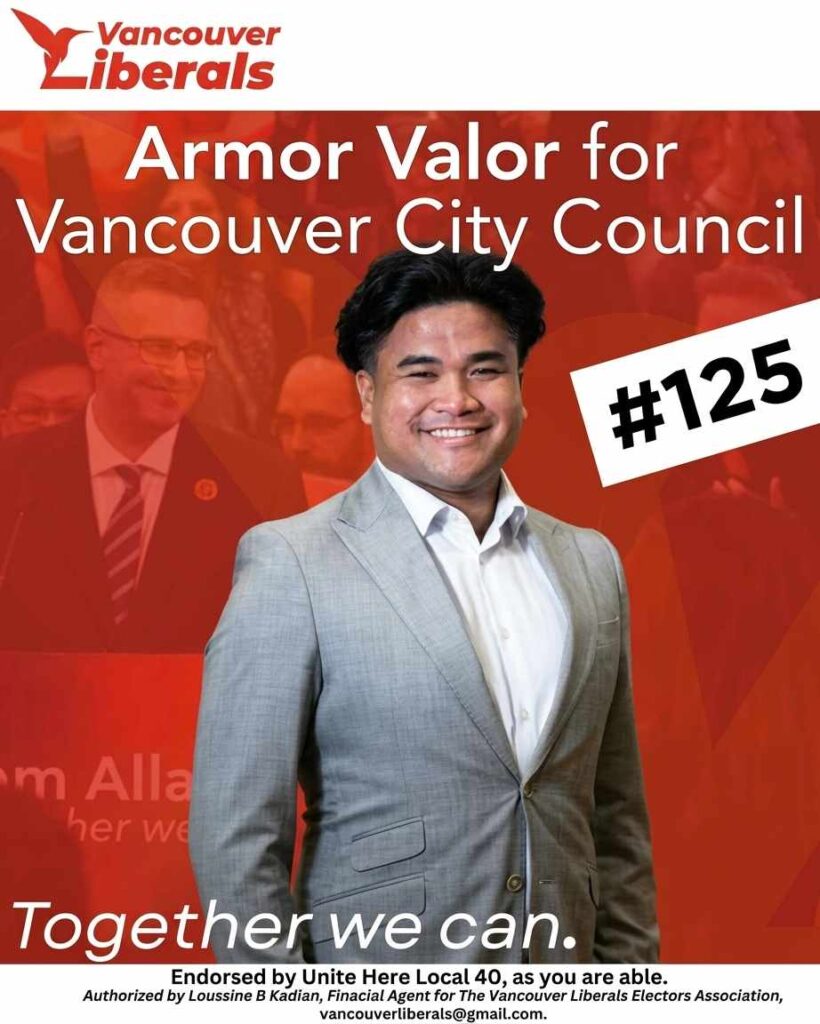
Vancouver’s diversity is one of its greatest strengths. Yet the composition of its elected institutions has not always reflected the communities that make the city what it is. Armor Valor’s candidacy offers an opportunity to strengthen Filipino-Canadian representation at City Hall while bringing practical experience from health care, small business, post-secondary governance and organised labour. Born and raised in South Vancouver, Valor works as a cook at BC Children’s and Women’s Hospital and belongs to the Hospital Employees’ Union. He understands the pressures confronting frontline workers: the demands of essential work, the importance of reliable public services and the need for workplaces that respect the people who keep institutions running. His experience extends beyond the hospital kitchen. Valor has served on the Langara College Board of Governors as a student-elected member since 2021 and previously served on the Vancouver Community College Board of Governors. Armor helped establish Langara’s first Filipino Student Association, participated in anti-racism initiatives and served as a Board member of Filipino BC. He has also operated a catering business and a small food enterprise, bringing first-hand knowledge of the challenges faced by entrepreneurs. These are not disconnected experiences. Together, they provide a perspective on how municipal decisions affect workers, students, small-business owners and culturally diverse neighbourhoods. Armor Valor has also spoken about the importance of neighbourhood representation in Vancouver’s at-large electoral system. The Vancouver Liberals have proposed a citizens’ assembly to examine a ward system, with a referendum contemplated for 2030. Such a process would give residents an opportunity to consider whether neighbourhoods should have a more direct connection to their elected representatives. It is long past time for Vancouver’s Filipino community to have a stronger presence in Council’s deliberations. Representation is not simply a matter of symbolism; it helps ensure that a wider range of experiences informs the choices a city makes. Armor Valor would bring working-class experience, community involvement, an understanding of South Vancouver and a commitment to inclusion. His candidacy deserves serious consideration from voters who want City Hall to look more like the city it serves.
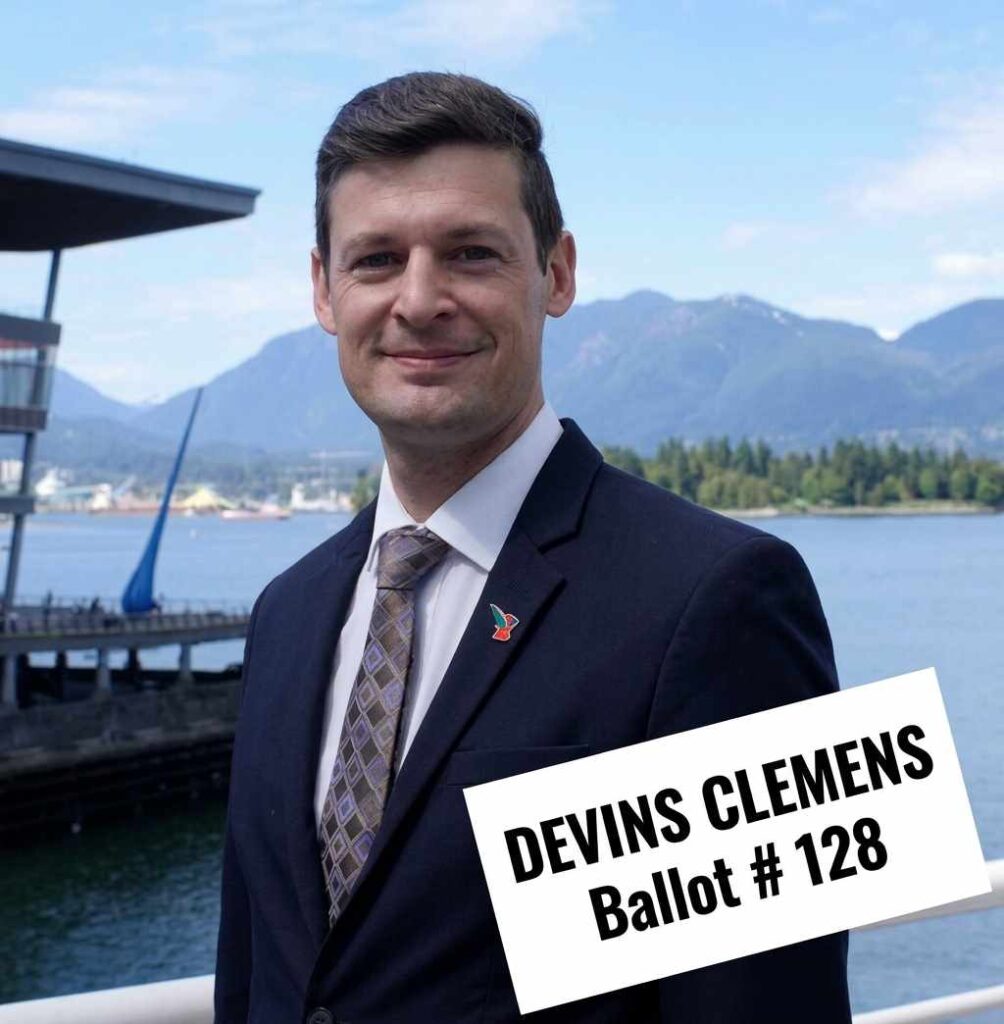
Devin Clemens represents a generation of British Columbians who have had to make difficult choices about whether they can afford to build their lives in the province they call home. His personal experience of leaving British Columbia to pursue post-secondary education, studing political science and anthropological linguistics at the University of Saskatchewan before spending several years in Japan working as an educator. Devin subsequently returned to British Columbia to be closer to family and build a future here. Devin’s return to British Columbia informs his commitment to making Vancouver a city where young people can establish themselves and remain. At university, Clemens founded and led a student advocacy organization dedicated to protecting high-quality, affordable education. The organization grew to several hundred members and pressed for policy reform and institutional accountability. That experience helped shape his understanding of how organized, evidence-based advocacy can bring about meaningful change. Devin Clemens now works at the University of British Columbia, continuing his involvement in public policy and access to education. Devin brings 15 years of experience in public policy, community engagement and grassroots advocacy. His interests include improving access to essential services, strengthening partnerships across levels of government and making public institutions more transparent and effective. Devin has also raised the possibility of integrating the UBC Endowment Lands into the City of Vancouver as part of a larger conversation about regional planning and future transit connections, including the proposed SkyTrain extension to UBC. These are ambitious questions requiring careful consultation, collaboration and long-term planning. What makes Devin Clemens a valuable candidate is his understanding that municipal government must consider the lives of people who are trying to build, not merely the development projects appearing on planning agendas. Young people need affordable housing, reliable transit, accessible recreation and the prospect of a future in their own communities. VanRamblings endorses Devin Clemens as a thoughtful, policy-oriented candidate with the potential to contribute to a Council focused on practical solutions and long-term opportunity.
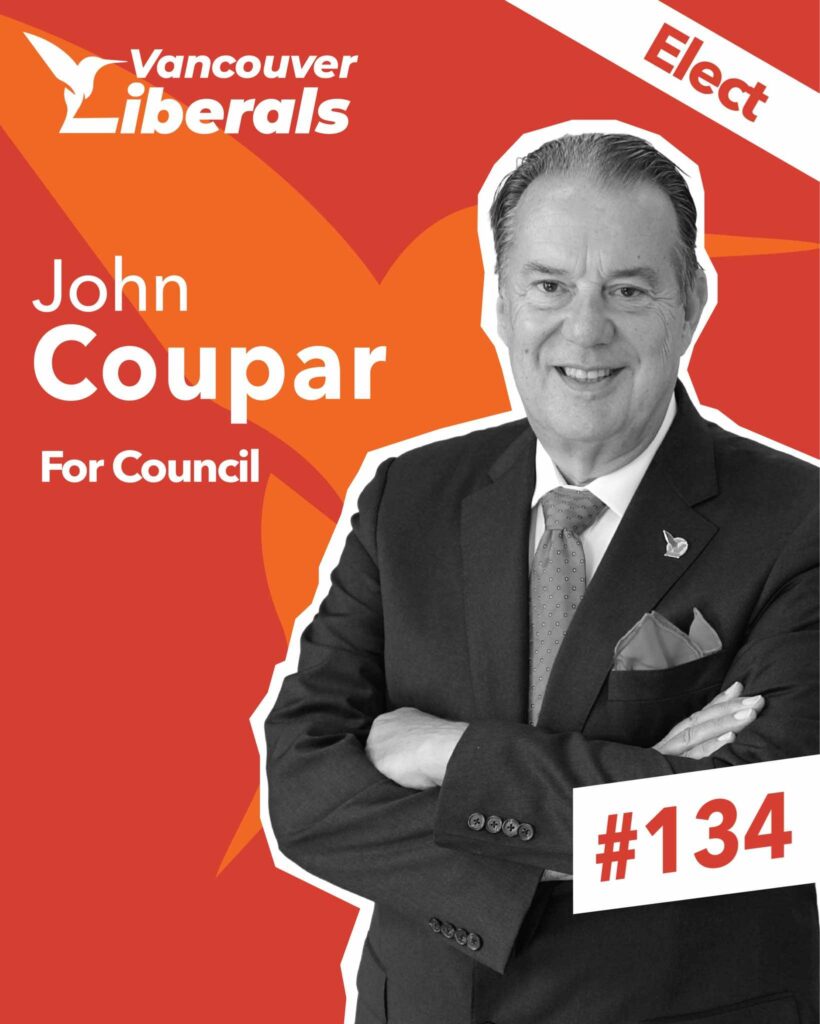
There are moments in public life when a person’s legacy is defined not by the number of motions passed, but by the determination to protect something precious to a community — and the courage to imagine what a city might become if its public spaces were truly accessible to everyone. For John Coupar, two causes stand out: saving the Bloedel Conservatory atop Queen Elizabeth Park in 2010, the campaign that brought him into public life and ultimately to his election as a Vancouver Park Board Commissioner, and his 2026 commitment to clean up False Creek, restoring its waters as a place where Vancouver families and children can once again enjoy the waterfront.
In 2010, John led the charge that saved the Bloedel Conservatory. As we wrote in our September 26, 2026 endorsement of John on VanRamblings, without the intervention of a then-apolitical John Coupar, who rallied Vancouverites to his cause, there would be no Bloedel Conservatory today. This remarkable heritage landmark, perched at the highest geographical point in Vancouver, has long served as a biodiversity sanctuary and community educational centre, offering residents and visitors a year-round tropical refuge. John’s campaign demonstrated what can happen when an ordinary citizen refuses to accept the loss of something that matters to a city. His achievement helped launch a career in public service rooted in the protection of Vancouver’s parks, natural spaces and community assets. Thank you, John.
Sixteen years later, Coupar is bringing that same determination to another cause of profound importance: cleaning up False Creek. How many Vancouverites realize that the city’s sewer infrastructure continues to discharge untreated sewage into waterways, including False Creek, under certain conditions? The problem is connected to Vancouver’s aging combined sewer system, which carries sewage and storm water in shared pipes and can overflow during heavy rainfall. Coupar wants the City to do more to address this longstanding environmental problem and restore the creek as a place for people, not simply a scenic backdrop to the downtown skyline.
John Coupar’s vision is particularly compelling around Science World, where children and families should be able to approach the water, enjoy the waterfront and, when environmental conditions safely permit, swim. That aspiration requires serious work on sewage infrastructure, water quality monitoring and public-health standards. Cleaning up False Creek cannot be accomplished with a campaign slogan alone; it demands sustained investment, accountability and a clear commitment to measurable progress. But it begins with a willingness to make the issue a civic priority.
The connection between these two signature causes is unmistakable. Saving the Bloedel Conservatory protected an irreplaceable natural and educational treasure. Cleaning up False Creek offers the prospect of reclaiming an urban waterway for recreation, environmental renewal and community life. Both speak to a vision of Vancouver in which public spaces are not expendable, nature is not an afterthought, and the city takes seriously its responsibility to future generations.
Coupar’s record also includes a commitment to inclusion in public recreation. When members of Vancouver’s gender-variant community described the barriers they faced in accessing swimming pools and recreation facilities, John responded with practical commitments. Upon becoming Chair of the Vancouver Park Board in December 2014, he pledged to establish inclusive swims, pursue more welcoming change rooms and washrooms, and work with the 2SLGBTQIA+ community. In January 2015, Templeton Pool held its first inclusive swim, turning that commitment into a tangible improvement in access to public recreation.
As VanRamblings recounted in its January 17, 2024 article, #SaveOurParkBoard | Tender Moments of Change at Park Board, Pt. 1, this episode remains an illustration of how listening to communities can translate into meaningful change.
Vancouver’s parks, pools, community centres and waterfront are essential parts of what makes a city livable. They need investment, thoughtful stewardship and elected officials prepared to defend their value. John Coupar’s experience as a former Park Board chair, his successful campaign to save the Bloedel Conservatory, his commitment to cleaning up False Creek and his work on inclusive recreation offer voters a record of engagement with the places and public institutions that shape everyday life in Vancouver.
For all these reasons, VanRamblings enthusiastically endorses John Coupar in his 2026 run for Vancouver City Council. His story began with a fight to save a beloved civic landmark. His next chapter could help restore an urban waterway and advance a vision of public space that serves children, families, neighbourhoods and generations yet to come.
For those reasons, and more, John Coupar is a must must must-elect in 2026.
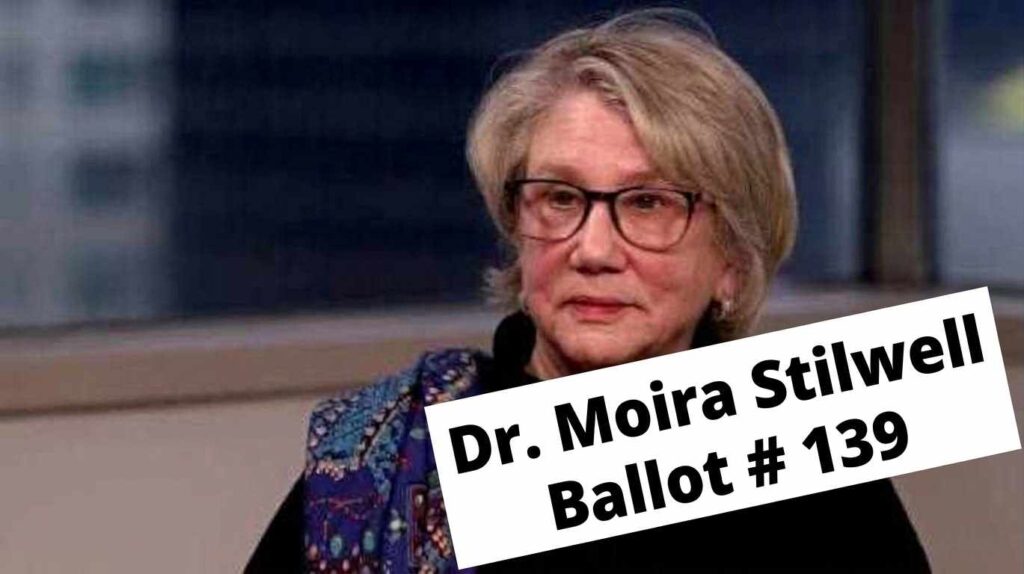
Some candidates arrive at City Hall with experience in campaigns. Others arrive with experience in business, community organizing or the daily struggles of working people. Dr. Moira Stilwell arrives with something that is particularly valuable to a city whose public services require both careful management and an understanding of human need: decades of medical practice combined with substantial experience in government. Stilwell is a physician specializing in nuclear medicine who has devoted more than 30 years to health care in British Columbia. Her career has included senior responsibilities at St. Paul’s Hospital, Surrey Memorial Hospital and Abbotsford Regional Hospital and Cancer Centre, as well as work at BC Women’s Hospital. Moira Stilwell’s public service extends well beyond medicine. Elected MLA for Vancouver-Langara in 2009, she served until 2017 and held provincial cabinet portfolios including Advanced Education and Labour Market Development and Social Development and Social Innovation. Her work encompassed education, economic participation, skills development and support for vulnerable populations. Dr. Stilwell also served in leadership roles with the Canadian Breast Cancer Foundation and contributed to organizations concerned with breast cancer research and health-care advancement. Why does that matter to Vancouver City Council? Because Moira Stilwell understands the challenges facing the city cannot be solved through slogans or partisan positioning alone. They require people who understand how complex institutions work, how budgets affect services, how public decisions influence vulnerable residents and how to translate policy into outcomes. Vancouver needs Councillors who can ask difficult questions, evaluate evidence, scrutinize spending and work collaboratively to produce results. Stilwell’s professional background gives her the foundation to do all four. VanRamblings believes Dr. Moira Stilwell is a must must must-elect candidate who could emerge as a leader and a tremendous difference-maker for the better on Vancouver City Council, her experience, seriousness of purpose and longstanding contribution to British Columbia would serve to strengthen a new administration seeking to restore public confidence and deliver better services.
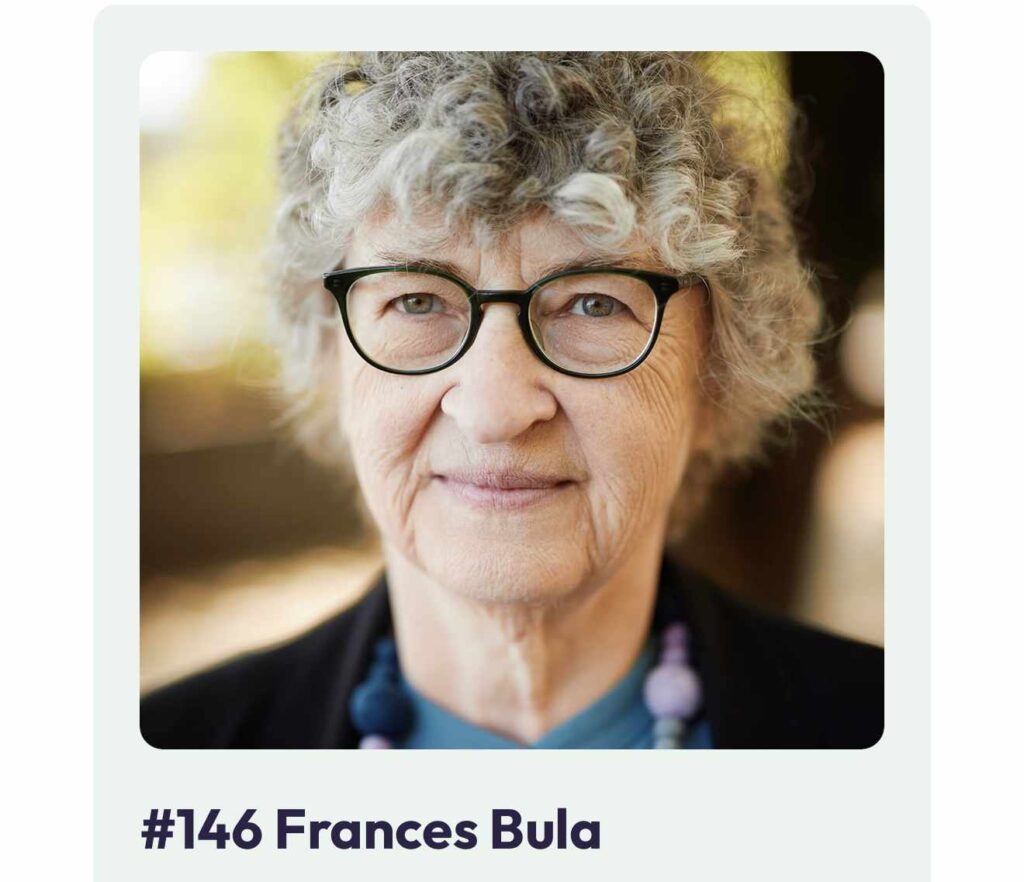
If Vancouver City Council has a fundamental weakness, it is that municipal government can become absorbed in its own procedures, language and political calculations, losing sight of how its decisions affect the people who live with the consequences. Frances Bula has spent decades explaining precisely how that happens. For many years, Bula has been one of British Columbia’s most respected journalists covering urban affairs and municipal politics. Here professional history matters enormously in this election. For approximately 30 years, Bula has observed Vancouver municipal politics: its personalities, its competing visions of the city, its development controversies, its budget debates and the often complicated relationships between elected officials, civic staff, neighbourhood organizations and the development industry. Candidate Bula understands how decisions emerge from the machinery of government. She knows the difference between a promising announcement and an implemented policy, between a budgetary commitment and a service residents can actually use. She has seen administrations arrive with grand plans, struggle with the realities of governance and leave successors to deal with the consequences. A Council with Frances Bula at the table would have a member capable of scrutinizing financial claims, identifying unanswered questions and explaining complex decisions in language ordinary residents can understand. That is not merely a communications advantage. It is an instrument of accountability. VanRamblings believes Frances Bula is a must must must-elect candidate. Her knowledge of Vancouver’s civic history, her professional understanding of public institutions and her commitment to making government more intelligible would be invaluable. When a city faces enormous challenges in housing, infrastructure, affordability and public confidence, electing someone who understands how City Hall actually works is not a luxury. It is common sense.
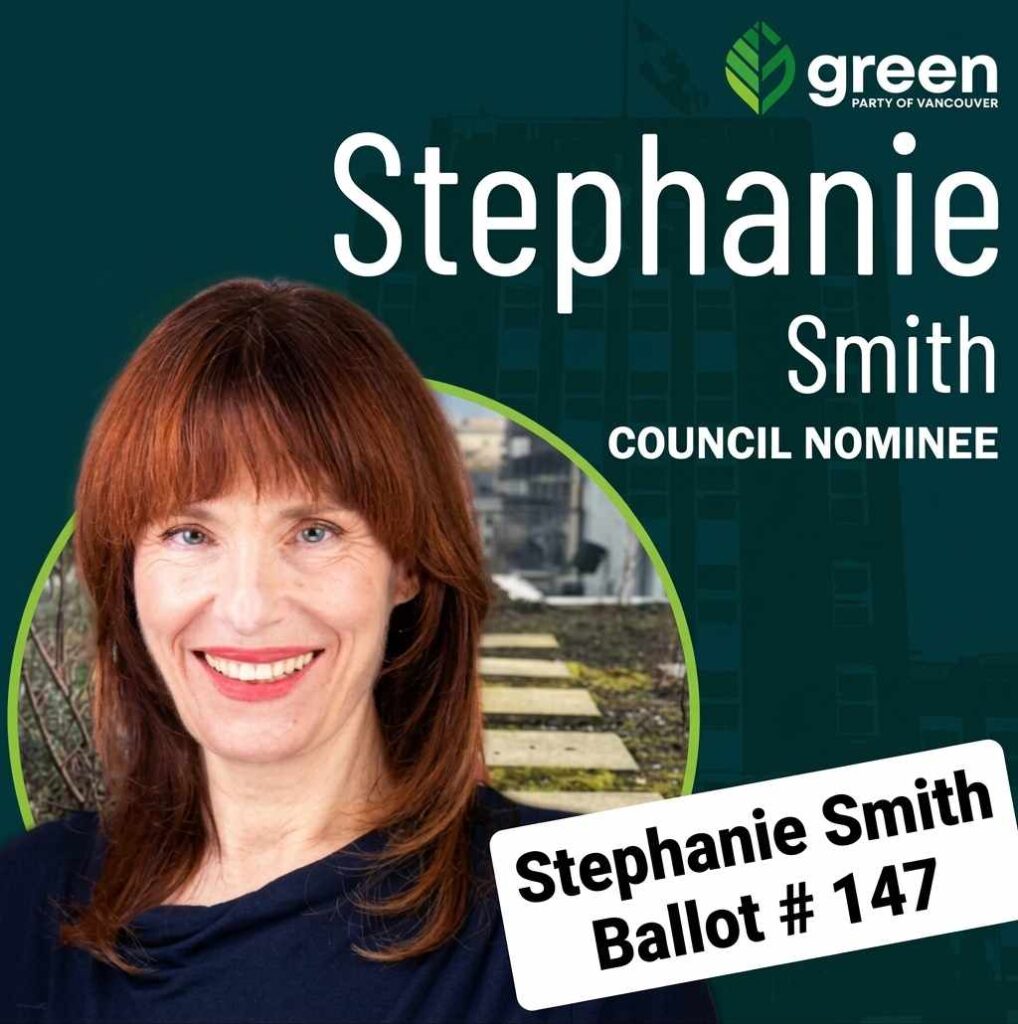
Stephanie Smith’s candidacy is rooted in a simple conviction: people should not have to surrender their homes, their dignity or their place in the community because the city they love has become unaffordable. Born at St. Paul’s Hospital, raised around her family’s small business on Granville Street and shaped by life in East Vancouver, Stephanie Smith has spent almost three decades working on behalf of tenants, workers and people confronting economic insecurity. Her experience is particularly relevant to the Downtown Eastside, where the intertwined challenges of housing, poverty, public health and displacement demand sustained attention rather than simplistic political answers. As a legal advocate, Smith has helped thousands of tenants facing renovictions, demovictions and other housing-related disputes. She has organized community legal clinics, trained advocates and law students, represented workers, negotiated collective agreements and worked with community groups, unions and governments to develop public-interest policies. Her service has included the BC Poverty Reduction Coalition, the Vancouver and District Labour Council and REACH Community Health Centre. Stephanie Smith’s housing work extends beyond advocacy. Since 2022, she has served with the Co-operative Housing Federation of BC and the Community Land Trust, organizations involved in developing and supporting genuinely affordable, community-owned housing. As President of her own housing co-operative, she also understands the daily work required to sustain housing communities. Smith brings a particularly important perspective to a Council that must grapple with the consequences of rising rents, redevelopment and the loss of affordable homes. Stephanie understands that housing policy is not simply about units and density. It is about whether people can remain connected to their neighbours, their schools, their jobs and the communities in which they have built their lives. The Vancouver Greens selected Smith as part of their 2026 Council team, citing her decades of work in housing and labour advocacy. Stephanie Smith’s candidacy also reflects the party’s commitment to affordability, accountable governance and placing people at the centre of municipal decision-making. VanRamblings heartily endorses Stephanie Smith, as we did in 2022, because Vancouver needs Councillors who understand the lived realities behind the statistics. Her experience would help ensure that tenants and working people are heard when Council debates the future of the city. A more livable Vancouver must be one where ordinary people can afford to stay. Stephanie Smith, who is another must must must-elect has spent much of her career working toward precisely that goal.
We need her on Council.
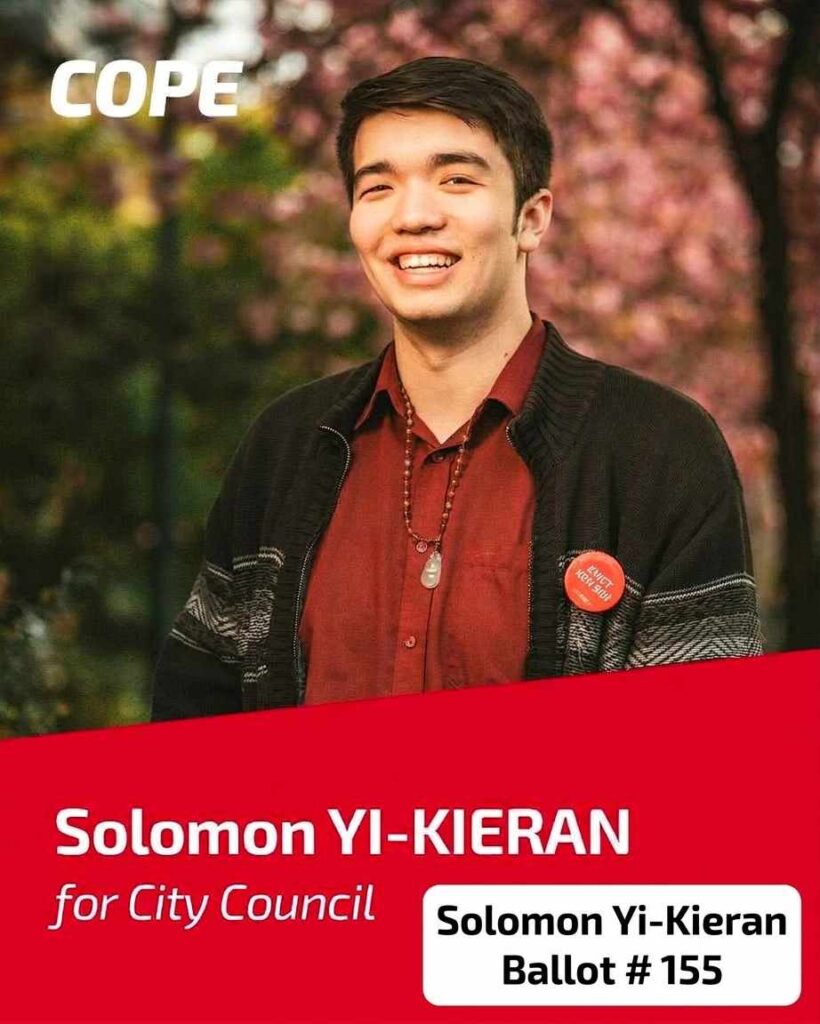
At a time when municipal politics can look like an old person’s game, Solomon Yi-Kieran represents something Vancouver urgently needs: a younger generation prepared to enter public life, challenge established assumptions and insist that the future belongs to those who will have to live in it. In VanRamblings’ August 20 column, #VOTE for Solomon Yi-Kieran | A New Generation Steps Forward in Vancouver, we argued that Solomon’s candidacy speaks to a generation facing a convergence of crises: unaffordable housing, precarious employment, the climate emergency and the increasingly difficult task of building a secure life in Vancouver. Read the August 20 VanRamblings endorsement (linked above).When young people cannot afford rent, they cannot plan confidently for their future. When transit is inadequate or unaffordable, access to education and employment becomes more difficult. When climate policy is postponed, younger generations inherit greater risks and costs. And when decisions about artificial intelligence, data centres and technological development are left exclusively to powerful private interests, communities may find themselves dealing with the consequences without having had a meaningful say in the choices that produced them. Yi-Kieran’s generation has every reason to demand a different approach. His candidacy with COPE also places him within a political tradition that emphasises working people, tenants, social justice and democratic participation. Those perspectives are important on a Council where development pressures, public spending and the allocation of scarce resources will continue to produce difficult choices. VanRamblings believes that a city must be governed not only for those who already possess power, property and influence, but also for the people trying to establish themselves. Younger residents deserve a meaningful role in shaping the policies that will determine whether they can remain in Vancouver. Solomon Yi-Kieraan would bring fresh energy, a forward-looking perspective and a willingness to confront questions that municipal government cannot afford to ignore. Their election would be a vote for the proposition that young people should not have to leave their city to secure their future.
That is a proposition worth fighting for.
III. What The Change Brigade Could Accomplish Together
The 10 candidates endorsed by VanRamblings do not share a single political ideology.
Mike Klassen represents ABC Vancouver; Sean Orr and Solomon Yi-Kiernan come from COPE; Jessica Walton, Armor Valor, Devin Clemens, John Coupar and Dr. Moira Stilwell are Vancouver Liberals; Frances Bula represents OneCity Vancouver; and Stephanie Smith is a Vancouver Green.
That diversity is a strength.
Vancouver’s next Council should not be a collection of politicians who agree automatically with their party leaders. It should be a working assembly of people who bring different experiences to the table, argue seriously about competing priorities, examine the evidence, and then make decisions in the public interest.
Imagine what that Council might accomplish if its members shared a commitment to getting the basics right.
Imagine a municipal government that regarded libraries as essential neighbourhood infrastructure, with a serious plan to restore funding and expand public access. A government that recognized swimming pools, recreation centres, water-play facilities and community centres as fundamental to children’s well-being and the health of neighbourhoods, rather than as expensive obligations to be postponed.
Imagine a Council that treated childcare as essential infrastructure, understood the pressures confronting working parents, and made the preservation and expansion of affordable childcare a priority in its planning decisions.
Imagine a government that worked to restore a living-wage commitment, took the concerns of renters seriously, strengthened public accountability and ensured people struggling with the cost of living could find assistance before desperation set in.
Imagine a city that invested in its parks, maintained its public spaces, improved transportation, protected tenants and built genuinely affordable housing — while recognizing that public safety depends on functioning services, effective partnerships, and a willingness to confront difficult problems honestly.
These are not extravagant aspirations.
They are the ordinary responsibilities of a well-run city.
Nor should any of this be understood as a promise that 10 elected Councillors, or even a new Mayor and a majority of Council, could solve every problem confronting Vancouver. The city operates within financial constraints, legal obligations and the division of responsibilities between municipal, provincial and federal governments.
Meaningful progress will require negotiation, prioritization, careful budgeting and sustained public engagement.
But those limitations make capable leadership more important, not less.
A new Council must be prepared to examine the City’s spending with clear eyes, distinguish essential services from less urgent expenditures, pursue partnerships that deliver tangible benefits, and explain honestly what can be achieved and how it will be paid for.
It must also recognize that Vancouver’s livability cannot be measured solely through property values, development statistics or the number of international visitors who arrive for a major sporting event.
A city is livable when its residents can afford a home. When children have somewhere safe to play. When young people can imagine a future here. When seniors can participate in community life. When a person with a disability can use public facilities without unnecessary barriers. When workers receive fair treatment. When renters have access to support. When neighbourhood libraries and recreation centres remain open and accessible.
And when the people who are struggling most are treated with dignity rather than contempt.
The candidates endorsed here bring different pieces of that larger vision. Frances Bula offers an unusually deep understanding of municipal government. Dr. Moira Stilwell brings medical and Cabinet experience, as well as a deep understanding of governance. John Coupar brings a record of action on inclusion at Park Board.
Jessica Walton brings labour experience and a lifelong commitment to accessibility. Armor Valor brings frontline health-care work and Filipino-Canadian community leadership. Devin Clemens brings policy experience and a perspective shaped by the challenges confronting younger British Columbians.
Stephanie Smith brings decades of tenant and labour advocacy. Sean Orr brings a determined voice for renters and people on the margins. Solomon Yi-Kiernan brings the urgency of a younger generation. Mike Klassen brings years of civic and professional experience.
Together, they represent a formidable range of abilities.
The challenge will be to turn those abilities into a governing culture defined by cooperation rather than hostility, public service rather than self-promotion, and measurable improvements rather than political theatre.
Kareem Allam’s responsibility, should Vancouver voters elect him Mayor, will be to help create the conditions in which that work can succeed.
That means listening to Councillors who disagree with him. It means allowing scrutiny of his administration. It means acknowledging mistakes, correcting them and reporting honestly on progress. It means understanding that a majority at City Hall is not a license to disregard the minority, and that the authority to govern comes with a continuing obligation to earn the public’s trust.
The next Mayor must also remember that the people of Vancouver are not an audience to be managed. They are citizens to be served.
IV. October 17: A Choice About The City We Want to Become
There is something deeply moving about the prospect of a city finding its way again.
Vancouver has always been more than its skyline, its real-estate market or the spectacular beauty of the mountains and ocean that surround it. Its character has been shaped by people who have built community centres, organised neighbourhood associations, fought for affordable housing, opened libraries, created cultural institutions, defended public parks and demanded that government become more responsive to ordinary lives.
The city has been made better by people who refused to accept that things had to remain as they were.
It has been made better by the citizen who attended a Council meeting after a long day at work because a decision threatened the future of a neighbourhood. By the parent who organized other families to demand childcare. By the tenant who stood up to an unfair eviction. By the community activist who insisted that a public swimming pool should welcome people who had previously been excluded. By the journalist who kept asking questions long after the political excitement had passed. By the worker who joined a union and discovered that solidarity could accomplish what an individual could not.
These are the people who make a city worth living in.
And they are the people to whom municipal government owes its greatest obligation.
The 2026 civic election presents Vancouver with an extraordinary opportunity to renew that obligation. Voters can choose a Mayor who brings substantial government experience and a practical commitment to improving municipal services. We can elect Councillors whose combined experience encompasses medicine, journalism, labour, housing, community activism, public policy, inclusion and the everyday concerns of working families.
We can choose a Council that understands the future of Vancouver is not simply a matter of how much the city builds, but of whether the people who live here can afford to remain.
VanRamblings believes this is an opportunity of generational significance — a chance to elect one of the strongest combinations of civic leadership and experience Vancouver has been offered in more than half a century.
It will not be enough to change the name on the Mayor’s office door. The deeper task is to change the spirit in which City Hall operates.
To replace cruelty with compassion. To replace arrogance with accountability. To replace political spectacle with meaningful action. To replace the reflexive defence of a party’s reputation with an honest assessment of whether the public is being well served.
To remember that a city belongs to everyone who calls it home.
On October 17, voters have the power to begin that work.
We urge you to elect Kareem Allam as Vancouver’s next Mayor, and to give serious consideration to each of the 10 candidates endorsed here as The Change Brigade. Not because they will agree on everything. Not because governing will suddenly become easy. And certainly not because any political party should be granted unquestioning loyalty.
We endorse them because we believe Vancouver deserves a Council whose members can bring their different experiences to bear on a shared task: making this city more affordable, more inclusive, more compassionate and more livable.
A city where the promise of a good life is not reserved for the fortunate few.
A city where a young person can stay, find meaningful work, establish a home and imagine raising a family.
A city where an older resident can continue to participate in neighbourhood life, where children can discover the pleasures of swimming and sport, where libraries remain open to curious minds, and where community centres are places of connection rather than neglected buildings awaiting another capital plan.
A city where the people who clean its streets, care for its patients, teach its children, serve its food and keep its institutions running are treated as indispensable members of the community they sustain.
And a city where public office is understood not as a privilege to be enjoyed, but as a responsibility to be honoured.
That is the Vancouver we want.
That is the Vancouver we believe is possible.
And that is the Vancouver for which, on October 17, VanRamblings asks you to vote.
Because a city is never finished. It is made and remade by the choices of its citizens, by the courage of those who step forward to lead, and by the willingness of its people to believe that tomorrow can be better than today.
Let us choose a City Hall that understands this.
Let us choose a Mayor who will work for the whole city, and Councillors who will bring their knowledge, their convictions and their humanity to the task.
Let us build a Vancouver where kindness is not mistaken for weakness, where competence is measured in the lives improved, where public money serves the public good, and where no neighbourhood, no family and no individual is considered expendable.
Let us build a city that welcomes the young, respects the old, protects the vulnerable and gives working people a fair chance to prosper.
A city of open libraries and lively community centres, of accessible pools and beautiful parks, of affordable homes and safe streets, of shared opportunity and genuine belonging.
A city in which our differences become a source of strength, our public institutions reflect our highest aspirations, and our elected representatives understand their most important legacy is not what they say about themselves, but what they help make possible for others.
On October 17, Vancouver has a choice.
VanRamblings believes it is time to choose change.
Together, we can build a better Vancouver.