When Gregor Robertson was first elected to office as Mayor of the City of Vancouver in 2008, as he had throughout his months of campaigning, the new Mayor made a commitment to eliminate homelessness in Vancouver by 2015.
That Mayor Robertson and his Vision Vancouver Councillors were unable to fulfill that laudatory commitment occurs partly as a consequence of what we wrote yesterday — that the steady and unrelenting influx of homeless persons into our city annually frustrates meeting that otherwise laudatory goal — and partly resulting from politics: neither the right-of-centre federal government of Prime Minister Stephen Harper, nor the right-leaning provincial administration of Premier Gordon Campbell were kindly disposed to providing assistance to someone they viewed as their political enemy, a recent provincial BC NDP MLA turned Vancouver Mayor.
Still and all, things weren’t as bad as they might have been.
In the autumn of 2006, then Non-Partisan Association (NPA) Vancouver Mayor Sam Sullivan negotiated an agreement with B.C. Liberal Housing Minister Rich Coleman to build 12 new social housing projects in the City of Vancouver.
The original agreement Mayor Sullivan struck with the provincial government was to build 20 social housing projects — in 2007, Minister Coleman reconsidered Mayor Sullivan’s original 20 project proposal, signing on to build the full 20 social housing project contingent, with the understanding that the properties would be sold to the province for $1 apiece, and that the City of Vancouver would both expedite the construction of the projects — cutting all City Hall red tape — while foregoing the usual $1 million dollars for each project in development fees. The deal was done.
The actual number built: 14 social housing projects, with the final 6 projects jettisoned by Vision Vancouver when they were elected to civic government.

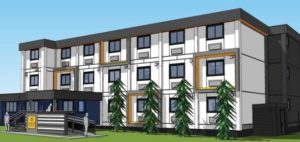
One of the first projects to open its doors was the McLaren Housing project, a 12-storey, 110 multi-tenant residential supportive social housing complex located at 1249 Howe Street, in downtown Vancouver, just south of Davie Street.
Also in the mix in 2007: Mayor Sullivan convinced Minister Coleman to purchase and renovate 23 (a number which rose to 30) SRO hotels located on the DTES, renovate them to make them livable for the new tenants / formerly homeless persons who would live in the newly renovated hotels, ensuring that a reputable social agency would be hired to operate each hotel, and provide support services.
The 2008 homeless count results indicated there were 2,660 homeless living rough in the City of Vancouver, couch surfing, living in their cars, and living in shelters.
In early 2013, when construction was completed on all 14 social housing projects, and 30 renovated DTES hotels, with tenants moved in, the homeless count that year indicated a rising number of 2,777 homeless persons — even given that all the new 6000 social housing and renovated SRO hotel units were fully occupied.
How does one build 6,000 new units of social housing in the City of Vancouver, and the homeless count rises? See yesterday’s VanRamblings’ column.
Time for A Bit of B.C. Homelessness History
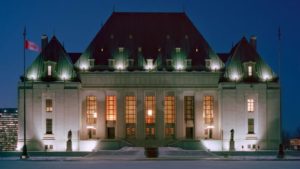
In 1981, the Supreme Court of the United States ruled that “the state does not have the authority to institutionalize and warehouse its citizens” who suffer from a mental health disability, that this population embodies the same right to life, liberty and the pursuit of happiness as do all citizens.
As such, SCOTUS ordered the United States federal government, and all U.S. states, to de-institutionalize all those persons who were resident in mental health facilities located across the United States of America.
The Supreme Court of Canada made a similar ruling the following year.

In British Columbia what that meant was: all persons resident in facilities such as the Woodlands Asylum in New Westminster (pictured above), at Riverview and Essondale in Coquitlam, at the Willingdon Treatment facility in Burnaby, and the Tranquille Sanitorium in Kamloops (pictured below) must be released from each of these facilities with all due haste, in order that those persons who’d been locked away from society for decades might once again be free to join society.
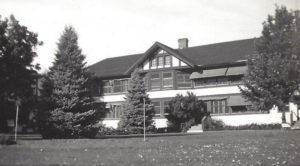
In the 1990s and early 2000s, VanRamblings worked with a number of Woodlands’ former residents, who told stories of a hell on Earth, as they were locked away for years from the eyes of society. Horror stories of abuse were reported in the media, the electroshock therapy, lobotomies conducted with a butter knife under an eyelid — when nerve pathways in the frontal lobe were severed, rendering the person apathetic, emotionally unavailable and passive — and the inhumane, Marquis de Sade-like, One Flew Over the Cuckoos Nest conditions which many residents had suffered through relentlessly for decades on end.
Said one resident of the Woodland facility to VanRamblings: “I was a resident, a prisoner in Woodlands for 3 decades, institutionalized when my parents died in a car accident when I was a young boy, locked away with no contact with the outside world for decades.
Friday night was bathing night. No matter the time of year, no matter the weather, the inmates — for that’s what we were — of Woodlands would be lined up naked, outside along the concourse leading to the shower facility. Sometimes we’d be in the cold for half an hour. Upon entering the brick shower room, we would be hosed down with a hose with great velocity, like a fire hose, sometimes lifted off our feet and thrust against the wall behind us. When the staffperson conducting the shower thought we were clean enough, we were dismissed, returning naked to our room.”
The humane plan of action to transition those millions of persons across the United States and Canada who had long been imprisoned in “mental health” facilities “to protect the health of society”, into homes in neighbourhoods adjacent to the mental health facilities, cared for and supported in community housing settings that would allow these persons freedom of movement, to live their lives with a modicum of respect and dignity, to find a job, or love, never came to pass.
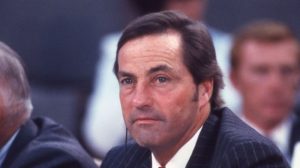
In the 1980s, North American governments consisted of socially maladaptive, right wing, penny pinching ideologues, each seemingly without hearts or a conscience: U.S. President Ronald Ronald Reagan, Progressive Conservative Prime Minister Brian Mulroney, and in British Columbia, a miserly Premier Bill Bennett, who were unwilling to spend one red cent to house and care for these newly “free” persons.
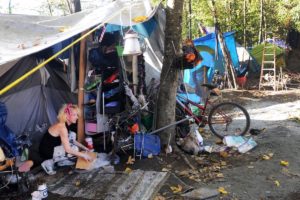
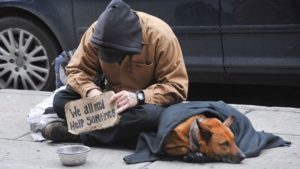
And, of course, you know where this newly-released but homeless population took refuge: on our streets, in our back alleys, under bridges, alone and uncared for, the beginning of a homelessness crisis that maintains until this day, those living rough who no longer had access to the medication they received at Riverview or Tranquille, self-medicating with drugs from the street, paid for through the commitment of crime. A new disorder now reigned on our streets, a smell of death.
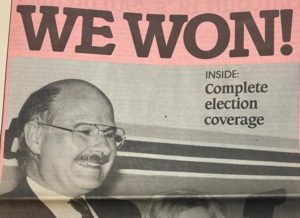
Upon being elected Premier of the province of British Columbia, on election night Thursday, October 17 1991, Mike Harcourt pledged to alleviate the misery of those persons who were living and dying on Vancouver city streets. Safe haven was the order of the day: the province stuck a deal with dozens of DTES SROs — facilities inspected for their livability — where the government would pay the shelter portion of the income assistance cheque directly to the landlord / owner of the SRO.
Building wrap-around services for these former residents of Tranquille, Riverview and Woodlands now living on the downtown eastside, all remained quiet on the social services front for a decade. The homeless were off the street and cared for, a continuing homelessness crisis ended, until two watershed events took place …
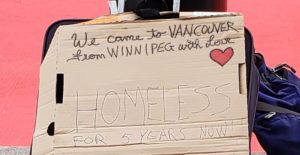
- Soon after becoming Alberta’s 12th Premier, on Monday, December 14th, 1992, a newly-elected Ralph Klein made a controversial decision to ship the province’s welfare recipients to British Columbia, giving them a bus ticket and waving them goodbye. Alberta’s indigent de-population programme proved so successful that it was adopted by provinces across our federation — in 1995, the government of Ontario Premier Mike Harris offered up to $1,500 in travel expenses to welfare recipients to move to B.C, and in 2016, the Saskatoon Star Phoenix published a story that stated two young First Nations men were each given one-way bus tickets from North Battleford to Vancouver and Victoria — in a practice that remains active to this day;
- In 2001, British Columbians elected a far-right, disreputable Mike Harris clone as our Premier: Gordon Muir Campbell. Even before the new Premier got started cancelling union contracts, Gordon Campbell passed an Order in Council requiring all recipients of income assistance and persons with disability to re-apply for their benefits, proclaiming to the masses, “There is immense fraud in B.C.’s welfare system. My government is going to root it out, and save the Treasury billions of dollars.” Yeah, well, that didn’t happen, did it? What happened instead is that Campbell cancelled the NDP programme that paid for SRO accommodation for Vancouver’s soon-to-be homeless population, thrusting hundreds of income recipients onto Vancouver streets.
So, 2001: Canadians provinces sending their homeless to B.C., as Canada’s new dumping ground for our nation’s indigent population, while a cruel Gordon Campbell government de-housed hundreds / thousands of income assistance recipients, forcing them onto the streets. No wonder Gordon Campbell came perilously close to losing government in the 2005 British Columbia provincial election.
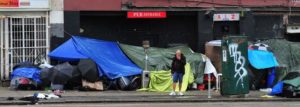
Clearly, all you have to do is look around, or watch the news, to realize the homelessness crisis in Vancouver has not abated, has only gotten progressively worse since 2001. Lives of desperation, and a population of the perpetually unhoused.
What is to be done? How do we end the human misery of homelessness?
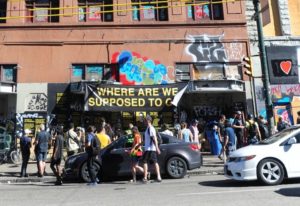
VanRamblings will present a bit more history on our province’s homeless in Wednesday’s column, and present a a revolutionary programme of restoration, recovery and deliverance, as envisioned by both soon-to-be Premier David Robert Patrick Eby, and certain-to-become Mayor on October 15, 2022, TEAM … for a Livable Vancouver’s, that Irish gal you love so very, very much, Colleen Hardwick.