Tag Archives: christine boyle

#BCPoli | Prepare for a Change In Government

On Tuesday, September 22, 2026, BC NDP Premier David Eby — contrary to the demand of his Cabinet, and members of his caucus — announced a snap election, after meeting with Lieutenant-Governor Wendy Cocchia at Government House in Victoria. That means, Election Day is this Saturday, October 24th, one week after  municipal elections across British Columbia this past Saturday, October 17th. The upcoming election this Saturday is our province’s 44th provincial general election since Confederation.

David Eby’s 2026 B.C. election campaign: 20 major promises
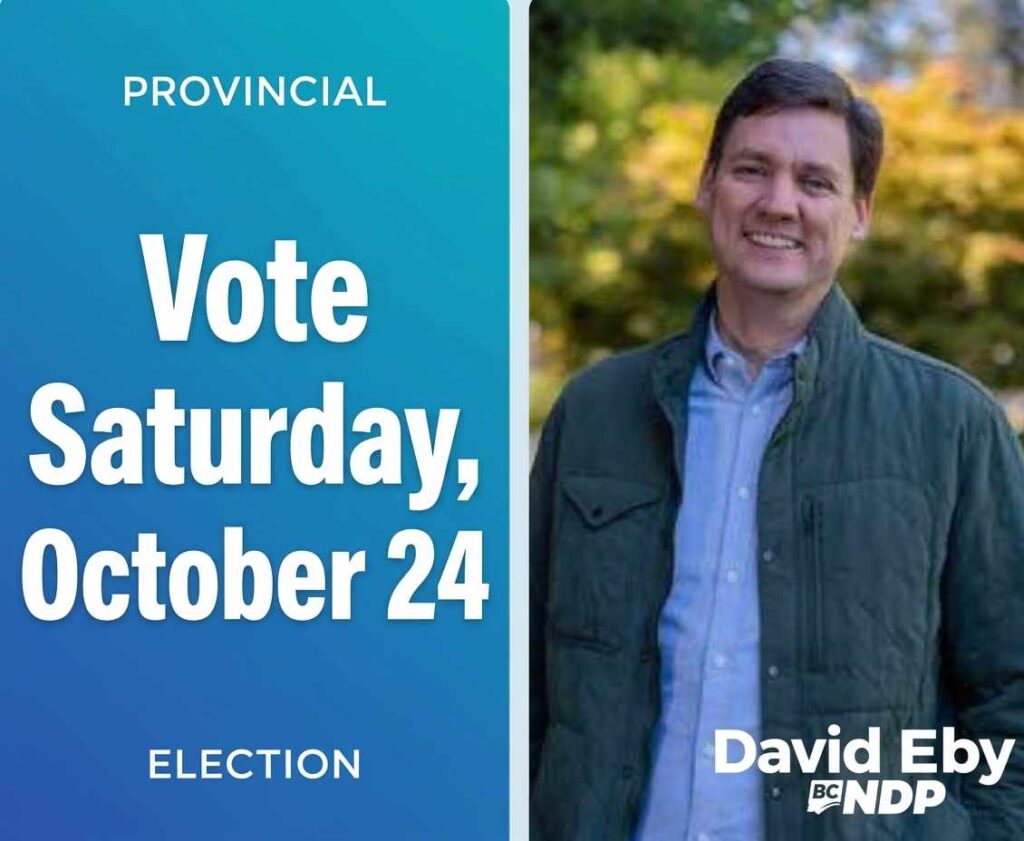
David Eby began his campaign for re-election as British Columbia Premier on September 22, 2026, with a central message: protect jobs, make life more affordable, strengthen public services and build a more self-reliant provincial economy amid the trade dispute with the United States.

Two early announcements were particularly significant. On September 18, before formally calling the election, Eby announced a pause in the planned expansion of the provincial sales tax (PST) to professional services and said future BC Ferries vessels would be built in British Columbia. The PST delay was estimated to save businesses, local governments and others approximately $260 million in 2026–27.

Here, then is a curated list of commitments, based on the BC NDP’s published campaign material and election coverage available as of October 21, 2026.

Taxes, affordability and the cost of living

  • 1. Pause the PST expansion. Delay the planned application of the provincial sales tax to professional services until well after the U.S. trade war ends. The initial pause was announced on September 18;
  • 2. Cut gasoline and diesel prices. Suspend 10 cents per litre of the provincial motor fuel tax, with the NDP projecting that its combined measures could reduce pump prices by as much as 30 cents per litre. Plus, cracking down on excessive fuel prices, by giving the BC Utilities Commission a stronger role in enforcing pricing rules and limiting excessive industry margins;
  • 3. Limit grocery markups on essential foods. Cap retail profit margins on products such as milk, eggs, cheese, butter and poultry. As well as combat algorithmic price discrimination. Strengthen consumer-protection and privacy laws to restrict AI-powered pricing practices that charge consumers different prices based on their personal data;
  • 4. Freeze ICBC insurance rates for another three years. Extend the existing rate freeze, bringing the proposed period of frozen rates to a decade;
  • 5. Ask higher-income earners to contribute more. Increase provincial income-tax rates for the top two tax brackets and establish a new bracket for annual income above $1 million. The NDP says the changes would affect fewer than 4% of income earners and raise approximately $1 billion annually.

Jobs, manufacturing and economic independence

  • 6. Build the next generation of BC Ferries in British Columbia. Require future vessels to be built in Canada, expand the provincial shipbuilding industry and develop a Made-in-B.C. shipbuilding strategy, as well as establish a new B.C. shipyward, working with the federal government, shipbuilders and organized labour to develop a new shipyard, with up to $250 million available provincially to leverage private and federal investment;
  • 7. Create dedicated support for forestry manufacturers. Help tariff-affected mills modernize, produce higher-value products, reduce costs and find customers outside the United States;
  • 8. Prioritize B.C. and Canadian-made products. Introduce purchasing rules for provincial ministries, Crown corporations and health authorities to favour locally and nationally produced goods and materials where viable;
  • 9. Double critical-mineral production and exports, while expanding the capacity of the Port of Prince Rupert, doubling B.C.’s critical-mineral production and exports within five years, strengthening trade links beyond the United States;
  • 10. Help small businesses survive tariffs and wildfires. Continue targeted assistance, including interest-free loans of up to $1 million for eligible businesses through the Small Business Tariff & Wildfire Relief Fund. While also helping small businesses hire young workers. Offer a $5,000 refundable tax credit to eligible small businesses hiring a young person aged 18–30 for their first full-time, 12-month job;
  • 11. Expand food processing in B.C. Make use of eligible Agricultural Land Reserve properties poorly suited to primary food production, while protecting prime farmland and creating local processing jobs.

Health care and seniors

  • 12. Triple recruitment of health-care workers from the United States. Expand efforts to attract American doctors, nurses and other health professionals to work in B.C.;
  • 13. Make shingles vaccination free for everyone aged 50 and older. Expand access to vaccination by removing the cost for eligible adults in this age group.

Housing and child care

  • 14. Turn more empty condominiums into affordable homes. Pursue measures to bring more vacant condo units into use as homes people can afford;
  • 15. Add 7,200 before- and after-school child-care spaces. Expand school-based care to help parents find convenient care for school-aged children. While Introducing a universal child-care fee cap on child-care fees, modelled on Ontario’s approach.

Transportation and public infrastructure

  • 16. Give local residents priority in BC Ferries reservations. Introduce a pilot reserving 12% of advance-booking space for local residents;
  • 17. Increase funding for public transit. Add $40 million annually to BC Transit funding to expand bus service, improve connections between communities, while delivering rapid bus transit in Metro Vancouver, making seniors’ bus passes free for low-income seniors and extending free transit passes to an estimated 350,000 eligible seniors across B.C.;
  • 18. Double provincial funding for public libraries. Permanently increase annual provincial library funding from $14 million to $28 million.

Environment, public safety and community support

  • 19. Protect more of B.C.’s land and water. Continue the commitment to protect 30% of the province’s land and water by 2030. Plus, fund climate action through new resource revenues. Dedicate a portion of provincial revenue from new oil and gas development to climate programs, beginning with a proposed $50-million investment;
  • 20. Expand involuntary care options in the Okanagan. Advance plans to increase access to involuntary mental-health and addiction treatment for people who meet the applicable criteria. Also, strengthen protections against gangs, guns and extortion. Make organized crime and extortion a campaign priority, with additional measures aimed at protecting communities and businesses.

For all of the commitments made to the citizens of British Columbia by the David Eby BC NDP government seeking re-election, in all of the polls published in the final week of the election campaign, it would seem David Eby is on his way to ignominious defeat this upcoming Saturday evening.
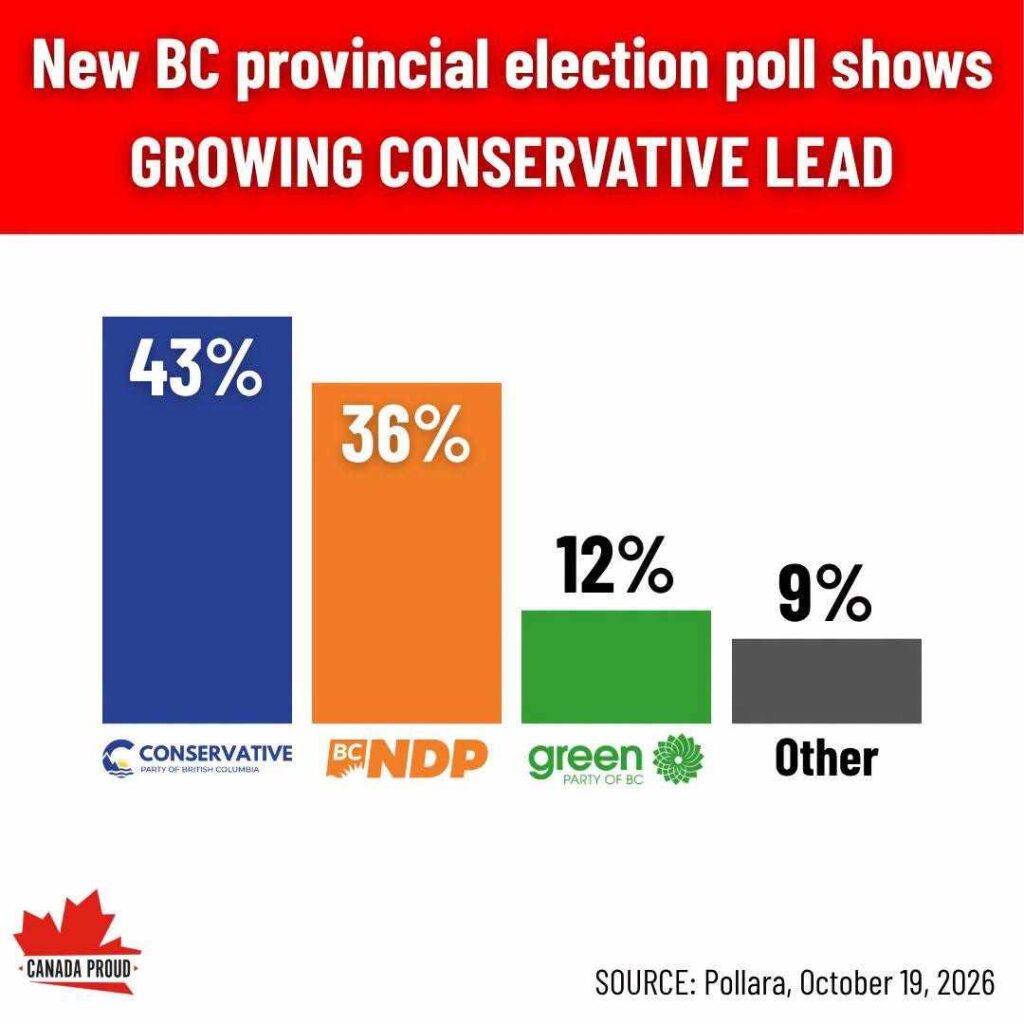
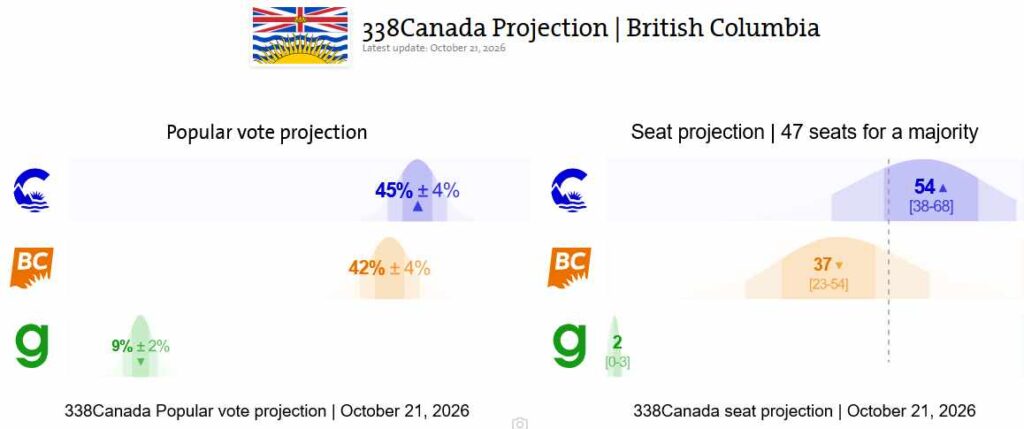
With each passing day the polls and the projected seat count for what now appears to be the outgoing British Columbia New Democratic government only worsens.

Below you will find the results of intensive polling conducted in all 93 riding across British Columbia. First up, focusing mainly on Metro Vancouver.
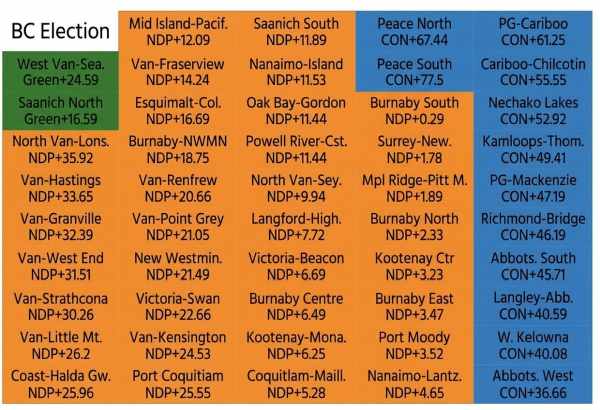
Not bad for the BC NDP: 35 NDP; 2 Greens; 12 Conservatives. Next up: the Interior.
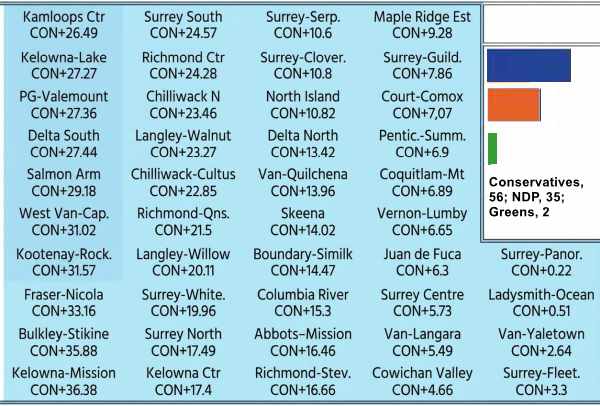
The entire rest of the province is turning blue. There are few, if any, safe seats for David Eby’s BC NPD outside of the Metro Vancouver region, with a handful of seats on Vancouver Island, and one on the Sunshine Coast.
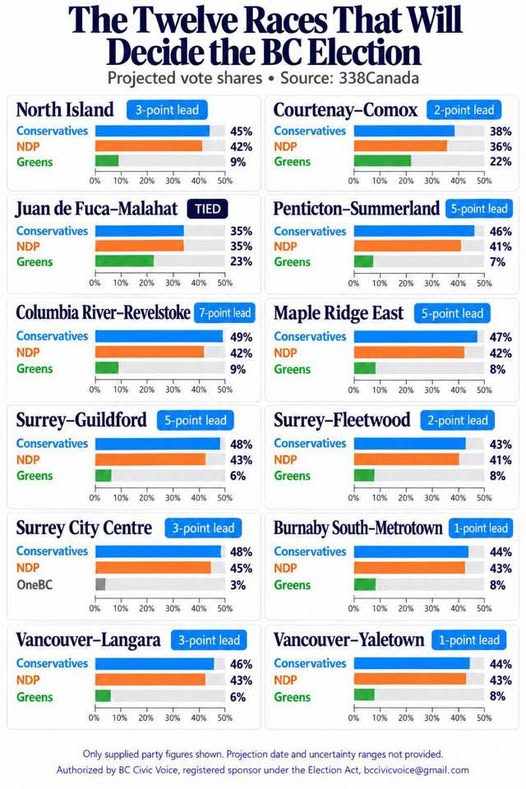
The only question that remains is: what will David Eby do on Election Night? Speculation is that if the election is a rout, and Mr. Eby’s party is only able to secure 29 or so seats — a possible outcome according to internal polls conducted by the Conservative Party of British Columbia — Mr. Eby will resign as leader of the BC NPD on Election Night.

VanRamblings would prefer that Mr. Eby tender his resignation in the new year.

Prior to calling the snap election, David Eby made a commitment to the members of his Cabinet and caucus: if he were to win anything less than a comfortable majority on Election Night, he would resign the leadership of the BC NDP this upcoming late winter / early spring, in order that a New Democratic Party leadership contest might be called by the party brass. Chances are the leadership convention would occur in late March, or early April, when a new leader of the party would be chosen by the party membership.
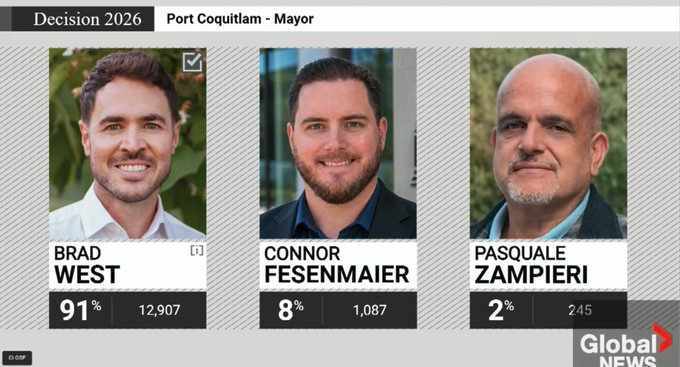
The heir apparent party membership wants: Brad West, the popular three-term Mayor of Port Coquitlam, former Executive Assistant to BC NDP Minister Mike Farnworth and a former communications and political action co-ordinator for the United Steelworkers (USW) union in B.C. There is little doubt that Ravi Kahlon and Christine Boyle would mount effective, well-run, well-financed campaigns for the party leadership, as well.
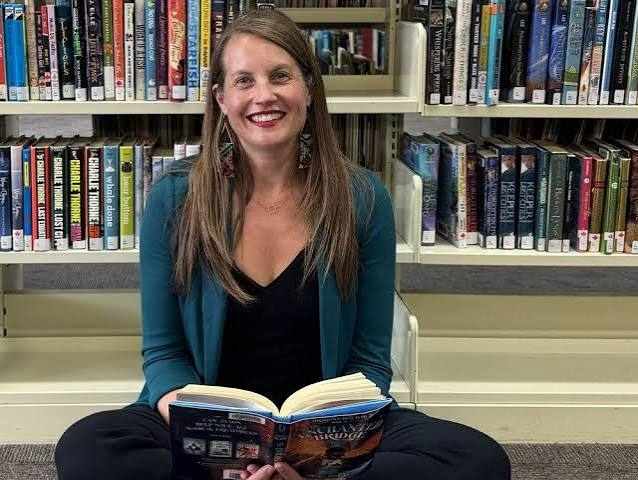
With the help of her brother-in-law Avi Lewis, the leader of the federal NDP, there is little doubt that Ms. Boyle and her backers and supporters would mount a strong campaign. Not to mention which, Dr. Cailey Lynch, the Premier’s better half, would support a run by Christine Boyle to ascend to the leadership.
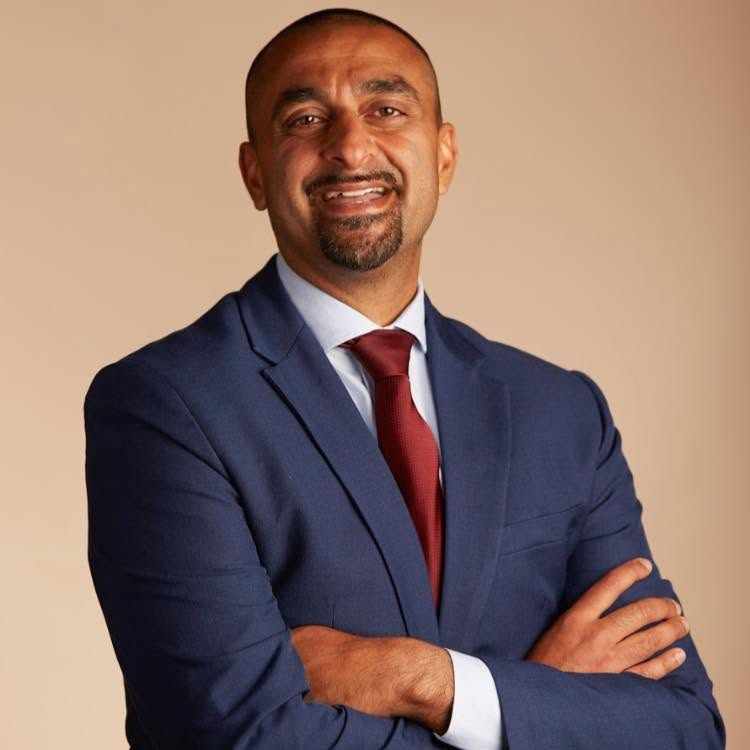
Ravi Kahlon — one of the most reliable and most competent Ministers in the BC NDP government this past 9+ years — wants the leadership, feels he is owed the leadership of the party so badly that he can almost taste it.
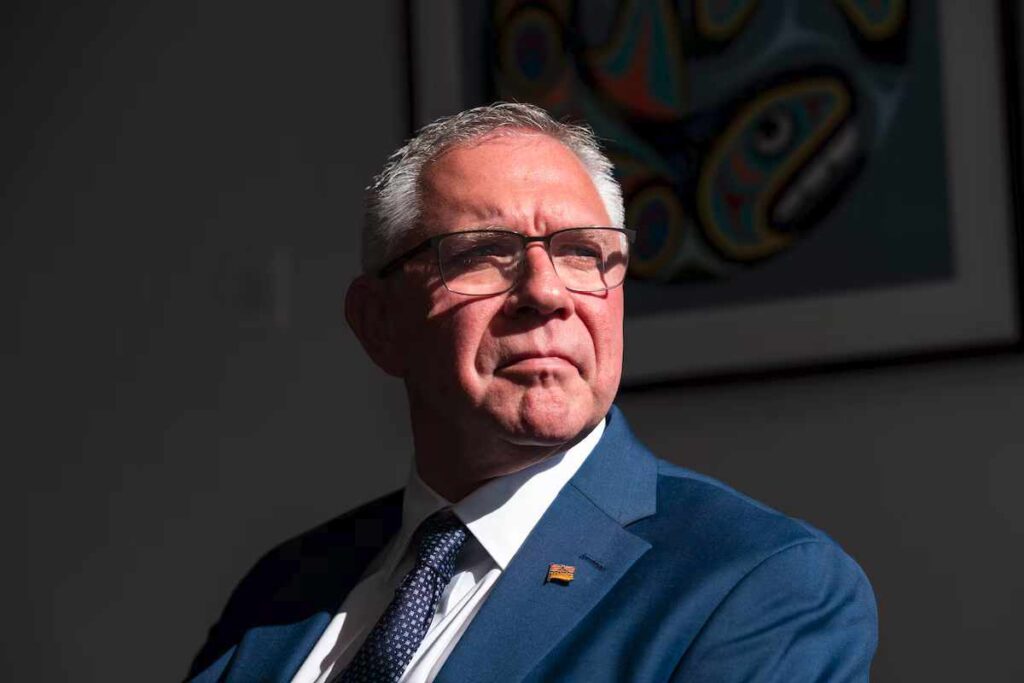
What does a government led by Conservative Party of British Columbia “interim” leader Lorne Doerkson mean for the people of British Columbia? In a word: chaos.

Lorne Doerkson is not the leader of the Conservative Party of British Columbia, he is only the “interim” leader of the party, even if he becomes the Premier.

The constitution of B.C.’s Conservative party requires a leadership contest be held to elect their leader.

The Conservative Party’s Board of Directors have been attempting to convince elected members not to run against Mr. Doerkson, such that he would be acclaimed leader.

If you believe that is a likely scenario, we have a bridge we’d like to sell you, cheap.

You just know the whack job / far right / conspiracy theorist / freedom convoy element in the party will run one of their elected members for the leadership, and mount a campaign to have her or him become the 44th Premier of the province of British Columbia.

So, all the time that a Premier Doerkson should be attempting to put a government into place, rather than focus on the tasks at hand, he’d be traveling across the province during the first five weeks of his new administration, attempting to keep the job British Columbians elected him to.
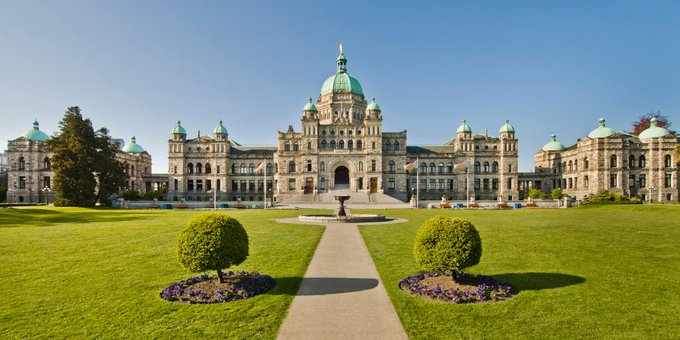
Only in the wild west of B.C. politics could such a disastrous scenario unfold.
#BCPoli | Humane, Innovative Housing Policy Delivered by British Columbia and Ottawa

Prime Minister Mark Carney held a press conference in Vancouver alongside British Columbia Premier David Eby on June 25, announcing innovative measures to create affordable housing in B.C.  

The June 25th announcement by Mark Carney on behalf of the federal government, and British Columbia Premier David Eby should have been a triumph.

Instead, it became a communications debacle.

When Prime Minister Mark Carney stood alongside federal Housing Minister Gregor Robertson, B.C. Premier David Eby and B.C. Housing Minister Christine Boyle to announce that the federal and provincial governments would work together to purchase approximately 2,200 unsold condominiums and convert them into rent-to-own housing, the promise was immediately overshadowed by confusion.

The questions that came were entirely predictable.

  • Where were these condominiums?
  • Who owned them?
  • Would taxpayers be paying full market value?
  • Would they be located in Metro Vancouver, where housing shortages are most acute?

Neither Mr. Carney nor Mr. Eby provided answers during their announcement.

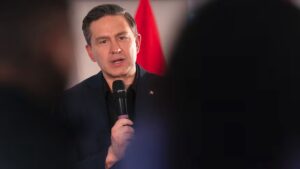
Instead of controlling the narrative, the governments allowed a vacuum to develop, one that was quickly filled by speculation, criticism and political attacks. Journalists demanded details that were not forthcoming, while federal Conservative leader Pierre Poilievre seized upon the uncertainty as evidence that the announcement was little more than political theatre.

Federal Conservative Party Leader Pierre Poilievre speaks out against the federal government’s proposal to purchase vacant condos, during a town hall meeting in Duncan, B.C.  

It was, without question, one of the poorest communications roll-outs either the Carney government or the Eby government has experienced.

And yet, buried beneath the muddled messaging was an idea that deserves considerably more attention than it has received.

In the days following the announcement, Mr. Eby provided the missing details.

Contrary to widespread assumptions, the condominiums would not be concentrated in Metro Vancouver, or even in British Columbia’s largest urban centres. Rather, they would largely be acquired in smaller communities throughout the province where residential developments have stalled or failed altogether.

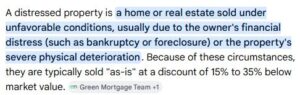
Many of these homes would be what the real estate industry describes as “distressed properties.”

These are condominiums sold under unfavourable financial circumstances because developers have encountered severe financial difficulties, entered receivership, declared bankruptcy or been forced into foreclosure, with licensed insolvency trustees disposing of assets well below their original market value.

Such circumstances create unusual opportunities for public acquisition.

Rather than paying retail prices, governments can often acquire these units at discounts ranging from 15% to 35% below market value.

Completed, distressed vacant condo building ready for sale below market value in Grand Forks, B.C.

Communities such as Grand Forks, and other smaller centres throughout the Okanagan, the Kootenays and Vancouver Island — including Duncan, Port Alberni and Campbell River — contain developments that fit this description.

These are not speculative purchases. They are existing homes. Completed homes. Vacant homes. Homes waiting for occupants.

That distinction matters enormously.

A typical condo construction timeline spans 2.5 to 5 years from initial sales launch to final move-in, a timeline that can stretch even longer due to complex excavation, permitting, and labour demands.

Governments have become accustomed to announcing ambitious affordable housing projects that require years of planning, environmental reviews, permitting, financing and construction before a family receives keys to a front door.

Typically, that timeline stretches three to four years, often longer.

Premier David Eby has argued that purchasing distressed condominium developments offers a dramatically different proposition.

  • The homes already exist;
  • The infrastructure is already built;
  • Water, sewer, electrical service and roads are already in place;
  • Families could move in almost immediately;
  • The economics are equally compelling.

Constructing affordable rental housing has become extraordinarily expensive. Labour shortages, escalating material costs, financing expenses and municipal development charges have pushed construction costs to unprecedented levels.

Acquiring completed condominiums at significant discounts represents substantially better value for taxpayers while simultaneously rescuing developments that otherwise risk remaining empty for years.

The most important aspect of this initiative has received the least attention.

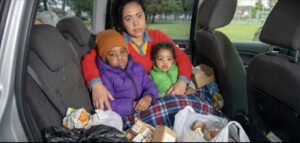
Behind every vacant condominium sits the possibility of a family whose life could be transformed. Not every homeless family sleeps on sidewalks. Many spend months couch surfing between relatives and friends. Some move weekly from one borrowed bedroom to another. Others sleep in aging recreational vehicles parked wherever municipal bylaws permit. Still others live in automobiles, desperately trying to shield children from the instability surrounding them.

For these families, housing is not merely shelter. Housing restores routine. It restores childhood. It restores educational stability, better physical health and improved mental health. It restores dignity.

The proposed rent-to-own model carries particular promise because it offers something beyond secure tenancy. It offers ownership.

Families who have spent years believing home ownership had become permanently unattainable may finally possess a realistic pathway toward building equity and long-term financial security. That possibility should not be underestimated.

If governments can purchase distressed condo developments substantially below replacement cost, rapidly convert them into affordable rent-to-own housing, and provide stable homes for thousands of families who otherwise face years of uncertainty, then taxpayers receive genuine value, while vulnerable British Columbians receive something infinitely more important than political messaging.

They receive hope.

In an age when political discourse increasingly rewards outrage over solutions, this initiative reminds us that governing still matters. It reminds us that budgets are, ultimately, moral documents reflecting the choices society makes about who deserves opportunity and who deserves security. Governments exist not merely to balance ledgers or score partisan victories, but to solve problems that markets alone cannot resolve. Housing is one of those problems.

We live in anxious times, when too many families have begun to wonder whether stability itself has become a luxury. Against uncertainty, both the B.C. and federal governments are attempting — however imperfectly — to meet the moment.

If vacant homes become places where children sleep safely, parents regain hope, and families begin building lives instead of merely surviving them, then history will remember not the fumbling announcement, but the quiet dignity of thousands of front doors opening onto a better future.

#BCPoli | BC Election 2024 Vancouver-Little Mountain May the Best Wo/Man Win

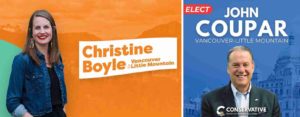
On Friday, May 3rd, the Conservative Party of British Columbia announced former Vancouver Park Board Chairperson John Coupar as their candidate in the newly-created riding of Vancouver-Little Mountain, in the upcoming provincial election.


John Coupar announced as BC Conservative Party candidate in the riding of Vancouver-Little Mountain

John Coupar is best known for his role in saving and restoring the iconic and much beloved Bloedel Conservatory atop Queen Elizabeth Park, located at the geographic centre of Vancouver and the Little Mountain riding.

“Public safety is issue number one. Residents deserve to walk down the street without worrying about being assaulted or robbed,” says Coupar. “I know this riding and the people who reside in it. I’ve lived in Olympic Village for over a decade.”

Upon accepting the Conservative Party of B.C. nomination, John Coupar had this to say about Christine Boyle, his BC NDP opponent in Vancouver-Little Mountain.

“The current NDP candidate, Christine Boyle, has not represented the concerns of this community. She doesn’t even live in the riding. She promoted the ‘defund the police’ movement, and supports reckless policies on illicit drug use. Quite simply, Christine Boyle is out of touch with the concerns of the community. The residents of Vancouver-Little Mountain require a common-sense approach to governance that will restore public safety, make life affordable, and a responsible MLA in the B.C. Legislature who will represent the best interests of the community,” concludes John Coupar.


BC NDP candidate, Vancouver City Councillor Christine Boyle, seeks office in Vancouver-Little Mountain

After a hard fought nomination race, on April 4th of this year, two-term Vancouver City Councillor Christine Boyle secured the British Columbia New Democratic Party nomination in the newly-created riding of Vancouver-Little Mountain.

“It’s an incredible honour to be your BC NDP candidate in Vancouver-Little Mountain in the upcoming B.C. election,” Ms. Boyle posted on the X social media platform upon securing the nomination. “Thank you for your support, for your encouragement and for your passion as together we work towards building a fairer, healthier and more affordable British Columbia for all.”

BC NDP candidate Christine Boyle for Vancouver-Little Mountain, with media after winning nomination

David Eby weighed in when Ms. Boyle secured the Vancouver-Little Mountain nomination.

“As a Vancouver City Councillor, Christine Boyle is a tireless champion for everyday people and the social good,” Eby said.

“I know she’ll bring that same energy and compassion to her work for people as a BC NDP MLA. Christine will be a strong addition to our team, and a great representative for people in Vancouver-Little Mountain and the issues they care about.”

Christine Boyle is a strong advocate for rental, co-op and non-market housing.

Since first being elected to Vancouver City Council in 2018, and re-elected to a second term on Council in 2022, Christine Boyle has only served to strengthen her environmental and climate advocacy bona fides — including, leading the development of Vancouver’s Climate Emergency Action Plan — which, when you consider that BC Conservative party leader John Rustad believes climate change to be a hoax, makes Ms. Boyle’s election to Victoria all that much more important.

Sources within both the BC NDP and the BC Conservative Party tell VanRamblings that Christine Boyle currently enjoys a five-point lead over John Coupar in the race to become the Member of the Legislature representing Vancouver-Little Mountain.

In the interest of full disclosure, as we wrote on social media yesterday, VanRamblings will formally endorse John Coupar in the lead up to British Columbia’s October 19th provincial election, when we will express why we believe it is critical to the interests of B.C. citizens that John Coupar becomes a member of the BC Conservative Party caucus, a goal that could be achieved should the residents of Vancouver-Little Mountain in all their wisdom elect John Coupar to represent them in the British Columbia Legislature over the next four years.

Here’s what we wrote yesterday on social media in support of John Coupar’s candidacy for elected office under the Conservative Party of B.C. banner.

“I am supporting John Coupar, who I’ve know well since 2011, someone I speak and meet with regularly, someone who saw me through my cancer journey, one of the best men I have ever known, a compassionate and caring man of character who doesn’t suffer fools gladly and stands up for the guiding principles that have defined his life of service and contribution, a champion of the gender variant community, and a person of character who I believe it is critical to have sitting in the BC Conservative caucus.

In the case of John Coupar, it is the privilege of my life to count John among my friends.

My endorsement of John is not meant to suggest that Christine Boyle — his NDP opponent — is not a worthy candidate, or that she wouldn’t make a fine member of the British Columbia Legislature.

The above said, my support for the re-election of British Columbia’s New Democratic Party government could not be stronger, as will be evidenced in my writing in the weeks to come.”

Make no mistake, this will be a close election, with either the NDP eking out a win to form government over the next four years, or the Conservative Party of B.C. — with the wind at their back, riding the coattails of popular federal Conservative Party leader Pierre Poilievre, who is currently polling at 50% support among the B.C. electorate — forming government, from late 2024 through the fall of 2028.

We’ll know the outcome of the provincial election on Saturday, October 19th.

Whoever secures government on the evening of October 19th, VanRamblings implores you to not allow yourself the destructive indulgence of division.

When you awake on a peaceful October 20th morning, those who love you will still love you, and as we head into the holiday season in November and December know that there will be much to be thankful for in all aspects of your life.

Yes, elections are important, and we all — well, at least those diminishing few of us who are engaged in the conditions that impact on our lives, and give a good galldarn about politics, and know how important the role of government is in determining the livability and economic and social viability of our province — will continue on with our lives as we always have, experiencing occasional peripatetic joy, while appreciating the natural beauty of our province, and the love of all those who play a critically important role in the stability and the livability of our lives.

#BCPoli | #VanPoli | Vancouver-Little Mountain NDP Nomination Battle


Andrea Reimer and Christine Boyle. Candidates for the Vancouver-Little Mountain NDP nomination.

Three weeks from today, the remaining 300 members of the Vancouver-Little Mountain NDP riding association will cast their ballots to choose who they wish to represent them in the upcoming October 19th provincial election.

Background as to membership numbers: when, in late 2022, Anjali Appadurai announced her intention to run for the leadership of the provincial NDP, 200 citizens who lived in the Vancouver-Fairview (now called Vancouver-Little Mountain) NDP riding signed up to support her candidacy — but did not renew their membership this past, or this, year, leaving 300 remaining voting members in the riding to cast a ballot in the current race to determine the provincial Vancouver-Little Mountain NDP candidate. In 2021, Ms. Appadurai had run as the federal NDP candidate in the riding of Vancouver-Granville, which shares borders with Vancouver-Fairview, thus was well-positioned to re-sign members during her provincial leadership bid.


Vancouver-Fairview MLA George Heyman will not seek re-election in the October provincial election.

In the lead-up to former three-term Vancouver City Councillor Andrea Reimer announcing her Vancouver-Little Mountain New Democratic Party nomination bid, Ms. Reimer and her team were able to sign up a handful of NDP members in the riding to support her candidacy for the nomination, following George Heyman’s March 4th announcement that he would not seek a further term in the Legislature.

George Heyman endorsed Andrea Reimer at his retirement announcement.

Much to the surprise of political observers, current two-term OneCity Vancouver Councillor Christine Boyle announced her candidacy for the Vancouver-Little Mountain NDP nomination, within an hour of Ms. Reimer’s announcement.

Vancouver-Little Mountain membership was locked in early March, just prior to Andrea Reimer and Christine Boyle announcing their respective nomination bids.

After which, the NDP nomination race in Vancouver-Little Mountain was engaged.

Ms. Reimer’s Twitter announcement was followed by Ms. Boyle’s …

In the 10 days since their respective announcements, both Andrea Reimer and Christine Boyle have been active on the campaign trail …

Christine Boyle also tweeted out her work with volunteers on the campaign trail.

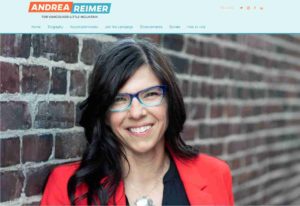
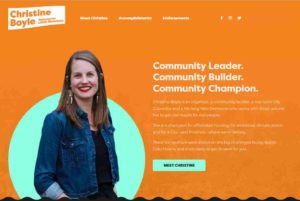
Both Vancouver-Little Mountain NDP candidates for nomination have active websites.


Each day on her website & on social media, Andrea Reimer has announced one or more endorsements.


When it comes to endorsements, nomination candidate Christine Boyle’s website hasn’t been as active.


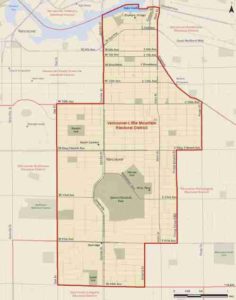
Click on the Vancouver-Little Mountain Electoral Map [PDF] for finer detail.


So, where are we three weeks out from April 4th’s NDP nomination meeting?

Andrea Reimer has run a 24-hour-a-day, high energy, community-oriented and tightly focused campaign to gain the Vancouver-Little Mountain NDP nomination.

Christine Boyle has also been out on the campaign trail, but her commitment to gaining the Vancouver-Little Mountain NDP nomination has been hamstrung by her full-time job as OneCity Vancouver’s only member on Vancouver City Council.

Should Andrea Reimer secure the Vancouver-Little Mountain nomination, she is a lock to be appointed as British Columbia’s next Environment Minister this upcoming November, when a newly-elected Premier David Eby announces his new Cabinet. Both are can-do, no nonsense politicos, both are team players, and neither politician suffers fools gladly. David Eby prefers to appoint Cabinet Ministers in whom he sees a bit of himself — and that is certainly the case with Ms. Reimer.

Christine Boyle, should she secure the Vancouver-Little Mountain nomination will not be destined for Cabinet, but will most certainly secure a position as a Parliamentary Secretary. To some extent, Ms. Boyle — an Anjali Appadurai acolyte — while friendly with the Premier must be seen as something of a Trojan horse, who will in all likelihood emerge as a thorn in the side of the Premier, as she speaks out against fracking and the lack of progress on the development of the Little Mountain site between 33rd and 37th avenues along Main Street.

Note. There is much NDP support for the policy positions enunciated by Ms. Boyle.


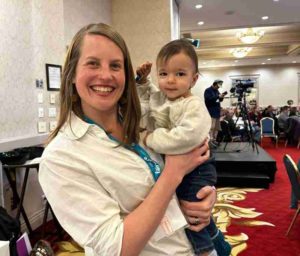
Christine Boyle holding Vancouver School Board trustee Jennifer Reddy’s child in her arms

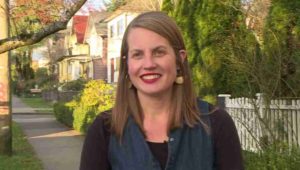
Of all the politicians across British Columbia, Christine Boyle has the most winning smile, and for many she is the most authentic political figure in Metro Vancouver.

While we support Andrea Reimer’s candidacy, we believe the Vancouver-Little Mountain NDP nomination is Christine Boyle’s to lose.

Not a day goes by when we don’t run across someone, or receive a call from an associate who sets about to extol Ms. Boyle’s many virtues — this recognition coming from persons from across the political spectrum. If you’re an old fogey like many of VanRamblings’ associates, you can’t help but look at Ms. Boyle and think, “If she were my daughter, I would be so proud of her.”

[A photo of Christine Boyle accompanies the word charming in the dictionary]

Clearly, Ms. Boyle has much support among younger, more activist NDP members.

Christine Boyle’s campaign for the Vancouver-Little Mountain NDP nomination has been less high profile than that of Andrea Reimer. But does it really matter?

All Christine Boyle needs to do is secure the support of one hundred and fifty-five Vancouver-Little Mountain NDP members to win the nomination.

We imagine that Ms. Boyle has found herself on the doorstep of each riding association member, and been invited inside for a cup of tea, and a warm chat, whereupon Christine Boyle without any effort on her part at all, has charmed the socks off the riding members in whose homes she finds herself, who will invariably be impressed at her deep knowledge of the issues, her presentation of self as an advocate for the change we all want to see, and perhaps the most authentic political figure Vancouver-Little Mountain riding members will have ever encountered.

A winning combination that.


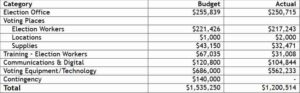
The 2017 by-election expense document published by Vancouver’s City Clerk’s office.

The only potential fly in the ointment of Christine Boyle securing the Vancouver-Little Mountain NDP nomination arises as a consequence of the near million dollar expense to the citizens of Vancouver should she secure the nomination, and go on to attempt to win a seat in the government of Premier David Eby.

Vancouver City Councillor Christine Boyle upon securing a second term of office on Saturday, October 15, 2022 to City Hall, committed to representing those who elected her to office for the full four years of the mandate she had been given.

Given the cut and thrust of politics, one is left to wonder — should Christine Boyle secure the Vancouver-Little Mountain NDP nomination — how she would fare in the upcoming provincial general election, when confronted by her B.C. United, B.C. Conservative and Green party opponents, who would surely call her out on her failure to complete her elected term of office, and the consequent million dollar by-election expense that would ensue, in service of her ambition they might well say.


Andrea Reimer. Vancouver-Little Mountain NDP candidate? B.C.’s next Environment Minister?

Perhaps Andrea Reimer’s high profile campaign to secure the Vancouver-Little Mountain NDP nomination, her many, many endorsements and her active participation in the community — and, let’s face it, her overall competence —  will carry the day, and come the evening of Thursday, April 4th, Andrea Reimer will emerge as the chosen candidate, the Vancouver-Little Mountain NDP candidate who will go on to victory on E-Day, Saturday, October 19th —  where soon after, Andrea Reimer will become British Columbia’s next, much admired Environment Minister.