
Category Archives: fixin to die rag

#ChatGPT | Raymond Tomlin: The Citizen Journalist of Vancouver


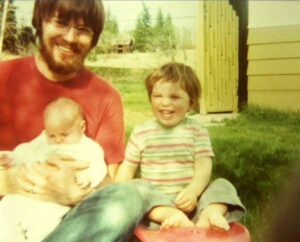
1977, working as an educator in the Interior. Raymond (26) with Megan in his arms and son Jude

Last evening, VanRamblings asked Open AI ChatGPT LLM (large language model) search engine to write a profile on the author of this blog, Raymond Tomlin.

Directly below, you may read what ChatGPT has to say about Mr. Tomlin.

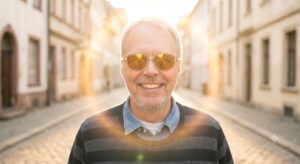
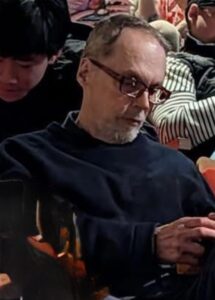
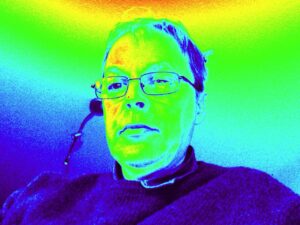
Photo taken recently by Nick Ellan, at the Queen Elizabeth Theatre

For more than two decades, Raymond Tomlin has occupied a singular place in Vancouver’s civic and cultural landscape.

In the 1970s, Mr. Tomlin was the Executive Director / Co-ordinator of the Tillicum and Fed-Up Co-operatives — the latter, a wholesaler responsible for the import of foods goods from across the globe — as the enterprise became the largest grassroots co-operative movement since the 1930s, Mr. Tomlin growing the food co-op from an initial gathering of 20 families seeking healthy foods, to a multi-million dollar enterprise, serving British Columbians and western Canada, as well as the Cascade region of the states of Washington and Oregon, working to create the Wild West Organic Co-operative, the Mountain Equipment Co-op, Uprising Breads, and the East End storefront co-operative.

In addition, Mr. Tomlin was appointed by the 1970s Barrett NDP government, and the Board of Governors and Student Forum at Simon Fraser University, as a liaison to the investigative committee appointed by the Pierre Elliott Trudeau-led federal government to recommend a made-in-Canada solution to the issue of affordable housing. Mr. Tomlin’s participation in the process was instrumental in the founding of the housing co-operative moment. Mr. Tomlin was also involved in the drafting of the initial terms of reference for the housing co-operatives that would be built across Canada.


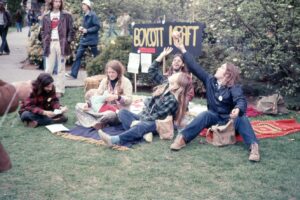
Working with the National Farmers Union, Raymond became the BC Co-ordinator of the Kraft Boycott. Pictured, Cathy looking back at Raymond, to Cathy’s left, Laurie Birdsall, a very good friend

Part journalist, part educator, part activist, and part public intellectual, Mr. Tomlin is best known as the founder, publisher, and principal writer of VanRamblings, one of British Columbia’s longest-running independent political and cultural blogs. Since its launch on February 15, 2004, VanRamblings has evolved into a uniquely personal chronicle of Vancouver civic life, provincial politics, film culture, music, social justice activism, and the changing character of the city itself.

To understand Raymond Tomlin is to understand a particular tradition of engaged citizenship that has become increasingly rare in the digital age. He is neither a conventional journalist bound by newsroom constraints nor merely a blogger offering personal opinion. Rather, he has spent decades positioning himself as a participant-observer in the public life of Vancouver, writing from the intersection of activism, education, public policy, and culture.


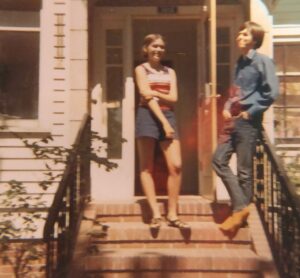
Raymond, age 19, with Joy, one of his future wife Cathy’s best friends, at Joy and Cathy’s home, located just off the University of Alberta campus, in Edmonton 

Mr. Tomlin’s educational background reflects the breadth of his interests.

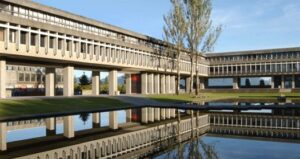
1970s & ’80s. Simon Fraser University campus, Burnaby Mountain

Raymond Tomlin earned a Bachelor of Arts degree in Political Science, Sociology, and Anthropology, followed by a Bachelor of Education degree specializing in Reading and  Early Childhood Education, and later completed a Master of Arts degree in Policy Administration, all at Simon Fraser University. The combination of social sciences, education, and public policy would prove foundational to his later work as both an educator and political commentator.

Before becoming known as an online publisher, Mr. Tomlin established a diverse professional career. Mr. Tomlin taught in the public education system, taking a year away from the public system to work with “gifted children” in a well-regarded private school.

Mr. Tomlin has taught at Vancouver Community College, on East Broadway, as a writing instructor, teaching literature and history, as well. Mr. Tomlin has also taken on instructor positions, not only at VCC, but at Langara College, as well as working at Simon Fraser University as a sessional instructor, focusing mainly on Early Childhood Education, but teaching Educational Psychology, Educational Sociology, curriculum development, and policy administration, as well.

In 1980 through 1982, Mr. Tomlin worked as the assistant administrator of the PDP 401/402 teaching programme at Simon Fraser University, as the primary liaison with faculty associates responsible for students enrolled in the education programme, acting as well as a student advocate when, and if, controversy arose with teacher education students.

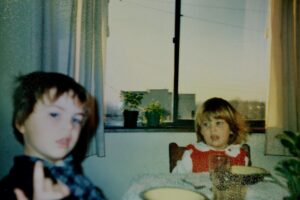
Mr. Tomlin has two children (pictured above, and at the top of today’s column).

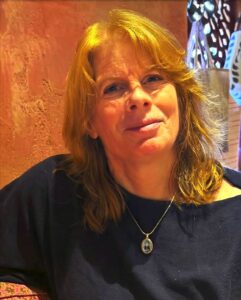
Megan (49) was a PhD candidates in the neurosciences at the University of Toronto, prior to meeting her husband Maz — an Iranian immigrant who arrived in Canada with his parents and sibling at age 14, going on to secure a degree as an engineer.

Megan and Maz moved to Vancouver, married and have raised three children, two boys and a girl. Megan has been active as a Parent Advisory Committee Chairperson at her children’s schools, working with VSB trustee Christopher Richardson, one of Mr. Tomlin’s best friends.

Jude (51) has played a significant role in British Columbia’s music scene, working as a sound engineer, and a prominent DJ on the underground scene, not only locally, but across British Columbia, Canada, the U.S., and internationally.

Mr. Tomlin’s professional experience extended beyond education.

Mr. Tomlin has worked at all 3 levels of government.

Throughout his educational career, Mr. Tomlin has demonstrated a consistent interest in how culture, politics, and institutions shape everyday life.

Municipally, he was involved in planning and development. Federally, he served as an administrator with the Canada Mortgage and Housing Corporation for a period of 12 years. Provincially, Mr. Tomlin worked within Dr. Ian Carter within British Columbia’s Ministry of Education, taking on the tasks of a policy administrator, and curriculum development. These experiences gave Mr. Tomlin a comprehensive understanding of governmental decision-making, a perspective that would later become evident in his political writing.

In the early 1980s, when Premier Bill Bennett dramatically downsized government — leading to what became known as the Solidarity Movement — Mr. Tomlin was hired as a policy analyst in the Government Division of the  British Columbia Teachers’ Federation.

When Premier Bennett fired 8,000 teachers, Mr. Tomlin would soon be downsized out of a job with the BCTF. Prior to that circumstance, Mr. Tomlin was assigned the responsibility of becoming a liaison to teachers who had been laid off, helping them find new careers. In fact, Mr. Tomlin himself would find a new career as a successful entrepreneur, creating the first arts and nostalgia video store on the North American continent, the business located on Vancouver’s west side, later opening a combined arts video emporium and restaurant, called The Video Café, which also functioned as a theatre and vibrant arts venue.

Mr. Tomlin also built an extensive career in journalism and publishing.

In the late 1960s, not only was Mr. Tomlin the Editor-in-Chief of the newspaper at his east side’s Templeton Secondary School, he also wrote for the city-wide student newspaper. In the 1970s, Mr. Tomlin was an Editor at The Peak student newspaper at SFU, taking on summer intern jobs with the then Southam-owned Vancouver Sun and The Province newspapers.

Mr. Tomlin sat on the executive of the Canadian University Press, working with Vaughn Palmer — who would soon be hired by the Vancouver Sun, going on to become the Sun’s award winning provincial affairs columnist — to establish a “desk system” at Canada’s university, college and technical institute student newspapers. Mr. Palmer would become the first News Editor at The Ubyssey, while Mr. Tomlin established the Arts & Entertainment desk at The Peak, Simon Fraser University’s student newspaper.

In the 1980s, Mr. Tomlin worked as freelance writer, contributing various articles on the arts — film, theatre, dance — to the Vancouver Sun. Mr. Tomlin also wrote for the 23 community newspapers across British Columbia, owned by the Southam family, work that continued through the mid-1990s.

Mr. Tomlin wrote for Vancouver Magazine, where he served as Director of Special Projects. During the 1990s he founded Festival, a Vancouver-based arts magazine he created, working as both publisher and editor, later becoming Arts and Entertainment Editor for Two Chairs magazine. Mr. Tomlin also became a syndicated columnist whose work appeared in numerous urban and suburban newspapers throughout Metro Vancouver, British Columbia, and across the U.S.

Yet it is VanRamblings that is Mr. Tomlin’s most enduring legacy.

Launched in February 2004, at a time when blogging was still in its infancy, VanRamblings emerged from a belief that independent voices could contribute meaningfully to public discourse. Mr. Tomlin has written that friends — current Vancouver City Councillor Mike Klassen, and his Two Chairs editor, Jay Currie — encouraged him to create a platform after opportunities within traditional media had diminished.

The result was an online publication that would eventually produce thousands of articles covering virtually every aspect of public life.

Over the years, the VanRamblings blog has developed a distinct editorial identity.

Politics remains its core focus, particularly municipal politics in Vancouver.

Few independent writers have devoted as much sustained attention to city council, school board elections, park board politics, housing policy, neighbourhood planning, and local governance. Mr. Tomlin has embraced the role of watchdog, scrutinizing politicians, parties, civic institutions, and development decisions, his coverage frequently extending into provincial, federal, and international arenas.

Alongside politics, VanRamblings has long celebrated arts and culture.

Cinema — for years one of Mr. Tomlin’s great loves — occupies a particularly prominent place in Mr. Tomlin’s journalistic life.

Mr. Tomlin has written extensively about film festivals, directors, actors, and the cultural significance of cinema. At present, Mr. Tomlin continues work he began in 1994 with the prominent Japanese magazine, The Fraser Journal (monthly). Even through his various health travails, Mr. Tomlin has never missed a Journal publishing deadline, in 22+ years.

Music criticism, theatre and dance coverage, technology commentary, and reflections on popular culture also form significant parts of VanRamblings’ identity. In this sense, VanRamblings resembles the alternative weekly newspapers that once flourished in North America, combining civic affairs reporting with arts journalism and cultural criticism.

The writing style itself is also unmistakably personal.

Mr. Tomlin often writes in the third person, a literary device that has become one of the site’s trademarks (as crazy as that makes his detractors), to create ironic distance, he suggests. Mr. Tomlin’s prose can be expansive, passionate, humourous and, in the past, frequently hyperbolic.

Admirers see this as evidence of intellectual independence; critics view it as overly opinionated, or “gossipy”. Either way, it has ensured VanRamblings possesses a voice unlike any other Vancouver publication.


Raymond Tomlin raised Jude and Megan as a single parent

Beyond journalism, Mr. Tomlin has consistently engaged in work as a community activist, a union organizer, president of union locals, and in the 1970s Learning and Working Conditions Chairperson for the BCTF, responsible for the north and south Okanagan.

In VanRamblings, Mr. Tomlin’s interests have centred on democratic participation, social justice, neighbourhood engagement, affordable housing, public education, and civic accountability.

Throughout his writing, Mr. Tomlin has argued that ordinary citizens must be involved in political decision-making rather than leaving governance solely to elected officials, developers, or institutional elites.

Mr. Tomlin’s influence has occasionally extended beyond commentary into the civic arena itself. Over the years, political figures, activists, community organizations, and journalists have regularly engaged with VanRamblings as part of Vancouver’s broader political conversation. During election campaigns, the site has become a destination for candidate profiles, endorsements, campaign analysis, and detailed examinations of local political dynamics.

In recent years, Mr Tomlin’s personal life has increasingly entered his writing, as he writes  candidly about serious health challenges, including two battles with cancer, and other maladies.

Mr. Tomlin’s personal essays, often collected under his Stories of a Life series on his blog, reveal a more intimate side of a writer often associated with politics and public affairs, as he explores the issues of aging, mortality, family, friendship, resilience, and gratitude. Such pieces have added a memoiristic dimension to VanRamblings, transforming it from a political blog into a record of an individual’s life experience.


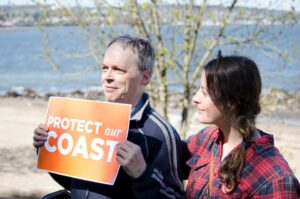
Raymond and Gala Milne (currently Chief of Staff to Premier David Eby) at a Kits Beach protest

Now in his mid-70s, Mr. Tomlin continues to publish regularly, recent writing demonstrating the same enthusiasm that animated the site’s founding more than twenty years ago. Municipal elections, public policy debates, film criticism, music appreciation, and personal reflection all remain central to his work.

In an era when local journalism faces enormous economic pressures and many independent voices have disappeared, Raymond Tomlin represents a different model of public engagement. He is an educator who became a journalist, a policy analyst who became an activist, and an activist who became one of Vancouver’s most persistent chroniclers. Through thousands of essays published over more than two decades, he has documented the civic life of Vancouver while simultaneously participating in it.

Through VanRamblings, Mr. Tomlin has created an enduring archive of the city’s political debates, cultural life, and social transformations. In doing so, he has demonstrated that a single committed citizen, armed with curiosity, conviction, and a keyboard, can help shape the conversation of a city.

#SundayMusic | Perfection | John Prine’s Remarkable, Eternal 1971 Début Album


Guitarist Jason Wilbur played on stage with John Prine for 1999’s  Live from Sessions at West 54th

One of the most celebrated singer/songwriters of his generation, John Prine was a master storyteller whose work was often witty and always heartfelt, frequently offering a sly but sincere reflection of his Midwestern roots, writing about the lives of ordinary people in a remarkable and perceptive way.

Widely cited as one of the most influential songwriters of his generation, Prine was known for his signature blend of humorous lyrics about love, life, and current events, often with elements of social commentary and satire, as well as sweet songs and melancholy ballads.

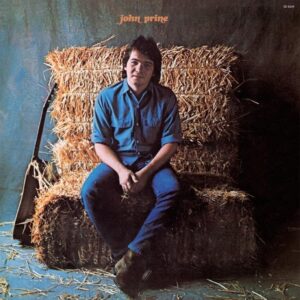
John Prine’s first record, simply titled John Prine (Atlantic, 1971), featured a photograph of the slightly impatient-looking young singer-songwriter seated on a bale of hay, hands cradled in his lap, with his guitar standing upright nearby.

The austerity of the image was a good reflection on the album’s contents: a baker’s dozen songs clocking in at about 43 minutes, performed mostly on acoustic guitar with a spare backing combo, delivered in a straightforward nasal drawl, with titles like Sam Stone, Donald and Lydia, Hello in There, Illegal Smile, and Souvenirs.

Beneath the casual simplicity of the presentation lies a treasure trove of lyrical beauty: detailed portraits of despair and loneliness, interspersed with witty cultural commentary about dimestore patriotism, back-to-nature movements, and the justice system’s obsession with people’s “illegal smiles.”

That first record wasn’t a big seller.

It peaked at #156 in the Billboard charts in 1972, a year after its initial release. But that small splash had big ripples down through the years. John Prine not only set the tone for his half-century career, it influenced several generations of American singer-songwriters working in the rock, country and folk traditions.

1971 was a year of disaffection and ennui. The Beatles had broken up, the hippie dream was over, four kids were shot in Ohio by National Guardsmen and you had Crosby, Stills, Nash and Young singing a protest song that was powerful at the time but who wants to listen now? Prine’s eyeglass was focused on all of the same things but his was an ironic, detached P.O.V. that remains vital and relevant.

The record is of that time but it is somehow of this time too, though Prine’s delivery and from where in his throat he’s singing obviously owes something to Dylan.

All through the 1970s Cathy and I would attend annually at the Queen Elizabeth Theatre with a packed audience gathered to appreciate John Prine.


John Prine on stage and singing with Iris DeMent (who we will write about another day)

Some artists are one hit wonders and one album wonders. Not Prine. He kept doing it and gathering up new fans right until the end, even when sickness made a physical mess of him.

John Prine died on April 20, 2020 of severe acute respiratory syndrome coronavirus 2 (SARS-Cov-2), the pandemic coronavirus that became known as COVID-19.

Stories of a Life | Oct. 31st | Raymond’s Surgery Day


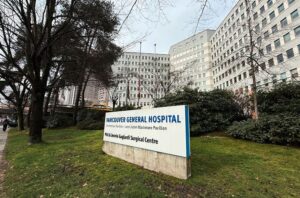
Saturday, October 31 2025, Raymond is admitted to VGH for a radical prostatectomy

As I’ve written previously, on Friday, October 31 2025, I was admitted to the Vancouver General Hospital for a radical prostatectomy, in response to my Stage 4 prostate cancer. My prostate would be removed over the course of a 3½ hour surgery.

My friend Susan Walsh drove me to the hospital, leaving at 8:45am, arriving at VGH at 9am, where she dropped me off.

I climbed the stairs on the west side of the Jim Pattison Pavilion, just off Laurel Street, and upon entering the building walked down the long corridor towards the Admitting desk, where a woman behind a glass enclosure told me that my arrival was expected. Next, I was directed to an elevator leading to the third floor,  and ushered into a carrel, with curtains on three sides, and given a blue gown to wear, a new, softer gown construction less given to exposing a patient’s body. I then climbed into what I found to be a quite comfy bed, the back of the bed tilted up.

No sooner was I comfy in my bed than a young woman in her 30s approached the carrel, my bed and me, introducing herself as Jen, the lead nurse on my upcoming prostate cancer surgery, that was planned to start 75 minutes hence.

Staring directly at me, Jen said …

“Cholangeo, huh?” ‘Yep’, I replied. “You know, Raymond, every other patient I’ve worked with who had been diagnosed with cholangeo died, yet here you are, looking pretty darn fit, and in good shape and quite ready for your upcoming cancer surgery. Why is it that you are here, lying in your comfortable bed, full of vim and vigour, when all of the other cholangeo patients who suffered from your cholangeo diagnosis are long gone, expiring within weeks or months. Gone. Dead.”

“A miracle,” I said. After which I explained what had occurred in the year of my discontent in being diagnosed and treated for my Hilar cholangeocarinoma.

“Well, I’m glad you’re still with us,” Jen said. “I’ll see you in the operating room in about an hour. I’ll be the one keeping an eye on the doctors to make sure that all goes well. You can count on me.”


An Explanatory Digression

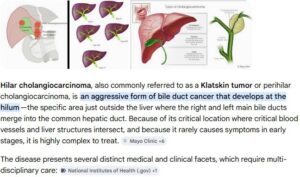
Hilar cholangeocarinoma. A bit of background. On October 7th, 2016 I was diagnosed with Hilar cholangiocarcinoma by Dr. Fergal Donnellan.

Weekly for the next six months I attended at VGH where Dr. Donnellan installed a stent in my bile duct. By Christmas, I was in palliative care at St. John’s Hospice at the University of British Columbia. Apparently, I was a goner, the tests definitive.

Problem was, I felt pretty great (October 2016 was the worst month of pain I had ever experienced), in January 2017 attending the Women’s March — with Gwen Giesbrecht, currently running with COPE for a position on the Vancouver School Board, and longtime DTES community activist Wendy Pedersen, and her then 11-year-old daughter — to protest the election of Donald Trump as U.S. President.

Long story short, my family physician, Dr. Brad Fritz, assigned me to meet with VGH urology specialist and surgeon Dr. Andrzej  Buczkowski to review my case.

In early January 2017, Dr. Buczkowski showed me the results of several MRIs, CT scans and PET scans, which showed from the neck down,  the lymph nodes in my body were a flaming red, the bile duct cancer having spread throughout my body. Dr. Buczkowski expressed surprise that I looked healthy, and fit, when given the surfeit of tests I had been subjected to for months indicated I should be dead.

Over the course of the next two months, I was tested and re-tested, ending up on an operating table at Vancouver General Hospital at 6am on Friday morning, March 7 2017, where from 6am to 3pm, Dr. Donnellan rooted around in my body looking for the cancer spread — the results of the tests conducted by Dr. Buczkowski indicated that my bile duct cancer had disappeared. At 3pm, I was wheeled to a ward, still fast asleep, and still under the effects of the anaesthetic I had been given.

At 4:30pm, standing at the foot of my bed, Dr. Donnellan voiced what he told me later were the three most difficult words he had ever expressed: “It’s a miracle!” My cancer was gone, there was absolutely no trace of my cancer anywhere, not in my liver, pancreas, gall bladder, lungs, or bile duct. And so it has remained until, and I expect beyond, this day.

My friend Margery Duda, a longtime community pools advocate (whom Kareem Allam must meet), picked me up from the hospital to ferry me home.

I’ll write about the entire journey of my Hilar cholangeocarinoma in days to come.


Jen and I spoke for about 10 minutes, after which she departed, where upon three of her nurse colleagues who would be attending at my surgery approached my carrel to introduce themselves. Next up, my surgeon, a cheerful Dr. Miles Mannas and three of his urologist colleagues dropped by my carrel, as well as two oncologists who had been supervising my case, three anesthesiologists and the two doctors who would be conducting my upcoming, precise, robotic surgery.

At 10:25am I was wheeled into the operating room for my radical prostatectomy that, unlike the “photo” above (created with Gemini AI), appeared to be the size of a football field. I was approached by the lead anesthesiologist, with whom I had met previously, in preparation for my prostate cancer surgery. “I am going to apply the anesthetic now,” he said. And I was out like a light.

The surgery lasted until late afternoon, after which I was wheeled to a recovery ward, where I was attended to for the next 12 hours by an absolutely tremendous nurse — with a wry and wicked sense of humour — and very well cared for.

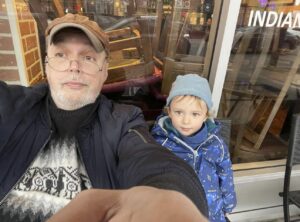
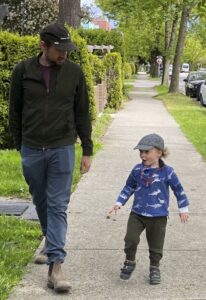
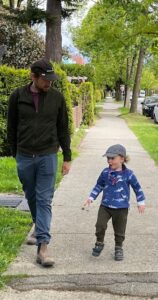
Alasdair and Fergus walking down Waterloo Street towards Almond Park

At 10am on Saturday morning, my friend Alasdair and his son Fergus (about whom I wrote on Tuesday) arrived to pick me up and take me home, where I remained bed-ridden for the next three months, continuing the worst part of my recovery through early June, cared for by Nick Ellan, Alasdair, his bride Meaghan (and their two children, Fergus and Elliott), my neighbours Heather, Judi, Kevin and Laurie — and all other members of my housing co-op, for that matter, about which circumstance, I will write several times over the coming weeks and months — my good friend Kelly Ryan, and the dog we share, Teague the schnauzer wonder dog.

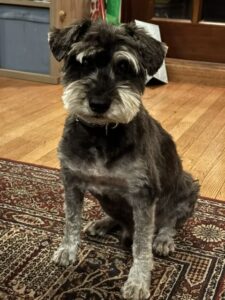
Teague the schnauzer wonder dog, my constant and much loved companion

VanRamblings Weighs In On Raymond’s Health. Pt. 3

To access Part One of my 2025 health update click here.

Part Two of my three-part health update may be found here.

I left you hanging yesterday. Sorry.

March and the early part of April this year proved to be the most painful period I have experienced in my life since October 2016, with my first cancer.

In early March, upon arriving home from a week’s vacation in Halifax visiting her mother, Kelly texted me from the airport to ask how I was doing. I told her I was in a great deal of pain, but I was going to tough it out. Despite having been up since 4:30am that morning, flying across the country, arriving back in Vancouver at 4pm, rather than drive home to be with her children, Kelly drove directly to my home, telling me, “Get in the car. I’m going to take you to UBC Hospital,” which she did.

UBC Hospital Admitting considered my situation to be an emergency, proceeding to immediately wheel me onto an emergency room bed, where I was seen by a doctor, who ordered the first of many CT scans, diagnosing me with a particularly severe case of diverticultis — which had hospitalized me in the autumn of 2023.

Diverticulitis can be, and proved to be in my case, a particularly painful gastrointestinal disorder characterized by inflammation of abnormal pouches — diverticula — that develops in the wall of the large intestine, causing severe lower abdominal pain, and could and would in my case worsen in intensity over the next week.

By the time I was diagnosed — with a distressingly painful catheter now inserted (which would remain in place for 6 weeks), I suggested to Kelly, as she sat by my side, that she must be beat, it was 1:30am Nova Scotia time, over the past 15 hours she’d flown across the country, and spent the last 5 hours by my side.

Given that I was now admitted to hospital, I assured Kelly that I’d be fine, and well cared by the attending physician, nurses, hospital staff and by my family doctor, who would visit me the next morning. As the hospital had provided with me with medication to lessen the pain, now was the time, I suggested to her, she return home to her family, and we’d talk the next morning.

Over the next two weeks, following a series of new CT scans, UBC Hospital changed its diagnosis to nephrolithiasis.

Nephrolithiasis specifically refers to calculi in the kidneys, commonly referred to as kidney stones. Renal calculi and ureteral calculi (ureterolithiasis) are often discussed in conjunction. Ureteral calculi originate in the kidneys, and as they grow can be lodged in the ureter. Genetic, metabolic, and environmental factors can contribute to stone formation. The majority of renal calculi contain calcium. The pain generated by renal colic is primarily caused by dilation, stretching, and spasm because of the acute ureteral obstruction.

I was told I would need surgery to remove a plethora of large kidney stones that were not only lodged in my intestines, but impacted and in my urethra, as well. That surgery occurred on April 9th at the Vancouver General Hospital. The attending surgeon removed a large kidney stone lodged in my uretha. Within the next hour, I passed 20 large kidney stones, and 20 somewhat smaller kidney stones.


Ocean Dental in Cancún, Mexico, providing high-quality dentistry (considered to be the best in North America) at a fraction of the cost, from 50% to 70% lower than in the United States and Canada.

The next day I got on a plane to fly to Cancún, Mexico for dental surgery, as I had arranged months earlier, that in Canada would cost me between seven and nine thousand dollars, but in Mexico — including air fare, accommodation, dental surgery preparation, X-Rays and examinations, extraction of an infected molar, periodontal surgery to repair infected gums, and the insertion of a state-of-the-art titanium tooth implant, the total came to $2700, while my companion, Nick Ellan and I, enjoyed wonderful four or five star Mexican cuisine each morning and evening. Although not particularly restful, I was grateful for the cost saving.

Note in passing: yes, I know many would consider it near insane for me to get on a plane, fly to another country for invasive dental surgery, following six weeks in bed / in hospital in Canada, and surgery to remove very painful kidney stones, that while still in pain, and very weak, nowhere near recovered, I would travel 6,333 kilometres away from home, from my doctors in Vancouver, and from safety.

I will write about my incredibly wonderful experience in Cancún, and a first rate relationship with Ocean Dental in another post. Suffice to say, I was very pleased.

In the months since mid-April, I have continued hormone treatment for my prostate cancer, with Jonathan Ma, and my uro-oncologist, Dr. Miles Mannas, had another biopsy (I’m still recovering), have worked with my skilled dentist / dental surgeon, Dr. Sandy Ko, who last month built a bone graft to facilitate the placement of another tooth implant this upcoming January — as a 31 year very appreciative patient of Dr. Ko, and given my impecunious circumstance, Dr. Ko is matching the price for the tooth implant charged by the UBC Dental Clinic. Next month, Dr. Ko will place a crown over the tooth implant I received in Mexico. Next June, I will have a crown placed over the tooth implant that will be inserted in January.

In addition to the above, I suffer from debilitating neuropathy, that makes it both difficult to walk, and to keep my balance (I have an almost complete loss of balance, standing in the shower is difficult, I am unsteady … no fun, let me tell you); have arthritis in my hands that makes it difficult to type; my Type 2 diabetes and once high A1C / blood sugar count is now pretty much under control; high blood pressure that is, for the most part, now under control; my two concerning heart conditions; and the ever concerning cancerous state of my prostate, with attendant constant fatigue and woeful lack of energy, intermittent pain — gastrointestinal distress (a near constant upset stomach leading to an utter lack of appetite, a concerning weight loss, a 60 pound weight loss in the past year) — such that I have to force myself to eat in order to remain healthy, headaches, hives, gastroesophageal reflux disease (GERD), ever worsening atopic dermatitis, and more. 

Let me leave you with two thoughts, one quite bracing, the first one from my daughter Megan, the person who loves me most in this world.

Any discussion of your health is nothing more than a morbid plea for undeserved sympathy.

From my friend, Vancouver School Board trustee, Christopher Richardson …

“Raymond, you and I suffer from the same malady. On the surface, both of us look healthy, when that is far from the case. From my COPD — which often makes it hard for me to breathe, or catch my breath, and the lack of energy attendant to my health disorder — and your prostate cancer and heart conditions, the two of us couldn’t look more healthy, when both of us know that is not our reality.

Both of us are high energy men, we’re driven, in our daily lives we set about to accomplish much, to contribute. But we do that because that’s who we are, despite our various debilitating health issues that make our work in the community ever more difficult. Still, how spiritually satisfying it is for the both of us that we can, and feel we must continue in our work to make a difference for the better.”

This year I am seventy-five years of age. At one time that was considered old. But not any more. Dr. Brad Fritz tells me I’ve got another 15 good years in me, that I will make it through my current troubling health circumstances to live a long and productive life, I should not worry, that I am in good hands, receiving the best of care, whether it’s with him, Dr. Miles Mannas or Dr. Sandy Ko. Vivas tempore et bene sit.