Tag Archives: federal government

#BCPoli | Humane, Innovative Housing Policy Delivered by British Columbia and Ottawa

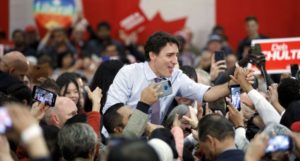
Prime Minister Mark Carney held a press conference in Vancouver alongside British Columbia Premier David Eby on June 25, announcing innovative measures to create affordable housing in B.C.  

The June 25th announcement by Mark Carney on behalf of the federal government, and British Columbia Premier David Eby should have been a triumph.

Instead, it became a communications debacle.

When Prime Minister Mark Carney stood alongside federal Housing Minister Gregor Robertson, B.C. Premier David Eby and B.C. Housing Minister Christine Boyle to announce that the federal and provincial governments would work together to purchase approximately 2,200 unsold condominiums and convert them into rent-to-own housing, the promise was immediately overshadowed by confusion.

The questions that came were entirely predictable.

  • Where were these condominiums?
  • Who owned them?
  • Would taxpayers be paying full market value?
  • Would they be located in Metro Vancouver, where housing shortages are most acute?

Neither Mr. Carney nor Mr. Eby provided answers during their announcement.

Instead of controlling the narrative, the governments allowed a vacuum to develop, one that was quickly filled by speculation, criticism and political attacks. Journalists demanded details that were not forthcoming, while federal Conservative leader Pierre Poilievre seized upon the uncertainty as evidence that the announcement was little more than political theatre.
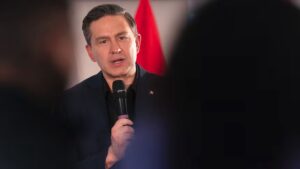
Federal Conservative Party Leader Pierre Poilievre speaks out against the federal government’s proposal to purchase vacant condos, during a town hall meeting in Duncan, B.C.  

It was, without question, one of the poorest communications roll-outs either the Carney government or the Eby government has experienced.

And yet, buried beneath the muddled messaging was an idea that deserves considerably more attention than it has received.

In the days following the announcement, Mr. Eby provided the missing details.

Contrary to widespread assumptions, the condominiums would not be concentrated in Metro Vancouver, or even in British Columbia’s largest urban centres. Rather, they would largely be acquired in smaller communities throughout the province where residential developments have stalled or failed altogether.

Many of these homes would be what the real estate industry describes as “distressed properties.”
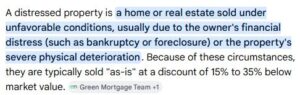
These are condominiums sold under unfavourable financial circumstances because developers have encountered severe financial difficulties, entered receivership, declared bankruptcy or been forced into foreclosure, with licensed insolvency trustees disposing of assets well below their original market value.

Such circumstances create unusual opportunities for public acquisition.

Rather than paying retail prices, governments can often acquire these units at discounts ranging from 15% to 35% below market value.

Completed, distressed vacant condo building ready for sale below market value in Grand Forks, B.C.

Communities such as Grand Forks, and other smaller centres throughout the Okanagan, the Kootenays and Vancouver Island — including Duncan, Port Alberni and Campbell River — contain developments that fit this description.

These are not speculative purchases. They are existing homes. Completed homes. Vacant homes. Homes waiting for occupants.

That distinction matters enormously.

A typical condo construction timeline spans 2.5 to 5 years from initial sales launch to final move-in, a timeline that can stretch even longer due to complex excavation, permitting, and labour demands.

Governments have become accustomed to announcing ambitious affordable housing projects that require years of planning, environmental reviews, permitting, financing and construction before a family receives keys to a front door.

Typically, that timeline stretches three to four years, often longer.

Premier David Eby has argued that purchasing distressed condominium developments offers a dramatically different proposition.

  • The homes already exist;
  • The infrastructure is already built;
  • Water, sewer, electrical service and roads are already in place;
  • Families could move in almost immediately;
  • The economics are equally compelling.

Constructing affordable rental housing has become extraordinarily expensive. Labour shortages, escalating material costs, financing expenses and municipal development charges have pushed construction costs to unprecedented levels.

Acquiring completed condominiums at significant discounts represents substantially better value for taxpayers while simultaneously rescuing developments that otherwise risk remaining empty for years.
The most important aspect of this initiative has received the least attention.

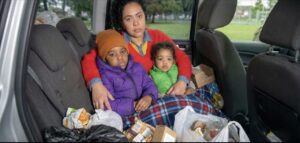
Behind every vacant condominium sits the possibility of a family whose life could be transformed. Not every homeless family sleeps on sidewalks. Many spend months couch surfing between relatives and friends. Some move weekly from one borrowed bedroom to another. Others sleep in aging recreational vehicles parked wherever municipal bylaws permit. Still others live in automobiles, desperately trying to shield children from the instability surrounding them.

For these families, housing is not merely shelter. Housing restores routine. It restores childhood. It restores educational stability, better physical health and improved mental health. It restores dignity.

The proposed rent-to-own model carries particular promise because it offers something beyond secure tenancy. It offers ownership.

Families who have spent years believing home ownership had become permanently unattainable may finally possess a realistic pathway toward building equity and long-term financial security. That possibility should not be underestimated.

If governments can purchase distressed condo developments substantially below replacement cost, rapidly convert them into affordable rent-to-own housing, and provide stable homes for thousands of families who otherwise face years of uncertainty, then taxpayers receive genuine value, while vulnerable British Columbians receive something infinitely more important than political messaging.

They receive hope.

In an age when political discourse increasingly rewards outrage over solutions, this initiative reminds us that governing still matters. It reminds us that budgets are, ultimately, moral documents reflecting the choices society makes about who deserves opportunity and who deserves security. Governments exist not merely to balance ledgers or score partisan victories, but to solve problems that markets alone cannot resolve. Housing is one of those problems.

We live in anxious times, when too many families have begun to wonder whether stability itself has become a luxury. Against uncertainty, both the B.C. and federal governments are attempting — however imperfectly — to meet the moment.

If vacant homes become places where children sleep safely, parents regain hope, and families begin building lives instead of merely surviving them, then history will remember not the fumbling announcement, but the quiet dignity of thousands of front doors opening onto a better future.
#CdnPoli | Why Did Prime Minister Justin Trudeau Call a Summer Election?

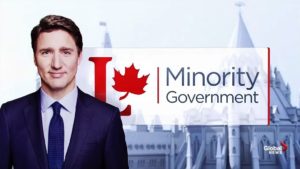
The most frequently asked question over the course, and throughout the duration, of the summer election called by the Prime Minister: why did Justin Trudeau call a needless summer election — particularly when, on Election Day, the final electoral result was a continuing minority Liberal government?

Internal Liberal Party polling conducted last spring, and throughout the summer, registered Justin Trudeau and the Liberals with a 45% approval rating, with Trudeau one of the most well-liked and respected Canadian Prime Ministers since Confederation. In the summer, within the Prime Minister’s office, the pressure on Trudeau to call a snap election was immense.

Prior to the 2021 federal election, the Liberal Party held 154 seats in a Parliament of 338 members. Pragmatically, what that meant for the Liberals was that all of the Committees of the House had majority Opposition party participation, and more importantly, decision-making power that could be — and more often than not was — wielded by the Opposition as a cudgel to serve their own partisan interests: the Conservatives, NDP, Bloc Québécois, and Greens, those parties less interested in the welfare of the Canadian people than scoring points against the government.

As they did during the election, in a display of rank partisanship and future, hoped-for increased electoral success,  and possibly government, the elected members of Erin O’Toole’s Conservative Party and Jagmeet Singh’s NDP colluded to make the life of the government as miserable as possible, using the committees not simply to hold the government to account, but to do all in their power to create an impression that Justin Trudeau’s government was both ‘do nothing’, and corrupt.

Little wonder Prime Minister Justin Trudeau wanted to call a summer election.

Why did Justin Trudeau call a summer election, then? To recap …

  • Throughout the first 8 months of the year, the Liberals had been riding high in the polls, Canadians grateful for the quick action by Prime Minister Justin Trudeau to secure the economy, through the introduction of CERB for Canadians who found themselves out of work due to the pandemic; the introduction of both a seniors grant for the poorest seniors, and an ongoing monthly supplement to the Canada Child Benefit to help families weather the storm of the pandemic; and the introduction of any number of business support programmes to keep the Canadian economy afloat. And, of course, securing the tens of millions of COVID-19 vaccine doses that would keep Canadians safe, and help over time to bring COVID-19 to an end. Thus far, more than 60 million doses of the mRNA Pfizer, Moderna, and the AstraZenica and Janssen vaccines have been administered to Canadians 12+, with millions more doses to be made available for children aged 5 to 12 years;
  • Focus on the economy and the health of Canadians rather than continue to allow the Conservatives and the NDP to play the sort of unproductive partisan politics that not only made the life of the government more difficult, but in having to respond to the partisanship of the Tories and the NDP on the Committees of the House, inhibited the Liberals from governing as effectively as the government deemed necessary, and to serve the best interests of all Canadians. A majority government, had that been the result of the September 20th election, would have made the life of the government easier, while still allowing the Opposition to hold the government to account.

In respect of the Trudeau government not being able to secure a majority, make no mistake: Shachi Kurl cost the Liberals a majority government.

Going into the English Leaders’ debate, the Bloc Québécois had lost their footing, with all polls showing them unable to retain more than 10 seats in Parliament, for a loss of 22 seats. The support of Québeckers had moved virtually wholesale to hometown boy Justin Trudeau and his Liberal party — which looked to pick up most of the lost Bloc seats, propelling them to a majority government. Then Ms. Kurl asked a damnedly poorly phrased question concerning Québec Bill 21 — banning Québec citizens from wearing religious symbols, and mandating that one’s face be uncovered to give or receive specific public services — the contentious nature of her question propelling the Bloc into a stratospherically high 32-riding seat count, costing the Liberals their much sought after majority.

One final point: the opportunity to exercise our franchise, to go to the polls and cast our ballot in seclusion, to hold our government to account, is central to our nation’s democracy. No election held in Canada, or elsewhere, is ever unnecessary. The opportunity to go to vote in an election is both our democratic right, and at the core of our democracy. Following a 35-day election period, Canadians went to the polls, and collectively decided that a continuing minority government for the Liberals would be for all of us the best possible outcome, and voted accordingly.

#CdnPoli | Prime Minister Justin Trudeau and His Legacy Cabinet

At the end of Tuesday’s Curse of Politics podcast, politico Scott Reid intones …

“Anybody who thinks this is Justin Trudeau’s last term in office, and that sometime before 2024 he’s going to resign as Prime Minister is a fool. That sort of punditry is nothing but lazy ass journalism. There’s absolutely no evidence to support that thesis. Why would you want to resign from the most important elected office in Canada, where change for the better that can be wrought with you at the helm? Never mind all the perks of the office. Those folks just oughta get over themselves, and stop that shit. It serves nobody’s interests. Fuck those assholes.”

Welcome to VanRamblings’ political world — it ain’t an easy life, lemme tell ya.


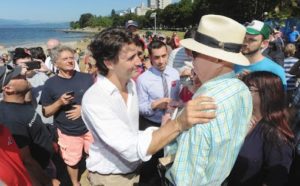
The 2015 campaign for office, with future Prime Minister Justin Trudeau at English Bay

VanRamblings has long believed that Justin Trudeau is a reluctant Prime Minister, who would rather spend time with his family, enjoying a life out of the public eye. Even so, Mr. Trudeau believes that he is uniquely positioned to both make a difference, and to maintain his father’s legacy of a fairer and more just Canada. For now, and the foreseeable future, he will make the sacrifices necessary, in order to maintain his family’s progressive vision for our nation.

In 2003, when Prime Minister Jean Chrétien tendered his resignation as Prime Minister of Canada, the first murmurings of what became known as the “AdScam Scandal” — involving illicit activities established to a fight a Parti Québécois government’s dreams of Québec independence, with tens of millions of dollars awarded to Liberal Party-linked ad firms in return for little or no work, where these ad firms maintained Liberal organizers, while donating much of their awarded monies back to Liberal party coffers — when in late 2005 a …

“Commission of Inquiry into the Sponsorship Program and Advertising Activities, headed by Justice John Gomery — which came to be known as “the Gomery Commission” — reported out, the Commission found that millions had been awarded in contracts without a proper bidding system, that millions more had been awarded for work that was never done, and that the Financial Administration Act had repeatedly been breached by the Liberal party government of Joseph Jacques Jean Chrétien.”

The death knell of federal Liberal governments for a generation was sounded.

Liberal Prime Minister Paul Martin lost the election he called in late 2005. The next federal Liberal Party leader, Stéphane Dion, lost again in the 2008 Canadian federal election, and in 2011 Liberal leader Michael “he’s just visiting” Ignatieff’s campaign saw the Liberals reduced to 34 meagre, ignominious seats, and fourth party status.

In late 2012, at the behest of family and longtime friends, political strategists Gerald Butts and Katie Telford — both senior policy advisors to Ontario Liberal Party leader Dalton McGuinty, dating back to 1999 — approached their former schoolmate and friend of some two decades, Justin Trudeau, and asked him to consider a run for the leadership of the federal Liberal Party of Canada.

On Sunday, April 14th, 2013, the son of former Canadian Prime Minister Pierre Elliott Trudeau, not only won his leadership bid, with 80.1% of the vote to 10.2% for British Columbia MP Joyce Murray, his victory more a coronation.

Two and one half years later, on October 15, 2015, 42-year-old Justin Pierre James Trudeau was elected the 23rd Prime Minister of Canada, having mounted a stunning, come from behind victory that saw the Liberal Party form a strong majority government of 184 seats in the House of Commons in Ottawa.

And since that day, Prime Minister Trudeau has not known a moment’s peace.

The governments of Justin Trudeau have wrought change for the better.

  • The Canada Child Tax Benefit has provided thousands of dollars more to 9 out of 10 Canadians families, lifting more than 40% of Canadian families out of poverty;
  • Marijuana and its by-products have been legal in Canada since 2017;
  • Tax cuts for middle class families, not the wealthy, have benefited 9 million Canadian families each year for the past six years;
  • After 10 years of Prime Minister Stephen Harper muzzling scientists in the Environment and Fisheries and Oceans department, and across his government, federal scientists have, since 2015, been afforded the opportunity to speak openly on government policy;
  • The Trudeau government has quadrupled funding for women’s shelters;
  • $9 billion to train thousands of new, highly-paid personal support workers;
  • Mark Jaccard, a professor of sustainable energy at Simon Fraser University’s School of Resource and Environmental Management has written that the federal Liberal Party climate action plan is a “world best,” with the government’s closure of coal plants, and a carbon tax that will see greenhouse gas emissions in Canada reduced by 40% by 2030, among myriad other world leading initiatives;
  • Through the introduction of Bill C-14, the federal government introduced legalized medical assistance in dying, offering Canadians the choice to die with dignity to patients who are suffering intolerably.

Re-opening the Kitsilano Coast Guard base; providing support to 450,000 students by increasing Canada Student Grants by 50%; reopening and staffing nine Veterans Affairs service offices across the country — these are just a few of the accomplishments of the governments of Justin Trudeau over the past six years in what has emerged as one of the most progressive governments anywhere across the planet.

And yet, you just can’t get away from feeling that Justin Trudeau’s continuing sacrifice of the joys of a private life, and time with his family and friends, weighs ever more heavily on him with each passing day, the relentless attacks by the opposition parties and right-wing media (“Hello, Brian Lilley“), with the support of only 33.12% of Canadians at the polls in this most recent election — despite his 159-seat minority government win — ever more unbearable.

For however long this Parliament lasts, in what may be Mr. Trudeau’s final term in office, the next years will be ‘legacy years’ for his government on the issue of the environment — which is why, on Tuesday, he appointed Greenpeace activist and respected Québec environmentalist Steven Guilbeault as his newly-minted Minister of Environment and Climate Change, and the former activist Minister who held the portfolio, Jonathan Wilkinson, as the new Minister of Natural Resources, both Ministers set to work in tandem to address the issue of oil and gas extraction, and dedicated to moving Canada away from the extraction of fossil fuels.

A pan-Canadian, legacy $10-a-day child care plan already signed onto by seven provinces and one territory, with the Ontario government just wrapping up negotiations with the federal government, and both Alberta and New Brunswick, and the two other territories not far behind; $2.7 billion in increased funding for the National Housing Co-investment fund; $3 billion over five years to support the application of higher standards for long-term care homes; unprecedented investment in public transporation, from buses, commuter rail, and a 21st-century high-speed system of regional train systems; $18 billion over 5 years to improve quality of life and create new opportunities for people in Indigenous communities, while completing the work on eliminating boiled water advisories on Indigenous lands; 10 days of paid sick leave for federal workers; funding for improved ventilation in schools and legal protection for businesses that decide to require vaccinations — represent just a few of the necessary initiatives of the Trudeau government.

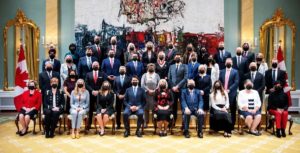
Scott Reid, Jenni Byrne and David Herle present below the most cogent analysis of the “shuffle” of the Trudeau Cabinet yesterday morning, in this third — and maybe, final — term of the Justin Pierre James Trudeau-led Canadian federal government.