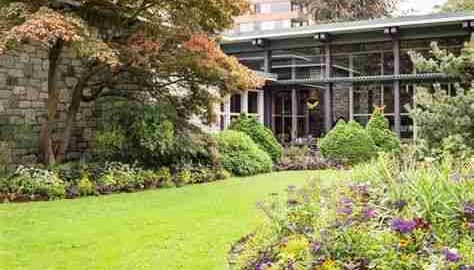
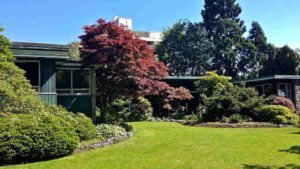
There is a remarkable piece of political chutzpah unfolding at Vancouver City Hall.
For nearly two decades, successive City Councils have failed to provide Vancouver’s parks, swimming pools, community centres, playing fields and recreation facilities with the sustained investment they require.
Now, after years of deferred maintenance and inadequate capital funding — funding that was approved by voters at each election in 2008, 2011, 2014, 2018 and 2022 — Vancouver City Hall has decided that the institution responsible for those assets, the Park Board, is the problem.
It isn’t.
City Hall is, as are all the Mayors and City Councils elected since 2008.
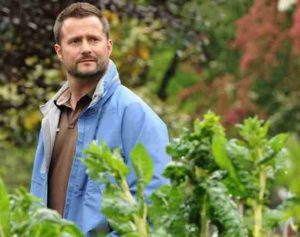
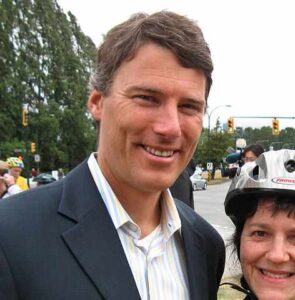 Mayor Gregor Robertson, who served as Vancouver Mayor from 2008 to 2018, cut Park Board funding
The modern history of this sorry affair begins with Mayor Gregor Robertson and Vision Vancouver, elected in 2008. Robertson’s administration inherited one of the world’s great urban parks and recreation systems.
Instead of establishing a long-term funding strategy to preserve it, the Vision Vancouver Mayor and Council imposed cuts.
In December 2010, the Vision Vancouver-led City Council approved more than $700,000 in reductions to the 2011 Park Board budget, with the consequences falling directly on parks: fewer flower beds, reduced lawn mowing and less street-tree pruning. Business in Vancouver subsequently reported that the cuts were visibly tarnishing the city’s parks.
The Park Board chairs during the opening years of the Robertson era — Raj Hundal in 2009 and Aaron Jasper in 2010–11 — were left attempting to manage an increasingly difficult financial situation. Constance Barnes chaired in 2012, Sarah Blyth from 2012 into 2013, and Jasper again in 2014.
And this is where the political responsibility becomes complicated.
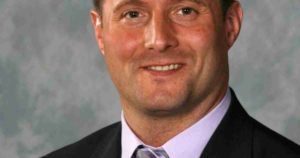
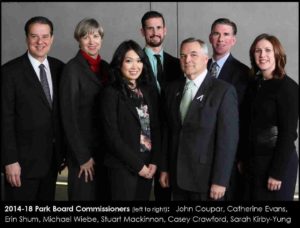
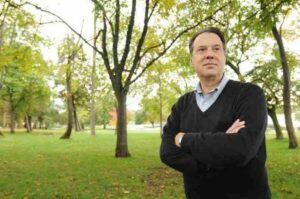 John Coupar, who served as a Vancouver Park Board Commissioner from 2011 through 2018
From 2014 to 2018, the Non-Partisan Association controlled Park Board, with John Coupar serving as chair 2014–15, followed by Sarah Kirby-Yung in 2016, Michael Wiebe in 2017 and Stuart Mackinnon in 2018.
Yet the Mayor remained Gregor Robertson and Vancouver City Council remained ultimately responsible for the municipal purse.
The NPA cannot credibly claim it was merely an innocent bystander, although it fought like hell to have funding for Vancouver’s Board of Parks and Recreation increased. While the NPA controlled the Park Board, Park Board Commissioners found themselves unable to develop the political coalition necessary to force City Hall to repair the funding model.
Vision Vancouver cannot escape responsibility for the underfunding of Park Board.
Robertson’s decade at City Hall coincided with an increasingly obvious deterioration in the city’s recreation infrastructure. By the late 2010s, the Park Board was talking not about maintaining a healthy capital system, but about catching up.
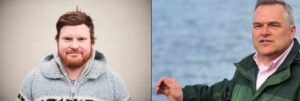 Camil Dumont, left, and Stuart Mackinnon, right, Green Party of Vancouver, former Park Board chairs
Under the 2018–22 Park Board, Green Party chairs Camil Dumont in 2020–21 and Stuart Mackinnon in 2019 and 2022 presided over a system confronting the consequences of years of inadequate renewal.
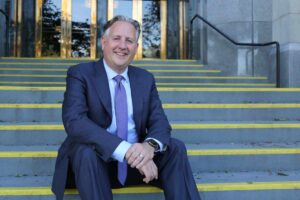 Kennedy Stewart, elected Mayor in 2018, continued to cut Park Board funding during his term in office
When Kennedy Stewart became Mayor in 2018, the political rhetoric changed, but the underlying financial structure did not. The Park Board remained dependent on City Council for the money required to maintain its facilities, monies that were not forthcoming during Stewart’s four years in power.
The numbers tell the story.
In 2022, the Park Board approved a staggering $539-million four-year capital plan, including $140 million for the Vancouver Aquatic Centre and $49 million for RayCam Community Centre.
Vancouver Is Awesome pointed out the fundamental problem: despite being an elected body, the Park Board does not have its own separate budget. It must request allocations from City Council.
In other words, City Hall controls the money and then complains about the consequences when the money isn’t sufficient.
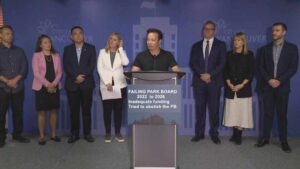 After electing a majority ABC slate Park Board, Sim and Council tried to eliminate the Park Board
Then came Ken Sim and ABC Vancouver.
Ken Sim was elected Mayor in 2022 with an overwhelming mandate.
ABC also won six of seven Park Board seats. The chairs during this period tell their own story: Scott Jensen was elected chair for the remainder of 2022 and 2023; Brennan Bastyovanszky was elected chair for 2024; Laura Christensen chaired in 2025; and Tom Digby is the current chair in 2026.
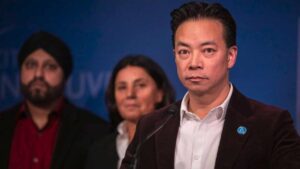
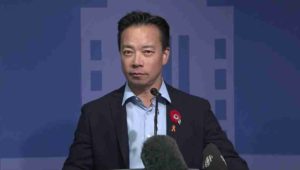
December 5, 2023 Ken Sim calls press conference, announcing his intention to abolish the Park Board
In December 2023, Ken Sim announced his intention to abolish Park Board.
And here the hypocrisy becomes almost breathtaking.
Three of Mayor Ken Sim’s own ABC Commissioners — Bastyovanszky, Christensen and Jensen — broke with the Mayor, joined forces with Green Party of Vancouver Commissioner Tom Digby and opposed the abolition plan. Vancouver Is Awesome reported Bastyovanszky’s blunt assessment: Park Board had been underfunded by City Council, which is Council’s responsibility.
Former Vision Commissioner Aaron Jasper agreed, arguing that if the issue was maintaining parks and community centres, Sim needed to look at his own actions.
Mayor Ken Sim nevertheless proceeded, despite community backlash.
Mayor Sim’s disinformation argument was that the system was “broken,” that abolition would produce efficiencies and that millions could be saved.
Sim failed to point out responsibility for the maintenance of Vancouver’s parks and recreation system was — at the insistence City Manager Penny Ballem — transferred to the City and its crews, after which Ballem and City Hall ignored the needs of the community centres for necessary upkeep and maintenance.
Former Park Board chair Jasper weighed in with another obvious point: eliminating the Commissioners would save only their salaries — roughly $140,000 annually — while the staff, planners, horticulturalists, recreation professionals and maintenance workers would still have to exist.
That is not reform.
It is political theatre.
And the bill for decades of deferred investment continues to arrive.
The approved 2022 $539-million capital plan made a demand for renewal.
Vancouver’s aging aquatic facilities, community centres, playgrounds, playing fields and parks require billions in investment. At the same time, City Hall continues to make budget decisions that put pressure on Park Board services.
This is not an argument that every Park Board decision has been wise. It hasn’t.
The Board has suffered from political infighting, poor governance at times, and occasionally baffling priorities. Critics have legitimate grievances.
But those failures do not justify rewriting history.
The Park Board did not independently decide how much money Vancouver’s taxpayers would provide it.
The elected Mayor since 2008, and all Vancouver City Councils since 2008 did.
Vision Vancouver under Gregor Robertson failed to establish an adequate long-term funding model. The NPA-controlled Park Board proved unsuccessful in forcing the issue. Kennedy Stewart’s administration inherited the problem without solving it. Ken Sim’s ABC administration, for the past two years, attempted to turn the accumulated consequences into an argument for abolishing the institution.
That is the ultimate political sleight of hand.
Starve an institution. Watch its infrastructure deteriorate. Declare the institution incompetent. Then seize its powers.
That is precisely what Vancouver voters should reject come October.
And there is one final irony.
After spending years attempting to abolish the elected Park Board, Ken Sim reversed course in July 2026, announcing ABC Vancouver would run a full slate of Park Board candidates in the October election.
So, apparently the institution that Ken Sim once described as fundamentally broken is now worth fighting an election to control.
Vancouver voters going to the polls in October should remember that.
The Vancouver Park Board does not need Vancouver City Hall to dismantle it.
Vancouver Park Board needs Vancouver City Hall to properly fund it.
And after eighteen years of Mayors, Councils and political parties failing to do precisely that, Vancouver’s voters should ask a very simple question this October:
Who broke the Park Board — the Commissioners who kept asking for money, or the politicians who controlled the money and refused to provide it?