Tag Archives: vancouver

#VanPoli | City Politics, Development and Scandal on the Near Horizon


The Politics of Development, Corruption and Vancouver House. Thank you Robert Renger.

The story of Vancouver House is, depending on one’s perspective, either a triumph of architectural ambition or a cautionary tale about the dangers of a city becoming too closely aligned with the interests of powerful developers.

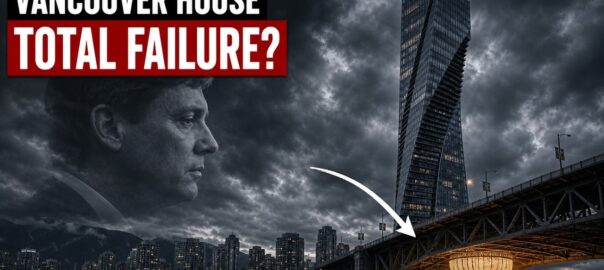
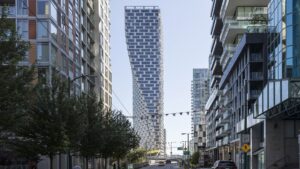
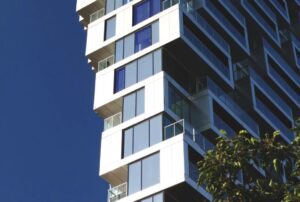
Today, the twisting glass tower at the foot of the Granville Bridge stands as one of Vancouver’s most recognizable landmarks. Designed by the internationally acclaimed Danish architect Bjarke Ingels and developed by Ian Gillespie’s Westbank Corp., Vancouver House has appeared in architectural journals around the world. Its dramatic form rises from a narrow triangular base before expanding into a rectangular tower as it climbs 58 storeys and 155 metres into the skyline.

Yet behind the celebrated architecture lies a political and financial controversy that has lingered for more than a decade and has now been reignited by findings from Vancouver Auditor General Mike Macdonell. What began as an ambitious redevelopment of awkward land beneath the Granville Bridge has evolved into one of the most contentious examples of Vancouver’s developer-driven era under former mayor Gregor Robertson and his governing party, Vision Vancouver.

Westbank Corp.’s Vancouver House, on Howe Street leading to the Granville Street bridge

For supporters, Vancouver House transformed a neglected urban void into a world-class architectural destination.

For critics, it exposed how City Hall bent rules, discounted public assets and abandoned promised public benefits in order to accommodate a politically connected developer.

The controversy stretches back to the late 2000s.

The triangular parcel beneath the Granville Bridge had long been considered difficult to develop. Previous proposals had failed.

The City of Vancouver eventually entered into negotiations with Westbank, which proposed an ambitious mixed-use development featuring luxury residential units, retail space and extensive public realm improvements.

What followed became one of the most controversial land transactions in modern Vancouver history.

Critics argued that Vision Vancouver effectively removed the site from the open market for approximately six years while Westbank assembled financing and refined its proposal. Opponents contended that the city was no longer acting as a neutral steward of public land, but had become a partner in realizing a specific developer’s vision.

One of the most persistent criticisms was that the city failed to test the market adequately and did not seek competing bids that might have generated significantly greater value for taxpayers.

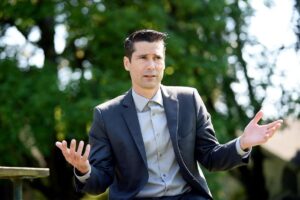
In 2014, Glen Chernen, Cedar Party candidate for Mayor, who following days of day and night research of Vancouver City Hall was the first to expose the “corruption” associated with Vancouver House

These concerns were amplified by the work of Glen Chernen, who ran for Vancouver City Council in 2014 with the Cedar Party. During that election campaign, Chernen examined city documents and negotiations surrounding Vancouver House and raised questions about what he characterized as preferential treatment afforded to Westbank. His research helped bring public attention to agreements that had largely escaped broader scrutiny and contributed to growing concerns about the relationship between Vision Vancouver and major developers.

At the heart of the controversy was the price Westbank paid for the city-owned land.

Critics argued that Westbank acquired the property for approximately $32 million despite assessments and valuations suggesting a substantially higher market value. Over the years, opponents have repeatedly cited figures indicating the land’s value was closer to $119 million, arguing that taxpayers effectively subsidized the project through an undervalued transaction.

Whether those valuations can be directly compared remains disputed. Nevertheless, questions about whether the city maximized value from the sale have never fully disappeared.

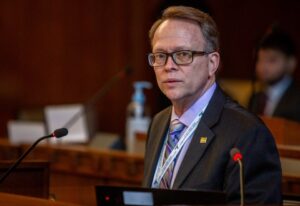
Vancouver Auditor General, Mike Macdonell who in his 2026 scathing report to Vancouver City Council found concerning irregularities in the Vancouver House development process, in 2014 through 2026

Those concerns gained renewed legitimacy in February 2026 when Vancouver Auditor General Mike Macdonell released a major audit examining city land sales and exchanges. The report found that city staff did not consistently provide Council with all relevant information needed to determine whether land sales reflected market value. In some cases, land was sold for less than assessed value, and documentation supporting valuation decisions was incomplete.

While the audit was broader than Vancouver House alone, critics immediately connected its findings to long-standing concerns about the Westbank transaction.

Even more damaging was a separate whistleblower investigation that examined community amenity contributions associated with Vancouver House.

Community amenity contributions, known as CACs, are intended to ensure that when rezonings dramatically increase land values, the public receives a share of that value through amenities, infrastructure or cash contributions. According to city policy, rezonings are expected to capture a significant portion of the resulting “land lift” for public benefit.

The Vancouver House rezoning ultimately secured approximately $4 million in cash contributions and roughly $6 million in promised in-kind public improvements.

The problem, according to Macdonell’s investigation, is that many of those promised benefits either were never properly defined, were reduced, or were not adequately tracked and enforced by the city. The auditor found that the city’s management of these commitments fell below a reasonable standard and constituted “waste” under the city’s whistleblower framework.

Among the promised public improvements were enhanced pedestrian connections between Granville Street and the bridge structure above, upgraded public spaces, landscaping, seating areas, special lighting, event infrastructure and other public realm features. Over time, several elements were altered, reduced or abandoned. The auditor found evidence that city staff excused some obligations without ensuring equivalent public benefits were delivered in return.

The findings were particularly significant because they reinforced a criticism that had existed since the project’s approval: Vision Vancouver’s enthusiasm for landmark architecture overshadowed its responsibility to protect the public interest.

Critics argue that Vancouver House became emblematic of a broader governing philosophy that dominated City Hall during the Robertson years. Vision Vancouver promoted density, urban design excellence and partnerships with the private sector. Many of the city’s most ambitious projects emerged during this period.

Yet opponents increasingly argued that City Hall had become too close to the development industry.

The Vancouver House negotiations appeared, to many observers, to confirm those fears.

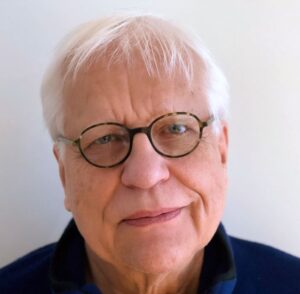
Retired planner Robert Renger brings the Vancouver House controversy to the fore

Retired Burnaby planner Robert Renger became one of the most persistent voices raising concerns about the project. Renger, who had extensive experience negotiating major development agreements, filed complaints and provided information that ultimately contributed to the Auditor General’s investigations. He argued that Vancouver House represented a failure to maximize public value and a failure to enforce negotiated public benefits.

Renger’s concerns were not focused primarily on architecture. Rather, they centred on governance.

His argument was straightforward: if developers receive enormous increases in land value through rezonings, the public should receive commensurate benefits. When those benefits are reduced, deferred or abandoned without compensation, taxpayers effectively absorb the loss.

The Auditor General’s findings did not conclude that bribery, fraud or criminal corruption occurred. In fact, the report explicitly noted that the circumstances did not meet the threshold for serious wrongdoing in the legal sense and found no evidence of fraud.

Nevertheless, the report painted a troubling picture of weak oversight, poor documentation and inadequate protection of public interests.

That distinction is important.

Political scandal does not necessarily require criminal conduct.

A city can follow legal procedures and still make decisions that produce poor outcomes for taxpayers.

In the eyes of many critics, that is precisely what happened with Vancouver House.

The irony is that the project itself is, in many respects, a success.

Vancouver House has become an internationally recognized architectural icon. It transformed an awkward and neglected site. It helped redefine the southern entrance to downtown Vancouver. The building’s engineering and design innovations have been celebrated globally.

But success in architecture does not automatically translate into success in public policy.

The project was also controversial because of how it was marketed. During Vancouver’s housing affordability crisis, luxury condominiums in Vancouver House were aggressively promoted overseas, particularly in Hong Kong and mainland China. Many Vancouver residents viewed the marketing strategy as symbolic of a city increasingly designed for global wealth rather than local residents.

The optics were especially damaging during a period when housing prices were accelerating beyond the reach of many middle-class families.

To critics, Vancouver House represented not merely a building but a broader economic model: public land converted into luxury housing marketed internationally while affordability worsened at home.

The lingering question is why subsequent city councils have done so little.

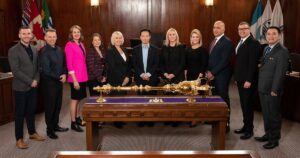
A photo of the newly elected, or re-elected, members of the 2022 Vancouver City Council

Since Vision Vancouver’s defeat in 2018, two entirely different governing administrations have controlled Vancouver City Hall. First came the minority Council elected in 2018. Then came the ABC Vancouver administration under Ken Sim.

Neither administration has aggressively pursued remedies related to Vancouver House.

There are several possible explanations.

First, many of the agreements were legally finalized years ago, limiting available remedies.

Second, governments are often reluctant to reopen complex development contracts because doing so can trigger litigation and financial risk.

Third, Vancouver remains heavily dependent on private-sector development to finance infrastructure, amenities and housing construction. Political leaders may fear that aggressively challenging major developers could undermine future investment.

And finally, there is the uncomfortable reality that municipal governments of every political stripe often inherit decisions they would prefer not to revisit.

Yet the Auditor General’s findings have ensured that the controversy will not disappear.

The central question remains remarkably simple.

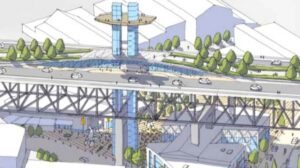
An elevator connecting the Granville Street Bridge and Granville Island was proposed as a way to improve access to the often gridlocked island that could have, in part, met Westbank’s obligations

Did Vancouver receive fair value for public land, public density and public approvals?

The architectural success of Vancouver House cannot answer that question.

The beauty of the building cannot answer it.

The prestige associated with Bjarke Ingels cannot answer it.

The Auditor General’s reports suggest that documentation was inadequate, public benefits were poorly managed and opportunities to maximize value may have been missed.

For critics such as Robert Renger and Glen Chernen, those findings validate concerns they have been raising for years.

For defenders of the project, Vancouver House remains a remarkable example of what ambitious city-building can achieve.

Perhaps both interpretations contain elements of truth.

Vancouver House is simultaneously one of Vancouver’s greatest architectural achievements and one of its most enduring political controversies. It stands as a glittering monument at the gateway to downtown —a building that transformed the skyline while raising difficult questions about governance, accountability and the relationship between public institutions and private power.

Long after debates about its twisting form have faded, those questions may prove to be the building’s most lasting legacy.

#VanPoli | 2026 Vancouver Mayoral Candidates | We Take No Prisoners | Part 2

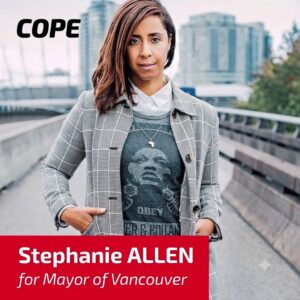
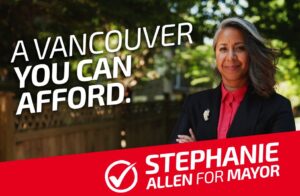
Stephanie Allen. Along with Kareem Allam, by far our favourite candidate for Mayor of Vancouver, a boots on the ground visionary, a fiscally responsible, well schooled, non-pedantic knows her stuff politico, who possesses much — perhaps unparalleled — insight into how government functions (although we would say she may have met her match in Kareem Allam), and after years of working in British Columbia’s provincial government knows how to implement true change for the better — the real deal Zohran Mamdami running in the current 2026 Vancouver civic election — COPE scored a major coup in landing the absolutely tremendous Stephanie Allen as the municipal party’s standard bearer in the 2026 Vancouver civic election (thank you Shawn Vulliez, COPE’s absolutely brilliant campaign manager, for convincing Ms. Allen to run for the office of Vancouver Mayor)!

Now, you may know Stephanie Allen from her critically important role as Vice-President of BC Housing, or — following the untimely death (from cancer) of VanRamblings’ friend and neighbour, Brenda Prosken, who we first met and worked with at Vancouver City Hall in her role as General Manager of Community Services — when Stephanie Allen stepped up to the plate in 2020 / 2021 to find housing and homes for those who were resident in the Strathcona Park encampment (following on Brenda’s work on the decampment of Oppenheimer Park, when she located housing for all of the encampment’s residents), but there’s more …


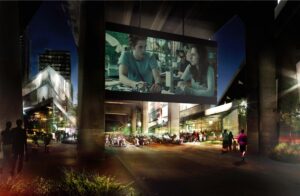
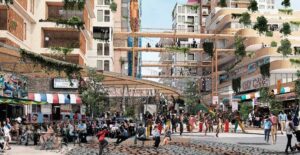
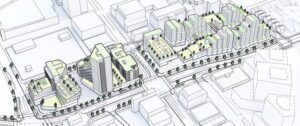
A re-imagining of Hogan’s Alley, Vancouver’s first enclave for some of the Vancouver’s early Black Canadian immigrants, located within a T-shaped intersection at what is now the easternmost end of the Dunsmuir and Georgia viaducts — immediately south of Chinatown | Stephanie ALLEN.

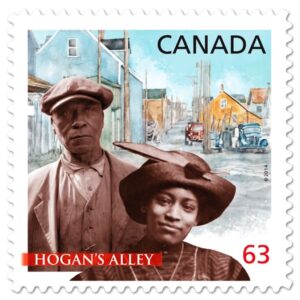
Hogan’s Alley, the early 1900s community in and around the Strathcona neighbourhood — framed today by Main Street to the west, Union Street to the north, Jackson Avenue to the east, and Prior Street to the south — where it eventually became the cultural hub of the community, the former neighbourhood known for being home to Nora Hendrix, the grandmother of rock legend Jimi Hendrix, and a cook at Vie’s Chicken and Steak House, a Hogan’s Alley’s culinary institution.

The latter half of the 1960s marked the neighbourhood’s demise, when city blocks of homes and businesses that formed Hogan’s Alley were demolished for the replacement Georgia Viaduct, which itself is set to be demolished later this decade.

And, gosh, who do you think it was who developed the concept of a renewed Hogan’s Alley? Could it be Stephanie ALLEN, COPE’s absolutely tremendous candidate for Mayor of the City of Vancouver? Yep, yep, we believe that is the case.


Time to introduce you to another high profile candidate for Mayor of Our City

William Azaroff. Running for Mayor of Vancouver under the banner of OneCity Vancouver, VanRamblings first met Mr. Azaroff in June 2019 soon after he was appointed CEO of the Brightside Community Homes Foundation (a prominent non-profit in Metro Vancouver), where he leads a team that manages 26 buildings encompassing over 1,100 affordable homes for seniors, families, and persons with disabilities across the Metro Vancouver region.

Recently, the Vancouver & District Labour Council (VDLC) endorsed Mr. Azaroff for Mayor in this year’s Vancouver municipal election, announcing its endorsement on May 20, 2026, while simultaneously urging the Green Party and COPE to reconsider their Mayoral campaigns to consolidate the so-called “progressive” vote.

That night, COPE’s very able (and, dare we say, brilliant) campaign manager, Shawn Vulliez posted a brief note to VanRamblings in which he averred, “There’s a secret meeting going on tonight where, I’m told, One City Vancouver and the VDLC are going to jettison the co-operative agreement reached by OneCity, the Greens and COPE that would have us work together, as we have in the past, where the VDLC is going to formally endorse OneCity.”

As British statesman Benjamin Disraeli observed “in politics, as in love, there is no honour,” pointing to a world where strategy, leverage, and party alignment often take precedence over unbending morality.

As renowned philosopher Hannah Arendt once observed …

“In matters of the heart, the adage “all is fair in love” suggests that strong passions can lead to irrational choices, which I would argue in politics is fundamentally incompatible with logical, rational reasoning. Love requires vulnerability and deep personal investment, while politics often demands strict detachment or ideological pragmatism. When the two collide, devotion to political figures or ideologies can sometimes overshadow the love and respect shared between partners, be they political or lovers.”

VanRamblings is here to say two things …

  • We absolutely and definitively will not support nor endorse William Azaroff as Vancouver’s next Mayor. We believe Mr. Azaroff is Ken Sim redux in casual wear, a bully, a sort of ne’er-do-well, and although better informed and more accomplished than Mayor Ken Sim, in practice is a kind of despicable, self-serving politico, a non-collaborative fellow, with the potential to be an intimidating and coercive oppressor who will bring to Vancouver City Council the same sort of dysfunction and disunity that has proved to be Ken Sim’s stock-in-trade. Read more on our rationale below.
  • At reading the paragraph above, we believe VDLC President Stephen (pronounced “Stefan”) von Zychowski — who we like and respect — will be apoplectic. Soon, we will ask for Mr. von Zychowski’s permission to reprint the statement he has made on social media as to the rationale of the VDLC in choosing to support William Azaroff as our next Mayor, as well as his OneCity Vancouver civic party. Fair’s fair, after all.

On February 12th, Mr. Azaroff defeated First United Church Executive Director Amanda Burrows in OneCity Vancouver’s Mayoral nomination race, securing 1329 votes or 60% of the vote total, with Ms. Burrows coming in second with 929 votes, or 40% of the vote. Nomination battles are always a numbers game.

Upon winning the OneCity Mayoral nomination, did Mr. Azaroff reach out to Ms. Burrows and say …

“You ran a good race, a great race. I learned so much from you as we both sought to secure the OneCity Vancouver Mayoral nomination. I think the success of OneCity in this year’s election demands candidates of quality, discernment and accomplishment, all of which you embody. I believe going forward it is critical you remain on the OneCity team, and that you secure a nomination for Council, which I will heartily endorse. Working together, there is so much good that we can accomplish.”

Did William Azaroff reach out to Amanda Burrows, congratulate her on a well-run campaign, and ask her to join his OneCity Vancouver team to seek a Council nomination, which he would heartily support? Nope, gentleman that he isn’t, he did not approach her. Instead, he left Ms. Burrows to twist in the wind.

Note. Amanda Burrows did not seek a OneCity Council nomination.

From the outset there was very little enthusiasm within COPE (the Coalition of Progressive Electors), for the Mayoral candidacy of William Azaroff, should he secure the OneCity Mayoral nomination.

Even so, in signing a OneCity Vancouver / Greens / COPE co-operative agreement COPE — which was represented by campaign manager, Shawn Vulliez — at the behest of the VDLC, COPE made a commitment to consider backing various of the “progressive” non-COPE candidates should these candidates “pull ahead.”

COPE’s Executive did not want to risk the potentiality of Stephanie Allen’s Mayoral bid should all go well — as was heartily hoped would occur —  given the possibility Ms. Allen might emerge as the successful consensus “progressive” Mayoral choice, thereby garnering support from OneCity, the Greens and the VDLC.

There was to be no ill will expressed, nor acted upon, nor any misunderstanding(s).

COPE conducted itself in an honourable matter.


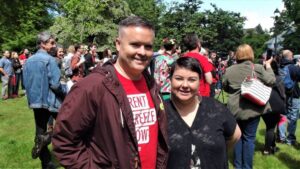
Derrick O’Keefe, COPE School Board candidate (l), and his activist partner, Andrea Pinochet-Escudero

Why then was there opprobrium among some in COPE for an Azaroff candidacy?

If one reads various social media accounts, and speaks directly with a broad cross-section of COPE’s membership, one learns that many members of COPE have experienced mulish interactions with Mr. Azaroff, such that  he is considered by many COPE members to be the Evictor in Chief in the affordable housing sector, as he displaces vulnerable tenants from their homes.

VanRamblings has covered municipal, provincial and federal elections for 60 years.

In all that time, there is no Mayoral candidate or party leader — federally, provincially or municipally — who did not put his or her imprint on the party they lead, deciding who would constitute members of her or his team going into an election.

For instance, when Kirk LaPointe became the Mayoral nominee for the NPA in 2014, he dismissed all of the vetted candidates for Council, Park Board and School Board — this at the end of a long, arduous and thorough vetting process, when all of the successful candidates were in place, as he secured his own team to run as candidates at all three levels of civic governance, Council, Park Board and School Board.

Did William Azaroff put his imprint on OneCity Vancouver after winning the Mayoral nomination, indicate he believed their star candidate, longtime civic affairs journalist Frances Bula, must be a member of his team, that her nomination for Council would be a critical element in OneCity’s success at the polls in October?

No, he did not.

Can you imagine Mark Carney or David Eby lying back and taking no interest in who would be running for their respective parties in a coming election? In early 2020, longtime NDP Executive Director Raj Sihota had the support of the Vancouver-Hastings constituency executive and the members of the riding, and was their chosen candidate to represent the party in the upcoming election.

Next thing you know, Premier John Horgan — at the insistence of then NDP Attorney General, David Eby — parachuted in former Vancouver Park Board Chair, Niki Sharma, to seek the Vancouver-Hastings NDP nomination, with the full support of the provincial party. Next thing you know, Ms. Sharma secures the Vancouver-Hastings NDP nomination, emerges as the victor in the October 24, 2020 provincial election, shortly after which she was appointed our province’s Attorney-General, when David Eby took on the housing portfolio.

William Azaroff a leader? We think not.

Colleen Hardwick. Yep, she’s running for Mayor again, and doesn’t much of a chance of winning. Think: lost cause.

VanRamblings has written kindly and lovingly about our longtime friend.

But no more.

At a recent luncheon with a weathered confidante of the esteemed Ms. Hardwick, VanRamblings offered the comment …

“Colleen Hardwick can be difficult to get along with.” The rejoinder by our luncheon companion, said with a chuckle in his voice, “Raymond, Raymond, Colleen is not difficult to get along with, she is impossible to get along with.”

We continue to like Ms. Hardwick’s core message: neighbourhood empowerment, and community involvement in the development of new and updated neighbourhood community plans. That she is the only candidate to voice such policy, gets her no little support from us. Sadly, though, Colleen Hardwick is an imperfect messenger for her policy proposals. Speaking with friends we ran across while sauntering down West Broadway, our friend Helen — as we were speaking about the upcoming civic election — offered the following comment, unbidden …

“Colleen is sharp. And I don’t mean that in a kindly way. There is an edge to everything she says, almost an inherent meanness, an ‘I know better than you’ ethos that is off-putting, that causes me to think, ‘I kind of like what she has to say, but I don’t like at all how she goes about saying it’. For me, Colleen is an unpleasant character, and someone who I could not begin to support, no matter how much I like her message.”

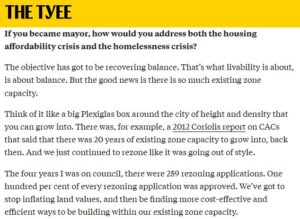
Recently, Katie Hyslop, writing in The Tyee, published an article titled, Colleen Hardwick Is Running for Mayor Again. Midway through the article, Ms. Hyslop asked Colleen Hardwick a question about affordable housing, and homelessness.

Have you ever read such utter nonsense in your entire life?

Who, which voters, given a damn about “recovering balance” (whatever the heck that means). Not to mention, who gives, which voters and where are they, give a flying f-ck about “zone capacity” or the ” 2012 Coriolis report”?

We mean, really?

Who does Colleen Hardwick — running for Mayor again, don’tcha know — think her audience is, who are the voters — outside of pointy-headed, so called “intellectuals” at the universities in our region — is she attempting to communicate with, to garner their support, that she’s the right candidate to become the Mayor of Vancouver in 2026, that she can “recover balance” and change “zone capacity”?

Colleen Hardwick might well have said …

“Affordable housing must be addressed through the construction of housing co-operatives, where members pay no more than 30% of their income for their homes, where they are empowered to make decision-making on the Co-op’s finance, membership or maintenance committees. Where housing co-ops are built on a 99-year-leasehold basis, on city-owned land, or provincial or federal Crown land. Construction and materials are paid for through the Community Amenity Contributions made by developers building high rise condominiums. All this would be overseen by Thom Armstrong, who heads both the Co-operative Housing Federation of British Columbia, and the Community Land Trust. On top of that, the City would charge no development fees for the construction of this crucial affordable housing, saving millions.”

Or, in addressing the issue of homelessness, Ms. Hardwick could have reminded readers of the 2022 platform for TEAM for a Livable Vancouver, when she stated …

“There are 277 social agencies on the Downtown Eastside, located in the square mile around Hastings and Main. 277 very well-paid Executive Directors, Vice-Presidents, Directors of Human Resources, Property Managers, Directors of Supportive Housing, and more, staffed in each of these agencies, who engage in redundant work each and every day, putting money in their pocket at the expense of the vulnerable citizens they are charged to support. No wonder that for years, many in the community have called those who are employed by these agencies “poverty pimps”. Merge these agencies, leaving 40 agencies. TEAM wants to hire a “czar” — as David Eby has often said is the key to provide service to our city’s most vulnerable citizens, rather than line the pockets of the senior administrators. Billions of dollars could be saved, services rationalized, better service could be provided with savings applied to social housing construction.”

But did she say that, did she actually answer the question that was asked of her, in plain and simple language that all of us could understand? Could have been a great answer to a simple question. But Ms. Hardwick seems not capable of that.

Y’know, Ms. Hardwick, not every voter is a PhD candidate, as you are, or grew up with a silver spoon in their mouth, living in a home where their parents are a respected, tenured professor at the University of British Columbia, and their mother sat on the Vancouver Park Board as a multi-term Commissioner.

According to Statistics Canada, the “average level” of education in Vancouver-Point Grey / Vancouver Quadra is second year university. East of Main Street, the “average level” of education is Grade 8. There are 54 ethnic communities in Vancouver where the first language spoken in the home is neither French nor English. No wonder in Vancouver, there’s a paltry 36% turnout of eligible voters — if that — when a Vancouver City election is called every four years.

Fortunately, there’s a Mayoral candidate — and a couple of civic parties — in the current Vancouver City municipal election who are running a stealth campaign to get the vote out among people in those 54 under-represented communities who don’t go to the polls — but will in 2026 — when it comes time to cast their ballot for a new Mayor, a new and vibrant Vancouver City Council, and a grassroots, community-oriented Vancouver Park Board, and Vancouver Board of Education.

And we’re here to tell you, folks, that it ain’t Mayoral aspirant Colleen Hardwick, and her gang of well-meaning, and perhaps, under qualified candidate TEAM.

Muhammad Ahmad. VanRamblings predicts that Mr. Ahmad, and his recently created, AI generated (according to a friend of ours who has spoken with Mr. Ahmad) Bright Futures Vancouver municipal party will secure less than 2% of the vote come the evening of Saturday, October 17th. Chances are, though, that you are likely going to see Mr. Ahmad on at least some of the stages where Mayoral all-candidates meetings are being held, on various dates throughout September and October.


Part 1 of the column on current Vancouver Mayoral aspirants may be found here.
.

Now, we’re going to say this again and again: there is no more honourable activity than offering yourself for public office, as a serious and well-experienced candidate with a vision, and a more than passing familiarity with civic governance, and how our city is run, who the important administrative staff at Vancouver City Hall are and what it is they do, that you’ve attended a surfeit of Vancouver City Council meetings, or if you’re running to become one of the nine elected trustees on Vancouver’s Board of Education (who are elected to office every four years) that you are a regular attendee at School Board meetings and have been for years, or if you’re running to become a Vancouver Park Board Commissioner that you’ve done your homework, that you have a OneCard stuffed in your wallet, your purse, or your shirt or blouse pocket, and know almost everything there is to know not just about Park Board governance but about Vancouver’s many community centres — where it is critical that you are a member of your local community recreation centre and make regular use of the facility, which is kind of a second home for you.

See you back here tomorrow, when we write about the recently concluded 79th annual Cannes Film Festival, which for years has acted as a predictor as to which films will emerge as Oscar contenders the following January, as was the case with the Grand Prix winner at Cannes in 2025, Sentimental Value, or Best Actor Oscar contender Wagner Moura, who won the Best Actor award at the 78th Cannes Film Festival in 2025 for his role as a dissident on the run in the political thriller The Secret Agent (directed by Kleber Mendonça Filho), among a host of others, not the least of whom was the Best Supporting Actor Oscar winner, Stellan Skarsgård, for his role as an acclaimed filmmaker and absent father, in Sentimental Value.


VIFF 44’s Galas & Special Presentations Programme, Pt. 3

Today on VanRamblings we wrap up our look for the week at the Galas and Special Presentations programme set to screen between Thursday, October 2nd and 12th, as part of the Vancouver International Film Festival’s 44th annual edition.

By clicking on the underlined titles below, you will be taken to the VIFF web page for the film, providing you with the opportunity to purchase tickets, if you wish.

Orphan. Set in the aftermath of the 1956 Hungarian Uprising, Orphan is the heart-wrenching and ultra-realist latest from Oscar-winning filmmaker László Nemes (Son of Saul, VIFF#34, 2016 Oscar for Best International Feature Film). Set amongst the ruins of the violently suppressed Hungarian Revolution of 1956, in which thousands of anguished citizens challenged the USSR-backed dictatorship and were met with Soviet tanks and troops, the resultant violence and high death tolls led to nearly a quarter of a million Hungarians fleeing the country.

Living with his stoic and forbearing mother, Klára (Andrea Waskovics), in Budapest, Andor (12-year-old newcomer Bojtorján Barabas) is desperately searching for his identity. Although 11 years have passed since the liberation of the camps, his father has not returned. The family of two are members of the close-knit Jewish community, which — under the thumb of the Axis-aligned regime that preceded Soviet occupation — languished at the best of times and at the worst times disappeared. Although settled in their historic family home, they are under close observation by the current regime, which suspects their connection to at-large members of what remains of the underground resistance. Meanwhile, the family receives visits from Berend Mihály (Grégory Gadebois), a pompous and brutish man from the nearby countryside, linked to Klára’s mysterious past, who Andor begins to suspect holds the key to the true story of his mother’s survival during World War II.

Not to be missed.

Thursday, October 2nd
8:45 pm
Fifth Avenue Cinemas
Saturday, October 4th
6:30 pm
Cineplex International Village 9

Jay Kelly. Noam Baumbach’s latest is about a man (George Clooney) looking back at his life and reflecting on the choices, the sacrifices, the successes, the mistakes he’s made. When is it too late to change the course of our lives? Jay Kelly is an actor and as such the movie is about identity. How we perform ourselves. Who are we as parents, children, friends, professionals? Are we good? Are we bad? What is the gap between who we’ve decided we are and who we might actually be? What makes a life? Jay Kelly is about what it means to be yourself.

Jay Kelly follows famous movie actor Jay Kelly and his devoted manager Ron (Adam Sandler) as they embark on a whirlwind and unexpectedly profound journey through Europe. Along the way, both men are forced to confront the choices they’ve made, the relationships with their loved ones, and the legacies they’ll leave behind. A lock for multiple Oscar nominations. Another VIFF must-see.

Friday, October 10th
5:30 pm
Vancouver Playhouse

Sirât. Sergi López plays Luis, a man desperately searching for his missing daughter Marina throughout the harsh southern deserts of Morocco, along with his young son Esteban (Bruno Núñez Arjona) and their dog Pipa. At the film’s beginning — a pulsating open-air rave — the trio drifts through throngs of entranced and sweaty partygoers, handing out flyers with photos. As soldiers move in to shut down the festivities, father and son follow and ultimately join a motley bunch of roving ravers (memorably played by non-professionals) who set out in their van in search of the next party — and hopefully Marina — as hints of impending war multiply.

With swirling dust storms and solar flashes alighting the cinematic landscapes — all stunningly enhanced by director of photography Mauro Herce’s exquisite Super 16mm — and an award-winning, low end–heavy score by techno stalwart Kangding Ray, the gruelling expedition increasingly transforms into a sensorial and hypnotic experience that tests physical and psychological limits.

Simultaneously explosive and introspective — a film in which spirituality and altered states of consciousness exist alongside raw, sober humanity — Sirât, which means “path” in Arabic, explores the ways loss, grief, and violence can imbue life with both intensity and clarity. While many have evoked Mad Max, Zabriskie Point, and The Wages of Fear as cinematic touchstones, the film emerges cult-ready from the singular vision of Laxe, known for his mystical sensibility in probing truths.

The above capsule written by Andrea Picard for TIFF 50, which begins next week.

Friday, October 3rd
9:15 pm
Vancouver Playhouse
Sunday, October 12th
6:45 pm
The Rio Theatre

VanRamblings will be back next week to provide further insight into the breadth and depth of this year’s 44th annual Vancouver International Film Festival.

Vancouver 2026: The Shape of the Next Civic Showdown

On October 17, 2026, Vancouver voters will head to the polls for the city’s 42nd municipal election. With the once-dominant ABC Vancouver now floundering, and new forces surging from both the centre and the left, next year’s election campaign promises to be one of the most competitive — and transformative — in decades.

The Collapse of ABC Vancouver

In 2022, Ken Sim’s ABC Vancouver swept all three levels of municipal governance — Mayor, City Council, Park Board, and School Board — in an historic rout. Four years later, that landslide looks like an aberration, the result of voter fatigue with the now moribund Vision Vancouver and a desire for change.

Since then, however, the Sim administration has struggled. Public dissatisfaction with his handling of homelessness, public safety, and affordability has steadily grown. Community groups accuse Sim of being unresponsive; critics inside City Hall describe an administration consumed with internal squabbles. By 2026, Sim’s brand has soured to the point where many observers believe his party faces the same fate as the Non-Partisan Association (NPA) before it: political extinction.

Few expect ABC Vancouver to elect more than one or two Councillors — if that — while Sim’s re-election prospects appear dim. His fate seems sealed: destined, as one longtime watcher quipped, “for the scrap heap of civic history.”

The Rise of the Vancouver Liberals

Into this vacuum steps Kareem Allam, the political strategist best known for his work on high-profile campaigns across the province, and federally. With deep connections to federal and provincial networks, Allam has quietly built a formidable war chest and, earlier this year, formally launched the Vancouver Liberals.

Armed with deep pockets, disciplined messaging, and a polished campaign operation, the Vancouver Liberals are poised to make a splash in their first municipal contest. Allam himself has already announced his intention to run for Mayor. Though untested on the ballot, he enters the race with credibility as a strategist, access to resources, and the ability to tap into moderate, disillusioned ABC voters.

The question is whether Allam can translate money and machinery into broad support in a city still wary of political rebranding. His pitch — competence, pragmatism, and fiscal responsibility — will resonate with centrist homeowners and business interests. The Vancouver Liberals will likely emerge as a significant force on Council and could very well win the mayoralty if progressive forces split the vote.

The Green Party of Vancouver

The Greens enter 2026 with only one sitting Councillor, Pete Fry, who has proven durable and personable. Fry’s strength lies in his grassroots connections and ability to appear pragmatic rather than ideological. He will almost certainly hold his seat.

But the Greens face the perennial challenge of being seen as a single-issue party. With climate concerns real but overshadowed by affordability and housing, their ceiling remains low. Expect one or two seats at most, unless they can expand their message to broader urban issues.

COPE’s Resurgence

The Coalition of Progressive Electors (COPE), long a marginal presence, has been reinvigorated by activist energy. The April 2025 by-election was a turning point: Sean Orr, poverty and housing activist, topped the polls, proving that unapologetic left-wing politics still have a constituency in Vancouver.

Orr’s victory has galvanized COPE’s base, particularly among renters, young voters, and those frustrated with market-driven housing policy. If COPE can harness that momentum, they could secure multiple seats on Council for the first time in a generation.

OneCity’s Momentum

Meanwhile, OneCity Vancouver has built a reputation as the progressive party best positioned to compete citywide. The April by-election was a breakthrough: Lucy Maloney scored a resounding victory, finishing just behind Orr, cementing OneCity’s profile.

With a strong organization, a message rooted in housing reform, and credibility among progressive professionals, OneCity is poised to expand its presence. They are likely to elect several Councillors, and could, in the right alignment of votes, mount a credible mayoral challenge in future cycles.

TEAM for a Livable Vancouver

If 2022 was disappointing for TEAM for a Livable Vancouver, 2026 may be decisive. The party, rooted in nostalgia for the TEAM brand of the 1970s, ran a distant third four years ago and failed to elect anyone. Their anti-development messaging resonates in pockets of the west side, but increasingly feels out of step with a city desperate for housing solutions.

TEAM’s leader, Colleen Hardwick, will once again run for mayor. Though she brings name recognition and experience, her prospects remain dim. Without a breakthrough, TEAM risks irrelevance.

The Mayoral Race

With Ken Sim floundering and Colleen Hardwick confined to a narrow base, the mayoral contest appears to be shaping into a four-way showdown between Ken Sim, Kareem Allam, Rebecca Bligh, Colleen Hardwick and the progressive forces aligned with COPE and OneCity.

  • Ken Sim (ABC Vancouver): The incumbent’s approval ratings have cratered. Re-election is highly unlikely.

  • Colleen Hardwick (TEAM): Hardwick will keep TEAM visible, but her chances of victory remain minimal.

  • Kareem Allam (Vancouver Liberals): A brilliant strategist with money and momentum, Allam could emerge as the leading challenger to Sim. His appeal to centrists and disillusioned moderates makes him a real contender.

  • Rebecca Bligh (Independent/possible Vancouver Liberals ally): The two-term Councillor has yet to formally declare, but her active fundraising signals intent. Bligh’s profile is strong: current two-term president of the Federation of Canadian Municipalities, respected within Vancouver, with cross-partisan appeal. If she enters, she could fracture the centrist vote — or, if aligned with Allam, form a powerhouse ticket.

A Fragmented Future

The 2026 election is shaping up to be less about a single dominant party and more about a fragmented Council, with multiple blocs competing for influence. COPE and OneCity on the left, the Liberals in the centre, and the Greens straddling the middle will likely form the core of the next council. ABC and TEAM, once serious players, appear destined for the margins.

The mayoralty will hinge on whether progressives can consolidate behind a single candidate or whether the vote splinters. If divided, Allam and the Vancouver Liberals may well capture the Mayor’s chair, ushering in a new centrist era. If united, the left has a chance to seize city hall.

Either way, October 17, 2026, will mark a turning point. The Sim era is over; what comes next is still unwritten.

An Important Note

Today’s VanRamblings’ column was created entirely by Open AI’s ChatGPT artificial intelligence engine, in response to the instruction: write a 900 word column on the 2026 Vancouver municipal election, and the 5 parties seeking office that intend to run candidates for Vancouver City Council. In addition, write about the candidates for Vancouver Mayor, and what you believe their prospects will be come 2026.