Tag Archives: affordable housing

#BCPoli | Humane, Innovative Housing Policy Delivered by British Columbia and Ottawa

Prime Minister Mark Carney held a press conference in Vancouver alongside British Columbia Premier David Eby on June 25, announcing innovative measures to create affordable housing in B.C.  

The June 25th announcement by Mark Carney on behalf of the federal government, and British Columbia Premier David Eby should have been a triumph.

Instead, it became a communications debacle.

When Prime Minister Mark Carney stood alongside federal Housing Minister Gregor Robertson, B.C. Premier David Eby and B.C. Housing Minister Christine Boyle to announce that the federal and provincial governments would work together to purchase approximately 2,200 unsold condominiums and convert them into rent-to-own housing, the promise was immediately overshadowed by confusion.

The questions that came were entirely predictable.

  • Where were these condominiums?
  • Who owned them?
  • Would taxpayers be paying full market value?
  • Would they be located in Metro Vancouver, where housing shortages are most acute?

Neither Mr. Carney nor Mr. Eby provided answers during their announcement.

Instead of controlling the narrative, the governments allowed a vacuum to develop, one that was quickly filled by speculation, criticism and political attacks. Journalists demanded details that were not forthcoming, while federal Conservative leader Pierre Poilievre seized upon the uncertainty as evidence that the announcement was little more than political theatre.
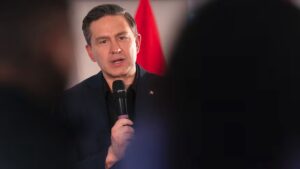
Federal Conservative Party Leader Pierre Poilievre speaks out against the federal government’s proposal to purchase vacant condos, during a town hall meeting in Duncan, B.C.  

It was, without question, one of the poorest communications roll-outs either the Carney government or the Eby government has experienced.

And yet, buried beneath the muddled messaging was an idea that deserves considerably more attention than it has received.

In the days following the announcement, Mr. Eby provided the missing details.

Contrary to widespread assumptions, the condominiums would not be concentrated in Metro Vancouver, or even in British Columbia’s largest urban centres. Rather, they would largely be acquired in smaller communities throughout the province where residential developments have stalled or failed altogether.

Many of these homes would be what the real estate industry describes as “distressed properties.”
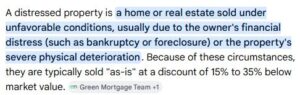
These are condominiums sold under unfavourable financial circumstances because developers have encountered severe financial difficulties, entered receivership, declared bankruptcy or been forced into foreclosure, with licensed insolvency trustees disposing of assets well below their original market value.

Such circumstances create unusual opportunities for public acquisition.

Rather than paying retail prices, governments can often acquire these units at discounts ranging from 15% to 35% below market value.
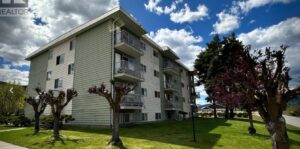
Completed, distressed vacant condo building ready for sale below market value in Grand Forks, B.C.

Communities such as Grand Forks, and other smaller centres throughout the Okanagan, the Kootenays and Vancouver Island — including Duncan, Port Alberni and Campbell River — contain developments that fit this description.

These are not speculative purchases. They are existing homes. Completed homes. Vacant homes. Homes waiting for occupants.

That distinction matters enormously.

A typical condo construction timeline spans 2.5 to 5 years from initial sales launch to final move-in, a timeline that can stretch even longer due to complex excavation, permitting, and labour demands.

Governments have become accustomed to announcing ambitious affordable housing projects that require years of planning, environmental reviews, permitting, financing and construction before a family receives keys to a front door.

Typically, that timeline stretches three to four years, often longer.

Premier David Eby has argued that purchasing distressed condominium developments offers a dramatically different proposition.

  • The homes already exist;
  • The infrastructure is already built;
  • Water, sewer, electrical service and roads are already in place;
  • Families could move in almost immediately;
  • The economics are equally compelling.

Constructing affordable rental housing has become extraordinarily expensive. Labour shortages, escalating material costs, financing expenses and municipal development charges have pushed construction costs to unprecedented levels.

Acquiring completed condominiums at significant discounts represents substantially better value for taxpayers while simultaneously rescuing developments that otherwise risk remaining empty for years.

The most important aspect of this initiative has received the least attention.

Behind every vacant condominium sits the possibility of a family whose life could be transformed. Not every homeless family sleeps on sidewalks. Many spend months couch surfing between relatives and friends. Some move weekly from one borrowed bedroom to another. Others sleep in aging recreational vehicles parked wherever municipal bylaws permit. Still others live in automobiles, desperately trying to shield children from the instability surrounding them.

For these families, housing is not merely shelter. Housing restores routine. It restores childhood. It restores educational stability, better physical health and improved mental health. It restores dignity.

The proposed rent-to-own model carries particular promise because it offers something beyond secure tenancy. It offers ownership.

Families who have spent years believing home ownership had become permanently unattainable may finally possess a realistic pathway toward building equity and long-term financial security. That possibility should not be underestimated.

If governments can purchase distressed condo developments substantially below replacement cost, rapidly convert them into affordable rent-to-own housing, and provide stable homes for thousands of families who otherwise face years of uncertainty, then taxpayers receive genuine value, while vulnerable British Columbians receive something infinitely more important than political messaging.

They receive hope.

In an age when political discourse increasingly rewards outrage over solutions, this initiative reminds us that governing still matters. It reminds us that budgets are, ultimately, moral documents reflecting the choices society makes about who deserves opportunity and who deserves security. Governments exist not merely to balance ledgers or score partisan victories, but to solve problems that markets alone cannot resolve. Housing is one of those problems.

We live in anxious times, when too many families have begun to wonder whether stability itself has become a luxury. Against uncertainty, both the B.C. and federal governments are attempting — however imperfectly — to meet the moment.

If vacant homes become places where children sleep safely, parents regain hope, and families begin building lives instead of merely surviving them, then history will remember not the fumbling announcement, but the quiet dignity of thousands of front doors opening onto a better future.
#BCPoli | Affordable Housing Plan | Part 2 |
BC New Democratic Party

Premier David Eby and the B.C. New Democratic Party (NDP) have developed a comprehensive housing plan aimed at addressing British Columbia’s escalating affordability crisis. The second plank in the B.C. NDP’s housing plan specifically targets individuals and families earning between $30,000 and $88,000 annually, aiming to provide affordable co-operative housing on a large scale.

The B.C. New Democrats’ housing plan emphasizes the use of municipal, provincial, and federal Crown land for the construction of housing co-ops, offering long-term leases — typically on a 66-or-99 year leasehold basis — to keep costs down.


The Railyard Housing Co-operative, built on Crown land, 135-units, with bachelor-1-2-3-and-4 bedroom units, priced well below the market. Includes two child care centres, with spaces for up to 130 children.

Additionally, municipalities would forego development fees — saving up to $1.5 to $4.5 million, depending on the size of the housing co-op, and number of units — significantly reducing the cost of building, thereby allowing these newly-built housing co-op homes to remain affordable for middle-income earners.

The strategy to build co-operative housing on government land is a notable aspect of the B.C. NDP’s approach to solving the housing crisis.

Co-operative housing, which offers more stability and community engagement than traditional rental housing, is a model where residents collectively own the housing but do not own individual units.

This model has proven successful in other parts of Canada and Europe, providing long-term affordability and community-driven management.

One of the key elements of the plan is its focus on affordability through leasehold arrangements on public land.


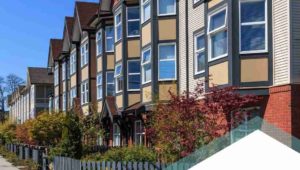
A town house-style housing co-operative built on Crown land in Vancouver’s River District

By leasing land rather than selling it outright to developers, the government can ensure that the affordability of these homes is maintained for generations. The 66- or 99-year lease term provides security for families and individuals, allowing them to build long-term roots without the fear of skyrocketing rent or property values.


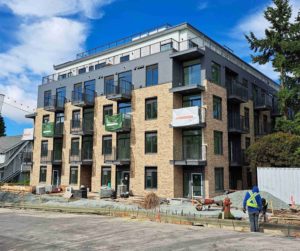
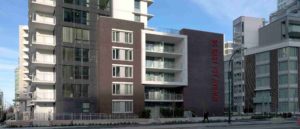
The 65-unit purpose built rental building at 2nd and Larch in Vancouver, with 14 studio, one, two and three-bedroom units set aside at CMHC’s median market rental rate, at $1000 – $1250 per month

The B.C. NDP has also introduced a provincial mandate that requires all new purpose-built rental housing to allocate 20% of units at the Canada Mortgage and Housing Corporation (CMHC) median market rental rates.

These CMHC rates are typically much lower than the market rates in hot real estate markets like Vancouver and Victoria.

By ensuring that a portion of new rental units are priced affordably, the provincial government hopes to address the growing rental affordability gap.

This is particularly significant as purpose-built rental housing often commands higher rents than older rental stock, leaving many renters — especially families — struggling to find affordable, stable homes.

In addition to building new housing, the B.C. NDP has a long-standing policy of purchasing existing apartment buildings to preserve affordable housing.

By acquiring older buildings, the government prevents private developers from converting them into luxury condos or raising rents beyond the means of current tenants. This approach has been lauded for ensuring that affordable housing remains available across municipalities, where market pressures often push lower-income residents out of desirable urban areas.

Premier David Eby has stated that the B.C. NDP will continue this strategy, helping to protect vulnerable renters from displacement due to real estate speculation.

In stark contrast, John Rustad’s B.C. Conservative Party has yet to present a comprehensive housing plan. The absence of a clear policy to address the affordability crisis leaves many wondering how the party intends to tackle one of the most pressing issues facing British Columbians.


Premier David Eby addresses a gathering of real estate and urban development professionals Thursday, Sept. 12, 2024, at the Paradox Hotel Vancouver | Photo: Rachel Thexton

Premier David Eby believes the B.C. Conservatives should release more particulars of their housing policies, with the October 19th election just over one month away.

Speaking at a meeting of real estate and urban development professionals last Thursday, the B.C. NDP leader said voters deserve to know what exactly the Conservatives intend to do on housing if they win a majority in the upcoming vote and form a new government.

“I would like to know what the Conservative housing plan is,” Eby told the audience at an industry event hosted by Urban Land Institute BC. “I think for housing to be on the ballot for people, they have to actually understand what their choices are that are coming forward.”

While Rustad has criticized the B.C. NDP for their housing initiatives, he has offered little in the way of a concrete solution. The B.C. Conservatives’ silence on this issue is particularly concerning given the housing crisis’s impact on the province’s middle- and lower-income families.

Moreover, the B.C. Conservative Party’s proposals related to rental housing would exacerbate the housing affordability problem.

Rustad’s party advocates for removing the cap on rent increases, a move that would disproportionately harm renters, particularly those on fixed or lower incomes.

Without rent control, landlords would have the freedom to increase rents at will, further straining families who already struggle to afford housing. This policy would worsen inequity in a rental market that already heavily favours landlords.

Additionally, the B.C. Conservatives have proposed further empowering landlords, potentially reducing tenant protections and making it easier for landlords to evict tenants or raise rents. This shift would create an even more unequal dynamic between landlords and tenants, where renters — many of whom are low- or middle-income families — would have little recourse against rent hikes or evictions.

Families relying on affordable rental housing would be hit hardest, with fewer options to find stable, affordable homes.

— David Eby (@Dave_Eby) September 16, 2024

In contrast, Premier David Eby’s B.C. NDP housing plan aims to strike a balance between affordability and housing supply, ensuring families earning between $30,000 and $88,000 can access housing without being priced out of the market.

David Eby’s emphasis on co-operative housing, along with the mandate for affordable rental units in new developments, represents a long-term strategy to combat housing unaffordability in British Columbia. This stands in direct opposition to the B.C. Conservatives’ pro-landlord, anti-renter policies, which would likely lead to higher rents, more evictions, and an exacerbation of the housing crisis.

The contrast between the B.C. NDP and the B.C. Conservatives on housing is stark.

While the B.C. NDP have laid out a multi-faceted plan that seeks to provide affordable housing to middle-income families, protect renters, and increase housing supply, Rustad and the B.C. Conservativesoffer a vision that favours landlords, weakens tenant protections, and risks pushing more families into housing insecurity.

As the housing crisis continues to dominate the political landscape in British Columbia, voters will need to decide which approach best addresses their needs — an inclusive, affordable, multi-faceted housing strategy, or a hands-off market approach that prioritizes developers and property owners over renters.


The B.C. NDP’s Housing Plan, Part 1 — Dignified Supportive Housing

#VanPoli | False Creek South | The Heart of Our City Preserved


REJECTED | City of Vancouver Real Estate Department Plan for False Creek South

In early October, when the City of Vancouver’s Real Estate Department presented a sordid, mercenary plan for the redevelopment of False Creek South —  that parcel of land on the south side of False Creek stretching from the Cambie Street bridge to the Granville Street bridge — Mayor Kennedy Stewart the very next day came out in full-throated support of The Plan, writing in an overly solicitous column published in The Straight that averred …

“Great cities like ours can never stand still. We must always examine whether our city is meeting our needs, both for today and tomorrow.”

The Real Estate Department’s Plan called for a greedy financial return to the City, that sought to more than triple the existing density of homes in the False Creek South neighbourhood, from 2450 units to a reconfigured 6600 units.

The real cost of the Plan?

The absolute, utter destruction of the False Creek South neighbourhood, a decimation of the heart and demographic integrity of one of Vancouver’s most sustainable and livable districts — the ‘close-fisted’ Plan laying waste to existing housing co-operatives dotted throughout the neighbourhood, moving residents from their current locations to a ghettoized, ‘poor door’ stretch of land situated along the bustling, carbon emitting 6th Avenue traffic corridor.

Community outrage soon ensued.

As founding chair of the UBC urban design programme, Patrick Condon, wrote in an article in The Tyee , the City’s Real Estate Department’s Plan would …

  • Increase market condos nearly fourfold, from 688 to 2,350 units;
  • Increase by more than 13x market rental units, from 150 to 2020 units;
  • See all new buildings constructed at least six storeys tall, ranging up to 50 storeys tall at the Granville Street bridgehead. Today, most buildings on the district’s city-owned land are three to four storeys in height;
  • Shift the tenure mix on city-owned land from the current 36% market strata, 8% market rental & 56% non-market co-op / affordable rental units, to 35% market strata, 30% market rental, and 34% non-market co-op and affordable rental;
  • Eventually demolish most of the existing co-ops, with these sites reused for market rentals and market condos, or to expand Charleson Park.

As Robert Renger, a retired senior planner who worked with the City of Burnaby, wrote in a response article in The Straight to the column written by Mayor Stewart — as well as to supporters of the City of Vancouver’s Real Estate Department’s Plan for False Creek South, which accused False Creek South residents of both nimbyism and elitism …

  • 15% of FCS residents are children, with 11% freehold and 16% citywide;
  • 17.5% of False Creek South family households are single-parent, compared to 10.9% of False Creek South freehold and 15.9% citywide;
  • The income mix on FCS lands closely parallels that of the city as a whole.
  • The residents of False Creek South had long ago published a document they called RePlan , a thorough and critical vetting of the City’s proposed Plan for the False Creek South neighbourhood, writing that …

    “False Creek South offers a housing model that is affordable, resilient and community-focused, with a variety of affordable, mixed-income housing options that span a spectrum of housing tenures. We are calling on Vancouver City Council to protect the existing variety of affordable, mixed-income housing options in False Creek South, to eliminate the threat of housing insecurity on leased City land, to kick start community growth, and to create right-sized housing in the False Creek South neighbourhood.

    Let’s expand affordable, resilient, mixed-income, mixed-tenure housing communities. Vancouver needs to protect and create more housing that is community centred, diverse, equitable, inclusive and secure that spans all leasehold housing tenures, including permanent housing for people who have experienced or are at risk of homelessness.”

    On October 5th in a motion presented to her colleagues on Vancouver City Council, Councillor Colleen Hardwick did just that in calling for security of tenure for the beleaguered residents of False Creek South, whose ongoing residency in the neighbourhood would be jeopardized by the redevelopment Plan published by the City’s Real Estate Department. Before that motion could be discussed around the Council table, the members of Council sought to hear feedback from the residents of False Creek South, as well as citizens from right across the city.

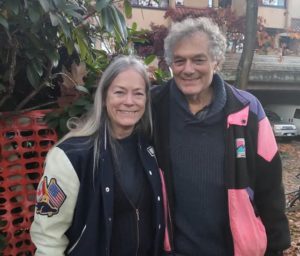
    Councillor Colleen Hardwick + retired CoV planner / RePlan co-author , Nathan Edelson

    Long story short, after hearing from some 171 residents of the City of Vancouver — many of them children, now adults, who had grown up in the False Creek South neighbourhood — in, perhaps, the most moving series of addresses this or any other Council has ever heard, in an amendment motion presented by Councillor Christine Boyle, all 10 Vancouver City Councillors, with an about face by Mayor Kennedy Stewart, unanimously rejected the City Real Estate Department’s Plan for False Creek South, instead opting to turn the process of the redevelopment of False Creek South to the City’s Planning Department, which planning process will include respectful and extensive consultation not only with False Creek South residents, but engaged residents across the city at-large.