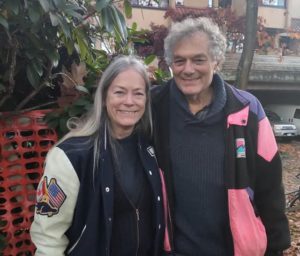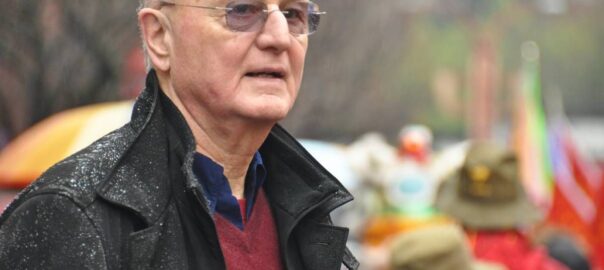
 Bill McCreery, architect, planner, housing advocate and civic reformer working to build Vancouver
Few individuals have left their fingerprints on Vancouver as indelibly as Bill McCreery. Over more than half a century, Bill McCreery has helped shape not only the city’s skyline but also its philosophy of urban living.
Architect, planner, housing advocate, civic reformer, and former Vancouver Park Board Commissioner, he belongs to a remarkable generation that transformed Vancouver from an inward-looking west coast port into one of the world’s most admired livable cities.
His buildings are important. His planning work is even more significant.
While many architects can point to individual towers or neighbourhoods, Bill McCreery’s influence extends across entire communities.
Bill McCreery was among the generation of designers and planners responsible for the creation of North False Creek and South False Creek — projects that fundamentally altered how North America thought about urban housing.
Throughout British Columbia, Alberta and the United Kingdom, Bill’s work contributed to thousands of units of market, public and social housing, always emphasizing the relationship between architecture, people and public space.
Yet, Bill McCreery’s greatest contribution may not be measured in concrete or glass. It lies instead in an enduring belief that cities belong first to their citizens.
Born into an era when Vancouver was still emerging from its provincial adolescence, Bill McCreery entered architecture at a time when modernism promised endless possibilities. The post-war decades were filled with confidence. Governments were building. Universities were expanding. New ideas about planning were replacing nineteenth-century assumptions about cities.
Unlike many architects who concentrated solely on buildings, Bill McCreery quickly became fascinated by the broader civic questions.
How should neighbourhoods function?
- Who gets to decide what is built?
- What responsibilities do governments have toward affordable housing?
- How can density improve rather than diminish community life?
Those questions would define much of Bill’s professional career.
Working on major housing developments in the United Kingdom, and throughout British Columbia and Alberta, Bill McCreery became known as an architect who understood that successful communities required more than attractive buildings.
Streets, parks, schools, public spaces and neighbourhood identity mattered just as much as architectural form. Housing, in his view, was never simply about construction; it was about creating places where families could flourish.
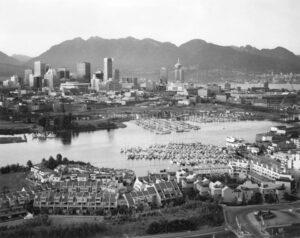 Photo of False Creek, circa 1980, showing False Creek & Ondine’s restaurant, designed by Bill McCreery. The bottom part of the photo shows south False Creek, including the Heather Street marina.
That philosophy reached perhaps its fullest expression in False Creek.
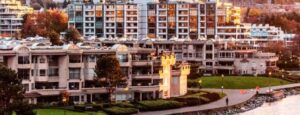 False Creek transformed from an industrial wasteland into a livable, diverse waterfront neighbourhood
Today, North and South False Creek are celebrated internationally.
Mid-rise buildings front generous parks. Walkways connect neighbourhoods to the waterfront. Families, seniors and young professionals share communities that balance density with human scale.
In the early 1970s, however, these ideas were revolutionary.
At a time when many North American cities were demolishing neighbourhoods for expressways and high-rise towers, Vancouver chose another path.
Mixed-income housing, accessible waterfronts, pedestrian-friendly streets and integrated parks became the guiding principles.
Bill McCreery was among the architects and planners who made that vision real.
The result became one of the defining planning achievements of twentieth-century Vancouver, influencing urban design far beyond British Columbia.
His public service unfolded alongside a consequential political transformation.
The Long Watch: Bill McCreery’s Five Decades in Vancouver’s Civic Life
There’s a particular kind of Vancouverite who never quite leaves City Hall, even after the votes are counted and the title expires.
Bill McCreery is one of them.
An architect by training and a civic conscience by temperament, Bill McCreery’s public life stretches from the reformist fever of the early 1970s to the housing fights still playing out in Council chambers today — more than fifty years of showing up, in one capacity or another, to argue about how Vancouver should be built and who should get to decide.
Bill McCreery served as a Vancouver Park Board Commissioner during one of the most remarkable periods in the city’s history.
Bill McCreery’s entry into Vancouver municipal politics first occurred in 1970, when Bill became involved in the freeway debate — a proposal to build a freeway, an extension of Highway 1, through downtown Vancouver, including through the Strathcona and Chinatown neighbourhoods.
Meeting in Bill’s apartment on Beach Avenue, a block away from the Park Board offices, this working group of planning and marine architectural professionals together developed two alternatives to the freeway plan, that included rapid transit and Seabus solutions that would better serve the interests of Vancouverites, while preserving the livability of the city for all citizens.
Elected as part of the reform movement associated with TEAM (The Electors’ Action Movement), he joined an extraordinary collection of civic leaders determined to modernize how Vancouver governed itself. Early in his term, Bill was appointed as the Park Board representative on the False Creek Planning Committee of Council.
That appointment was unique, in that Bill was the only non-Council person in the history of Vancouver who had a vote on a Council committee.
TEAM emerged in opposition to the old Non-Partisan Association establishment that had dominated city politics for decades.
Rather than treating municipal government as merely administrative, TEAM believed City Hall should actively shape the quality of urban life.
Its leaders included Mayor Art Phillips, whose vision of participatory government redefined civic politics, and Dr. Walter Hardwick, the geographer and planner whose intellectual influence remains visible across the city.
Bill McCreery fit naturally within that movement.
A TEAM (The Electors’ Action Movement ) Player
Bill McCreery’s entry into civic office came at Vancouver’s most consequential political inflection point. In 1972, TEAM – The Electors’ Action Movement, a coalition of Liberals, Conservatives, reform-minded professionals and New Democrats — swept the long-governing Non-Partisan Association from power, carrying Art Phillips into the Mayor’s chair, alongside eight TEAM Councillors.
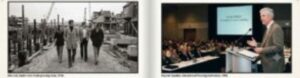 TEAM – The Electors’ Action Movement re-imagining Vancouver as a livable urban paradise
The new administration set about dismantling decades of NPA-era governance almost immediately, firing the city’s powerful commissioner, opening up public hearings, and killing the freeway plan that would have gutted Chinatown and Strathcona. It was, by every account, one of the more sweeping reinventions of municipal government in a Canadian city’s history — anchored by Phillips and by Walter Hardwick, the UBC geography professor who served as TEAM’s intellectual architect and the driving force behind transforming the industrial wasteland of South False Creek into mixed-income housing.
Bill McCreery joined that movement’s governing apparatus as a TEAM-affiliated Vancouver Park Board Commissioner, serving from 1973 to 1974. It was a smaller stage than Council, but not a trivial one — the Park Board has run as its own elected body since the 1880s, with real authority over the city’s parks and recreation system, answerable directly to voters rather than to council or the mayor.
To sit on it during the TEAM years was to be inside the machinery of a government self-consciously remaking how Vancouver made decisions, at the moment the city was deciding whether development or livability would set its priorities.
Bill’s experience as an architect made him aware decisions about parks, neighbourhoods and public land could not be separated from broader planning policy.
The Vancouver Park Board during that era became much more than an agency responsible for lawns and playgrounds.
It became one of the principal guardians of Vancouver’s emerging philosophy that public space should serve everyone.
Together, Art Phillips, Dr. Walter Hardwick, Bill McCreery and their TEAM colleagues fundamentally altered Vancouver’s civic governance.
Their greatest achievement was changing who participated in decision-making.
Prior to TEAM’s arrival, planning decisions often occurred behind closed doors with relatively little public involvement. Developers, bureaucracies and political insiders largely determined the city’s future.
TEAM insisted on something radically different.
- Neighbourhood consultation became an expectation rather than an exception;
- Community planning gained legitimacy;
- Citizen advisory committees became influential;
- Public hearings assumed greater importance.
The planning process itself became more transparent.
This transformation permanently altered the relationship between City Hall and Vancouver residents.
Instead of viewing citizens as obstacles to development, the new governance model treated them as partners in shaping neighbourhoods.
Bill McCreery: The Architect’s Eye
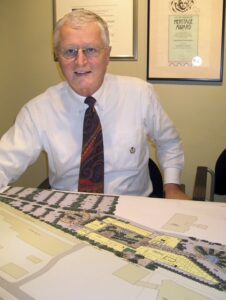 Bill McCreery, the architect, circa 2006 | Photo credit, Malcolm Parry, the Vancouver Sun.
Bill McCreery brought a working architect’s credentials to that civic role — he held professional registration with both the Architectural Institute of British Columbia (AIBC) and the Alberta Association of Architects (AAA).
During the course of his career, Bill McCreery has been credited with helping create North and South False Creek and with contributing to thousands of units of developer, public, and social housing across British Columbia, Alberta, and the United Kingdom, alongside several Vancouver residential projects of his own.
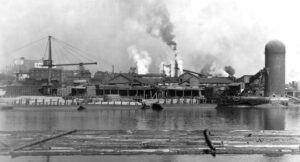 Southeast False Creek, once the waterfront particulate smoke spewing ‘heart’ of Vancouver, circa 1950
False Creek South is a body of work that placed him, professionally, inside the same era-defining project — the reclamation of False Creek’s derelict industrial shoreline into one of the templates North American cities would study for a generation — that his political colleagues were shaping through policy.
That philosophy eventually evolved into Vancouver’s celebrated “CityPlan” consultation model and neighbourhood planning processes that attracted international attention decades later.
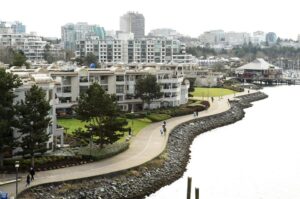 Mid-rise buildings and parks front the walkways connecting southeast False Creek to the waterfront
Bill McCreery has remained one of the strongest defenders of those principles, arguing public consultation remains essential to successful urban planning.
Bill McCreery’s advocacy has continued long after leaving elected office.
Even in retirement from architectural practice, Bill McCreery has remained one of Vancouver’s most thoughtful voices on housing and urban development.
Bill has frequently argued that planning must balance density with neighbourhood character, insisting that growth should occur through genuine collaboration rather than imposed solutions.
Writing and speaking publicly, he has warned against abandoning the community-based planning traditions established during the 1970s.
In his view, Vancouver’s international reputation rests not simply on beautiful buildings but on decades of patient civic engagement that gave residents a meaningful voice in shaping their communities.
His critiques have never been nostalgic.
Rather, they reflect a conviction formed over decades of professional practice: cities function best when architects, planners, politicians and citizens work together instead of competing for influence.
That belief explains why Bill McCreery has continued participating in debates surrounding housing policy, planning reform and neighbourhood development well into the twenty-first century. He has joined fellow architects, planners and urban thinkers in advocating for approaches that combine increased housing supply with careful urban design and democratic accountability.
Architecture often celebrates individual genius.
Bill McCreery’s career tells a different story.
His work reminds us that cities are collaborative achievements.
Successful neighbourhoods reflect countless conversations between architects, elected officials, planners, engineers, community organizations and residents.
Collaboration became a Vancouver hallmark during its most innovative decades.
Today, visitors admire False Creek, the city’s waterfront neighbourhoods, its network of parks, and its human-scaled urban design without always knowing the names of those responsible.
Bill McCreery is one of those names.
Life After Bill McCreery’s Tenure on The Vancouver Park Board
Bill McCreery’s civic instincts didn’t retire when his term did.
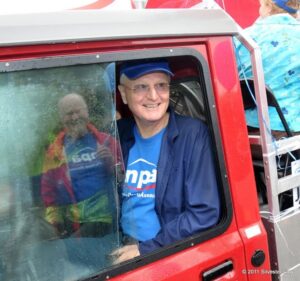 Bill McCreery running for civic office in the 2011 Vancouver municipal election under the NPA banner
Decades later, he re-emerged as a candidate for City Council under the NPA banner — the party TEAM had unseated in 1972, a small irony that says something about how thoroughly the city’s political alignments had scrambled by the 2010s.
Running for Council gave him a public platform to argue “city hall democracy” had suffered under the Vision Vancouver administrations then in power.
Drawing on his own memory of the job — the stack of reports, sometimes a foot high, that landed on a Commissioner’s desk each Friday for study before Monday’s meeting — he made the case that transparency and direct access between citizens, reporters, and city staff had eroded, and that the public was worse informed for it.
That advocacy has continued well past his own campaigns.
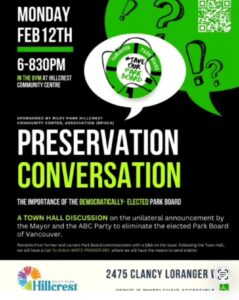
Bill McCreery has stood among the coalition of former Park Board commissioners publicly opposing efforts to dissolve Vancouver’s elected park board — a fight rooted in the same principle that shaped his TEAM years: decision-making over civic institutions belongs in the hands of people directly accountable to voters, not folded into the broader authority of City Council or the Mayor’s office.
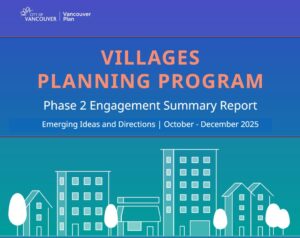
As recently as February of this year, he was among the signatories of an open letter to Mayor Ken Sim and Council challenging the city’s housing “Villages Plan,” identifying himself in that document as a former registered architect who helped build False Creek — still, after half a century, making his case in writing rather than letting the record speak for itself.
Bill McCreery: A Consistent Thread in Bill’s Civic Life
What runs through Bill McCreery’s public life isn’t a single ideology so much as a recurring instinct: a belief that how a city governs itself — who gets consulted, which bodies hold power, how transparently decisions get made — matters as much as what gets built.
Bill arrived in civic office on the wave of a movement built on that premise, spent a career as an architect inside one of that movement’s landmark projects, and spent the decades since defending the governance structures TEAM left behind.
Few figures in Vancouver’s civic history have stayed at that post for quite so long
Bill belongs to a generation that refused to accept that cities must choose between growth and livability, density and beauty, or development and democracy.
Instead, he helped demonstrate that thoughtful architecture and enlightened governance could reinforce one another.
His buildings continue to house thousands.
His planning principles continue to influence generations of architects.
Bill’s work on the Park Board and alongside Art Phillips, Walter Hardwick and the TEAM reformers helped reshape Vancouver’s civic institutions, embedding public participation into the city’s political culture in ways that continue to define municipal government today.
Few architects can claim to have transformed both a city’s physical landscape and its democratic institutions.
Bill McCreery is one of them.