
#VanPoli | Mayoral Candidate Kareem Allam To Address Food Insecurity

Each month, the Greater Vancouver Food Bank supports 15,000 clients directly and another 20,000+ people through 119 community partner agencies (such as shelters and transition houses) in Vancouver, Burnaby, New Westminster, and the North Shore.

Separate organizations handle outer cities, such as the Friends in Need Food Bank serving Maple Ridge and Pitt Meadows, and local groups covering Surrey, Langley, and Richmond independently.

Food Banks BC reported that over 113,000 unique individuals utilize food banks across British Columbia in a single month, marking a sharp 44% surge compared to pre-pandemic levels.

  • Children: Make up roughly 25% to 31% of direct food bank clients in the region;
  • Seniors: Account for about 16% to 17% of individuals seeking food assistance;
  • Employment: Up to 30% of urban food bank clients in Vancouver report being currently employed, struggling with high housing and living costs.

Should they win power on October 17th, the Vancouver Liberals have committed to adopting and implementing a food security programme in the City of Vancouver that would address the issue of food insecurity for the thousands of families in Vancouver in need who make regular use of the Greater Vancouver Food Bank, a programme not unlike the food insecurity programme currently being implemented by New York Mayor Zohran Mamdani, and the University of British Columbia’s Community Food Hub Programme.

That is what today’s VanRamblings column is all about. Good on the Vancouver Liberals for addressing a critical need for so many families across Vancouver.

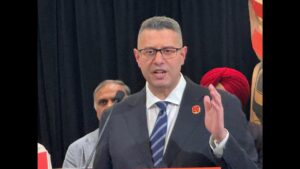
Vancouver Liberals’ Mayoral candidate Kareem Allam sits down with Will Lich, founder of UBC’s Community Food Hub, to discuss food insecurity, and what might be done to address the issue

Vancouver Liberals’ candidate for Mayor, Kareem Allam, has developed a full-fledged plan to address food insecurity in the City of Vancouver.

Development of the Vancouver Liberals’ Food Insecurity Relief Plan would include implementation of a Community Food Hub with, over time, more than one such Food Hub Market to be located in neighbourhoods throughout Vancouver.

The development of Food Hub Markets across the city is but one facet, or feature, of the Vancouver Liberals’ Food Insecurity Relief Plan, about which VanRamblings will write at greater and in-depth length on another day.

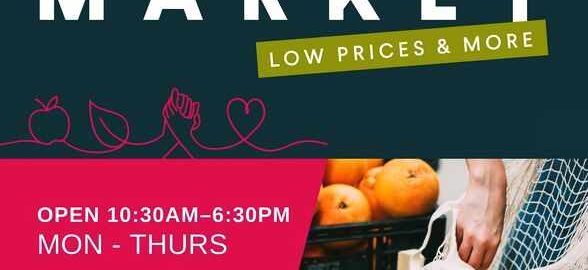
At the University of British, the Community Food Hub is a campus-wide initiative designed to tackle student food insecurity through affordable groceries, educational workshops, and community-building.
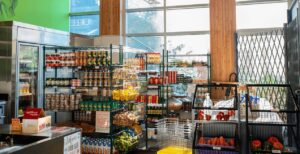
The primary feature of the Community Food Hub is the UBC Food Hub Market, which operates out of the Centre for Interactive Research on Sustainability building, located on the UBC campus.

The programme offers several key resources and initiatives:

  • The Food Hub Market: A low-cost, at-cost grocery store for the campus community;
  • Workshops & Outreach: Educational sessions on food literacy, nutrition, and hands-on food skills.;
  • Food Prescription Programme: A pilot programme running at the Gateway Health Building allowing healthcare providers to screen for food insecurity and prescribe personalized food support.;
  • The Acadia Food Hub: Located in the Acadia Park Residence, this location offers food and baby supply distribution for families on campus.

The Food Hub Market is a not-for-profit community space offering affordable grocery essentials while fostering community social connection.
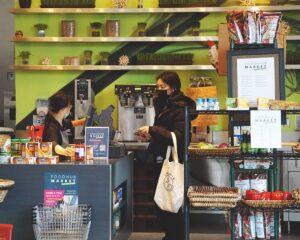
The Market is dedicated to improving access to affordable and culturally diverse grocery staples that support food security and meet the everyday needs of those who make use of the facility within a welcoming and inclusive environment.

The Community Food Hub also provides hands-on food skills workshops, community events and educational outreach on food literacy and nutrition. These programmes promote food literacy and food skills, helping the community navigate available food security resources, and strengthen community connections.

The Vancouver Liberals’ Food Security Programme is woven into the party’s broader agenda on affordability, economic opportunity, neighbourhood services, and community well-being.

Food Security Through Affordability

In part, the Vancouver Liberals approach to the issue of food insecurity emerges as a consequence of the rising cost of living. Throughout the Vancouver Liberals’ platform, Vancouvers’s newest civic party argues that Vancouver City Hall must focus on restoring affordability so families have more disposable income available for necessities such as groceries.

Kareem Allam has repeatedly framed the Vancouver Liberals’ broader objective as creating “a city where young people are able to stay and raise a family,” arguing that municipal government should measure every policy against that standard.

Within that framework, food security becomes one key element of overall household affordability. If housing costs, transportation costs, and municipal taxes consume less of a family’s income, residents will be better able to afford nutritious food.

The Principal Tenets of the Vancouver Liberals Platform

  • 1. Lower the cost pressures on households 

    The Vancouver Liberals argue that controlling property tax increases and improving fiscal management will leave residents with more money available for everyday expenses, including groceries. They contend that City Hall should concentrate on efficient delivery of core services rather than expensive capital projects that do not directly improve residents’ quality of life;
  • 2. Build an economy that supports working families 

    Kareem Allam frequently links food affordability with employment. His speeches emphasize attracting better-paying jobs and ensuring young people can remain in Vancouver rather than being forced to leave because of living costs. In the party’s view, food security is strengthened when residents have stable employment and rising incomes;
  • 3. Strengthen neighbourhood infrastructure 

    The party proposes significant investment in community centres, parks, libraries, and other neighbourhood facilities. While these proposals are not described specifically as food security initiatives, such facilities often serve as locations for community kitchens, seniors’ meal programmes, food distribution initiatives, and neighbourhood support services;
  • 4. Improve frontline municipal services 

    The Vancouver Liberals propose hiring 400 additional frontline unionized employees to improve municipal services. Their argument is a better-functioning city creates healthier neighbourhoods and stronger communities capable of supporting vulnerable residents.

Vancouver Liberals’ Mayoral Candidate Kareem Allam’s Perspective

Kareem Allam consistently argues that municipal government should concern itself with whether ordinary families can successfully build their lives in Vancouver.

Kareem’s public messaging repeatedly returns to several themes:

  • Vancouver must once again become affordable for young families;
  • Municipal spending should prioritize essential public services;
  • Economic growth is necessary to sustain strong social programmes;
  • Public investment should focus on practical improvements rather than prestige projects.

Vancouver Liberals’ Council Candidate Jessica Walton’s Contribution

Jessica Walton brings perhaps the strongest personal connection to food affordability within the Vancouver Liberals.

Her candidate biography highlights several experiences directly related to food insecurity and rising living costs:

  • Working retail jobs from the age of 15 while helping support a family member living in poverty;
  • Experience in restaurants and service-sector employment;
  • Advocacy for a fair and livable wage;
  • Concern that rising food costs are forcing students and young people to leave British Columbia;
  • Frontline government work connecting residents with public services.

Jessica’s biography specifically identifies “rising food costs” as one of the major pressures facing younger generations. Rather than presenting food insecurity solely as a charitable issue, Jessica Walton frames it as part of a broader affordability crisis affecting students, workers, and young families.

Ms. Walton also emphasizes accessibility, inclusion, and ensuring government programmes are understandable and reachable by those who need them most. Her experience helping residents navigate government services informs her belief that municipal programmes should be practical and accessible.

Relationship With Existing City Policy

The Vancouver Liberals’ emerging approach differs from the City of Vancouver’s long-established food policy framework. Vancouver already operates a comprehensive food strategy supporting community food networks, urban agriculture, food access programs, and local food system planning.

The Vancouver Liberals have not proposed eliminating these initiatives.

Instead, their emphasis has been on improving affordability, strengthening neighbourhood infrastructure, and restoring confidence in municipal governance.

As the October 17th Vancouver Municipal Election Approaches

Kareem Allam presents food security as inseparable from creating a city where working families can afford to remain and prosper. Vancouver Liberals’ candidate for Vancouver City Council Jessica Walton reinforces that message from personal experience, speaking about poverty, rising grocery costs, fair wages, and the barriers confronting students and young families.

The Vancouver Liberals are dedicated to publishing  a definitive food security platform in the lead up to this autumn’s civic election campaign that will expand on the provision of specific municipal initiatives and measurable policy commitments.