Category Archives: #VanPoli Civic Politics

#VanPoli | Mayor Ken Sim and the Sadly Premature Death of ABC Vancouver


ABC Vancouver, the upstart Vancouver civic party that only 22 months ago ascended to super majority status at Vancouver City Hall, with mayoral candidate, businessman and novice politico Ken Sim achieving a record number of votes on election night, Saturday, October 15th, 2022, carrying seven Councillors on his coattails to victory, to dominate civic politics, in August 2024 is a municipal party — although once celebrated — very much in freefall and worrisome disarray.

In a recent conversation with a long serving, retired Vision Vancouver City Councillor, the Councillor told us of her many conversations with ABC Vancouver’s electeds, who have expressed to her — as has been the case with VanRamblings’ conversations with various ABC Vancouver electeds — a distress and a mournfulness at the goings on at Vancouver City Hall, in the main emanating from the Mayor’s office and his “bullying staff”, an unfortunate and disconcerting arbitrariness, a lack of consultation, respect and engagement (not to mention prior notice) involving a series of “surprising” dictums by Mayor Ken Sim.

None more surprising, of course, than the arbitrary and unilateral reversal by Mayor Ken Sim of ABC Vancouver’s commitment to, and support of, a much cherished Vancouver institution, the 135-year-old elected Vancouver Park Board.
Following a week-long sojourn in ABC Vancouver founder Peter Armstrong’s luxurious, well-appointed yacht up British Columbia’s west coast, Ken Sim arrived back in Vancouver in early December of 2023 to announce — with the shortest possible notice to his fellow ABC Vancouver electeds — of his intention to ask the province to change the city charter, to shift Park Board’s responsibilities to Council, in the process unilaterally eliminating our cherished 135-year-old elected Park Board.

Where else has Ken Sim and ABC Vancouver gone wrong, losing the support of a Vancouver populace who elected the civic party with so much hope for better?

  • Shuttering the Rental Office at Vancouver City Hall, established by the previous Council to help renters. Ken Sim and ABC Vancouver promised to transfer the funds  allocated to the Rental Office to TRAC — the Tenant Resource & Advisory Centre — in the process committing, as well, to move TRAC into a newly renovated, City-owned building on Howe Street, neither of which commitments have been fulfilled to date;
  • In the most unconscionable manner, scrapping Vancouver’s Livable Wage Programme that certified employers who provide services and supplies to the City of Vancouver pay a living wage of $25.68 per hour to their employees;
  • Increasing property taxes by the highest amount ever, in December 2022 by 10.7%, and in December 2023, by 7.5%. Note should be made that in Port Coquitlam, Mayor Brad West’s City Council raised the 2022 property tax by 3.55% and in 2023, by 5.58%, all while providing supportive and affordable housing, and a new community centre;
  • Restricting public access to Council decision-making by allocating only 3 minutes rather than 5 minutes to citizens addressing their concerns to Council, while disallowing Councillors the opportunity to ask clarification questions to speakers;
  • Committing to hiring 100 police officers, and 100 public health nurses for an expanded Car 87 mental health programme, fulfilling only the first part of ABC Vancouver’s commitment to the citizens of Vancouver.

More concerns about Ken Sim, in particular: Mayor Ken Sim has missed a full one-third of Council meetings during his 21-month tenure as Mayor. As of March of this year, Sim had been marked absent 222 times, including during the vote on one of his most significant campaign promises.

As Stewart Prest, a lecturer in political science at UBC, told CTV Vancouver

“I think when we start to get to the range of missing one vote in three, it’s worth asking the question of whether the Mayor is actually showing up to do the job that he was primarily elected to do,” Prest said.

“The Mayor is elected, first and foremost, to represent Vancouverites at Council and if the Mayor is missing in action for a significant amount of those deliberations – even apart from casting the vote – if the Mayor is not there to offer his perspective, then there may be the appearance, if not the reality of not doing a crucial part of his job,” Prest told CTV News.

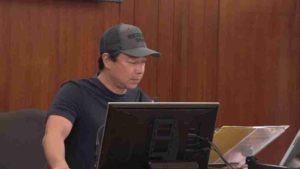
Concern was expressed recently when, presiding over an emergency Council meeting that would effectively stop the work of Vancouver City Hall’s Integrity Commissioner, Lisa Southern, Mayor Sim wore a baseball cap, T-shirt and light running shorts to Council, lessening the dignity of the office, as if somehow Mr. Sim is not the Mayor of Canada’s third largest city, but an interloper at City Hall.
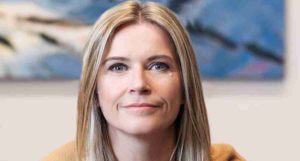

Lisa Southern, Integrity Commissioner, City of Vancouver

Of course, attempting to shutter the office of the Integrity Commissioner, disallowing Commissioner Southern from investigating and weighing in, purportedly, to complaints leveled against the Mayor and members of his ABC Vancouver Council contingent, is only the latest “scandal” to befall Vancouver’s inept, part-time, decidely unserious, and let’s face it “not fit for the job” baseball cap wearing Mayor.

Former Vancouver Sun Managing Editor / publisher-editor of Business in Vancouver / 2014 candidate for Mayor of the City of Vancouver, Kirk LaPointe, weighs in on the Southern fiasco

“What appeared to be a routine motion to get a third-party review of the mandate was amended at the meeting to propose freezing Southern’s work for an indefinite period until the review was complete. This isn’t standard practice while mandates are reviewed — usually, it’s just business as usual while the amendments are assembled — and critics immediately wondered if Council was just trying to silence the Commissioner and the complainants. (The Mayor’s chief of staff insists the review would be done swiftly.)

The amendment passed, but Council needed another recent meeting to amend the bylaw for its measure to take effect. Meantime, Southern got busy writing and releasing two reports arising from complaints. One complaint (from a Park Board Commissioner) alleged Sim and his officials tried to influence Park Board decision-making and leadership, and a second complaint (filed by Sim’s senior advisors) alleged two Park Board Commissioners contravened the City’s code of conduct by recording and sharing phone calls they made to one of them. Southern dismissed both complaints, but her reports on them splayed open the discordant municipal political culture.

It appeared we were headed for a work freeze, but on the day before the meeting, another complaint about the ABC Councillors landed with the Integrity Commissioner from an opposition Councillor, the Green Party’s Pete Fry (son of Liberal MP Hedy Fry). Details of the complaint aren’t yet public, but Fry decided to inform Councillors and the city manager of his complaint as it was filed. In doing so, he stymied Councillors from voting on the freeze of Southern’s work. After all, in being named in the complaint, they would have been conflicted and have to recuse themselves at least until the Commissioner’s office could investigate and rule on it.

Out of caution, Sim adjourned the meeting until late September, but not before chiding Fry and insisting again that his goal was an improved Integrity Commissioner’s office. Two things were most evident at the meeting: Sim’s frustration, and the surprising absence of two of his own ABC Councillors (ed. clearly unhappy, Lisa Dominato and Rebecca Bligh) from a meeting where one would think solidarity and attendance would be a whipped must.”

LaPointe raises further concerns, in writing …

“Last week, the ABC Vancouver Chair of the School Board, Victoria Jung, quit ABC Vancouver to sit an an Independent over the integrity issue; she may not be the last to leave, and each departure further fritters the momentum of the 2022 mandate most everyone thought would be so empowering.”

For some time now, there’s been a movement afoot to create a Unity Slate for the 2026 Vancouver municipal election that would be backed by the Vancouver District & Labour Council, such Unity Slate that could include Melody Ma, Council candidates from COPE (think Tanya Webking, Derrick O’Keefe), TEAM (Colleen Hardwick, Cleta Brown or Sean Nardi), former Vision Vancouver electeds (Overdose Prevention Society founder, Sarah Blyth and/or former Park Board Chair, Aaron Jasper), One City Vancouver (Dulcy Anderson and/or Tessica Truong),  Green Party electeds (Pete Fry and/or Adriane Carr), and former ABC Vancouver electeds, now Independents (Scott Jensen, and/or Laura Christensen / Brennan Bastyovanszky).
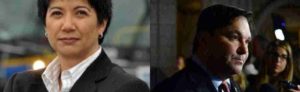
Unity Slate Mayoral candidates: BC NDP MLA Mable Elmore, or NDP MP Don Davies.
Building Needed Housing, Preserving Our Democracy

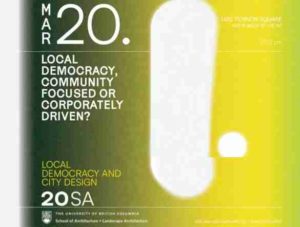
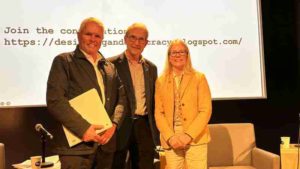
Last evening, Wednesday, March 20th, 2024, the University of British Columbia sponsored a civic democracy workshop event at their Robson Square site, hosted by Dr. Patrick Condon, founding Chair of the UBC’s Urban Design programme, with UBC Professor Emeritus David Ley, TEAM candidate for Mayor in 2022 and former Vancouver City Councillor, Colleen Hardwick, and former Vancouver City Planner Larry Beasley the evening’s featured speakers.


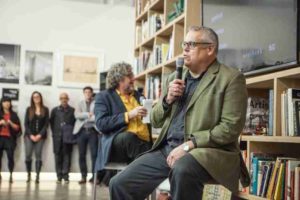
Former Vancouver City Planner Larry Beasley, UBC Professor Emeritus David Ley + Colleen Hardwick

The first speaker of the evening was Dr. David Ley, a UBC Professor Emeritus in the university’s Department of Geography.

Sadly, a glitch in our recording of Colleen Hardwick’s address prevents us from posting our video of her contribution to the evening. However, the entirety of Ms. Hardwick’s historically relevant address on Wednesday evening may be found by clicking on the link to the full video covering the two-plus hours of the event.

The final speaker of the evening was Larry Beasley, introduced by Dr. Condon.

Video of the entirety of the evening is available by clicking on this link.

Autocracy and the End of Democracy — But Not Yet


Scot Hein, retired senior designer, City of Vancouver. Adjunct Professor, University of British Columbia.

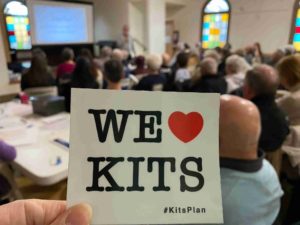
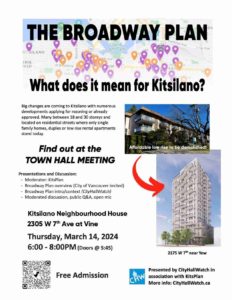
When Scot Hein spoke at last Thursday’s #KitsPlan Town Hall, held at the Kitsilano Neigbourhood House at West 7th and Vine, to discuss the Broadway Plan, and its implications for our beloved Kitsilano neighbourhood, he bemoaned the fact that in recent years citizens throughout Vancouver have been locked out of the decision-making process that affects the communities where they and we live.

Here is what Scot Hein had to say on the matter of civic democracy

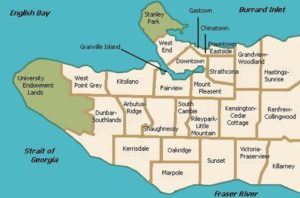
“As little as 15 years ago, the City of Vancouver regularly engaged in a thorough, often years long, one-on-one, in-person consultation process with citizens, when the City worked toward developing community plans for the future of neighbourhoods across the City, be that in the Grandview-Woodlands, Riley Park-Little Mountain, Kensington-Cedar Cottage or Granville-Fairview communities, or any other Vancouver neighbourhood.

In recent years, consultation and community involvement in the development process in the City of Vancouver has devolved into a top down process, where the community is not — or rarely — consulted, but are rather called out to a community meeting, where white boards are placed on walls at a community centre, announcing the planners’ conception for the development future of a neighbourhood, a development fait accompli if you will, sans any meaningful engagement with the community, or citizens who live in one of the twenty-three neighbourhoods that are the heart of Vancouver.”

Sadly, as former Vancouver City Councillor Colleen Hardwick has often averred …

“The members of City Council have often expressed that organizations like the Coalition of Vancouver Neighbourhoods, or the community resident associations who are members of the Coalition, are extra-legal forms of civic governance, unsanctioned and without mandate, that all civic authority autocratically rests solely and unabashedly with the Mayor and 10 City Council members.”


On February 13th, David Eby’s government launched the BC Builds programme to build rental housing for “middle-income earners”, geared towards  those earning between $134,000 and $284,000 annually.

Whether it’s Premier David Eby and his Housing Minister, Ravi Kahlon, or Mayor Ken Sim and the members of Vancouver City Council or, down south, Republican MAGA candidate for President Donald Trump, or in Canada should Conservative Party leader Pierre Poilevre form government following the 2025 federal election, for almost two decades now democracy has been in peril, where high-handed governments impose their will on an increasingly angry and woefully disenfranchised electorate, counterintuitively driving turn out down at the polls during the election period — only 36.3% of eligible Vancouver voters cast a ballot in our City’s 2022 municipal election — as more and more, decision-making is left to the elites.

The thrust of last week’s #KitsPlan Town Hall was to reverse the “trend” towards disenfranchisement, for the community to regain its collective power to influence change for the better, for themselves and their families, to demand a voice and input that would be incorporated into civic and provincial affairs decision-making.

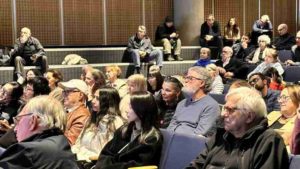
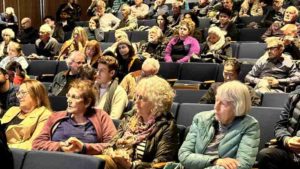
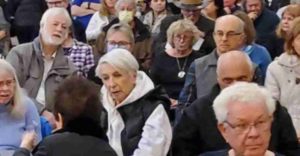
While a diverse crowd attended the Town Hall — encompassing a broad cross-section of the Asian and other communities of colour and ethnicities who reside in Kitsilano, with a demographic representation of the parents of young families also voicing their concerns about the tower-driven Broadway Plan, and what it means for the livability of the Kitsilano neighbourhood — many of those in attendance were comprised of members of the seniors community, and were Caucasian.


An unrepresentative, selectively misleading photo of #KitsPlan Town Hall attendees, posted on X

The Abundant Housing, in-the-pocket of developers “We’ve never met a tower-driven development we didn’t like” naysayers posting on Elon Musk’s X (formerly Twitter) cesspool were quick to selectively call out the attendees at the Town Hall as “universally white” and old. Of course, that was not the case, as we pointed out.

Of course, there was a big online hue and cry that referred to #KitsPlan Town Hall attendees as that most awful of things, a NIMBY (as in Not In My Back Yard). The NIMBY appellation is little more than untoward name-calling and a misrepresentation of the truth. Desiring to maintain a livable community — and an agreed upon and very much desired much more dense community that encompasses a variety of environmentally-sound housing forms — can hardly be called NIMBYism.

You know, too, there was a time in the not-so-distant past when younger members of our community valued those who comprise our seniors community, as elders possessed of wisdom, gained across a lifetime of activist community involvement.

Sadly, no longer it would seem. #FightAgeism and intolerance, VanRamblings says.

In fact, if you were to survey the majority of the seniors who were in attendance at the #KitsPlan Town Hall,  you would more than likely find an engaged population of longtime died-in-the-wool community activists, who throughout their lives have fought for a better, a richer, a more diverse and a more inclusive community, who are in point of fact situated on the progressive side of history, and after a lifetime of fighting for better, are unwilling to allow City Hall to steamroll over them and their families, their neighbours, their colleagues and members of the Kits community.

In the days, weeks, months and years to come, there will be more #KitsPlan Town Halls, next time and beyond — as the movement grows — in increasingly larger venues, as members of the Kitsilano community, in increasing numbers, rally in support of the preservation of Kitsilano as a livable, if increasingly dense, family neighbourhood, where all members of the community are valued, where we might live in harmony and good health, where we know our neighbours, where our streets are friendly and safe, where we know the shop keepers in our Kitsilano neighbourhood and enjoy the restaurants we have come to love, where Jericho and Locarno beaches and Spanish Banks are but a hop, skip and a jump away.

Vancouver Broadway Plan, and Its Impact on the Kitsilano Neighbourhood

This past Thursday evening, in an event sponsored by CityHallWatch — the online activist civic affairs journal — in a crowded, overflow event held at Kitsilano Neighbourhood House, a broad spectrum of speakers addressed the Broadway Plan — an extensive development plan for the future of Vancouver’s Broadway corridor, a growth plan that envisions an additional 50,000 residents who will take up residence along the corridor from Clark to Arbutus streets, between 1st and 16th avenues — and the implications of the Plan on the Kitsilano neighbourhood.


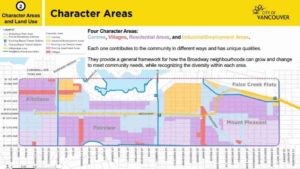
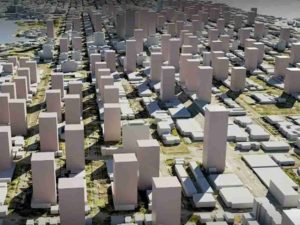
The Broadway Plan will provide a framework for the types of buildings, with towers between 20 to 40 storeys allowed in the light blue ‘centres’. The graphic above was supplied by the City of Vancouver.

The evening was MC’d by Larry Benge, a co-founder and co-Chairperson of the Coalition of Vancouver Neighbourhoods — an alliance of more than 20 community and residents’ associations, who have long sought and continue to seek a respectful relationship between the powers that be at City Hall,  and the 23 neighbourhood communities that comprise and are at the heart of the City of Vancouver.


Video | Vancouver’s Broadway Plan: What does it mean for Kitsilano? Townhall Meeting March 14, 2024

Well-informed, respected and accomplished speakers at Town Hall included …

    • Brian Palmquist, a Vancouver-based architect, and publisher of the ‘you must subscribe to’ City Conversations substack, an in-depth journal that provides detailed coverage of development in the City of Vancouver, and its implications for the health, safety and well-being of those of us who reside in the city;
    • Arny Wise, an urban planner, retired developer, and mediator of municipal housing disputes in Vancouver;
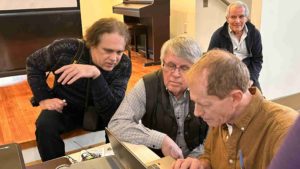
      In front, l-r: Stephen Bohus, Brian Palmquist, Randy Helten. In behind: Arny Wise.
    • Michael Geller, an urban planner, real estate consultant and property developer, who serves on the adjunct faculty of Simon Fraser University’s Centre for Sustainable Development and School of Resource and Environmental Management. His blog may be found at gellersworldtravel.blogspot.ca;
    • Scot Hein, a retired senior urban designer employed by the City of Vancouver for more than 30 years, and at present an Adjunct Professor in the Master of Urban Design Programme at UBC where he works with his colleague …
    • Patrick Condon, the James Taylor chair in Landscape and Livable Environments at the University of British Columbia’s School of Architecture and Landscape Architecture, and the founding chair of the UBC Urban Design programme.

    In addition to those named above, during the question, answer and commentary portion of the meeting, former Vancouver City Councillor Colleen Hardwick spoke about the lack of civic democracy, while an architect present with his family in attendance spoke of the work of an old Simon Fraser University pal of VanRamblings, the University of Victoria’s Robert Gifford, a Professor of Psychology and Environmental Studies, who in his paper titled The Consequences of Living in High-Rise Buildings [PDF], writes …

    “… high-rises are less satisfactory than other housing forms for most people, are sub-optimal environments to raise children, social relations within high-rise towers tends to be more impersonal and less than satisfactory than is the case with more ground-oriented housing forms, there is an increased incidence of crime and fear of crime among those who reside in high-rise developments, social cohesion is more difficult and substantively less present in tower developments, while independent studies have found that tower high-rise living may well be a strong contributory and determinative factor that can lead to an increased incidence of suicidal ideation and actual suicide among residents who live in concrete, steel and glass tower constructed buildings.”


    The future of the Kitsilano neighbourhood along the West Broadway / West 4th Avenue corridors

The thrust of Arny Wise’s address to those gathered at the Kitsilano Neighbourhood House Town Hall was that the advent of environmentally unsound steel, concrete and glass towers to increase density in the Kitsilano neighbourhood is simply not an optimal form of development to achieve the density desired by planners at Vancouver City Hall.

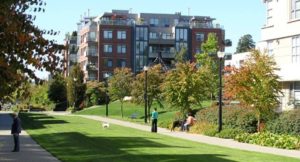
Scot Hein made reference to the Arbutus Walk neighbourhood, west of Arbutus Street and West 12th Avenue that, originally, was presented by the Molson-Carling developers and planners back in the day at Vancouver City Hall as three 50-storey concrete and steel towers — a development which the neighbourhood residents very much objected to — that under Mr. Hein’s watch was transformed into a neighbourhood-friendly and livable townhouse, 3-5-and-10 storey condominium and affordable housing development, with a walkable green space centering the development, and a 10-storey housing co-op established in the northwest corner.

It should be noted in passing that the final Arbutus Walk neighbourhood achieved much higher densification, overall, than would have been the case had the originally planned three 50-storey podium and tower development gone forward.


Two final notes for today (there’s more coming tomorrow) …

As UBC’s Patrick Condon pointed out at meetings’ end …

“Vancouver has tripled the number of housing units in our city since the 1970s, more than any other urban centre on the continent, certainly a laudable and unprecedented development feat, far outstripping the number of developments elsewhere. Yet, if supply is “the answer”, why is it that even with a 300% increase in development in Vancouver, we have the poorest supply of affordable housing for residents, the highest land prices, the highest rents of any jurisdiction across the continent, and the most expensive condominiums? Supply, alone, is not the answer.”

And, finally, on a somewhat hopeful note: both Arny Wise and Brian Palmquist pointed out during their presentations that the Planning, Urban Design and Sustainability Department at City Hall has had a change of heart respecting tower development along the Broadway corridor. No longer will citizens face the prospect of dark corridors lined with towers on either side of arterial streets.


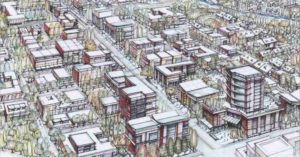
Sensitive Urban Infill Charette Report City of Surrey. Drawing: Neda Roohnia, Landscape / Urban Design

Rather, arterial streets like the Broadway corridor will allow six storey developments, while the allowable 20-to-40-storey tower developments will be situated one block behind either side of the arterial street, so as “to prevent shadowing” and obviate the dark arterial corridor residents have made known in no uncertain terms to Vancouver City Hall that, that under no circumstance they want or desire.

Arterial streets must remain walkable, and neighbourhood friendly.

Not good news, of course, for those residents who live along the tree-lined streets, off Broadway (9th Avenue), along West 10th and West 8th Avenues.

But there you have it, for what it’s worth. As we say above, more tomorrow.