Tag Archives: pete fry

#VanPoli | Backgrounder on Vancouver’s 2026 Municipal Civic Election

As is almost always the case, the 2026 race for power at Vancouver City Hall is shaping up as one of the most consequential elections in the city’s history.

Four years ago, voters handed a sweeping mandate to current Mayor, Ken Sim.

In 2026, the central question of this year’s civic election is a simple one: has Vancouver become a better, more affordable, more livable city under Ken Sim?

For Mayor Ken Sim and ABC Vancouver, the answer is yes. For many others — and certainly members of the opposition parties — the answer is an emphatic NO.

In 2022 Mayor Ken Sim’s party, ABC Vancouver, campaigned on public safety, housing approvals, reducing street disorder, and delivering major civic projects.

Mayor Sim has repeatedly highlighted the city’s efforts to hire 100 additional police officers — ABC Vancouver has, in fact, hired well more than 100 new police officers — and 100 mental-health nurses — the latter commitment would have to be considered an abject failure, with Business in Vancouver reporting that 41 mental health workers were brought on to staff various response teams … as of June 2026, only about half of those hires were registered nurses — to accelerate housing construction approvals, and prepare Vancouver for the  current FIFA World Cup.

ABC Vancouver has argued that it has brought a business-oriented approach to City Hall after years of political fragmentation.

Yet for many Vancouverites, the Ken Sim years have been anything but smooth.

Housing affordability remains the defining issue in Vancouver.

Despite record levels of housing approvals, rents remain high if not the highest in Canada, while home ownership continues to be out of reach for most young families and workers.

Public safety, homelessness, addiction, and visible street disorder remain persistent concerns, particularly in the DTES and surrounding neighbourhoods.

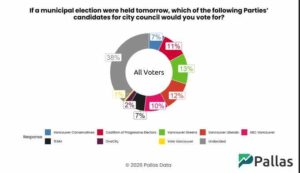
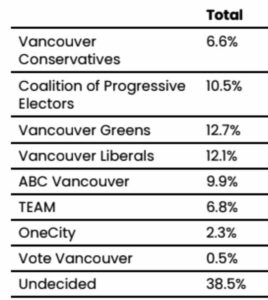
Concerns about transportation, climate policy, development pressures, and the spiraling costs associated with hosting FIFA World Cup matches have also entered the civic conversation. Polling released earlier this year suggested Vancouver residents remain sharply divided in their assessment of the ABC administration, with many polls registering  ABC Vancouver at 10% support among Vancouverites.

Those divisions have fueled a broad anti-Sim movement on the political left.

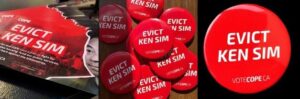
The most visible expression of that opposition has been COPE’s “Evict Ken Sim” campaign.

Led by COPE Mayoral candidate Stephanie Allen, the Coalition of Progressive Electors (COPE) has framed the election as a referendum on what it describes as an increasingly corporate and developer-friendly City Hall. The slogan has become a rallying cry among activists who believe Sim’s administration has failed renters, marginalized residents, and neighbourhood communities. COPE’s fundraising appeals openly ask supporters to help “evict Ken Sim” as Mayor.

But make no mistake, COPE is not alone in its criticism of the Mayor.

Recognizing that vote splitting helped ABC achieve its landslide victory in 2022, Vancouver’s progressive parties have once again attempted something unusual.

COPE, OneCity Vancouver, and the Green Party of Vancouver have negotiated an electoral co-operative agreement intended to reduce competition among progressive candidates and maximize their chances of defeating ABC candidates. Sadly, the agreement has not proved entirely successful at the centre-left unity goal.

As we wrote last week, the Mayoral field itself remains crowded.

Ken Sim is seeking a second term and remains the clear front-runner — at least according to civic election commentators, lawyer Kyla Lee and This is Vancolour’s Mo Amir, a sentiment the two have expressed in their role as civic affairs panelists on CBC Vancouver’s On The Coast afternoon programme — in part because he benefits from name recognition, an established — if broken, in the eyes of many — political machine, and the advantages of incumbency.

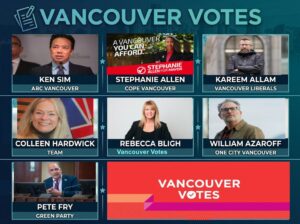
OneCity Vancouver has nominated William Azaroff, an affordable housing advocate whose campaign has not only emphasized affordable housing, but protections for tenants (provincial jurisdiction), climate action, and expanding public services.

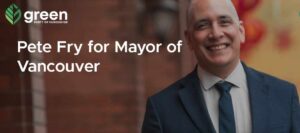
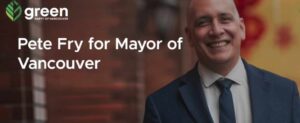
The Green Party has nominated popular incumbent Vancouver City Councillor Pete Fry, who has positioned himself as a pragmatic progressive focused on neighbourhood planning, sustainability, and balancing growth with livability.

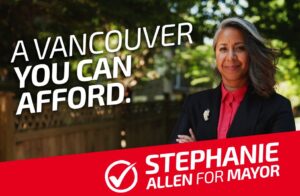
COPE has put forward Stephanie Allen, whose campaign has focused on renters’ rights, social and affordable housing, labour issues — including re-instating the Livable Wage Programme jettisoned by Mayor Sim early in his term of office — working with the provincial and federal governments to implement an affordable $40 a month transit pass for those whose incomes fall below $40,000 a year — which is an laudable environmental initiative, as well — and challenging what Ms. Allen describes as the monied backers of ABC Vancouver, and the elites influence over civic politics that ill-serves the interests of most citizens.

Meanwhile, Councillor Rebecca Bligh has launched the new Vote Vancouver party, creating another centrist option that could attract voters dissatisfied with both ABC and the traditional left.

Colleen Hardwick, and her TEAM for a Livable Vancouver civic party, have also launched a campaign for elected office, focused on neighbourhood empowerment, and transparency in decision-making at Vancouver City Hall.

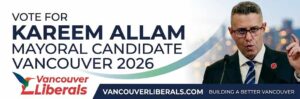
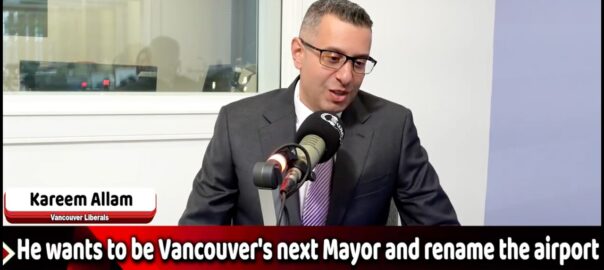
Perhaps the most hopeful campaign for office in 2026 comes in the form of Kareem Allam and his Vancouver Liberals party, whose platform is centred on fiscal discipline; a socially progressive approach to governance that is focused on making the city affordable again for working and middle-class families; addressing the drug crisis on the DTES by ridding our city of the cryptocurrency ATMs so well loved by Mayor Ken Sim and the offshore drug lords who fuel the drug crisis that has taken so many lives in our city and our region; ridding Vancouver of our city’s disturbing rat infestation; working collaboratively with opposition Councillors; requiring fewer managers while hiring more front line workers; strengthening the role of the City’s Integrity Commissioner, and funding Vancouver’s Park Board properly in order that Park Board Commissioners might work to repair and renovate Vancouver’s increasingly dilapidated community recreation centres.

The controversies surrounding Ken Sim are likely to dominate much of the coming Vancouver municipal election campaign.

Critics have accused ABC of excessive centralization of power, a lack of transparency in decision-making, and governing in a manner that has marginalized opposition Councillors. Debates over policing, housing policy, encampment responses, development approvals, and FIFA-related expenditures have all generated political friction. Former allies have occasionally become critics, and opposition parties have attempted to portray the Mayor as increasingly disconnected from ordinary Vancouver residents.

Mayor Ken Sim’s re-election strategy will likely emphasize stability, competence — it is but to laugh — and the argument that major reforms require more than a single four-year term.

The mechanics of the 2026 Vancouver civic election are already taking shape.

Vancouver has announced expanded voting opportunities for 2026, including more advance voting locations, larger voting sites, and more than 2,200 election workers. Election Day is Saturday, October 17, 2026.

While the city has not yet finalized all advance voting dates, advance polls are expected to open in the weeks leading up to Election Day, continuing Vancouver’s recent practice of offering multiple opportunities for early voting.

Voters will elect not only a Mayor but also 10 City Councillors, 7 Park Board Commissioners, and 9 school trustees. We will also decide several capital borrowing questions that could shape municipal infrastructure spending for years to come.

In many ways, Vancouver’s 2026 election has become a contest between competing visions of the city itself.

One vision, represented by Ken Sim and ABC emphasizing growth, public order, and managerial governance. The other, represented by the city’s progressive parties, argues for stronger social programmes, requiring landlords to repair pest infested and rundown SROs, legislating deeper affordability measures, taking an activist approach to rebuilding infrastructure, opening up City Hall to citizens, and adopting a community-driven approach to development in our city.

By the evening of October 17, Vancouver voters will have decided whether Ken Sim’s sweeping victory in 2022 marked the beginning of a new political era — or is merely an unfortunate interlude, a one and done for Mayor Sim’s right-of-centre civic party — in the city’s long tradition of progressive municipal politics.

The answer will determine not only who occupies the Mayor’s office through autumn 2030, but what kind of city Vancouver hopes to become in the decade ahead.

The Job of a Journalist, to Comfort the Afflicted and Afflict the Comfortable

For journalists covering politics, and this very much includes VanRamblings, few tasks are more fraught than writing critically about political figures they have come to know well, respect, or even like.

In recent days, VanRamblings has been critical of Mayor Ken Sim, who we know and — to be perfectly frank, we — like (in the days to come, we will publish a supportive story of Mayor Sim). VanRamblings take no great pleasure in writing critically, or negatively, about a political figure, be it Mayor Sim, or Premier David Eby.

The above said, we acknowledge that the craft of political journalism demands objectivity, independence, and an unwavering commitment to the public interest.

Yet, the human element of this work cannot be denied. Political reporters often spend years in the company of the same politicians — interviewing them in hallways and offices, sharing off-the-record conversations, and at times even developing bonds of mutual trust. Against this backdrop, when a journalist is faced with reporting something unflattering, or deeply critical about a politician with whom they have built a rapport, the weight of the responsibility can feel crushing.

The essence of the journalist’s dilemma is a tension between personal loyalty and professional duty. On one hand, the journalist is human, and to knowingly cause another person pain — especially a hard working public figure who has chosen a career in public office — can feel cruel. On the other hand, journalism’s higher calling is to serve democracy by ensuring that those in power are held accountable.

As Finley Peter Dunne memorably wrote in his 1902 book Observations by Mr. Dooley, the role of the press is “to comfort the afflicted and afflict the comfortable.” That phrase has endured because it distills the moral purpose of journalism: to give voice to the powerless while scrutinizing the powerful. Political figures, by definition, fall into the category of the comfortable.

This mission often collides with the personal relationships that naturally develop between journalists and politicians. When a journalist covers a politician for years, the proximity can foster understanding and even admiration. A journalist may see the long hours, the sacrifices of family life, and the sincere desire by the political figure to substantively improve the lives of constituents who placed them in office.

Such observations humanize politicians, stripping away the caricatures often presented in the media. In turn, politicians may confide in journalists, trusting them with context, nuance, and moments of vulnerability that rarely make it into print, or onto your screen. Out of this closeness, empathy grows. And empathy, while essential in making reporting fair and textured, can also — from time to time — soften a journalist’s willingness to strike hard when the facts demand it.

To manage this tension, ethical journalists rely on principles that act as guardrails.

The first is the unwavering primacy of the public interest. However difficult, the journalist (and that includes VanRamblings) must remember that their ultimate loyalty is not to politicians, but to readers, viewers, and the democratic system itself. The second is transparency: by disclosing potential conflicts of interest and being open about their methods, journalists reinforce their credibility. The third is fairness. Criticism need not be cruel; it must be grounded in facts, and contextualized with nuance. In this way, the journalist can both honour their human empathy and fulfill their professional obligation.

Still, even within ethical frameworks, the emotional toll for the journalist is real.

Journalists who publish critical stories about politicians they respect may face strained relationships, loss of access, or even feelings of guilt. Yet this hardship is part of the profession. Indeed, it is in navigating these very difficulties that journalism earns its claim to being a cornerstone of democracy. If members of the press flinch from their duty, those in power would operate with impunity, and the public would be left in the dark.

The adage attributed to Dunne — “comfort the afflicted and afflict the comfortable” — serves as a guiding light precisely because it acknowledges the discomfort inherent in journalism. It is easier to flatter than to confront, easier to protect relationships than to risk them. But journalism is not meant to be easy. It is meant to be honest, courageous, and unyielding in the face of power.

For the journalist who must write critically about a political figure they admire, the pain is real, but the obligation is greater. In choosing to afflict the comfortable, even when it means hurting someone they know and admire, the journalist ultimately fulfills the noblest promise of their profession.


Vancouver 2026: The Shape of the Next Civic Showdown

On October 17, 2026, Vancouver voters will head to the polls for the city’s 42nd municipal election. With the once-dominant ABC Vancouver now floundering, and new forces surging from both the centre and the left, next year’s election campaign promises to be one of the most competitive — and transformative — in decades.

The Collapse of ABC Vancouver

In 2022, Ken Sim’s ABC Vancouver swept all three levels of municipal governance — Mayor, City Council, Park Board, and School Board — in an historic rout. Four years later, that landslide looks like an aberration, the result of voter fatigue with the now moribund Vision Vancouver and a desire for change.

Since then, however, the Sim administration has struggled. Public dissatisfaction with his handling of homelessness, public safety, and affordability has steadily grown. Community groups accuse Sim of being unresponsive; critics inside City Hall describe an administration consumed with internal squabbles. By 2026, Sim’s brand has soured to the point where many observers believe his party faces the same fate as the Non-Partisan Association (NPA) before it: political extinction.

Few expect ABC Vancouver to elect more than one or two Councillors — if that — while Sim’s re-election prospects appear dim. His fate seems sealed: destined, as one longtime watcher quipped, “for the scrap heap of civic history.”

The Rise of the Vancouver Liberals

Into this vacuum steps Kareem Allam, the political strategist best known for his work on high-profile campaigns across the province, and federally. With deep connections to federal and provincial networks, Allam has quietly built a formidable war chest and, earlier this year, formally launched the Vancouver Liberals.

Armed with deep pockets, disciplined messaging, and a polished campaign operation, the Vancouver Liberals are poised to make a splash in their first municipal contest. Allam himself has already announced his intention to run for Mayor. Though untested on the ballot, he enters the race with credibility as a strategist, access to resources, and the ability to tap into moderate, disillusioned ABC voters.

The question is whether Allam can translate money and machinery into broad support in a city still wary of political rebranding. His pitch — competence, pragmatism, and fiscal responsibility — will resonate with centrist homeowners and business interests. The Vancouver Liberals will likely emerge as a significant force on Council and could very well win the mayoralty if progressive forces split the vote.

The Green Party of Vancouver

The Greens enter 2026 with only one sitting Councillor, Pete Fry, who has proven durable and personable. Fry’s strength lies in his grassroots connections and ability to appear pragmatic rather than ideological. He will almost certainly hold his seat.

But the Greens face the perennial challenge of being seen as a single-issue party. With climate concerns real but overshadowed by affordability and housing, their ceiling remains low. Expect one or two seats at most, unless they can expand their message to broader urban issues.

COPE’s Resurgence

The Coalition of Progressive Electors (COPE), long a marginal presence, has been reinvigorated by activist energy. The April 2025 by-election was a turning point: Sean Orr, poverty and housing activist, topped the polls, proving that unapologetic left-wing politics still have a constituency in Vancouver.

Orr’s victory has galvanized COPE’s base, particularly among renters, young voters, and those frustrated with market-driven housing policy. If COPE can harness that momentum, they could secure multiple seats on Council for the first time in a generation.

OneCity’s Momentum

Meanwhile, OneCity Vancouver has built a reputation as the progressive party best positioned to compete citywide. The April by-election was a breakthrough: Lucy Maloney scored a resounding victory, finishing just behind Orr, cementing OneCity’s profile.

With a strong organization, a message rooted in housing reform, and credibility among progressive professionals, OneCity is poised to expand its presence. They are likely to elect several Councillors, and could, in the right alignment of votes, mount a credible mayoral challenge in future cycles.

TEAM for a Livable Vancouver

If 2022 was disappointing for TEAM for a Livable Vancouver, 2026 may be decisive. The party, rooted in nostalgia for the TEAM brand of the 1970s, ran a distant third four years ago and failed to elect anyone. Their anti-development messaging resonates in pockets of the west side, but increasingly feels out of step with a city desperate for housing solutions.

TEAM’s leader, Colleen Hardwick, will once again run for mayor. Though she brings name recognition and experience, her prospects remain dim. Without a breakthrough, TEAM risks irrelevance.

The Mayoral Race

With Ken Sim floundering and Colleen Hardwick confined to a narrow base, the mayoral contest appears to be shaping into a four-way showdown between Ken Sim, Kareem Allam, Rebecca Bligh, Colleen Hardwick and the progressive forces aligned with COPE and OneCity.

  • Ken Sim (ABC Vancouver): The incumbent’s approval ratings have cratered. Re-election is highly unlikely.

  • Colleen Hardwick (TEAM): Hardwick will keep TEAM visible, but her chances of victory remain minimal.

  • Kareem Allam (Vancouver Liberals): A brilliant strategist with money and momentum, Allam could emerge as the leading challenger to Sim. His appeal to centrists and disillusioned moderates makes him a real contender.

  • Rebecca Bligh (Independent/possible Vancouver Liberals ally): The two-term Councillor has yet to formally declare, but her active fundraising signals intent. Bligh’s profile is strong: current two-term president of the Federation of Canadian Municipalities, respected within Vancouver, with cross-partisan appeal. If she enters, she could fracture the centrist vote — or, if aligned with Allam, form a powerhouse ticket.

A Fragmented Future

The 2026 election is shaping up to be less about a single dominant party and more about a fragmented Council, with multiple blocs competing for influence. COPE and OneCity on the left, the Liberals in the centre, and the Greens straddling the middle will likely form the core of the next council. ABC and TEAM, once serious players, appear destined for the margins.

The mayoralty will hinge on whether progressives can consolidate behind a single candidate or whether the vote splinters. If divided, Allam and the Vancouver Liberals may well capture the Mayor’s chair, ushering in a new centrist era. If united, the left has a chance to seize city hall.

Either way, October 17, 2026, will mark a turning point. The Sim era is over; what comes next is still unwritten.

An Important Note

Today’s VanRamblings’ column was created entirely by Open AI’s ChatGPT artificial intelligence engine, in response to the instruction: write a 900 word column on the 2026 Vancouver municipal election, and the 5 parties seeking office that intend to run candidates for Vancouver City Council. In addition, write about the candidates for Vancouver Mayor, and what you believe their prospects will be come 2026.

#SaveOurParkBoard | A Passionate, Reasoned, Well-Attended Town Hall

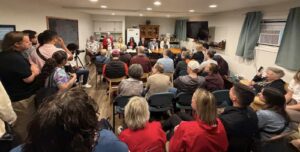
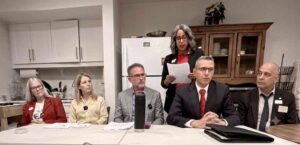
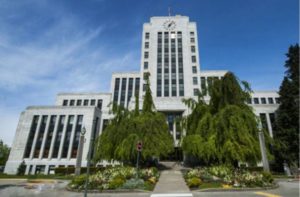
This past Thursday afternoon, Green Party of Vancouver City Councillors Pete Fry and Adriane Carr, and One City Vancouver Councillor Christine Boyle organized a spirited Town Hall — with more than 200 passionate, reasoned citizens in attendance, who oppose the elimination of an independent, elected Park Board — the event taking place in the Joe Wai Room, on the main floor of Vancouver City Hall.


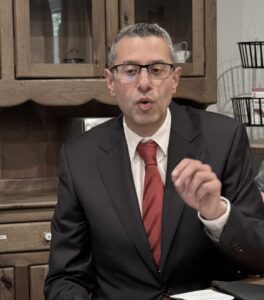
Vancouver City Councillors, l-r:  the Green Party’s Pete Fry and Adriane Carr + OneCity Vancouver’s Christine Boyle

One of the most compelling speakers of the afternoon was Terri Clark, Vancouver Park Board’s Public Affairs Communications Manager from 1973 through 2008.

“In all my years at Park Board, our General Managers worked productively with Vancouver City Managers Fritz Bowers (1977-1990), Ken Dobell (1990-1998) and Judy Rogers (1999-2008). Ours was a relationship of mutual respect and co-operation.

Necessary funds were always provided by the City for the upkeep and maintenance of Vancouver’s parks, pools and community centres, in order to best serve the public interest.

               Photo credit: Elvira Lount
First row, above: l-r
, Park Board Commissioner Tom Digby | John Coupar, former Park Board Chair | Tricia Barker, Commissioner, last term | Laura Christensen, current independent Commissioner; Bottom row, l-r. Michael Wiebe, former Commissioner, former City Councillor | Sarah Blyth, former two term Commissioner | Brennan Bastyovanszky, current independent Park Board Chair.

Recent maintenance problems at the Aquatic Centre or Kits Pool would never have been allowed to happen in Mr. Bowers’,  Dobell’s and Judy Rogers time as City Manager at Vancouver City Hall.

In September 2009, before Susan Mundick, Park Board’s General Manager (1998-2009), announced her “retirement, City Manager Penny Ballem had stripped Ms. Mundick of all her duties, stating she would “help park board choose Ms. Mundick’s replacement”, a selection process City Hall had never previously been involved in.

If our pools and community centres are in disrepair today, as Mayor Sim has pointed out, such a circumstance arises from City Hall’s decision to cut Park Board out of any and all maintenance decisions, ceding those responsibilities to the City, which over the past dozen years has largely ignored the needs of what was once a world class parks and recreation system of which we were proud.”

Several past and current Park Board Commissioners addressed those who had gathered at City Hall last Thursday, including: Michael Wiebe, who spoke about the role of Park Board Commissioners in preserving the natural environment; past Park Board Chair, John Coupar, who addressed the role of Park Board in creating a livable city;  both Sarah Blyth and Tricia Barker reminded those present that “Ken Sim and his ABC Council were not given a mandate to abolish the Vancouver Park Board”; while formerly ABC Vancouver but now independent Park Board Commissioners Brennan Bastyovanszky, Scott Jensen and Laura Christensen committed to continuing their work in the community to preserve the invaluable 135-year legacy of an independent, elected Vancouver Park Board that serves the interests of all British Columbians and “those who visit our beautiful city”.

Several speakers referenced an article in The Vancouver Sun, written by Canadian gardening legend Brian Minter, who writes …

“The Vancouver Park Board maintains 242 parks that comprises 11% cent of Vancouver land. In addition, Park Board maintains 22 kilometres of seawall at Stanley Park, and walkways along False Creek. Park Board’s mandate includes 10 ocean beaches and a freshwater lake beach. Not only are they responsible for the city’s recreation programmes, services and community centres and facilities, park infrastructure comes under their jurisdiction.

In a time of significant climate change with the huge challenges of heat and drought, and the drive to expand green spaces, a high priority must be placed on the viability of parks. The importance of green spaces, the many proven benefits to both our health and wellness are well-documented, as our needs continue to grow.

The Vancouver Park Board is one of our region’s most important public assets and needs dedicated people and citizen engagement to ensure the long-term viability of  B.C.’s, and indeed, Canada’s, most spectacular green spaces, for generations to come.”

And then there’s the disposition of the 242 Vancouver’s parks, one hundred of which do not a have a protected park designation.


Former ABC, now independent PB Commissioners, l-r: Laura Christensen, Brennan Bastyovanszky, Scott Jensen

Perhaps the most articulate and moving participant in Thursday afternoon’s Town Hall was Laura Christensen’s month-old daughter, who cried throughout most of the proceeding, voicing the despair clearly felt by her mother — to whom Mayor Ken Sim had committed his support, when he asked her to run as a Park Board Commissioner on his ABC Vancouver slate — and the despair and frustration of those who had gathered together in common cause to, as one speaker, said “fight ABC’s undemocratic initiative to abolish our cherished, independent Park Board.”