On Tuesday, September 22, 2026, BC NDP Premier David Eby — contrary to the demand of his Cabinet, and members of his caucus — announced a snap election, after meeting with Lieutenant-Governor Wendy Cocchia at Government House in Victoria. That means, Election Day is this Saturday, October 24th, one week after municipal elections across British Columbia this past Saturday, October 17th. The upcoming election this Saturday is our province’s 44th provincial general election since Confederation.
David Eby’s 2026 B.C. election campaign: 20 major promises
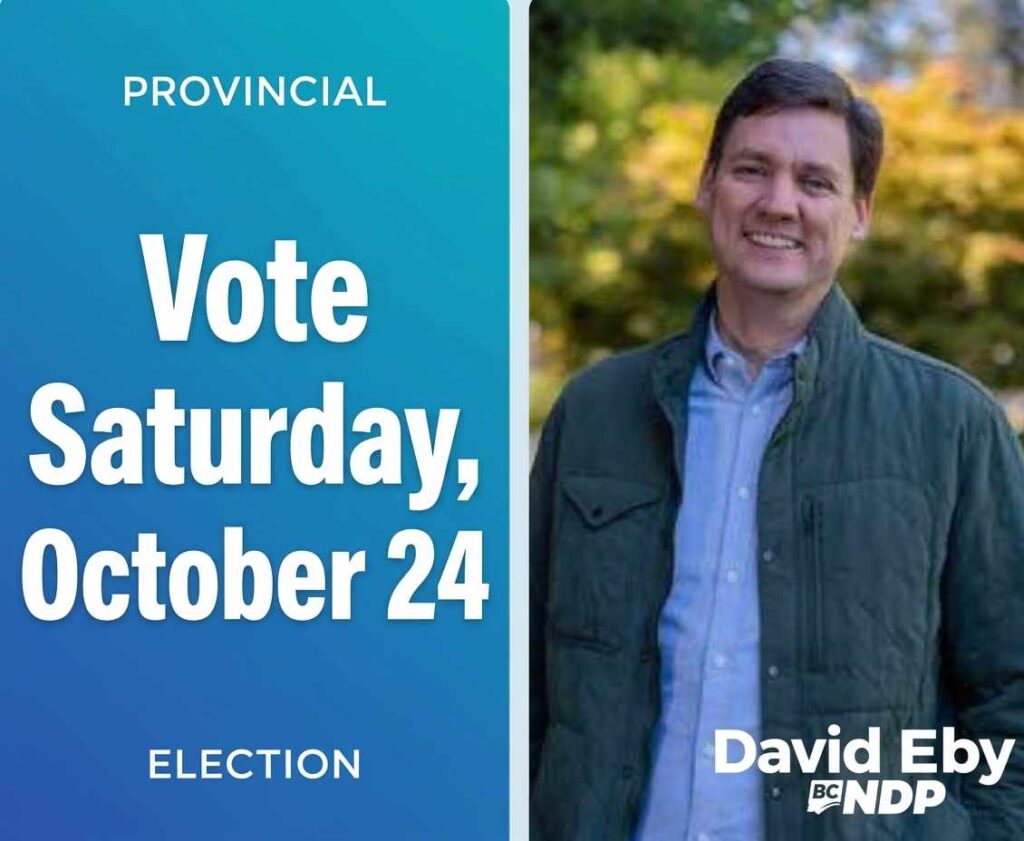
David Eby began his campaign for re-election as British Columbia Premier on September 22, 2026, with a central message: protect jobs, make life more affordable, strengthen public services and build a more self-reliant provincial economy amid the trade dispute with the United States.
Two early announcements were particularly significant. On September 18, before formally calling the election, Eby announced a pause in the planned expansion of the provincial sales tax (PST) to professional services and said future BC Ferries vessels would be built in British Columbia. The PST delay was estimated to save businesses, local governments and others approximately $260 million in 2026–27.
Here, then is a curated list of commitments, based on the BC NDP’s published campaign material and election coverage available as of October 21, 2026.
Taxes, affordability and the cost of living
- 1. Pause the PST expansion. Delay the planned application of the provincial sales tax to professional services until well after the U.S. trade war ends. The initial pause was announced on September 18;
- 2. Cut gasoline and diesel prices. Suspend 10 cents per litre of the provincial motor fuel tax, with the NDP projecting that its combined measures could reduce pump prices by as much as 30 cents per litre. Plus, cracking down on excessive fuel prices, by giving the BC Utilities Commission a stronger role in enforcing pricing rules and limiting excessive industry margins;
- 3. Limit grocery markups on essential foods. Cap retail profit margins on products such as milk, eggs, cheese, butter and poultry. As well as combat algorithmic price discrimination. Strengthen consumer-protection and privacy laws to restrict AI-powered pricing practices that charge consumers different prices based on their personal data;
- 4. Freeze ICBC insurance rates for another three years. Extend the existing rate freeze, bringing the proposed period of frozen rates to a decade;
- 5. Ask higher-income earners to contribute more. Increase provincial income-tax rates for the top two tax brackets and establish a new bracket for annual income above $1 million. The NDP says the changes would affect fewer than 4% of income earners and raise approximately $1 billion annually.
Jobs, manufacturing and economic independence
- 6. Build the next generation of BC Ferries in British Columbia. Require future vessels to be built in Canada, expand the provincial shipbuilding industry and develop a Made-in-B.C. shipbuilding strategy, as well as establish a new B.C. shipyward, working with the federal government, shipbuilders and organized labour to develop a new shipyard, with up to $250 million available provincially to leverage private and federal investment;
- 7. Create dedicated support for forestry manufacturers. Help tariff-affected mills modernize, produce higher-value products, reduce costs and find customers outside the United States;
- 8. Prioritize B.C. and Canadian-made products. Introduce purchasing rules for provincial ministries, Crown corporations and health authorities to favour locally and nationally produced goods and materials where viable;
- 9. Double critical-mineral production and exports, while expanding the capacity of the Port of Prince Rupert, doubling B.C.’s critical-mineral production and exports within five years, strengthening trade links beyond the United States;
- 10. Help small businesses survive tariffs and wildfires. Continue targeted assistance, including interest-free loans of up to $1 million for eligible businesses through the Small Business Tariff & Wildfire Relief Fund. While also helping small businesses hire young workers. Offer a $5,000 refundable tax credit to eligible small businesses hiring a young person aged 18–30 for their first full-time, 12-month job;
- 11. Expand food processing in B.C. Make use of eligible Agricultural Land Reserve properties poorly suited to primary food production, while protecting prime farmland and creating local processing jobs.
Health care and seniors
- 12. Triple recruitment of health-care workers from the United States. Expand efforts to attract American doctors, nurses and other health professionals to work in B.C.;
- 13. Make shingles vaccination free for everyone aged 50 and older. Expand access to vaccination by removing the cost for eligible adults in this age group.
Housing and child care
- 14. Turn more empty condominiums into affordable homes. Pursue measures to bring more vacant condo units into use as homes people can afford;
- 15. Add 7,200 before- and after-school child-care spaces. Expand school-based care to help parents find convenient care for school-aged children. While Introducing a universal child-care fee cap on child-care fees, modelled on Ontario’s approach.
Transportation and public infrastructure
- 16. Give local residents priority in BC Ferries reservations. Introduce a pilot reserving 12% of advance-booking space for local residents;
- 17. Increase funding for public transit. Add $40 million annually to BC Transit funding to expand bus service, improve connections between communities, while delivering rapid bus transit in Metro Vancouver, making seniors’ bus passes free for low-income seniors and extending free transit passes to an estimated 350,000 eligible seniors across B.C.;
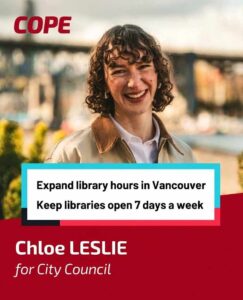
- 18. Double provincial funding for public libraries. Permanently increase annual provincial library funding from $14 million to $28 million.
Environment, public safety and community support
- 19. Protect more of B.C.’s land and water. Continue the commitment to protect 30% of the province’s land and water by 2030. Plus, fund climate action through new resource revenues. Dedicate a portion of provincial revenue from new oil and gas development to climate programs, beginning with a proposed $50-million investment;
- 20. Expand involuntary care options in the Okanagan. Advance plans to increase access to involuntary mental-health and addiction treatment for people who meet the applicable criteria. Also, strengthen protections against gangs, guns and extortion. Make organized crime and extortion a campaign priority, with additional measures aimed at protecting communities and businesses.
For all of the commitments made to the citizens of British Columbia by the David Eby BC NDP government seeking re-election, in all of the polls published in the final week of the election campaign, it would seem David Eby is on his way to ignominious defeat this upcoming Saturday evening.
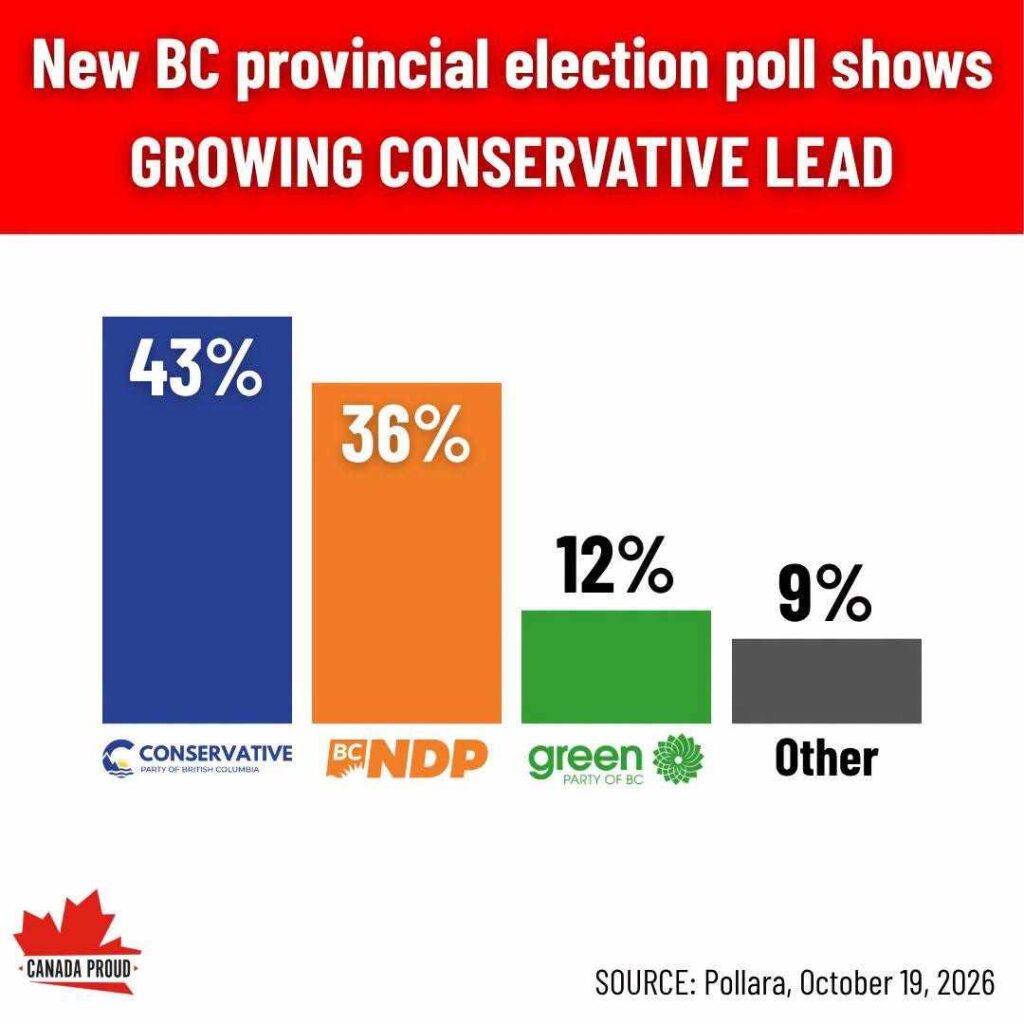
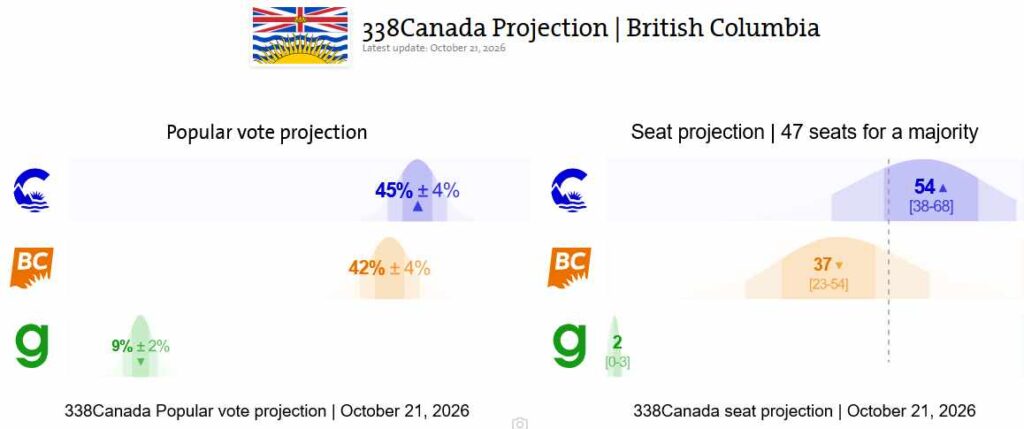
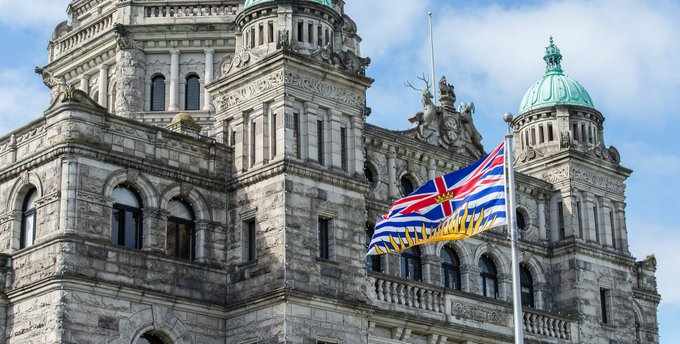
With each passing day the polls and the projected seat count for what now appears to be the outgoing British Columbia New Democratic government only worsens.
Below you will find the results of intensive polling conducted in all 93 riding across British Columbia. First up, focusing mainly on Metro Vancouver.
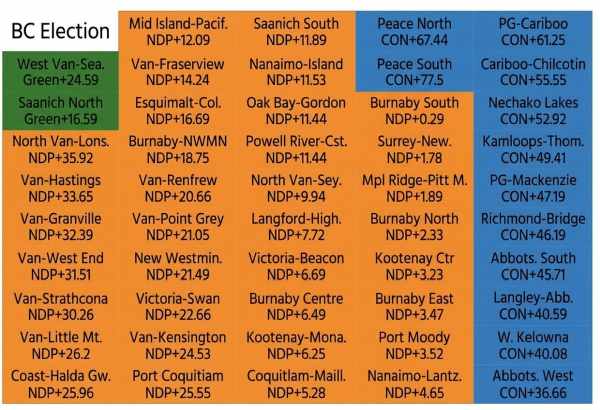
Not bad for the BC NDP: 35 NDP; 2 Greens; 12 Conservatives. Next up: the Interior.
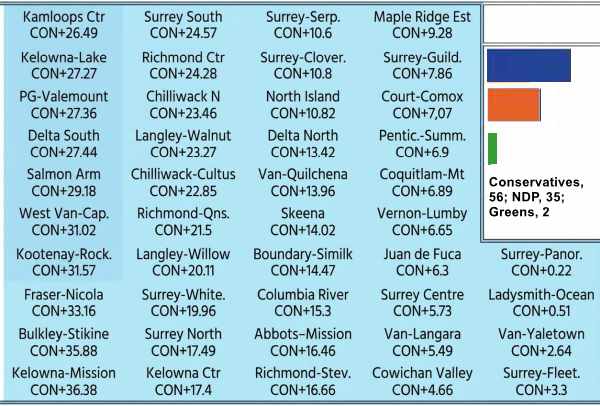
The entire rest of the province is turning blue. There are few, if any, safe seats for David Eby’s BC NPD outside of the Metro Vancouver region, with a handful of seats on Vancouver Island, and one on the Sunshine Coast.
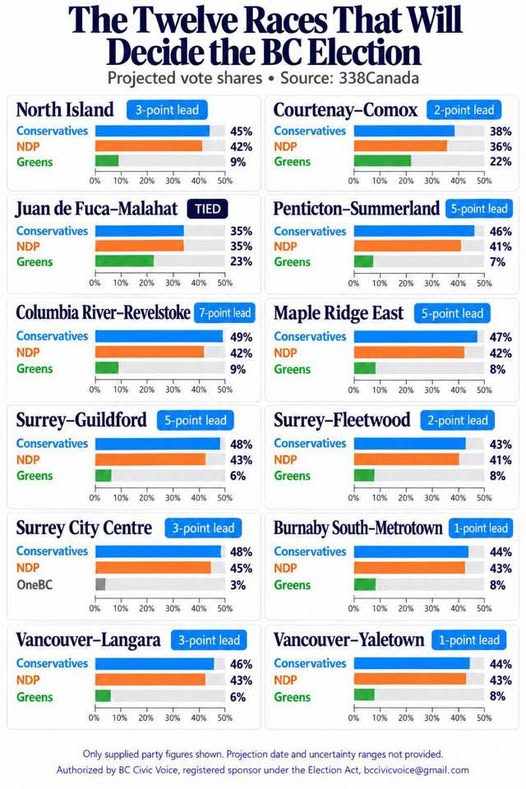
The only question that remains is: what will David Eby do on Election Night? Speculation is that if the election is a rout, and Mr. Eby’s party is only able to secure 29 or so seats — a possible outcome according to internal polls conducted by the Conservative Party of British Columbia — Mr. Eby will resign as leader of the BC NPD on Election Night.
VanRamblings would prefer that Mr. Eby tender his resignation in the new year.
Prior to calling the snap election, David Eby made a commitment to the members of his Cabinet and caucus: if he were to win anything less than a comfortable majority on Election Night, he would resign the leadership of the BC NDP this upcoming late winter / early spring, in order that a New Democratic Party leadership contest might be called by the party brass. Chances are the leadership convention would occur in late March, or early April, when a new leader of the party would be chosen by the party membership.
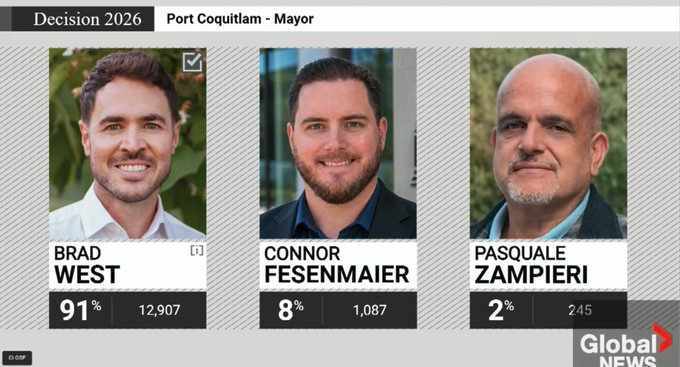
The heir apparent party membership wants: Brad West, the popular three-term Mayor of Port Coquitlam, former Executive Assistant to BC NDP Minister Mike Farnworth and a former communications and political action co-ordinator for the United Steelworkers (USW) union in B.C. There is little doubt that Ravi Kahlon and Christine Boyle would mount effective, well-run, well-financed campaigns for the party leadership, as well.
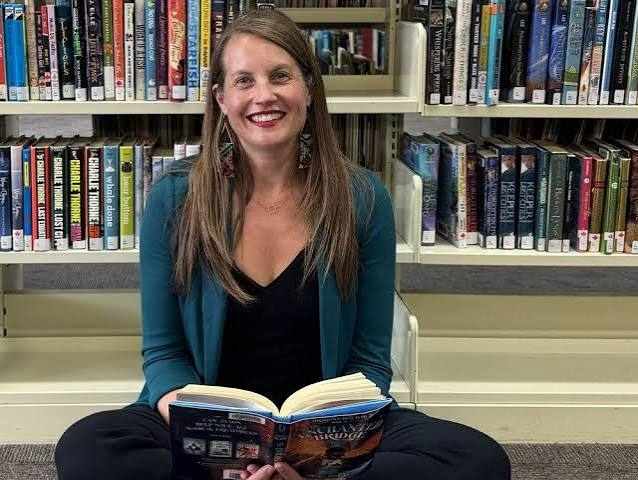
With the help of her brother-in-law Avi Lewis, the leader of the federal NDP, there is little doubt that Ms. Boyle and her backers and supporters would mount a strong campaign. Not to mention which, Dr. Cailey Lynch, the Premier’s better half, would support a run by Christine Boyle to ascend to the leadership.
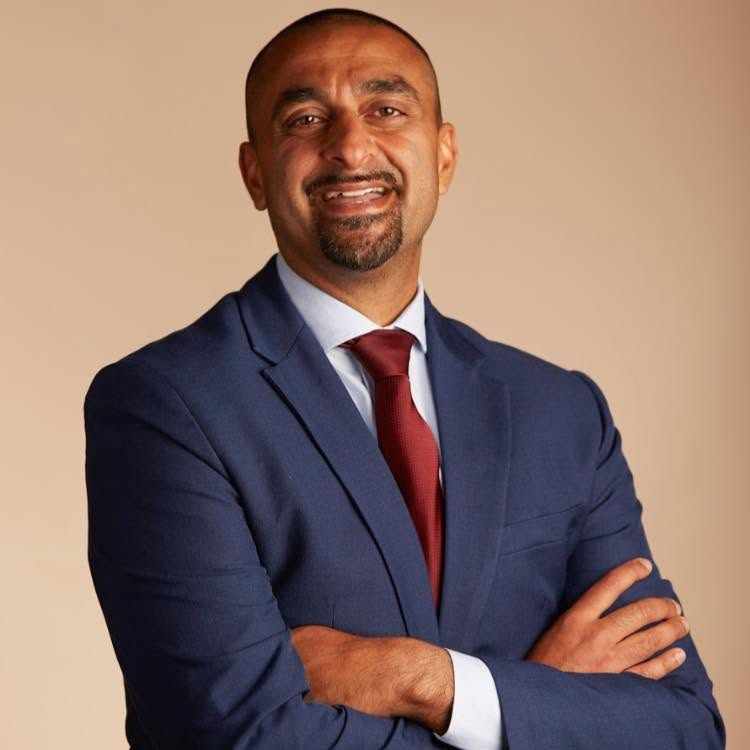
Ravi Kahlon — one of the most reliable and most competent Ministers in the BC NDP government this past 9+ years — wants the leadership, feels he is owed the leadership of the party so badly that he can almost taste it.
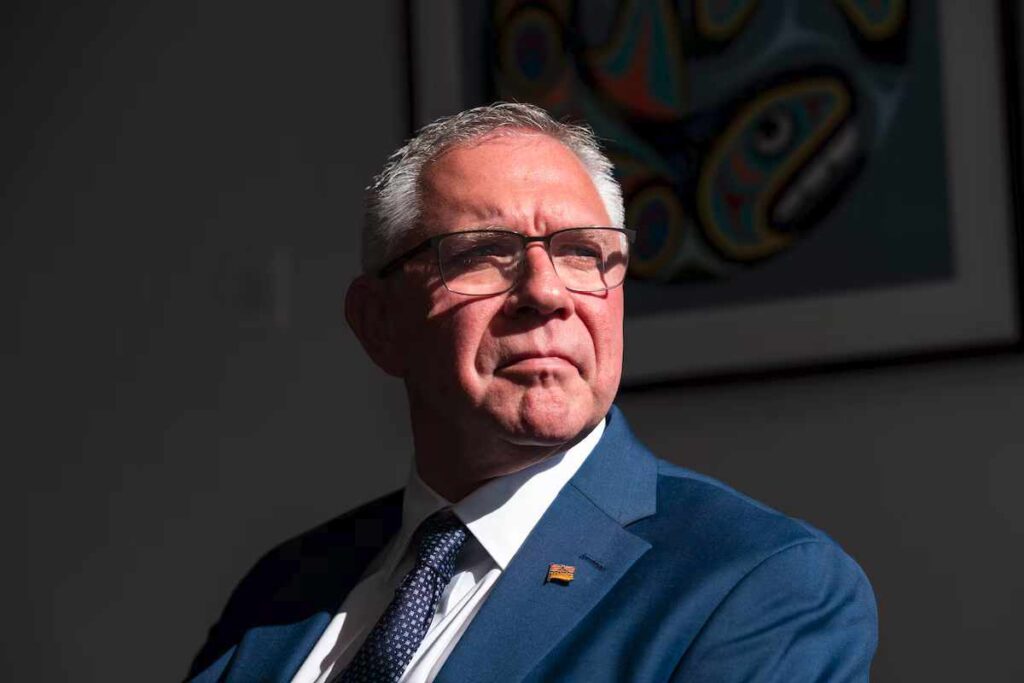
What does a government led by Conservative Party of British Columbia “interim” leader Lorne Doerkson mean for the people of British Columbia? In a word: chaos.
Lorne Doerkson is not the leader of the Conservative Party of British Columbia, he is only the “interim” leader of the party, even if he becomes the Premier.
The constitution of B.C.’s Conservative party requires a leadership contest be held to elect their leader.
The Conservative Party’s Board of Directors have been attempting to convince elected members not to run against Mr. Doerkson, such that he would be acclaimed leader.
If you believe that is a likely scenario, we have a bridge we’d like to sell you, cheap.
You just know the whack job / far right / conspiracy theorist / freedom convoy element in the party will run one of their elected members for the leadership, and mount a campaign to have her or him become the 44th Premier of the province of British Columbia.
So, all the time that a Premier Doerkson should be attempting to put a government into place, rather than focus on the tasks at hand, he’d be traveling across the province during the first five weeks of his new administration, attempting to keep the job British Columbians elected him to.
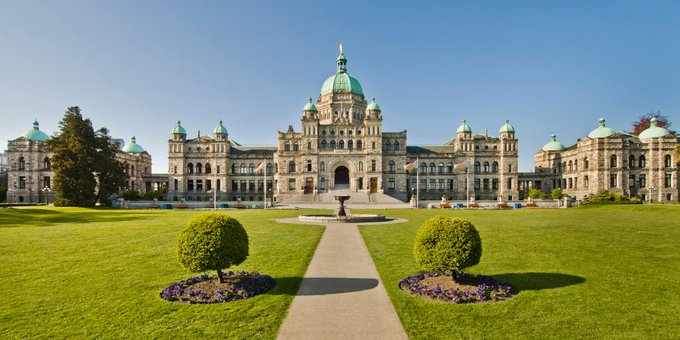
Only in the wild west of B.C. politics could such a disastrous scenario unfold.