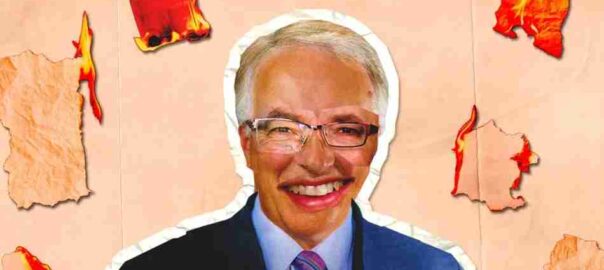
David Eby’s Political Waterloo: How Arrogance, Autocracy and Fiscal Irresponsibility Brought Down British Columbia’s NDP
There is an old lesson in politics that ambitious Premiers, convinced of their own brilliance, have a peculiar habit of learning only when it is too late: the public may forgive a government for making mistakes, but it is considerably less forgiving of a government that refuses to listen, refuses to admit its mistakes, and behaves as though the people who elected it have an obligation to accept whatever their political masters decide is good for them.
David Eby has now learned that lesson the hard way.
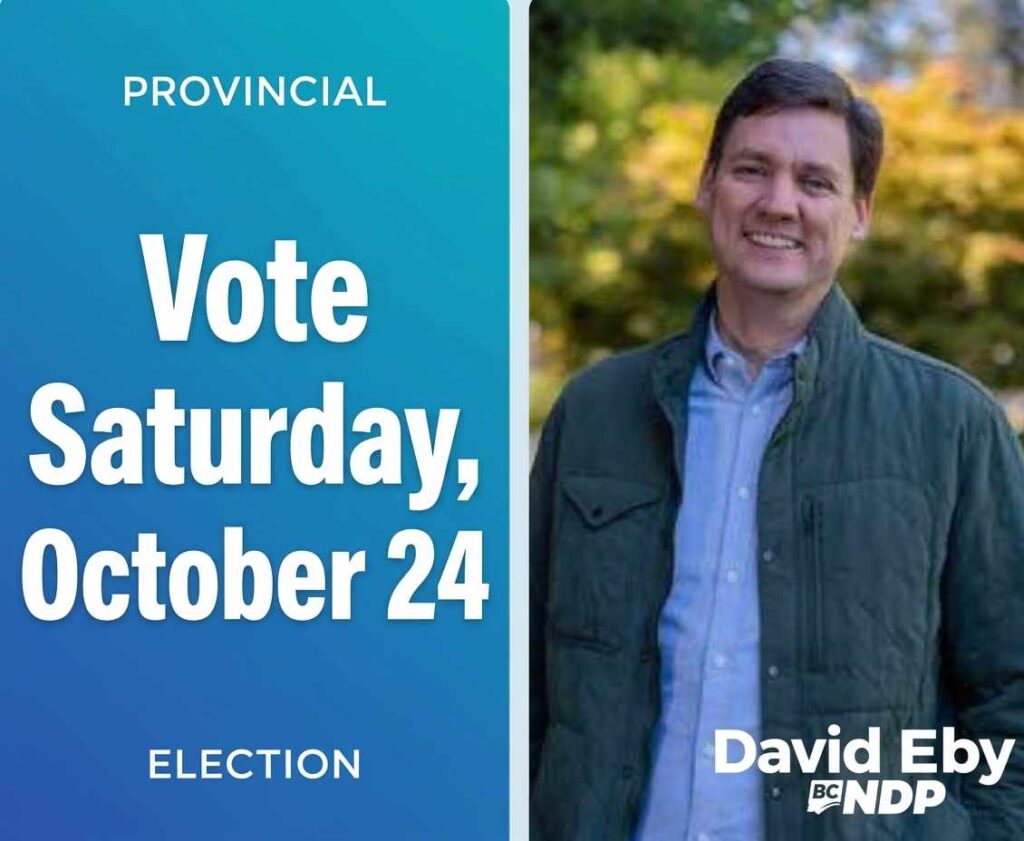
On October 24, 2026, British Columbians delivered their verdict on a Premiership that began with considerable promise, but increasingly came to be defined by centralized authority, extravagant spending, an astonishing faith in the righteousness of its own decisions, and a governing style that too often seemed to confuse political leadership with the imposition of one man’s will.
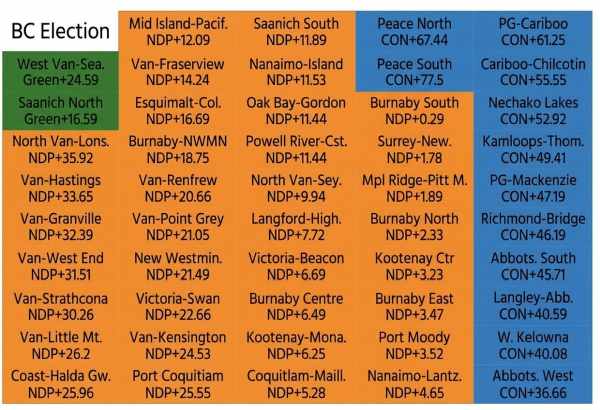
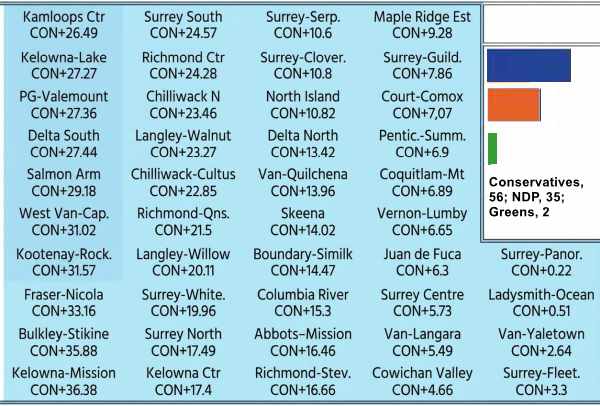
The result was a devastating political defeat for the BC New Democratic Party, leaving it with approximately 27 seats, a diminished caucus, and the unwelcome prospect of rebuilding its credibility from the opposition benches.
Eby had gone to the polls on September 22nd, despite having roughly two years remaining in his mandate. He did so against the reported misgivings of members of his own Cabinet and caucus, wagering that an early election would strengthen his personal authority and give British Columbians a fresh opportunity to endorse his government’s direction.
Instead, he turned an election he did not need to call into a referendum on his own judgment, or lack thereof.
The tragedy for the BC NDP is that its defeat was not inevitable.
Nor was it simply the consequence of an unfavourable political climate, an opposition that found its footing, or a weary electorate looking for change.

David Eby himself supplied his opponents with much of the material they needed.
Eby’s government accumulated grievances among municipal leaders, professional associations, citizens across British Columbia, housing advocates, and ordinary everyday folks who increasingly felt that their concerns were being treated as obstacles to be overcome rather than democratic voices deserving consideration.
The Premier who wanted to demonstrate that he was the smartest person in the room ultimately discovered that the room belonged to the voters.
And the voters were finished listening.
The Arrogance of a Premier Who Believed He Knew Best

To understand the defeat of the David Eby government, it is necessary to look beyond the election campaign and examine the political temperament that shaped his government.
David Eby arrived in provincial politics with a formidable reputation as a lawyer, an advocate for vulnerable people, and a politician prepared to take on difficult problems. His work with Vancouver’s Pivot Legal Society, beginning in 2007, reflected a commitment to people whose voices were routinely ignored by those with power.
That background should have served him well as Premier. It should have reminded him that government exists to serve people, not to instruct them on what they ought to want.
Somewhere along the way, however, the advocate became the authority, and the authority became increasingly convinced that his preferred solutions were the only sensible ones.
David Eby could be intellectually formidable, impatient with opposition, and dismissive of arguments he considered uninformed. Those qualities can be assets in a courtroom or a political debate. In government they can become habitual, liabilities of the first order.
A Premier cannot run a province as though every disagreement were an argument to be won and every critic an obstacle to be defeated.
Mayors and Councillors have responsibilities to their communities. Doctors have professional obligations to their patients. Lawyers have duties to their clients and to the administration of justice. Citizens have every right to ask whether the government is spending their money wisely. Members of a governing caucus have a responsibility to question their leader when they believe he is making a mistake.
David Eby’s problem was not that he exercised authority. Every Premier must do so. His problem was that his government increasingly gave the impression that consultation was an inconvenience, dissent was disloyalty, and compromise represented weakness.
The distinction matters.
Strong leadership means making difficult decisions after listening carefully to competing arguments. Arrogance means deciding that listening is unnecessary because the answer is already known.
British Columbians had ample reason to conclude that their Premier was increasingly practicing the latter.
Bills 44, 46 and 47: Victoria’s declaration of war on municipal autonomy
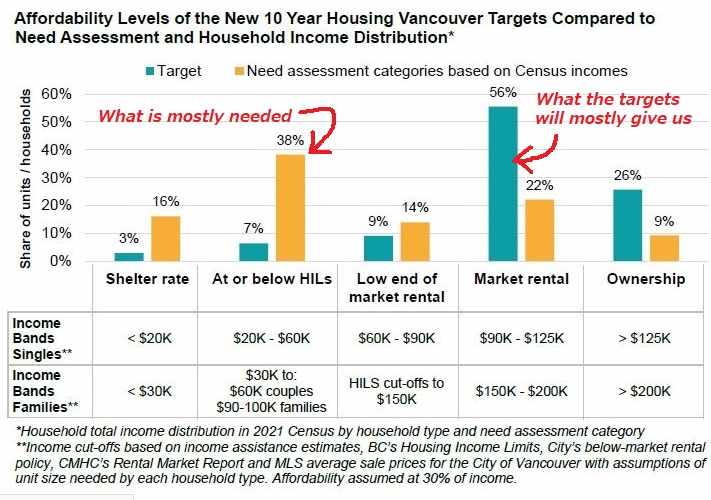 Graphic courtesy of Randy Helten and Stephen Bohus at CityHallWatch
Nowhere was this governing philosophy more evident than in Eby’s sweeping housing legislation.
In late 2023, his government introduced three major pieces of legislation: Bill 44, the Housing Statutes (Residential Development) Amendment Act; Bill 46, the Housing Statutes (Development Financing) Amendment Act; and Bill 47, the Housing Statutes (Transit-Oriented Areas) Amendment Act.
Together, they represented a profound restructuring of the relationship between the provincial government and local governments.
The objective was understandable.
British Columbia faced an increasingly desperate housing affordability crisis. Young people were being priced out of the communities in which they had grown up. Renters struggled with escalating costs. Families found home ownership increasingly unattainable. The province needed more homes, and it needed them faster.
But a worthy objective does not automatically justify every means employed to achieve it.
Bill 44 required municipalities with more than 5,000 residents to permit small-scale, multi-unit housing on lots previously restricted to single-family homes or duplexes. Depending on lot size and location, the legislation permitted three or four units on many properties, with additional density possible near qualifying frequent-transit stops.
It also reduced the scope for public hearings on residential projects consistent with a municipality’s official community plan, while requiring local governments to update their planning documents and housing-needs assessments.
Bill 46 changed the financing framework for growth. It expanded the infrastructure costs that municipalities could recover from development, including certain policing, fire-protection and solid-waste facilities, and introduced amenity cost charges to help fund infrastructure such as parks, recreation facilities and childcare spaces.
Bill 47 went further still. It established mandatory transit-oriented development areas around designated rapid-transit stations and major bus exchanges, requiring municipalities to permit specified minimum building heights and densities and removing minimum residential off-street parking requirements within designated areas.
In practical terms, the province was telling municipalities that decisions historically made through local planning processes would increasingly be governed by provincial rules.
There is a powerful argument for provincial intervention when local zoning practices frustrate the construction of desperately needed homes. Municipal governments cannot indefinitely invoke neighbourhood character to prevent younger and lower-income residents from finding a place to live.
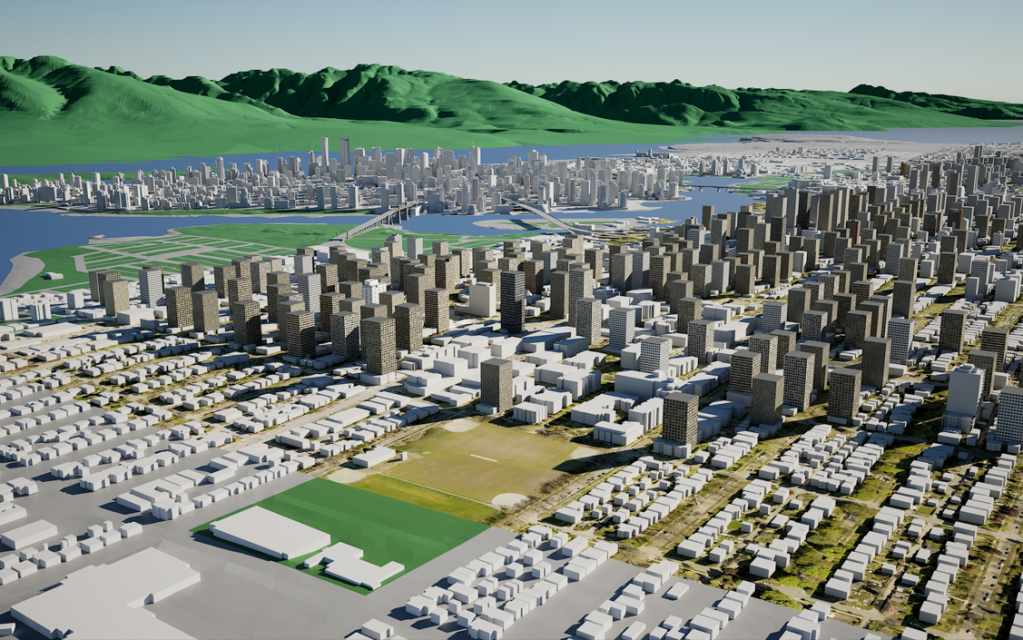
But there is an equally important democratic principle: communities must have a meaningful voice in determining how growth occurs, how infrastructure is financed, and how public services keep pace with development.
David Eby too often treated those principles as though they were mutually exclusive.
The provincial government could have pursued density while engaging municipal leaders in a serious conversation about implementation, infrastructure funding, transit capacity, school places, water and sewer systems, and the timing of new development. Eby could have made a more compelling case for change while acknowledging that municipalities possessed practical knowledge the provincial government did not.
Instead, the legislation became a symbol of a government prepared to impose its preferences and expect local elected officials to make the best of the consequences.
For Mayors and Councillors, the message was unmistakable: you may be elected by your residents, but when David Eby has decided how your community should grow, your discretion has limits.
That approach might produce uniformity. It does not necessarily produce trust.
And trust is not an optional extra in democratic government.
David Eby could have been remembered as the Premier who confronted exclusionary zoning and helped build a more affordable province. Instead, his handling of the housing reforms risked making him a symbol of provincial overreach.
The irony is that housing policy requires co-operation among every level of government, developers, infrastructure providers and the public. No single Premier can decree his way out of a housing crisis.
You cannot legislate homes into existence simply by changing zoning rules. You need financing, construction capacity, skilled workers, infrastructure and a viable economic environment. And you need governments capable of working together.
Eby understood the urgency of the housing problem. What he seemed unwilling to acknowledge was understanding a problem does not mean possessing every answer.
That was the recurring failure of his Premiership: an understandable sense of urgency becoming an excuse for insufficient humility.
When government reaches into the professions
The same pattern emerged in two other consequential areas: the regulation of medical professionals, and the governance of the legal profession.
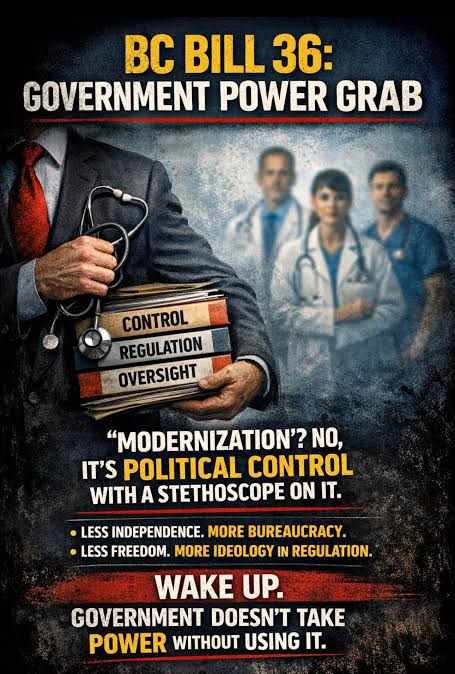
Bill 36, the Health Professions and Occupations Act, was passed in 2022 and came substantially into force on April 1, 2026. It overhauled the regulatory framework for health professions, including consolidating regulatory colleges and expanding government oversight. The province presented the changes as a means of strengthening accountability, transparency and public protection.
Those objectives deserve to be taken seriously. Professional self-regulation is not infallible, and the public must be protected from misconduct, discrimination and failures of accountability.
But the question is not whether doctors should be accountable. Of course they should. The question is how that accountability can be strengthened without unnecessarily compromising the independence of professional judgment.
When government increases its influence over the bodies responsible for regulating physicians and other health professionals, it must explain how it will prevent political considerations from displacing professional expertise.
It must also demonstrate that the new arrangements will genuinely improve public protection rather than merely transfer authority to Victoria.
David Eby’s government did not escape serious criticism on these questions. The changes were consequential enough to warrant sustained consultation, careful explanation and a willingness to address the profession’s concerns.
 Bill 21 removes the right of lawyers to regulate their own profession and was challenged by legal organizations in B.C. Supreme Court on constitutional grounds. Photo by Jason Payne /PNG
The same issue arose with Bill 21, the Legal Professions Act, passed in 2024. It established a framework for bringing lawyers, notaries and paralegals under a unified regulatory structure, changing the governance arrangements that had historically allowed the Law Society of British Columbia to regulate lawyers. The legislation prompted substantial opposition from legal organizations concerned about the independence of the legal profession.
These concerns were not trivial turf battles. An independent bar is an important safeguard in a constitutional democracy because lawyers must be able to represent clients challenging government decisions without fearing that the government itself will exert inappropriate influence over their professional regulator.
Reforming professional regulation is not inherently authoritarian. Neither is requiring greater accountability from doctors or lawyers. But independence, accountability and public oversight must be balanced carefully, especially when the state is restructuring institutions that may have to challenge the state itself.
The political failure lay in the impression that Eby’s government regarded established institutional independence as something to be reorganized from above, rather than a democratic safeguard that required exceptional care.
The more often a government centralizes authority, the more important it becomes for its leader to demonstrate restraint.
David Eby seemed to believe that the merits of his objectives would vindicate his methods. He underestimated how much trust could be lost along the way.
The fiscal recklessness that revived an old NDP stereotype
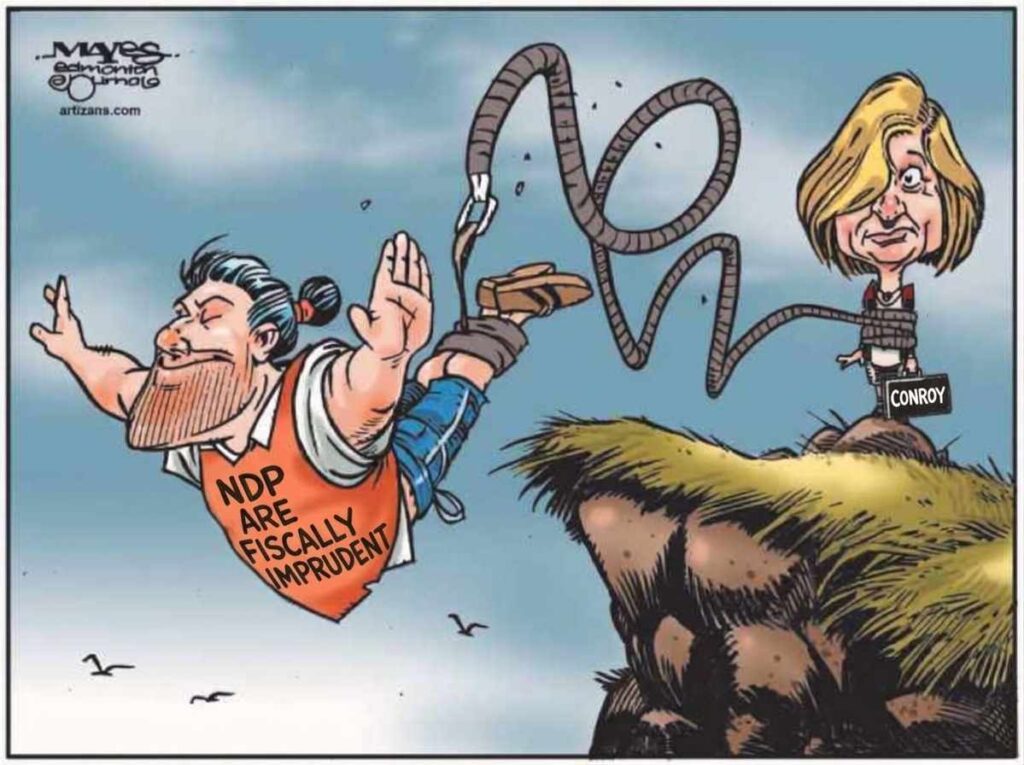
For decades, British Columbia’s more conservative political forces promoted a familiar accusation: give the New Democrats the keys to the treasury and they will spend the province into trouble. An NDP government, they insisted, couldn’t manage a popsicle stand in the heat of a British Columbia summer.
John Horgan understood that this caricature was politically damaging. Alongside Finance Minister Carole James, and subsequently Finance Minister Selina Robinson, his government sought to demonstrate that progressive government and responsible fiscal management were not mutually exclusive.
The Horgan years included substantial surpluses in several pre-pandemic budgets. That record helped undermine the notion that an NDP government was automatically a threat to the provincial treasury.
David Eby has done considerably less to sustain that achievement.
There is an important accounting distinction here. The audited surplus for 2022–23, the fiscal year in which Eby became Premier, was approximately $704 million, rather than $5.6 billion. His first full fiscal year, 2023–24, ended with an operating deficit of approximately $5 billion. The subsequent 2024–25 deficit reached approximately $7.3 billion.
The precise numbers matter. But so does the broader political question: how did a government that inherited a comparatively strong fiscal position move so quickly into substantial deficits and rising debt?
David Eby inherited major pressures that cannot simply be wished away.
Housing costs, healthcare demands, infrastructure requirements and the economic consequences of international trade disputes all impose genuine obligations on government. Public investment is not inherently wasteful, and borrowing for worthwhile infrastructure is not automatically irresponsible.
But these considerations do not absolve a Premier of the responsibility to establish priorities, assess the long-term costs of his decisions, and explain how public spending will be sustained.
The public is entitled to ask whether the government’s spending commitments were properly sequenced, whether promised benefits justified their costs, and whether the province was building sufficient fiscal resilience against an uncertain future.
David Eby’s government increasingly faced those questions against the backdrop of mounting deficits and debt.
That is how an old political stereotype returns: not necessarily because every expenditure was wrong, but because the government failed to persuade enough people that its spending was disciplined, sustainable and delivering results commensurate with the money being spent.
British Columbians were being asked to trust the Premier with ever-larger financial commitments while confronting affordability pressures in their own lives. For many households, the contrast was difficult to ignore.
A government cannot indefinitely substitute announcements for results, or the moral attractiveness of its objectives for a convincing account of what those objectives cost.
The voters’ verdict suggests that David Eby failed to make that case.
Big promises, disappointing delivery
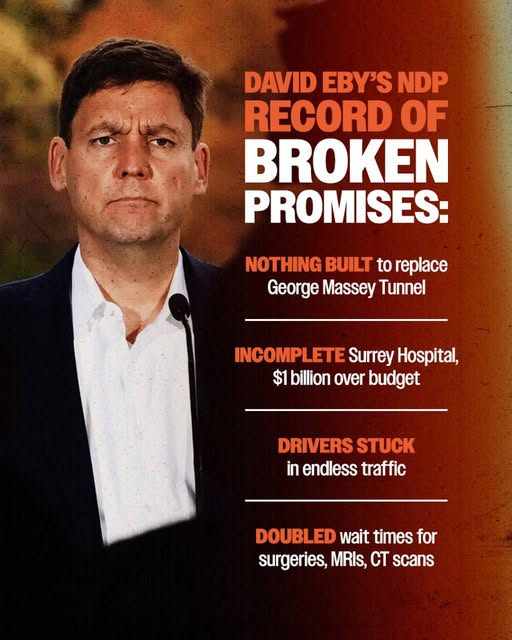
Consider childcare, one of the most consequential examples of the gap between political ambition and the lived experience of British Columbian families.
The NDP made $10-a-day childcare a signature commitment in 2017. The idea was transformative: reduce the cost of care, help parents return to work if they wished, improve family finances and make early childhood education accessible to more children.
It was precisely the kind of policy that could have defined progressive government.
There has been genuine progress. British Columbia expanded fee-reduction programmes and increased the number of childcare spaces receiving support. The $10-a-day initiative became a real programme for participating families and providers, rather than remaining merely an election slogan.
But universal access to $10-a-day childcare was not achieved. Families continued to encounter shortages of spaces, uneven availability and costs that remained well above the advertised figure when they could not obtain a subsidized place.
The distinction between a programme that exists and a promise that has been fulfilled is not semantic. It is the difference between a government announcing a destination and actually getting people there.
David Eby’s government inherited the childcare commitment, but it also inherited the responsibility to deliver on it. Eight years after the original promise, families were entitled to ask why access to affordable, dependable childcare remained so difficult.
This was the wider weakness of David Eby’s Premiership. Its communications operation could explain the ambition behind its policies, but too often the government struggled to demonstrate that the results matched the rhetoric.
The same question applied to housing. The province could mandate zoning changes, establish density targets and accelerate planning processes, but ordinary British Columbians still needed homes they could afford.
It applied to healthcare, where systemic reform and new investments had to translate into timely access to care.
And it applied to the broader cost of living, where families were not interested in winning an ideological argument. They wanted to know whether their lives were improving.
As BC Green Party leader Emily Lowan put it, in the formulation supplied for this editorial, “Today’s bribe to British Columbians is tomorrow’s broken promise.”
It is a sharp political accusation, but it captures the danger of governing through a succession of attractive announcements without demonstrating consistent delivery.
A promise becomes a liability when it is repeated often enough that the public begins to measure the government by what remains unfinished.
Being “Eby-ed”: a cautionary tale for Canadian politicians
There is another lesson in Eby’s defeat, one that extends well beyond British Columbia.
Former Ontario Premier David Peterson’s 1990 defeat remains a cautionary tale about calling an early election when a government has no compelling reason to do so.
David Peterson had won a majority government in 1987. Three years later, he called an election while still enjoying the advantages of incumbency, only to see Bob Rae’s New Democrats defeat his Liberals and form government.
The decision became an enduring example of how a seemingly confident Premier can transform a manageable political situation into a personal catastrophe.
David Eby had his own reasons for calling an early election. He argued that the threat posed by U.S. President Donald Trump’s trade policies required a strong mandate. The Conservative opposition had been in turmoil, and its leadership had recently changed. Eby evidently believed the circumstances favoured an early vote.
But the opposition’s difficulties were not a permanent feature of British Columbia politics. They were a temporary advantage, and the Premier’s decision gave his opponents a common target.
Instead of allowing the Conservatives to work through their problems while the NDP governed, Eby gave them an immediate opportunity to unite around a straightforward question: why was the Premier asking British Columbians to vote again when the existing mandate had years left to run?
That question proved damaging because it was so difficult to answer convincingly.
A Premier who calls an unnecessary election assumes responsibility for the consequences. He cannot blame the calendar, the opposition, or the electorate when the gamble fails.
And when the gamble is motivated, even in part, by a desire to consolidate personal authority, the consequences can be especially unforgiving.
In the aftermath of October 24th, the expression “being Eby-ed” may well become shorthand in Canadian political conversation for a leader who mistakes a temporary advantage for a mandate to gamble with his government’s future.
The phrase would be cruelly appropriate.
The Election David Eby Did Not Need to Call
 Source: CTV News / James Moore; The Canadian Press
The most consequential decision of Eby’s final months in office was not a housing bill, a budget announcement or a dispute with a professional association.
It was the decision to call the election in the first place.
On September 22nd, David Eby sent British Columbians to the polls with almost two years remaining in the ordinary electoral cycle. He chose to do so while facing concerns within his own political ranks and while municipal leaders had reason to object to the timing, which overlapped with local election campaigns.
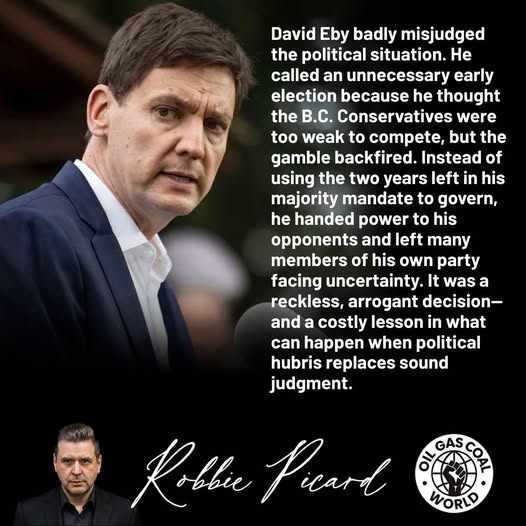
Eby framed the election as an opportunity to secure a mandate for defending British Columbia against American economic threats. Yet his opponents had a more immediate question for voters: why should a province already struggling with affordability, healthcare pressures and fiscal uncertainty be asked to endure an unnecessary provincial campaign?
The decision consumed political attention, divided the government from potential allies and placed Eby’s leadership on trial.
In the end, the electorate delivered its judgment.
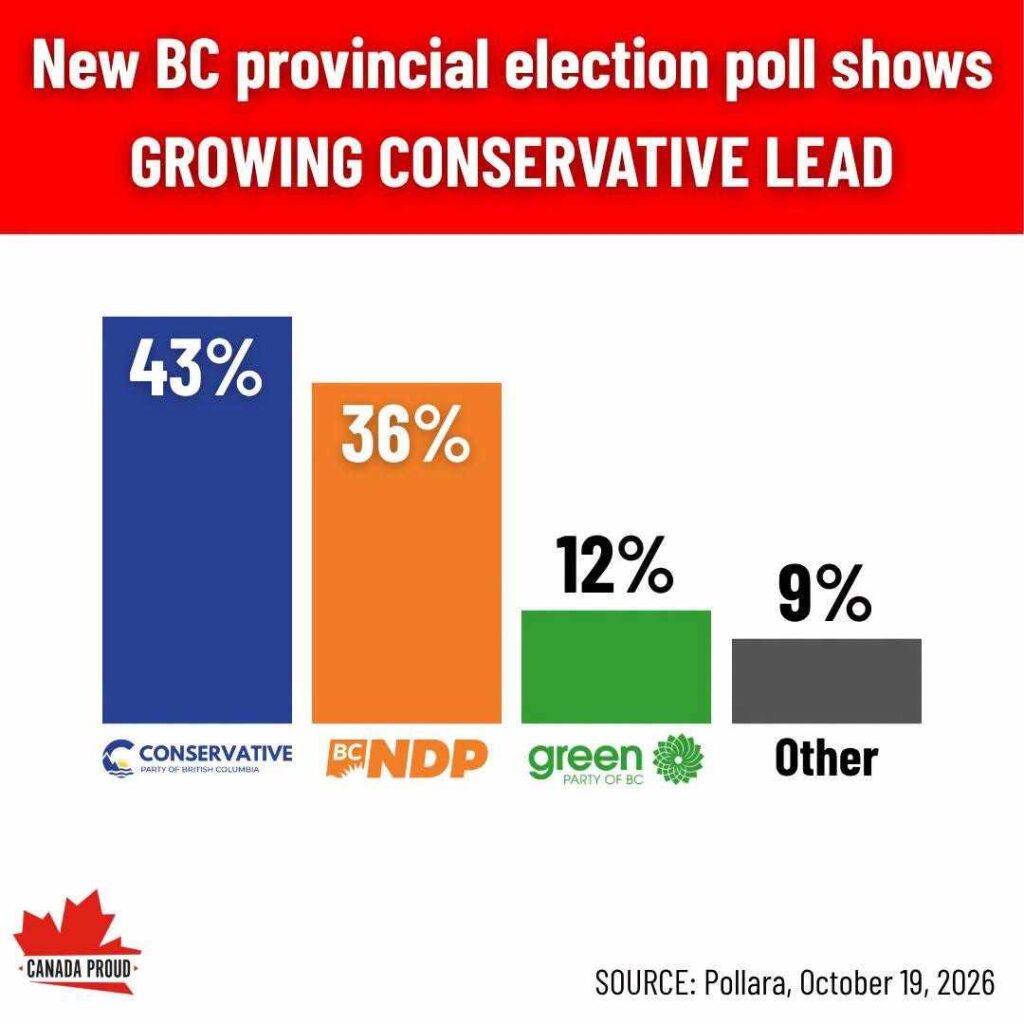
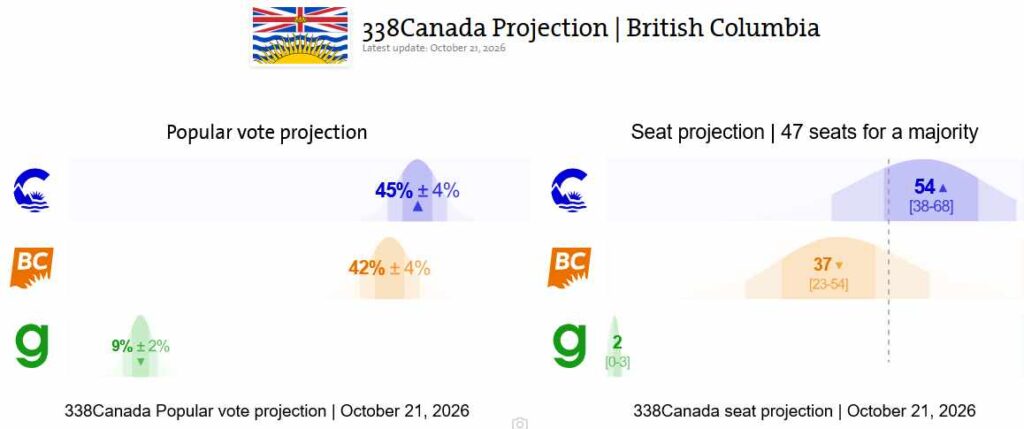
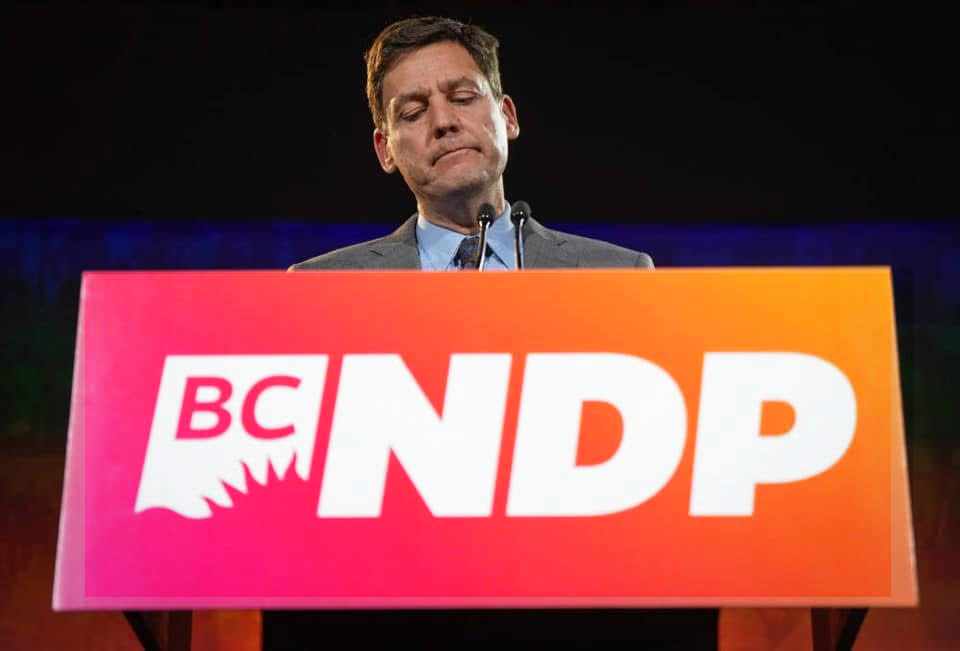
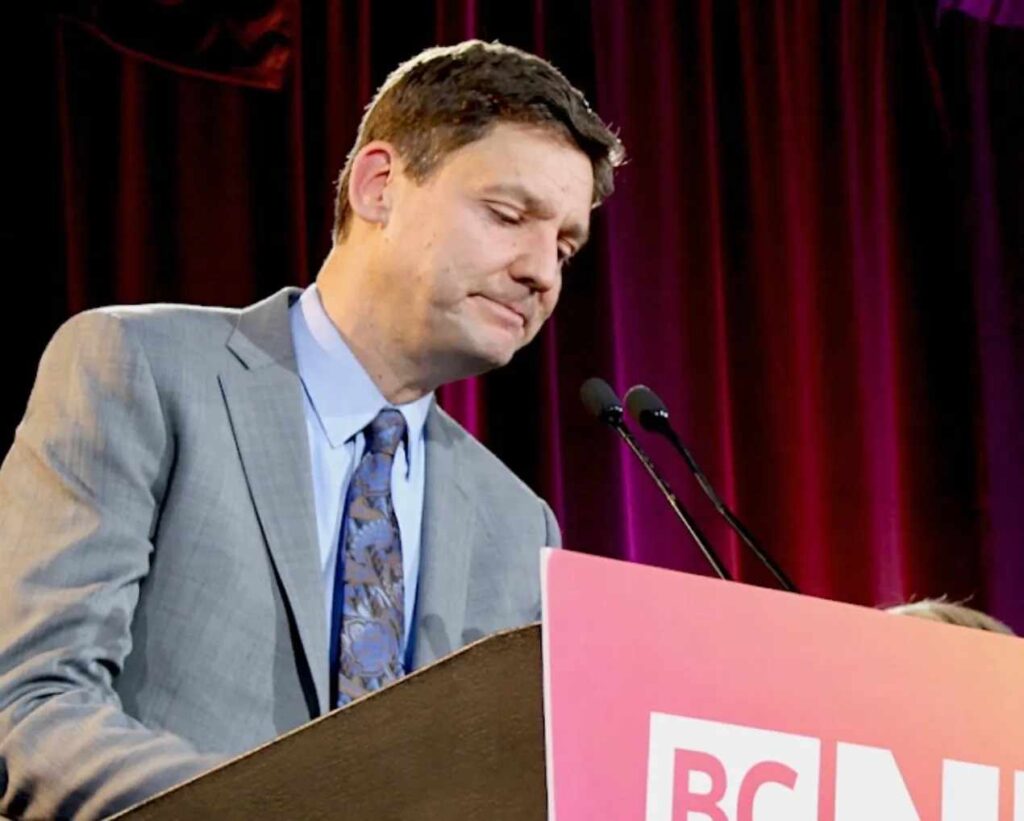
The preliminary election picture was devastating: the Conservatives emerged with a commanding lead, while the NDP was reduced to approximately 27 or 28 seats in the initial count, with final counting still to come. The Greens retained two seats. Eby announced his resignation as NDP leader, although he won his own seat in Vancouver-Point Grey.
For the New Democrats, the consequences were immense. A party that had governed British Columbia was left to contemplate opposition, renewal and the painful work of explaining how it had squandered its political advantage.
And consider what David Eby and his colleagues will not be able to celebrate as a government in 2027: the anticipated completion of the Millennium Line extension along Broadway to Arbutus Street, and the opening of the new St. Paul’s Hospital.
These are major projects with consequences for transit, healthcare and the future of Vancouver. They will proceed under a new political administration, and their eventual opening will belong to the people of British Columbia, not to any one Premier or party.
That is how government should work. Public achievements belong to the public.
Yet for David Eby, there is a bitter irony in leaving office before the completion of projects that could have formed part of his government’s legacy. He had the opportunity to remain Premier, continue governing, and allow British Columbians to judge his administration on the full record of its accomplishments and failures.
Instead, he chose an early election.
The decision followed him through the campaign, shadowing his announcements and competing with his arguments about the economy, housing and healthcare. Every time he asked voters to trust his judgment, they could ask why that judgment had led him to call an election he did not need.
He could explain his reasons, but he could not make the question disappear.
In that sense, the election became a referendum on something more fundamental than any individual policy: whether British Columbians trusted Eby to make decisions in their interests, even when those decisions were difficult or politically inconvenient.
On October 24, enough voters answered no.
The final lesson is not that strong governments should avoid ambitious reforms, or that premiers should never intervene when local institutions fail to act. British Columbia needs housing, reliable healthcare, affordable childcare and public infrastructure. It needs governments prepared to make difficult decisions.
But it also needs leaders who understand the limits of their own authority.
A Premier is not the province’s proprietor. A legislative majority is not a licence to disregard every objection. And intelligence, however formidable, is no substitute for humility.
David Eby may have been convinced that he possessed the answers British Columbia needed. His mistake was behaving as though the province’s other elected officials, professional institutions and ordinary citizens were simply required to catch up with him.
They were not.
The people of British Columbia had their own judgment to exercise, and they exercised it at the ballot box.
There is a final, melancholy lesson in all of this.
David Eby began his Premiership with the opportunity to show that progressive government could combine social ambition with fiscal discipline, institutional respect and a willingness to listen. He could have demonstrated that a government can pursue transformative housing reform without treating municipalities as adversaries, and that promises are most powerful when they are matched by delivery.
Instead, his final chapter was consumed by the consequences of an unnecessary election and the growing perception that his confidence had hardened into arrogance.
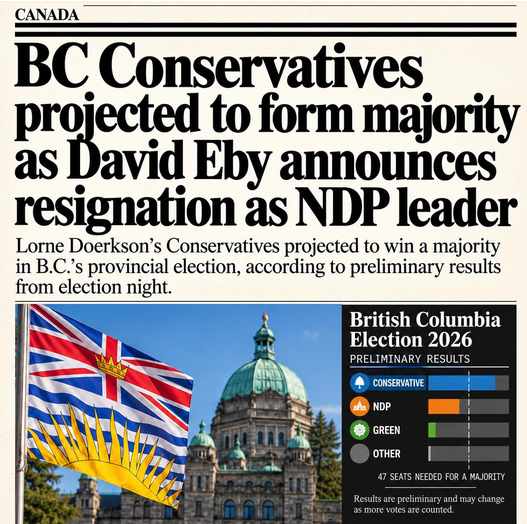
The man who sought a renewed mandate received a political repudiation. The Premier who wanted to demonstrate strength weakened his own party. The leader who believed he could impose his timetable on British Columbia discovered that voters had a timetable of their own.
David Peterson’s snap-election gamble became a cautionary tale for generations of Canadian politicians. David Eby’s has now joined it.
And perhaps that is the most enduring truth of October 24, 2026: no matter how clever the strategist, how persuasive the speechwriter, or how convinced a Premier becomes of his own indispensability, democracy retains the final word.
A leader may call an election to prove that he is right.
The electorate is under no obligation to agree.
Migawd, we thought we were angry about David Eby’s decision to call a snap election, and were concerned about today’s column as coming across as too pointed, critical and unkind to David Eby, and a seemingly mute Cabinet and caucus that allowed him to call a needless election that proved devastating for the provincial New Democratic Party.
We can’t hold a candle to the criticisms, and outright anger, of former Vancouver City Councillor / former Chief of Staff to Premier John Horgan, Geoff Meggs, who is withering in his denunciation of Premier Eby and his woefully inept, failed to deliver on NDP commitments, fiscally irresponsible, and incompetent New Democratic Party government.
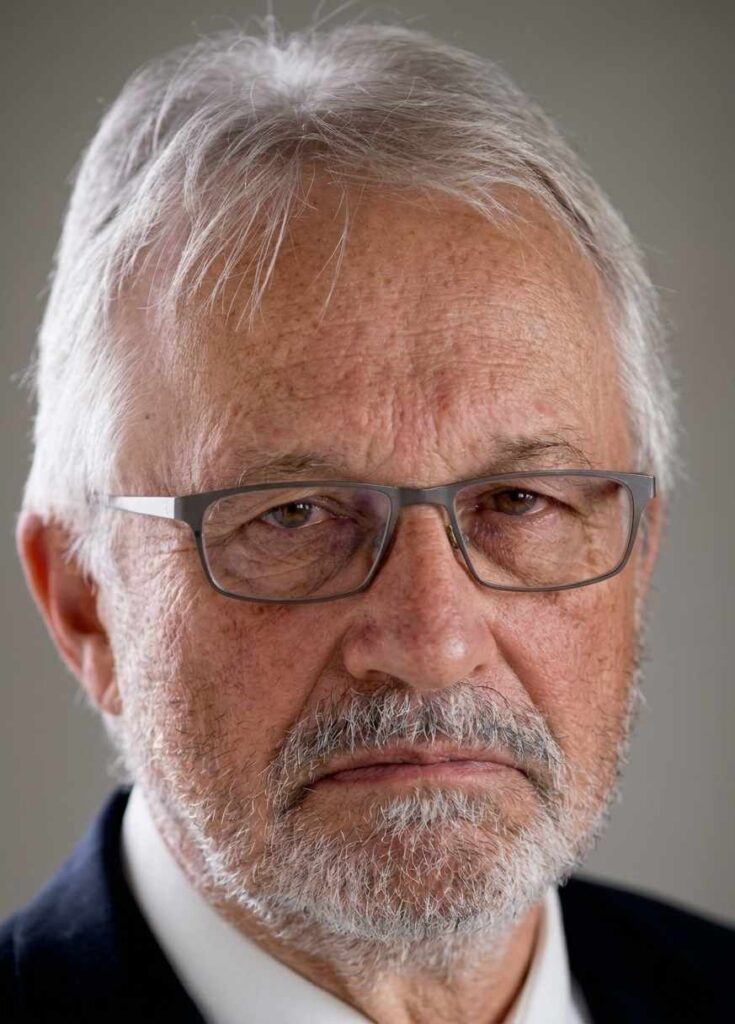
In Meggs’s Substack article, Laying the foundations for a post-Eby BC NDP: a tough hill to climb, but we’ve been here before, Meggs writes that the seeds of the October 24 defeat were sown in the near-death experience of David Eby’s one-seat majority victory in 2024, creating a government that never really stabilized.
Meggs’ Substack column may be found here. Definitely worth a read.
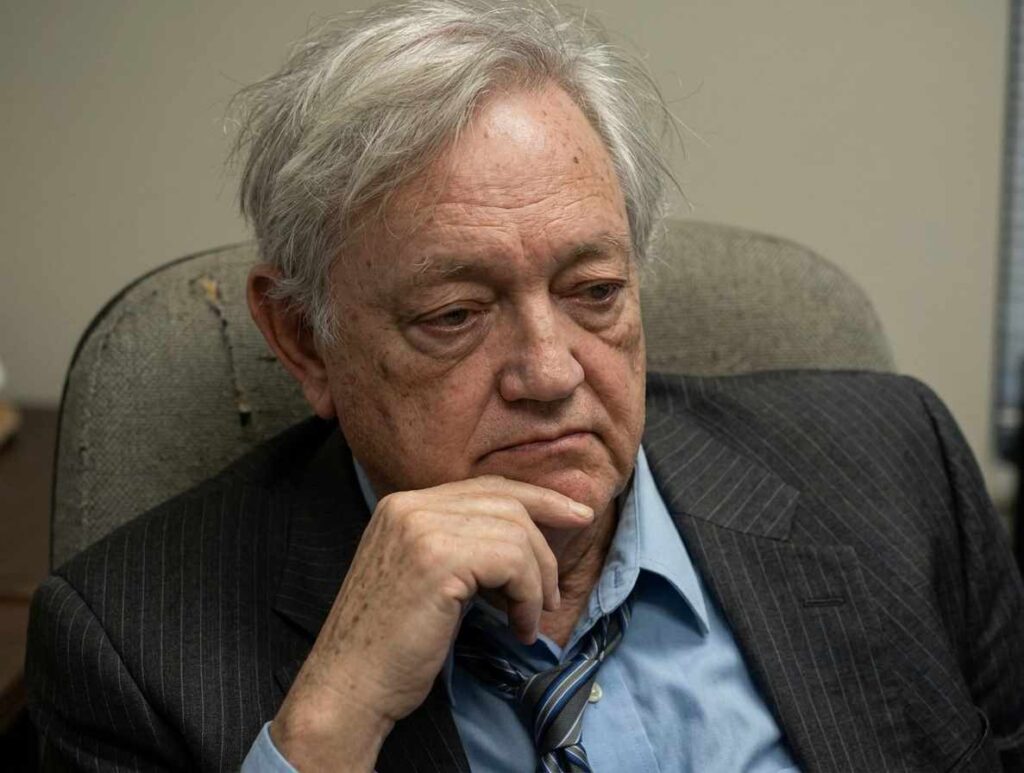
Perhaps even more angry and disappointed — and mightily disheartened — is Ron Johnson, a longtime New Democratic Party stalwart and former NDP candidate in Vancouver whose decades of service to both the federal and provincial parties have made him a respected behind-the-scenes political operative.
An eminence grise of the New Democratic Party, Ron Johnson has contributed a wealth of institutional knowledge, strategic insight and political experience to the NDP, helping shape its campaigns, nurture its candidates and sustain its organizational strength. A steadfast New Democrat, Johnson represents the enduring commitment, loyalty and hard-earned wisdom of the party’s grassroots political tradition.
In Johnson’s Substack article, We must build a renewed BC NDP from the bottom up, he writes that social democrats and democratic socialists must work together to forge a revitalized membership-focused working people’s BC NDP and be ready to win in 2030.
Ron Johnson’s must-read Substack column may be found here.