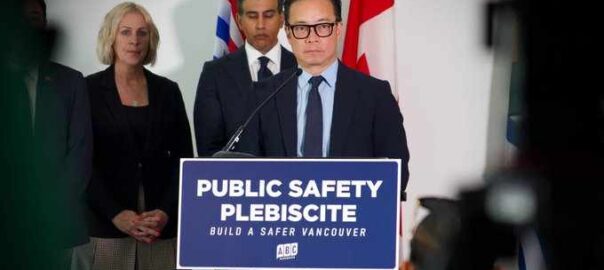
There are few issues more important to Vancouver than public safety, open-air drug use and the city’s increasingly desperate struggle to respond to addiction and severe mental illness.
That is precisely why Mayor Ken Sim and his ABC Vancouver majority on City Council should be held to a higher standard than the one they have set for themselves in putting two non-binding plebiscite questions on the October 17 municipal election ballot.
The questions concern matters on which every Vancouverite has an opinion.
Plebiscite Questions
- Open-Air Drug Use: Asks voters if they support the city strengthening its laws and bylaws to forbid open-air hard drug use (such as fentanyl, crack, meth, and heroin) in public spaces.
- Involuntary Care Beds: Asks voters if Vancouver should formally request that the provincial government provide over 100 voluntary and involuntary mental health and addiction treatment beds within the city, specifically referencing the St. Paul’s Hospital site
The first asks whether voters support strengthening the city’s laws and bylaws to forbid open-air use of hard drugs — including fentanyl, crack, methamphetamine and heroin — in public spaces.
The second asks whether Vancouver should formally request that the provincial government establish a secure medical facility with more than 100 voluntary and involuntary mental-health and addiction treatment beds, potentially at portions of the former St. Paul’s Hospital site.
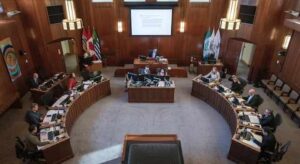
The questions passed during the emergency Council meeting held this past Thursday, August 13th, occurred amidst heated opposition.
Councillors Pete Fry (the Greens) and Sean Orr (COPE) walked out of the impromptu Council meeting in protest, while Lucy Maloney (OneCity Vancouver) remained in chambers and voted no.
Why, after nearly four years in office, does Mayor Ken Sim and his ABC Vancouver majority need a $400,000-to-$550,000 election-day plebiscite, roughly 4% to 6% the municipal election budget?
That is the question voters should be asking.
What Vancouver’s 2026 Mayoral Candidates Have to Say
The Mayoral candidates have exposed the political calculation differently.
Vancouver residents don’t need another survey on the drug epidemic on our streets. Vancouver deserves action, not cheap political stunts. pic.twitter.com/tNIftprQN0
— Kareem Allam (@kareemformayor) August 14, 2026
Kareem Allam, the Vancouver Liberals candidate and Sim’s former chief of staff, has been particularly blunt. Allam argues that residents do not need another survey; they need a city government that actually acts. His central criticism is that Sim is spending public money asking permission to do things City Council can already pursue and that the Mayor can already raise directly with Premier David Eby.
Kareem Allam rejected Ken Sim’s public-safety plebiscite outright, calling it political theatre rather than a solution to Vancouver’s public safety issues.
Allam’s argument: Vancouverites do not need another survey about public safety.
“The people of Vancouver need a municipal government that actually delivers results. Ken Sim has had four years to address public safety and rather than conditions improving they have deteriorated.”
Allam also sees the plebiscite as a distraction from ABC’s record, describing Sim’s 2026 campaign as effectively “campaigning against his 2022 campaign.” Allam also questioned the wisdom of holding a referendum on matters that extend beyond the city’s jurisdiction and mandate, his most pointed criticism that …
“The Mayor’s job is about governing not campaigning: if Sim believes open-air drug use must be prohibited and Vancouver needs substantially more treatment capacity, the Mayor should use the powers and political relationships he already possesses rather than spend hundreds of thousands of dollars asking voters a non-binding question.”
Allam: “Residents don’t need another survey. They need a city that works.”
That is a devastating criticism precisely because it comes from someone who knows how Sim’s administration operates.
More distractions & fear mongering from ABC. Don’t fall for it. We must address poverty, homelessness, & the poison being sold on our streets at the root cause level. We must get rid of predators wherever they are, be it in mansions or on street corners. pic.twitter.com/ixmTbK1nAD
— stephanie allen (@builtjustice) August 13, 2026
In a statement released following the plebiscite vote, COPE Mayoral candidate Stephanie Allen suggested there is public drug use …
“Because predators are being given free rein to kick people out of their homes for money for profit, abuse children, or sell poison drugs. If we want real public safety in Vancouver, we need to crack down on predators in our communities, both in the mansions and in the streets.”
Allen was sharply critical of Mayor Ken Sim and ABC Vancouver’s decision to spend as much as $550,000 putting two non-binding public-safety questions on the October 17 municipal-election ballot, characterizing it as an “expensive re-election gimmick” designed to “scapegoat the vulnerable” and distract Vancouverites from the record of the Sim administration.
Allen went on to say that …
“Ken Sim has had four years — and an overwhelming Council majority — to act on public safety, mental-health and addiction issues,” she told The Tyee. “Governments should address poverty and the mental-health and addictions crisis directly, while also drawing attention to less visible forms of violence, including gender-based violence,” describing public safety as a political “football” that can obscure the deeper social problems producing street disorder.
Allen isn’t arguing that Vancouver should simply tolerate open-air drug use.
Rather, she is challenging ABC’s method and motives.
Allen’s position is essentially: if ABC believes these measures are necessary, why hasn’t it acted during the four years it has controlled City Hall?
ABC lackeys feigning disappointment w/ 8sec gotcha from 1 hour meeting – yet couldn’t answer basic questions on law/jurisdiction, explain $500k cost, meet a reasonable standards of notice/evidence, and cut me off from comment on their non-binding, performative election stunt 😐 https://t.co/dSnT16b9vO
— Pete Fry (@PtFry) August 14, 2026
Pete Fry, the Green Party candidate and one of the Councillors who walked out of the emergency meeting in protest, has likewise challenged ABC’s approach to public safety. Fry’s broader position is that Vancouver’s problems require municipal leadership that combines enforcement with housing, mental-health and social services rather than reducing public safety to policing alone.
Fry’s objection is not to safer streets; it is to the false choice ABC presents between public safety and more comprehensive solutions.
Colleen Hardwick, a Mayoral candidate for TEAM for a Livable Vancouver, strongly opposes Mayor Ken Sim’s proposed public safety plebiscite, dismissing it as a costly political stunt and an expensive re-election gimmick.
Key Stances from Colleen Hardwick
- Waste of Public Funds: Hardwick criticized the plebiscite — which is estimated to cost about half a million dollars — as an unnecessary distraction.
- Ineffective Leadership: She stated that Sim and his ABC Vancouver majority had four years to address the addictions and public safety crisis but failed to deliver meaningful solutions.
- Recovery-Oriented Approach: Instead of short-term political theatre regarding open-air drug use, Hardwick advocates for serious, lasting solutions focused on recovery and livability.
- Council Authority: Echoing broader criticisms following the approval of the Vancouver public safety plebiscite, opponents note that the city already has the authority to adjust bylaws and address these issues without spending public money on a non-binding ballot question.
Colleen Hardwick, running again for TEAM for a Livable Vancouver, brings a different critique. Hardwick has repeatedly argued that municipalities must concentrate on their actual jurisdiction and that politicians should resist simplistic answers to complicated problems. As she has observed in discussing the Downtown Eastside and public safety, politicians can exploit fear and anger because frightened voters turn out. Her warning is especially relevant here: complex problems cannot be solved by slogans.
Sure, Ken. We can do that.
But why the plebiscite?
It’s non-binding. And you’re asking Vancouverites whether you should ask the Province to act.
Pick up the phone. Call the Premier. Deliver a plan.
And if you want to know what Vancouverites think, listen to them. You can do… https://t.co/GTf3rQsmj2
— Rebecca Bligh, City Councillor (@rebeccaleebligh) August 14, 2026
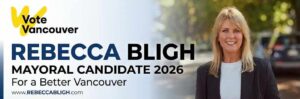
Rebecca Bligh, running for Mayor with Vote Vancouver after being expelled from the ABC caucus, has emphasized that public safety must extend beyond a purely reactive police response. She argues for embedded health services, supportive housing and less bureaucratic access to addiction and mental-health care. Her position is particularly significant because she once sat inside Sim’s governing coalition and now offers an alternative to its approach.
“If Ken Sim wanted to do something about improving public safety, he could have done so as Mayor, Police Chair, and head of a majority Council. Instead, Vancouver has suffered a failure of leadership. Ken Sim has joined successive mayors and councils in doing too little for too long.
In case Ken Sim doesn’t know: strengthening the City’s laws is literally the Mayor’s job. A plebiscite to ‘strengthen the City of Vancouver’s laws’ to tackle open air drug use is pure political theatre – he’s making grand claims that he can’t execute and playing politics with people’s lives as a stunt.”
And William Azaroff, the OneCity Vancouver Mayoral candidate, has positioned himself as part of a broader progressive challenge to Sim, emphasizing housing, community and social supports rather than the punitive politics that ABC has increasingly embraced.
OneCity’s approach rejects the notion that public safety can be separated from homelessness, poverty, housing and access to treatment.
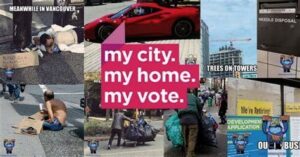
None of these candidates is proposing that Vancouver simply tolerate dangerous public behaviour.
That is the straw man ABC needs voters to believe.
The City of Vancouver Deserves Governing, Not Campaigning
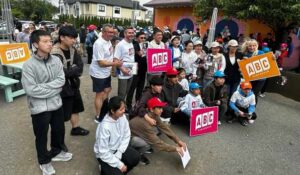
There is a legitimate public-safety crisis in Vancouver. Pretending otherwise would be irresponsible.
But exploiting that crisis politically is equally irresponsible.
If Ken Sim believes public drug use should be prohibited, he should tell Vancouverites exactly how he intends to do it.
If he believes Vancouver needs 100-plus involuntary treatment beds, he should sit down with the premier and negotiate the agreement.
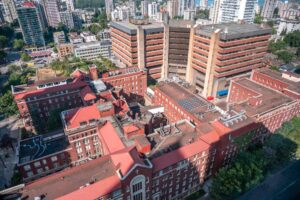
If he believes the old St. Paul’s site is appropriate, he should explain how a property already sold for redevelopment would be made available.
And if he believes these matters are urgent, he should have been doing all of this during the past four years — not two months before an election.
The $550,000 plebiscite is not the solution to Vancouver’s public-safety crisis.
It is a symptom of a government that has discovered, very late in its mandate, that asking voters whether they want something is considerably easier than actually delivering it.
Vancouverites deserve safer streets. They deserve treatment beds. They deserve a serious response to addiction and mental illness.
Most of all, they deserve a government capable of governing.
A Question Without A Policy: Ken Sim Doesn’t Know What He’s Doing
The first question asked in the plebiscite is perhaps the most revealing.
Voters are being asked whether they want Vancouver to “strengthen its laws” to prohibit public consumption of hard drugs.
But which laws?
When asked what specific bylaws ABC intends to change, Sim reportedly could not provide an answer. His response was essentially that the city would look at the laws after the plebiscite.
That turns democratic consultation upside down.
Normally, government proposes a policy, explains what it will do, tells citizens what it will cost and then asks elected representatives — or voters — to approve it.
Here, ABC is asking voters to approve a concept without telling them precisely what the concept means.
Worse, open-air drug consumption is not simply a municipal-policy vacuum waiting for Ken Sim to fill. Criminal law, prosecution, health care and much of the regulation of controlled substances lie with the federal and provincial governments. The province’s three-year decriminalization experiment has already ended, and small-quantity possession is once again illegal.
If the Mayor believes Vancouver needs stronger municipal enforcement against public drug use, he has had four years to bring forward a concrete bylaw.
For four years Mayor Ken Sim has enjoyed a bullet-proof Council majority.
As a Mayor with a Council majority, Sim has the authority to propose legislation.
What exactly has prevented him from acting?
On October 17th, voters will have the opportunity to decide whether Ken Sim and his team of ABC Vancouver City Councillors have done their job.
Two non-binding questions costing half a million dollars should not be allowed to substitute for the answer.