Category Archives: #VanElxn 2026

Bill McCreery: The Architect Who Helped Build Vancouver’s Soul

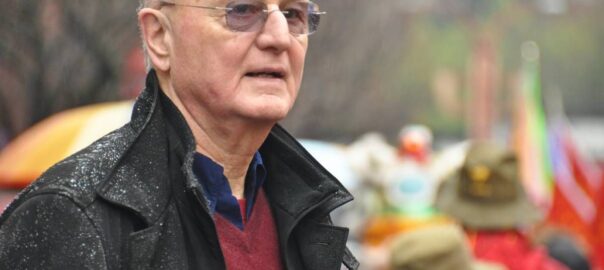
Bill McCreery, architect, planner, housing advocate and civic reformer working to build Vancouver

Few individuals have left their fingerprints on Vancouver as indelibly as Bill McCreery. Over more than half a century, Bill McCreery has helped shape not only the city’s skyline but also its philosophy of urban living.

Architect, planner, housing advocate, civic reformer, and former Vancouver Park Board Commissioner, he belongs to a remarkable generation that transformed Vancouver from an inward-looking west coast port into one of the world’s most admired livable cities.

His buildings are important. His planning work is even more significant.

While many architects can point to individual towers or neighbourhoods, Bill McCreery’s influence extends across entire communities.

Bill McCreery was among the generation of designers and planners responsible for the creation of North False Creek and South False Creek — projects that fundamentally altered how North America thought about urban housing.

Throughout British Columbia, Alberta and the United Kingdom, Bill’s work contributed to thousands of units of market, public and social housing, always emphasizing the relationship between architecture, people and public space.

Yet, Bill McCreery’s greatest contribution may not be measured in concrete or glass. It lies instead in an enduring belief that cities belong first to their citizens.

Born into an era when Vancouver was still emerging from its provincial adolescence, Bill McCreery entered architecture at a time when modernism promised endless possibilities. The post-war decades were filled with confidence. Governments were building. Universities were expanding. New ideas about planning were replacing nineteenth-century assumptions about cities.

Unlike many architects who concentrated solely on buildings, Bill McCreery quickly became fascinated by the broader civic questions.

How should neighbourhoods function?

  • Who gets to decide what is built?
  • What responsibilities do governments have toward affordable housing?
  • How can density improve rather than diminish community life?

Those questions would define much of Bill’s professional career.

Working on major housing developments in the United Kingdom, and throughout British Columbia and Alberta, Bill McCreery became known as an architect who understood that successful communities required more than attractive buildings.

Streets, parks, schools, public spaces and neighbourhood identity mattered just as much as architectural form. Housing, in his view, was never simply about construction; it was about creating places where families could flourish.
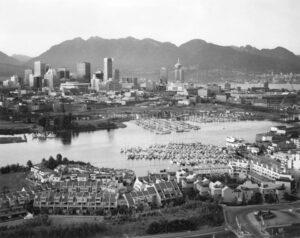
Photo of False Creek, circa 1980, showing False Creek & Ondine’s restaurant, designed by Bill McCreery. The bottom part of the photo shows south False Creek, including the Heather Street marina.

That philosophy reached perhaps its fullest expression in False Creek.
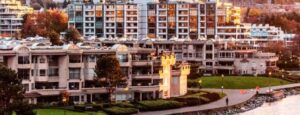
False Creek transformed from an industrial wasteland into a livable, diverse waterfront neighbourhood

Today, North and South False Creek are celebrated internationally.

Mid-rise buildings front generous parks. Walkways connect neighbourhoods to the waterfront. Families, seniors and young professionals share communities that balance density with human scale.

In the early 1970s, however, these ideas were revolutionary.

At a time when many North American cities were demolishing neighbourhoods for expressways and high-rise towers, Vancouver chose another path.

Mixed-income housing, accessible waterfronts, pedestrian-friendly streets and integrated parks became the guiding principles.

Bill McCreery was among the architects and planners who made that vision real.

The result became one of the defining planning achievements of twentieth-century Vancouver, influencing urban design far beyond British Columbia.

His public service unfolded alongside a consequential political transformation.

The Long Watch: Bill McCreery’s Five Decades in Vancouver’s Civic Life

There’s a particular kind of Vancouverite who never quite leaves City Hall, even after the votes are counted and the title expires.

Bill McCreery is one of them.

An architect by training and a civic conscience by temperament, Bill McCreery’s public life stretches from the reformist fever of the early 1970s to the housing fights still playing out in Council chambers today — more than fifty years of showing up, in one capacity or another, to argue about how Vancouver should be built and who should get to decide.

Bill McCreery served as a Vancouver Park Board Commissioner during one of the most remarkable periods in the city’s history.

Bill McCreery’s entry into Vancouver municipal politics first occurred in 1970, when Bill became involved in the freeway debate — a proposal to build a freeway, an extension of Highway 1, through downtown Vancouver, including through the Strathcona and Chinatown neighbourhoods.

Meeting in Bill’s apartment on Beach Avenue, a block away from the Park Board offices, this working group of planning and marine architectural professionals together developed two alternatives to the freeway plan, that included rapid transit and Seabus solutions that would better serve the interests of Vancouverites, while preserving the livability of the city for all citizens.

Elected as part of the reform movement associated with TEAM (The Electors’ Action Movement), he joined an extraordinary collection of civic leaders determined to modernize how Vancouver governed itself. Early in his term, Bill was appointed as the Park Board representative on the False Creek Planning Committee of Council.

That appointment was unique, in that Bill was the only non-Council person in the history of Vancouver who had a vote on a Council committee.

TEAM emerged in opposition to the old Non-Partisan Association establishment that had dominated city politics for decades.

Rather than treating municipal government as merely administrative, TEAM believed City Hall should actively shape the quality of urban life.

Its leaders included Mayor Art Phillips, whose vision of participatory government redefined civic politics, and Dr. Walter Hardwick, the geographer and planner whose intellectual influence remains visible across the city.

Bill McCreery fit naturally within that movement.

A TEAM (The Electors’ Action Movement ) Player

Bill McCreery’s entry into civic office came at Vancouver’s most consequential political inflection point. In 1972, TEAM – The Electors’ Action Movement, a coalition of Liberals, Conservatives, reform-minded professionals and New Democrats — swept the long-governing Non-Partisan Association from power, carrying Art Phillips into the Mayor’s chair, alongside eight TEAM Councillors.
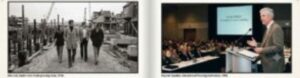
TEAM – The Electors’ Action Movement re-imagining Vancouver as a livable urban paradise

The new administration set about dismantling decades of NPA-era governance almost immediately, firing the city’s powerful commissioner, opening up public hearings, and killing the freeway plan that would have gutted Chinatown and Strathcona. It was, by every account, one of the more sweeping reinventions of municipal government in a Canadian city’s history — anchored by Phillips and by Walter Hardwick, the UBC geography professor who served as TEAM’s intellectual architect and the driving force behind transforming the industrial wasteland of South False Creek into mixed-income housing.

Bill McCreery joined that movement’s governing apparatus as a TEAM-affiliated Vancouver Park Board Commissioner, serving from 1973 to 1974. It was a smaller stage than Council, but not a trivial one — the Park Board has run as its own elected body since the 1880s, with real authority over the city’s parks and recreation system, answerable directly to voters rather than to council or the mayor.

To sit on it during the TEAM years was to be inside the machinery of a government self-consciously remaking how Vancouver made decisions, at the moment the city was deciding whether development or livability would set its priorities.

Bill’s experience as an architect made him aware decisions about parks, neighbourhoods and public land could not be separated from broader planning policy.

The Vancouver Park Board during that era became much more than an agency responsible for lawns and playgrounds.

It became one of the principal guardians of Vancouver’s emerging philosophy that public space should serve everyone.

Together, Art Phillips, Dr. Walter Hardwick, Bill McCreery and their TEAM colleagues fundamentally altered Vancouver’s civic governance.

Their greatest achievement was changing who participated in decision-making.

Prior to TEAM’s arrival, planning decisions often occurred behind closed doors with relatively little public involvement. Developers, bureaucracies and political insiders largely determined the city’s future.

TEAM insisted on something radically different.

  • Neighbourhood consultation became an expectation rather than an exception;
  • Community planning gained legitimacy;
  • Citizen advisory committees became influential;
  • Public hearings assumed greater importance.

The planning process itself became more transparent.

This transformation permanently altered the relationship between City Hall and Vancouver residents.

Instead of viewing citizens as obstacles to development, the new governance model treated them as partners in shaping neighbourhoods.

Bill McCreery: The Architect’s Eye
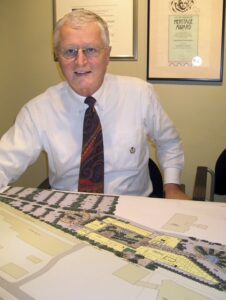
Bill McCreery, the architect, circa 2006 | Photo credit, Malcolm Parry, the Vancouver Sun.

Bill McCreery brought a working architect’s credentials to that civic role — he held professional registration with both the Architectural Institute of British Columbia (AIBC) and the Alberta Association of Architects (AAA).

During the course of his career, Bill McCreery has been credited with helping create North and South False Creek and with contributing to thousands of units of developer, public, and social housing across British Columbia, Alberta, and the United Kingdom, alongside several Vancouver residential projects of his own.
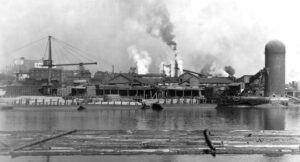
Southeast False Creek, once the waterfront particulate smoke spewing ‘heart’ of Vancouver, circa 1950

False Creek South is a body of work that placed him, professionally, inside the same era-defining project — the reclamation of False Creek’s derelict industrial shoreline into one of the templates North American cities would study for a generation — that his political colleagues were shaping through policy.

That philosophy eventually evolved into Vancouver’s celebrated “CityPlan” consultation model and neighbourhood planning processes that attracted international attention decades later.
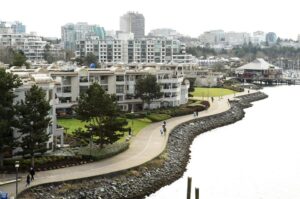
Mid-rise buildings and parks front the walkways connecting southeast False Creek to the waterfront

Bill McCreery has remained one of the strongest defenders of those principles, arguing public consultation remains essential to successful urban planning.

Bill McCreery’s advocacy has continued long after leaving elected office.

Even in retirement from architectural practice, Bill McCreery has remained one of Vancouver’s most thoughtful voices on housing and urban development.

Bill has frequently argued that planning must balance density with neighbourhood character, insisting that growth should occur through genuine collaboration rather than imposed solutions.

Writing and speaking publicly, he has warned against abandoning the community-based planning traditions established during the 1970s.

In his view, Vancouver’s international reputation rests not simply on beautiful buildings but on decades of patient civic engagement that gave residents a meaningful voice in shaping their communities.

His critiques have never been nostalgic.

Rather, they reflect a conviction formed over decades of professional practice: cities function best when architects, planners, politicians and citizens work together instead of competing for influence.

That belief explains why Bill McCreery has continued participating in debates surrounding housing policy, planning reform and neighbourhood development well into the twenty-first century. He has joined fellow architects, planners and urban thinkers in advocating for approaches that combine increased housing supply with careful urban design and democratic accountability.

Architecture often celebrates individual genius.

Bill McCreery’s career tells a different story.

His work reminds us that cities are collaborative achievements.

Successful neighbourhoods reflect countless conversations between architects, elected officials, planners, engineers, community organizations and residents.

Collaboration became a Vancouver hallmark during its most innovative decades.

Today, visitors admire False Creek, the city’s waterfront neighbourhoods, its network of parks, and its human-scaled urban design without always knowing the names of those responsible.

Bill McCreery is one of those names.

Life After Bill McCreery’s Tenure on The Vancouver Park Board

Bill McCreery’s civic instincts didn’t retire when his term did.
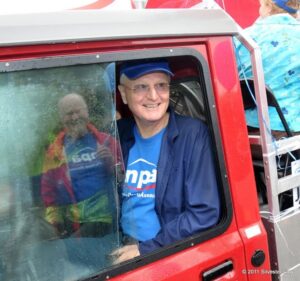
Bill McCreery running for civic office in the 2011 Vancouver municipal election under the NPA banner

Decades later, he re-emerged as a candidate for City Council under the NPA banner — the party TEAM had unseated in 1972, a small irony that says something about how thoroughly the city’s political alignments had scrambled by the 2010s.

Running for Council gave him a public platform to argue “city hall democracy” had suffered under the Vision Vancouver administrations then in power.

Drawing on his own memory of the job — the stack of reports, sometimes a foot high, that landed on a Commissioner’s desk each Friday for study before Monday’s meeting — he made the case that transparency and direct access between citizens, reporters, and city staff had eroded, and that the public was worse informed for it.

That advocacy has continued well past his own campaigns.
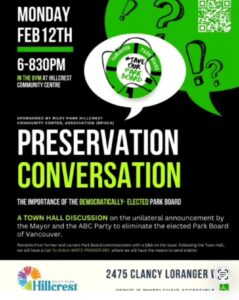
Bill McCreery has stood among the coalition of former Park Board commissioners publicly opposing efforts to dissolve Vancouver’s elected park board — a fight rooted in the same principle that shaped his TEAM years: decision-making over civic institutions belongs in the hands of people directly accountable to voters, not folded into the broader authority of City Council or the Mayor’s office.
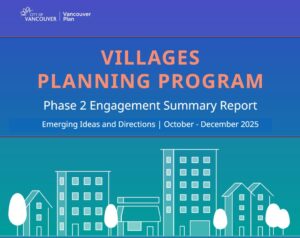
As recently as February of this year, he was among the signatories of an open letter to Mayor Ken Sim and Council challenging the city’s housing “Villages Plan,” identifying himself in that document as a former registered architect who helped build False Creek — still, after half a century, making his case in writing rather than letting the record speak for itself.

Bill McCreery: A Consistent Thread in Bill’s Civic Life

What runs through Bill McCreery’s public life isn’t a single ideology so much as a recurring instinct: a belief that how a city governs itself — who gets consulted, which bodies hold power, how transparently decisions get made — matters as much as what gets built.

Bill arrived in civic office on the wave of a movement built on that premise, spent a career as an architect inside one of that movement’s landmark projects, and spent the decades since defending the governance structures TEAM left behind.

Few figures in Vancouver’s civic history have stayed at that post for quite so long

Bill belongs to a generation that refused to accept that cities must choose between growth and livability, density and beauty, or development and democracy.

Instead, he helped demonstrate that thoughtful architecture and enlightened governance could reinforce one another.

His buildings continue to house thousands.

His planning principles continue to influence generations of architects.

Bill’s work on the Park Board and alongside Art Phillips, Walter Hardwick and the TEAM reformers helped reshape Vancouver’s civic institutions, embedding public participation into the city’s political culture in ways that continue to define municipal government today.

Few architects can claim to have transformed both a city’s physical landscape and its democratic institutions.

Bill McCreery is one of them.
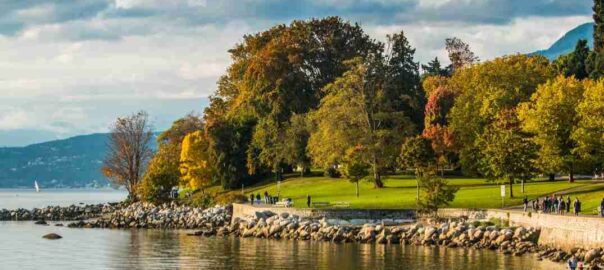
Where the City Breathes: The Enduring Story of Vancouver’s Park Board

The history of the Vancouver Board of Parks and Recreation, more commonly known as the Vancouver Park Board, is in many ways the history of Vancouver.

Few public institutions have done more to shape the daily lives of residents than the elected body charged with protecting the city’s forests, beaches, community centres,  gardens and public gathering places.

Long before Vancouver became celebrated for its livability, the Park Board was quietly laying the foundations for the city that would emerge — a city where parks were not an afterthought, but the framework around which neighbourhoods would grow.

For well over a century, Vancouver’s Park Board has remained one of the most cherished civic institutions anywhere in North America.

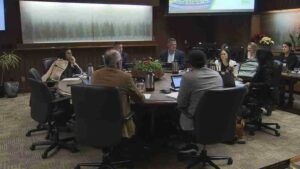
Current  2022 elected Commissioners mandated to oversee decision-making at Vancouver’s Park Board

It is one of a handful of fully elected, independent park boards across the continent, exercising powers granted under the Vancouver Charter.

While virtually every other major North American city places parks and recreation under the direct authority of city council or a municipal department, Vancouver entrusted those responsibilities to Commissioners elected directly by the public.

That institutional independence has often produced spirited political debates, occasional conflict with City Hall, and differing visions for Vancouver’s future.

Yet it has also allowed generations of Commissioners to devote themselves exclusively to parks, recreation and public space — an extraordinary civic experiment that has helped define Vancouver’s identity.

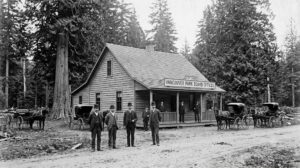
The origins of the Park Board date to 1888, only two years after Vancouver’s incorporation as a city.

The fledgling municipality recognized early on that preserving public land would be essential if the young city were to avoid the mistakes made elsewhere, where development consumed valuable waterfronts and forests before governments acted to protect them.

The Board’s original mandate was straightforward but ambitious: acquire, preserve and improve public park land for present and future generations.

Over time that mandate expanded dramatically to include playgrounds, sports fields, beaches, golf courses, marinas, swimming pools, arenas, horticulture, urban forestry, environmental stewardship, arts programming, recreation services, cultural events and, eventually, the management of one of Canada’s largest systems of community recreation centres.

Among the Board’s earliest achievements was the preservation and stewardship of Stanley Park, which remains one of the world’s great urban parks. Commissioners oversaw improvements to trails, beaches, seawalls, gardens and recreation facilities while preserving the park’s extraordinary natural landscape.

Throughout the twentieth century the Board continued acquiring neighbourhood parks as Vancouver expanded westward and southward. Small local parks became the green hearts of emerging communities, ensuring that nearly every resident would live within walking distance of public open space.

An equally transformative chapter began after the Second World War with the emergence of Vancouver’s community centres.

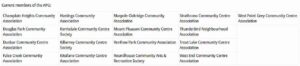
Across neighbourhoods, citizens had organized independently to build and operate recreation facilities. These community centre associations were grassroots organizations, led almost entirely by volunteers. Local residents raised money, organized activities, hired instructors, operated concessions, planned events and determined programming reflecting each neighbourhood’s unique character.

In the early through mid-1950s, these independent volunteer-run community organizations commenced discussions on realizing a formal partnership with the Vancouver Park Board that rather than replace local control embraced the volunteer model. The resulting partnership became one of the most successful examples of community governance in Canada.

To this day, community centre associations continue to elect volunteer boards composed of neighbourhood residents. The Park Board supplies professional staff, access to maintenance support — although, since 2009, the City has largely failed on that front — recreation expertise and long-term capital investment.

Together, the Vancouver Park Board, and the volunteer community centre Boards of Directors have worked together — sometimes fitfully — to create community recreation facilities that are responsive to the interests of neighbourhoods throughout the city.

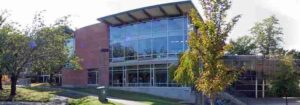
Today Vancouver’s network of community centres remains one of the city’s defining civic institutions. They are places where children learn to swim, seniors meet friends over coffee, newcomers improve their English, teenagers play basketball, families attend festivals, artists teach pottery and musicians rehearse.

Unlike private fitness clubs or exclusive recreational facilities, Vancouver’s community centres have been designed around accessibility and inclusion.

No matter one’s income, ethnicity, language, sexual identity or age, the doors remain open.

Recognizing that financial barriers should never prevent participation, the Park Board long ago developed a comprehensive concession programme offering substantially reduced fees for low-income residents.

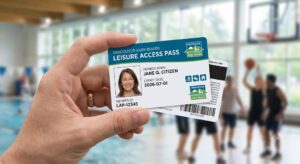
Through what is now the Leisure Access Programme, eligible residents receive significant discounts on admission to pools, skating rinks, fitness centres and recreational programmes, ensuring that recreation remains a public good rather than a luxury.

The Vancouver Park Board had majority Non-Partisan Association (NPA) Commissioners from 1940 to 1972.

In 1972, TEAM formed a majority on Park Board, that thrived through the late 1970s, transforming governance of Vancouver’s Board of Parks and Recreation,  while building a parks and recreation system that became the envy of the world.

From much of the 1980s through the late 1990s, Park Board Commissioners affiliated with the Non-Partisan Association (NPA) civic party frequently held governing majorities on the Board.

Although civic politics remained partisan, Vancouver’s Park Board  focused less on ideology than on practical questions of expanding recreation services, acquiring park land and maintaining infrastructure.

Numerous Commissioners developed reputations as diligent stewards rather than ideological combatants.

Civic figures and Park Board Commssioners who made a difference, taking the job of stewards of Vancouver’s system of parks and recreation seriously and as a public trust, include such figures as Bill McCreery — who VanRamblings will write about next Monday — Allan De Genova, Ian Robertson, Don Bellamy, Christopher Richardson, Trevor Loke, George Wainborn, Libbi Davies, Art Cowie, Tim Louis, Michael Wiebe, George Puil,  Donna Morgan, John Coupar, Erin Shum, Melissa De Genova, Alan Featherstonhaugh, Niki Sharma, Philip Owen, Laura McDiarmid, Aaron Jasper, Andy Livingstone, Constance Barnes, Sarah Kirby-Yung, Grace McCarthy, Stuart Mackinnon, and Sarah Blyth — among many, many other elected Park Board Commissioners — each left their own imprint, though representing different political movements and philosophies in Vancouver politics.

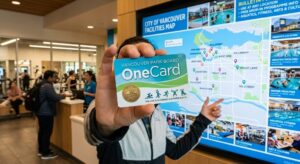
One of the most ambitious administrative reforms ever undertaken by the Park Board emerged decades later with development of the OneCard.

For years Vancouver residents were effectively members of individual community centres rather than the city-wide recreation system. Memberships, registrations and financial systems differed from one association to another.

Creating a universal Park Board access card allowing residents to use any community centre, pool, rink or fitness facility across Vancouver required years of sometimes fraught negotiation, involving the Presidents of the various community centre associations, and a too often uncompromising and intractable City of Vancouver, in the form of Vancouver’s imperious City Manager, Dr. Penny Ballem.

Presidents of the various community centre associations played an indispensable role. Many understood that while local identity should remain protected, residents increasingly expected seamless access throughout the city.

The discussions were often lengthy, often contentious and politically delicate. Associations wished to preserve their independence and financial stability. Park Board leadership / Dr. Ballem sought greater “consistency” across the system.

Ultimately co-operation prevailed.

The OneCard became a symbol of a unified recreation system while preserving the volunteer governance that had served Vancouver so well for decades.

Like every democratic institution, the Park Board has experienced controversy.

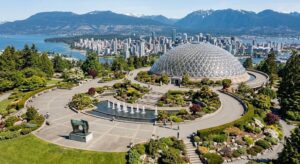
Perhaps no episode better illustrates the intensity of civic engagement than the debate surrounding the Bloedel Conservatory.

Facing financial pressures during the tenure of a Vision Vancouver majority on Park Board, in 2010 proposals emerged that contemplated closing the beloved conservatory atop Queen Elizabeth Park.

To many Vancouver residents, the Bloedel Conservatory represented far more than a greenhouse. It was a tropical sanctuary. A refuge during rainy winters. A place where generations of families introduced children to exotic birds and lush plant life.

Public opposition was immediate and passionate.


John Coupar loves Vancouver parks. In 1937, John’s father was hired as an apprentice gardener at Park Board, taking a leave to join the Canadian army in 1939. During the war, John’s father worked with the Allies on the liberation of Europe, returning to Park Board at the end of the war in 1945, where he was employed all of his working life, often taking John to the gardens and parks throughout Vancouver where he was working. When the Vision Vancouver Park Board, in 2010, threatened the closure of the Bloedel Conservatory, John — in concert with others — worked to save the Bloedel Conservatory, which he and his activist colleagues did, preserving the conservatory to this day.

Among those helping lead efforts to preserve the conservatory was future Park Board Commissioner John Coupar, working alongside community advocates, volunteers, horticultural supporters and civic organizations.

Following the 2011 civic election when he was elected to Park Board, and later as Chair of the Board following the 2014 civic election, John Coupar became one of the institution’s strongest champions. Rather than allowing closure, the Board pursued restoration, fundraising partnerships and renewed public programming.

Today the conservatory remains one of Vancouver’s treasured civic attractions.

Sarah Kirby-Yung, current Vancouver City Councillor / former Park Board Commissioner / Chairperson

Another landmark achievement came through collaboration between Commissioners and senior Park Board management regarding cetaceans (whales, dolphins) in captivity at the Vancouver Aquarium.

After years of public debate, scientific evidence and changing public attitudes toward whales and dolphins in captivity, thanks to very fine work by then Chairperson of the Vancouver Park Board, Sarah Kirby-Yung, working with Park Board General Manager, the incredibly competent — and dare we say, well-loved — Malcolm Bromley, the two discovered an obscure 1923 by-law that allowed the Vancouver Park Board to adopt a policy that would ultimately end the keeping of cetaceans at the Vancouver Aquarium in Stanley Park.

Pissed off future Vancouver City Councillor Colleen Hardwick complained loud and long that “the despicable Sarah Kirby-Yung” had ignored / rejected / gone against Non-Partisan Association policy that supported whales in captivity.

F-ck Non-Partisan Association policy VanRamblings says, and do the moral thing — which an ethical, principled Sarah Kirby-Yung did, allowing The Aquarium to continue their policy of providing service and succour to whales in the open ocean, rather than in the “cages” of the Aquarium, Vancouver’s Aquarium thriving to this day without keeping cetaceans in small pool, caged captivity.

The ever-so autocratic and, dare we say, kind of nuts — but still competent — Dr. Penny Ballem.

Perhaps the most significant institutional conflict emerged during the tenure of former City Manager Dr. Penny Ballem. Historically, the Park Board General Manager functioned primarily as the senior executive accountable to the elected Commissioners. Dr. Ballem restructured Park Board such that the Park Board General Manager became an employee of the City, reporting directly to her.

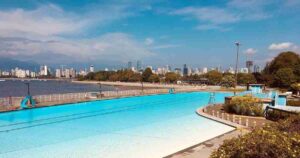
Not only that, Dr. Ballem also transferred responsibility for maintenance operations — including many park maintenance functions — to centralized City departments, which have done a piss poor job of maintaining Vancouver’s community centres, facilities and parks (lack of funding, don’tcha know, as do nothing Council after do nothing Council ignored these cherished community spaces), recently resulting in a scathing report by Vancouver Auditor General Mike Macdonnell, who found that 11 of Vancouver’s community centres are in “an advanced state of disrepair,” neglected for the past 18 years by the City and Mayors and City Councillors, as Vancouver’s public social infrastructure — community-owned recreation centres, pools, hockey rinks, golf courses, not to mention, libraries and community hubs — have eroded, many beyond repair (think: the Aquatic Centre, currently in the throes of being torn down, or Vancouver’s well-loved Kitsilano pool).

Which is why Vancouver Liberals’ candidate for Mayor, Kareem Allam, has emerged as the only candidate seeking office in 2026 committed to repairing, rebuilding, rejuvenating and building more neighbourhood community centres and pools across the city — including a new 50-metre pool —  increasing public library hours, committed to restoring social cohesion, says Vancouver’s only ‘can-do’ candidate.

The future of the elected Park Board itself became a defining issue following the election of Mayor Ken Sim and his ABC Vancouver administration in 2022.

Mayor Sim has argued that Vancouver’s governance structure unnecessarily duplicates administrative functions and that parks should become another department reporting directly to City Council, as he envisions replacing the elected Park Board with a standing committee of an already overworked Council.

An overflow crowd attended the rally at the Hillcrest Community Centre this past February

Mayor Sim’s arguments are specious, wrong-headed, devoid of facts, an unseemly power grab based on Trump-like disinformation — not to mention which, VanRamblings is given to understand that Mayor Sim has intention of selling off park lands in Vancouver to his well-heeled billionaire friends, a topic which we will address in greater detail another day.

Fortunately, British Columbia Premier David Eby and his government have declined — and will continue to decline — to introduce legislation that would abolish the elected Park Board arising from a motion passed unanimously by ABC Vancouver Councillors, vehemently opposed by the non-affiliated Councillors.

For nearly 140 years the Vancouver Board of Parks and Recreation has acted as the steward of those shared places.

Governments will change. Political parties will rise and fall. Commissioners will come and go. Administrative structures may evolve. Yet the parks themselves endure, growing greener with each passing season, shaped by generations who believed that beauty, recreation and nature should belong to everyone.

In the end, that may be the Park Board’s greatest achievement. It has never simply managed parks. It has cultivated a way of life. In every towering cedar, every neighbourhood playground, every crowded skating rink on a winter evening, every child learning to swim, every senior lingering in the warmth of a community centre, Vancouver’s Park Board has quietly sustained the rhythm of the city itself.

For Vancouver breathes through its parks.

Vancouver’s parks are our lungs, its common ground — offering the enduring promise that amidst the pressures of urban life there will always remain places where the city pauses, and remembers who it is.

Mayoral Candidate Kareem Allam’s Bid to Rebuild Vancouver’s Social Fabric


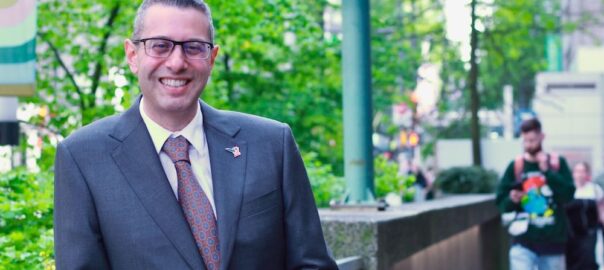
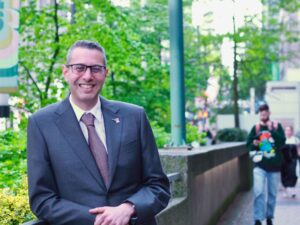
Kareem Allam, 47, Vancouver Liberals’ Mayoral candidate  | Photo credit: Katie Hyslop, The Tyee

For over two decades, Kareem Allam has been the man behind the curtain in Canadian politics.

Kareem is a self-described “policy nerd” and a master campaign strategist who has navigated the highest corridors of municipal, provincial, and federal power.

Yet, for all his time spent steering others to victory, in 2026 Kareem Allam has stepped out from the shadows of backroom strategy to mount his own campaign.

As the founder, leader, and Mayoral candidate for the newly formed municipal party, the Vancouver Liberals, Kareem Allam is running a well-funded, high-stakes campaign to unseat Mayor Ken Sim, in the October 2026 civic election.

Kareem Allam’s transition from kingmaker to candidate marks a massive shift in Vancouver’s civic landscape.

In 2022, Kareem Allam was the mastermind who successfully guided Ken Sim and the ABC Vancouver party to a historic sweep of City Hall, the Park Board, and the School Board. After steering ABC Vancouver to a sweeping majority at all three levels of civic government, he served briefly as Mayor Sim’s Chief of Staff before a highly publicized falling-out led to his departure in February 2023.

@jessforvancouverWe are still in a housing crisis – but we have a real solution to get Vancouver out of crisis mode. #vanpoli @vancouverliberals♬ original sound – jessforvancouver


Now, disillusioned by what he views as a broken social contract and a deeply divided city, Kareem Allam has built a political vehicle of his own.

With a platform focused on a massive infrastructure injection, an aggressive front line service plan, and a return to consensus-driven, big-tent governance, Kareem Allam aims to execute an activist civic agenda not seen since the 1970s.

Upbringing, Roots, and the Great Canadian Social Contract

To understand Kareem Allam’s political philosophy, one must look to his family history, which he frequently cites as the bedrock of his world view.

Born in Vancouver and raised in Richmond, Kareem is the son of an Egyptian colonel — who spent 11 months as an Israeli prisoner of war — and a Sudanese mother whose family was expropriated during a revolution. His mother spent two grueling years living in a refugee camp in Lebanon before arriving in Canada.

Though his father, Mahmoud Allam, would eventually return to Egypt to manage the Al Ahly football club, the family’s formative years in the Lower Mainland left an indelible mark on Kareem.

Speaking with reporter Katie Hyslop for an extensive feature profile in The Tyee, Kareem Allam reflected on how Vancouver served as a safe harbour where his family could heal, plant roots, and ultimately thrive:

“My family history defines a lot of how I perceive this place… [Vancouver] was a welcoming place, a place of refuge and a place where they were able to thrive, raise their children. It wasn’t always prosperous. But over the arc of time, the family has done well.”

This personal history forged Allam’s deep belief in what he terms the “great Canadian social contract” — the idea that a booming economy must directly fund world-class social programming, and that each generation bears a strict responsibility to build winning conditions for the next.

Kareem Allam’s formal education took him away from the West Coast for high school and graduate studies, including a stint in Ottawa where he cut his political teeth working on Parliament Hill for the federal Canadian Alliance party.

But the pull of Vancouver was permanent.

View this post on Instagram


A post shared by Kareem Allam (@kareemformayor)

Outside of politics, his career spanned public, private, and non-profit sectors. He served as the Director of Public Policy for the Vancouver Board of Trade, sat on the Fraser Health Authority’s Board of Directors, worked with major energy corporations like TransCanada and FortisBC, and served on the TransLink screening panel and the College of Massage Therapists of B.C.


View this post on Instagram


A post shared by Kareem Allam (@kareemformayor)

Professionally, his primary focus for the last two decades has been as a partner at Richardson Strategy Group (formerly Richardson Strategies), working closely alongside prominent Indigenous leaders like Haida nation leader Miles Richardson on complex title, rights, and economic development negotiations.

The Campaign Veteran: 40 Races and the Road to Kingmaker

Before launching his own mayoral bid, Kareem Allam compiled a legendary résumé as a political strategist, managing or advising on roughly 40 political campaigns across the ideological spectrum.


Kareem specializes in taking complex policy ideas and distilling them into simple, powerful promises that resonate with everyday voters.

His track record as a backroom general is elite:

  • The 2005 Surrey Municipal Race: He helped guide Dianne Watts to an upset victory as Mayor of Surrey, reshaping the politics of BC’s fastest-growing city;
  • Federal Conservative Leadership (2020): Kareem Allam played a critical role in successfully securing the federal Conservative Party leadership for Erin O’Toole, navigating a complex, multi-ballot ranked voting system.;
  • Provincial BC Liberal Leadership (2022): He served as the campaign manager who secured the leadership of the provincial Liberal party (later renamed BC United) for Kevin Falcon;
  • ABC Vancouver Municipal Sweep (2022): In his most (in)famous local victory, Mr. Allam masterminded Ken Sim’s mayoral campaign. He engineered the easily digestible pledge to hire “100 police officers and 100 nurses,” a message that fundamentally shifted public safety discourse and handed ABC a total majority.

However, Kareem Allam’s political alignment experienced a dramatic shift.

In the 2024 British Columbia provincial election, the lifelong conservative strategist publicly broke ranks to endorse and re-organize and energize the BC NDP campaign — steering the party and their moribund campaign for re-election, from an almost certain defeat to majority status — stating to The Tyee’s Katie Hyslop that the modern center-right movement had abandoned its traditional values of climate action, reconciliation, and social cohesion, veering instead toward populism.

“I’m not sure that I left the center-right movement,” Kareem Allam observed. “I think the center-right movement left me.”

The Vancouver Liberals and the Fight for a Council Majority

The Vancouver Liberal Electors Association — commonly known as the Vancouver Liberals  — was officially founded on July 3, 2025. The Vancouver Liberals are a strictly municipal political party, entirely independent of both the federal Liberal Party of Canada and the former provincial B.C. Liberals.

Kareem Allam’s strategy for the 2026 election hinges on building a true coalition party that rejects extreme polarization. He has intentionally recruited high-profile candidates from across the political spectrum to build a team capable of seizing a majority on the 11-member Vancouver City Council.

Vancouver Liberals 2026 Civic Team (Key Figures)

├── Mayoral Candidate: Kareem Allam

City Council Candidates:

Dr. Moira Stilwell, a Vancouver Liberals Council candidate, one of VanRamblings two favourites in 2026

│ ├── Dr. Moira Stilwell (Physician; former B.C. provincial cabinet minister)
│ ├── Jessica Walton (Front line government worker, socialist, NDP stalwart)
│ ├── Michael Wu (30-year entrepreneur & former RCMP Auxiliary Constable)
│ ├── Devin Clemens (UBC Graduate Programs Manager, School of Economics)
│ └── Armor Valor (South Vancouver community advocate, front line worker)
│ ├── Victoria Jung (current Vancouver School Board Chair)

└── Park Board Candidates:

Shayla Bird, Vancouver Liberals candidate for Vancouver Park Board

├── Brennan Bastyovanszky (Sitting Park Board Commissioner)
├── Scott Jensen (Sitting Park Board Commissioner; first Indigenous Chair)
├── Mark Halyk (transformed Park Boards concession services for the better)
└── Shayla Bird (Educator, consultant, Black public Historian)

By bringing over sitting heavyweights like Victoria Jung, Scott Jensen, and Brennan Bastyovanszky — who actively opposed Ken Sim’s efforts to dismantle the democratically elected Park Board — Kareem Allam has positioned the Vancouver Liberals as protectors of civic democracy and neighbourhood infrastructure.

The Mayoral Platform: From Infrastructure to Pest Control

Kareem Allam’s platform represents a highly activist approach to municipal government. Rather than scaling back, Kareem proposes using the city’s financial levers to aggressively address long-ignored public deficits.

Service to the People of Vancouver: Rebuilding Civic Infrastructure

The centre-left anchor of Kareem Allam’s platform is a monumental $1.35 billion capital fund commitment aimed at thoroughly renovating 11 Vancouver community centres.

These facilities were explicitly flagged by City Auditor General Mike McDonnell as being in an advanced state of disrepair. Kareem Allam argues that by neglecting neighbourhood pools, libraries, and community hubs, the current administration is eroding the literal spaces where social cohesion is formed.

As part of this infrastructure push, Kareem Allam has rejected “half-measures,” pledging to build brand-new hockey rinks and aquatic facilities — headlined by a premium 50-meter Olympic-standard swimming pool designed to train future Canadian athletes, rather than standard 25-meter alternatives.

Ridding Vancouver of Rats That Are Infecting Every Neighbourhood


View this post on Instagram


A post shared by Kareem Allam (@kareemformayor)

On the public works front, Kareem Allam has targeted a quality-of-life crisis that many politicians avoid: the city’s exploding rodent population.

With regional data frequently placing Vancouver among the most rat-infested cities in Canada, Kareem Allam has made a firm mayoral commitment to implement coordinated, science-based eradication strategies across all city neighborhoods, treating pest control as a core public health responsibility of City Hall.

Core Policy Positions: Decentralization, Compassion, and Anti-Laundering


View this post on Instagram


A post shared by Kareem Allam (@kareemformayor)

Kareem Allam has carved out distinct, highly detailed policy positions on the most polarizing crises facing Vancouver today:

Homelessness and the Downtown Eastside (DTES)

Kareem Allam has been a vocal critic of the encampment clearances on East Hastings Street executed by the current administration.

In an interview with CBC, Kareem Allam publicly apologized for his own past role as Chief of Staff during the early stages of those policy discussions, noting that the final execution violated a fundamental commitment to not decamp vulnerable residents without providing adequate, permanent housing.


View this post on Instagram


A post shared by Kareem Allam (@kareemformayor)

Kareem Allam argues that forced decampments simply push the crisis into surrounding neighborhoods and sever the vital connections between unhoused individuals and healthcare workers. His strategy shifts away from displacement, focusing instead on collaborating with non-profits and utilizing surplus city land to build supportive housing networks.

Mr. Allam’s deep ties to the front lines are underscored by his volunteer work on the Board of the Overdose Prevention Society (OPS) in the Downtown Eastside.

Countering Our City’s Food Security Crisis | Kareem’s Civic Food Strategy


View this post on Instagram


A post shared by Kareem Allam (@kareemformayor)

To counter the food security crisis, Kareem Allam has proposed a municipal food strategy modeled directly after the UBC Food Hub.

Rather than using taxpayer funds to purchase commercial grocery stores, Kareem Allam’s plan involves donating unused city buildings and surplus municipal land to non-profit organizations to distribute low-cost, high-quality groceries directly into underserved communities.

Crypto, Bitcoin, and Money Laundering

Kareem Allam has positioned the Vancouver Liberals firmly against alternative financial systems that complicate public safety.

Labeling money laundering as the financial engine of international drug cartels operating out of luxury downtown penthouses, Kareem Allam’s platform includes an outright ban on Bitcoin ATMs across Vancouver.

His policy pledges to gradually eliminate unchecked private currency exchanges and actively replace predatory payday loan shops with trusted, community-focused institutions like Pigeon Park Savings.

Furthermore, Kareem Allam has explicitly mocked what he terms “ridiculous, tech-bro ideas” championed by political opponents, such as attempting to heat public swimming pools using commercial Bitcoin servers, arguing that public spaces must remain focused entirely on community utility.

Prose Poetry: A Fit for Activist Office | The Architect of Change

To look upon Kareem Allam is to see a man forged in the crucible of institutional statecraft, an operative whose life has been an extended masterclass in the levers, gears, and quiet pulleys of Canadian governance.

Kareem Allam does not approach City Hall as a starry-eyed idealist or a corporate outsider fluent only in the language of balance sheets; he arrives as an architect who knows exactly where the foundational pillars are buried.

His decades spent navigating the fierce currents of federal ministries, provincial cabinets, and complex Indigenous title negotiations have granted him a rare, battle-tested wisdom. He understands a city is not a business to be managed down to the lowest dividend, but a profound, living trust that must be fiercely protected.

Should Kareem Allam emerge as Mayor on the evening of October 17th, Vancouver will witness its most radical, activist executive since Art Phillips and the TEAM movement revolutionized local politics in the 1970s.

Like Art Phillips — who created the south False Creek neighbourhood of co-operative and social housing, watefront parks and pedestrian pathways; introduced neighbourhood planning and advisory committees, public consultation, and community involvement in major planning decisions; protected parks and public waterfronts; restructured municipal governance by making elected officials — not unelected administrators—the primary drivers of policy, Kareem Allam possesses the rare, panoramic vision required to build a grand coalition from a fractured electorate, drawing voices from the left, the right, and the forgotten centre into a unified civic project.

Kareem Allam is the only Mayoral candidate in the current Vancouver civic election, who recognizes that true strength lies not in top-down edicts or institutional closures, but in rebuilding the public squares — the community centres, the Olympic pools, the local libraries — where citizens of every race, age, and economic station cross paths and recognize their shared humanity.

Kareem Allam stands uniquely equipped to wield the power of City Hall as an instrument of profound social repair.

Kareem Allam is a leader who wakes up hungry for the complex, grinding work of structural reform, ready to deploy a billion-dollar capital fund with the precise, sweeping ambition of a true city-builder.

In an era defined by division and retreat, Kareem Allam’s Mayoral bid represents an audacious return to bold, interventionist municipal leadership — a promise to restore the fracturing social contract and ensure that Vancouver remains, above all else, a sanctuary where future generations can truly belong.

For the remainder of the summer through until Labour Day, VanRamblings will publish Mondays and Thursdays only — unless there is breaking news demanding our attention — and on Fridays, Saturdays and Sundays on an occasional basis.

Enjoy your summer!

#VanPoli | City Politics, Development and Scandal on the Near Horizon


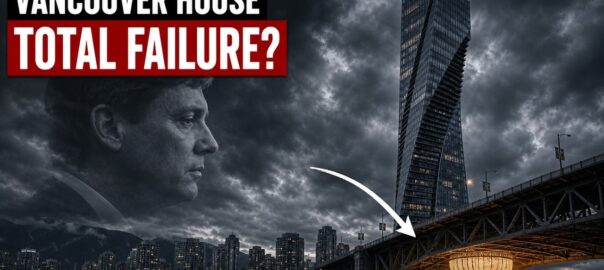
The Politics of Development, Corruption and Vancouver House. Thank you Robert Renger.

The story of Vancouver House is, depending on one’s perspective, either a triumph of architectural ambition or a cautionary tale about the dangers of a city becoming too closely aligned with the interests of powerful developers.

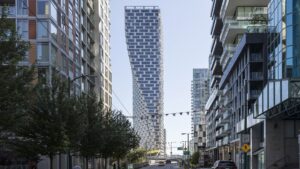
Today, the twisting glass tower at the foot of the Granville Bridge stands as one of Vancouver’s most recognizable landmarks. Designed by the internationally acclaimed Danish architect Bjarke Ingels and developed by Ian Gillespie’s Westbank Corp., Vancouver House has appeared in architectural journals around the world. Its dramatic form rises from a narrow triangular base before expanding into a rectangular tower as it climbs 58 storeys and 155 metres into the skyline.

Yet behind the celebrated architecture lies a political and financial controversy that has lingered for more than a decade and has now been reignited by findings from Vancouver Auditor General Mike Macdonell. What began as an ambitious redevelopment of awkward land beneath the Granville Bridge has evolved into one of the most contentious examples of Vancouver’s developer-driven era under former mayor Gregor Robertson and his governing party, Vision Vancouver.

Westbank Corp.’s Vancouver House, on Howe Street leading to the Granville Street bridge

For supporters, Vancouver House transformed a neglected urban void into a world-class architectural destination.

For critics, it exposed how City Hall bent rules, discounted public assets and abandoned promised public benefits in order to accommodate a politically connected developer.

The controversy stretches back to the late 2000s.

The triangular parcel beneath the Granville Bridge had long been considered difficult to develop. Previous proposals had failed.

The City of Vancouver eventually entered into negotiations with Westbank, which proposed an ambitious mixed-use development featuring luxury residential units, retail space and extensive public realm improvements.

What followed became one of the most controversial land transactions in modern Vancouver history.

Critics argued that Vision Vancouver effectively removed the site from the open market for approximately six years while Westbank assembled financing and refined its proposal. Opponents contended that the city was no longer acting as a neutral steward of public land, but had become a partner in realizing a specific developer’s vision.

One of the most persistent criticisms was that the city failed to test the market adequately and did not seek competing bids that might have generated significantly greater value for taxpayers.

In 2014, Glen Chernen, Cedar Party candidate for Mayor, who following days of day and night research of Vancouver City Hall was the first to expose the “corruption” associated with Vancouver House

These concerns were amplified by the work of Glen Chernen, who ran for Vancouver City Council in 2014 with the Cedar Party. During that election campaign, Chernen examined city documents and negotiations surrounding Vancouver House and raised questions about what he characterized as preferential treatment afforded to Westbank. His research helped bring public attention to agreements that had largely escaped broader scrutiny and contributed to growing concerns about the relationship between Vision Vancouver and major developers.

At the heart of the controversy was the price Westbank paid for the city-owned land.

Critics argued that Westbank acquired the property for approximately $32 million despite assessments and valuations suggesting a substantially higher market value. Over the years, opponents have repeatedly cited figures indicating the land’s value was closer to $119 million, arguing that taxpayers effectively subsidized the project through an undervalued transaction.

Whether those valuations can be directly compared remains disputed. Nevertheless, questions about whether the city maximized value from the sale have never fully disappeared.

Vancouver Auditor General, Mike Macdonell who in his 2026 scathing report to Vancouver City Council found concerning irregularities in the Vancouver House development process, in 2014 through 2026

Those concerns gained renewed legitimacy in February 2026 when Vancouver Auditor General Mike Macdonell released a major audit examining city land sales and exchanges. The report found that city staff did not consistently provide Council with all relevant information needed to determine whether land sales reflected market value. In some cases, land was sold for less than assessed value, and documentation supporting valuation decisions was incomplete.

While the audit was broader than Vancouver House alone, critics immediately connected its findings to long-standing concerns about the Westbank transaction.

Even more damaging was a separate whistleblower investigation that examined community amenity contributions associated with Vancouver House.

Community amenity contributions, known as CACs, are intended to ensure that when rezonings dramatically increase land values, the public receives a share of that value through amenities, infrastructure or cash contributions. According to city policy, rezonings are expected to capture a significant portion of the resulting “land lift” for public benefit.

The Vancouver House rezoning ultimately secured approximately $4 million in cash contributions and roughly $6 million in promised in-kind public improvements.

The problem, according to Macdonell’s investigation, is that many of those promised benefits either were never properly defined, were reduced, or were not adequately tracked and enforced by the city. The auditor found that the city’s management of these commitments fell below a reasonable standard and constituted “waste” under the city’s whistleblower framework.

Among the promised public improvements were enhanced pedestrian connections between Granville Street and the bridge structure above, upgraded public spaces, landscaping, seating areas, special lighting, event infrastructure and other public realm features. Over time, several elements were altered, reduced or abandoned. The auditor found evidence that city staff excused some obligations without ensuring equivalent public benefits were delivered in return.

The findings were particularly significant because they reinforced a criticism that had existed since the project’s approval: Vision Vancouver’s enthusiasm for landmark architecture overshadowed its responsibility to protect the public interest.

Critics argue that Vancouver House became emblematic of a broader governing philosophy that dominated City Hall during the Robertson years. Vision Vancouver promoted density, urban design excellence and partnerships with the private sector. Many of the city’s most ambitious projects emerged during this period.

Yet opponents increasingly argued that City Hall had become too close to the development industry.

The Vancouver House negotiations appeared, to many observers, to confirm those fears.

Retired planner Robert Renger brings the Vancouver House controversy to the fore

Retired Burnaby planner Robert Renger became one of the most persistent voices raising concerns about the project. Renger, who had extensive experience negotiating major development agreements, filed complaints and provided information that ultimately contributed to the Auditor General’s investigations. He argued that Vancouver House represented a failure to maximize public value and a failure to enforce negotiated public benefits.

Renger’s concerns were not focused primarily on architecture. Rather, they centred on governance.

His argument was straightforward: if developers receive enormous increases in land value through rezonings, the public should receive commensurate benefits. When those benefits are reduced, deferred or abandoned without compensation, taxpayers effectively absorb the loss.

The Auditor General’s findings did not conclude that bribery, fraud or criminal corruption occurred. In fact, the report explicitly noted that the circumstances did not meet the threshold for serious wrongdoing in the legal sense and found no evidence of fraud.

Nevertheless, the report painted a troubling picture of weak oversight, poor documentation and inadequate protection of public interests.

That distinction is important.

Political scandal does not necessarily require criminal conduct.

A city can follow legal procedures and still make decisions that produce poor outcomes for taxpayers.

In the eyes of many critics, that is precisely what happened with Vancouver House.

The irony is that the project itself is, in many respects, a success.

Vancouver House has become an internationally recognized architectural icon. It transformed an awkward and neglected site. It helped redefine the southern entrance to downtown Vancouver. The building’s engineering and design innovations have been celebrated globally.

But success in architecture does not automatically translate into success in public policy.

The project was also controversial because of how it was marketed. During Vancouver’s housing affordability crisis, luxury condominiums in Vancouver House were aggressively promoted overseas, particularly in Hong Kong and mainland China. Many Vancouver residents viewed the marketing strategy as symbolic of a city increasingly designed for global wealth rather than local residents.

The optics were especially damaging during a period when housing prices were accelerating beyond the reach of many middle-class families.

To critics, Vancouver House represented not merely a building but a broader economic model: public land converted into luxury housing marketed internationally while affordability worsened at home.

The lingering question is why subsequent city councils have done so little.

A photo of the newly elected, or re-elected, members of the 2022 Vancouver City Council
Since Vision Vancouver’s defeat in 2018, two entirely different governing administrations have controlled Vancouver City Hall. First came the minority Council elected in 2018. Then came the ABC Vancouver administration under Ken Sim.

Neither administration has aggressively pursued remedies related to Vancouver House.

There are several possible explanations.

First, many of the agreements were legally finalized years ago, limiting available remedies.

Second, governments are often reluctant to reopen complex development contracts because doing so can trigger litigation and financial risk.

Third, Vancouver remains heavily dependent on private-sector development to finance infrastructure, amenities and housing construction. Political leaders may fear that aggressively challenging major developers could undermine future investment.

And finally, there is the uncomfortable reality that municipal governments of every political stripe often inherit decisions they would prefer not to revisit.

Yet the Auditor General’s findings have ensured that the controversy will not disappear.

The central question remains remarkably simple.

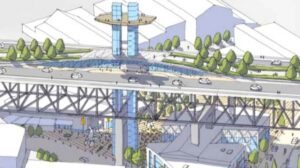
An elevator connecting the Granville Street Bridge and Granville Island was proposed as a way to improve access to the often gridlocked island that could have, in part, met Westbank’s obligations

Did Vancouver receive fair value for public land, public density and public approvals?

The architectural success of Vancouver House cannot answer that question.

The beauty of the building cannot answer it.

The prestige associated with Bjarke Ingels cannot answer it.

The Auditor General’s reports suggest that documentation was inadequate, public benefits were poorly managed and opportunities to maximize value may have been missed.

For critics such as Robert Renger and Glen Chernen, those findings validate concerns they have been raising for years.

For defenders of the project, Vancouver House remains a remarkable example of what ambitious city-building can achieve.

Perhaps both interpretations contain elements of truth.

Vancouver House is simultaneously one of Vancouver’s greatest architectural achievements and one of its most enduring political controversies. It stands as a glittering monument at the gateway to downtown —a building that transformed the skyline while raising difficult questions about governance, accountability and the relationship between public institutions and private power.

Long after debates about its twisting form have faded, those questions may prove to be the building’s most lasting legacy.