The history of the Vancouver Board of Parks and Recreation, more commonly known as the Vancouver Park Board, is in many ways the history of Vancouver.
Few public institutions have done more to shape the daily lives of residents than the elected body charged with protecting the city’s forests, beaches, community centres, gardens and public gathering places.
Long before Vancouver became celebrated for its livability, the Park Board was quietly laying the foundations for the city that would emerge — a city where parks were not an afterthought, but the framework around which neighbourhoods would grow.
For well over a century, Vancouver’s Park Board has remained one of the most cherished civic institutions anywhere in North America.
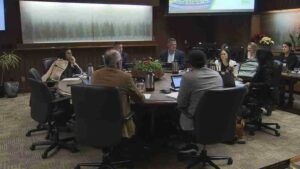 Current 2022 elected Commissioners mandated to oversee decision-making at Vancouver’s Park Board
It is one of a handful of fully elected, independent park boards across the continent, exercising powers granted under the Vancouver Charter.
While virtually every other major North American city places parks and recreation under the direct authority of city council or a municipal department, Vancouver entrusted those responsibilities to Commissioners elected directly by the public.
That institutional independence has often produced spirited political debates, occasional conflict with City Hall, and differing visions for Vancouver’s future.
Yet it has also allowed generations of Commissioners to devote themselves exclusively to parks, recreation and public space — an extraordinary civic experiment that has helped define Vancouver’s identity.
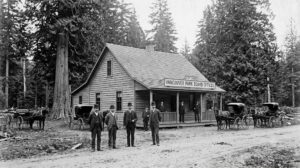
The origins of the Park Board date to 1888, only two years after Vancouver’s incorporation as a city.
The fledgling municipality recognized early on that preserving public land would be essential if the young city were to avoid the mistakes made elsewhere, where development consumed valuable waterfronts and forests before governments acted to protect them.
The Board’s original mandate was straightforward but ambitious: acquire, preserve and improve public park land for present and future generations.
Over time that mandate expanded dramatically to include playgrounds, sports fields, beaches, golf courses, marinas, swimming pools, arenas, horticulture, urban forestry, environmental stewardship, arts programming, recreation services, cultural events and, eventually, the management of one of Canada’s largest systems of community recreation centres.
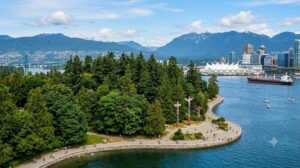
Among the Board’s earliest achievements was the preservation and stewardship of Stanley Park, which remains one of the world’s great urban parks. Commissioners oversaw improvements to trails, beaches, seawalls, gardens and recreation facilities while preserving the park’s extraordinary natural landscape.
Throughout the twentieth century the Board continued acquiring neighbourhood parks as Vancouver expanded westward and southward. Small local parks became the green hearts of emerging communities, ensuring that nearly every resident would live within walking distance of public open space.
An equally transformative chapter began after the Second World War with the emergence of Vancouver’s community centres.
Across neighbourhoods, citizens had organized independently to build and operate recreation facilities. These community centre associations were grassroots organizations, led almost entirely by volunteers. Local residents raised money, organized activities, hired instructors, operated concessions, planned events and determined programming reflecting each neighbourhood’s unique character.
In the early through mid-1950s, these independent volunteer-run community organizations commenced discussions on realizing a formal partnership with the Vancouver Park Board that rather than replace local control embraced the volunteer model. The resulting partnership became one of the most successful examples of community governance in Canada.
To this day, community centre associations continue to elect volunteer boards composed of neighbourhood residents. The Park Board supplies professional staff, access to maintenance support — although, since 2009, the City has largely failed on that front — recreation expertise and long-term capital investment.
Together, the Vancouver Park Board, and the volunteer community centre Boards of Directors have worked together — sometimes fitfully — to create community recreation facilities that are responsive to the interests of neighbourhoods throughout the city.
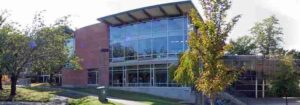
Today Vancouver’s network of community centres remains one of the city’s defining civic institutions. They are places where children learn to swim, seniors meet friends over coffee, newcomers improve their English, teenagers play basketball, families attend festivals, artists teach pottery and musicians rehearse.
Unlike private fitness clubs or exclusive recreational facilities, Vancouver’s community centres have been designed around accessibility and inclusion.
No matter one’s income, ethnicity, language, sexual identity or age, the doors remain open.
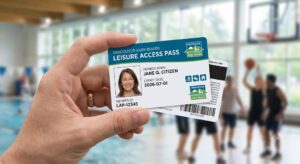
Recognizing that financial barriers should never prevent participation, the Park Board long ago developed a comprehensive concession programme offering substantially reduced fees for low-income residents.
Through what is now the Leisure Access Programme, eligible residents receive significant discounts on admission to pools, skating rinks, fitness centres and recreational programmes, ensuring that recreation remains a public good rather than a luxury.
The Vancouver Park Board had majority Non-Partisan Association (NPA) Commissioners from 1940 to 1972.
In 1972, TEAM formed a majority on Park Board, that thrived through the late 1970s, transforming governance of Vancouver’s Board of Parks and Recreation, while building a parks and recreation system that became the envy of the world.
From much of the 1980s through the late 1990s, Park Board Commissioners affiliated with the Non-Partisan Association (NPA) civic party frequently held governing majorities on the Board.
Although civic politics remained partisan, Vancouver’s Park Board focused less on ideology than on practical questions of expanding recreation services, acquiring park land and maintaining infrastructure.
Numerous Commissioners developed reputations as diligent stewards rather than ideological combatants.
Civic figures and Park Board Commssioners who made a difference, taking the job of stewards of Vancouver’s system of parks and recreation seriously and as a public trust, include such figures as Bill McCreery — who VanRamblings will write about next Monday — Allan De Genova, Ian Robertson, Don Bellamy, Christopher Richardson, Trevor Loke, George Wainborn, Libbi Davies, Art Cowie, Tim Louis, Michael Wiebe, George Puil, Donna Morgan, John Coupar, Erin Shum, Melissa De Genova, Alan Featherstonhaugh, Niki Sharma, Philip Owen, Laura McDiarmid, Aaron Jasper, Andy Livingstone, Constance Barnes, Sarah Kirby-Yung, Grace McCarthy, Stuart Mackinnon, and Sarah Blyth — among many, many other elected Park Board Commissioners — each left their own imprint, though representing different political movements and philosophies in Vancouver politics.
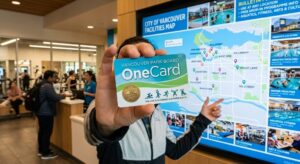
One of the most ambitious administrative reforms ever undertaken by the Park Board emerged decades later with development of the OneCard.
For years Vancouver residents were effectively members of individual community centres rather than the city-wide recreation system. Memberships, registrations and financial systems differed from one association to another.
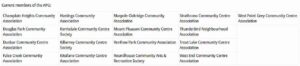
Creating a universal Park Board access card allowing residents to use any community centre, pool, rink or fitness facility across Vancouver required years of sometimes fraught negotiation, involving the Presidents of the various community centre associations, and a too often uncompromising and intractable City of Vancouver, in the form of Vancouver’s imperious City Manager, Dr. Penny Ballem.
Presidents of the various community centre associations played an indispensable role. Many understood that while local identity should remain protected, residents increasingly expected seamless access throughout the city.
The discussions were often lengthy, often contentious and politically delicate. Associations wished to preserve their independence and financial stability. Park Board leadership / Dr. Ballem sought greater “consistency” across the system.
Ultimately co-operation prevailed.
The OneCard became a symbol of a unified recreation system while preserving the volunteer governance that had served Vancouver so well for decades.
Like every democratic institution, the Park Board has experienced controversy.
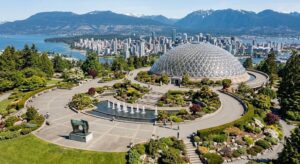
Perhaps no episode better illustrates the intensity of civic engagement than the debate surrounding the Bloedel Conservatory.
Facing financial pressures during the tenure of a Vision Vancouver majority on Park Board, in 2010 proposals emerged that contemplated closing the beloved conservatory atop Queen Elizabeth Park.
To many Vancouver residents, the Bloedel Conservatory represented far more than a greenhouse. It was a tropical sanctuary. A refuge during rainy winters. A place where generations of families introduced children to exotic birds and lush plant life.
Public opposition was immediate and passionate.
John Coupar loves Vancouver parks. In 1937, John’s father was hired as an apprentice gardener at Park Board, taking a leave to join the Canadian army in 1939. During the war, John’s father worked with the Allies on the liberation of Europe, returning to Park Board at the end of the war in 1945, where he was employed all of his working life, often taking John to the gardens and parks throughout Vancouver where he was working. When the Vision Vancouver Park Board, in 2010, threatened the closure of the Bloedel Conservatory, John — in concert with others — worked to save the Bloedel Conservatory, which he and his activist colleagues did, preserving the conservatory to this day.
Among those helping lead efforts to preserve the conservatory was future Park Board Commissioner John Coupar, working alongside community advocates, volunteers, horticultural supporters and civic organizations.
Following the 2011 civic election when he was elected to Park Board, and later as Chair of the Board following the 2014 civic election, John Coupar became one of the institution’s strongest champions. Rather than allowing closure, the Board pursued restoration, fundraising partnerships and renewed public programming.
Today the conservatory remains one of Vancouver’s treasured civic attractions.
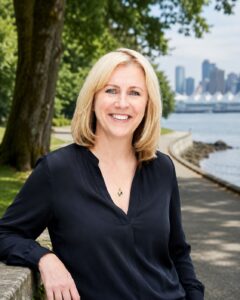 Sarah Kirby-Yung, current Vancouver City Councillor / former Park Board Commissioner / Chairperson
Another landmark achievement came through collaboration between Commissioners and senior Park Board management regarding cetaceans (whales, dolphins) in captivity at the Vancouver Aquarium.
After years of public debate, scientific evidence and changing public attitudes toward whales and dolphins in captivity, thanks to very fine work by then Chairperson of the Vancouver Park Board, Sarah Kirby-Yung, working with Park Board General Manager, the incredibly competent — and dare we say, well-loved — Malcolm Bromley, the two discovered an obscure 1923 by-law that allowed the Vancouver Park Board to adopt a policy that would ultimately end the keeping of cetaceans at the Vancouver Aquarium in Stanley Park.
Pissed off future Vancouver City Councillor Colleen Hardwick complained loud and long that “the despicable Sarah Kirby-Yung” had ignored / rejected / gone against Non-Partisan Association policy that supported whales in captivity.
F-ck Non-Partisan Association policy VanRamblings says, and do the moral thing — which an ethical, principled Sarah Kirby-Yung did, allowing The Aquarium to continue their policy of providing service and succour to whales in the open ocean, rather than in the “cages” of the Aquarium, Vancouver’s Aquarium thriving to this day without keeping cetaceans in small pool, caged captivity.
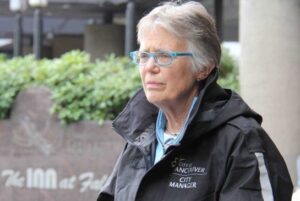 The ever-so autocratic and, dare we say, kind of nuts — but still competent — Dr. Penny Ballem.
Perhaps the most significant institutional conflict emerged during the tenure of former City Manager Dr. Penny Ballem. Historically, the Park Board General Manager functioned primarily as the senior executive accountable to the elected Commissioners. Dr. Ballem restructured Park Board such that the Park Board General Manager became an employee of the City, reporting directly to her.
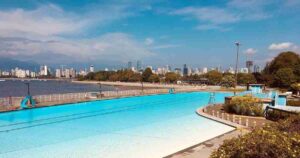
Not only that, Dr. Ballem also transferred responsibility for maintenance operations — including many park maintenance functions — to centralized City departments, which have done a piss poor job of maintaining Vancouver’s community centres, facilities and parks (lack of funding, don’tcha know, as do nothing Council after do nothing Council ignored these cherished community spaces), recently resulting in a scathing report by Vancouver Auditor General Mike Macdonnell, who found that 11 of Vancouver’s community centres are in “an advanced state of disrepair,” neglected for the past 18 years by the City and Mayors and City Councillors, as Vancouver’s public social infrastructure — community-owned recreation centres, pools, hockey rinks, golf courses, not to mention, libraries and community hubs — have eroded, many beyond repair (think: the Aquatic Centre, currently in the throes of being torn down, or Vancouver’s well-loved Kitsilano pool).
Investing in parks, libraries, and community spaces is how we reduce crime.
That’s why we’re committing 400 new frontline workers and a historic $1.35B investment in parks, recreation, and pools. pic.twitter.com/Q1mgs6SGAJ
— Kareem Allam (@kareemformayor) April 3, 2026
Which is why Vancouver Liberals’ candidate for Mayor, Kareem Allam, has emerged as the only candidate seeking office in 2026 committed to repairing, rebuilding, rejuvenating and building more neighbourhood community centres and pools across the city — including a new 50-metre pool — increasing public library hours, committed to restoring social cohesion, says Vancouver’s only ‘can-do’ candidate.
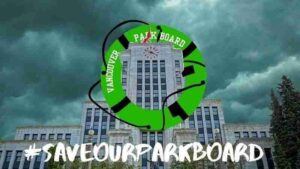
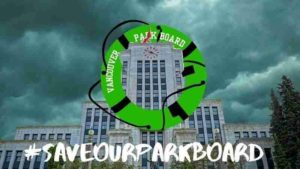
The future of the elected Park Board itself became a defining issue following the election of Mayor Ken Sim and his ABC Vancouver administration in 2022.
Mayor Sim has argued that Vancouver’s governance structure unnecessarily duplicates administrative functions and that parks should become another department reporting directly to City Council, as he envisions replacing the elected Park Board with a standing committee of an already overworked Council.
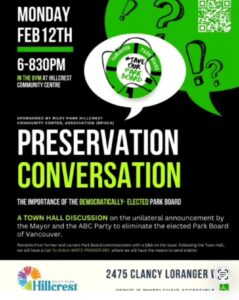 An overflow crowd attended the rally at the Hillcrest Community Centre this past February
Mayor Sim’s arguments are specious, wrong-headed, devoid of facts, an unseemly power grab based on Trump-like disinformation — not to mention which, VanRamblings is given to understand that Mayor Sim has intention of selling off park lands in Vancouver to his well-heeled billionaire friends, a topic which we will address in greater detail another day.
Fortunately, British Columbia Premier David Eby and his government have declined — and will continue to decline — to introduce legislation that would abolish the elected Park Board arising from a motion passed unanimously by ABC Vancouver Councillors, vehemently opposed by the non-affiliated Councillors.
For nearly 140 years the Vancouver Board of Parks and Recreation has acted as the steward of those shared places.
Governments will change. Political parties will rise and fall. Commissioners will come and go. Administrative structures may evolve. Yet the parks themselves endure, growing greener with each passing season, shaped by generations who believed that beauty, recreation and nature should belong to everyone.
In the end, that may be the Park Board’s greatest achievement. It has never simply managed parks. It has cultivated a way of life. In every towering cedar, every neighbourhood playground, every crowded skating rink on a winter evening, every child learning to swim, every senior lingering in the warmth of a community centre, Vancouver’s Park Board has quietly sustained the rhythm of the city itself.
For Vancouver breathes through its parks.
Vancouver’s parks are our lungs, its common ground — offering the enduring promise that amidst the pressures of urban life there will always remain places where the city pauses, and remembers who it is.