Category Archives: Politics

#VanPoli | Vancouver Needs a Ward System: Democracy Begins Where People Live

Vancouver Liberals Mayoral candidate Kareem Allam’s proposal to place a plebiscite before voters in the 2030 Vancouver municipal election asking voters / Vancouver residents — should he become Mayor on October 17 2026 — whether they would like to see the adoption of a “ward” system / that is, elect a Councillor to represent their neighbourhood or geographic area, rather than electing 10 City Councillors at-large, deserves more than a passing mention in the 2026 Vancouver municipal campaign.

This issue goes to the heart of what democracy at the municipal level is supposed to accomplish: Is a Councillor primarily accountable to an entire city, or should there be a Councillor whose first responsibility is to the people and neighbourhoods of a particular part of that city?


Kareem Allam, the Vancouver Liberals’ Mayoral candidate, has proposed establishing a Citizens’ Assembly to examine the adoption of a ward system in Vancouver.

The assembly would make recommendations and develop the question that could go before voters in 2030, with a ward system potentially taking effect for the 2034 civic election. The Vancouver Liberals say the present at-large system makes campaigns expensive and can leave neighbourhoods without direct representation.

Wards / geographic neighbourhood representation is an idea whose time has come.

Vancouver Needs a Ward System: Democracy Begins Where People Live

Vancouver is an extraordinary city, but electing City Councillors at-large is an anachronism.

Today, Vancouverites elect the Mayor and 10 Councillors at-large.

Every voter can vote for every Councillor, and every Councillor is theoretically responsible for every resident of the city.

On paper, that sounds wonderfully democratic.

In practice, it can mean the opposite.
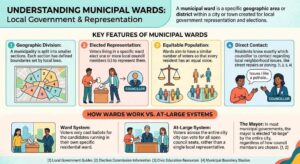
When everyone represents everyone, no one necessarily represents you.

That is the fundamental weakness of Vancouver’s at-large electoral system.

Imagine a resident in Killarney confronting a serious neighbourhood issue: a proposed development, traffic problems, inadequate pedestrian infrastructure, a community facility under threat or a local planning decision. Under the current system, that resident has 10 Councillors to whom she or he can appeal — and, paradoxically, no single Councillor whose political job is to be that neighbourhood’s representative.

Under a ward system, there would be one.

That distinction matters.

A Councillor Who Knows, Lives In and Cares About Your Neighbourhood

In the heart of the city, Vancouver’s Mount Pleasant neighbourhood, looking north towards the mountains

Consider what happens in federal and provincial politics.

If you have a problem with a federal matter, you know who your Member of Parliament is.

If you have a provincial concern, you know who your MLA is.

You may not agree with that person politically. You may never have voted for them. But you know that person is your representative.

There is a geographical relationship between citizen and elected official.

Municipal government should work the same way.

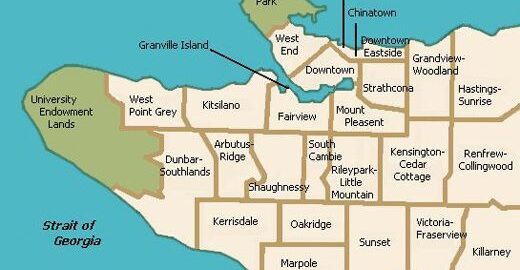
A Councillor representing, for example, a ward encompassing Hastings-Sunrise and Renfrew-Collingwood would have an obvious political responsibility to understand those communities: their transportation problems, housing pressures, parks, schools, businesses, community centres, development proposals and neighbourhood concerns.

That Councillor could hold regular constituency meetings, maintain an office, attend community-association meetings and become known to the people who live there.

Most importantly, residents would know exactly who to call.

That is accountability.

Vancouver is The Outlier: Every Other Major City in Canada Has Wards

Located in the NE part of Vancouver, the Killarney neighbourhood where ABC Councillor Mike Klassen grew up

The argument for a ward system is strengthened by looking beyond Vancouver.

Toronto elects 25 ward Councillors, with the Mayor elected city-wide.
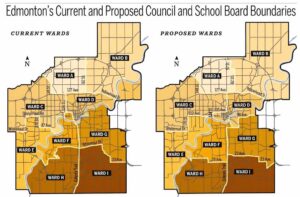
Edmonton has 12 wards and one Councillor per ward. Winnipeg has 15 wards, again with one Councillor representing each. Ottawa has 24 wards, with one Councillor elected from each and the Mayor elected at-large.

These are not small communities experimenting with an untested democratic theory. They are some of Canada’s largest municipalities.

And the principle is straightforward: the Mayor represents the entire city; Councillors represent both their communities and the city as a whole.

That is precisely the model Vancouver should consider.

It is worth correcting one point, however. It would be inaccurate to say that British Columbia is literally the only Canadian province in which large municipalities lack ward systems. Canadian provincial legislation permits different electoral arrangements, and some municipalities outside B.C. also use at-large or hybrid systems.

But Vancouver is unquestionably unusual among Canada’s major cities in continuing to elect its entire Council at-large.

And there is no compelling reason why Vancouver should remain an exception.

The At-large Election System Favours The City-Wide Political Machine

The almost always sunny Vancouver Point Grey neighbourhood, located in the western part of the city

There is another argument for wards that should not be ignored: money.

Running for one of 10 city-wide Council positions is enormously different from campaigning in a defined geographical constituency.

An at-large candidate must communicate with hundreds of thousands of voters across Vancouver. That requires money, organization, name recognition, volunteers and often the support of a political party or electoral slate.

A ward campaign would be different.

A candidate could concentrate on 50,000 or 60,000 residents rather than the entire city.

That opens the door to people who do not have the financial resources, political connections or city-wide name recognition required to mount an effective at-large campaign.

It could make civic politics more accessible to community activists, small-business owners, renters, neighbourhood advocates, younger candidates and people who have spent years working in their communities but have never contemplated a city-wide campaign.

In that respect, wards could actually democratize Vancouver politics.

Every Vancouver Councillor Must Have a Neighbourhood Constituency

Vancouver’s east side Grandview-Woodland neighbourhood, home to a thriving retail Commercial Drive

Critics of ward systems argue that Councillors should think about the entire city.

Of course they should.

A ward Councillor would still vote on the city budget, transportation policy, housing, policing, parks, taxation, climate policy and every other issue before Council.

But representing a ward does not mean abandoning the city.

It means bringing a particular community’s perspective into the debate.

Indeed, a Council composed of geographically accountable representatives could arguably produce better city-wide decisions, because Councillors would arrive at the table with a deeper understanding of the communities affected by those decisions.

Vancouver is not one homogeneous city.

The concerns of Downtown are not identical to those of Kerrisdale.

Killarney is not Kitsilano.

Marpole is not Mount Pleasant.

Renfrew-Collingwood is not the West End.

That diversity should be reflected in the composition of City Council.

Elect a Mayor At-Large + 10 Councillors Representing Wards Makes Sense

Osler Street in the Shaughnessy neighbourhood, Vancouver’s richest and most well-heeled neighbourhood

Kareem Allam has not proposed simply drawing 10 arbitrary lines across Vancouver. His proposal is to establish a Citizens’ Assembly that would examine the question and make recommendations.

That is precisely the right approach.

The neighbourhood groupings suggested for discussion provide a starting point:

  • Hastings-Sunrise / Renfrew-Collingwood
  • Grandview-Woodland / Kensington-Cedar Cottage
  • Riley Park / Mount Pleasant
  • Chinatown / Strathcona / Downtown / West End
  • Fairview / Kitsilano
  • Point Grey / Dunbar-Southlands
  • Arbutus Ridge / Shaughnessy
  • South Cambie / Oakridge
  • Kerrisdale / Marpole
  • Sunset / Victoria-Fraserview / Killarney

These should not be treated as predetermined boundaries. Population equality, communities of interest, natural boundaries, transportation patterns, neighbourhood identities and future population growth would all have to be considered.

Toronto’s ward-boundary process, for example, explicitly considered population equality, communities of interest, neighbourhoods, history and physical or natural features.

That is precisely the kind of independent, evidence-based process Vancouver needs.

Creating a Citizens’ Assembly is Critical to Adopting a Ward System
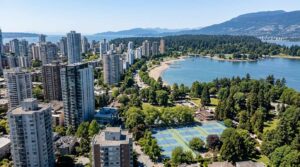
Vancouver’s West End neighbourhood, incorporating towers, tennis courts, English Bay and Stanley Park

The beauty of Kareem Allam’s proposal is that he is not saying: Elect me and I will impose 10 wards.

He is saying: let Vancouverites study the question first.

That distinction matters.

A Citizens’ Assembly could hear from constitutional and municipal-government experts, community associations, Indigenous representatives, political scientists, former Councillors, election administrators and ordinary residents.

It could examine ward sizes, boundaries, the number of Councillors, campaign financing, representation of renters and homeowners, population growth and whether a hybrid system might work better than a pure ward system.

Then, in 2030, Vancouverites could decide.

That gives the proposal democratic legitimacy.

Electing  Vancouver’s Mayor Through The At-Large System Should Remain
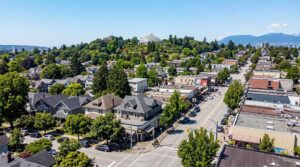
Vancouver’s welcoming, family friendly east side Riley Park neighbourhood, bounded by 16th Avenue to the north, 41st Avenue to the south, Cambie Street to the west, and Fraser Street to the east

There is a strong argument for retaining a city-wide Mayor.

The Mayor is the one elected official whose mandate should encompass the entire city.

The Councillor’s job is different.

The Mayor should speak for Vancouver.

The Councillor should speak for Vancouver, and for their respective neighbourhoods.
That creates a healthy balance between city-wide leadership and local accountability.

It is already the model used in Edmonton and Ottawa, among other cities. Edmonton explicitly describes its system this way: the Mayor is elected by all Edmontonians, while Councillors are elected by voters in their individual wards.

Why shouldn’t Vancouver do the same?

Changing the Vancouver Charter: The Province Can Accommodate Wards

Vancouver’s east side Victoria-Fraserview neighbourhood, current home to ABC Councillor Mike Klassen and the love of his life, Stacey, Mike’s lovely bride, who together celebrated 28 years of marriage in July

There is an important misconception about this debate.

The Vancouver Charter already contemplates Councillors being elected on a neighbourhood-constituency basis.

Section 138 currently provides that Councillors are elected at-large unless Council adopts a by-law establishing neighbourhood constituencies. Such a by-law must receive approval from the Lieutenant Governor in Council before it can take effect.

In other words, the idea of geographically based representation is not foreign to Vancouver’s governing legislation.

The Province ultimately has the authority to approve the change.

The Vancouver Charter is provincial legislation, and the Province describes it as the statute that governs Vancouver’s structure, elections and principal municipal powers.

So, Kareem Allam’s proposal would ultimately require co-operation between Vancouver and Victoria.

That is entirely appropriate.

A Better, More Representative Democracy in Vancouver is Worth Pursuing

Dunbar, one of Vancouver’s oldest west side neighbourhoods, adjacent to the University of British Columbia

There is no electoral system that guarantees perfect representation.

Ward Councillors can become overly parochial. They can favour their own neighbourhood at the expense of the wider city. Boundary-drawing can become contentious. Population changes can make wards unequal unless boundaries are periodically reviewed.

These are arguments for designing a good ward system — not preserving a flawed one.

Toronto has undertaken independent ward reviews specifically because population growth can make some wards substantially larger than others.

Vancouver can learn from Toronto, Ottawa, Edmonton, Winnipeg and other municipalities.

The central question is remarkably simple:

When a Vancouver resident has a problem with City Hall, a citizen should be able to look at a map, identify their Councillor and say, “That’s my representative”?
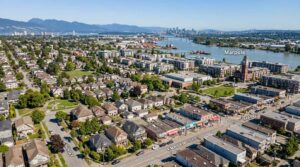
The Sunset and Marpole neighbourhoods of Vancouver, the Sunset neighbourhood home to Vancouver’s thriving Indo-Canadian population, Marpole bounded by the Fraser River, British Columbia’s longest river, to the south

The answer should be yes.

For too long, Vancouver has treated city-wide elections as synonymous with democracy.

But democracy is not merely the ability to vote for 10 Councillors.

Democracy is also representation, accessibility, accountability and proximity.

A ward system would bring City Hall closer to the people it serves.

It would give neighbourhoods a recognizable voice.

It could lower the barriers to entering municipal politics.

It could make Councillors more accountable to their constituents.

And it could ensure when a resident knocks on the door of City Hall, there is a Councillor whose political responsibility begins with the community where s/he lives.

Kareem Allam is right to put the question on the table.

The final decision should not belong to Kareem Allam, COPE, OneCity, ABC, TEAM, Vote Vancouver, the Greens, the Vancouver Liberals or any other political organization.

The decision on whether to adopt a ward system must belong to Vancouver’s citizens.

Let the Citizens’ Assembly do its work. Let the experts and residents debate the alternatives. Draw fair and transparent boundaries. And then let Vancouverites vote.

If, in 2030, the people of Vancouver decide that they want Councillors who actually represent where they live, then the 2034 election should mark the beginning of a new era in Vancouver democracy.

The city should elect its Mayor at-large. But those of us who live in one of Vancouver’s 23 neighbourhoods deserve Councillors of our own to represent our voices at City Hall.
Ken Sim’s Vancouver:
$13.4 Million in FIFA Tickets for ‘Friends’, Rather Than Installing Barriers on the Granville Street Bridge

There are moments in public life when a government decision tells you almost everything you need to know about its priorities.

Vancouver Mayor Ken Sim’s ABC Vancouver has provided one of those moments.

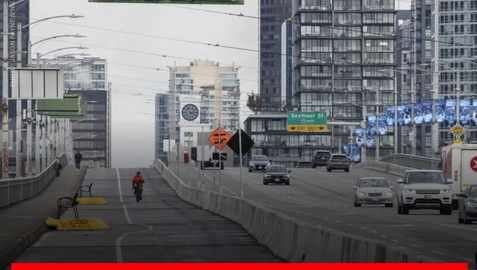
For years, the City has known that the Granville Street Bridge is a suicide hotspot.

For years, health professionals, suicide-prevention advocates, first responders and community members have urged Vancouver City Hall to install barriers that could prevent people in moments of acute crisis from making an irreversible decision.

And for years, Vancouver City Hall has delayed, deferred, postponed.

In March of this year, ABC Vancouver Councillors voted to remove funding for Granville Bridge suicide-prevention barriers from the 2027–2030 Capital Plan. The decision prompted the Crisis Centre of BC to accuse Council of failing to act on an established, evidence-based method of saving lives.

That is an astonishing decision when placed beside the City’s enthusiasm for FIFA World Cup hospitality.

Vancouver set aside $13.4 million for FIFA tickets, suites and lounges, purchased through FIFA contractor On Location. The City says the packages were intended to be resold through a commercial sponsorship programme to help offset World Cup costs.

So, to be fair, this is not literally a case of Ken Sim handing $13.4 million worth of tickets to his friends.

But the contrast is nevertheless devastating.

Ken SIm can find millions for hospitality packages whose resale prospects remain commercially confidential. Yet when the subject is installing physical barriers on a bridge where people have repeatedly died, ABC Vancouver’s City Hall answer is delay, cost-sharing and another study.

What kind of municipal government does that, makes those choices?

The health community across Metro Vancouver has been remarkably blunt.

Dr. Brandon Yau, Medical Health Officer with Vancouver Coastal Health, told Vancouver City Council that “suicide deaths from this bridge are preventable tragedies.” He described means prevention as an “established, evidence-based approach” and called the barriers “critical, life-saving infrastructure.”

The statistics are chilling.

The Crisis Centre says Granville Bridge has averaged approximately 2.6 suicide deaths a year. Since 2019, there have been more than 20 incidents involving people in distress on the bridge.

And there is something else City Hall cannot plausibly claim it does not know.

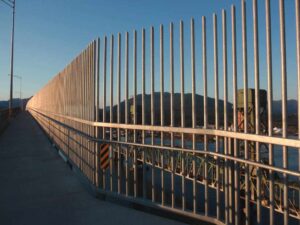
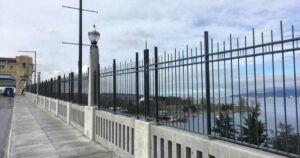
Suicide prevention barriers were installed on the Burrard Street Bridge in 2017. There have been no known deaths on the Burrard Street Bridge since the barriers were erected.

Since barriers were installed on the Burrard Street Bridge in 2017, there have been no known suicide deaths. Similar means-prevention fencing was installed on the Ironworkers Memorial Bridge in 2015, with the same striking result.

Suicide prevention barriers were installed on the Ironworkers Memorial Bridge, by the province, in 2015. There have been no deaths on the bridge since the barriers were erected.

Vancouver’s own 2024 Council documentation cited research finding that physical barriers at bridges are associated with a 93% reduction in suicide deaths.

Do the arithmetic.

If Granville Bridge continues to average roughly 2.6 suicide deaths annually, a reduction of that magnitude would translate into the potential prevention of approximately 2.4 deaths per year. Over a decade, that is roughly 24 lives.

Nobody can honestly promise that exactly 24 people would be saved.

Suicide prevention statistics do not work that way. But neither can anyone honestly pretend that the potential lifesaving effect is trivial.

This is not theoretical.

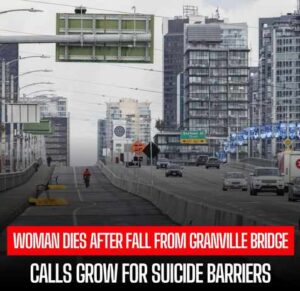
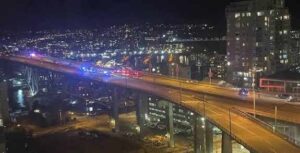
In May, a woman died after a 9-hour standoff on the Granville Bridge.

Police told media at the time, officers spent several hours trying to communicate with the woman after reports she was standing outside the bridge railing Tuesday afternoon, May 14th. She later fell from the bridge just after midnight.

Mental health advocates say the death was preventable, stepping up their campaign to have governments fund safety barriers for the bridge.

According to Vancouver Police, there were 21 incidents involving people at risk of jumping from the bridge in 2024, followed by 25 more in 2025.

Advocates also point out there have reportedly been no deaths by suicide from Burrard Street Bridge since protective fencing was installed there in 2017.

The Independent Investigations Office launched an incident investigation.

The Crisis Centre subsequently wrote to Mayor Sim and Vancouver Council that the death was preventable — and that the suffering endured by her family, first responders, nearby residents and witnesses was preventable as well.

Stacy Ashton, executive director of the Crisis Centre, has repeatedly emphasized the fundamental principle behind bridge barriers: they create time.

A person in suicidal crisis may not be making a settled, rational decision about the rest of their life. A barrier interrupts the crisis. It creates an opportunity for intervention. It gives police, firefighters, paramedics, crisis workers or members of the public time to reach the person.

Ashton put the issue bluntly:

“The importance of a suicide bridge barrier is that we know that they work and that they save lives.”

That should have been enough.

Apparently, it wasn’t.

The argument from Ken Sim’s City Hall is that the project needs more design work, that the total construction cost has not yet been confirmed and that senior governments should contribute. Those are legitimate administrative considerations.

In June, Council voted unanimously, reaffirming its commitment to barriers, asking staff to accelerate design, costing and discussions with Ottawa and Victoria.

But that only makes the March decision all that more difficult to understand.

The City of Vancouver has already spent $300,000 on conceptual design and costing. Council itself had acknowledged the urgency. The health community had supplied the evidence. The Burrard Street Bridge had supplied the real-world proof.

And still, actual construction funding was removed.

Meanwhile, Vancouver’s FIFA operation paid millions for hospitality packages.

This is where the issue ceases to be merely about infrastructure.

It becomes a question of what Ken Sims’ City Hall considers essential.

A barrier that may prevent a Vancouver resident from dying is not a luxury.

It is not an amenity.

It is not an optional beautification project.

It is public safety.

The Crisis Centre has described suicide-prevention barriers as “lifesaving.”

That is precisely what they are.

Mayor Ken Sim’s ABC administration has spent much of its political life talking about public safety. It has made public safety a central theme of its political messaging. Public safety must mean more than policing, bylaws and political slogans.

It must also mean protecting people at their most vulnerable.

A Vancouver municipal government that can find millions for the World Cup but cannot immediately find the money necessary to protect people at a known suicide hotspot has a serious problem with priorities.

This is not an argument against FIFA.

It is an argument against an inhumane municipal government with skewed priorities that appears to understand urgency when the subject is a global sporting spectacle, but discovers fiscal caution when the subject is preventing suicide.

The people contemplating suicide on Granville Bridge do not have corporate sponsors. They do not sit in hospitality suites. They do not buy VIP packages.

They are human beings in crisis.

Their families are human beings.

The firefighters and police officers rescuing vulnerable lives are human beings.

The residents watching these tragedies unfold nearby are human beings.

And they, we all, deserve a government that understands that saving even one life is worth more than any hospitality package, and any political spectacle.

Mayor Ken Sim likes to talk about Vancouver becoming a world-class city.

A world-class city is not measured by how many FIFA suites it can afford.

It is measured by how it treats people when they are most vulnerable.

On the Granville Street Bridge, Vancouver has known what needs to be done.

The evidence is overwhelming.

The health professionals have spoken.

The Crisis Centre has spoken.

The families have spoken.

The bridge itself has spoken, through the lives already lost.

Vancouver City Hall needs to listen. But will City Hall listen if Ken Sim is re-elected with a majority ABC Vancouver administration?

The question is no longer whether barriers can save lives.

The question is how many more Vancouverites must die before Mayor Ken Sim and his ABC Vancouver administration decide that saving them is an urgent enough priority for them to act?

Perhaps the answer is to …

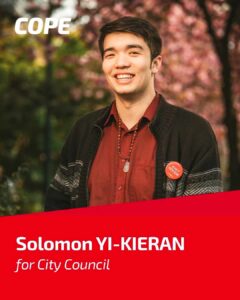
#VanPoli | VOTE for Solomon Yi-Kieran | A New Generation Steps Forward in Vancouver

At a time when municipal politics can sometimes look like an old person’s game, Solomon Yi-Kieran represents something Vancouver badly needs: a younger generation prepared not merely to complain about politics, but to enter the arena and try to change it.

Power structures across the country are often dominated by older cohorts, leaving younger residents feeling that the issues directly shaping their futures — from soaring living costs to climate resilience — are addressed with passive incrementalism rather than urgency. It is precisely why having young leaders come forward to run for elected office is so critical.

Young candidates bring a essential perspective to local government. They carry the lived experience of navigating today’s acute housing crisis, reliance on public transit, and the precarity of the modern economy. Rather than viewing policies through abstract statistics, young representatives experience the direct impact of municipal decisions every day.

At 20 years old, Yi-Kieran — who identifies as they/them — represents a rising generation of community organizers who refuse to wait on the sidelines.

Stepping up to bring that exact energy and perspective to local government is Solomon Yi-Kieran is running for Vancouver City Council with the The Coalition of Progressive Electors (COPE) in the October 17 municipal election. Still in their early 20s, they are among the youngest candidates seeking a seat on Council — and their résumé is already unusually substantial for someone so young.

Yi-Kieran graduated from Glenlyon Norfolk School in Victoria in 2023. While still in high school, they were accepted into Oxford University’s history and politics programme, but ultimately chose to attend the University of British Columbia.

At the University of British Columbia, Yi-Kieran is an Arts student studying History and Linguistics, with a particular interest in history and education. They have said their long-term ambition is to become a high-school history teacher.

Their political education, however, has taken place as much outside the classroom as inside it.

Despite their young age, Yi-Kieran already boasts a track record as a public advocate and student leader. Yi-Kieran has been deeply involved in UBC student politics, serving as a student senator and, more recently, as Vice-President External Affairs of the Alma Mater Society, representing more than 61,000 undergraduate and graduate students.

Yi-Kieran has advocated for improved accessibility and academic accommodations, recorded lectures, affordable student housing, greater financial assistance and more transparent university governance.


Their activism extends beyond campus.

Yi-Kieran has worked with the BC NDP, participated in campaigns involving affordable sexual-health services and humanitarian assistance, and organized advocacy for a federal Youth Climate Corps. That campaign ultimately helped secure $40 million for youth climate employment.

Yi-Kieran’s background in activism is rooted in tangible, grassroots organizers’ campaigns:

  • Public Transit Expansion: As AMS VP External, they spearheaded the high-profile campaign to extend the Millennium Line SkyTrain route directly to UBC, organizing rallies and leading a petition that gathered over 15,000 signatures to press provincial and municipal governments into action.

  • Student & Tenant Advocacy: They have consistently organized around tenant rights, pushing for tenant protections in student residence housing and lobbying for increased non-market and below-market housing options in the University Endowment Lands.

  • Climate & Youth Empowerment: Through coalition work with student unions across British Columbia, Yi-Kieran campaigned for the establishment of a national Youth Climate Corps.

Running on the progressive COPE platform, Yi-Kieran’s Council campaign focuses on systemic challenges:

  1. Housing Affordability & Tenant Protection: Expanding non-market, social, and co-op housing, alongside strong rent-control protections to keep renters from being priced out of Vancouver.

  2. Public Transit & Infrastructure: Accelerating major regional transit extensions like the UBC SkyTrain corridor and ensuring accessible, frequent municipal transit options.

  3. Climate Action & Green Jobs: Supporting local climate initiatives, including clean energy transitions and workforce opportunities for young people in sustainability.

  4. Labour & Accessibility Reforms: Championing worker rights, accessibility accommodations, and transparent civic governance that invites broader public participation.

Yi-Kieran’s campaign offers Vancouver voters a chance to bring a fresh, community-driven voice to Vancouver City Hall — one that understands the pressing realities facing the city’s youth, renters, and working residents.

Perhaps their most visible campaign has been the fight for a SkyTrain extension to UBC. As AMS vice-president external, Yi-Kieran spearheaded a petition that gathered more than 10,000 signatures and pressed provincial and federal governments to move forward on the long-promised project.

Now Yi-Kieran wants to take that activism to Vancouver City Hall.

There is a tendency on the left to approach issues on a macro scale, to fight for systemic change that makes a difference for the better in the lives of groups of our disenfranchised population, whose voices are neither heard nor respected.

Sometimes in such a circumstance, there is a tendency to lose touch with the individual needs of members of the community, of families, of Vancouver’s new immigrant or ethnic populations, of individual seniors and students.

From VanRamblings’ personal experience, we are here to tell you that in addition to working on a macro scale for systemic change, Solomon Yi-Kieran also connects — really connects — on a micro scale, that is, they see you, feel you, empathize with you, hear your concerns, and will work with you one-on-one to make the conditions of your life better, to work with you to resolve your issues of concern.

Something else to mention about Solomon Yi-Kieran, for which again we have first hand salutary experience: Solomon is kind.

Sadly, a commodity in short supply in politics.

In an era where political discourse is often dominated by divisiveness, hostility, and polarization, the concept of kindness might seem quaint or naïve.

When we examine the foundational purpose of politics — the organization of society for the common good — kindness emerges as a practical and necessary value.

At its core, kindness represents empathy, respect, and a genuine concern for others. When woven into the fabric of political practices, kindness fosters collaboration, promotes inclusivity, and enables the pursuit of justice and equality.

When you cast your ballot for Solomon Yi-Kieran this October, and when they are elected to Vancouver City Council, you will come to find that there is no stronger advocate for you on City Council than Solomon Yi-Kieran, whose boundless energy, heartbreaking intelligence, inspiring presence in your life, and dedication to improving the conditions of your life will always be the driving force and central feature of their time in municipal governance at Vancouver City Hall.

Their platform emphasizes affordable housing, rents, better and eventually free public transit, government transparency and accountability, and making Vancouver a city in which young people can afford to build a life. They have called for reviving the City’s Renters Office, and establishing a climate defense strategy.


Solomon has emerged as one of COPE’s leading voices opposing proposed artificial-intelligence data centres in Vancouver, calling for a moratorium until their environmental, water, electricity, employment and privacy implications are properly understood.

But Yi-Kieran’s candidacy is about more than any particular policy.

Canadian politics — and especially municipal politics — can become dominated by people who have been around for decades. Experience matters, certainly. But so does having people in government who will live with the consequences of today’s decisions for another 50 or 60 years.

Young politicians bring a different perspective. They experience the housing crisis as renters rather than homeowners. They depend upon public transit. They confront the realities of precarious employment, student debt, climate change and an increasingly digital economy firsthand.

Yi-Kieran’s campaign offers Vancouver voters a chance to bring a fresh, community-driven voice to City Hall — one that understands the pressing realities facing the city’s youth, renters, and working residents.

They also bring something politics desperately needs: a sense of urgency.

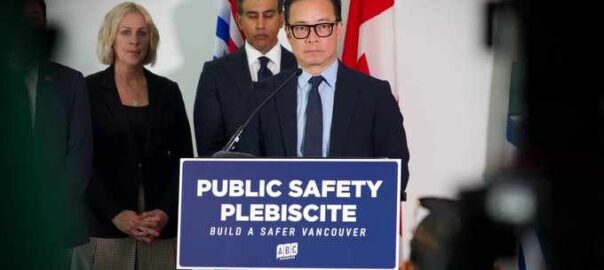
Ken Sim’s $550,000 Question: Is Vancouver’s Public-Safety Plebiscite Really About Governing?

There are few issues more important to Vancouver than public safety, open-air drug use and the city’s increasingly desperate struggle to respond to addiction and severe mental illness.

That is precisely why Mayor Ken Sim and his ABC Vancouver majority on City Council should be held to a higher standard than the one they have set for themselves in putting two non-binding plebiscite questions on the October 17 municipal election ballot.

The questions concern matters on which every Vancouverite has an opinion.

Plebiscite Questions

  • Open-Air Drug Use: Asks voters if they support the city strengthening its laws and bylaws to forbid open-air hard drug use (such as fentanyl, crack, meth, and heroin) in public spaces.
  • Involuntary Care Beds: Asks voters if Vancouver should formally request that the provincial government provide over 100 voluntary and involuntary mental health and addiction treatment beds within the city, specifically referencing the St. Paul’s Hospital site

The first asks whether voters support strengthening the city’s laws and bylaws to forbid open-air use of hard drugs — including fentanyl, crack, methamphetamine and heroin — in public spaces.

The second asks whether Vancouver should formally request that the provincial government establish a secure medical facility with more than 100 voluntary and involuntary mental-health and addiction treatment beds, potentially at portions of the former St. Paul’s Hospital site.

The questions passed during the emergency Council meeting held this past Thursday, August 13th, occurred amidst heated opposition.

Councillors Pete Fry (the Greens) and Sean Orr (COPE) walked out of the impromptu Council meeting in protest, while Lucy Maloney (OneCity Vancouver) remained in chambers and voted no.

Why, after nearly four years in office, does Mayor Ken Sim and his ABC Vancouver majority need a $400,000-to-$550,000 election-day plebiscite, roughly 4% to 6% the municipal election budget?

That is the question voters should be asking.

What Vancouver’s 2026 Mayoral Candidates Have to Say

The Mayoral candidates have exposed the political calculation differently.

Kareem Allam, the Vancouver Liberals candidate and Sim’s former chief of staff, has been particularly blunt. Allam argues that residents do not need another survey; they need a city government that actually acts. His central criticism is that Sim is spending public money asking permission to do things City Council can already pursue and that the Mayor can already raise directly with Premier David Eby.

Kareem Allam rejected Ken Sim’s public-safety plebiscite outright, calling it political theatre rather than a solution to Vancouver’s public safety issues.

Allam’s argument: Vancouverites do not need another survey about public safety.

“The people of Vancouver need a municipal government that actually delivers results. Ken Sim has had four years to address public safety and rather than conditions improving they have deteriorated.”

Allam also sees the plebiscite as a distraction from ABC’s record, describing Sim’s 2026 campaign as effectively “campaigning against his 2022 campaign.” Allam also questioned the wisdom of holding a referendum on matters that extend beyond the city’s jurisdiction and mandate, his most pointed criticism that …

“The Mayor’s job is about governing not campaigning: if Sim believes open-air drug use must be prohibited and Vancouver needs substantially more treatment capacity, the Mayor should use the powers and political relationships he already possesses rather than spend hundreds of thousands of dollars asking voters a non-binding question.”

Allam: “Residents don’t need another survey. They need a city that works.”

That is a devastating criticism precisely because it comes from someone who knows how Sim’s administration operates.

In a statement released following the plebiscite vote, COPE Mayoral candidate Stephanie Allen suggested there is public drug use …

“Because predators are being given free rein to kick people out of their homes for money for profit, abuse children, or sell poison drugs. If we want real public safety in Vancouver, we need to crack down on predators in our communities, both in the mansions and in the streets.”

Allen was sharply critical of Mayor Ken Sim and ABC Vancouver’s decision to spend as much as $550,000 putting two non-binding public-safety questions on the October 17 municipal-election ballot, characterizing it as an “expensive re-election gimmick” designed to “scapegoat the vulnerable” and distract Vancouverites from the record of the Sim administration.

Allen went on to say that …

“Ken Sim has had four years — and an overwhelming Council majority — to act on public safety, mental-health and addiction issues,” she told The Tyee. “Governments should address poverty and the mental-health and addictions crisis directly, while also drawing attention to less visible forms of violence, including gender-based violence,” describing public safety as a political “football” that can obscure the deeper social problems producing street disorder.

Allen isn’t arguing that Vancouver should simply tolerate open-air drug use.

Rather, she is challenging ABC’s method and motives.

Allen’s position is essentially: if ABC believes these measures are necessary, why hasn’t it acted during the four years it has controlled City Hall?

Pete Fry, the Green Party candidate and one of the Councillors who walked out of the emergency meeting in protest, has likewise challenged ABC’s approach to public safety. Fry’s broader position is that Vancouver’s problems require municipal leadership that combines enforcement with housing, mental-health and social services rather than reducing public safety to policing alone.

Fry’s objection is not to safer streets; it is to the false choice ABC presents between public safety and more comprehensive solutions.

Colleen Hardwick, a Mayoral candidate for TEAM for a Livable Vancouver, strongly opposes Mayor Ken Sim’s proposed public safety plebiscite, dismissing it as a costly political stunt and an expensive re-election gimmick.

Key Stances from Colleen Hardwick

  • Waste of Public Funds: Hardwick criticized the plebiscite — which is estimated to cost about half a million dollars — as an unnecessary distraction.
  • Ineffective Leadership: She stated that Sim and his ABC Vancouver majority had four years to address the addictions and public safety crisis but failed to deliver meaningful solutions.
  • Recovery-Oriented Approach: Instead of short-term political theatre regarding open-air drug use, Hardwick advocates for serious, lasting solutions focused on recovery and livability.
  • Council Authority: Echoing broader criticisms following the approval of the Vancouver public safety plebiscite, opponents note that the city already has the authority to adjust bylaws and address these issues without spending public money on a non-binding ballot question.

Colleen Hardwick, running again for TEAM for a Livable Vancouver, brings a different critique. Hardwick has repeatedly argued that municipalities must concentrate on their actual jurisdiction and that politicians should resist simplistic answers to complicated problems. As she has observed in discussing the Downtown Eastside and public safety, politicians can exploit fear and anger because frightened voters turn out. Her warning is especially relevant here: complex problems cannot be solved by slogans.

Rebecca Bligh, running for Mayor with Vote Vancouver after being expelled from the ABC caucus, has emphasized that public safety must extend beyond a purely reactive police response. She argues for embedded health services, supportive housing and less bureaucratic access to addiction and mental-health care. Her position is particularly significant because she once sat inside Sim’s governing coalition and now offers an alternative to its approach.

“If Ken Sim wanted to do something about improving public safety, he could have done so as Mayor, Police Chair, and head of a majority Council. Instead, Vancouver has suffered a failure of leadership. Ken Sim has joined successive mayors and councils in doing too little for too long.

In case Ken Sim doesn’t know: strengthening the City’s laws is literally the Mayor’s job. A plebiscite to ‘strengthen the City of Vancouver’s laws’ to tackle open air drug use is pure political theatre – he’s making grand claims that he can’t execute and playing politics with people’s lives as a stunt.”

And William Azaroff, the OneCity Vancouver Mayoral candidate, has positioned himself as part of a broader progressive challenge to Sim, emphasizing housing, community and social supports rather than the punitive politics that ABC has increasingly embraced.

OneCity’s approach rejects the notion that public safety can be separated from homelessness, poverty, housing and access to treatment.

None of these candidates is proposing that Vancouver simply tolerate dangerous public behaviour.

That is the straw man ABC needs voters to believe.

The City of Vancouver Deserves Governing, Not Campaigning

There is a legitimate public-safety crisis in Vancouver. Pretending otherwise would be irresponsible.

But exploiting that crisis politically is equally irresponsible.

If Ken Sim believes public drug use should be prohibited, he should tell Vancouverites exactly how he intends to do it.

If he believes Vancouver needs 100-plus involuntary treatment beds, he should sit down with the premier and negotiate the agreement.

If he believes the old St. Paul’s site is appropriate, he should explain how a property already sold for redevelopment would be made available.

And if he believes these matters are urgent, he should have been doing all of this during the past four years — not two months before an election.

The $550,000 plebiscite is not the solution to Vancouver’s public-safety crisis.

It is a symptom of a government that has discovered, very late in its mandate, that asking voters whether they want something is considerably easier than actually delivering it.

Vancouverites deserve safer streets. They deserve treatment beds. They deserve a serious response to addiction and mental illness.

Most of all, they deserve a government capable of governing.

A Question Without A Policy: Ken Sim Doesn’t Know What He’s Doing

The first question asked in the plebiscite is perhaps the most revealing.

Voters are being asked whether they want Vancouver to “strengthen its laws” to prohibit public consumption of hard drugs.

But which laws?

When asked what specific bylaws ABC intends to change, Sim reportedly could not provide an answer. His response was essentially that the city would look at the laws after the plebiscite.

That turns democratic consultation upside down.

Normally, government proposes a policy, explains what it will do, tells citizens what it will cost and then asks elected representatives — or voters — to approve it.

Here, ABC is asking voters to approve a concept without telling them precisely what the concept means.

Worse, open-air drug consumption is not simply a municipal-policy vacuum waiting for Ken Sim to fill. Criminal law, prosecution, health care and much of the regulation of controlled substances lie with the federal and provincial governments. The province’s three-year decriminalization experiment has already ended, and small-quantity possession is once again illegal.

If the Mayor believes Vancouver needs stronger municipal enforcement against public drug use, he has had four years to bring forward a concrete bylaw.

For four years Mayor Ken Sim has enjoyed a bullet-proof Council majority.

As a Mayor with a Council majority, Sim has the authority to propose legislation.

What exactly has prevented him from acting?

On October 17th, voters will have the opportunity to decide whether Ken Sim and his team of  ABC Vancouver City Councillors have done their job.

Two non-binding questions costing half a million dollars should not be allowed to substitute for the answer.