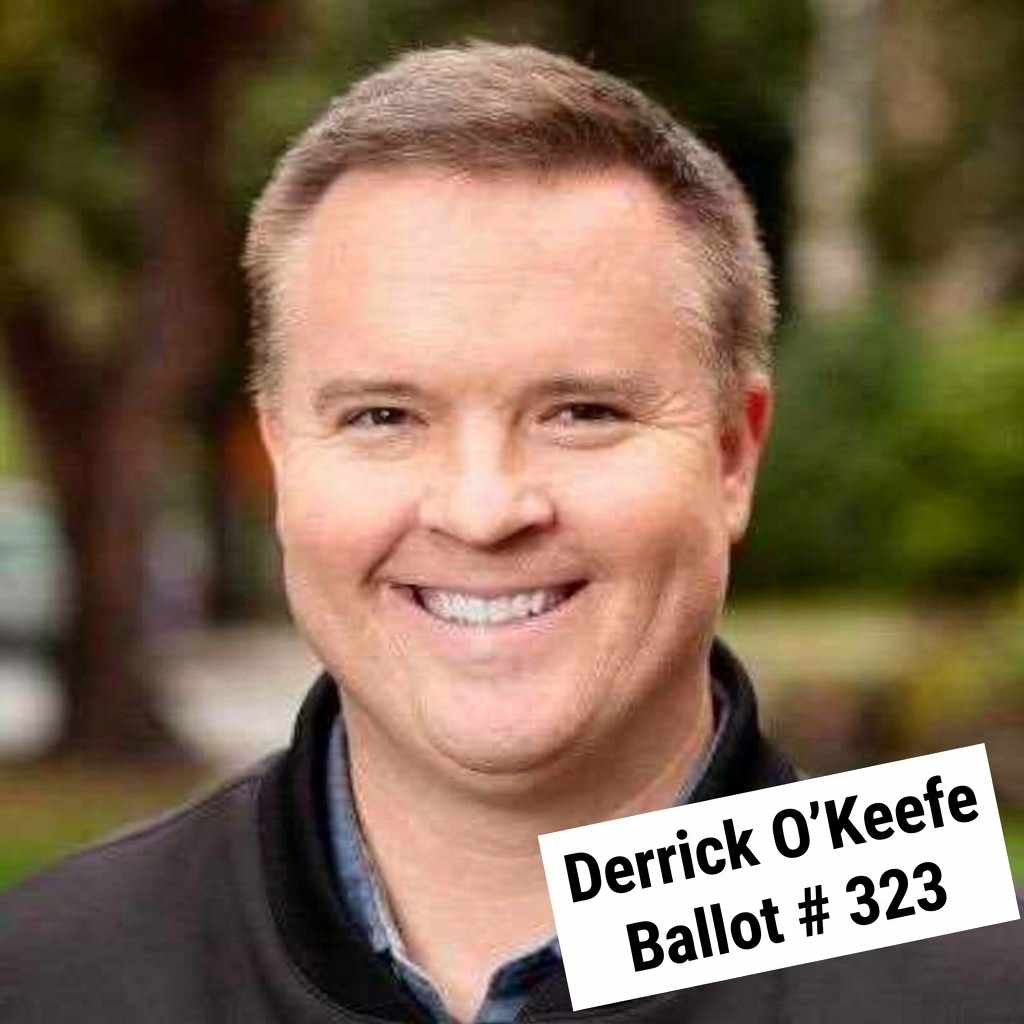
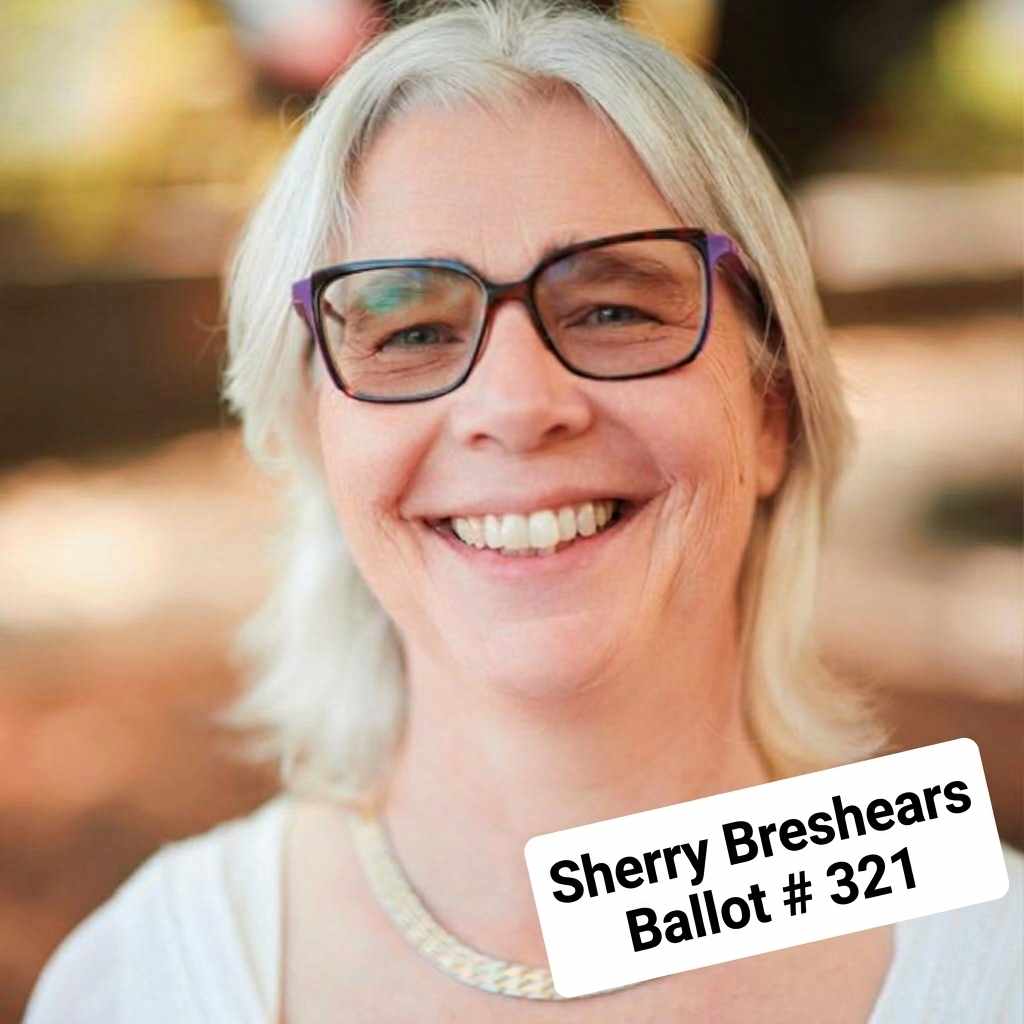
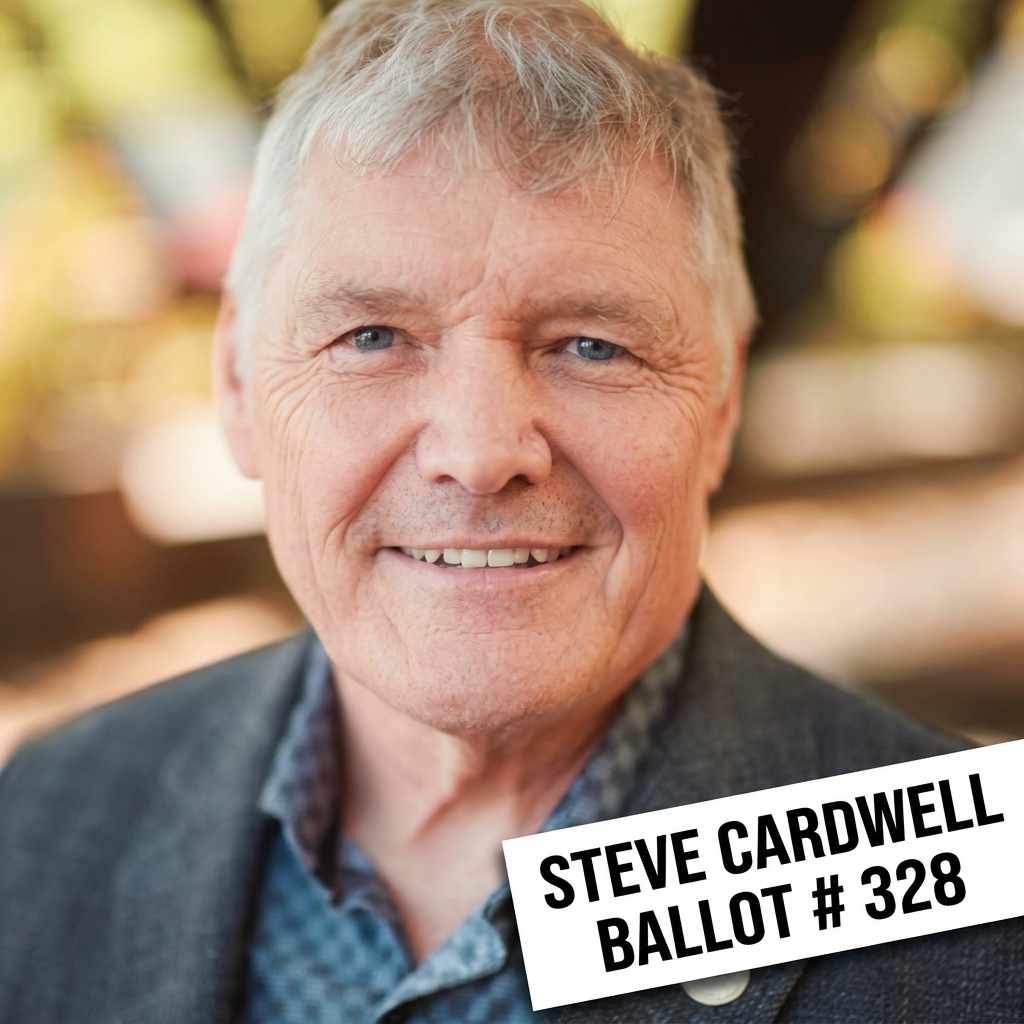
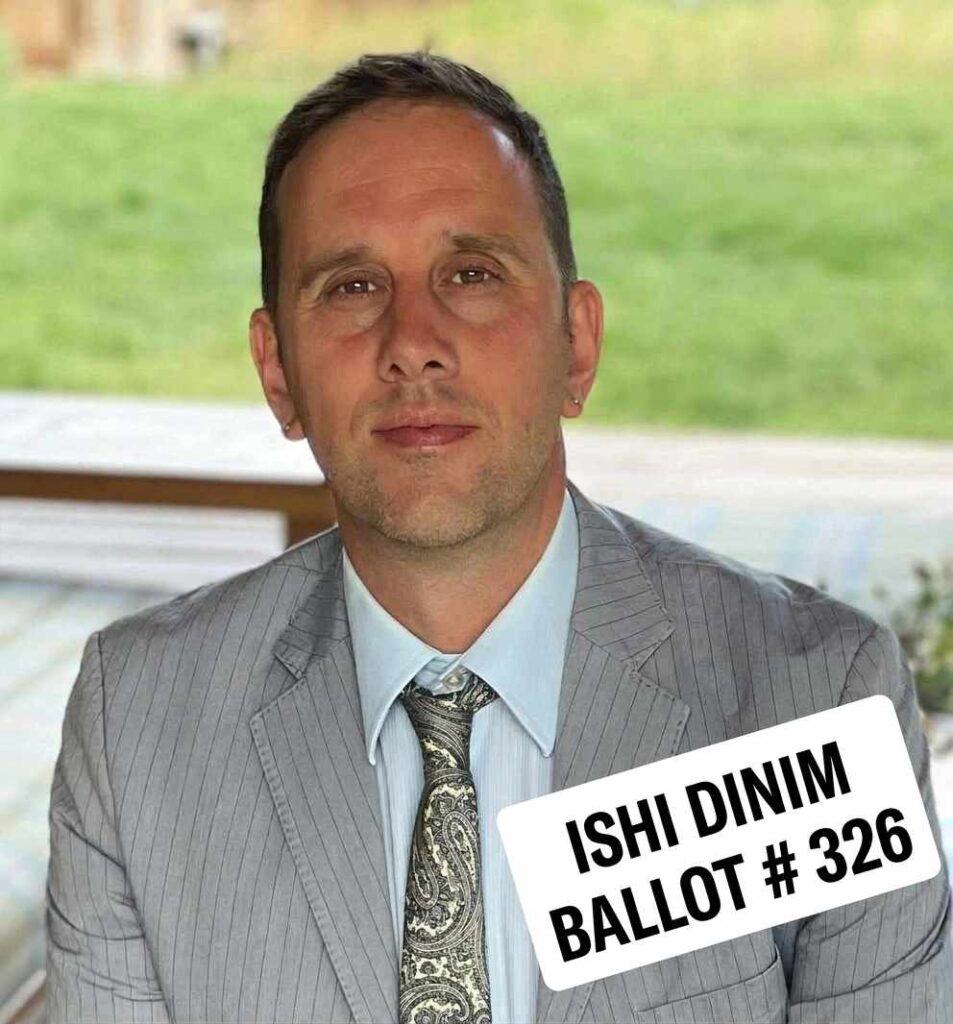
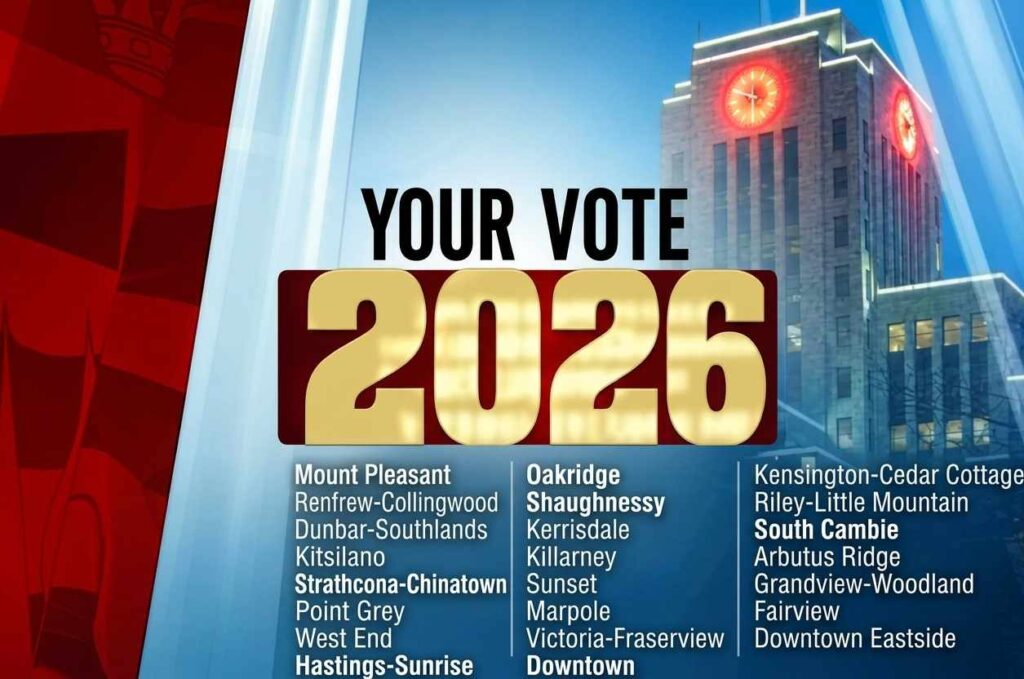
There are moments in the political life of a city when an election becomes about more than choosing a Mayor.
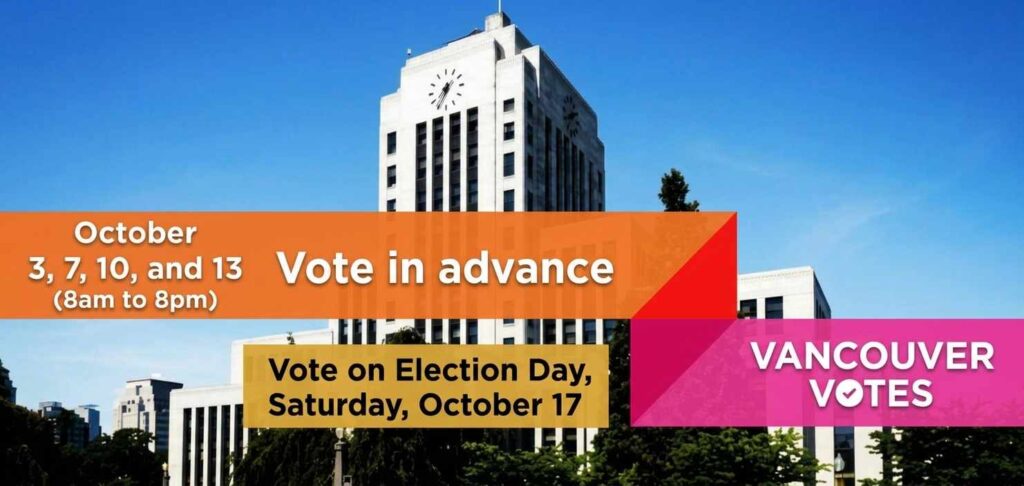
October 17, 2026, is one of those moments.
Vancouver is not simply deciding whether to give Ken Sim and ABC Vancouver another four years. Vancouver is deciding what kind of city it wants to become — and, more importantly, who the city is actually going to work for.
For the past four years, City Hall has too often appeared preoccupied with grand announcements, expensive projects, political theatre and the interests of the well-connected while the everyday infrastructure of neighbourhood life has deteriorated.
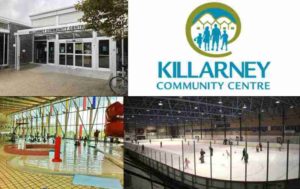
Libraries have faced cuts. Community facilities are aging. Swimming pools are disappearing. Parking meters have appeared around community amenities, our beaches, parks and community centres.
Families are struggling with the cost of living. Seniors are wondering where affordable recreation opportunities are going to come from. Young people increasingly question whether they can afford to remain in the city in which they grew up.
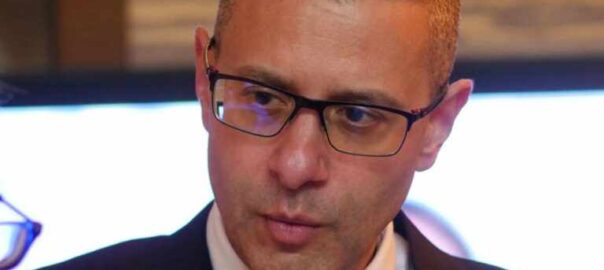
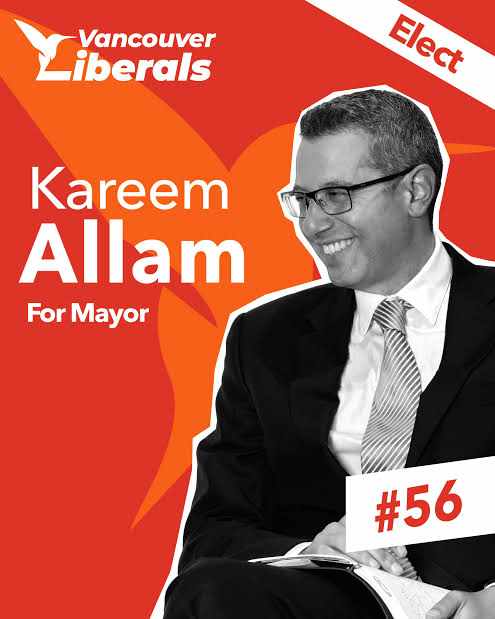
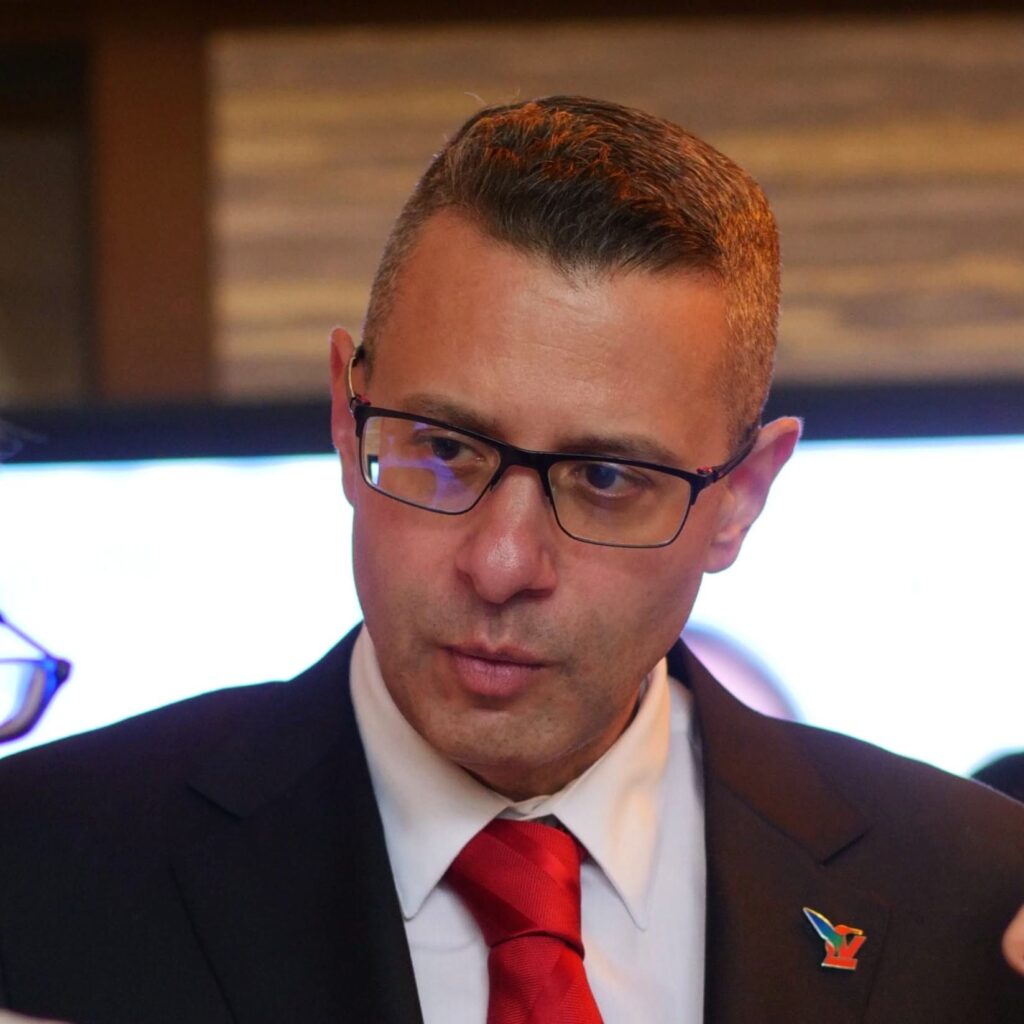
The next Mayor of Vancouver should you cast your ballot for Kareem Allam, Vancouver Liberals.
Into that vacuum comes Kareem Allam and the Vancouver Liberals.
There is a compelling case to be made that Kareem Allam must become Vancouver’s most progressive Mayor in more than half a century.
Not because he comes from the traditional left.
Not because he comes from the traditional right.
But precisely because he doesn’t fit neatly into either category.
Kareem Allam’s political proposition is something Vancouver has desperately needed: a government organized around people rather than ideology.
The Vancouver Liberals’ stated goal is refreshingly straightforward: create a Vancouver where young people can stay, work, build a career and raise a family. Their platform combines affordability, public investment, stronger frontline services, parks and recreation, public safety, accountability and neighbourhood infrastructure.
That is progressive municipal government in its most practical form.
Kareem Allam: The Vancouver Mayor Who Will Get To Work on Day One
For Vancouver voters looking for a Mayor who can begin governing on the morning after the 2026 civic election, rather than spending the first year learning how City Hall works, Kareem Allam presents a compelling case.
The Vancouver Liberals’ Mayoral candidate is not simply a political newcomer with an attractive platform. He is a lifelong Vancouverite who has spent more than 25 years working in and around municipal, provincial and federal governments, working on public policy, Indigenous relations, health care, transportation and infrastructure.
Kareem’s career has given him something that is extraordinarily rare among candidates for municipal office: an understanding of government not merely from the outside, but from inside the machinery of government itself.
Kareem Allam did not enter Vancouver’s 2026 Mayoral race as a political novice. Far from it. Kareem has worked for elected politicians, inside government, in public institutions, on political campaigns and, critically, inside Vancouver’s Mayor’s office itself.
There is no other Mayoral candidate in 2026 who can match his breadth of experience.
Over his 25-year professional life, Kareem Allam has worked in government relations and public affairs, holding positions involving consequential policy areas facing British Columbia: energy, health care, transportation, infrastructure and Indigenous relations.
Kareem Allam worked with the Fraser Health Authority. He served on public and advisory boards. He became Director of Public Policy at the Vancouver Board of Trade. He developed extensive relationships with First Nations and worked on Indigenous economic-development issues.
Vancouver Magazine placed Kareem Allam among British Columbia’s 50 most powerful people, recognizing him as one of the province’s most sought-after political minds.
A Mayor must understand municipal bureaucracy, the Vancouver Charter, budgeting, procurement, zoning, permitting, capital budgets, collective agreements, infrastructure financing, development approvals, labour relations, intergovernmental negotiations, civic infrastructure, regional government, provincial jurisdiction and the relationship between elected officials and the professional bureaucracy.
Kareem Allam has spent his entire professional career learning precisely those systems.
Indeed, it is difficult to identify another 2026 Mayoral candidate who has worked so extensively across the federal, provincial and municipal spheres while also gaining experience inside Vancouver’s own Mayoral office. His career has included government-relations positions, senior policy work, public boards and direct municipal executive experience. He has served on the TransLink screening panel, and other public and advisory bodies. He currently serves on advisory bodies associated with the University of Victoria and Kwantlen Polytechnic University.
The Mayor of the City of Vancouver has to interact with Metro Vancouver.
With TransLink.
With the provincial government.
With Ottawa.
With developers.
With unions.
With neighbourhoods.
With First Nations.
With a bureaucracy employing thousands of people.
And then the Mayor has to get 10 Councillors to agree on what should actually happen.
This is not theory. It is governing.
And Kareem Allam has spent decades learning how to do it.
Kareem Allam’s political career is unusual because he has worked across ideological and partisan boundaries. Conservatives, Liberals, New Democrats, civic politicians, business leaders, public servants and Indigenous governments have all been part of his professional world.
In the 2024 British Columbia election, Kareem Allam inspired the NDP campaign for office.
It means Kareem Allam understands that government is not about finding people who agree with you.
It is about finding a way to get things done among people who don’t.
Former B.C. NDP cabinet minister Michelle Mungall joined the campaign back in September as an honourary co-chair, while Arminder Randhawa, a former B.C. NDP executive member and former Vancouver Board of Variance member, has described Kareem Allam as a thoughtful and pragmatic leader who brings people together.
Those are precisely the qualities Vancouver should be looking for.
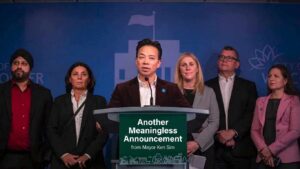
Vancouver doesn’t need a Mayor who believes governing means announcing initiatives.
Vancouver needs a Mayor who understands implementation.
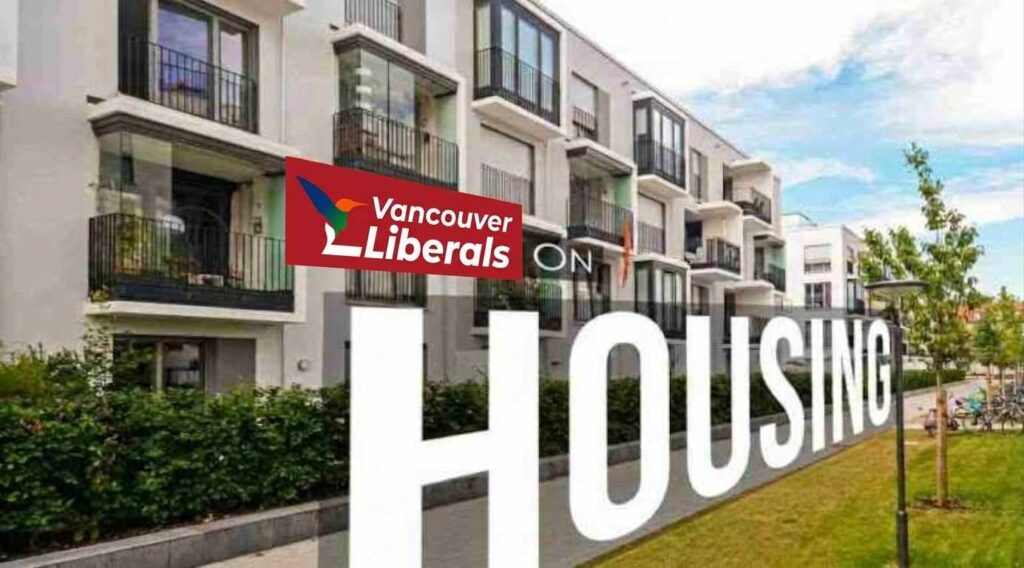
Consider housing.
Kareem Allam’s approach is revealing. Rather than simply promising to build more housing, he has focused on the regulatory machinery that determines whether housing actually gets built — including municipal permitting, building codes and bureaucratic duplication.
Not to mention which, a core focus of the Vancouver Liberals campaign for office revolves around renewing Vancouver’s commitment to the construction of housing co-operatives across our city, on City-owned land or provincial and federal Crown land, working with the President of the Co-operative Housing Federation of BC — who also happens to be the CEO of the Community Land Trust (CLT) — Thom Armstrong, towards expanding the already existing, and wildly successful, Community Land Trust programme, while building thousands more of co-operative housing units across our city.
Do you know how much the construction of co-operative housing will cost taxpaypers? Nada, nothing, zero, zilch. Because those groups making application to construct a housing co-operative will secure funding through a lending institution, the loan backed by the federal government through the Canada Mortgage and Housing Corporation.
That is the language of someone who understands government.
The problem isn’t always that government doesn’t know what Vancouver needs.
The problem is that government often makes it extraordinarily difficult to deliver it.
Kareem Allam knows where the levers are.
He knows which government controls which lever.
He knows who has to be at the table.
And, having spent years dealing with senior governments, he knows how to pick up the telephone and get the right people on the other end.
Imagine a Mayor walking into City Hall on the first day of his administration already familiar with the bureaucracy, already understanding municipal government, already possessing relationships with provincial and federal officials, already knowing the political terrain and already having spent time inside the Mayor’s office.
That is a fundamentally different proposition from electing someone who will spend the first year learning the job.
The choice facing Vancouver voters is larger than a choice between political parties.
It is a choice between experience and apprenticeship.
Between knowing what government should do and knowing how to get things done.
Between another four years of political theatre and the possibility of a Mayor who can walk into the Mayor’s office on Day One and immediately begin governing.
Vancouver voters can rest assured that Kareem Allam understands the machinery required to turn an idea into policy, policy into a decision, and a decision into something residents can actually see, touch and use.
After the experience of the past four years, that distinction should matter enormously.
Kareem Allam may not be the loudest candidate in the 2026 Vancouver Mayoral race.
He may not be the candidate with the largest political organization.
But he may very well be the best-informed.
And when the doors of City Hall open on the morning after October 17, Vancouver doesn’t need another Mayor learning how to govern.
We need someone who already knows how.
An Affordability Agenda That Actually Reaches People’s Daily Lives
Of all the Mayoral campaigns seeking Vancouver’s vote, Kareem Allam and the Vancouver Liberals have put forward one of the most comprehensive affordability agendas.
Consider something as mundane — and as revealing — as parking.
The Vancouver Liberals would remove parking meters in front of beaches and community centres throughout Vancouver within their first year in office.
That may sound like a small issue.
It isn’t.
For a senior taking a child to a community centre, a parent bringing children to a neighbourhood programme, a family visiting the beach, or someone using a recreation facility because they cannot afford a private gym, another municipal fee can be the difference between participating and staying home.
Public spaces should actually feel public.
Vancouver’s parks and beaches are, for hundreds of thousands of residents, the closest thing they have to a backyard. They are playgrounds, fitness centres, meeting places, swimming areas, outdoor classrooms and places of refuge.
They should not be treated as revenue opportunities.
That philosophy runs through the Vancouver Liberals agenda.
Kareem Allam and the Vancouver Liberals are proposing an historic $1.35 billion investment in parks, recreation, pools and community infrastructure, accompanied by 400 new unionized frontline workers. The party explicitly argues that investing in parks, libraries and community spaces is part of creating safer neighbourhoods.
This is an important departure from the simplistic notion that public safety begins and ends with policing.
Of course Vancouver needs police.
But a child who has a safe place to play, a teenager who has somewhere to go after school, a senior who has an affordable fitness programme, a family with a functioning community and recreation centre nearby, and a neighbourhood with a well-maintained park with facilities in the park are all components of a safer city.
Community infrastructure is crime prevention infrastructure.
Fix The Community Centres — And Stop Governing Through Neglect
The Auditor General has already identified a serious problem.
A 2025 audit by Vancouver’s auditor general, Mike Macdonnell, found that Vancouver’s 24 recreation facilities face an infrastructure funding deficit of approximately $33 million a year, with many building systems already extended beyond their intended useful life.
That is not an abstract accounting problem.
It is what happens when a city delays maintenance until maintenance becomes reconstruction.
Kareem Allam understands this.
The Vancouver Liberals are proposing major investment in community centres, pools and parks rather than allowing these facilities to continue deteriorating. Kareem Allam has argued that failing to invest in capital infrastructure actually drives up operating costs because aging buildings become more expensive to maintain.
That is precisely the kind of municipal economics Vancouver needs.
Spend money where it makes people’s lives better.
Repair what is broken.
Build what communities need.
And stop confusing expensive government with effective government.
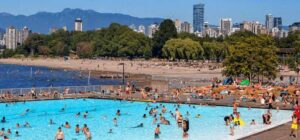
Vancouver Needs Community Pools In Every Neighbourhood
Perhaps nowhere is the difference between the Vancouver Liberals vision and the ABC vision more obvious than swimming pools.
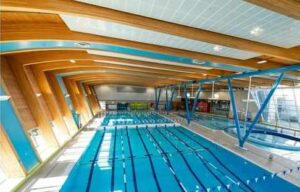
The Vancouver Liberals have committed to a 50-metre pool, rather than accepting a 25-metre replacement for the Vancouver Aquatic Centre. Their platform argues that Vancouver already has among the lowest levels of public swimming-pool provision per capita in Canada.
Why should Vancouver settle for less?
A city of more than 600,000 people should be building recreation infrastructure for the next generation, not shrinking its ambitions to fit yesterday’s budget.
Kareem Allam’s agenda also envisions additional neighbourhood pools and water parks, including a long-overdue community pool in Mount Pleasant.
This is what a programme for the people actually looks like.
It looks like children learning to swim.
It looks like seniors exercising.
It looks like families having somewhere affordable to spend an afternoon.
It looks like hockey rinks, libraries, community centres and parks that are maintained, accessible and welcoming.
It looks remarkably like the kind of people-centred municipal agenda that New York Mayor Zohran Mamdani has brought to the international political conversation.
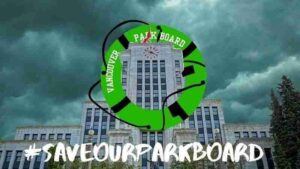
Save the Park Board, Restore the Park Board, Fund the Park Board
The Vancouver Liberals unapologetically defend Vancouver’s elected Park Board.
They argue that Vancouver needs a strong, independent and properly funded Park Board — not its elimination.
That is about more than institutional nostalgia.
The Park Board represents an important democratic principle: Vancouver’s parks belong to Vancouverites.
Restoring stable funding for parks and recreation means acknowledging that these services are not luxuries.
They are municipal necessities.
Did you know that prior to Vision Vancouver being elected to City Hall in 2008, that Vancouver spent 19.3% of the city budget on our parks and recreation system? In 2026, that figure has fallen to an unconscionable 7.9%. No wonder our parks look so neglected, and our community centres have been allowed to fall into a state of disrepair.
The $1.35-billion Vancouver Liberals commitment would give the city an opportunity to address the accumulated infrastructure deficit while creating better parks, pools, community centres and recreational opportunities across all 23 neighbourhoods.
Finish What Vancouver Civic Governments Have Already Promised
A re-imagined Marpole Community Centre approved in a 2008 Capital Expenditure referendum. Not complete more than 18 years later. Only the Vancouver Liberals will complete the project.
There is another essential principle here: if government makes a commitment to a neighbourhood, government should keep it.
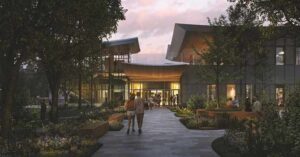
The long-planned renewal of the Marpole Community Centre is finally under construction, with completion expected early to mid 2027. The project will provide a renewed centre, childcare, a field house and new outdoor amenities.
But Vancouver’s broader history is filled with promises that have taken far too long to become reality.
A Vancouver Liberals administration would adopt a rule:
No more indefinite delays.
Where projects have been approved, promised or negotiated — as they were when voters went to the polls to approve the proposed Capital Expenditure budget, in 2008, 2011, 2014, 2018 and 2022 — residents deserve a clear timetable, transparent financing and a government prepared to get the work done.
That includes ensuring that the community amenities associated with major developments actually materialize.
At Oakridge Park, QuadReal and Westbank are responsible for a major redevelopment that includes a community centre, library, performance area and childcare.
At River District, Wesgroup’s long-term plan includes a community centre as an important public amenity.
A government led by Kareem Allam would insist developers honour those commitments.
That is not anti-development.
It is pro-community development.
Food Security is Affordability, and Necessary in the City of Vancouver
Perhaps one of the most innovative elements of the Vancouver Liberals agenda is the proposed Food Hub Programme.
As VanRamblings has previously reported, Kareem Allam’s food-security vision draws inspiration from the University of British Columbia’s Community Food Hub, where the Food Hub Market operates as a not-for-profit community space offering affordable groceries and culturally diverse foods.
The concept is deceptively simple.
Use public resources and partnerships to make nutritious food more affordable.
Create neighbourhood-based food hubs.
Connect residents with community organizations.
Make food security part of a civic affordability policy rather than treating hunger exclusively as a charitable problem.
That matters because food insecurity is not confined to people without jobs.
It increasingly affects working families, students, seniors and people whose incomes simply cannot keep pace with Vancouver’s extraordinary cost of living.
Food security is affordability.
And affordability is the defining municipal issue of 2026.
A Vancouver Liberal Commitment: Taxes People Can Actually Afford
Kareem Allam has committed to limiting annual property-tax increases to the rate of inflation, or less, per year.
That is an important commitment because Vancouver citizens deserve predictability.
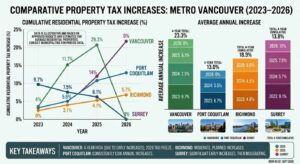
Under Ken Sim’s ABC Vancouver, the Vancouver Liberals point out, property taxes have risen by 26%. Kareem Allam has argued that the city’s budget grew from approximately $1.7 billion when Sim inherited it to approximately $2.4 billion, without a corresponding improvement in frontline services.
The question Vancouver voters should be asking is simple:
If taxes keep rising, where is the improvement in our daily lives?
Kareem Allam’s answer is to redirect spending toward frontline workers and core services.
Four hundred new frontline employees.
Better garbage collection.
Better road maintenance.
Ban Bitcoin cryptocurrency ATMs on the DTES and take the fight to the drug dealers — not the street level drug dealers, but their suppliers;
Develop a methamphetamine — the leading cause of violent incidents that puts people at risk — strategy, just like Premier Wab Kinew has done in Manitoba (a plan that is working!);
Address homelessness in a humane and caring manner consistent with the values of the vast majority of us who call Vancouver home;
Protect local businesses during transit expansion, by reducing property taxes by 50% for the duration of construction;
Build more public washrooms, including within our parks (I mean, when the kids have gotta pee, they’ve gotta pee);
Reinstate library funding and hours, cut by a heartless and cruel Ken Sim administration that have so weakened these vital public spaces and community services.
Better parks.
Better recreation facilities.
Better basic services.
No property taxes levied on medical centres.
Downsize a bloated middle management bureaucracy at Vancouver City Hall (do we really need 95 people working in Vancouver’s communications department, or employ more middle managers in our development services and planning departments than on the ground CUPE workers — like plan checkers — who do the real work!);
That is not austerity.
It is prioritization.
A City Hall That Isn’t Afraid of But Actually Welcomes the Public
A progressive government must also be a transparent government.
The Vancouver Liberals have proposed cheaper public access to government records, a stronger Integrity Commissioner and greater accountability at City Hall.
That should include reducing or eliminating Freedom of Information fees for journalists and members of the public wherever possible.
Government records belong to the public.
Journalists should not have to fight City Hall to discover what City Hall is doing.
And citizens should not have to pay excessive fees to learn how their own government spends their money.
Transparency isn’t an administrative courtesy.
It is democracy.
Even The Rats Living in Our Neighbourhoods Are Telling us Something
And then there is the rat problem.
Yes, the rat problem.
The Vancouver Liberals have made tackling Vancouver’s growing rodent infestation a public-health priority, proposing a blue-ribbon panel of experts to develop a comprehensive strategy.
It might sound almost comical.
It isn’t.
A city that cannot keep its streets, parks and public spaces clean and safe cannot call itself well governed.
The rat problem is about sanitation, waste management, infrastructure, construction practices and public health.
Sometimes the most progressive thing government can do is simply do the basics properly.
The Remarkable Coalition Allam’s Vancouver Liberals Have Built
Perhaps the strongest argument for Kareem Allam is not simply his platform.
It is the coalition he has built.
The Vancouver Liberals are attempting something Vancouver civic politics has rarely seen: bringing together people from dramatically different political traditions around a shared municipal agenda.
Their candidates include people with labour and NDP backgrounds, progressive activists, businesspeople, academics, former BC Liberals and former Conservatives.
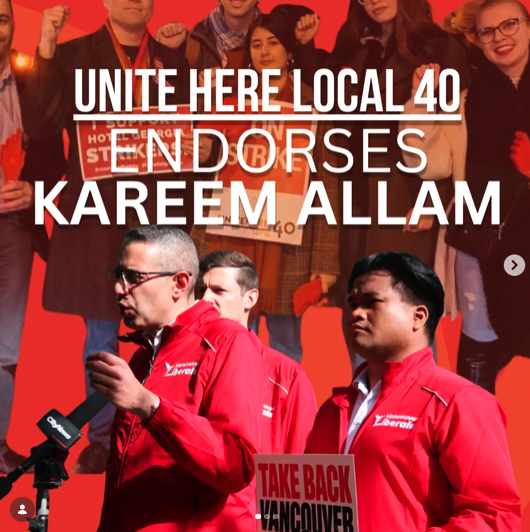
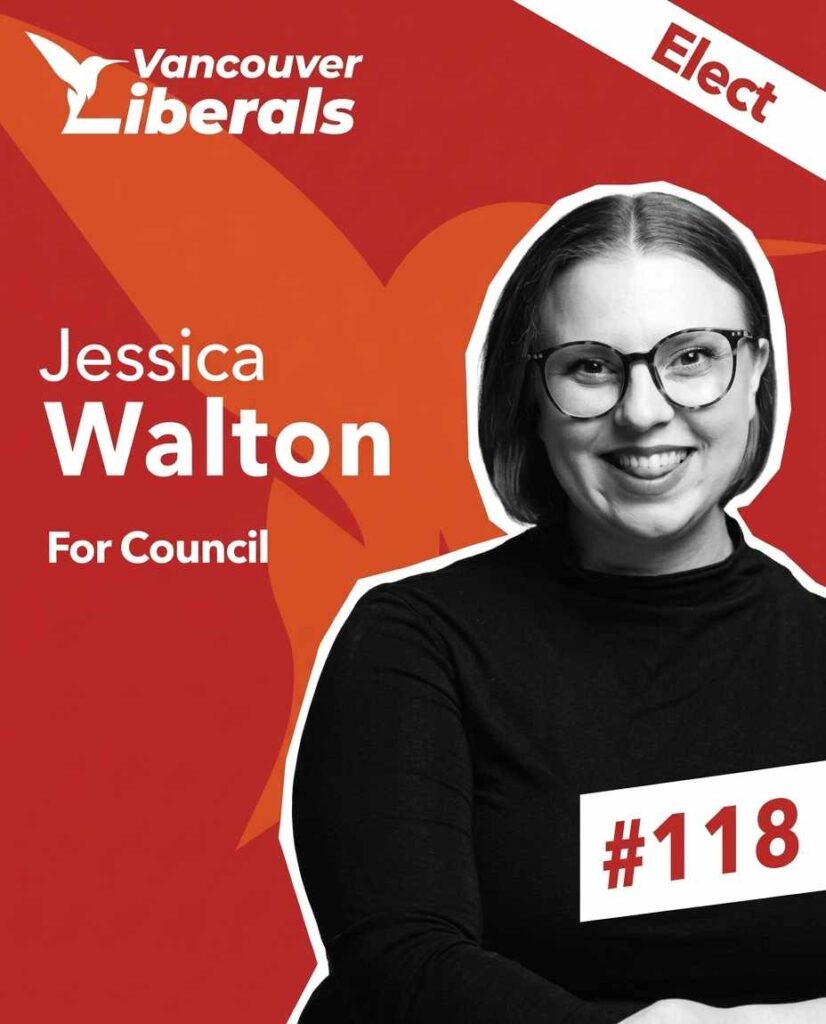
Jessica Walton, for example, brings years of feminist, environmental, labour and political activism to the campaign, along with experience as a BCGEU shop steward and frontline government worker. Mention should also be made that Jessica Walton was recently endorsed by Unite Here Local 40, one of Vancouver’s most progressive unions.
John Coupar brings 11 years of Park Board experience and a long record of advocacy for Vancouver’s parks and cultural institutions.
And the coalition continues to expand.
On August 27, former BC NDP cabinet minister Michelle Mungall and former BC NDP executive member Arminder Randhawa were announced as honorary co-chairs of the campaign. Ms. Mungall served as B.C.’s Minister of Energy, Mines and Petroleum Resources under John Horgan, while Ms. Randhawa has extensive experience in municipal politics and advocacy concerning intimate-partner violence, policing and women’s and children’s safety.
Their presence says something important.
This isn’t simply another ideological faction fighting another ideological faction.
It is an attempt to build a unity government for Vancouver.
As Ms. Mungall put it, she was impressed by Kareem Allam’s emphasis on frontline workers and by the work ethic of the candidates.
Ms. Randhawa described Mr. Allam as a pragmatic leader who brings people together.
And that may be precisely what Vancouver needs.
A Municipal Government of Civic Reconciliation and Unity
Vancouver is an extraordinarily diverse city.
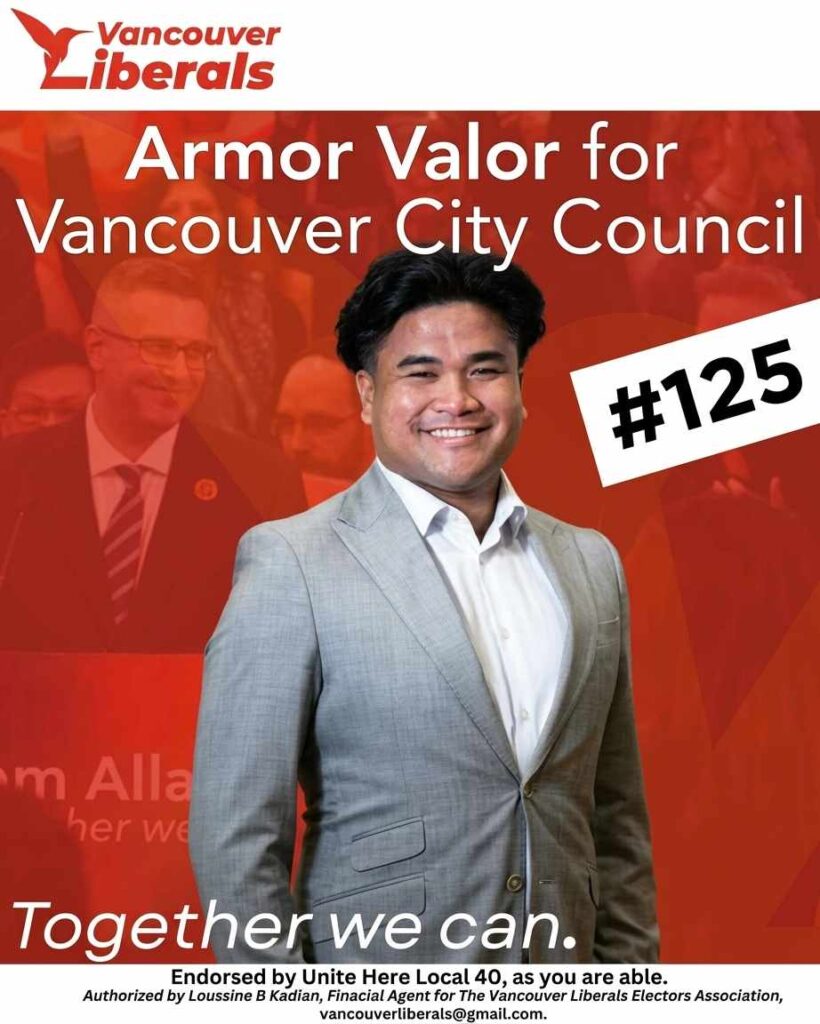
Vancouver Liberal Armor Valor of Filipino descent running for a seat on City Council
The 2021 Census counted 38,605 Filipino residents in the City of Vancouver alone, while Filipino Canadians represented the third-largest racialized group in the Vancouver census metropolitan area.
That diversity deserves political representation.
But reconciliation also means something larger than ethnicity.
It means reconciling competing political traditions.
Labour and business.
Progressives and conservatives.
Social democrats and Liberals.
Immigrants and people whose families have lived here for generations.
Young people and seniors.
Renters and homeowners.
Downtown residents and suburban neighbourhoods.
People who disagree profoundly about politics but agree that Vancouver should be affordable, safe, clean, vibrant and welcoming.
That is the Vancouver Liberals experiment.
And it is a worthwhile experiment.
Why Kareem Allam Needs a Majority at Vancouver City Hall
But there is a final point Vancouver voters need to understand.
Electing Kareem Allam as Mayor will not be enough.
If Vancouver wants the programme described above — the pools, community centres, parks, food hubs, frontline workers, public-space investments, tax discipline, transparency reforms and neighbourhood improvements — Kareem Allam needs Councillors and Park Board Commissioners who share that agenda.
A Mayor Kareem Allam cannot govern alone.
A Mayor Kareem Allam needs a Council capable of passing budgets.
A Mayor Kareem Allam needs Park Board Commissioners committed to rebuilding Vancouver’s recreation system.
A Mayor Kareem Allam needs School Board trustees who understand the needs of families and children.
And a Mayor Kareem Allam needs a political team capable of turning campaign promises into municipal policy.
That is why Vancouver needs to elect a majority Vancouver Liberal civic administration on October 17.
This is not about giving Kareem Allam a blank cheque.
Quite the opposite.
It is about giving Vancouver voters the opportunity to hold an entire governing team accountable for a coherent programme.
For too long, Vancouver has been governed through fragmented politics, institutional conflict and competing agendas.
Kareem Allam is offering something different.
A plan.
A team.
A coalition.
And, most importantly, a willingness to govern.
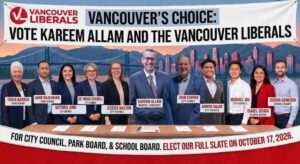
Vancouver’s Choice: Vote Kareem Allam and the Vancouver Liberals
The choice facing Vancouver on October 17 could hardly be clearer.
One path leads back to four more years of the politics and priorities of the past four years.
The other asks Vancouver to try something fundamentally different.
A city where parks are treated as public assets rather than revenue opportunities.
A city where libraries are strengthened rather than diminished.
A city where community centres are repaired before they become catastrophes.
A city where children have swimming pools.
A city where seniors have affordable recreation.
A city where seniors and persons with disabilities can traverse our crumbling and uneven sidewalks, as a Vancouver Liberals administration — working with all of the elected on Vancouver City Council — will embark on a programme to renew sidewalks across the city.
A city where families can buy groceries without being pushed to the edge.
A city where property taxes are predictable, at or below inflation.
A city where developers are required to deliver the amenities they promised.
A city where City Hall welcomes scrutiny rather than resists it.
Jettisoned by Ken Sim / ABC in 2022, Kareem Allam will renew the ‘Healthy City for All’ initiative
A city where public safety means police, yes — but also clean streets, functioning neighbourhoods, recreation, mental-health services, public spaces and communities in which people actually know one another.
A city where government works for the people who live here.
That is why Kareem Allam represents something larger than another Mayoral candidacy.
Kareem Allam represents the possibility of a progressive, pragmatic, people-first government that breaks with the politics of the past half-century.
The Vancouver Liberals are not perfect. No political party is.
But in 2026, they have something increasingly rare in municipal politics:
An Action Plan That Will Transform Vancouver Into a Livable City
And on October 17, Vancouver voters have an opportunity to put that plan into action.
If Vancouver wants the change we so desperately need, we cannot settle for changing the Mayor while leaving the political machinery of City Hall essentially unchanged.
Vancouver needs a government capable of delivering.
We need a government willing to invest in people.
We need a government willing to listen.
We need a government willing to cross partisan boundaries rather than deepen them.
We need a government that believes public spaces belong to the public.
We need a government that understands that affordability is not a slogan but something measured in grocery bills, parking fees, property taxes, recreation fees and whether a family can afford to stay in the city it calls home.
And above all, Vancouver needs a Mayor who understands that government exists to serve the public — not the other way around.
That Mayor of Vancouver, in 2026, should and must be Kareem Allam.
And the government he needs with him is a majority Vancouver Liberal administration.
October 17 is Vancouver’s opportunity to choose a different future.
Vote for Kareem Allam.
Vote Vancouver Liberal. And give Vancouver the government we have all been waiting for.
𝗧𝗵𝗲 𝗩𝗮𝗻𝗰𝗼𝘂𝘃𝗲𝗿 𝗟𝗶𝗯𝗲𝗿𝗮𝗹𝘀 𝗮𝗿𝗲 𝘁𝗵𝗲 𝗰𝗵𝗮𝗻𝗴𝗲 𝗺𝗮𝗸𝗲𝗿𝘀 𝗳𝗼𝗿 𝘁𝗵𝗲 𝗕𝗘𝗧𝗧𝗘𝗥 𝗶𝗻 𝘁𝗵𝗲 2026 𝗩𝗮𝗻𝗰𝗼𝘂𝘃𝗲𝗿 𝗺𝘂𝗻𝗶𝗰𝗶𝗽𝗮𝗹 𝗲𝗹𝗲𝗰𝘁𝗶𝗼𝗻, 𝘁𝗵𝗲 ONLY 𝗰𝗶𝘃𝗶𝗰 𝗽𝗮𝗿𝘁𝘆 𝘄𝗵𝗶𝗰𝗵 𝗵𝗮𝘀 𝗮 𝗽𝗹𝗮𝗻 𝘁𝗼 𝗺𝗮𝗸𝗲 𝘆𝗼𝘂𝗿 𝗹𝗶𝗳𝗲 𝗯𝗲𝘁𝘁𝗲𝗿, 𝘁𝗼 𝗮𝗱𝗱𝗿𝗲𝘀𝘀 𝘁𝗵𝗲 𝗶𝘀𝘀𝘂𝗲 𝗼𝗳 𝗮𝗳𝗳𝗼𝗿𝗱𝗮𝗯𝗶𝗹𝗶𝘁𝘆, 𝗮𝗻𝗱 𝘄𝗵𝗼 𝘄𝗶𝗹𝗹 𝗹𝗶𝘀𝘁𝗲𝗻 𝘁𝗼 𝗮𝗻𝗱 𝘄𝗼𝗿𝗸 𝘄𝗶𝘁𝗵 𝘆𝗼𝘂 𝘁𝗼 𝗺𝗮𝗸𝗲 𝗩𝗮𝗻𝗰𝗼𝘂𝘃𝗲𝗿 𝗮 𝗺𝗼𝗿𝗲 𝗷𝘂𝘀𝘁 𝗮𝗻𝗱 𝗺𝗼𝗿𝗲 𝗶𝗻𝗰𝗹𝘂𝘀𝗶𝘃𝗲 𝗰𝗶𝘁𝘆.
#TogetherWeCan
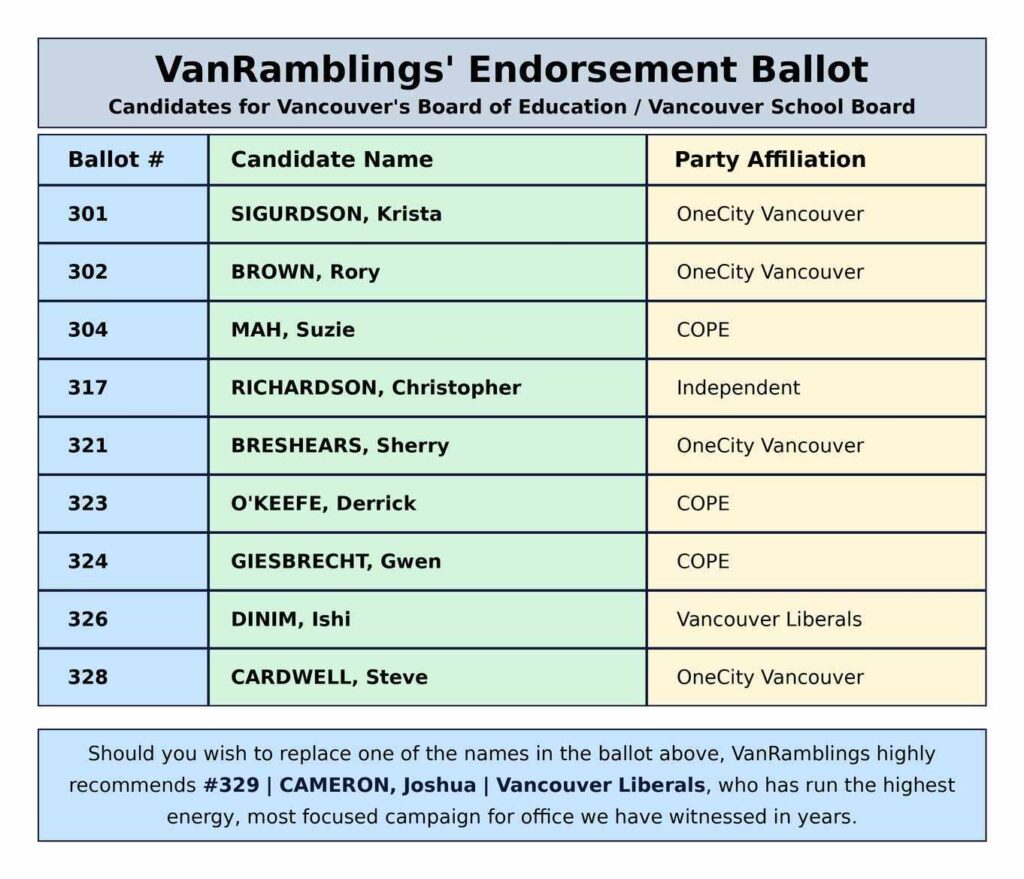
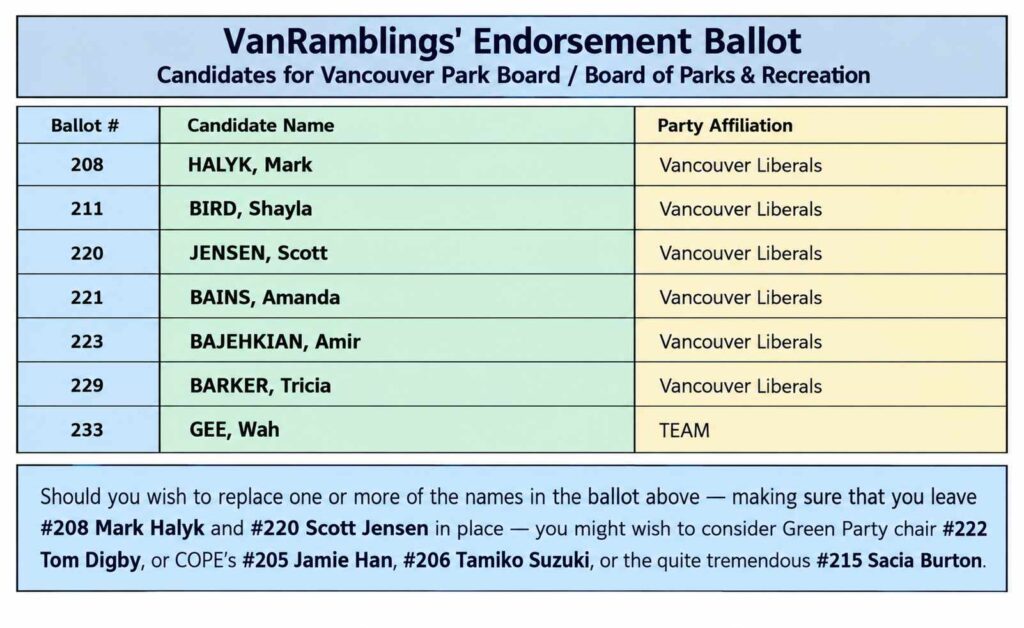
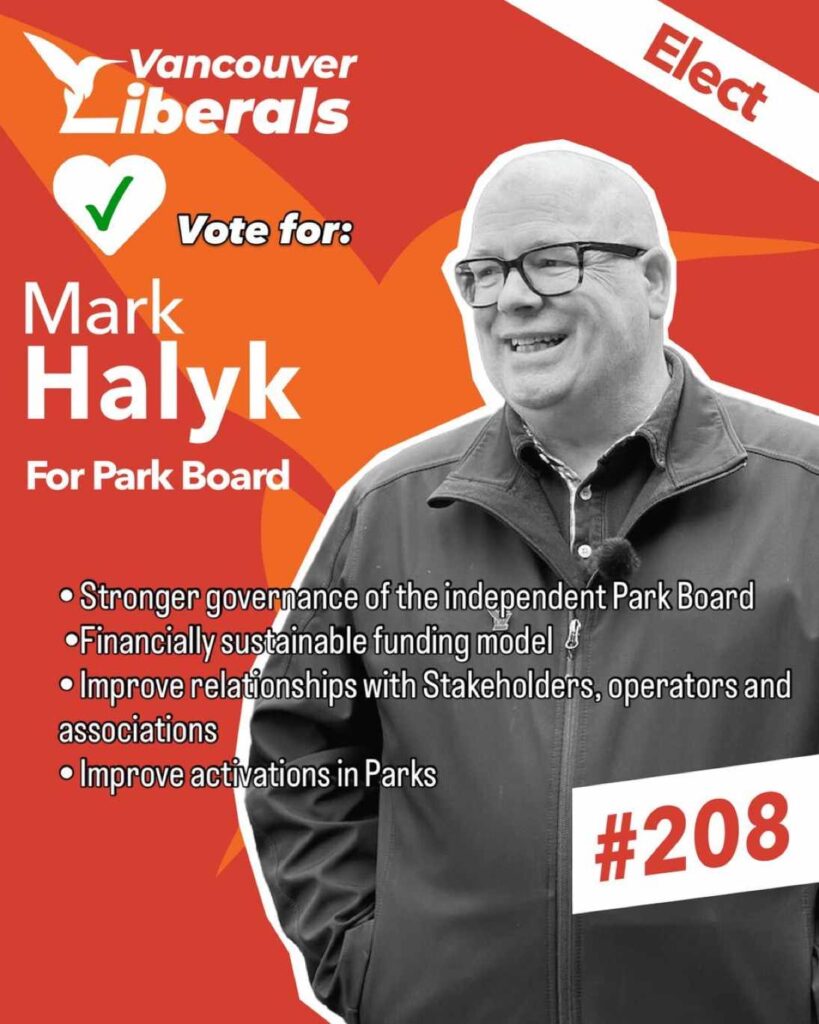
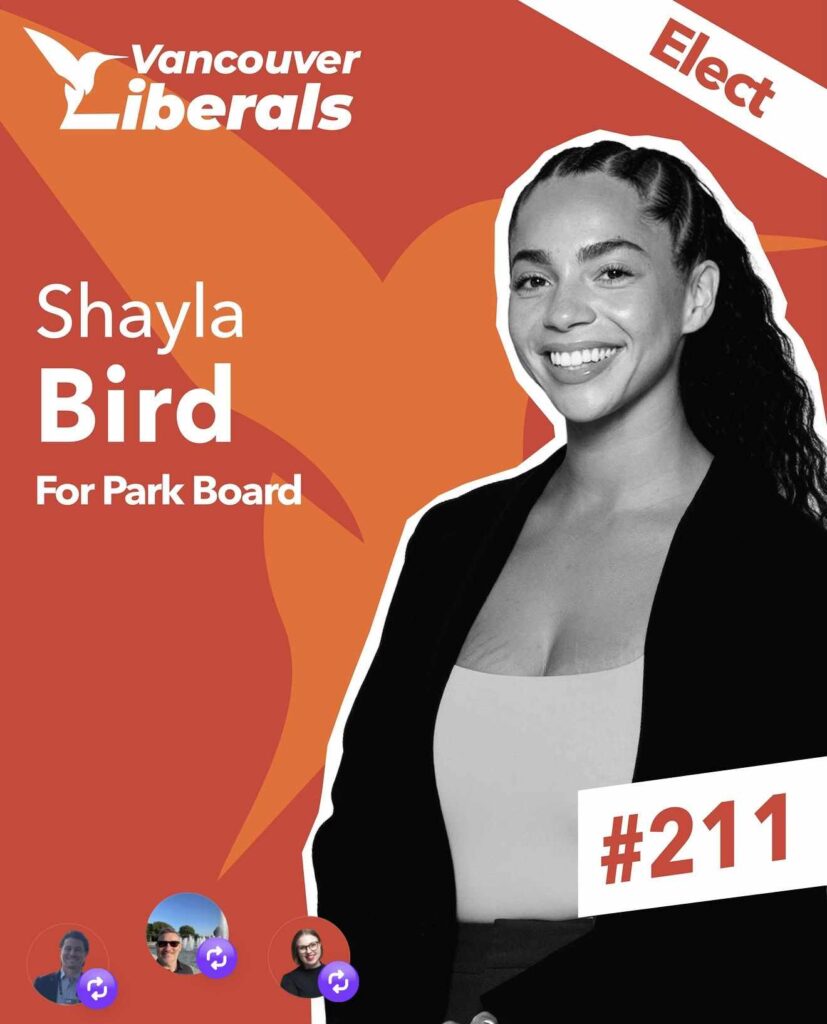
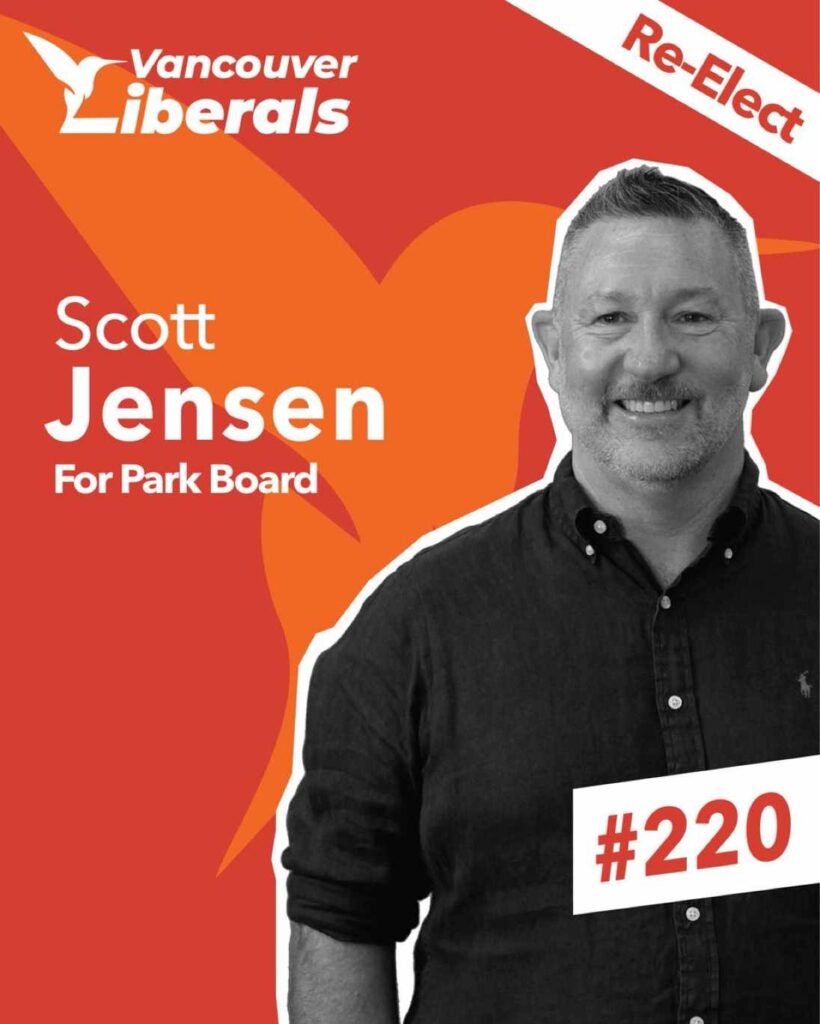
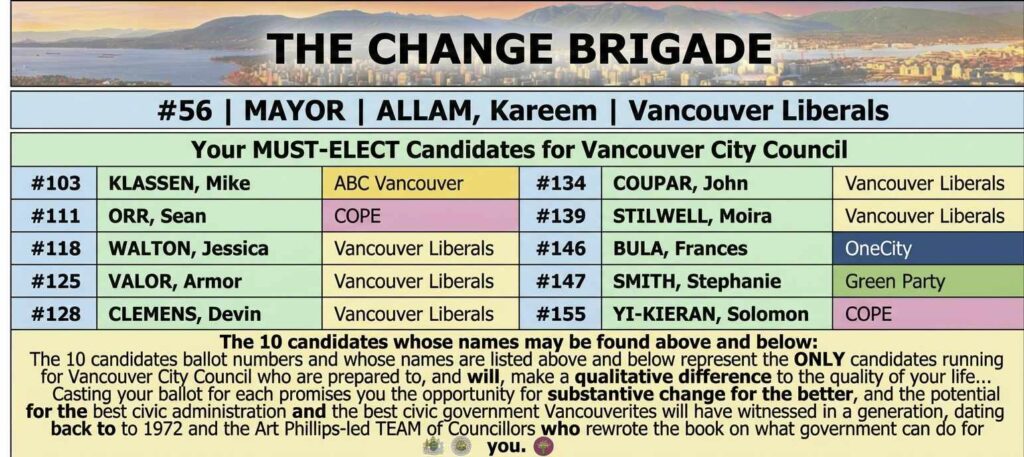
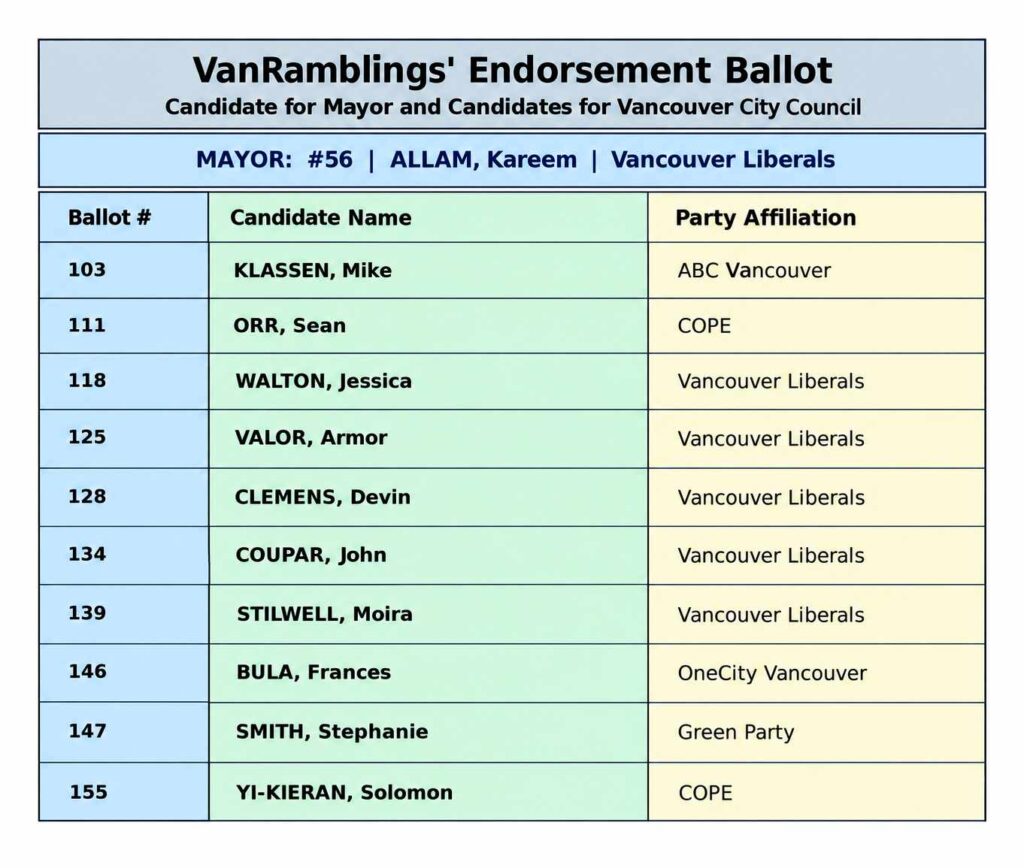
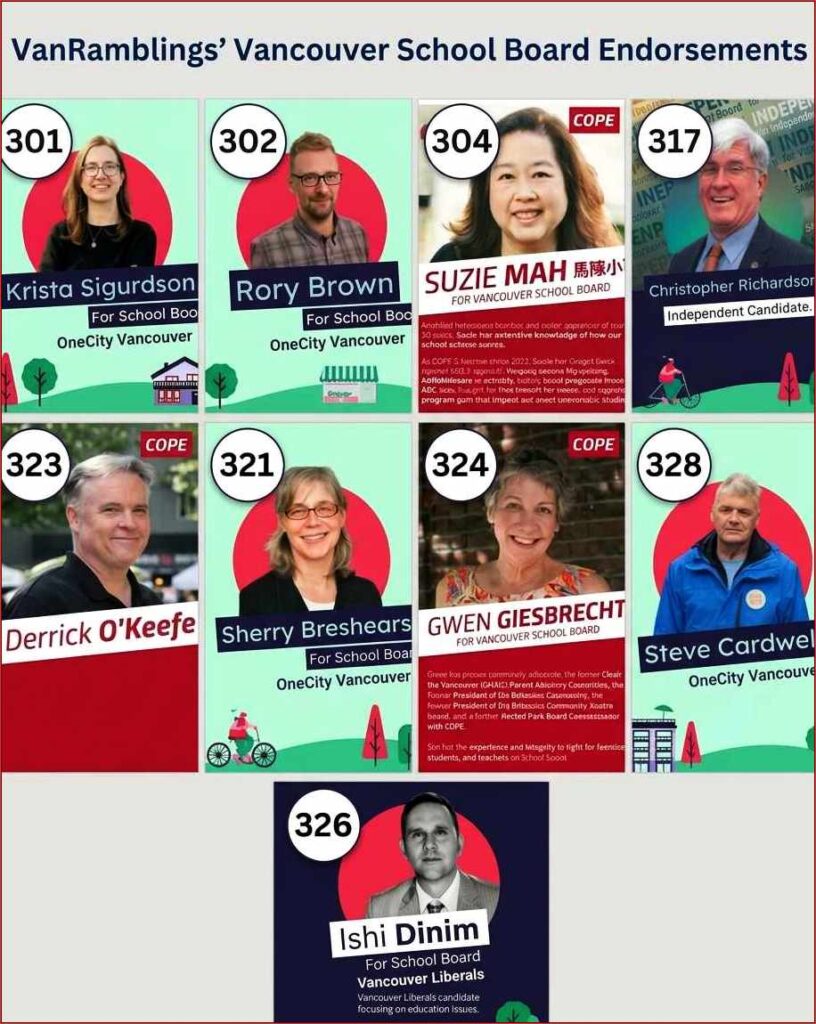 Yes, we know the numbers above are out of order, but the candidate ballot numbers are correct.