Vancouver’s Next Mayor | Kareem Allam | Priorities | Cancel Ken Sim’s $800 Million City Hall Campus

A Note from Kareem Allam, Vancouver’s Next Mayor

I am seeking the nomination of the Vancouver Liberal Party to be the next Mayor because I think I can do a better job.

As I prepare to launch, I am reaching out to my friends to donate to ensure my campaign has the best launch possible.

I’m running because we need to fix the mess at City Hall.

Vancouver should be a place young people flock to — for great careers and to raise their families. It needs to be more affordable with great public services that just work for people.

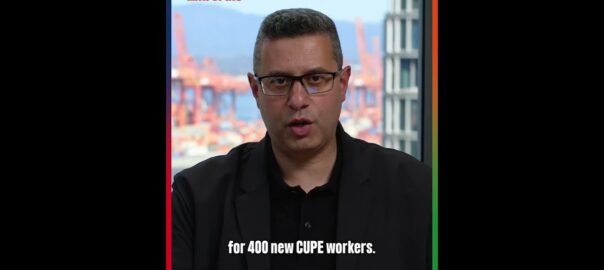
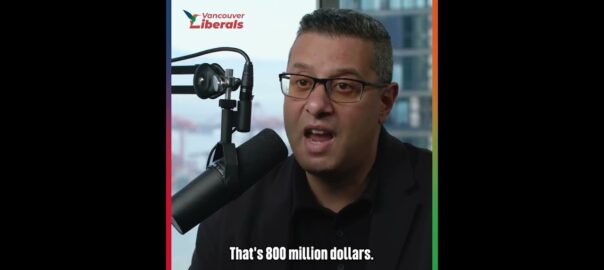
And on great services … this week I announced on Day One the Vancouver Liberals would requisition 400 more frontline workers, and we will pay for it by ending the practice of hiring management consultants and managers … who do nothing more than manage other managers.

I want a new rule at City Hall: if it doesn’t help bring young people back, make life more affordable, improve city services, or keep people safe, we’re not doing it.

Period.

So many people have stepped forward to offer their help, to volunteer to run for office, to offer smart ideas to make our city better. You’re one of them — and so I’m writing to ask for your help:

  • Donate as much as you’re able today. You can give as much as $1,402.40 – but whatever you can contribute today will help.
  • Get involved. You can sign up at VancouverLiberals.com — let us know you want to be a part of this project.

Thank you so much — more to come.

— Kareem

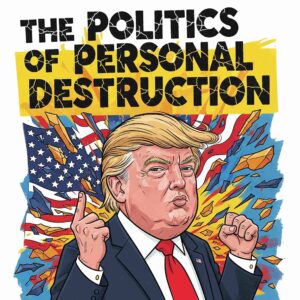
The Politics of Personal Destruction in Vancouver

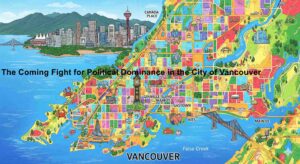
In Vancouver, the politics of personal destruction has long been stock and trade for those running for office. In a city where political competition is fierce and civic identity is fragmented across 23 neighbourhoods, campaigns often take the shape of contests not about ideas, but about the destruction of personalities.

For instance, on March 20th, 2020, when Mayor Kennedy Stewart called for a cessation of in-person meetings in Vancouver City Hall’s Council chambers, due to the outbreak of COVID-19, Councillor Pete Fry allegedly tweeted out an untoward comment about a fellow Councillor. This alleged tweet was allegedly directed at then City Councillor Colleen Hardwick.

When VanRamblings’ friend Joseph Jones filed a formal complaint with the office of the City Manager respecting Councillor Fry’s alleged injudicious “mean” tweet, the City replied in an e-mail that, as a third party, he did not have any standing, and therefore his complaint could not be accepted, nor acted upon.

Vancouverites know well the stories of politicians torn apart not by their policies or their vision, but by narratives manufactured and circulated for the purpose of ensuring their defeat. Former Vancouver City Councillor Colleen Hardwick is the candidate for office most often subject to personal attacks by her political opponents. In these latter days of his time as Mayor, Ken Sim runs a close second.

The politics of personal destruction is not new. Its roots can be traced back through centuries of democratic life, from pamphleteers in the 18th century to the tabloids of the 20th. Yet in recent years, the vitriol has intensified.

Donald Trump’s entrance into politics a decade ago supercharged a cultural shift: insult, ridicule, and character assassination became normalized as the central tools of political combat. What began as spectacle in the United States has since migrated north, settling into Canada’s civic politics with troubling force.

Vancouver, far from immune, has absorbed this toxin into its bloodstream.

The dynamic plays out in every election cycle. Local media, amplified by social media platforms, frame candidates in terms of their weakest or most controversial qualities. What might once have been a gaffe becomes a defining feature. A poorly worded sentence becomes a character flaw. A photo from decades past resurfaces as proof of hypocrisy or malice. The candidate’s ideas are eclipsed; the person becomes the story. And in a political environment as fragmented as Vancouver’s, where candidates often win office with a fraction of the vote, tearing down opponents is more effective than inspiring broad-based support.

The consequences are corrosive. At the civic level, Vancouver faces enormous challenges: a housing affordability crisis, an opioid epidemic, climate pressures, and deepening inequality. Addressing these issues requires serious debate, collaboration, and — above all— public trust in political leadership.

Yet when the political arena becomes consumed by personal attacks, trust evaporates. Politicians no longer seem like public servants but more like caricatures, defined only by the accusations lodged against them. Voters, in turn, grow cynical and disengaged. Democracy shrinks when citizens come to see politics not as a space for collective problem-solving but as a blood sport where the only winners are those most adept at tearing others down.

This dynamic does more than corrode public trust; it also drives away talent.

Who, knowing the ferocity of political campaigns, would willingly step forward?

For every candidate who accepts the risks, there are others who quietly decline.

Community leaders, business people, academics, and activists who might bring fresh perspectives to City Hall weigh the costs of public humiliation against the potential rewards of civic leadership — and they walk away.

The result is a narrowing of the pool of candidates, leaving the field to those willing to endure or even to participate in destructive politics. In this way, the politics of personal destruction perpetuates itself.

The media plays an undeniable role. The incentive structures of journalism reward conflict, scandal, and controversy. A headline about a candidate’s vision for neighbourhood development rarely generates as much attention as one about a candidate’s personal misstep. Social media amplifies the dynamic, rewarding the sharpest, most caustic takes with likes, retweets, and viral circulation.

In Vancouver’s polarized civic politics, with factions aligned around housing, development, and ideological identity, these attacks are not just tolerated but often celebrated by supporters eager to see opponents discredited.

Yet the responsibility does not lie solely with media or candidates. Citizens, too, play a role in perpetuating the culture of personal destruction. By consuming, sharing, and rewarding negative content, voters enable the very dynamics that undermine our democracy. It is easier, in some ways, to join the pile-on than to engage thoughtfully with the complexities of policy.

The digital age has made outrage a form of social currency, and too often Vancouverites spend it freely.

But the politics of personal destruction is not inevitable.

Cities like Vancouver thrive not when they are divided, but when they are connected — when residents and leaders alike focus on building bridges rather than tearing one another down. The challenges Vancouver faces are collective ones, and they demand collective solutions.

The housing crisis will not be solved by discrediting the character of those who hold office; it will be solved by debate, compromise, and innovative policy. The overdose crisis will not be solved by mocking the missteps of political leaders; it will be solved by compassion, evidence-based strategy, and political will.

Towards building a better society, our job as citizens, as political candidates, and as journalists ought to be to resist the destructive instincts that have come to plague politics. We must choose instead to elevate the conversation. That means expecting better of our leaders, but also of ourselves. It means seeking common ground in our city’s diverse neighbourhoods, acknowledging difference without demonizing those who hold it. It means holding candidates accountable for their ideas and actions, not for caricatures drawn by their opponents.

If Vancouver is to be a city worthy of its promise, it must move beyond the politics of personal destruction. It must embrace politics as an act of community-building, not community-breaking.

Each of the 23 neighbourhoods that make up our city deserves leadership that is respected, even when it is contested. Each citizen deserves a politics that invites them to participate, not one that drives them away in disgust.

The politics of personal destruction has been with us for too long, but it need not define our future. In Vancouver, a city of breathtaking landscapes and vibrant communities, our city by the sea, we can and must choose a different path: one of conscience, common ground, and collective purpose.
Vancouver 2026: The Shape of the Next Civic Showdown

On October 17, 2026, Vancouver voters will head to the polls for the city’s 42nd municipal election. With the once-dominant ABC Vancouver now floundering, and new forces surging from both the centre and the left, next year’s election campaign promises to be one of the most competitive — and transformative — in decades.

The Collapse of ABC Vancouver

In 2022, Ken Sim’s ABC Vancouver swept all three levels of municipal governance — Mayor, City Council, Park Board, and School Board — in an historic rout. Four years later, that landslide looks like an aberration, the result of voter fatigue with the now moribund Vision Vancouver and a desire for change.

Since then, however, the Sim administration has struggled. Public dissatisfaction with his handling of homelessness, public safety, and affordability has steadily grown. Community groups accuse Sim of being unresponsive; critics inside City Hall describe an administration consumed with internal squabbles. By 2026, Sim’s brand has soured to the point where many observers believe his party faces the same fate as the Non-Partisan Association (NPA) before it: political extinction.

Few expect ABC Vancouver to elect more than one or two Councillors — if that — while Sim’s re-election prospects appear dim. His fate seems sealed: destined, as one longtime watcher quipped, “for the scrap heap of civic history.”

The Rise of the Vancouver Liberals

Into this vacuum steps Kareem Allam, the political strategist best known for his work on high-profile campaigns across the province, and federally. With deep connections to federal and provincial networks, Allam has quietly built a formidable war chest and, earlier this year, formally launched the Vancouver Liberals.

Armed with deep pockets, disciplined messaging, and a polished campaign operation, the Vancouver Liberals are poised to make a splash in their first municipal contest. Allam himself has already announced his intention to run for Mayor. Though untested on the ballot, he enters the race with credibility as a strategist, access to resources, and the ability to tap into moderate, disillusioned ABC voters.

The question is whether Allam can translate money and machinery into broad support in a city still wary of political rebranding. His pitch — competence, pragmatism, and fiscal responsibility — will resonate with centrist homeowners and business interests. The Vancouver Liberals will likely emerge as a significant force on Council and could very well win the mayoralty if progressive forces split the vote.

The Green Party of Vancouver

The Greens enter 2026 with only one sitting Councillor, Pete Fry, who has proven durable and personable. Fry’s strength lies in his grassroots connections and ability to appear pragmatic rather than ideological. He will almost certainly hold his seat.

But the Greens face the perennial challenge of being seen as a single-issue party. With climate concerns real but overshadowed by affordability and housing, their ceiling remains low. Expect one or two seats at most, unless they can expand their message to broader urban issues.

COPE’s Resurgence

The Coalition of Progressive Electors (COPE), long a marginal presence, has been reinvigorated by activist energy. The April 2025 by-election was a turning point: Sean Orr, poverty and housing activist, topped the polls, proving that unapologetic left-wing politics still have a constituency in Vancouver.

Orr’s victory has galvanized COPE’s base, particularly among renters, young voters, and those frustrated with market-driven housing policy. If COPE can harness that momentum, they could secure multiple seats on Council for the first time in a generation.

OneCity’s Momentum

Meanwhile, OneCity Vancouver has built a reputation as the progressive party best positioned to compete citywide. The April by-election was a breakthrough: Lucy Maloney scored a resounding victory, finishing just behind Orr, cementing OneCity’s profile.

With a strong organization, a message rooted in housing reform, and credibility among progressive professionals, OneCity is poised to expand its presence. They are likely to elect several Councillors, and could, in the right alignment of votes, mount a credible mayoral challenge in future cycles.

TEAM for a Livable Vancouver

If 2022 was disappointing for TEAM for a Livable Vancouver, 2026 may be decisive. The party, rooted in nostalgia for the TEAM brand of the 1970s, ran a distant third four years ago and failed to elect anyone. Their anti-development messaging resonates in pockets of the west side, but increasingly feels out of step with a city desperate for housing solutions.

TEAM’s leader, Colleen Hardwick, will once again run for mayor. Though she brings name recognition and experience, her prospects remain dim. Without a breakthrough, TEAM risks irrelevance.

The Mayoral Race

With Ken Sim floundering and Colleen Hardwick confined to a narrow base, the mayoral contest appears to be shaping into a four-way showdown between Ken Sim, Kareem Allam, Rebecca Bligh, Colleen Hardwick and the progressive forces aligned with COPE and OneCity.

  • Ken Sim (ABC Vancouver): The incumbent’s approval ratings have cratered. Re-election is highly unlikely.

  • Colleen Hardwick (TEAM): Hardwick will keep TEAM visible, but her chances of victory remain minimal.

  • Kareem Allam (Vancouver Liberals): A brilliant strategist with money and momentum, Allam could emerge as the leading challenger to Sim. His appeal to centrists and disillusioned moderates makes him a real contender.

  • Rebecca Bligh (Independent/possible Vancouver Liberals ally): The two-term Councillor has yet to formally declare, but her active fundraising signals intent. Bligh’s profile is strong: current two-term president of the Federation of Canadian Municipalities, respected within Vancouver, with cross-partisan appeal. If she enters, she could fracture the centrist vote — or, if aligned with Allam, form a powerhouse ticket.

A Fragmented Future

The 2026 election is shaping up to be less about a single dominant party and more about a fragmented Council, with multiple blocs competing for influence. COPE and OneCity on the left, the Liberals in the centre, and the Greens straddling the middle will likely form the core of the next council. ABC and TEAM, once serious players, appear destined for the margins.

The mayoralty will hinge on whether progressives can consolidate behind a single candidate or whether the vote splinters. If divided, Allam and the Vancouver Liberals may well capture the Mayor’s chair, ushering in a new centrist era. If united, the left has a chance to seize city hall.

Either way, October 17, 2026, will mark a turning point. The Sim era is over; what comes next is still unwritten.

An Important Note

Today’s VanRamblings’ column was created entirely by Open AI’s ChatGPT artificial intelligence engine, in response to the instruction: write a 900 word column on the 2026 Vancouver municipal election, and the 5 parties seeking office that intend to run candidates for Vancouver City Council. In addition, write about the candidates for Vancouver Mayor, and what you believe their prospects will be come 2026.

Kareem Allam, Running for Mayor of Vancouver

With 417 days still to go between today and election day, Saturday, October 17th, 2026 Vancouver candidate for Mayor, Kareem Allam, has begun his campaign for the Mayor’s office in earnest, rolling out the first of dozens of campaign videos.

With a well-experienced campaign manager (a highly regarded apparatchik in the New Democratic Party) already in place, 14 months out from next year’s Vancouver municipal election, Kareem Allam — running with the newly created Vancouver civic party, the Vancouver Liberals — means to oust Vancouver’s current right-of-centre Mayor, Ken Sim, from office and return sanity to Vancouver City Hall, with a renewed commitment to providing good government at 12th and Cambie, and to Vancouver’s beleagurered residents, for perhaps the first time in decades.