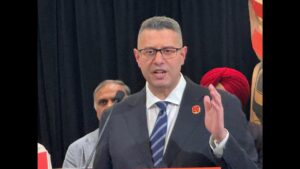
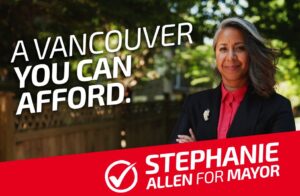
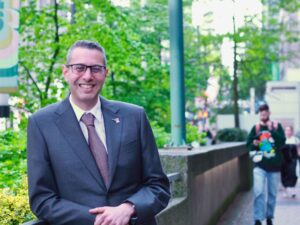
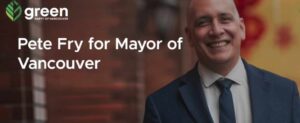
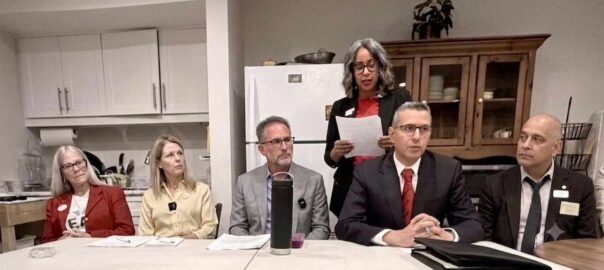
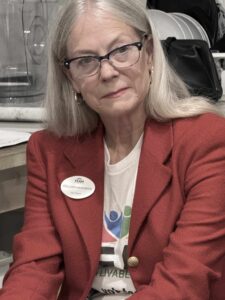
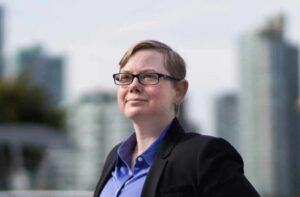
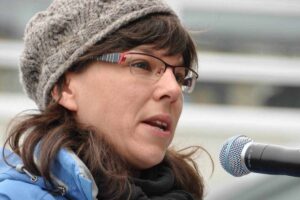
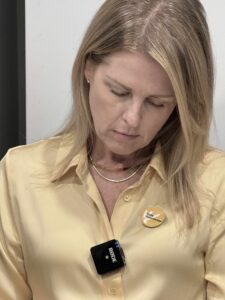
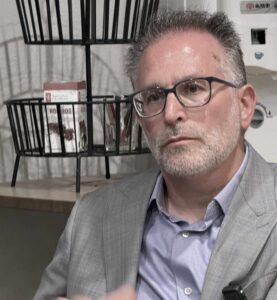
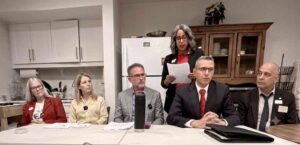
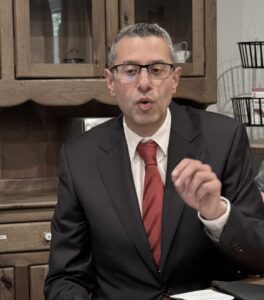
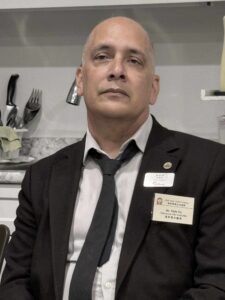
L-R, 2026 Vancouver Mayoral candidates: Colleen Hardwick, TEAM for a Livable Vancouver; Rebecca Bligh, Vote Vancouver; William Azaroff, OneCity Vancouver; Stephanie Allen (standing), The Coalition of Vancouver Electors (COPE); Kareem Allam, Vancouver Liberals; Pete Fry, Green Party of Vancouver.
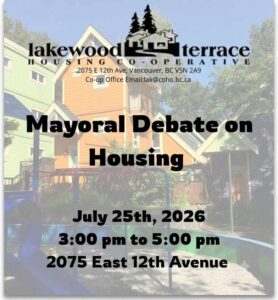
On Saturday, July 25th, Lakewood Terrace Housing Co-op held a Mayoral Debate.
The main issue before those gathered in the Co-op’s Common Room: housing.
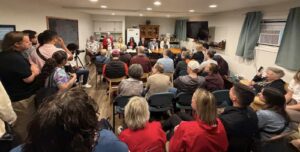
An overflow crowd of Vancouverites attended the July 25 Mayoral debate at Lakewood Co-op
The first speaker of the afternoon was Colleen Hardwick, representing TEAM for a Livable Vancouver, under whose banner she was unanimously endorsed as the party’s standard bearer.
Colleen Hardwick, TEAM for a Livable Vancouver
As per usual, Ms. Hardwick was heartbreakingly articulate in her presentation, with a solid command of the housing issue — a critical tenet of TEAM’s platform document and, in reality, the raison d’être of the civic party — as Ms. Hardwick argued housing co-ops represent the best answer to the provision of affordable housing in Vancouver, and across the vast land we call Canada.
Sadly, as articulate as Ms. Hardwick is on a myriad of civic issues, as we have written previously, she is an imperfect messenger for TEAM’s various policy proposals. There is about Ms. Hardwick a meanness of character, a distinct lack of joy, or as a friend said recently “an offputting sharpness that would make it difficult, if not impossible for me to cast my ballot for her as our city’s next Mayor.”
Ms. Hardwick comes into the campaign with “baggage” — not the least of the concerns expressed by many her lack of a general appreciation of the “trans issue” — which translates into a utter lack of respect (never mind support) for the too often marginalized members of the trans community, that while a central tenet of the platform of right-of-centre B.C. Conservative Party leader Kerry-Lynne Findlay, hardly seems resonant with the views of the majority population of Vancouverites who will go to the polls this October.
Transphobia. The bane of TEAM for a Livable Vancouver Mayoral candidate Colleen Hardwick’s existence, an issue likely to dog her second Mayoral bid.
Adrienne Smith, transgender human rights activist
The following is a quote by Adrienne Smith, a prominent Vancouver-based transgender human rights activist, social justice lawyer, and litigation director at the Catherine White Holman Wellness Clinic.
“The chair of the City’s own LGBTQ advisory committee was asked in open Council by Councillor Hardwick, after their submission, what their sex assignment was at birth. This is an incredibly invasive, inappropriate question. I’m going to give Councillor. Hardwick the benefit of the doubt that she learned something, but I’m still angry about that specific question.”
“Certainly, she’s had time to familiarize herself with some of the elements of contemporary transphobia and focusing on people’s sex assignment. Asking the Chair of the LGBTQ advisory committee about their surgical status, interrogating whether their gender identity is valid, is a central feature of transphobia.”
Andrea Reimer, former Vancouver City Councillor
Anti-reconciliation acknowledgment commentary by Colleen Hardwick.
Andrea Reimer, who sat on Council from 2008 to 2018 with Vision Vancouver, tweeted that her heart hurts and her head is angry over Councillor Colleen Hardwick’s vote against receiving a City report written by Katelyn Crabtree, the City’s Manager of Indigenous relations, and a specialist in Indigenous law.
“In 9 years of purposeful work in reconciliation, we achieved 100% unanimous votes on every single item brought forward,” Reimer says. “There was a lot of tough work — all of it involved land and money, because that’s what colonialism is all about.”
Councillor Hardwick also voted against City Manager Sadhu Johnston’s recommendation that Council direct staff to include in its Reconciliation Report an analysis of the status of Vancouver’s reconciliation commitments — as well as recommendations for building on these commitments, as Ms. Hardwick openly questioned whether it is appropriate for the local level of government to “spend taxpayers’ money on reconciliation,” or if the issue is the responsibility of senior levels of government. Ms. Hardwick also expressed her opposition to Council opening their meetings with a reconciliation acknowledgement, as recommended by Murray Sinclair, the author of the 2015 Truth and Reconciliation Report.
Rebecca Bligh, Vote Vancouver, and William Azaroff, OneCity Vancouver
Vote Vancouver’s Rebecca Bligh; and OneCity Vancouver’s Mayoral candidate William Azaroff
We are combining both Vote Vancouver Mayoral candidate and sitting Vancouver City Councillor Rebecca Bligh, and OneCity Vancouver Mayoral candidate William Azaroff together given their polling numbers, at present, are in the basement, and the likelihood that either Mayoral candidate ascending to the Mayor’s office would seem remote, at best.
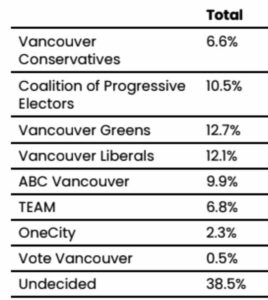
Rebecca Bligh. We are befuddled that the two term Vancouver City Councillor — and recent President of the Federation of Canadian Municipalities, which represents the interests of Canadian cities vis-a-vis the federal government — is polling at a mere 0.5%. Wrenchingly articulate on the issue of housing during the course of the debate at the Lakewood Terrace Housing Co-operative Mayoral forum held on the afternoon of Saturday, July 25th, there was no Mayoral candidate addressing those gathered who argued as articulately and well for the construction of housing co-ops on City-owned / Crown land on a 99-year leasehold basis that afternoon than Councillor Bligh.
“To provide safety and truly affordable homes for struggling families who reside across all 23 of the neighbourhoods that comprise the city we all love.”
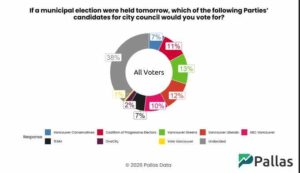
Yet, Councillor Bligh finds herself mired at dead last in support by those polled by the Pallas Data polling company. We’re confused.
Click on the link for further insight into the Pallas Data civic poll conducted on July 30, 2026
Subsequent to the meeting, as Councillor Pete Fry and VanRamblings were walking towards East Broadway and Commercial Drive, Councillor Fry wondered aloud as to why Councillor Bligh had come forward to seek the Mayor’s Chair, when from all reports she is polling terribly, and the chance that she might be Vancouver’s next Mayor would seem, at best, remote if not an impossibility, the two of us agreeing that in putting her name forward as a Mayoral candidate, Ms. Bligh was simply “bowing out of politics with grace.”
William Azaroff. OneCity Vancouver’s Mayoral candidate, endorsed by the Vancouver & District Labour Council, given his fiscal history working for the Vancity Credit Union, and since 2019, the CEO of Brightside Homes, a non-profit which builds affordable housing, Mr. Azaroff would seem to be a first-rate candidate for Vancouver Mayor. Not so, according to the Pallas Data polling company, and certainly not so if the response he received from those gathered for the forum on that Saturday afternoon is any indication.
Mr. Azaroff was hardly afforded an opportunity to speak, as each time he opened his mouth, he was heckled by one or another member of the audience, who questioned him as to why Brightside Homes so readily evicted their tenants on the thinnest possible evidence, and why Brightside — given so many of the tenants are vulnerable seniors — made it near impossible for residents to install air conditioners to mitigate the effects of Vancouver’s hot weather.
On a side note, if there is one candidate running for Mayor in 2026 that a surfeit of members of COPE, the Coalition of Progressive Electors are vehemently opposed, it would be the poor, woebegone Mr. Azaroff.
Polling at 2.3% — yep, seems just about right.
COPE, the Coalition of Progressive Elector’s Mayoral candidate Stephanie Allen (standing)
Quite simply, Stephanie Allen (standing, addressing the audience) walked away with the debate on that somewhat chilly, overcast Saturday afternoon, by far the most dynamic and engaging speaker of the afternoon, a charismatic presence at the front of the room, and the long sought saviour of COPE — the too often confused Coalition of Progressive Electors …
A personal aside: Just what the hell is COPE Councillor Sean Orr doing when he floats the idea of bringing back the Villages Plan in the next term of Council … whose side is he on, anyway? … developers, or the community who spoke up so vehemently against the developer-initiated Villages Plan designed to enrich themselves at the expense of those of us who live in one of the 14 Vancouver neighbourhoods designated as “density friendly”, Councillor Orr seemingly ignoring the wishes of the hundreds of folks, the Vancouver residents who turned up to address Council on why the Villages Plan constituted non-consultative, top down, autocratic city planning, that utterly failed to take into consideration the wishes of the residents who have long called these neighbourhoods home, where we raise our families …
We don’t mean to be unduly harsh in our criticism of COPE Councillor Sean Orr, who has stepped up to the plate, put in the hours, making himself available to the public in every neighbourhood across our city after being elected as the top candidate voters cast a ballot for in the April 5, 2025 by-election, securing 34,448 votes, the highest among all the candidates running for Vancouver City Council.
Not to mention, the utter ugliness of the allegation made by Mayor Ken Sim about Councillor Orr, that Mr. Orr had distributed illegal drugs on the DTES over the December 2025 holiday season, an utterly specious and unfounded allegation, given that in reality Councillor Orr was visiting friends and family on the Sunshine Coast when he, according to Mayor Sim, allegedly was distributing drugs. Having spoken with Councillor Orr about the matter, we are quite aware that Sean was emotionally devastated by the allegation made by Mayor Sim, that sought to damage Mr. Orr’s hard earned reputation for integrity.
All said, thank goodness that COPE Mayoral candidate Stephanie Allen is the most knowledgeable Mayoral candidate on the issue of affordable housing, given her past role as the respected Vice President of BC Housing, who brings herself forward as the democratic socialist candidate in the 2026 Vancouver civic election, with a strong a commitment to the democratic participation of Vancouver residents on the issues that dominate their lives, and her long held belief that democratic socialism is the only true cure for the ills that impact the alienated and disenfranchised majority population of Vancouver, who for so long have been locked out of decision-making at Vancouver City Hall, as one autocratic civic administration after another assumed power at City Hall.
Make no mistake, a Stephanie Allen-led City — ably aided by Shawn Vulliez, who we expect would be her outstanding Chief of Staff — is committed to the democratic participation of the residents of Vancouver on the decisions taken at Vancouver City Hall that impact their lives, no autocrat she, but rather a democrat, and a democratic socialist of the first order.
Kareem Allam, Vancouver Liberals Mayoral candidate
Kareem Allam, Vancouver Liberals.
In a word, tepid.
One of the worst presentations by a candidate for office that we’ve witnessed over the course of our lifetime. When members of the audience repeatedly demanded that Mr. Allam “speak up, we can’t hear you,” you know there’s trouble in his candidacy for Mayor that must be addressed before the current Vancouver municipal election truly gets underway next month.
The above said, although to some extent for us “the bloom is off the rose” in respect of Mr. Allam’s Mayoral candidacy, our continuing and heartfelt belief that Kareem Allam would make the best Mayor of Vancouver the residents of our city would experience in a generation, as the only action-oriented candidate for Mayor who has a plan of action for change that will transform civic governance which truly represents the interests of all of us who call Vancouver home, both Kareem Allam and Stephanie Allen have our full-throated support as the two of them fight tooth and nail to become Vancouver’s next Mayor.
Mr. Allam has to recognize he’s the candidate, not a behind-the-scenes campaign manager, who must up his game if he is to become Vancouver Mayor.
At one point in the afternoon, Kareem mentioned — in passing, while addressing those gathered at the Lakewood Terrace Co-op — that he was the only Mayoral candidate who “grew up living in a housing co-operative”, after which he let his statement lie dormant, seemingly without meaning, as he addressed a crowd consisting mostly of housing co-op members !!! … before moving on to discuss his, for this crowd anyway, his utterly irrelevant personal family history, rather than waxing poetic on the salutary role living in a housing co-op afforded him, the sense of community imbued living in a housing co-operative, where opportunity was afforded him that might not otherwise be available to an immigrant family attempting to make a new life for themselves in Metro Vancouver.
Councillor Pete Fry, Green Party of Vancouver
Pete Fry is the status quo candidate, the avuncular and well-regarded opposition to the corrupt ABC Vancouver civic administration that has ruled Vancouver for the past four interminable years, under the unsteady thumb of an often too absent Mayor Ken Sim.
Were Pete to become Mayor — mark my words, we’d soon be referring to him as Mayor Pete — there is little doubt he’d bring back the Renter’s Office, and in time would re-instate the Livable Wage Programme at Vancouver City Hall that the Sim administration jettisoned early in their term of office.
Mayor Pete wouldn’t look to get much done, rather he’d be a caretaker — a sane and caring caretaker, unlike the current incumbent — of the Mayor’s office. An upside? A Mayor Pete would be much more available to the public than any Mayor in Vancouver’s recent history, a kind of Mayoral energizer bunny, who would be everywhere in the public weal throughout the entirety of his term in office.
VanRamblings harbours a concern that Emily Lowan, the current democratic socialist leader of the Green Party of British Columbia — who has endorsed Stephanie Smith for Council, the accomplished and sophisticated ‘woman of the people’ who is running under the Green banner for the second time (we’ll be endorsing Stephanie, whose voice and presence we need on Council) — would not endorse Pete Fry in a month of Sundays.
Maybe that’s what the citizens of Vancouver want: someone they know, someone they trust who won’t upset the apple cart, but dedicate himself to taking care of the basics (garbage pick up, recycling, road maintenance. etc.) while keeping taxes down.
Although, we’re not so sure.
Research Co. and Angus Reid have recently published polling asking Vancouver voters what they want. The answer according to 56% of those polled: change, significant and even radical change, not the status quo.
Change is in the air.
Pete Fry, for all that he’s a good guy would not in any way, shape or form be the Mayoral candidate of change for whom a majority of Vancouver voters would seem to wish to cast their ballot as the next leader of our beloved city, come this early autumn October. Or, so it would seem this early in the 2026 campaign for Vancouver municipal office.
On Thursday, VanRamblings’ intends to publish a thoughtful, reflective column on what the three serious-minded candidates to become Vancouver’s next Mayor — that would be COPE’s Stephanie Allen, the Vancouver Liberals’ Kareem Allam, and the Green Party of Vancouver’s Pete Fry — would mean for those of us who live in Vancouver, and call our respective neighbourhoods and our city, home.

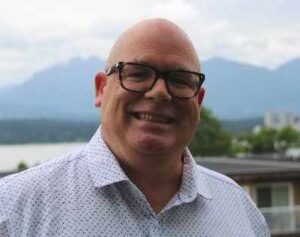 After spending more than a decade working inside the Vancouver Park Board as a senior leader in Commercial Services, Mark brings something increasingly rare to civic politics: real operational experience and firsthand knowledge of how the system actually works.
 Batch at Kitsilano Pool, the licensed Kits Beach concession stand, joint and patio — featuring great food