Category Archives: Environment

#SaveOurParkBoard | Tender Moments of Change at Park Board, Pt 1

The mandate of the elected Vancouver Park Board: building a bridge to a better tomorrow

As the last bastion for civic democracy in our city, the Vancouver Park Board has played a vital role in serving the best environmental, recreational and family interests of the community for more than 133 years, since its founding in 1889.

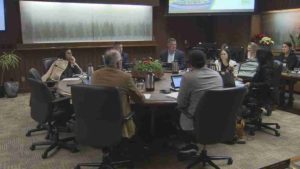
For many years, members of the community who attended Park Board meetings to address an issue or a “cause” sat at the same table as the elected Park Board Commissioners while addressing their concern, and were successful in having a direct impact on the livability and humanity of our beloved home by the ocean.

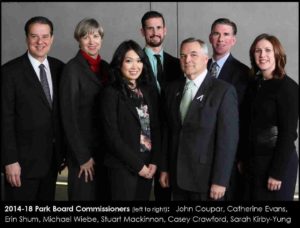
Today on VanRamblings, the first of two “stories” revolving around humanity at the Park Board table, specifically involving past Park Board Chairperson John Coupar, as well as Park Board Commissioners Trevor Loke and Constance Barnes, who sat on the 2014  Vancouver Park Board with Commissioners Sarah Blyth, Melissa De Genova and current British Columbia Attorney General, Niki Sharma.

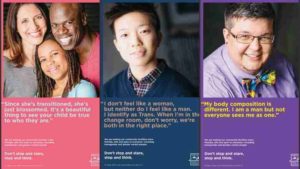
Vancouver Park Board Adopts an Inclusive Trans & Gender-Variant Policy


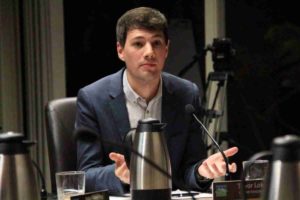
Trevor Loke, Vision Vancouver Park Board Commissioner

At the  May 12, 2013 meeting of Park Board, Commissioner Trevor Loke moved a motion to establish a trans and gender-variant working group, aimed at creating more inclusive spaces for members of the trans and gender-variant communities.

The Park Board Commissioners unanimously supported the motion, drawing a standing ovation from the dozens of supporters of the motion, present in the Park Board meeting room that night, many of the attendees sharing trenchant stories with the Commissioners about their experiences of feeling unwelcome in city facilities, such as recreation centres, swimming pools, and washrooms.

“There are days when with the best intents I’m off to the gym or off to the pool, and I turn around and I go back,” said Drew Dennis, a member of the City of Vancouver’s LGBTQ advisory committee.

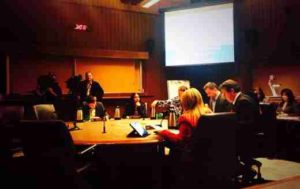
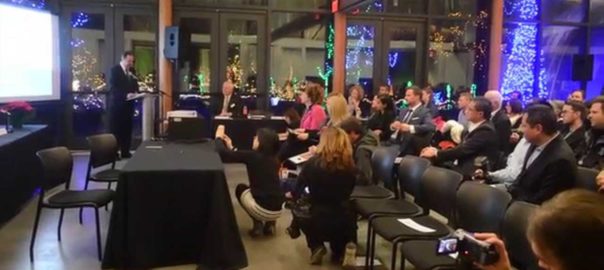
One year later, on Monday, April 28, 2014, the Vancouver Park Board’s Trans* and Gender-Variant Inclusion Working Group reported back to the seven Park Board Commissioners gathered at the table, on their engagement findings and priority recommendations, aimed at enhancing service quality and access to facilities.

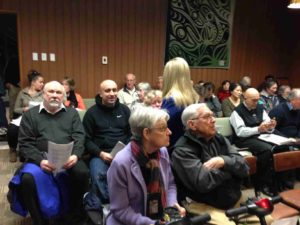
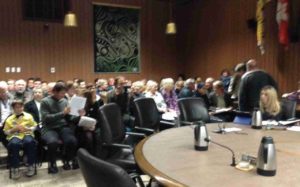
On that warm, early spring evening, 150 members of the trans and gender-variant community were present in the Park Board meeting room to address the recommendations of the working group, a good number of whom who would come to sit at the Park Board table while speaking to the Commissioners: incredibly articulate physicians employed by Vancouver Coastal who identified themselves as gender-variant persons on the spectrum, who spoke movingly and with spirit.

Young persons, high school students, members of the business community, teachers, lawyers, construction workers, actors and entertainers, seniors, a broad and representative spectrum of members of the cultural and ethnic mosaic communities that comprise and have long defined the Vancouver we know and love.


Constance Barnes, elected Chairperson of the Vancouver Park Board, on December 5, 2011

When it came time for the Commissioners to vote to adopt and establish a 2SLGBTQIA+ policy, the first Commissioner to speak was Vision Vancouver Park Board Commissioner Constance Barnes, who spoke with eloquence in her support of each of the members of the 2SLGBTQIA+ who were present in the room, down the long hallway outside the meeting room, and who had been standing outside the office listening to the speakers, now ready to hear Ms. Barnes’ words.

Constance Barnes’ address to the community gathered in the room, and to her fellow Commissioners, was heartbreakingly poignant, as she spoke of “righting an historical wrong”, of how — as a member of a minority community — she had often found herself excluded and even demeaned, and of how important it was to her that the Board unanimously adopt the motion to establish a 2SLGBTQIA+ policy that, among other initiatives, would construct all new change rooms, including three separate change rooms: Universal (U), Women (W) and Men (M).


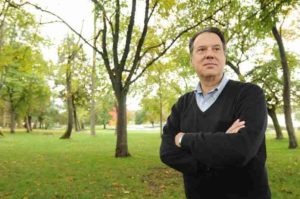
John Coupar, long-serving Non-Partisan Association Vancouver Park Board Commissioner

Next to speak: Non-Partisan Association Park Board Commissioner, John Coupar.

“Sitting at the Park Board table this quite wondrous evening, as was clearly the case with my fellow Commissioners, I was heartened and stirred by all that I heard, of the grace and vivid evocation of spirit of all the speakers, your pointed, poignant and potent argumentation for necessary change to establish a fairer and more inclusive society, and the role that the Vancouver Park Board has to play in realizing a more inclusive community for all.

Listening to the speakers who sat at the Park Board table this evening, I was moved. I am changed, forever. For me, the best part of being a Park Board Commissioner is how I am afforded the opportunity to learn about aspects of life about which I was not fully aware. I want to thank you for helping to make me a better, a more whole person, and for working with us to help create a fairer and more inclusive city for all.

2014 is an election year. If I should be so fortunate to  be re-elected to Park Board this autumn, and should I become the Chairperson of the Board, I commit to you tonight, that my first priority will include the construction of the new change rooms that Commissioner Barnes spoke about, but more: I will establish, as was requested this evening, a gender variant swim at the Templeton and Lord Byng pools, and during my next term in office, I will work with the 2SLGBTQIA+ community to create a welcoming environment in our community and aquatic centres, to work with you towards the creation of a fairer community for all.”

Indeed, John Coupar was re-elected as a Park Board Commissioner on Saturday, November 15, 2014, and was soon after inaugurated as Chairperson of the Board at a ceremony held at the VanDusen Botanical Gardens, on December 1, 2014.

Park Board Chairperson John Coupar’s first priority?

Establish a gender-variant swim at each of the Templeton and Lord Byng pools.

Next, Chairperson Coupar instructed Park Board General Manager Malcolm Bromley to begin work on the construction of inclusive change rooms and washroom facilities for members of the trans and gender variant communities.

In the 50+ years VanRamblings has covered the work that takes place at the Vancouver Park Board table, never have we been more moved than was the case this hallowed evening of change for the better, never before or since have we experienced as moving and eloquent a speaker than was the case with Constance Barnes on that particular late evening of April, 2014, and never, ever have we been more proud of an elected official than was the case that halcyon evening, and since, in the person of John Coupar, a true hero in our fair city by the sea.


Click / tap on the graphic above to sign  the Save Our Park Board Petition started by Sarah Blyth
#SaveOurParkBoard | Park Board History & Mandate

Vancouver Park Board History + Commissioners’ Mandate & Compensation

Established by an 1889 amendment to the Vancouver Incorporation Act, 1886 (later the Vancouver Charter). The Vancouver Park Board is unique not just across Canada, but across North America, as well (and the globe, for that matter), as the sole elected body of its kind, and as British Columbia’s Attorney General, Niki Sharma — herself, a former celebrated Vancouver Park Board Commissioner — recently told VanRamblings, “the Vancouver Park Board is a cherished institution.”

Correction, sent in by a reader. Vancouver is one of many jurisdictions in North America to have a semi-autonomous elected Park Board. It’s not unique, though it is the largest city in North America to have an elected Park Board. Although Vancouver, B.C., is the only major city in Canada with an independently elected Park Board, Minneapolis, MN, is a major U.S. city with a similar, long-standing, semi-autonomous elected board. While Vancouver’s board is unique in Canada, elected park boards exist in various U.S. municipalities, including Oregon, Illinois, North Dakota, and local districts in California and Washington.

Vancouver Park Board has seven elected commissioners who are charged with determining the policy direction of the institution. The Board’s mandate: “provide, preserve and advocate for Vancouver’s parks and recreation system … to the benefit of the citizens of Vancouver, the many neighbourhoods that comprise our beloved home, the City of Vancouver, and to advocate for the environment, as our parks represent the lungs of our city, contributing to the health of the community.”

Commissioners are elected at large every four years, with a chair and vice-chair elected by the Commissioners each December, their term to begin at the first meeting of Park Board Commissioners, in January, following the holiday break. At present the Vancouver Park Board Chairperson is Brennan Bastyovanszky, the Vice-Chairperson Scott Jensen, Park Board Committee Chairperson (the body which hears public presentations, and where all the “real” work of the Commissioners takes place), Laura Christensen, with Scott Jensen Vice-Chair.


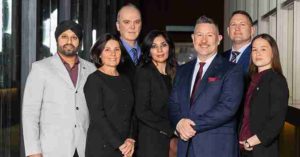
Vancouver Park Board Commissioners | L-R: Jas Virdi (ABC), Marie-Claire Howard (ABC), Tom Digby (Green), Angela Haer (ABC), Independents: Scott Jensen, Brennan Bastyovanszky, Laura Christensen

Park Board Commissioners served without remuneration until a 1972 amendment to the Vancouver Charter allowed them an annual honorarium of $1000. At present, for a not unusual 45-hour work week (this apart from the Commissioners’ regular employment in their professions), the Park Board Chairperson earns $23,428.65 per annum, with Commissioners earning $18,743.38 annually, or about 12.5% of the compensation afforded the average City Councillor at Vancouver City Hall.

The Vancouver Park Board oversees 242 parks and gardens, including major park “attractions” such as  the 1,000 acre / 406 hectare Stanley Park, the VanDusen Botanical Garden on Oak Street, and the Bloedel Conservatory atop Queen Elizabeth, 24 active community centres located in each neighbourhood across the city, the Park Board also responsible for Vancouver’s pools and water park system, and well-maintained skating rinks and playing fields, as well as three non-profit, well-used-and-enjoyed public golf courses, Langara, McCleery and Fraserview.

Today and tomorrow, we’re taking a break from the politics of Vancouver City Councillors making the horrendous, anti-democratic decision to eliminate the elected 133-year-old Vancouver Park Board, the last bastion of civic democracy in Metro Vancouver, where members of the public are listened to and respected, and have a direct impact on the setting of public parks and recreation policy.

On Wednesday, we’ll write about tender moments around the Park Board table — involving past Park Board Chairpersons John Coupar and Aaron Jasper, once on opposite sides of the political spectrum and avowed “enemies”, but who thanks to the shocking decision of the ABC Vancouver Councillors at Vancouver City Hall to attempt to abolish Vancouver’s elected Park Board have, in common cause, become new best friends, with John Coupar saying to VanRamblings recently ..

“I can’t believe how skilled Aaron is at organizing. Each and every time we get together I am more and more impressed with his intelligence, his dedication, and his love and commitment to Vancouver’s parks and recreation system, and the preservation of Vancouver’s elected Park Board. Working with Aaron is a joy!”

As you can see from the commentary above, some good is coming out of the Ken Sim-led fiasco to eliminate Vancouver’s elected Park Board. In addition to John Coupar and Aaron Jasper’s newfound friendship, former Vancouver Park Board Commissioners Sarah Blyth (a city hero, and founder of the Overdose Prevention Society) and Melissa De Genova, a two-term Vancouver City Councillor, have also now become new best friends, working together in common cause to ensure going forward, and long into the future, Vancouver will enjoy an elected Park Board.

Click / tap on the graphic above to sign  the Save Our Park Board Petition started by Sarah Blyth
Save Our Park Board GoFundMe Display Campaign
Click / tap on the graphic above to donate to the Save Our Park Board GoFundMe display campaign

#VanPoli | Vancouver 2050 | The City of the Future

A draft 30-year plan calls for limiting growth in Vancouver, and pushing new residents to the suburbs

All development decisions within the City of Vancouver that are currently being made by senior staff employed within the city’s Planning Department — currently slated to add more than 100,000 new residents to Vancouver, over the course of the next 30 years — is predicated on a rate of population growth that many commentators, and the most recent figures published by Statistics Canada, don’t jibe with population growth projections that are being made at Vancouver City Hall.

In an article published in The Vancouver Sun this past weekend, reporter Douglas Todd writes …

“In recent years about 12,000 more people have been annually moving out of Metro Vancouver for other parts of B.C. than have been moving into the metropolis. The vast majority of new arrivals into Metro Vancouver are foreign-born immigrants.”

Todd goes on to quote former provincial NDP MLA and current two-term Nanaimo Mayor, Leonard Krog.

“We have had lots of people from Alberta and the East cashing out and moving to Nanaimo — to get away from the crush and the smoke,” says Krog. “People are also fleeing Vancouver, and the Lower Mainland. Now it’s more common for people to ask why would you stay in the Lower Mainland when you can cash out on your $2-million house on a crowded Burnaby street, or $3 million Vancouver home and get a great $1 million home in Nanaimo?”

Krog says newcomers are pouring into Nanaimo for several reasons — affordable housing, less density, and a higher-quality lifestyle. “The strong overall shift of residents from other provinces, and from Vancouver or Metro Vancouver, to smaller B.C. cities, which have more young adults, is unsurprising,” writes Douglas Todd.

“Nanaimo’s rapid growth of two per cent a year”, Krog says, “is a result of a ‘perfect storm’ of conditions, including the attractiveness of the region’s oceanfront, university, airport, nearby ski mountains, climate and a lower cost of living.”

“It has all been amplified by the pandemic,” he said. “COVID-19 is helping many across Canada and in other parts of B.C. realize they might be able to permanently work out of their homes. So why not do it in a place that is pleasant and somewhat more affordable?”

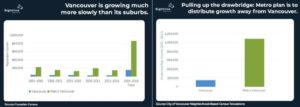
If as lawyer, writer, and and community organizer Daniel Oleksiuk writes on the Sightline Institute website that population growth in Metro Vancouver will occur in the Metro Vancouver suburbs, and not in Vancouver, and if Nanaimo Mayor Leonard Krog is correct in his assertion that rather than remain in Vancouver, families are instead opting to move to smaller, more affordable cities such as Nanaimo, how can the Vancouver Planning Department justify a growth strategy, population growth projections, and the consequent tower-driven densification projects they are currently presenting to the members of Vancouver City Council for approval?

At Issue: Form of Development, and the Livability of Vancouver

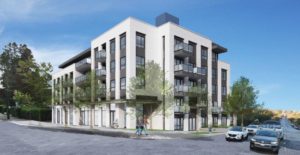
Artistic rendering of the Esso gas station site at 3205 Arbutus, redeveloped into a mixed-use building

A deep issue of concern that has arisen for many, as Vancouver’s  Planning Department presents their plans to City Council, is “form of development”.

For the most part, if you take a look at many of the projects VanRamblings wrote about yesterday, they adhere to the ‘development at all cost’ ethos of the now discredited former Vision Vancouver civic administration, who were roundly and wholly turfed from office in the 2018 Vancouver municipal election: a plethora of greenhouse gas-emitting podium and tower-driven developments — whether they be in the northeast “forest of condos” False Creek neighbourhood, the newly-reimagined Oakridge Centre or nearby Heather Lands development, or in the southern sector of the Grandview Woodland neighbourhood’s ‘Safeway site’.

The question must be asked: whatever happened to the notion of ‘gentle density’?

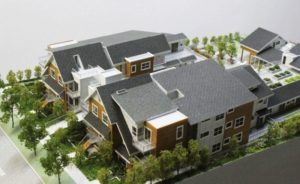
Why is it that rather than construct high-rise condominum towers all along the Broadway Corridor, from Clark Drive all the way out to UBC, could we not opt instead for the kind of low-rise building illustrated directly above, in the proposed, neighbourhood friendly project located at West 16th Avenue and Arbutus Street?

Artistic rendering of a planned, environmentally-friendly wood construction building

Perhaps of even more importance to the stewards of our environment who sit on Vancouver City Council, why not mandate that future home construction be built employing sustainable, carbon-storing cross-laminated timber —  glued at perpendicular angles to make thick beams, and clearly visible in columns, beams, walls and ceilings? Wood construction has proven popular across a broad section of our developer, architect and contractor communities, who see building with wood as a way to increase density at a lower cost, while reducing environmental impact.

Now, that would be an innovation for our Vancouver City Council to truly consider.

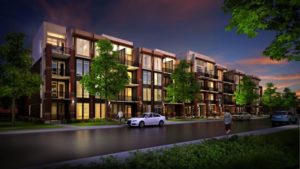
Rowhouses such as the ones above are common in many cities around the world, but not in Vancouver

And what of fee-simple row housing , which architect Michael Geller argues for in an interview conducted by Carlito Pablo, in the October 6, 2021 issue of The Straight?

“In a fee-simple rowhouse or townhouse, there’s nothing owned by the association. The owners own their roof, their windows, the land under and around their townhouse. That means the individual owners are responsible for taking care of any lawn, painting the outside, fixing leaks in the roof, and shoveling the snow.”

Whatever happened to the notion of human-scale, gentle density townhouse construction, all the rage 40 & 50 years ago? Why, in recent years, has townhouse construction fallen so out of favour, as podium and high-rise tower-driven plinth construction has become the greenhouse gas-emitting building forme de la journée?

Vancouver Co-Housing, located on 33rd Avenue between Victoria Drive and Knight Street

And what about co-housing in Vancouver, housing that is family-supportive, senior-friendly and energy-efficient? For instance, Vancouver Co-Housing consists of 29 privately owned, fully equipped homes plus 2 rental units, in addition to a large and beautiful common house and outdoor common areas. This vibrant community is located on East 33rd Avenue between Victoria Drive and Knight Street.

The homes range from studios to one-, two-, three- and four-bedroom units – all with their own kitchens. The common house has an area of 6,500 sq ft. and includes a community kitchen, dining room, and lounge; activity rooms for children and teens; office areas; two guest rooms; a yoga studio; and rooftop gardens. As well, there are ground-level gardens, workshops, plus a courtyard and play area that encourage year-round social contact. All parking is underground.

By working together, Vancouver Co-Housing members are able to share amenities common to a traditional home and reduce the size of their private dwelling.


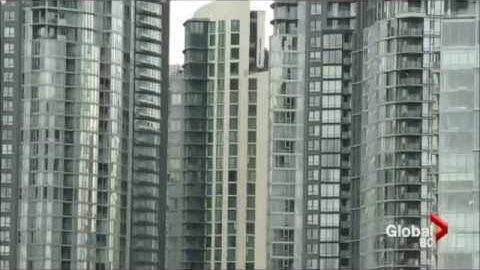
A 2014 Global BC video, identifying Vancouver as one of the high-rise capitals of the world

On July 24, 2014, during the lead up to the Vancouver civic election that year, VanRamblings published a column titled At Issue: Form of Development, and the Livability of Vancouver, which quoted a 2012 study conducted by University of British Columbia Chair of Urban Design and Landscape Architecture, Patrick Condon, addressing the question of how Vancouver might reasonably approach the reduction of energy use and consequent greenhouse gas production in the city by at least 80 per cent by 2050, and how that goal might be accomplished.

The answer: the construction of compact, low-rise structures across the city, along its arterials and throughout its neighbourhoods, as a greener, more workable, more energy-efficient alternative to the present form of high-rise development that so captured the imagination of Vision Vancouver, as seems to be the case with our present Council. That 2014 VanRamblings column is well worth reading.

The indefatigable Patrick Condon, future — and absolutely necessary — Vancouver City Councillor

Again today, VanRamblings will leave you with the words of Patrick Condon …

“While it is true that high-rises, when combined in large numbers, create GHG-efficient districts, the buildings themselves are not as efficient as mid-rise buildings.

“High-rises are subject to the effects of too much sun and too much wind on their all-glass skins. And all-glass skins are, despite many improvements to the technology, inherently inefficient. Glass is simply not very good at keeping excessive heat out, or desirable heat in. High-rises, according to BC Hydro data, use almost twice as much energy per square metre as mid-rise structures.”

“High-rise buildings built largely of steel and concrete are less sustainable than low-rise and mid-rise buildings built largely of wood; steel and concrete produce a lot of GHG. Wood traps it. Concrete is 10 times more GHG-intensive than wood.”

Patrick Condon argued with heart and with purpose in 2014, as he does through until today, for the construction of thousands of primarily mid-rise wood frame mixed use commercial / residential buildings on Vancouver’s arterial streets.

And, most importantly, Patrick Condon argues for the retention of existing neighbourhood quality, and the supply of sufficient units to house the burgeoning wave of our elderly population, housing for young families, housing equity, and neighbourhood preservation, through the gentle infill of existing residential streets.

VIFF 2020 | Canada’s National Film Board Shines With 2 Great Docs

Jennifer Abbott's devastating climate change documentary, The Magnitude of All ThingsThe Magnitude of All Things, director Jennifer Abbott’s devastating NFB co-production about personal and planetary grief, premièred at VIFF’s Vancity Theatre, with Abbott and co-producers Shirley Vercruysse and Andrew Williamson in attendance. #VIFF2020.

The Magnitude of All Things (Canada). Truth telling, a call to action, and gorgeously filmed by cinematographer Vince Arvidson, Sundance and Genie award-winning director Jennifer Abbott (The Corporation) offers viewers an intimate and emotional punch-in-the-gut with her new documentary.
The Magnitude of All Things draws intimate parallels between the experiences of grief — personal for the filmmaker in coming to terms with the passing of her sister, and planetary, as Magnitude takes us across the globe to witness planet Earth in crisis: from the catastrophic fires Australia suffered at the end of 2019, to the devastating role our current climate emergency has played in destroying a southern hemisphere eco-system, the bleaching of the Great Barrier Reef, the rising sea levels drowning the Pacific Island nation of Kiribati, to the destruction of the Amazon rain forest arising from the grievous policies of Brazilian and Ecuadorian presidents Jair Bolsonaro and Lénín Moreno, the struggles of the Indigenous peoples who are waging a desperate battle against oil and mining extraction and, at home, how the melting ice in the autonomous Newfoundland and Labrador Inuit community of Nunatsiavut has permanently altered the landscape.
Lest you believe The Magnitude of All Things to be a polemic, didactic filmmaking regurgitating what you’ve heard before, allow this writer to assure you that is not at all the case. Rather, Magnitude is a film about battles waged, lamentations of loss, and raw testimony that coalesces into an extraordinary tapestry, woven together with raw emotion and staggering beauty, a film that transform darkness into light, and grief into action.

The Magnitude of All Things. A film by Jennifer Abbott. An NFB & partners production.

star.jpg star.jpg star.jpg

John Ware Reclaimed, an NFB documentary from filmmaker and historian, Cheryl Foggo.

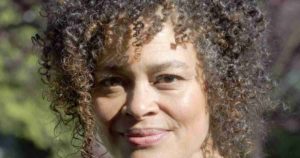
John Ware Reclaimed (Canada). A genealogical exploration of the life of 19th century Alberta cowboy, John Ware, that seeks to reclaim the narrative of his life, filmmaker and historian Cheryl Foggo expands on the work she undertook in mounting her 2012 award winning play, John Ware Re-imagined, as she re-examines the history of Alberta’s famous early black folk hero and Prairie cowboy, who was rugged, independent & black.
From a story written by Omayra Issa for CBC Saskatchewan …

“It is a history that has been erased,” says Foggo. Both sets of her maternal grandparents came to Saskatchewan from the U.S. at the turn of the 20th century. Three generations lived in the province before moving to Alberta, the family eventually spanning across the 3 Prairie provinces.

Foggo’s ancestors were among the 1,500 to 2,000 African American farmers who came from the southern U.S. from 1905 to 1911 in search of a better life and a place that was less hostile and dangerous than Jim Crow America. They established five small pioneering communities: one in Saskatchewan and four in Alberta. Their story is steeped in slavery, racial segregation, and the fierce desire for emancipation.

Foggo has been reclaiming her family history for decades. More recently, she has been doing the same for an iconic Black figure on the Prairies, John Ware.

Ware proved himself to be a charismatic man and a highly skilled rancher. He owned two ranches, ultimately reaching one thousand head of cattle. He also pioneered irrigation in the region. Legends of his talents as a horseman were known in Indigenous communities on Treaty 7 territory, where he was close friends with chief Crowfoot of the Siksika First Nation.

John Ware’s story is a fundamental Prairie story and an indelible thread in the Canadian narrative. “It is important to connect John Ware to the Black history that was here in his time, carried on, and has been here from that time forward,” Foggo told CBC Saskatchewan journalist, Omayra Issa.