Category Archives: Environment

Saving the Environment | Fast Fashion vs the ‘Thrift’ Economy

Consignment clothes shopping as a thrifty means to save the environment

Fashion is today the second most polluting industry in the world, following only the oil business.
For altruistic and ecological reasons, the shopping attitude of Canadians towards second-hand clothes has been changing, and consignment stores are bustling with their newfound clientele, and consequent increased sales.
What was once a $12 billion North American market only a few short years ago is now a thriving $24 billion consignment clothing market, with the marketplace expected to top $50 billion by the middle of the next decade.
In other words, the ‘second hand economy’ is thriving.

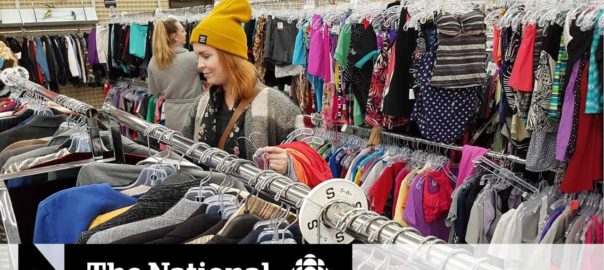
A consignment clothing shop

Consignment stores are not what they used to be, offering quality like never before, carefully curated collections, and an elevated shopping experience for their burgeoning customer base.
A recent published study shows that in 2018, 64% of women and men were willing to buy pre-owned consignment store clothing — clothing which often has never been worn, and acquired from businesses which have gone bankrupt — up from 45% in 2016. The clothing retail industry believes that by 2028, up to half of the clothes in women’s and men’s wardrobes are likely to be ‘secondhand’. Fashion circularity, a new term referring to the recycled life of a garment, as indicated above is projected to reach $51 billion in five years, up from the current $24 billion.
In discussion with consignment store operators across Vancouver, proprietors told VanRamblings that where there was once “a stigma attached” to purchasing consignment store clothing — conjuring images of the yellow sweat patches, clothes strewn casually and confusingly hung (if at all) and emotional baggage people often associate with used clothing …
“Now, thankfully, purchasing clothing from consignment stores is not just acceptable — it’s cool and has completely captured the fashion zeitgeist,” one consignment clothing proprietor recently told us.
A recent study published by the Raymond James Financial Centre reports that 56% of women and men aged 18-29 prefer the consignment second hand market over conventional retailers of new clothing. Shopping in a thrifty manner guarantees shoppers the uniqueness of their own style. Most of the pieces in a consignment clothing shop are one of a kind, and allow endless possibilities of matching and styling in a creative and unique way.
All of which is to say, no longer is there a taboo about consignment clothes shopping. The rise of the sharing economy has also helped — it’s taken the stigma out of resale and removed the need to own something forever.

Forever 21 fashion retailer closes its doors

In September, fast fashion chain Forever 21 announced it was closing all its international locations, including 44 stores in Canada, amid flagging sales.
According to a recent interview conducted with the CBC finance guru Diane Buckner, British Columbia retail consultant Bruce Winder told her fast fashion’s target market — young, style-conscious shoppers on a budget — are also among those most concerned about the health of the planet.

“The younger millennial specifically, along with Gen Z, are incredibly environmentally conscious,” he said. “And they look at every brand and every product in terms of what is the impact on society, but also what is the impact on the employees and the environment.”

Not only do consignment stores benefit from the fact that the city’s stylish set are clearing out their closets like never before, a return to quality over quantity in the minds of most shoppers means visits to consignment stores for quality designer goods that will last (i.e. not end up in a landfill) and not break the bank will only continue to rise.

One third of millennials do the vast majority of the clothes shopping at thrift and consignment shops

How does consignment clothing store shopping save the environment while also saving you money? Thrift shopping at consignment stores offers a viable solution for anyone looking to help out the environment.

  • Saving Money. Thrifted clothing is far more affordable than new clothes of comparable quality.

  • Smarter Buys. You tend to spend more time looking over each item instead of buying it outright.
  • Unique Finds. It’s highly unlikely that anyone else is walking around in the same clothes as you.
  • Creative Potential. You might be inspired to try new combinations, or even some DIY reconstruction!

If that isn’t enough incentive, as promised above, here are seven ways Erich Lawson writes thrifting helps the environment …

1. Consignment clothing shopping lowers your carbon footprint. A great deal of energy goes into clothing manufacture, right from the transportation of raw materials to the production process. Then, there’s the energy required to transport clothing to stores, and dispose of unwanted pieces. When shoppers buy from consignment stores, we prevent wastage of energy & resources on production of new clothes.

2. Aiding in Water Preservation. In addition to energy, water consumption is extremely high at every stage of clothing production. For instance, growing one kilogram of cotton requires 5,300 gallons of water, while wet processing and printing use 18 and 21.6 gallons respectively, per pound of cotton. Manufacturing, packaging and transportation processes add to this cost as well.

3. Reducing Chemical Pollution. The production of cotton is highly pesticide-intensive, causing soil acidification and water contamination. Textile manufacturing processes also involve the use of harmful dyes, caustic soda and crude oil by-products. These chemicals are generally dumped into areas around manufacturing units, contaminating surface and ground water through soil runoff.

4. North Americans throw out anywhere from 60 to over 80 pounds of textile waste annually, and only about 10% of this makes it to consignment stores. If more people start shopping for consignment clothes, less fabric ends up being dumped in landfills. That’s not all. Packaging material is also reduced, keeping plastic, paper and metal out of the waste stream.

5. Inspiring Green Living. Thrifting is an essential part of green living, in more ways than one. When you buy consignment clothing, you keep them from being sent to a landfill and reduce manufacturing demand as well. Also, by donating consigning clothes you no longer wish to wear, you encourage others simply by giving them something they can use.

6. Boosting Community Development. Shopping at consignment stores means support for local business instead of multinational corporations. Consignment stores provide employment in retail outlets, creating more jobs and boosting the local economy. Many hire disabled workers and support local community programming projects as well.

7. Encourages Recycling. Did you know that recycled cotton clothing uses less than 3% of the energy that would have gone into producing new clothes? When you reuse or recycle clothes, you’re decreasing the demand for production & encouraging sustainabity. It may not seem like much, but every item that doesn’t end up in a landfill counts as a win!

In the 1990s, when VanRamblings was charged with training Statistics Canada employees on how to conduct the annual Survey of Household Spending, during the role play portion of the training exercise, in answer to the question as to how much we spent on clothing and shoes each year, we responded with: $500. Senior staff at Statistics Canada guffawed loudly when VanRamblings offered this bit of information, saying to us at days’ end, “Raymond, suggesting that you spend only $500 a year on clothing and shoes is the funniest thing I think I’ll ever hear. How clever of you. Good for you. It brought lightness to the day’s proceedings.”

Men's jackets to be found at a consignment clothing shop

Little did senior staff know that, in fact, VanRamblings was acquiring most of our clothing from Arthur’s for Men on West 1st Avenue just west of Burrard Street, where fashionable wool sweaters could be had for $15, shirts and pants for $10, and jackets and shoes for $25, or less.
VanRamblings’ children had long encouraged shopping at consignment stores.

“Dad, not only are you colour blind, you have no fashion sense. In the past, you’ve bought your clothing at The Bay, and you’ve tended to shop for the store brands. You are much better off shopping for name label clothing at a consignment store: those clothing items are priced less expensively than what you’re buying now, the clothes are of invariably better quality — and will hold their nap in a way your current shirts, sweaters and pants will never do, meaning the clothing will last longer.”

“Buying name label consignment clothing assures quality, assures — at least in most cases — proper colour and design that will match the remaining items in your wardrobe, and as long as you shop at Arthur’s for Men, the owners will know what clothing items you have in your wardrobe at home, because they have a list of what you’ve purchased, so will be able to recommend complementary items.”

And now to the present.
Recently, we purchased an Italian suede jacket we’d seen at a neighbourhood Italian clothing boutique that had now gone out of business.
The jacket was retailing for $380.
When Turnabout (our consignment clothing shop of choice, these days) purchased almost the entire stock of the bankrupt Italian clothing boutique, that $380 suede jacket was put on sale for $40!

Turnabout Luxury Clothes Consignment Shop on West Broadway in Vancouve

When walking into the store the morning the jacket was put on sale, staff approached me to say, “Mr. Tomlin, we’ve just put a jacket out on the floor that we think you’ll love,” directing me to the suede jacket. “You’d better buy it now, or it’ll be gone by noon.”
So, we did — and enjoy wearing it today!

One third of millennials do the vast majority of the clothes shopping at thrift and consignment shops

Now, it may be a lark that our former employers at Statistics Canada thought our voiced annual clothing expenditure to be a laugh, but in our current scarce and uncertain economy, if sales at the consignment store we most often attend is any indication — where only a decade ago, we could wait for an item to drop 80% in price were we to wait six to eight weeks — when an item we like now appears in the shop, we purchase it immediately, because if we don’t, it’s almost a certainty that it’ll be gone the next day.

#VanPoli Civic Politics | The Death of Cynicism | Part 1 of 4

Vancouver City Council, 2018 - 2022 | Sarah Kirby-Yung, Christine Boyle, Pete FryVancouver City Council, to serve from 2018 thru October 2022, clockwise: Councillors Rebecca Bligh, Christine Boyle, Adriane Carr, Melissa De Genova, Lisa Dominato, Michael Wiebe, Jean Swanson, Sarah Kirby-Yung, Colleen Hardwick, and Pete Fry.

The time has arrived once again for VanRamblings to weigh in on the state and nature of civic politics, as practiced in the City of Vancouver.
Today’s post will begin a brief insight into the 10 City Councillors who were elected this past October, and how each is faring in the current term.

Rebecca Bligh, Vancouver City Council delegate to the Federation of Canadian Municipalities

As per the graphic above, Councillor Rebecca Bligh is Vancouver City Council’s delegate to, and a Board member of, the Federation of Canadian Municipalities, replacing retired City Councillor Raymond Louie in that role.
The socially-skilled Ms. Bligh has emerged, as might well be expected given her background in business, as one of the more conservative voices on Council — although, as is the case with her Non-Partisan Association colleagues, a fiscal conservative and certainly not a social conservative.
Working with her fellow elected, progressive and feminist NPA City Councillors, Council Finance Chair Melissa De Genova, Lisa Dominato, Colleen Hardwick and Sarah Kirby-Yung, Ms. Bligh’s focus has tended towards looking after the public purse, keeping taxes low and, most recently, championing the shifting of the tax burden away from small business owners — who you may have noticed have been going out of business in record numbers these past months, with vacancy signs on arterials throughout the city — to homeowners — receiving support for this important initiative from councillors Sarah Kirby-Young, Lisa Dominato, Michael Wiebe, Adriane Carr and Pete Fry. Note should be made that small business bears up to 49% of the tax burden in the City of Vancouver.
Note should also be made that the passage of the tax shift motion represented the first time this current term Councillors voted contrary to staff wishes, who unsurprisingly emerged as the only voices in opposition to the tax shift — for a Council that has tended to be in sway to City staff, Councillors’ decision to act in the public interest rather than bureaucratic staff interest, represents hope on the horizon that Council, in future, may more consistently vote for us, rather than adhere to bureaucratic wishes.

Christine Boyle, Vancouver City Council, climate change warrior

Councillor Christine Boyle (pictured above) has emerged as Vancouver City Council and our city’s leading climate change warrior, this past January introducing a ground-breaking, precedent-setting motion that in the process of declaring a climate emergency, mandated Six Big Moves

1. That 90% of Vancouver citizens will eventually live within an easy walk or stroll of their daily needs. That implies much more densification in South Vancouver, where this is mostly not the case — apart from in Marpole, Oakridge, Dunbar, Kerrisdale, and South Hill;

2. Council will set a target of 50% of kilometres driven in 2030 will be made in zero-emission vehicles. This implies a sharp increase in electric-vehicle charging stations and far more extensive efforts to make these available to tenants, who comprise 53 percent of the city’s population;

3. By 2030, two-thirds of trips will be by walking, cycling, rollerblading, and transit. This implies that more road space for motor vehicles will be taken away to accommodate non-motorists. This process has already begun on the Granville Street bridge;

4. That all new replacement heating and hot water systems will deliver zero emissions, which implies a sharp expansion of neighbourhood energy utilities and the use of heat pumps;

5. Setting a target of reducing embedded emissions in new buildings and construction projects to 40% of 2018 levels by 2030, which as Georgia Straight editor Charlie Smith writes, “would inevitably lead to far more wood construction and far less use of cement, as well as fewer underground parkades”;

6. Passing policies that will remove one million tonnes of carbon annually by 2060 through regeneration of local forests and coastal ecosystems, which as Mr. Smith writes, “… implies a whole lot of tree planting.”

This past week Council unanimously approved the climate action initiative.
As VanRamblings has long contended, 34-year-old Councillor Christine Boyle represents the hope of our future, a visionary leader made for our times, a humble political figure who surveys a broad cross-section of public opinion (listening, really listening) before acting, a Tommy Douglas-like figure (although, she’s not there yet — but she will be!) who inspires, has consistently proven she can work productively with others, and whose clarion voice — as is the case with many of her Council colleagues — is undeniable, honest and true & in Ms. Boyle’s case, authentically her own.

Vancouver City Councillor Adriane Carr, top vote-getter in 2014 and 2018Vancouver City Councillor Adriane Carr celebrating Pride Day in our city, in 2018.

After serving two terms in office leading the charge at City Council on behalf of citizen interests, three-term Councillor Adriane Carr has taken somewhat of a back seat to her more vocal, recently-elected, activist, and ambitious colleagues on Council: think Councillors Christine Boyle, Sarah Kirby-Yung and Ms. Carr’s Green colleague, Pete Fry, in particular — all of whom have proved, as well might be expected to anyone in the know, as the most media savvy of our Vancouver councillors, consistently articulate, the most progressive and forward thinking, plain spoken and engaged councillors, and absolutely tireless in their service of the public interest, out and about our city engaging with the broadest range of citizens in every neighbourhood across our city every opportunity they get … and who, for the record, constitute VanRamblings’ favourite councillors.
Still and all, we’re talking Vancouver City Councillor Adriane Carr here — two elections in a row emerging as Vancouver’s most beloved City Councillor, reflected in poll topping numbers on election day in both 2014 and 2018 — no piker she. As the Chairperson of Vancouver City Council’s Standing Committee on Policy and Strategic Priorities (Councillor Sarah Kirby-Yung is vice-chair), chairperson of the Metro Vancouver Board Climate Action Committee, and since 2009 the co-chair of the Canadian Women Voters’ Congress non-partisan Women’s Campaign School, Ms. Carr has long worked on behalf of citizens, as she continues to do to this day.
Councillor Carr has argued articulately and well in the current term for awarding extra density to developers in exchange for renting 20% of the suites in new construction at CMHC (and Council’s) “moderate rental” / median market rental rents, rents well below market, the best example of which is the proposed Kitsilano development at 2nd and Larch.
Let us all hope that Councillor Carr carries the day on this important initiative, a constituent element of a broader affordable housing strategy.
At present, under the existing Vision Vancouver-initiated Rental 100 programme, in exchange for extra density, developers offer rents only slightly below market rates (e.g. $1,768 for a studio, $2,056 for one bedroom, $2,703 for two bedrooms, and $3,559 for three bedrooms), as opposed to $950 for a studio unit; $1,200, one bedroom; $1,600, two bedrooms; and $2,000, three bedrooms (with lower “moderate rents” on Vancouver’s eastside), as the “moderate rental rates” proposed by Councillor Adriane Carr, for those earning between $30,000 and $80,000.
In case you were wondering: yes, Adriane Carr remains very much on our side, as we presume will continue to be the case throughout the term.

Vancouver City Hall

For anyone paying attention to the goings-on at Vancouver City Hall this past six months, you have to know that our new Council is the most action-oriented, public interest serving, neighbourhood-consulting and activist City Council Vancouver voters have elected to municipal office in years.
Although, the new Council members sometimes lose the thread of the argument that got them elected (which we’ll write about on Thursday), most Councillors consistently finding themselves in these early days of their four-year term too often in the sway of bureaucratic staff. In consequence, even given their activist bent, our new Council has emerged as quiescent.
VanRamblings believes that our current very bright and dedicated group of Councillors by this autumn will finally have begun to find their feet (and independent activist, community-serving voices), leading to a new era of hope in our city, and as we suggest in the headline of today’s VanRamblings’ posting, the death of cynicism in Vancouver civic politics.


Don't Miss Any of VanRamblings Must-Read Content. Click On This Graphic for More


Don't Miss Any of VanRamblings Must-Read Content. Click On This Graphic for More

Sunday Reflection | Save Your Life | EWG’s Dirty Dozen Foods

EWG, the Environmental Working Group's 2018 most and least pesticide-ridden foods | Eat Organic
EWG: The Environmental Working Group’s Dirty Dozen & Clean 15 Foods | Eat Organic

From August 2016 through the end of October of that year, from the initial diagnosis of my terminal, inoperable Stage 4 hilar cholangeocarcinoma, I simply stopped eating. No appetite, simply wasn’t hungry. Didn’t feel well.

Not only did I have no appetite, but my entire intestinal system was in an uproar and in the early stages of shutdown, with my kidneys, gallbladder, biliary tract and bile duct, pancreas and liver pretty much shot and so cancer-ridden as to dramatically compromise my tenure on this Earth, my being kept alive a function of my Vancouver General Hospital gastro-intestinal surgeon, Dr. Fergal Donnellan, placing stents into my bile duct to keep things functioning, alleviating the jaundice that was serving to compromise my immune system, my bilirubin count up in the 200 range (normal bilirubin count: 17), my liver shot, my jaundiced body (but not spirit) causing me to glow yellow — not that I could see any difference between how I look normally, and the apparent way I looked to friends in this three month span of 2016 — keeping me bed-ridden, or in the hospital.

The bile duct system in the intestines, the organs and ducts that make and store bile (a fluid made by the liver that helps digest fat), and release it into the small intestine. The biliary tract includes the gallbladder and bile ducts inside and outside
The bile duct system in the intestines, the organs and ducts that make and store bile (a fluid made by the liver that helps digest fat), and release it into the small intestine. The biliary tract includes the gallbladder and bile ducts inside and outside.

Of course, aside from writhing around in my bed or finding myself in meu banheiro for hours on end, there was an upside to all the pain and misery that was now consuming my life: I was losing weight like mad, and I wasn’t spending any money! Now, anyone who knows me — as my daughter Megan is wont to point out — knows that I tend to be tubby. Dropping 70 pounds & not spending any money — what a great programme, I tell ya.

I didn’t announce my hilar cholangeocarcinoma to the world until October 7th, 2016, doing so only after arriving home from Vancouver General Hospital after a day of surgery, still a little fuzzy and discombobulated from the anaesthetic, but ready to reveal to the world that my time on this Earth was seemingly and abruptly, not to mention, painfully, coming to an end.

Not really oh woe is me, I thought, nor did I relay the information of my cancer diagnosis in an attempt to gain sympathy (or, empathy for that matter — as came to be my experience in the next months, though, as one person after another revealed their own cancer diagnoses to me), but more as a matter-of-fact “this is what’s happening to me, it’s been good knowing you, thank you for your support, and for indulging my idiosyncrasies all these years” message to friends on Facebook, and a whole lot of good-natured folks I had no idea had been following me on Facebook, among them friends I’d not communicated with in years, sometimes decades.

Now, my friend (and as it turned out, personal saviour), author and mom and lover of Alan Bayless, the incredible and talented — and “make no mistake, I would not be here today were it not for Maureen’s intervention on my behalf, consistently the only person and the right person to see me through the scarifying experience of my cancer journey, and the only person who knows the whole story” — Maureen Bayless, about whom I will write, and dedicate more than one VanRamblings column in the future, in the story of my cancer journey, which will commence publishing in the aftermath of the current and hopeful 2018 Vancouver municipal election.

Marlie Oden, with whom I had worked as an arts journalist with the Lower Mainland community newspapers, as Director of Special Projects at Vancouver Magazine, and later publisher-editor of Festival magazine, published in support of Leonard Schein’s Festival Cinemas, upon reading in early October of my cancer diagnosis, got on the phone with me, texted and messaged me, told me of her own arduous cancer journey, a cancer with which she was still living, and set about to make arrangements to arrive at my now dark, dank and utterly messy home in mid-October, laden with an organic chicken from Whole Foods, as well as soups and prepared breakfast items from Whole Foods, salads and more, she and her husband leaving me a store of food that took me more than a month to eat, Marlie insisting, “Okay, Raymond. You’re going to eat well. You’re going to eat organically. You may not have much of an appetite, but you’re going to find a way to eat this food, whether you want to or not, because you need nutrition to keep up your strength, and to fight your cancer.” Hallelujah!

And with that, Marlie and her husband were gone.

I should probably say that I’d had no communication with Marlie in 20 years! Yet, there she was in my home, placing food into my refrigerator, giving me much needed instruction, showing a caring that was so heartening and spiritually uplifting that — as dire as everything looked, and would for months to come — for the first time in two months, Marlie gave me hope. You’re reading this, so you know I’m still around. When you run across Marlie and Maureen thank them for me, will ya — please.

I managed to consume the chicken over a one-week period, the soups over the month and into November, and most of the breakfasts over the course of the next month. So, thanks to Marlie and her husband, I was eating again, my weight loss slowed, and my strength began to return.

Anyone who knows me knows that I like (maybe that should read, love) strong, emotionally healthy, and spiritually sound women — any part of me that is at all recommendable comes in consequence to the women in my life, women who have cared for me against all reason, I have often thought to myself, but who have taken on the task of helping to make me a better, a healthier and more spiritually-centered person, women who have given me life and a sense of purpose. Marlie Oden and Maureen Bayless certainly are members of the cadre of compassion who have contributed to creating the best parts of me, and of how I daily bring myself to the world.

EWG, the Environmental Working Group's 2018 most and least pesticide-ridden foods | Eat Organic
Read through the entire Dirty Dozen list of foods that the Environmental Working Group insists you should never eat, unless they’re organically-grown.

Marlie says, “Eat organic,” I eat organic. Of course, I already knew that — but I’d bought into the myth that eating organically would cost a fortune, and living like a pauper like I do, I thought, “Well, I oughta be eating organically, but can I really afford it?” Turned out, though, that eating organically doesn’t cost any more money than eating pesticide-ridden, corporate-farmed agri-business foods. For instance, if you look at the graphic above, you’ll notice that strawberries are first on the list of foods that if you’re not eating them organically, and you’re consuming pesticide-ridden agri-business strawberries, as I wrote on Facebook the other day …

“Strawberries contain residue from up to 22 pesticides — eating ‘regularly grown’ strawberries is like eating little bits of death, as yummy as they may look and taste. UNLESS, unless, unless the strawberries are ORGANIC — in which case, you may enjoy this life-giving food to your heart’s content. A couple of weeks ago, Whole Foods Market had 3 pounds of organic strawberries for only $9.99 (regular price, $6.98 a pound). This week, Choices Market has stepped up to plate, offering 3 pounds of organic strawberries for only $9.94!”

If you’re a Trump / Alex Jones conspiracy theorist, and you believe that there’s no difference between organic foods and agri-business grown foods, have at it, believe what you will. Me, I’m going to eat organic, especially when organic foods are often cheaper, much cheaper, than agri-business grown foods you’ll find at your local grocer. For instance, organic celery at Safeway — which is #10 on the Dirty Dozen list of foods you should stay away from, or as the folks at the Environmental Working Group write, “More than 95% of conventional celery samples tested positive for pesticides. A maximum of 13 pesticides were detected on a sample of conventional celery.” Oh gosh, I want to have some conventional celery right now … not — is consistently cheaper, often much cheaper, than the agri-business celery that you’re probably buying regularly, or periodically.

EWG, the Environmental Working Group's 2018 Clean 15 Foods, the least pesticide-ridden foods
Read through the entire Clean Fifteen list of foods that the Environmental Working Group suggests you can eat, even if the foods are not organically-grown.

The Environmental Working Group also publishes a Clean Fifteen list of foods you can consume without having to be too concerned as to whether they’re organic or not, including as above, avocadoes, corn on the cob, pineapples, cabbages, onions, frozen peas, papayas, mangoes, eggplant, honeydew melons, canteloupe, cauliflower and broccoli — because these foods have thick, impenetrable “skins”, or the Environmental Working Group found that these foods had no detectable pesticide residues.

You’ll notice, too, that on both lists, at the bottom of the linked pages there’s an expanded list of foods under each category, so you’ll want to take a look at the expanded lists, in order to know what you should, or should not, be eating.

If you’re a parent of young children, as is the case with OneCity Vancouver’s Alison Atkinson, Cara Ng, Anna Chudnovsky and Christine Boyle (and their respective partners), or if you’re a good BC NDP supporting parent of a young child, like Kurt Heinrich and Theodora Lamb (should I have reversed the order of names? hmmm), Stepan Vdovine and Mira Oreck, or physician-to-be Cailey Lynch who’s co-habiting with some guy named David Eby (isn’t he British Columbia’s Minister of Justice and Attorney General, and maybe they’re, like I dunno, married? … who knows, it’s so beyond me …) — and, how in heck did I manage to miss mentioning Vancouver City Councillor Melissa De Genova again? … ew, she’s not going to like that, and what about new mom, and great and democratic Park Board Commissioner, Erin Shum, or mom-to-Grade One student and fiscally prudent and dedicated and hard-working Vancouver School Board trustee, Lisa Dominato? — or even if you’re not a died-in-the-wool progressive — or, maybe you’re the hope of our future, COPE candidate for City Council, Derrick O’Keefe, and his partner, Andrea Pinochet-Escudero, who have a great young son — it’s probably in the best interests of your family, and your family’s health, to take a look at both EWG lists, and act according to your conscience & as I say above, in yours and your family’s best interests.

A Park Excursion, and An Opportunity for Peace & Companionship

Take the FREE ParkBus service from Vancouver to Golden Ears Park this summer!

Perhaps you’re a pauper like me, or maybe it is that you are parsimonious of nature. Maybe it’s that the prospect of actually driving out of town seems daunting, finding your way through traffic and searching endlessly for the route to your destination all just a little bit too much for you.
Or, maybe you wish to save the environment, but can’t yet afford an electric vehicle, and renting one is cost prohibitive, driving to Golden Ears Provincial Park in your old beater, or gas guzzling SUV, not the way that you’re choosing to live your life these days as a responsible citizen.
Well, you’re in luck. Today on VanRamblings, something you may have read or heard about elsewhere, but perhaps not.

British Columbia's Golden Ears Provincial Park, only 55 kilometres from the heart of Vancouver.ParkBus | Vancouver to Golden Ears Park | FREE bus service | Weekends | Summer 2018

In any case, today on VanRamblings you will learn about ParkBus, an absolutely FREE bus service that will run over the summer months — sponsored by the Mountain Equipment Co-op (MEC) — that will take you on a pleasant and stress-free out-of-town excursion from Vancouver to Golden Ears Park, each and every Saturday and Sunday, starting this upcoming July 7th, and ending just shy of two months later, on September 2nd.
Operated by Vancouver-based Environmental Sound Transportation, ParkBus will depart from MEC’s Vancouver Store, located at 130 West Broadway, just east of Cambie, each Saturday and Sunday morning, returning in the late afternoon. Did we mention that ParkBus is free?

This summer, Vancouver's Mountain Equipment Co-op will over a FREE bus service — called ParkBus — that each and every Saturday and Sunday, commencing on July 7th, leaving in the morning from the MEC store at 130 West Broadway, will take you on the excursion of your life to Golden Ears Park for the day, returning to Vancouver in the late afternoon.ParkBus | Vancouver to Golden Ears Park | FREE bus service | Weekends | Starting Saturday, July 7th | Running each Saturday and Sunday through September 2nd

Just look at that comfy, spacious and ultra-clean air-conditioned bus above, the ParkBus of which we write today.
You’ll need to pre-book your seat online with a credit card deposit (to prevent no-shows), with reservations set to open up in mid-June, when you can book your seats by calling 1-800-928-7101. Vancouver to Golden Ears Park is a hop, skip and jump 55 kilometres from Vancouver, the journey taking all of one-hour, surrounded by families and folks intent on having a good and responsible time in British Columbia’s welcoming wilderness.
You can learn about Leave No Trace principles from a ride facilitator, too.

Hikers on a day excursion to Golden Ears Provincial Park, who us the FREE ParkBus service.Hikers on a day excursion to Golden Ears Provincial Park | FREE ParkBus service.

At 62,540 hectares, Golden Ears is one of the biggest parks in British Columbia. Known for its extensive trail system for hikers and equestrian use, Golden Ears also is home to Alouette Lake, which is a popular spot for swimming, windsurfing, water-skiing, canoeing, boating, and fishing.
ParkBus drops you off at Gold Creek Parking, inside the park, conveniently located within walking distance of a number of beautiful hiking trails.