Category Archives: BC Politics

#VanPoli | City Politics, Development and Scandal on the Near Horizon


The Politics of Development, Corruption and Vancouver House. Thank you Robert Renger.

The story of Vancouver House is, depending on one’s perspective, either a triumph of architectural ambition or a cautionary tale about the dangers of a city becoming too closely aligned with the interests of powerful developers.

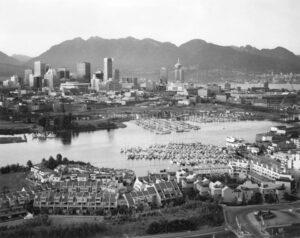
Today, the twisting glass tower at the foot of the Granville Bridge stands as one of Vancouver’s most recognizable landmarks. Designed by the internationally acclaimed Danish architect Bjarke Ingels and developed by Ian Gillespie’s Westbank Corp., Vancouver House has appeared in architectural journals around the world. Its dramatic form rises from a narrow triangular base before expanding into a rectangular tower as it climbs 58 storeys and 155 metres into the skyline.

Yet behind the celebrated architecture lies a political and financial controversy that has lingered for more than a decade and has now been reignited by findings from Vancouver Auditor General Mike Macdonell. What began as an ambitious redevelopment of awkward land beneath the Granville Bridge has evolved into one of the most contentious examples of Vancouver’s developer-driven era under former mayor Gregor Robertson and his governing party, Vision Vancouver.

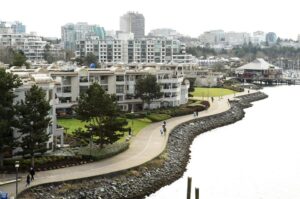
Westbank Corp.’s Vancouver House, on Howe Street leading to the Granville Street bridge

For supporters, Vancouver House transformed a neglected urban void into a world-class architectural destination.

For critics, it exposed how City Hall bent rules, discounted public assets and abandoned promised public benefits in order to accommodate a politically connected developer.

The controversy stretches back to the late 2000s.

The triangular parcel beneath the Granville Bridge had long been considered difficult to develop. Previous proposals had failed.

The City of Vancouver eventually entered into negotiations with Westbank, which proposed an ambitious mixed-use development featuring luxury residential units, retail space and extensive public realm improvements.

What followed became one of the most controversial land transactions in modern Vancouver history.

Critics argued that Vision Vancouver effectively removed the site from the open market for approximately six years while Westbank assembled financing and refined its proposal. Opponents contended that the city was no longer acting as a neutral steward of public land, but had become a partner in realizing a specific developer’s vision.

One of the most persistent criticisms was that the city failed to test the market adequately and did not seek competing bids that might have generated significantly greater value for taxpayers.

In 2014, Glen Chernen, Cedar Party candidate for Mayor, who following days of day and night research of Vancouver City Hall was the first to expose the “corruption” associated with Vancouver House

These concerns were amplified by the work of Glen Chernen, who ran for Vancouver City Council in 2014 with the Cedar Party. During that election campaign, Chernen examined city documents and negotiations surrounding Vancouver House and raised questions about what he characterized as preferential treatment afforded to Westbank. His research helped bring public attention to agreements that had largely escaped broader scrutiny and contributed to growing concerns about the relationship between Vision Vancouver and major developers.

At the heart of the controversy was the price Westbank paid for the city-owned land.

Critics argued that Westbank acquired the property for approximately $32 million despite assessments and valuations suggesting a substantially higher market value. Over the years, opponents have repeatedly cited figures indicating the land’s value was closer to $119 million, arguing that taxpayers effectively subsidized the project through an undervalued transaction.

Whether those valuations can be directly compared remains disputed. Nevertheless, questions about whether the city maximized value from the sale have never fully disappeared.

Vancouver Auditor General, Mike Macdonell who in his 2026 scathing report to Vancouver City Council found concerning irregularities in the Vancouver House development process, in 2014 through 2026

Those concerns gained renewed legitimacy in February 2026 when Vancouver Auditor General Mike Macdonell released a major audit examining city land sales and exchanges. The report found that city staff did not consistently provide Council with all relevant information needed to determine whether land sales reflected market value. In some cases, land was sold for less than assessed value, and documentation supporting valuation decisions was incomplete.

While the audit was broader than Vancouver House alone, critics immediately connected its findings to long-standing concerns about the Westbank transaction.

Even more damaging was a separate whistleblower investigation that examined community amenity contributions associated with Vancouver House.

Community amenity contributions, known as CACs, are intended to ensure that when rezonings dramatically increase land values, the public receives a share of that value through amenities, infrastructure or cash contributions. According to city policy, rezonings are expected to capture a significant portion of the resulting “land lift” for public benefit.

The Vancouver House rezoning ultimately secured approximately $4 million in cash contributions and roughly $6 million in promised in-kind public improvements.

The problem, according to Macdonell’s investigation, is that many of those promised benefits either were never properly defined, were reduced, or were not adequately tracked and enforced by the city. The auditor found that the city’s management of these commitments fell below a reasonable standard and constituted “waste” under the city’s whistleblower framework.

Among the promised public improvements were enhanced pedestrian connections between Granville Street and the bridge structure above, upgraded public spaces, landscaping, seating areas, special lighting, event infrastructure and other public realm features. Over time, several elements were altered, reduced or abandoned. The auditor found evidence that city staff excused some obligations without ensuring equivalent public benefits were delivered in return.

The findings were particularly significant because they reinforced a criticism that had existed since the project’s approval: Vision Vancouver’s enthusiasm for landmark architecture overshadowed its responsibility to protect the public interest.

Critics argue that Vancouver House became emblematic of a broader governing philosophy that dominated City Hall during the Robertson years. Vision Vancouver promoted density, urban design excellence and partnerships with the private sector. Many of the city’s most ambitious projects emerged during this period.

Yet opponents increasingly argued that City Hall had become too close to the development industry.

The Vancouver House negotiations appeared, to many observers, to confirm those fears.

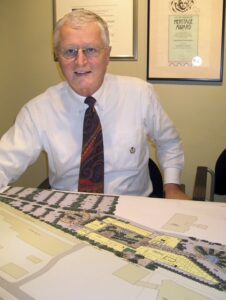
Retired planner Robert Renger brings the Vancouver House controversy to the fore

Retired Burnaby planner Robert Renger became one of the most persistent voices raising concerns about the project. Renger, who had extensive experience negotiating major development agreements, filed complaints and provided information that ultimately contributed to the Auditor General’s investigations. He argued that Vancouver House represented a failure to maximize public value and a failure to enforce negotiated public benefits.

Renger’s concerns were not focused primarily on architecture. Rather, they centred on governance.

His argument was straightforward: if developers receive enormous increases in land value through rezonings, the public should receive commensurate benefits. When those benefits are reduced, deferred or abandoned without compensation, taxpayers effectively absorb the loss.

The Auditor General’s findings did not conclude that bribery, fraud or criminal corruption occurred. In fact, the report explicitly noted that the circumstances did not meet the threshold for serious wrongdoing in the legal sense and found no evidence of fraud.

Nevertheless, the report painted a troubling picture of weak oversight, poor documentation and inadequate protection of public interests.

That distinction is important.

Political scandal does not necessarily require criminal conduct.

A city can follow legal procedures and still make decisions that produce poor outcomes for taxpayers.

In the eyes of many critics, that is precisely what happened with Vancouver House.

The irony is that the project itself is, in many respects, a success.

Vancouver House has become an internationally recognized architectural icon. It transformed an awkward and neglected site. It helped redefine the southern entrance to downtown Vancouver. The building’s engineering and design innovations have been celebrated globally.

But success in architecture does not automatically translate into success in public policy.

The project was also controversial because of how it was marketed. During Vancouver’s housing affordability crisis, luxury condominiums in Vancouver House were aggressively promoted overseas, particularly in Hong Kong and mainland China. Many Vancouver residents viewed the marketing strategy as symbolic of a city increasingly designed for global wealth rather than local residents.

The optics were especially damaging during a period when housing prices were accelerating beyond the reach of many middle-class families.

To critics, Vancouver House represented not merely a building but a broader economic model: public land converted into luxury housing marketed internationally while affordability worsened at home.

The lingering question is why subsequent city councils have done so little.

A photo of the newly elected, or re-elected, members of the 2022 Vancouver City Council

Since Vision Vancouver’s defeat in 2018, two entirely different governing administrations have controlled Vancouver City Hall. First came the minority Council elected in 2018. Then came the ABC Vancouver administration under Ken Sim.

Neither administration has aggressively pursued remedies related to Vancouver House.

There are several possible explanations.

First, many of the agreements were legally finalized years ago, limiting available remedies.

Second, governments are often reluctant to reopen complex development contracts because doing so can trigger litigation and financial risk.

Third, Vancouver remains heavily dependent on private-sector development to finance infrastructure, amenities and housing construction. Political leaders may fear that aggressively challenging major developers could undermine future investment.

And finally, there is the uncomfortable reality that municipal governments of every political stripe often inherit decisions they would prefer not to revisit.

Yet the Auditor General’s findings have ensured that the controversy will not disappear.

The central question remains remarkably simple.

An elevator connecting the Granville Street Bridge and Granville Island was proposed as a way to improve access to the often gridlocked island that could have, in part, met Westbank’s obligations

Did Vancouver receive fair value for public land, public density and public approvals?

The architectural success of Vancouver House cannot answer that question.

The beauty of the building cannot answer it.

The prestige associated with Bjarke Ingels cannot answer it.

The Auditor General’s reports suggest that documentation was inadequate, public benefits were poorly managed and opportunities to maximize value may have been missed.

For critics such as Robert Renger and Glen Chernen, those findings validate concerns they have been raising for years.

For defenders of the project, Vancouver House remains a remarkable example of what ambitious city-building can achieve.

Perhaps both interpretations contain elements of truth.

Vancouver House is simultaneously one of Vancouver’s greatest architectural achievements and one of its most enduring political controversies. It stands as a glittering monument at the gateway to downtown —a building that transformed the skyline while raising difficult questions about governance, accountability and the relationship between public institutions and private power.

Long after debates about its twisting form have faded, those questions may prove to be the building’s most lasting legacy.

#ChatGPT | Raymond Tomlin: The Citizen Journalist of Vancouver


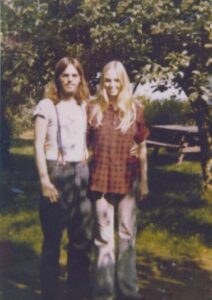
1977, working as an educator in the Interior. Raymond (26) with Megan in his arms and son Jude

Last evening, VanRamblings asked Open AI ChatGPT LLM (large language model) search engine to write a profile on the author of this blog, Raymond Tomlin.

Directly below, you may read what ChatGPT has to say about Mr. Tomlin.

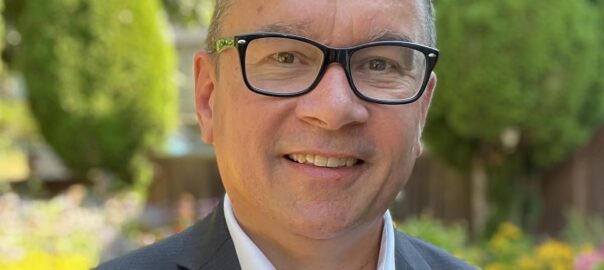
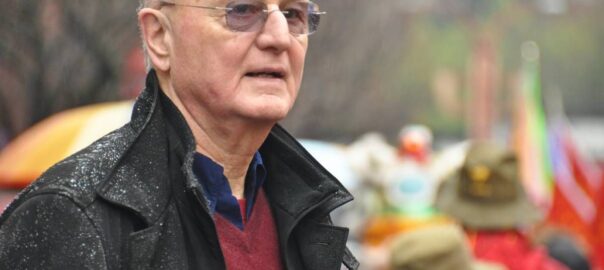
Photo taken recently by Nick Ellan, at the Queen Elizabeth Theatre

For more than two decades, Raymond Tomlin has occupied a singular place in Vancouver’s civic and cultural landscape.

In the 1970s, Mr. Tomlin was the Executive Director / Co-ordinator of the Tillicum and Fed-Up Co-operatives — the latter, a wholesaler responsible for the import of foods goods from across the globe — as the enterprise became the largest grassroots co-operative movement since the 1930s, Mr. Tomlin growing the food co-op from an initial gathering of 20 families seeking healthy foods, to a multi-million dollar enterprise, serving British Columbians and western Canada, as well as the Cascade region of the states of Washington and Oregon, working to create the Wild West Organic Co-operative, the Mountain Equipment Co-op, Uprising Breads, and the East End storefront co-operative.

In addition, Mr. Tomlin was appointed by the 1970s Barrett NDP government, and the Board of Governors and Student Forum at Simon Fraser University, as a liaison to the investigative committee appointed by the Pierre Elliott Trudeau-led federal government to recommend a made-in-Canada solution to the issue of affordable housing. Mr. Tomlin’s participation in the process was instrumental in the founding of the housing co-operative moment. Mr. Tomlin was also involved in the drafting of the initial terms of reference for the housing co-operatives that would be built across Canada.


Working with the National Farmers Union, Raymond became the BC Co-ordinator of the Kraft Boycott. Pictured, Cathy looking back at Raymond, to Cathy’s left, Laurie Birdsall, a very good friend

Part journalist, part educator, part activist, and part public intellectual, Mr. Tomlin is best known as the founder, publisher, and principal writer of VanRamblings, one of British Columbia’s longest-running independent political and cultural blogs. Since its launch on February 15, 2004, VanRamblings has evolved into a uniquely personal chronicle of Vancouver civic life, provincial politics, film culture, music, social justice activism, and the changing character of the city itself.

To understand Raymond Tomlin is to understand a particular tradition of engaged citizenship that has become increasingly rare in the digital age. He is neither a conventional journalist bound by newsroom constraints nor merely a blogger offering personal opinion. Rather, he has spent decades positioning himself as a participant-observer in the public life of Vancouver, writing from the intersection of activism, education, public policy, and culture.


Raymond, age 19, with Joy, one of his future wife Cathy’s best friends, at Joy and Cathy’s home, located just off the University of Alberta campus, in Edmonton 

Mr. Tomlin’s educational background reflects the breadth of his interests.

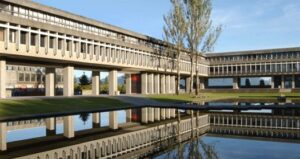
1970s & ’80s. Simon Fraser University campus, Burnaby Mountain

Raymond Tomlin earned a Bachelor of Arts degree in Political Science, Sociology, and Anthropology, followed by a Bachelor of Education degree specializing in Reading and  Early Childhood Education, and later completed a Master of Arts degree in Policy Administration, all at Simon Fraser University. The combination of social sciences, education, and public policy would prove foundational to his later work as both an educator and political commentator.

Before becoming known as an online publisher, Mr. Tomlin established a diverse professional career. Mr. Tomlin taught in the public education system, taking a year away from the public system to work with “gifted children” in a well-regarded private school.

Mr. Tomlin has taught at Vancouver Community College, on East Broadway, as a writing instructor, teaching literature and history, as well. Mr. Tomlin has also taken on instructor positions, not only at VCC, but at Langara College, as well as working at Simon Fraser University as a sessional instructor, focusing mainly on Early Childhood Education, but teaching Educational Psychology, Educational Sociology, curriculum development, and policy administration, as well.

In 1980 through 1982, Mr. Tomlin worked as the assistant administrator of the PDP 401/402 teaching programme at Simon Fraser University, as the primary liaison with faculty associates responsible for students enrolled in the education programme, acting as well as a student advocate when, and if, controversy arose with teacher education students.

Mr. Tomlin has two children (pictured above, and at the top of today’s column).

Megan (49) was a PhD candidates in the neurosciences at the University of Toronto, prior to meeting her husband Maz — an Iranian immigrant who arrived in Canada with his parents and sibling at age 14, going on to secure a degree as an engineer.

Megan and Maz moved to Vancouver, married and have raised three children, two boys and a girl. Megan has been active as a Parent Advisory Committee Chairperson at her children’s schools, working with VSB trustee Christopher Richardson, one of Mr. Tomlin’s best friends.

Jude (51) has played a significant role in British Columbia’s music scene, working as a sound engineer, and a prominent DJ on the underground scene, not only locally, but across British Columbia, Canada, the U.S., and internationally.

Mr. Tomlin’s professional experience extended beyond education.

Mr. Tomlin has worked at all 3 levels of government.

Throughout his educational career, Mr. Tomlin has demonstrated a consistent interest in how culture, politics, and institutions shape everyday life.

Municipally, he was involved in planning and development. Federally, he served as an administrator with the Canada Mortgage and Housing Corporation for a period of 12 years. Provincially, Mr. Tomlin worked within Dr. Ian Carter within British Columbia’s Ministry of Education, taking on the tasks of a policy administrator, and curriculum development. These experiences gave Mr. Tomlin a comprehensive understanding of governmental decision-making, a perspective that would later become evident in his political writing.

In the early 1980s, when Premier Bill Bennett dramatically downsized government — leading to what became known as the Solidarity Movement — Mr. Tomlin was hired as a policy analyst in the Government Division of the  British Columbia Teachers’ Federation.

When Premier Bennett fired 8,000 teachers, Mr. Tomlin would soon be downsized out of a job with the BCTF. Prior to that circumstance, Mr. Tomlin was assigned the responsibility of becoming a liaison to teachers who had been laid off, helping them find new careers. In fact, Mr. Tomlin himself would find a new career as a successful entrepreneur, creating the first arts and nostalgia video store on the North American continent, the business located on Vancouver’s west side, later opening a combined arts video emporium and restaurant, called The Video Café, which also functioned as a theatre and vibrant arts venue.

Mr. Tomlin also built an extensive career in journalism and publishing.

In the late 1960s, not only was Mr. Tomlin the Editor-in-Chief of the newspaper at his east side’s Templeton Secondary School, he also wrote for the city-wide student newspaper. In the 1970s, Mr. Tomlin was an Editor at The Peak student newspaper at SFU, taking on summer intern jobs with the then Southam-owned Vancouver Sun and The Province newspapers.

Mr. Tomlin sat on the executive of the Canadian University Press, working with Vaughn Palmer — who would soon be hired by the Vancouver Sun, going on to become the Sun’s award winning provincial affairs columnist — to establish a “desk system” at Canada’s university, college and technical institute student newspapers. Mr. Palmer would become the first News Editor at The Ubyssey, while Mr. Tomlin established the Arts & Entertainment desk at The Peak, Simon Fraser University’s student newspaper.

In the 1980s, Mr. Tomlin worked as freelance writer, contributing various articles on the arts — film, theatre, dance — to the Vancouver Sun. Mr. Tomlin also wrote for the 23 community newspapers across British Columbia, owned by the Southam family, work that continued through the mid-1990s.

Mr. Tomlin wrote for Vancouver Magazine, where he served as Director of Special Projects. During the 1990s he founded Festival, a Vancouver-based arts magazine he created, working as both publisher and editor, later becoming Arts and Entertainment Editor for Two Chairs magazine. Mr. Tomlin also became a syndicated columnist whose work appeared in numerous urban and suburban newspapers throughout Metro Vancouver, British Columbia, and across the U.S.

Yet it is VanRamblings that is Mr. Tomlin’s most enduring legacy.

Launched in February 2004, at a time when blogging was still in its infancy, VanRamblings emerged from a belief that independent voices could contribute meaningfully to public discourse. Mr. Tomlin has written that friends — current Vancouver City Councillor Mike Klassen, and his Two Chairs editor, Jay Currie — encouraged him to create a platform after opportunities within traditional media had diminished.

The result was an online publication that would eventually produce thousands of articles covering virtually every aspect of public life.

Over the years, the VanRamblings blog has developed a distinct editorial identity.

Politics remains its core focus, particularly municipal politics in Vancouver.

Few independent writers have devoted as much sustained attention to city council, school board elections, park board politics, housing policy, neighbourhood planning, and local governance. Mr. Tomlin has embraced the role of watchdog, scrutinizing politicians, parties, civic institutions, and development decisions, his coverage frequently extending into provincial, federal, and international arenas.

Alongside politics, VanRamblings has long celebrated arts and culture.

Cinema — for years one of Mr. Tomlin’s great loves — occupies a particularly prominent place in Mr. Tomlin’s journalistic life.

Mr. Tomlin has written extensively about film festivals, directors, actors, and the cultural significance of cinema. At present, Mr. Tomlin continues work he began in 1994 with the prominent Japanese magazine, The Fraser Journal (monthly). Even through his various health travails, Mr. Tomlin has never missed a Journal publishing deadline, in 22+ years.

Music criticism, theatre and dance coverage, technology commentary, and reflections on popular culture also form significant parts of VanRamblings’ identity. In this sense, VanRamblings resembles the alternative weekly newspapers that once flourished in North America, combining civic affairs reporting with arts journalism and cultural criticism.

The writing style itself is also unmistakably personal.

Mr. Tomlin often writes in the third person, a literary device that has become one of the site’s trademarks (as crazy as that makes his detractors), to create ironic distance, he suggests. Mr. Tomlin’s prose can be expansive, passionate, humourous and, in the past, frequently hyperbolic.

Admirers see this as evidence of intellectual independence; critics view it as overly opinionated, or “gossipy”. Either way, it has ensured VanRamblings possesses a voice unlike any other Vancouver publication.


Raymond Tomlin raised Jude and Megan as a single parent

Beyond journalism, Mr. Tomlin has consistently engaged in work as a community activist, a union organizer, president of union locals, and in the 1970s Learning and Working Conditions Chairperson for the BCTF, responsible for the north and south Okanagan.

In VanRamblings, Mr. Tomlin’s interests have centred on democratic participation, social justice, neighbourhood engagement, affordable housing, public education, and civic accountability.

Throughout his writing, Mr. Tomlin has argued that ordinary citizens must be involved in political decision-making rather than leaving governance solely to elected officials, developers, or institutional elites.

Mr. Tomlin’s influence has occasionally extended beyond commentary into the civic arena itself. Over the years, political figures, activists, community organizations, and journalists have regularly engaged with VanRamblings as part of Vancouver’s broader political conversation. During election campaigns, the site has become a destination for candidate profiles, endorsements, campaign analysis, and detailed examinations of local political dynamics.

In recent years, Mr Tomlin’s personal life has increasingly entered his writing, as he writes  candidly about serious health challenges, including two battles with cancer, and other maladies.

Mr. Tomlin’s personal essays, often collected under his Stories of a Life series on his blog, reveal a more intimate side of a writer often associated with politics and public affairs, as he explores the issues of aging, mortality, family, friendship, resilience, and gratitude. Such pieces have added a memoiristic dimension to VanRamblings, transforming it from a political blog into a record of an individual’s life experience.


Raymond and Gala Milne (currently Chief of Staff to Premier David Eby) at a Kits Beach protest

Now in his mid-70s, Mr. Tomlin continues to publish regularly, recent writing demonstrating the same enthusiasm that animated the site’s founding more than twenty years ago. Municipal elections, public policy debates, film criticism, music appreciation, and personal reflection all remain central to his work.

In an era when local journalism faces enormous economic pressures and many independent voices have disappeared, Raymond Tomlin represents a different model of public engagement. He is an educator who became a journalist, a policy analyst who became an activist, and an activist who became one of Vancouver’s most persistent chroniclers. Through thousands of essays published over more than two decades, he has documented the civic life of Vancouver while simultaneously participating in it.

Through VanRamblings, Mr. Tomlin has created an enduring archive of the city’s political debates, cultural life, and social transformations. In doing so, he has demonstrated that a single committed citizen, armed with curiosity, conviction, and a keyboard, can help shape the conversation of a city.

#VanPoli | Frances Bula | A Must-Elect Candidate for Vancouver City Council


Frances Bula, running as a OneCity Vancouver Council candidate in the 2026 civic election

After a career spent observing Vancouver City Hall from the press gallery, journalist Frances Bula is attempting something entirely different.

In 2026, Ms. Bula is seeking a seat on Vancouver City Council, as a candidate with OneCity Vancouver. As is stated on OneCity’s website, “Frances’s candidacy marks one of the most significant transitions in recent Vancouver civic politics — a reporter who spent years scrutinizing elected officials is now asking voters to entrust her with public office.”

VanRamblings wholeheartedly supports Frances Bula’s candidacy for Vancouver City Council. We believe Frances Bula, who we have long known and respected, to be a must-elect at the polls, in our upcoming October civic election.

As Frances has written — the information also to be found in OneCity Vancouver literature — Ms. Bula’s career in journalism spans more than four decades.

According to her own biography, Frances Bula began her reporting career in southeastern B.C. in 1983, the very day a province-wide general strike began. From those beginnings in community journalism, she gradually developed a lifelong fascination with cities, and the political systems that shape them.

The Journalist Who Helped Interpret Vancouver City Politics

Frances Bula has spent so many years explaining Vancouver to itself that, for many residents, it is difficult to imagine the city’s civic conversation without her.

For more than three decades, Ms. Bula has occupied a unique place in Vancouver public life: part journalist, part historian, part urban anthropologist, and part translator of the often bewildering language of municipal politics.

Frances Bula’s career in journalism spans more than four decades.

The defining chapter of her career began in 1994, when she started covering Vancouver municipal politics and urban affairs.

Over the course of the following years, Ms. Bula became one of the most respected and recognizable civic-affairs reporters in British Columbia. At the Vancouver Sun, where she spent approximately two decades as a staff reporter, she covered City Hall, education, housing, transportation, homelessness, development, infrastructure, drug policy, and nearly every other issue that defines urban life.

One pivotal moment in Frances Bula’s life came in 1998-99 when she received the prestigious Atkinson Fellowship in Public Policy, after which she spent a year studying housing and homelessness issues, producing a major series and a documentary project that deepened her understanding of urban poverty and housing policy. Housing would become a central theme of her journalism.

Frances Bula Leaves the Vancouver Sun, to Re-Invent Her Journalism

In 2008, Ms. Bula left the Vancouver Sun, to become one of British Columbia’s most prominent freelance journalists, writing extensively for The Globe and Mail, as well as contributing to publications ranging from BCBusiness, Canadian Architect, Canadian Business, Western Living to The Guardian, and more.

Among Ms. Bula’s most influential post-Sun work was her column Urban Fix in Vancouver Magazine where from 2008 through 2015 she explored the challenges facing Vancouver as it grappled with growth, affordability, transportation, density, neighbourhood change, and urban planning, all while profiling a broad cross-section of political leaders, planners, community advocates, developers, architects, and the overlooked civic actors who influence how cities evolve, her work examining those in power and how power operates in urban environments.

Vancouver. Culture, Diversity, and Civic Life

Ms. Bula has long championed the idea cities are fundamentally about the citizens who reside in the city, and the communities in which they live.

Ms. Bula’s writing has highlighted Vancouver’s multicultural character, examining how immigrant communities shaped Vancouver neighbourhoods, transforming the city over time, reporting on Chinatown, the Punjabi Market, Richmond’s Asian communities, and Metro Vancouver’s changing demographics.

Similarly, Frances Bula has long possessed a deep interest in, and consistent supporter of, Vancouver’s cultural institutions and artistic life, her writing regularly exploring the connections between culture, public space, and civic identity.

Ms. Bula is also a supporter of the Vancouver International Film Festival, reflecting a broader interest that extended beyond politics, as she focused on film, the arts, and cultural expression, over the years emphasizing and prioritizing the importance of cultural institutions in creating vibrant, livable cities not solely about infrastructure, but about creativity, diversity, public life, and community.

Why Politics? What Frances Bula Hopes to Accomplish in Elected Office

The obvious question surrounding Frances Bula’s candidacy is simple: Why leave journalism for politics? Ms.Bula has offered a straightforward answer.

As she recently told journalist Kenneth Chan in the Daily Hive

“Journalism was my service to the public for decades. Now I want to do public service more directly.”

After decades documenting problems and analyzing solutions, in 2026 Frances Bula has decided that she wants a direct role in civic decision-making.

In her run to secure a seat on Vancouver City Council, in her campaign literature Frances Bula has emphasized housing, livability, transparency, and effective governance, as well as fighting for civic improvements that will make Vancouver function better for residents. Few candidates in Vancouver history would arrive at Vancouver City Hall with as deep an understanding of municipal governance and the institutional knowledge about how Vancouver City Hall operates.

Based on her writing and public statements, several priorities appear likely to define Frances Bula’s approach to public office.

  • Housing will almost certainly be central. Throughout her career she has treated housing affordability as Vancouver’s defining challenge;
  • Advocating for evidence-based policy making, drawing lessons from successful initiatives elsewhere;
  • Ms. Bula has also expressed an interest in improving the efficiency and effectiveness of municipal government. Her own experiences navigating the permitting process while building a laneway house provided first hand exposure to the frustrations many residents experience when dealing with City Hall;
  • Balancing growth with livability, recognizing Vancouver must accommodate more residents while preserving the qualities that make neighbourhoods attractive;
  • Strengthening public trust in local government through transparency, accountability, and thoughtful decision-making.

For 30-plus years, Frances Bula sat inside Council Chambers, notebook in hand, watching elected officials wrestle with the complexities of governing a rapidly changing city, observing the administrations of multiple mayors, political parties, planning movements, housing booms, and civic controversies, chronicling their triumphs and failures, ambitions and unintended consequences.

Few people understand Vancouver’s civic history as comprehensively as she.

Now, Frances Bula wants in, to step into the story she once covered.

For decades, Vancouver residents relied on Ms. Bula to explain City Hall.

In 2026, VanRamblings endorses the candidacy of Frances Bula for Vancouver City Council, as she asks the residents of our city for the opportunity to serve.

The journey — from reporter to candidate, from observer to participant — may prove to be one of the most intriguing civic stories Vancouver has seen in years.

VanRamblings asks you to vote for Frances Bula for Council this October.

#VanPoli | 2026 Vancouver Mayoral Candidates | We Take No Prisoners | Part 2

Stephanie Allen. Along with Kareem Allam, by far our favourite candidate for Mayor of Vancouver, a boots on the ground visionary, a fiscally responsible, well schooled, non-pedantic knows her stuff politico, who possesses much — perhaps unparalleled — insight into how government functions (although we would say she may have met her match in Kareem Allam), and after years of working in British Columbia’s provincial government knows how to implement true change for the better — the real deal Zohran Mamdami running in the current 2026 Vancouver civic election — COPE scored a major coup in landing the absolutely tremendous Stephanie Allen as the municipal party’s standard bearer in the 2026 Vancouver civic election (thank you Shawn Vulliez, COPE’s absolutely brilliant campaign manager, for convincing Ms. Allen to run for the office of Vancouver Mayor)!

Now, you may know Stephanie Allen from her critically important role as Vice-President of BC Housing, or — following the untimely death (from cancer) of VanRamblings’ friend and neighbour, Brenda Prosken, who we first met and worked with at Vancouver City Hall in her role as General Manager of Community Services — when Stephanie Allen stepped up to the plate in 2020 / 2021 to find housing and homes for those who were resident in the Strathcona Park encampment (following on Brenda’s work on the decampment of Oppenheimer Park, when she located housing for all of the encampment’s residents), but there’s more …


A re-imagining of Hogan’s Alley, Vancouver’s first enclave for some of the Vancouver’s early Black Canadian immigrants, located within a T-shaped intersection at what is now the easternmost end of the Dunsmuir and Georgia viaducts — immediately south of Chinatown | Stephanie ALLEN.

Hogan’s Alley, the early 1900s community in and around the Strathcona neighbourhood — framed today by Main Street to the west, Union Street to the north, Jackson Avenue to the east, and Prior Street to the south — where it eventually became the cultural hub of the community, the former neighbourhood known for being home to Nora Hendrix, the grandmother of rock legend Jimi Hendrix, and a cook at Vie’s Chicken and Steak House, a Hogan’s Alley’s culinary institution.

The latter half of the 1960s marked the neighbourhood’s demise, when city blocks of homes and businesses that formed Hogan’s Alley were demolished for the replacement Georgia Viaduct, which itself is set to be demolished later this decade.

And, gosh, who do you think it was who developed the concept of a renewed Hogan’s Alley? Could it be Stephanie ALLEN, COPE’s absolutely tremendous candidate for Mayor of the City of Vancouver? Yep, yep, we believe that is the case.


Time to introduce you to another high profile candidate for Mayor of Our City

William Azaroff. Running for Mayor of Vancouver under the banner of OneCity Vancouver, VanRamblings first met Mr. Azaroff in June 2019 soon after he was appointed CEO of the Brightside Community Homes Foundation (a prominent non-profit in Metro Vancouver), where he leads a team that manages 26 buildings encompassing over 1,100 affordable homes for seniors, families, and persons with disabilities across the Metro Vancouver region.

Recently, the Vancouver & District Labour Council (VDLC) endorsed Mr. Azaroff for Mayor in this year’s Vancouver municipal election, announcing its endorsement on May 20, 2026, while simultaneously urging the Green Party and COPE to reconsider their Mayoral campaigns to consolidate the so-called “progressive” vote.

That night, COPE’s very able (and, dare we say, brilliant) campaign manager, Shawn Vulliez posted a brief note to VanRamblings in which he averred, “There’s a secret meeting going on tonight where, I’m told, One City Vancouver and the VDLC are going to jettison the co-operative agreement reached by OneCity, the Greens and COPE that would have us work together, as we have in the past, where the VDLC is going to formally endorse OneCity.”

As British statesman Benjamin Disraeli observed “in politics, as in love, there is no honour,” pointing to a world where strategy, leverage, and party alignment often take precedence over unbending morality.

As renowned philosopher Hannah Arendt once observed …

“In matters of the heart, the adage “all is fair in love” suggests that strong passions can lead to irrational choices, which I would argue in politics is fundamentally incompatible with logical, rational reasoning. Love requires vulnerability and deep personal investment, while politics often demands strict detachment or ideological pragmatism. When the two collide, devotion to political figures or ideologies can sometimes overshadow the love and respect shared between partners, be they political or lovers.”

VanRamblings is here to say two things …

  • We absolutely and definitively will not support nor endorse William Azaroff as Vancouver’s next Mayor. We believe Mr. Azaroff is Ken Sim redux in casual wear, a bully, a sort of ne’er-do-well, and although better informed and more accomplished than Mayor Ken Sim, in practice is a kind of despicable, self-serving politico, a non-collaborative fellow, with the potential to be an intimidating and coercive oppressor who will bring to Vancouver City Council the same sort of dysfunction and disunity that has proved to be Ken Sim’s stock-in-trade. Read more on our rationale below.
  • At reading the paragraph above, we believe VDLC President Stephen (pronounced “Stefan”) von Zychowski — who we like and respect — will be apoplectic. Soon, we will ask for Mr. von Zychowski’s permission to reprint the statement he has made on social media as to the rationale of the VDLC in choosing to support William Azaroff as our next Mayor, as well as his OneCity Vancouver civic party. Fair’s fair, after all.

On February 12th, Mr. Azaroff defeated First United Church Executive Director Amanda Burrows in OneCity Vancouver’s Mayoral nomination race, securing 1329 votes or 60% of the vote total, with Ms. Burrows coming in second with 929 votes, or 40% of the vote. Nomination battles are always a numbers game.

Upon winning the OneCity Mayoral nomination, did Mr. Azaroff reach out to Ms. Burrows and say …

“You ran a good race, a great race. I learned so much from you as we both sought to secure the OneCity Vancouver Mayoral nomination. I think the success of OneCity in this year’s election demands candidates of quality, discernment and accomplishment, all of which you embody. I believe going forward it is critical you remain on the OneCity team, and that you secure a nomination for Council, which I will heartily endorse. Working together, there is so much good that we can accomplish.”

Did William Azaroff reach out to Amanda Burrows, congratulate her on a well-run campaign, and ask her to join his OneCity Vancouver team to seek a Council nomination, which he would heartily support? Nope, gentleman that he isn’t, he did not approach her. Instead, he left Ms. Burrows to twist in the wind.

Note. Amanda Burrows did not seek a OneCity Council nomination.

From the outset there was very little enthusiasm within COPE (the Coalition of Progressive Electors), for the Mayoral candidacy of William Azaroff, should he secure the OneCity Mayoral nomination.

Even so, in signing a OneCity Vancouver / Greens / COPE co-operative agreement COPE — which was represented by campaign manager, Shawn Vulliez — at the behest of the VDLC, COPE made a commitment to consider backing various of the “progressive” non-COPE candidates should these candidates “pull ahead.”

COPE’s Executive did not want to risk the potentiality of Stephanie Allen’s Mayoral bid should all go well — as was heartily hoped would occur —  given the possibility Ms. Allen might emerge as the successful consensus “progressive” Mayoral choice, thereby garnering support from OneCity, the Greens and the VDLC.

There was to be no ill will expressed, nor acted upon, nor any misunderstanding(s).

COPE conducted itself in an honourable matter.


Derrick O’Keefe, COPE School Board candidate (l), and his activist partner, Andrea Pinochet-Escudero

Why then was there opprobrium among some in COPE for an Azaroff candidacy?

If one reads various social media accounts, and speaks directly with a broad cross-section of COPE’s membership, one learns that many members of COPE have experienced mulish interactions with Mr. Azaroff, such that  he is considered by many COPE members to be the Evictor in Chief in the affordable housing sector, as he displaces vulnerable tenants from their homes.

VanRamblings has covered municipal, provincial and federal elections for 60 years.

In all that time, there is no Mayoral candidate or party leader — federally, provincially or municipally — who did not put his or her imprint on the party they lead, deciding who would constitute members of her or his team going into an election.

For instance, when Kirk LaPointe became the Mayoral nominee for the NPA in 2014, he dismissed all of the vetted candidates for Council, Park Board and School Board — this at the end of a long, arduous and thorough vetting process, when all of the successful candidates were in place, as he secured his own team to run as candidates at all three levels of civic governance, Council, Park Board and School Board.

Did William Azaroff put his imprint on OneCity Vancouver after winning the Mayoral nomination, indicate he believed their star candidate, longtime civic affairs journalist Frances Bula, must be a member of his team, that her nomination for Council would be a critical element in OneCity’s success at the polls in October?

No, he did not.

Can you imagine Mark Carney or David Eby lying back and taking no interest in who would be running for their respective parties in a coming election? In early 2020, longtime NDP Executive Director Raj Sihota had the support of the Vancouver-Hastings constituency executive and the members of the riding, and was their chosen candidate to represent the party in the upcoming election.

Next thing you know, Premier John Horgan — at the insistence of then NDP Attorney General, David Eby — parachuted in former Vancouver Park Board Chair, Niki Sharma, to seek the Vancouver-Hastings NDP nomination, with the full support of the provincial party. Next thing you know, Ms. Sharma secures the Vancouver-Hastings NDP nomination, emerges as the victor in the October 24, 2020 provincial election, shortly after which she was appointed our province’s Attorney-General, when David Eby took on the housing portfolio.

William Azaroff a leader? We think not.

Colleen Hardwick. Yep, she’s running for Mayor again, and doesn’t much of a chance of winning. Think: lost cause.

VanRamblings has written kindly and lovingly about our longtime friend.

But no more.

At a recent luncheon with a weathered confidante of the esteemed Ms. Hardwick, VanRamblings offered the comment …

“Colleen Hardwick can be difficult to get along with.” The rejoinder by our luncheon companion, said with a chuckle in his voice, “Raymond, Raymond, Colleen is not difficult to get along with, she is impossible to get along with.”

We continue to like Ms. Hardwick’s core message: neighbourhood empowerment, and community involvement in the development of new and updated neighbourhood community plans. That she is the only candidate to voice such policy, gets her no little support from us. Sadly, though, Colleen Hardwick is an imperfect messenger for her policy proposals. Speaking with friends we ran across while sauntering down West Broadway, our friend Helen — as we were speaking about the upcoming civic election — offered the following comment, unbidden …

“Colleen is sharp. And I don’t mean that in a kindly way. There is an edge to everything she says, almost an inherent meanness, an ‘I know better than you’ ethos that is off-putting, that causes me to think, ‘I kind of like what she has to say, but I don’t like at all how she goes about saying it’. For me, Colleen is an unpleasant character, and someone who I could not begin to support, no matter how much I like her message.”

Recently, Katie Hyslop, writing in The Tyee, published an article titled, Colleen Hardwick Is Running for Mayor Again. Midway through the article, Ms. Hyslop asked Colleen Hardwick a question about affordable housing, and homelessness.

Have you ever read such utter nonsense in your entire life?

Who, which voters, given a damn about “recovering balance” (whatever the heck that means). Not to mention, who gives, which voters and where are they, give a flying f-ck about “zone capacity” or the ” 2012 Coriolis report”?

We mean, really?

Who does Colleen Hardwick — running for Mayor again, don’tcha know — think her audience is, who are the voters — outside of pointy-headed, so called “intellectuals” at the universities in our region — is she attempting to communicate with, to garner their support, that she’s the right candidate to become the Mayor of Vancouver in 2026, that she can “recover balance” and change “zone capacity”?

Colleen Hardwick might well have said …

“Affordable housing must be addressed through the construction of housing co-operatives, where members pay no more than 30% of their income for their homes, where they are empowered to make decision-making on the Co-op’s finance, membership or maintenance committees. Where housing co-ops are built on a 99-year-leasehold basis, on city-owned land, or provincial or federal Crown land. Construction and materials are paid for through the Community Amenity Contributions made by developers building high rise condominiums. All this would be overseen by Thom Armstrong, who heads both the Co-operative Housing Federation of British Columbia, and the Community Land Trust. On top of that, the City would charge no development fees for the construction of this crucial affordable housing, saving millions.”

Or, in addressing the issue of homelessness, Ms. Hardwick could have reminded readers of the 2022 platform for TEAM for a Livable Vancouver, when she stated …

“There are 277 social agencies on the Downtown Eastside, located in the square mile around Hastings and Main. 277 very well-paid Executive Directors, Vice-Presidents, Directors of Human Resources, Property Managers, Directors of Supportive Housing, and more, staffed in each of these agencies, who engage in redundant work each and every day, putting money in their pocket at the expense of the vulnerable citizens they are charged to support. No wonder that for years, many in the community have called those who are employed by these agencies “poverty pimps”. Merge these agencies, leaving 40 agencies. TEAM wants to hire a “czar” — as David Eby has often said is the key to provide service to our city’s most vulnerable citizens, rather than line the pockets of the senior administrators. Billions of dollars could be saved, services rationalized, better service could be provided with savings applied to social housing construction.”

But did she say that, did she actually answer the question that was asked of her, in plain and simple language that all of us could understand? Could have been a great answer to a simple question. But Ms. Hardwick seems not capable of that.

Y’know, Ms. Hardwick, not every voter is a PhD candidate, as you are, or grew up with a silver spoon in their mouth, living in a home where their parents are a respected, tenured professor at the University of British Columbia, and their mother sat on the Vancouver Park Board as a multi-term Commissioner.

According to Statistics Canada, the “average level” of education in Vancouver-Point Grey / Vancouver Quadra is second year university. East of Main Street, the “average level” of education is Grade 8. There are 54 ethnic communities in Vancouver where the first language spoken in the home is neither French nor English. No wonder in Vancouver, there’s a paltry 36% turnout of eligible voters — if that — when a Vancouver City election is called every four years.

Fortunately, there’s a Mayoral candidate — and a couple of civic parties — in the current Vancouver City municipal election who are running a stealth campaign to get the vote out among people in those 54 under-represented communities who don’t go to the polls — but will in 2026 — when it comes time to cast their ballot for a new Mayor, a new and vibrant Vancouver City Council, and a grassroots, community-oriented Vancouver Park Board, and Vancouver Board of Education.

And we’re here to tell you, folks, that it ain’t Mayoral aspirant Colleen Hardwick, and her gang of well-meaning, and perhaps, under qualified candidate TEAM.

Muhammad Ahmad. VanRamblings predicts that Mr. Ahmad, and his recently created, AI generated (according to a friend of ours who has spoken with Mr. Ahmad) Bright Futures Vancouver municipal party will secure less than 2% of the vote come the evening of Saturday, October 17th. Chances are, though, that you are likely going to see Mr. Ahmad on at least some of the stages where Mayoral all-candidates meetings are being held, on various dates throughout September and October.


Part 1 of the column on current Vancouver Mayoral aspirants may be found here.
.

Now, we’re going to say this again and again: there is no more honourable activity than offering yourself for public office, as a serious and well-experienced candidate with a vision, and a more than passing familiarity with civic governance, and how our city is run, who the important administrative staff at Vancouver City Hall are and what it is they do, that you’ve attended a surfeit of Vancouver City Council meetings, or if you’re running to become one of the nine elected trustees on Vancouver’s Board of Education (who are elected to office every four years) that you are a regular attendee at School Board meetings and have been for years, or if you’re running to become a Vancouver Park Board Commissioner that you’ve done your homework, that you have a OneCard stuffed in your wallet, your purse, or your shirt or blouse pocket, and know almost everything there is to know not just about Park Board governance but about Vancouver’s many community centres — where it is critical that you are a member of your local community recreation centre and make regular use of the facility, which is kind of a second home for you.

See you back here tomorrow, when we write about the recently concluded 79th annual Cannes Film Festival, which for years has acted as a predictor as to which films will emerge as Oscar contenders the following January, as was the case with the Grand Prix winner at Cannes in 2025, Sentimental Value, or Best Actor Oscar contender Wagner Moura, who won the Best Actor award at the 78th Cannes Film Festival in 2025 for his role as a dissident on the run in the political thriller The Secret Agent (directed by Kleber Mendonça Filho), among a host of others, not the least of whom was the Best Supporting Actor Oscar winner, Stellan Skarsgård, for his role as an acclaimed filmmaker and absent father, in Sentimental Value.