All posts by Raymond Tomlin

About Raymond Tomlin

Raymond Tomlin is a veteran journalist and educator who has written frequently on the political realm — municipal, provincial and federal — as well as on cinema, mainstream popular culture, the arts, and technology.

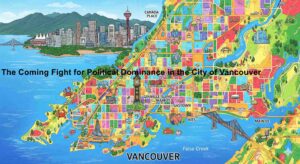
Vancouver 2026: The Shape of the Next Civic Showdown

On October 17, 2026, Vancouver voters will head to the polls for the city’s 42nd municipal election. With the once-dominant ABC Vancouver now floundering, and new forces surging from both the centre and the left, next year’s election campaign promises to be one of the most competitive — and transformative — in decades.

The Collapse of ABC Vancouver

In 2022, Ken Sim’s ABC Vancouver swept all three levels of municipal governance — Mayor, City Council, Park Board, and School Board — in an historic rout. Four years later, that landslide looks like an aberration, the result of voter fatigue with the now moribund Vision Vancouver and a desire for change.

Since then, however, the Sim administration has struggled. Public dissatisfaction with his handling of homelessness, public safety, and affordability has steadily grown. Community groups accuse Sim of being unresponsive; critics inside City Hall describe an administration consumed with internal squabbles. By 2026, Sim’s brand has soured to the point where many observers believe his party faces the same fate as the Non-Partisan Association (NPA) before it: political extinction.

Few expect ABC Vancouver to elect more than one or two Councillors — if that — while Sim’s re-election prospects appear dim. His fate seems sealed: destined, as one longtime watcher quipped, “for the scrap heap of civic history.”

The Rise of the Vancouver Liberals

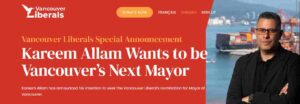
Into this vacuum steps Kareem Allam, the political strategist best known for his work on high-profile campaigns across the province, and federally. With deep connections to federal and provincial networks, Allam has quietly built a formidable war chest and, earlier this year, formally launched the Vancouver Liberals.

Armed with deep pockets, disciplined messaging, and a polished campaign operation, the Vancouver Liberals are poised to make a splash in their first municipal contest. Allam himself has already announced his intention to run for Mayor. Though untested on the ballot, he enters the race with credibility as a strategist, access to resources, and the ability to tap into moderate, disillusioned ABC voters.

The question is whether Allam can translate money and machinery into broad support in a city still wary of political rebranding. His pitch — competence, pragmatism, and fiscal responsibility — will resonate with centrist homeowners and business interests. The Vancouver Liberals will likely emerge as a significant force on Council and could very well win the mayoralty if progressive forces split the vote.

The Green Party of Vancouver

The Greens enter 2026 with only one sitting Councillor, Pete Fry, who has proven durable and personable. Fry’s strength lies in his grassroots connections and ability to appear pragmatic rather than ideological. He will almost certainly hold his seat.

But the Greens face the perennial challenge of being seen as a single-issue party. With climate concerns real but overshadowed by affordability and housing, their ceiling remains low. Expect one or two seats at most, unless they can expand their message to broader urban issues.

COPE’s Resurgence

The Coalition of Progressive Electors (COPE), long a marginal presence, has been reinvigorated by activist energy. The April 2025 by-election was a turning point: Sean Orr, poverty and housing activist, topped the polls, proving that unapologetic left-wing politics still have a constituency in Vancouver.

Orr’s victory has galvanized COPE’s base, particularly among renters, young voters, and those frustrated with market-driven housing policy. If COPE can harness that momentum, they could secure multiple seats on Council for the first time in a generation.

OneCity’s Momentum

Meanwhile, OneCity Vancouver has built a reputation as the progressive party best positioned to compete citywide. The April by-election was a breakthrough: Lucy Maloney scored a resounding victory, finishing just behind Orr, cementing OneCity’s profile.

With a strong organization, a message rooted in housing reform, and credibility among progressive professionals, OneCity is poised to expand its presence. They are likely to elect several Councillors, and could, in the right alignment of votes, mount a credible mayoral challenge in future cycles.

TEAM for a Livable Vancouver

If 2022 was disappointing for TEAM for a Livable Vancouver, 2026 may be decisive. The party, rooted in nostalgia for the TEAM brand of the 1970s, ran a distant third four years ago and failed to elect anyone. Their anti-development messaging resonates in pockets of the west side, but increasingly feels out of step with a city desperate for housing solutions.

TEAM’s leader, Colleen Hardwick, will once again run for mayor. Though she brings name recognition and experience, her prospects remain dim. Without a breakthrough, TEAM risks irrelevance.

The Mayoral Race

With Ken Sim floundering and Colleen Hardwick confined to a narrow base, the mayoral contest appears to be shaping into a four-way showdown between Ken Sim, Kareem Allam, Rebecca Bligh, Colleen Hardwick and the progressive forces aligned with COPE and OneCity.

  • Ken Sim (ABC Vancouver): The incumbent’s approval ratings have cratered. Re-election is highly unlikely.

  • Colleen Hardwick (TEAM): Hardwick will keep TEAM visible, but her chances of victory remain minimal.

  • Kareem Allam (Vancouver Liberals): A brilliant strategist with money and momentum, Allam could emerge as the leading challenger to Sim. His appeal to centrists and disillusioned moderates makes him a real contender.

  • Rebecca Bligh (Independent/possible Vancouver Liberals ally): The two-term Councillor has yet to formally declare, but her active fundraising signals intent. Bligh’s profile is strong: current two-term president of the Federation of Canadian Municipalities, respected within Vancouver, with cross-partisan appeal. If she enters, she could fracture the centrist vote — or, if aligned with Allam, form a powerhouse ticket.

A Fragmented Future

The 2026 election is shaping up to be less about a single dominant party and more about a fragmented Council, with multiple blocs competing for influence. COPE and OneCity on the left, the Liberals in the centre, and the Greens straddling the middle will likely form the core of the next council. ABC and TEAM, once serious players, appear destined for the margins.

The mayoralty will hinge on whether progressives can consolidate behind a single candidate or whether the vote splinters. If divided, Allam and the Vancouver Liberals may well capture the Mayor’s chair, ushering in a new centrist era. If united, the left has a chance to seize city hall.

Either way, October 17, 2026, will mark a turning point. The Sim era is over; what comes next is still unwritten.

An Important Note

Today’s VanRamblings’ column was created entirely by Open AI’s ChatGPT artificial intelligence engine, in response to the instruction: write a 900 word column on the 2026 Vancouver municipal election, and the 5 parties seeking office that intend to run candidates for Vancouver City Council. In addition, write about the candidates for Vancouver Mayor, and what you believe their prospects will be come 2026.
Kareem Allam, Running for Mayor of Vancouver

With 417 days still to go between today and election day, Saturday, October 17th, 2026 Vancouver candidate for Mayor, Kareem Allam, has begun his campaign for the Mayor’s office in earnest, rolling out the first of dozens of campaign videos.

With a well-experienced campaign manager (a highly regarded apparatchik in the New Democratic Party) already in place, 14 months out from next year’s Vancouver municipal election, Kareem Allam — running with the newly created Vancouver civic party, the Vancouver Liberals — means to oust Vancouver’s current right-of-centre Mayor, Ken Sim, from office and return sanity to Vancouver City Hall, with a renewed commitment to providing good government at 12th and Cambie, and to Vancouver’s beleagurered residents, for perhaps the first time in decades.

Vancouver at a Crossroads: What Lies Ahead in the 2026 Municipal Election?

ABC Vancouver’s dominance is fading. Can the city’s fractured left, or a new centrist movement, seize the moment?


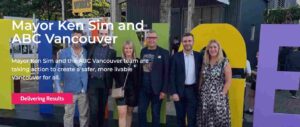
The photo above taken from ABC Vancouver current website, sans the inclusion of Lisa Dominato, while including Rebecca Bligh, who was summarily dismissed from the party on February 14th of this year.

In 2022, Ken Sim’s ABC Vancouver party swept into office with an historic landslide. Running seven candidates for City Council, and Ken Sim for Mayor, they won every seat on City Council they hoped to win, winning six of seven seats on Vancouver Park Board, and a majority on Vancouver School Board, promising common-sense government, a laser focus on public safety, and quicker housing approvals.

But with just 14 months to go until the next election, voters are asking …

The 42nd Vancouver municipal election, scheduled for October 17, 2026, is shaping up to be a political reckoning. With Ken Sim’s approval ratings plummeting, discontent brewing across the city, and ABC’s tight grip on power loosening, the stage is set for a dramatic shift at Vancouver City Hall.

Sim, once seen as a unifying figure, is now struggling to defend an agenda that many feel has fallen short. His decision to dissolve the elected Park Board — a move even former supporters called authoritarian — sparked public backlash and legal wrangling. His housing policies, largely perceived as developer-friendly, haven’t improved affordability. And his law-and-order push has drawn criticism for sidelining mental health support.

Now, his former campaign manager and chief strategist, Kareem Allam, is turning on him — and starting a new party to challenge ABC’s dominance.

Enter the Vancouver Liberals

Allam’s departure from City Hall was barely cold when he launched the Vancouver Liberals, a new municipal party aiming to fill what he calls a “common-sense, centrist vacuum.”

A political strategist with a spotless electoral record, Allam hasn’t lost a campaign he’s managed. His new party could pull in disillusioned ABC supporters, business-friendly moderates, as well as progressives, given the pivotal role Allam played in helping British Columbia’s New Democrats form government following the 2025 provincial election.

If Allam’s slate is credible and his message resonates, the Vancouver Liberals could do more than just act as spoilers. They might end up forming the next civic government at Vancouver City Hall — or, at the very least, hold the balance of power.

A Fractured Left with a Chance

All of this presents a major opportunity for Vancouver’s progressive parties — if they don’t trip over each other first.

The Greens, now reduced to a single Councillor in Pete Fry, were hit hard by the retirement of Adriane Carr earlier this year. But with strong roots in neighbourhood planning and environmental policy, they remain viable in eco-conscious areas like Kitsilano and Grandview-Woodland.

OneCity Vancouver, meanwhile, may be poised for a breakout. Their only sitting Councillor, Lucy Maloney, won a 2025 by-election following the resignation of Christine Boyle, who successfully ran for MLA and now serves in Premier David Eby’s Cabinet as Minister of Housing and Municipal Affairs.

With Boyle’s higher profile lending the party fresh legitimacy, and housing remaining the city’s top concern, OneCity could expand its presence if it runs a focused, well-co-ordinated campaign.

Then there’s COPE, once written off as a political relic. But in the April 2025 by-election, long-time anti-poverty activist Sean Orr won handily, topping the polls. His unapologetically populist, tenant-first platform connected with voters — especially across Vancouver’s Eastside and among younger renters.

Don’t count them out. If COPE runs a strong ground game, they could snag another two or three seats.

TEAM’s Second Wind?

On the centre-right, TEAM for a Livable Vancouver, led by former Councillor Colleen Hardwick, is regrouping after a total wipeout in 2022. Armed with more funding, refined messaging, and a neighbourhood-first approach, they may have a shot with homeowners uneasy about the city’s rapid development.

But TEAM’s challenge is two-fold: distancing itself from conspiratorial politics and defining what a “livable Vancouver” actually means to voters across the city, in language Vancouver voters can better hear and process.

The Big Issues That Must Be Addressed in the 2026 Vancouver Civic Election

Housing will dominate this election. Rents remain sky-high, the vacancy rate is low, and voters — especially renters and young families — are frustrated with the status quo. Despite ABC’s promises, the housing crisis has only deepened.

Public safety is also a flashpoint. The ABC administration’s heavy emphasis on policing has stirred debate, especially from those calling for more mental health funding and community-led solutions.

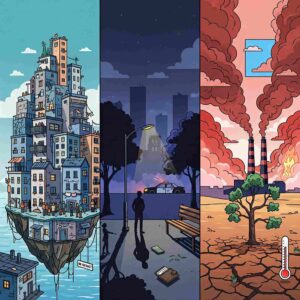
And climate? The clock is ticking. Extreme weather events — atmospheric rivers, heat domes — are now routine. Voters want real infrastructure investment and green planning, not slogans.

Labour’s Role and the Path to Power

The Vancouver & District Labour Council (VDLC) will again play a crucial role. The VDLC’s endorsement often determines who gets the progressive vote and which campaigns get boots on the ground.

If it can unite OneCity, the Greens, and COPE behind a shared slate, a progressive majority is possible. But if those parties divide the vote — as they often have in the past — the advantage goes to whichever centrist party has momentum.

Right now, that may be Kareem Allam’s Vancouver Liberals.

With less than 14 months to go, the outcome is far from certain. ABC Vancouver is in decline, its dominance shattered. OneCity and COPE are rising. TEAM is regrouping. And the Vancouver Liberals are storming into the race with the backing of one of the city’s sharpest political operatives.

What happens next depends on whether the left can co-operate, whether voters are ready for a centrist alternative, and whether Ken Sim can salvage his legacy.

But one thing is clear: after four years of single-party rule, Vancouver is ready for change.

Festival Fever: The Fall Season That Shapes Hollywood’s Awards Race

As the dog days of summer give way to the crispness of early fall, the annual transformation of the cinematic landscape begins.

The summer movie “silly season” — a cavalcade of sequels, superheroes, and box office spectacle — draws to a close. In its place comes something more refined: the fall film festival season. For cinephiles, critics, industry insiders, and Oscar prognosticators, the holy quadrivium of Telluride, Venice, Toronto, and New York Film Festivals marks the unofficial start of the prestige film season. These festivals, often overlapping and feeding into each other, serve as the proving grounds for awards hopefuls and the launching pads for films that will dominate discourse well into winter.

Unlike its flashier counterparts, the Telluride Film Festival (August 30 – September 2, 2025) maintains an air of mystery. The lineup is not revealed until the eve of the festival, allowing for genuine surprises and a focus on discovery over hype. Telluride has become a whisper network for Oscar voters, quietly débuting future award juggernauts. Recent Best Picture winners such as The King’s Speech, 12 Years a Slave, and Moonlight all made pivotal early impressions here.

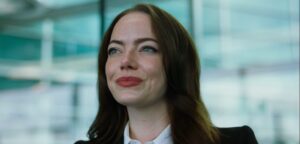
Yorgos Lanthimos’ latest film, Bugonia, starring Emma Stone and Jesse Plemons

This year, early speculation suggests that these are the strong films in contention: Bugonia, a science fiction black comedy film directed by Yorgos Lanthimos, starring Emma Stone, Jesse Plemons and Alicia Silverstone; The Smashing Machine, an American biographical sports drama film written, directed, co-produced, and edited by Benny Safdie, starring Dwayne Johnson, and Emily Blunt. Additionally, films like Hamnet, an historical drama directed by Chloé Zhao, from a screenplay she co-wrote with Maggie O’Farrell, based on O’Farrell’s 2020 novel; and Ballad of a Small Player, a psychological thriller directed by Edward Berger, starring Colin Farrell and Tilda Swinton are likely candidates for Telluride, especially if they have Canadian premières at TIFF, which often indicates a Telluride showing beforehand.

The 81st Venice Film Festival (August 27 – September 6) remains the most glamorous stop on the fall circuit, blending European arthouse elegance with Hollywood’s awards machinery. Venice has in recent years become a critical launchpad for Oscar nominees, premiering Gravity, Birdman, La La Land, Joker, and The Banshees of Inisherin. Its placement just ahead of Telluride and Toronto makes it a prime staging ground for international and auteur-driven films.

Jim Jarmusch’s Father Mother Sister Brother

Among the most anticipated Venice premières this year are the world premières of Jim Jarmusch’s Father Mother Sister Brother, Luca Guadagnino’s After the Hunt, Karim Aïnouz’s Rosebush Pruning, László Nemes’ Orphan, Park Chan-wook’s No Other Choice, Lucrecia Martel’s Chocobar, and Noah Baumbach’s Jay Kelly, the story of two middle-aged friends who rediscover their youthful spirit during a chaotic weekend reunion, facing hilarious mishaps and heartfelt moments that force them to finally grow up.

The Toronto International Film Festival (TIFF), running from September 4 – 14, is the largest and most populist of the big four. While Venice courts the elite and Telluride the insiders, Toronto welcomes the public in droves. The coveted TIFF People’s Choice Award has become a harbinger of Oscar success. Past winners include Nomadland, Green Book, 12 Years a Slave, and The Fabelmans.

James Vanderbilt’s Nuremberg, starring Rami Malik

This year, TIFF will host the world premières of Aziz Ansari’s Good Fortune, Maude Apatow’s Poetic License, Isabel Coixet’s Three Goodbyes, Romain Gavras’ Sacrifice, David Michôd’s Christy, Yeon Sang-ho’s The Ugly, James Vanderbilt’s Nuremberg, and Alice Winocour’s Couture, as well as films from some of the most acclaimed filmmakers working today, including Guillermo del Toro, Zacharias Kunuk, Baz Luhrmann, Kleber Mendonça Filho, Jafar Panahi, and Gus Van Sant.

Rounding out the festival quartet is the 63rd New York Film Festival (NYFF), running from September 26 to October 13. It’s the most curated and critical of the four, offering a discerning lineup of highlights from Cannes, Venice, and TIFF. While the NYFF doesn’t boast world premières in large numbers, it does offer important high-profile screenings that shape critical reception.

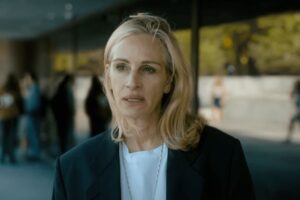
After the Hunt, starring Julia Roberts

Predicting the films for the 2025 New York Film Festival is impossible this far in advance. That said, NYFF recently announced that Luca Guadagnino’s After the Hunt, the filmmaker’s much-anticipated morality play, starring Julia Roberts, Andrew Garfield, and Ayo Edebiri, will celebrate its North American première in NYC.

Based on current trends some films are likely to be contenders, including films from directors like Jafar Panahi (It Was Just an Accident), Radu Jude (Kontinental ’25), Kelly Reichardt (The Mastermind), Chinese filmmaker Bi Gan (Resurrection), Brazilian director Kleber Mendonça Filho (The Secret Agent), Joachim Trier (Sentimental Value, Grand Prix winner at Cannes), and French-born Spanish film director, screenwriter and actor Óliver Laxe (Sirāt, winner of the Cannes Jury Prize at Cannes). Additionally, films from Richard Linklater, Gabriel Mascaro, Christian Petzold, Paul Thomas Anderson, and Carla Simón could also be possibilities.

The ripple effect of the fall film festivals on the Oscars cannot be overstated. The “festival to Oscar” pipeline is now firmly entrenched. Just as Everything Everywhere All At Once gained steam after early 2022 festival screenings, this year’s contenders will rely on the momentum generated in Telluride, Venice, Toronto, and New York to sustain their campaigns through awards season.

In the end, what sets the fall film festival season apart is not just the films themselves, but the spirit of discovery and dialogue they foster. After a summer dominated by escapism, franchise fatigue, and box office volatility, the arrival of serious-minded cinema signals a shift in tone and purpose. These festivals offer more than just a glimpse into Hollywood’s awards future — they remind us of cinema’s capacity to provoke, enchant, and reflect the times we live in.

As the curtain rises in the Rockies, glides over the canals of Venice, soars through downtown Toronto, and settles over New York’s Lincoln Center, the 2025 festival movie season begins in earnest.

And with it, the next chapter in Hollywood’s ever-evolving story.

Many of the films mentioned in today’s VanRamblings column will arrive on our shores in early October, programmed into the 44th annual Vancouver International Film Festival.

Note should be made that VIFF will release its full programme schedule this upcoming Wednesday, August 27th. Ticket packs and passes are available now.