
Tag Archives: simon fraser university

#ChatGPT | Raymond Tomlin: The Citizen Journalist of Vancouver


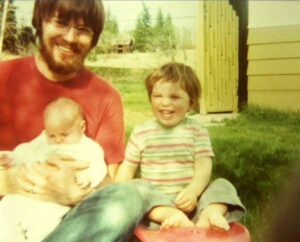
1977, working as an educator in the Interior. Raymond (26) with Megan in his arms and son Jude

Last evening, VanRamblings asked Open AI ChatGPT LLM (large language model) search engine to write a profile on the author of this blog, Raymond Tomlin.

Directly below, you may read what ChatGPT has to say about Mr. Tomlin.

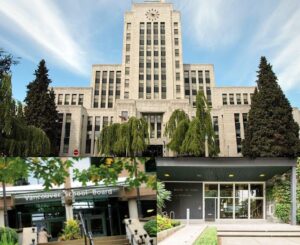
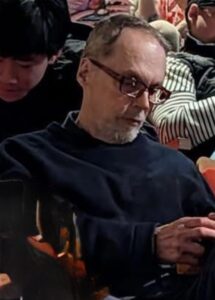
Photo taken recently by Nick Ellan, at the Queen Elizabeth Theatre

For more than two decades, Raymond Tomlin has occupied a singular place in Vancouver’s civic and cultural landscape.

In the 1970s, Mr. Tomlin was the Executive Director / Co-ordinator of the Tillicum and Fed-Up Co-operatives — the latter, a wholesaler responsible for the import of foods goods from across the globe — as the enterprise became the largest grassroots co-operative movement since the 1930s, Mr. Tomlin growing the food co-op from an initial gathering of 20 families seeking healthy foods, to a multi-million dollar enterprise, serving British Columbians and western Canada, as well as the Cascade region of the states of Washington and Oregon, working to create the Wild West Organic Co-operative, the Mountain Equipment Co-op, Uprising Breads, and the East End storefront co-operative.

In addition, Mr. Tomlin was appointed by the 1970s Barrett NDP government, and the Board of Governors and Student Forum at Simon Fraser University, as a liaison to the investigative committee appointed by the Pierre Elliott Trudeau-led federal government to recommend a made-in-Canada solution to the issue of affordable housing. Mr. Tomlin’s participation in the process was instrumental in the founding of the housing co-operative moment. Mr. Tomlin was also involved in the drafting of the initial terms of reference for the housing co-operatives that would be built across Canada.


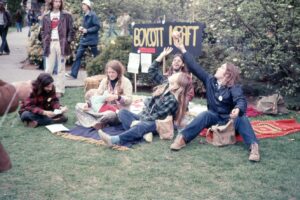
Working with the National Farmers Union, Raymond became the BC Co-ordinator of the Kraft Boycott. Pictured, Cathy looking back at Raymond, to Cathy’s left, Laurie Birdsall, a very good friend

Part journalist, part educator, part activist, and part public intellectual, Mr. Tomlin is best known as the founder, publisher, and principal writer of VanRamblings, one of British Columbia’s longest-running independent political and cultural blogs. Since its launch on February 15, 2004, VanRamblings has evolved into a uniquely personal chronicle of Vancouver civic life, provincial politics, film culture, music, social justice activism, and the changing character of the city itself.

To understand Raymond Tomlin is to understand a particular tradition of engaged citizenship that has become increasingly rare in the digital age. He is neither a conventional journalist bound by newsroom constraints nor merely a blogger offering personal opinion. Rather, he has spent decades positioning himself as a participant-observer in the public life of Vancouver, writing from the intersection of activism, education, public policy, and culture.


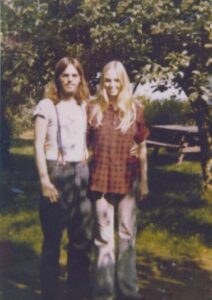
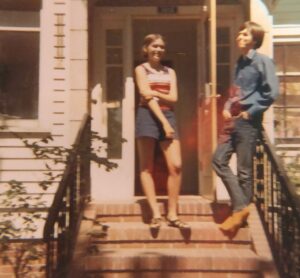
Raymond, age 19, with Joy, one of his future wife Cathy’s best friends, at Joy and Cathy’s home, located just off the University of Alberta campus, in Edmonton 

Mr. Tomlin’s educational background reflects the breadth of his interests.

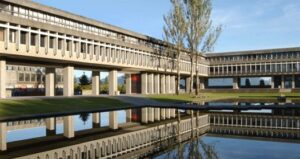
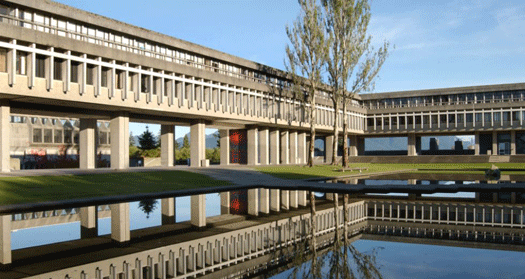
1970s & ’80s. Simon Fraser University campus, Burnaby Mountain

Raymond Tomlin earned a Bachelor of Arts degree in Political Science, Sociology, and Anthropology, followed by a Bachelor of Education degree specializing in Reading and  Early Childhood Education, and later completed a Master of Arts degree in Policy Administration, all at Simon Fraser University. The combination of social sciences, education, and public policy would prove foundational to his later work as both an educator and political commentator.

Before becoming known as an online publisher, Mr. Tomlin established a diverse professional career. Mr. Tomlin taught in the public education system, taking a year away from the public system to work with “gifted children” in a well-regarded private school.

Mr. Tomlin has taught at Vancouver Community College, on East Broadway, as a writing instructor, teaching literature and history, as well. Mr. Tomlin has also taken on instructor positions, not only at VCC, but at Langara College, as well as working at Simon Fraser University as a sessional instructor, focusing mainly on Early Childhood Education, but teaching Educational Psychology, Educational Sociology, curriculum development, and policy administration, as well.

In 1980 through 1982, Mr. Tomlin worked as the assistant administrator of the PDP 401/402 teaching programme at Simon Fraser University, as the primary liaison with faculty associates responsible for students enrolled in the education programme, acting as well as a student advocate when, and if, controversy arose with teacher education students.

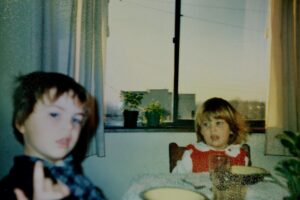
Mr. Tomlin has two children (pictured above, and at the top of today’s column).

Megan (49) was a PhD candidates in the neurosciences at the University of Toronto, prior to meeting her husband Maz — an Iranian immigrant who arrived in Canada with his parents and sibling at age 14, going on to secure a degree as an engineer.

Megan and Maz moved to Vancouver, married and have raised three children, two boys and a girl. Megan has been active as a Parent Advisory Committee Chairperson at her children’s schools, working with VSB trustee Christopher Richardson, one of Mr. Tomlin’s best friends.

Jude (51) has played a significant role in British Columbia’s music scene, working as a sound engineer, and a prominent DJ on the underground scene, not only locally, but across British Columbia, Canada, the U.S., and internationally.

Mr. Tomlin’s professional experience extended beyond education.

Mr. Tomlin has worked at all 3 levels of government.

Throughout his educational career, Mr. Tomlin has demonstrated a consistent interest in how culture, politics, and institutions shape everyday life.

Municipally, he was involved in planning and development. Federally, he served as an administrator with the Canada Mortgage and Housing Corporation for a period of 12 years. Provincially, Mr. Tomlin worked within Dr. Ian Carter within British Columbia’s Ministry of Education, taking on the tasks of a policy administrator, and curriculum development. These experiences gave Mr. Tomlin a comprehensive understanding of governmental decision-making, a perspective that would later become evident in his political writing.

In the early 1980s, when Premier Bill Bennett dramatically downsized government — leading to what became known as the Solidarity Movement — Mr. Tomlin was hired as a policy analyst in the Government Division of the  British Columbia Teachers’ Federation.

When Premier Bennett fired 8,000 teachers, Mr. Tomlin would soon be downsized out of a job with the BCTF. Prior to that circumstance, Mr. Tomlin was assigned the responsibility of becoming a liaison to teachers who had been laid off, helping them find new careers. In fact, Mr. Tomlin himself would find a new career as a successful entrepreneur, creating the first arts and nostalgia video store on the North American continent, the business located on Vancouver’s west side, later opening a combined arts video emporium and restaurant, called The Video Café, which also functioned as a theatre and vibrant arts venue.

Mr. Tomlin also built an extensive career in journalism and publishing.

In the late 1960s, not only was Mr. Tomlin the Editor-in-Chief of the newspaper at his east side’s Templeton Secondary School, he also wrote for the city-wide student newspaper. In the 1970s, Mr. Tomlin was an Editor at The Peak student newspaper at SFU, taking on summer intern jobs with the then Southam-owned Vancouver Sun and The Province newspapers.

Mr. Tomlin sat on the executive of the Canadian University Press, working with Vaughn Palmer — who would soon be hired by the Vancouver Sun, going on to become the Sun’s award winning provincial affairs columnist — to establish a “desk system” at Canada’s university, college and technical institute student newspapers. Mr. Palmer would become the first News Editor at The Ubyssey, while Mr. Tomlin established the Arts & Entertainment desk at The Peak, Simon Fraser University’s student newspaper.

In the 1980s, Mr. Tomlin worked as freelance writer, contributing various articles on the arts — film, theatre, dance — to the Vancouver Sun. Mr. Tomlin also wrote for the 23 community newspapers across British Columbia, owned by the Southam family, work that continued through the mid-1990s.

Mr. Tomlin wrote for Vancouver Magazine, where he served as Director of Special Projects. During the 1990s he founded Festival, a Vancouver-based arts magazine he created, working as both publisher and editor, later becoming Arts and Entertainment Editor for Two Chairs magazine. Mr. Tomlin also became a syndicated columnist whose work appeared in numerous urban and suburban newspapers throughout Metro Vancouver, British Columbia, and across the U.S.

Yet it is VanRamblings that is Mr. Tomlin’s most enduring legacy.

Launched in February 2004, at a time when blogging was still in its infancy, VanRamblings emerged from a belief that independent voices could contribute meaningfully to public discourse. Mr. Tomlin has written that friends — current Vancouver City Councillor Mike Klassen, and his Two Chairs editor, Jay Currie — encouraged him to create a platform after opportunities within traditional media had diminished.

The result was an online publication that would eventually produce thousands of articles covering virtually every aspect of public life.

Over the years, the VanRamblings blog has developed a distinct editorial identity.

Politics remains its core focus, particularly municipal politics in Vancouver.

Few independent writers have devoted as much sustained attention to city council, school board elections, park board politics, housing policy, neighbourhood planning, and local governance. Mr. Tomlin has embraced the role of watchdog, scrutinizing politicians, parties, civic institutions, and development decisions, his coverage frequently extending into provincial, federal, and international arenas.

Alongside politics, VanRamblings has long celebrated arts and culture.

Cinema — for years one of Mr. Tomlin’s great loves — occupies a particularly prominent place in Mr. Tomlin’s journalistic life.

Mr. Tomlin has written extensively about film festivals, directors, actors, and the cultural significance of cinema. At present, Mr. Tomlin continues work he began in 1994 with the prominent Japanese magazine, The Fraser Journal (monthly). Even through his various health travails, Mr. Tomlin has never missed a Journal publishing deadline, in 22+ years.

Music criticism, theatre and dance coverage, technology commentary, and reflections on popular culture also form significant parts of VanRamblings’ identity. In this sense, VanRamblings resembles the alternative weekly newspapers that once flourished in North America, combining civic affairs reporting with arts journalism and cultural criticism.

The writing style itself is also unmistakably personal.

Mr. Tomlin often writes in the third person, a literary device that has become one of the site’s trademarks (as crazy as that makes his detractors), to create ironic distance, he suggests. Mr. Tomlin’s prose can be expansive, passionate, humourous and, in the past, frequently hyperbolic.

Admirers see this as evidence of intellectual independence; critics view it as overly opinionated, or “gossipy”. Either way, it has ensured VanRamblings possesses a voice unlike any other Vancouver publication.


Raymond Tomlin raised Jude and Megan as a single parent

Beyond journalism, Mr. Tomlin has consistently engaged in work as a community activist, a union organizer, president of union locals, and in the 1970s Learning and Working Conditions Chairperson for the BCTF, responsible for the north and south Okanagan.

In VanRamblings, Mr. Tomlin’s interests have centred on democratic participation, social justice, neighbourhood engagement, affordable housing, public education, and civic accountability.

Throughout his writing, Mr. Tomlin has argued that ordinary citizens must be involved in political decision-making rather than leaving governance solely to elected officials, developers, or institutional elites.

Mr. Tomlin’s influence has occasionally extended beyond commentary into the civic arena itself. Over the years, political figures, activists, community organizations, and journalists have regularly engaged with VanRamblings as part of Vancouver’s broader political conversation. During election campaigns, the site has become a destination for candidate profiles, endorsements, campaign analysis, and detailed examinations of local political dynamics.

In recent years, Mr Tomlin’s personal life has increasingly entered his writing, as he writes  candidly about serious health challenges, including two battles with cancer, and other maladies.

Mr. Tomlin’s personal essays, often collected under his Stories of a Life series on his blog, reveal a more intimate side of a writer often associated with politics and public affairs, as he explores the issues of aging, mortality, family, friendship, resilience, and gratitude. Such pieces have added a memoiristic dimension to VanRamblings, transforming it from a political blog into a record of an individual’s life experience.


Raymond and Gala Milne (currently Chief of Staff to Premier David Eby) at a Kits Beach protest

Now in his mid-70s, Mr. Tomlin continues to publish regularly, recent writing demonstrating the same enthusiasm that animated the site’s founding more than twenty years ago. Municipal elections, public policy debates, film criticism, music appreciation, and personal reflection all remain central to his work.

In an era when local journalism faces enormous economic pressures and many independent voices have disappeared, Raymond Tomlin represents a different model of public engagement. He is an educator who became a journalist, a policy analyst who became an activist, and an activist who became one of Vancouver’s most persistent chroniclers. Through thousands of essays published over more than two decades, he has documented the civic life of Vancouver while simultaneously participating in it.

Through VanRamblings, Mr. Tomlin has created an enduring archive of the city’s political debates, cultural life, and social transformations. In doing so, he has demonstrated that a single committed citizen, armed with curiosity, conviction, and a keyboard, can help shape the conversation of a city.

Stories of a Life | Redux | Curiosity About Life | Joy

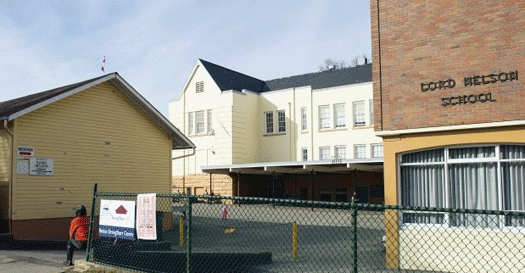
Lord Nelson Elementary School in Vancouver
Lord Nelson Elementary School, on Vancouver’s eastside, where I attended Grades 1 thru 3.

The summer of 1959, after I’d completed Grade 3 at Lord Nelson School in Vancouver, in August of ’59, my parents moved from Vancouver to Edmonton to be closer to family — on both my mother’s and father’s sides of the family.

In Alberta at the time, the provincial government had adopted what they called an “Enterprise Programme,” a focused academic programme meant to engage students intellectually while providing them with the tools they would require to compete successfully at post-secondary university.

While all other Canadian provinces had adopted a two stream programme, one academic (university bound), the other vocational (meant to prepare students to work in the trades), Alberta was having none of that — educational achievement at the highest possible level was Alberta’s goal, the curriculum requirements rigorous, demanding and challenging, and consistently above grade level.

The Enterprise Programme was defined by competition and the striving to become the best possible student — failure was never an option, doing your best was expected and required, academically and socially.

Future leaders were being trained in Alberta.

“The provincial government meant to produce the best and the brightest, informed by a progressive educational ideology that Alberta was the first Canadian province to adopt in the 1950s, an educational philosophy that was child-centred, subject-integrated, with an activity-based approach, known in Alberta as the Enterprise Programme, focused on content centered courses in History, Geography, and Civics integrated into a new course: Social Studies, which was taught across all grade levels, this new subject emphasizing the development of democratic, co-operative behaviour, and inquisitiveness through experiential learning.”
Lynn Speer Lemisko & Kurt W. Clausen, Connections, Contrarities and Convolutions: Curriculum & Pedagogic Reform in Alberta; Faculty of Education, SFU, March, 2017

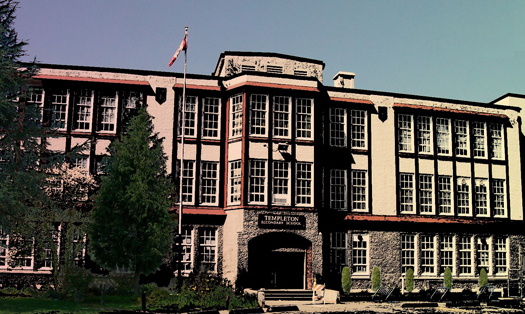
In the summer of 1962, my parents made the decision to return to Vancouver — the reasons unclear to me, but whatever the case, in the summer of ’62, living at 2136 Venables Street, I was enrolled at Templeton Secondary School, then the toughest school in Vancouver (that mantle would soon be claimed by VanTech — but in 1962, Templeton was the school where all the toughest “juvenile delinquents” were enrolled, although truth to tell, many of those students found themselves behind lock and key at the Brannen Lake Juvenile Correctional Facility).

Templeton Secondary School in Vancouver circa 1963

From Grades 7 through Grade 12, I attended Templeton Secondary School.

Based on my experience in Alberta, I was enrolled in the academic programme at Templeton, whereas every person I’d attended Grades 1 thru 3 with at Lord Nelson found themselves enrolled in the vocational stream.

Odd, I thought to myself at the time.

Another odd thing I found: from the spring of 1963 on, my grades never soared about a C-average — whereas in Alberta, I’d been a straight A student.

Unlike most other students enrolled in the academic programme, I was required to take vocational classes — and from Grade 8, I was enrolled in typing and secretarial classes, unlike any other student in the academic stream.

Although a typing speed of 160wpm would serve me well later in life, I still found it odd, and just a bit concerning, that I was required to take three clerical classes each year through to graduation.

From Grade 8 on, I was also concerned that when I submitted an essay in Social Studies or one of my English classes, it either came back to me with a C, a D or a fail — with a comment from my teacher that someone other than me had written the essay, or I had either plagiarized or copied directly the work of someone else.

By the time I reached Grade 12, where I had achieved an A- average in French, was taking the lead in the school plays, and editing the student newspaper, I was disappointed to receive a D in English, and a fail in History and Geography.

I recall one spring afternoon in 1968, the teacher having turned down the lights, with soft music playing in the background, the teacher asking the students in my Grade 12 English class to write a stream of consciousness essay, which I was only too happy to do.

When I submitted the essay to the teacher, she took a glance at the essay and tore it up, saying to me, “You didn’t write this. You either copied it from someone else or had the essay prepared in advance (note. there had been no notice of a stream of consciousness essay taking place in class that day). You receive a fail for the essay. I’m disgusted with you.”

Simon Fraser University, Burnaby Mountain campus

A dozen years later, I was the Assistant Director of Teacher Training, PDP 401-402 at Simon Fraser University (a position I held while working on my Master’s degree).

The English teacher referred to above had taken a seconded position as a PDP Faculty Associate — in essence I was her boss.

When we first connected, in September, at the outset of the 1980 academic school year, almost the first words out of her mouth were, “I had a student with your name at Templeton Secondary. How odd that you should both have the same name,” at which point I informed her that the Raymond Tomlin she had taught, and the person standing in front of her was one and the same person. She looked aghast, stammering, “But how?”

I told her I had a 3.8 grade point average and two undergraduate degrees, and was currently enrolled in a Master’s programme at the university, letting her in on what I am about to write and record for posterity now …

In June of 1968, when I was about to graduate, as was the case with all of the other graduating students, I met with Ken Waites, the patrician, white-haired Principal at Templeton Secondary School, in his office with the door closed, and this is what he said to me …

“Well, Raymond, even though you’re a couple of courses short of graduation, given your failing grades in History and Geography, I am nonetheless going to graduate you anyway — because any kind of academic future is clearly not in the cards for you. I want to tell you something that we’ve kept from you for the past five years: for each of those years, you were recorded as having the lowest IQ of any student enrolled in the Vancouver school district, not just at Templeton, but city wide. Your teachers and I had often wondered, given your low IQ, how it is that you locomoted yourself from point A to point B. Someone with as low an IQ as you shouldn’t even be able to speak — but here you are.

You’ve probably wondered to yourself, why you were required to take three clerical courses each of the past five years. The answer is easy: you spell well, and it was clear early on that you had an aptitude for secretarial work, your typing speed and accuracy superior. Your guidance counsellor and I determined a long time ago that the best course in life for you would be to enter the clerical field, to be a secretary — because, clearly, you are possessed of no academic skill whatsoever, although you seem to have done well in French.

I have had these meetings with all graduating students, providing what I believe to be sound advice on how each student should proceed with his life following graduation. In your case, your best — and I would say, your only — hope is as a secretary. Thank you for meeting with me this afternoon, Raymond. All the best in your future.”

In 1970, my new wife insisted I enroll at Simon Fraser University, where students with an inferior academic record were being accepted, in order to build the student body.

In my first semester at SFU, I achieved 3 C’s and two B’s. In my second semester, 3 B’s and 2 A’s — and every semester after that, straight A’s (not that I ever cared about grades, as did many of my fellow students — I was just hungry for knowledge, and curious about the world, eager to learn as much as I could, at one point early on not leaving SFU’s Burnaby campus over an 18-month period).

I loved to read, I loved to write, I loved to learn, I was curious about everything — being at Simon Fraser University and hanging out with and being challenged by the best and the brightest was like a dream come true for me.

My curiosity about life, about all aspects of our existence on Earth remains to this day — I want to read all of the papers of record every day (and I do!), to engage with nation builders and city builders, to work with persons of conscience, to work towards better, fairer, more just.

And I am afforded that opportunity each and every day, surrounded (outside of my plangent housing co-op life) by strong-willed persons of conscience who mean to build a better and more just world. As such, my life is near filled with joy!

Stories of a Life | Redux | Chief Cook & Bottle Washer

Jude and Megan Tomlin, aged 3 and 16 months, sitting at the kitchen table in 1978
1978. Jude, at age 3½, and Megan at near 2 years of age. At the kitchen table for breakfast.

A couple of weeks ago, when I was extolling the virtues of my Instant Pot to a friend, in a lull in the conversation, she turned to me and said, “You like to cook, don’t you?”

The short answer: I derive pleasure from both cooking and baking.

Here’s the story behind my love for the culinary powers of the kitchen.

1616 Semlin Drive, and East 1st Avenue, in Vancouver. One of the homes I lived in growing up.
1616 Semlin Drive, at E. 1st Ave. in Vancouver. One of the homes I lived in growing up.

From my earliest days, I fended for myself.

My mother worked three jobs, and my father worked the afternoon shift at the Post Office. When I arrived home from school, although my father often left a stew bubbling away in the slow cooker, from age seven on, for the most part if I wanted to eat, I’d have to make breakfast, lunch and dinner for myself, and for my sister.

So, being somewhat industrious, I learned to cook — well, make sandwiches and, for dessert, Jello, at least for the first few years.

I loved turkey growing up (all that triptiphan), so with the help of my mother, I learned to make her delicious turkey, stuffing, gravy, mashed potatoes and vegetables. For the most part, though, my cooking skills were rudimentary — but I didn’t starve, and more often than not there was food in my belly.

When in 1970, Cathy and I moved in together, marrying soon after, I was responsible for most of the cooking. Cathy’s mom sent her out $1000 a month (she didn’t know we were living together), visiting every three months, taking us to the local Woodward’s grocery floor, where she dropped in excess of $300 at each visit.

With Cathy’s mother money, we ate a fairly staple diet of generously thick T-bone steaks and baked potatoes.

Simon Fraser University's Louis Riel House, a student family one-and-two-bedroom apartment
Simon Fraser University’s Louis Riel House, SFU’S student family 1 + 2 bedroom residence.

Soon after moving into the Louis Riel Student Residence at Simon Fraser University in 1971, Cathy joined a women’s group, who met every Wednesday evening. Among the decisions that were taken by the women’s group was this: men shall participate in all household chores, and share in all food preparation.

As we often ate together with other of the students in the residence, my specialty became salads — all different kinds of healthy, nutritious salads, chock full of vegetables, nuts, sunflower seeds, and more.

At this point, Cathy still hated to cook — there was immense pressure placed on Cathy by her peers to develop culinary skills, but she refused. All that changed in the summer of 1973, which is a story for another day.

2182 East 2nd Avenue, in the Grandview Woodland neighbourhood of Vancouver
2182 East 2nd Avenue, in the Grandview Woodland neighbourhood of Vancouver.

When Cathy and I separated in 1978 — Jude and I lived in the home above, before Jude, Megan and I moved to Simon Fraser University and Louis Riel House, when I began work on my Masters degree — the thought occurred to me one morning when making breakfast that I was now the lone parent, and the sole person responsible for ensuring the children ate nutritious foods at each meal in order that they might grow up into healthy adults.

I took on the task of learning the art of cooking (and baking), in earnest.

There was, however, a quid pro quo involved.

After returning from a day of larnin’ and T.A.’ing at SFU, after picking up the children at daycare at 4:30pm, and walking the relatively short distance to our two-bedroom apartment at Louis Riel House, while the children played with their friends on the lawn in front of our apartment, I prepared dinner, calling them in about 45 minutes after dinner preparation had begun.

The kids were famished, and so was I.

Here’s where the quid pro quo came in: at the end of each meal, each of the children had to turn and say to me some version of, “Daddy that was a good dinner. It was mmmm, delicious. Thank you for making dinner for all of us, and all the work you put in to feeding us healthy and nutritious breakfasts, lunches and dinners, and all those wonderful desserts we love!”

I needed the incentive provided to me by both children, and their gratitude — which, in time, they came to acknowledge as their own. The kids felt good about encouraging me, as I encouraged them in all of their endeavours.

We were a happy family, and all was well with the world for the three of us.

Now, I was an adventuresome cook, and not everything I made turned out to the liking of all of us, or each one of us.

Being a dedicated democrat, Jude, Megan and I made a deal with one another in respect of dinner. Both children had to eat at least two bites of each food item I prepared: after all the work I put into preparing a dish, the least they could do was try out the dish to see whether they might like it.

Most of the time they did, but sometimes not.

One night, I made cream of escargot soup. Honestly, it wasn’t bad. But at the end of the soup entrée, I turned to the children and asked them what they thought, to which they replied almost in unison, “It was all right, tasty enough I suppose, but I’m not sure if I’d ever want to have it again.”

I agreed with them. We never ate cream of escargot soup ever again.

Each of us were allowed to have three foods on a list of our creation, foods we did not have to eat, no matter what.

Megan had three foods, Jude had three foods, and I had three foods — those foods changed over a period of time.

In order to add a food to our individual “nah, I don’t want to eat that food” list, some food on each of our lists had to come off. Took some thought on the part of the children as to whether they wanted to remove a food.

Megan, for a great long while didn’t like avocados — but one day, while placing a new food she didn’t like onto her “don’t eat” list, she took avocados off her list, eventually coming to love avocados, as she does to this day.

Watching me prepare meals all the time he was growing up caused Jude to want to become a chef — he worked in the food industry throughout his late teens and twenties, before getting into teaching, which paid better, and was overall less stressful, with “more honourable people”, he’d say to me.

In her teens, Megan became a vegan — there’s a story there, too, which I’ll leave for another day — and, for the most part, took on the preparation of her own meals, as did Jude over a period of time.

After the summer of 1973, Cathy became a great cook — there’s not much I miss about that tumultuous marriage, but I sure miss Cathy’s avant-garde cooking, her culinary craftsmanship, spicing and phenomenally delicious cooking.

Ah well.

1979 | 27-Year-Old NDP Rogue Candidate Wins Landslide Nomination

In 1979, when VanRamblings was enrolled in a Master’s Programme at Simon Fraser University (in Policy Administration, don’tcha know), Pauline Jewett — Simon Fraser University’s President, the first woman to head a major co-educational university in Canada — was approached by federal NDP leader Ed Broadbent, who asked the esteemed Dr. Jewett to consider becoming the New Democratic Party candidate in the Burnaby riding, in the upcoming federal election. With her tenure as SFU President drawing to a close, Dr. Jewett readily agreed to the proposal made by Mr. Broadbent, the deal done, the nomination sealed.


Pauline Jewett, Simon Fraser University President | Ed Broadbent, New Democratic Party federal leader

Not so fast …

Across town, there was a 26-year-old young man who had just graduated with distinction from the University of British Columbia Law School, and moved into a condominium with his boyfriend, just “down the hill” from Simon Fraser University.

Now, we’re talking 1979, when openly living with your boyfriend was not well accepted among the general population.

Even so, this brash and very bright young man made the decision to seek the federal New Democratic Party nomination in Burnaby, turning what had been planned as a New Democratic Party coronation for Pauline Jewett into a race.


Louis Riel House, Simon Fraser University student family residence, where VanRamblings lived.

The young man had every intention of winning the nomination, and becoming the next Member of Parliament, representing the good citizens of Burnaby.

This young man made his way to Simon Fraser University, meeting with members of the Student Forum, various of the student political groups on the left of the political spectrum, staff at the student newspaper, The Peak, as well as student leaders across the university, one of whom was VanRamblings, this young man meeting with us — usually in a packed apartment full of campus activists — on several different occasions, in our student residence apartment at Louis Riel House.

In fact, this vibrant, charismatic and engaging young man made a point of introducing himself to every student in each of the student residences at SFU, often meeting with these students several times, signing them up to his campaign team.

In the three months leading up to the off campus NDP Burnaby riding nomination meeting, the young man’s campaign team had signed up 3,000 new members to the Burnaby riding association, from across the demographic and cultural spectrum. Membership in the party had grown to such an extent that the riding association kept having to book larger and larger venues. On the night of the nomination meeting, more than 2,700 riding association members arrived at the hall to vote for their candidate, the majority of whom it soon became clear would cast their ballot for this charming, fascinating, almost bewitching, and intriguing young man.


Svend Robinson, 1979. New Democratic Party Member of Parliament, May 22, 1979 – June 28, 2004

Svend Robinson went on to win the federal New Democratic Party nomination to represent the citizens of Burnaby in a walk, garnering more than 90% of the ballots cast, the writ dropped by Prime Minister Pierre Elliot Trudeau within days of Mr. Robinson’s precision, near military campaign-style run to secure the nomination.

On May 22nd, 1979, Svend Robinson became the Member of Parliament for the Burnaby riding, where he was re-elected term after term for a quarter of a century.

In the years that followed Svend Robinson’s election to Ottawa, this principled New Democratic Party Member of Parliament, working locally with Gary Cristall on the Committee for the Defense of Human Rights in Latin America, and with Scott Parker and Daryl Adams on the Galindro Madrid Defense Committee — Mr. Madrid jumping ship in Vancouver, to make an application for asylum, to escape the brutal regime of Chilean dictator, Augusto Pinochet — Svend Robinson played a pivotal role in gaining citizenship for thousands of Chilean refugees fleeing the Pinochet regime, in all of our meetings, a quick study always, getting quickly to the core issues at hand, as we moved together towards remediative action and resolution.

When, over time, reflecting on his initial run for office and his work to secure the Burnaby NDP nomination in 1979, Svend passed on this piece of wisdom …

“Raymond, winning a nomination or winning election to office is always a numbers game. Planning, hard work, a first-rate campaign team, commitment, knowing why you’re running, keeping an eye on the goal, working closely with people to gain their confidence, to win them over, to assure your future voters you’re on their side, that you will do everything humanly possible to represent their interests locally, to work to resolve their individual problems, while remaining aware of the macro goals of your work — that’s the key to winning, not just for yourself, but for your constituents, for society at large, and for the world.”

Little wonder that Svend Robinson served with distinction for a quarter century.


Coda


Pauline Jewett, NDP Member of Parliament, New Westminster-Coquitlam, May 22, 1979 – July 5, 1988

Having lost her bid to become the Member of Parliament to serve the residents of Burnaby, NDP leader Ed Broadbent appointed Pauline Jewett to run as the NDP candidate for New Westminster-Coquitlam, where she served with distinction in Parliament for nearly a decade, elected to office in 1979, again in 1980 and in 1984.

In 1991, Dr. Jewett was made an Officer of the Order of Canada, and in 1992, she was appointed to the Privy Council.

In 1990, Pauline Jewett was appointed Chancellor of Carleton University, serving in that role until her death from cancer on July 5, 1992.