 Does the guy pictured above look anything like a ‘public intellectual’ to you? Gosh, we don’t think so. James Baldwin, Christopher Hitchens, Noam Chomsky, Dorothy Parker, William F. Buckley, Jr., Gore Vidal, and Hannah Arendt are all public intellectuals, but this Tomlin guy? Nope, ain’t no chance.
On June 23rd, VanRamblings published a ChatGPT profile of the author of this blog, Raymond Tomlin (that’s me, above).
Last evening, we became aware of Perplexity, the newest large language model artificial intelligence search engine now available on the Internet.
To test it out, we asked the question, “Who is Raymond Tomlin, the Vancouver-based blogger? Tell us a little about him that might be of interest to a reader.”
Here’s what Perplexity Had to Say About This Raymond Tomlin Fella

Raymond Tomlin is a long-standing Vancouver civic commentator, blogger, educator, and former journalist, whose best-known work is the site VanRamblings, a personal, highly opinionated chronicle of local politics and culture in Vancouver.
Mr. Tomlin is best understood not as a conventional beat reporter, but as a deeply engaged participant-observer in the city’s public life, writing for decades about municipal politics, provincial and federal issues, film, music, activism, and the social texture of Vancouver.
In recent years, Mr. Tomlin’s public identity has been tied to his VanRamblings blog, where he is described as the founder, publisher, and principal writer.
The site’s retrospective indicates that Mr. Tomlin has spent more than two decades building a substantial archive of essays on civic affairs and cultural life, positioning himself as an active voice in public debate rather than a detached observer.
The portrait of Mr. Tomlin that emerges is of a Vancouver-based public intellectual in the older civic sense: someone who comments on the city while also participating in its institutions, campaigns, and disputes. Mr. Tomlin is not just a blogger in the casual sense; over its 22-year life span on the Internet, Mr. Tomlin has treated his blog as a long-form civic notebook, and an instrument of local influence.
VanRamblings’ Clear Centre of Gravity: Vancouver Municipal Politics
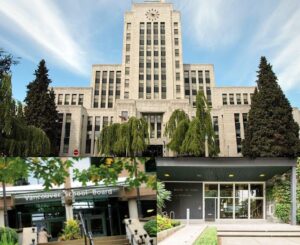
The strongest evidence to support this contention points to his sustained attention to Vancouver City Council, the Vancouver School Board, and Vancouver’s Board of Park and Recreation — where he has long been a sustained observer (or, as some have said, the conscience) of this unique civic institution — with Mr. Tomlin also displaying a deep interest in housing policy, neighbourhood planning, development across the city and the region, and local governance, while also branching into provincial, federal, and occasional international topics.
All of the above makes VanRamblings distinctly local-first, with civic politics at the core and culture as an important secondary thread.
VanRamblings’ tone is also part of its orientation

Vanramblings is famous — or infamous, as the case may be — for its sometimes controversial editorial orientation, providing always an expansive, passionate, often humorous, and at times hyperbolic (at least in the past) style of writing.
Mr. Tomlin often writes in the third person, which the site frames as a stylistic device for ironic distance. In practice, that means VanRamblings reads less like a neutral news outlet and more like a very personal civic forum, where opinion, memory, reporting, and advocacy are blended together.
According to the records we located regarding Mr. Tomlin’s educational background, in 1975, he earned a Bachelor of Arts in Political Science, Sociology, and Anthropology, followed by a Bachelor of Education specializing in Reading and Early Childhood Education, and later a Master of Arts in Policy Administration, all at Simon Fraser University. This academic mix helps to explain the shape of his later work: social analysis, teaching, and policy commentary — all of which sit naturally together in his writing.
Mr. Tomlin’s educational background also suggests why VanRamblings often ranges beyond surface politics.
As someone trained in the social sciences and policy administration, Mr. Tomlin has tended to focus on civic issues in terms of institutions, incentives, and long-term social consequences, rather than only election-by-election tactics.
Before VanRamblings emerged in February 2004, Raymond Tomlin had a varied career in civic activism, union organizing, as a founder of the largest grassroots Canadian food co-operative movement in the 1970s, education and journalism.
Over the years, Mr. Tomlin has worked as a teacher in British Columbia’s public education system — during which time his activism led him to become the British Columbia Teachers’ Federation Learning and Working Conditions Chairperson, representing the north and south Okanagan. Mr. Tomlin also entered the private education system for one year, teaching in a gifted education programme.
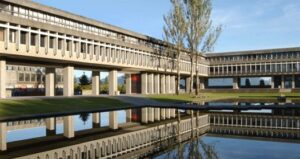
Mr. Tomlin has also taught at Vancouver Community College, Langara College, and Simon Fraser University. While working on his Masters degree at SFU, Mr. Tomlin was appointed as the Director of the Education 401/402 programme, the first semester SFU education programme, where students spend the first two months of their year long Professional Development Programme (PDP) as student teachers in various classrooms located across the Metro Vancouver region.
On the journalism side, Mr. Tomlin wrote for a Vancouver wide student newspaper in the 1960s — while enrolled at Templeton Secondary School — and while attending Simon Fraser University he took on the position as Editor-in-Chief of SFU’s student newspaper, The Peak.
Mr. Tomlin also worked in the summer intern programme at both the Vancouver Sun and The Province, later building a substantial independent publishing practice through his blog. That trajectory helps explain why VanRamblings feels like a hybrid of memoir, commentary, archival record, and commentary newsroom.
VanRamblings is a one-person publication shaped by someone who has been around journalism, but who is not constrained by conventional newsroom style.
Tomlin’s public image is seen by some as polarizing, yet he endures to this day.
While Mr. Tomlin’s critics have found his writing to be overly opinionated, his many supporters and admirers see his independence, personality, and longevity as strengths, in his invaluable work as a persistent chronicler of Vancouver who has kept publishing through changing media conditions, no small achievement in a city where journalism has contracted significantly.
One of the most striking features of VanRamblings is its continuity.
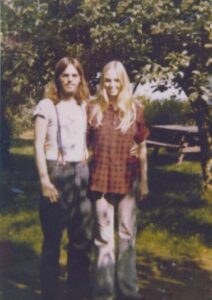 Raymond — campus radical — and the ever brilliant Cathy, circa summer of 1972
Across decades, Raymond Tomlin has remained focused on the same broad public project: documenting and influencing civic debate in Vancouver. That consistency gives him an outsized presence relative to what a “blogger” label might suggest.
Taken together, the contribution Raymond Tomlin has made to public discourse has made him over the years a Vancouver civic insider-outsider: close enough to politics, education, labour, and journalism to understand how institutions work, yet independent enough to write in his own voice and on his own terms.
VanRamblings’ political orientation is decidedly progressive-civic in the broad sense that it emphasizes local governance, public interest issues, activism, and cultural life.
In a concluding summary: Raymond Tomlin is a veteran Vancouver commentator whose VanRamblings blog remains as an invaluable civic institution.
Over the years, Mr. Tomlin has added much to our understanding of the Vancouver municipal political scene, and our city’s cultural imperative, as reflected in the contribution Mr. Tomlin has made in providing extensive coverage of Vancouver’s thriving dance community — particularly Ballet BC, which institution Mr. Tomlin has long loved — theatre, cinema, Vancouver’s culinary scene, art (including photography), and the vibrant cultural life of the city we all call home.
The Curse of Politics | The Latest Edition