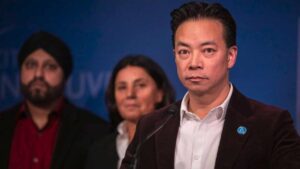
Crypto, The Scam Currency Championed by Vancouver Mayor Ken Sim

Cryptocurrency promised a democratized financial future.

In practice, it functions like a casino wrapped in techno-mystique — ideal for laundering money and enriching insiders.

The Financial Action Task Force (FATF), the world’s Anti-Money Laundering standard-setter, warns that without strong rules, “virtual assets … risk becoming a safe haven for the financial transactions of criminals and terrorists.”

FATF Chainanalysis traces tens of billions in tainted money each year — its 2025 report estimates illicit crypto addresses received about $40.9 billion in 2024 (likely nearer $51 billion once all is identified). FATF Chainalysis has issued red-flag indicators and repeated calls for tougher global action precisely because criminals employ crypto to launder funds.

Crypto’s core economic claim — “value” — is equally shaky, fraudulent even.

The Bank for International Settlements writes bluntly that crypto assets “have no intrinsic value and lack a backing authority,” making prices prone to sudden swings. Bank for International Settlements reviewers have long argued they are “akin to a commodity money (although without any intrinsic value in use).” That hollowness fuels boom-and-bust cycles in which sophisticated players harvest gains while latecomers eat losses, the ultimate Ponzi scheme.

Who actually wins?

Not the many, but the whales (the very very wealthy, the 1%). Academic work and regulators document extreme concentration: the top 10,000 Bitcoin holders controlled a massive share of supply, revealing “participation … still very skewed toward a few top players, which is to say, the wealthy one per cent.” Such concentration means market moves are often dictated by a tiny cohort of the very wealthy, who can move liquidity and sentiment at will — hardly a people’s money.

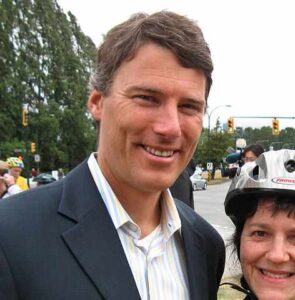
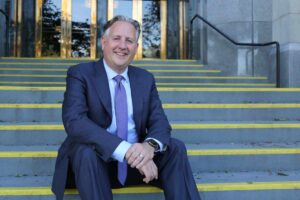
Against this backdrop, Vancouver’s Mayor Ken Sim has championed making the city “Bitcoin-friendly,” even floating paying municipal property taxes and holding reserves in Bitcoin — “a hill I am willing to die on,” he told Business in Vancouver’s Mike Howell this spring while awaiting a staff report.

BIV reporting in December 2024 detailed his motion to explore accepting Bitcoin for taxes / fees and investing a portion of city reserves. Tying essential public revenues to an asset class that lacks any intrinsic value is fiscal brinkmanship, not innovation. (Bank for International Settlements)

Crypto currency certainly doesn’t serve the interests of the citizens of Vancouver.

The pattern is clear: a system tailor-made for obfuscation — bafflement, bewilderment, mystification, puzzlement — celebrated by a wealthy minority that profits from volatility, and promoted as “the future” despite watchdogs’ alarms.

When the smoke clears, crypto looks less like finance for the many and more like a high-risk conduit for the few — plus a convenient money laundering tool for the criminal underworld.

And this is the fraudulent “currency” Mayor Ken Sim champions?

VIFF 44’s Galas & Special Presentations Programme, Pt. 4

VanRamblings returns today with a continuing look at the Galas & Special Presentations programme at this year’s 44th annual Vancouver International Film Festival. Click on the underlined link for each film title below to be taken to the VIFF web page for the film, which will both provide you with more information on the film, and allow you the opportunity to purchase a ticket for each award winning film (pleasing the VIFF folks no end), if you are of a mind to do so.

Father Mother Sister Brother. Winner of the Golden Lion, the top prize, at the Venice Film Festival this past weekend. Hollywood Elsewhere’s Jeffrey Wells in his review called the film inert and threadbare, also writing, “Jim Jarmusch’s new film is easily his weakest, least nourishing film ever, which is why Cannes Film Festival artistic director Thierry Fremaux declined to début the film four months ago.”

Clearly, American director Alexander Payne (Nebraska, The Descendants, Election, Sideways) who headed up the jury in Venice that chose Jarmusch’s film for the award had an entirely different take from Wells on the worthiness of the film.

The Hollywood Reporter’s David Rooney writes of the film, “For a three-part piece, it gains a gorgeous fluidity from the gossamer ribbon of melancholy threaded through it. Like Paterson, it’s a film whose simplicity, sweetness and unvarnished ordinariness make it seem almost a miracle,” while Variety’s Jessica Kiang calls the film “consistently beautiful.’ The Guardian’s Peter Bradshaw: “it is a film to savour.”

Are you are Jarmusch fan? Then Father, Mother, Sister Brother is a must-see.

Friday, October 3rd
5:45 pm
The Rio
Sunday, October 12th
6:30 pm
Vancouver Playhouse

Rental Family. A smash hit at the Toronto International Film Festival, with critics suggesting that Rental Family is a lock for a Best Picture Oscar nomination, and Brendan Fraser a Best Actor Oscar nomination, and maybe even another win.

Writes The Hollywood Reporter’s Frank Scheck …

“Oscar winners, especially those coming from left field, don’t always find worthy successors to their award-winning roles. But Brendan Fraser has come up with a beaut in his first starring part since The Whale. Playing an American actor living in Tokyo who finds a unique way to practice his craft, the actor delivers a superlative performance in Rental Family, a dramedy that proves a charming surprise balancing poignancy and humour with rare delicacy.”

Want a good cry in a darkened movie theatre? Then Rental Family is for you.

Saturday, October 4th
6:00 pm
The Rio Theatre

The Secret Agent. When far right conspiracy theorist, Trump acolyte and danger to humanity Jair Bolsonaro was President of Brazil (more’s the pity), Kleber Mendonça Filho — Brazil’s most acclaimed film director ever, and one of VanRamblings’ favourite directors dating back to 2012’s Neighbouring Sounds (a film we absolutely loved), Kleber Mendonça Filho was persona non grata, having to leave the country for fear of arrest (that’s what fascists do to prominent members of the arts community), but now that Lula is President (again) Kleber Mendonça Filho is back in the good graces of Brazil’s federal government. Thank goodness.

Allow a few prestigious film critics to weigh in on The Secret Agent

“Visually and dramatically superb in every way, moving with unhurried confidence across the screen, pausing to savour every bit of bizarre comedy or erotic byway, or note of pathos, on its circuitous path to the violent finale,” says The Guardian’s Peter Bradshaw.

Says The Film Stages’ Leonardo Goi, “The Secret Agent doesn’t just exist in conversation with the genre films from the decade in which most of it unfurls; it also testifies, time and again, to the director’s unwavering belief in cinema’s capacity to disquiet and mesmerize.”

Time Out’s Dave Calhoun, “The Secret Agent is vicious and vivid in its sense of place and danger, but also has a streak of weirdness, as it offers a very human take on the political-crime thriller genre.”

Slant Magazine’s Mark Hanson writes: “More broadly appealing than Kleber Mendonça Filho’s past films, The Secret Agent is still unmistakably the work of an artist who’s deeply fascinated with the ways in which cinema, politics, and personal history co-mingle.”

Destined for a Best International Feature Film Oscar nomination. See it now.

Monday, October 6th
9:00 pm
Vancouver Playhouse
Saturday, October 11th
2:00 pm
Vancouver Playhouse

For Part One of our VIFF Galas & Special Presentations columns click here.

For Part Two of our VIFF Galas & Special Presentations columns click here.

For Part Three of our VIFF Galas & Special Presentations columns click here.

VanRamblings Weighs In On Raymond’s Health. Pt. 3

To access Part One of my 2025 health update click here.

Part Two of my three-part health update may be found here.

I left you hanging yesterday. Sorry.

March and the early part of April this year proved to be the most painful period I have experienced in my life since October 2016, with my first cancer.

In early March, upon arriving home from a week’s vacation in Halifax visiting her mother, Kelly texted me from the airport to ask how I was doing. I told her I was in a great deal of pain, but I was going to tough it out. Despite having been up since 4:30am that morning, flying across the country, arriving back in Vancouver at 4pm, rather than drive home to be with her children, Kelly drove directly to my home, telling me, “Get in the car. I’m going to take you to UBC Hospital,” which she did.

UBC Hospital Admitting considered my situation to be an emergency, proceeding to immediately wheel me onto an emergency room bed, where I was seen by a doctor, who ordered the first of many CT scans, diagnosing me with a particularly severe case of diverticultis — which had hospitalized me in the autumn of 2023.

Diverticulitis can be, and proved to be in my case, a particularly painful gastrointestinal disorder characterized by inflammation of abnormal pouches — diverticula — that develops in the wall of the large intestine, causing severe lower abdominal pain, and could and would in my case worsen in intensity over the next week.

By the time I was diagnosed — with a distressingly painful catheter now inserted (which would remain in place for 6 weeks), I suggested to Kelly, as she sat by my side, that she must be beat, it was 1:30am Nova Scotia time, over the past 15 hours she’d flown across the country, and spent the last 5 hours by my side.

Given that I was now admitted to hospital, I assured Kelly that I’d be fine, and well cared by the attending physician, nurses, hospital staff and by my family doctor, who would visit me the next morning. As the hospital had provided with me with medication to lessen the pain, now was the time, I suggested to her, she return home to her family, and we’d talk the next morning.

Over the next two weeks, following a series of new CT scans, UBC Hospital changed its diagnosis to nephrolithiasis.

Nephrolithiasis specifically refers to calculi in the kidneys, commonly referred to as kidney stones. Renal calculi and ureteral calculi (ureterolithiasis) are often discussed in conjunction. Ureteral calculi originate in the kidneys, and as they grow can be lodged in the ureter. Genetic, metabolic, and environmental factors can contribute to stone formation. The majority of renal calculi contain calcium. The pain generated by renal colic is primarily caused by dilation, stretching, and spasm because of the acute ureteral obstruction.

I was told I would need surgery to remove a plethora of large kidney stones that were not only lodged in my intestines, but impacted and in my urethra, as well. That surgery occurred on April 9th at the Vancouver General Hospital. The attending surgeon removed a large kidney stone lodged in my uretha. Within the next hour, I passed 20 large kidney stones, and 20 somewhat smaller kidney stones.


Ocean Dental in Cancún, Mexico, providing high-quality dentistry (considered to be the best in North America) at a fraction of the cost, from 50% to 70% lower than in the United States and Canada.

The next day I got on a plane to fly to Cancún, Mexico for dental surgery, as I had arranged months earlier, that in Canada would cost me between seven and nine thousand dollars, but in Mexico — including air fare, accommodation, dental surgery preparation, X-Rays and examinations, extraction of an infected molar, periodontal surgery to repair infected gums, and the insertion of a state-of-the-art titanium tooth implant, the total came to $2700, while my companion, Nick Ellan and I, enjoyed wonderful four or five star Mexican cuisine each morning and evening. Although not particularly restful, I was grateful for the cost saving.

Note in passing: yes, I know many would consider it near insane for me to get on a plane, fly to another country for invasive dental surgery, following six weeks in bed / in hospital in Canada, and surgery to remove very painful kidney stones, that while still in pain, and very weak, nowhere near recovered, I would travel 6,333 kilometres away from home, from my doctors in Vancouver, and from safety.

I will write about my incredibly wonderful experience in Cancún, and a first rate relationship with Ocean Dental in another post. Suffice to say, I was very pleased.

In the months since mid-April, I have continued hormone treatment for my prostate cancer, with Jonathan Ma, and my uro-oncologist, Dr. Miles Mannas, had another biopsy (I’m still recovering), have worked with my skilled dentist / dental surgeon, Dr. Sandy Ko, who last month built a bone graft to facilitate the placement of another tooth implant this upcoming January — as a 31 year very appreciative patient of Dr. Ko, and given my impecunious circumstance, Dr. Ko is matching the price for the tooth implant charged by the UBC Dental Clinic. Next month, Dr. Ko will place a crown over the tooth implant I received in Mexico. Next June, I will have a crown placed over the tooth implant that will be inserted in January.

In addition to the above, I suffer from debilitating neuropathy, that makes it both difficult to walk, and to keep my balance (I have an almost complete loss of balance, standing in the shower is difficult, I am unsteady … no fun, let me tell you); have arthritis in my hands that makes it difficult to type; my Type 2 diabetes and once high A1C / blood sugar count is now pretty much under control; high blood pressure that is, for the most part, now under control; my two concerning heart conditions; and the ever concerning cancerous state of my prostate, with attendant constant fatigue and woeful lack of energy, intermittent pain — gastrointestinal distress (a near constant upset stomach leading to an utter lack of appetite, a concerning weight loss, a 60 pound weight loss in the past year) — such that I have to force myself to eat in order to remain healthy, headaches, hives, gastroesophageal reflux disease (GERD), ever worsening atopic dermatitis, and more. 

Let me leave you with two thoughts, one quite bracing, the first one from my daughter Megan, the person who loves me most in this world.

Any discussion of your health is nothing more than a morbid plea for undeserved sympathy.

From my friend, Vancouver School Board trustee, Christopher Richardson …

“Raymond, you and I suffer from the same malady. On the surface, both of us look healthy, when that is far from the case. From my COPD — which often makes it hard for me to breathe, or catch my breath, and the lack of energy attendant to my health disorder — and your prostate cancer and heart conditions, the two of us couldn’t look more healthy, when both of us know that is not our reality.

Both of us are high energy men, we’re driven, in our daily lives we set about to accomplish much, to contribute. But we do that because that’s who we are, despite our various debilitating health issues that make our work in the community ever more difficult. Still, how spiritually satisfying it is for the both of us that we can, and feel we must continue in our work to make a difference for the better.”

This year I am seventy-five years of age. At one time that was considered old. But not any more. Dr. Brad Fritz tells me I’ve got another 15 good years in me, that I will make it through my current troubling health circumstances to live a long and productive life, I should not worry, that I am in good hands, receiving the best of care, whether it’s with him, Dr. Miles Mannas or Dr. Sandy Ko. Vivas tempore et bene sit.

VanRamblings Weighs In On Raymond’s Health. Pt. 2

Part One of my 2025 health update may be found here.

At my December 5th, 2024 appointment with Dr. Brad Fritz, my family physician for the past 42 years, while addressing the issue of my prostate cancer diagnosis and the necessity for an immediate MRI following an alarming late November PSA — prostate-specific antigen — blood test, arrangements were made for a follow up bone scan to determine if the cancer had spread (as it has for former president Joe Biden), with a prostate biopsy to follow.

In addition to the prostate cancer, I told Dr. Fritz that throughout the autumn I had been passing out / falling a great deal, in the shower, when walking across my living room, and when leaving my apartment. The issue was that I was passing out for just a second before “coming to”, before getting my bearings.

Dr. Fritz told me that he thought that my passing out was related to my heart, and immediately made an appointment at UBC Hospital for me for an EKG (electrocardiogram), a test to check my heart for the aberrant electrical activity, such as an irregular heartbeat (arrhythmias), atrial fibrillation, heart attack, heart failure, blocked or narrowed heart arteries, and enlarged heart. The EKG was also to check for damage to my heart muscle, and assess the effectiveness of heart medications or devices like pacemakers, and investigate symptoms like chest pain, dizziness, or shortness of breath. An appointment for an EKG at UBC Hospital was set for Christmas Eve, at 4:30pm.

On December 24th, I entered the lobby of a near deserted UBC Hospital, taking the eleevator to the second floor, where I waited outside the office that had an EKG sign to the right of the door. I waited 15 minutes before the technician came out and invited me into the his clinic offer for the EKG, having me take of all of my top clothing, before have my lie down on a bed. Moving the EKG machine into place, electrodes attached, a thorough 20-minute electrocardiogram commenced. To say that the technician was alarmed at the result would be to understate the matter, as he asked me a series of questions, “Are you alright? Will you be able to stand? Do you think we should admit you to the hospital.” I assured him that I was fine, and would make my way home, after which I walked to the bus “loop” at UBC, and took the #9 Broadway bus home, settling in on my sofa to watch the news.

No sooner had I settled in than Dr. Fritz called me, sounding frantic (Brad is one of the most calm and centered persons I have ever met, so his “behaviour” I found to be unusual and out of character). Long story short, Dr. Fritz told me I was a candidate for a heart attack or stroke, that one of my arteries was clogged, that he’d left a message for my pharmacy to provide me with two medications he’d prescribed. Brad Fritz told me that if felt at all ill, I should call 911 and have an ambulance pick me up, and he’d meet me at Vancouver General Hospital. I told Brad I felt fine.

Turns out that in addition to the atrial fibrillation, I have a blockage in one of my arteries. Dr. Fritz told me that surgery is not an option, because if the blockage becomes unstuck, it could very well travel to my brain, and it’d be lights out for me. I tell ya, that kind of news sure makes for a happy Christmas season.

My pharmacy did not open until December 28th, the date I picked up my two prescribed medications. I already had a pulse oximeter, but purchased a Kardiamobile which records and analyzes a single-lead, medical-grade electrocardiogram (EKG) in 30 seconds employing my smartphone, allowing me to detect my heart arrhythmia (atrial fibrillation, AFib), as well as bradycardia (slow heart rate) and tachycardia (fast heart rate), all in the comfort of my home.

The Kardiamobile confirmed that I had atrial fibrillation (my heart rate would spike to 140 beats a minute), as well as (months later) bradycardia, which first came to my attention when my pulse oximeter indicated I had a pulse rate of 36 beats a minute, confirmed by my Kardiamobile.

I will note here that I felt fine then, and I feel fine now, despite my prostate cancer and two heart conditions. As I wrote yesterday, I feel fatigued throughout the day, am sleeping a great deal more than I usually do, and have some trouble performing basic households tasks, like making breakfast or dinner, making my bed, doing the wash, or vacuuming and washing my floors.

Throughout late January and February all proceeded as it should. My prostate cancer was under control, I was under the care of not only Dr. Fritz and Dr. Miles Mannas, my uro-oncologist, but a fine fellow by the name of Jonathan Ma, who is the Vancouver co-ordinator for the Guns Study — or genomic biomarker-selected umbrella neoadjuvant study for high risk localized prostate cancer trial — as well as the fine women in the prostate cancer supportive care centre.

Then all hell broke loose in early March, with hospitalization, five weeks of immense pain, a painful catheter throughout this entire period, surgery (not the kind that would knock me out), a flight to Cancún for dental surgery (again, I was not knocked out, I just fell asleep during the procedure), a loss of balance (thank you neuropathy), Type 2 diabetes, a tremendous weight loss, a new computer so I can post to VanRamblings (my old computer died) again, hives, and …

Come back tomorrow for the thrilling, heart wrenching, hopeful conclusion of Raymond’s 2025 Health Update. See you back here then.