Category Archives: VanRamblings

#VanPoli | A Friendship | Vancouver City Councillor Colleen Hardwick


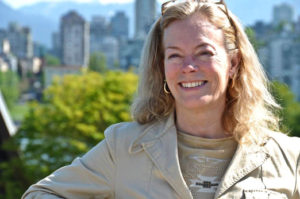
First term Vancouver City Councillor and 2022 Mayoral hopeful, Colleen Hardwick

In 2013, a group of community activists came together to Save Kits Beach, a community-led environmental response to a Vision Vancouver proposal to run a 12-foot wide asphalt bike path through Hadden and Kitsilano Beach parks.

Although I had known Colleen in the years prior to 2013 — both as an arts reporter writing about the film industry, in which she was involved, as well as working with her father, the late Dr. Walter Hardwick, in the late 1980s / early 1990s on the Livable Region Project — it was not until 2013 that Colleen and I came to know each other better, working on Save Kits Beach, when we first became true friends.
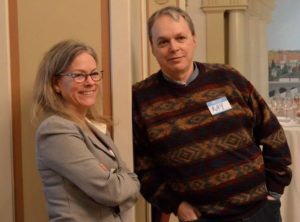
In mid-2016, when I was diagnosed with hilar cholangiocarcinoma, Colleen gave me a call one morning, and in her inimitable, straightforward manner exclaimed boldly to me over the phone, “If you’re going to beat this thing, Raymond, you’re going to need a spiritual element in your life. I’ll be picking you up this coming Sunday morning at 10 a.m. to take you to church!”

During the course of the telephone call Colleen revealed to me that she, too, had earlier been diagnosed with cancer, and that she was still in recovery, as was a good (and mutual) friend of ours, Tina Oliver — who was still receiving treatment. If you know Colleen, you know that there’s no refusing her when she has her mind set, so that next Sunday morning, I dragged myself out of my sick bed, and the two of us headed off to Fairview Baptist Church — where I gratefully attend to this day.
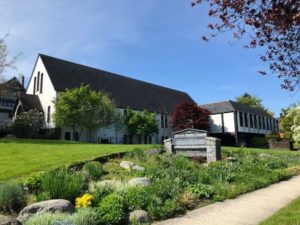
Quite obviously, Colleen was right — for despite my terminal cancer diagnosis, I am still here today, grateful to be alive, and thankful for Colleen’s friendship.
Over the years, Colleen had spoken with me about making a run for Vancouver City Council. In 2014, she created A Better City, the name of the nascent Vancouver political party since “appropriated” for the upcoming 2022 Vancouver municipal election by former Non-Partisan Association President, Peter Armstrong — without permission, of course, with not even a call, text or e-mail posted / made to Colleen.


A Better City, a political party created by City Councillor Colleen Hardwick in 2014

After much thought and discussions with friends, Colleen made the difficult decision not to make a bid for elected office in 2014, under the ABC banner.

All that changed,  however, in 2018, when Peter Armstrong approached and pleaded with Colleen to run for Vancouver civic office under the Non-Partisan Association (NPA) banner — about which she had significant misgivings, not the least of which was the lack of a nomination process.

Having run with the NPA in the 2005 Vancouver municipal election, where she placed 14th after a hard fought campaign, Colleen decided to take Peter up on his offer to fund her civic election campaign, as he all but assured Colleen of her election to Vancouver civic office on October 20.

In fact, Colleen placed a very respectable fifth place in the hard fought 2018 Vancouver civic election, where she would sit as one of five Non-Partisan Association City Councillors — all women —  the others: second term Councillor Melissa De Genova, Lisa Dominato, Rebecca Bligh, and barely squeaking onto Council, former Vancouver Park Board Chairperson, Sarah Kirby-Yung.


Vancouver City Councillor Colleen Hardwick looks askance at a Council colleague

In the five weeks following her election as a City Councillor, then City Manager Sadhu Johnson arranged an orientation for the newly-elected Councillors, during which time the Councillors became intimately familiar with how the city works, with visits to each of the City’s departments, from Planning to Engineering, and Transportation, and beyond, including instruction on City “processes”. During the orientation, the Councillors got to know one another well.
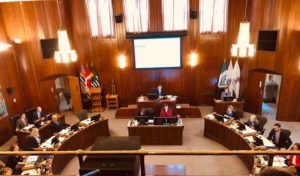
At the Council table, to Colleen’s right sat Christine Boyle, and to her left, Pete Fry. Colleen already knew Pete, but apart from what I had written about Christine during the course of the 2018 Vancouver civic election, was not all that familiar with Ms. Boyle, and what she “brought to the table.” From the outset, Christine let it be known that each and every one of us is living on the stolen lands of the Coast Salish peoples, raising issues of indigenous relations with novice Vancouver City Councillor, Colleen Hardwick.

Quite an education it proved for Ms. Hardwick, who came to like, respect and admire her principled, younger, distaff Council colleague.

As it happens, there was to be no “mutual admiration society” extant between the two nascent Vancouver City Councillors. Christine Boyle implicitly and explicitly let it be known — with a viciousness that Colleen found both perplexing and unsettling — that she despised Colleen and all that she “stood for”, that she would not work with her, had no interest in developing any kind of working relationship with her more mature Council colleague, that she considered Colleen to be a “right winger” and would set about to make Colleen’s life on Council “a living hell.”

And thus the Christine Boyle-created narrative of Colleen Hardwick as a morbid, unredeemable and entirely loathsome “right winger” was born.

As proved to be the case over the next two years, Vancouver City Council’s chief  dissembler — Christine Boyle — was more than true to her word.

Even more, when other of Colleen’s City Council seatmates saw how vicious was the treatment Colleen was being afforded by Christine Boyle, the three men on Council (Mayor Kennedy Stewart, and Green Councillors, Pete Fry and Michael Wiebe) — or as I like to refer to them, the Three Misogynist Musketeers — were only too happy to pile on the train of hate throwing rotten fruit at Colleen, with Christine Boyle handing them the fetid, putrid projectiles.

On two occasions in December 2019, at the end of our regular Sunday church service, Colleen threw herself into my arms, crying and inconsolable, that when I was able to settle her down was told by her that sitting on Council had become too much. The hateful treatment she was afforded at every Council meeting, most particularly by Christine Boyle, but also by Mayor Kennedy Stewart and Councillors Pete Fry and Michael Wiebe, was more than she could bear, it was unrelenting.

Never had she been so miserable, at any point in her life, she cried out.

As it happens, I attended the OneCity Vancouver AGM later in the month of that December, making contact with Christine, telling her how much Colleen had admired her in their early days on Council, how much she had learned from Christine, how grateful Colleen was for the humanity Christine brought to the issue of our relations and collective obligation to our Indigenous peoples.

While staring daggers at me as I made my exclamatory statement, Christine harrumphed, spitting out “I’m not interested,” then briskly walked away.

And this was at a pre-Christmas / Hannukah celebration by a whole passel of OneCity Vancouver members — just about the kindest, most welcoming, generous and socially conscious, as well as activist people you’d ever want to meet.

In March 2020, when a decision was to be made — arising from the demands of the just declared pandemic — Council decided that until further notice that Council meetings would be held virtually through WebEx. Both Councillors Boyle & Fry posted bitter tweets deriding Ms. Hardwick, with Pete tweeting, “At least I don’t have to sit next to that whack job anymore,” referring to Colleen.
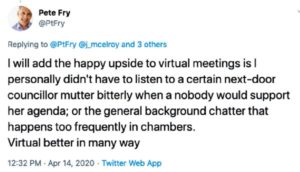
A tamped down Pete Fry tweet deriding Councillor Colleen Hardwick

That original tweet has since been deleted. The sentiment and ill-regard remains.

Later, when Christine Boyle — the Chairperson of Council’s Selection Committee — insisted that independent Councillors Melissa De Genova and Sarah Kirby-Yung resign their positions on Council Advisory Committees (which they did … to this day it befuddles me as to why Melissa, by far the toughest person on Council, puts up with Christine’s hateful nonsense, with nary a response to Ms. Boyle’s myriad provocations), and when Ms. Kirby-Yung, Ms. De Genova and Ms. Dominato recommended Councillor Hardwick for a position on the expanded Selection Committee, Christine Boyle cried long and loud that she would not sit on a Selection Committee with … well, let’s not record what the Councillor actually said, but it weren’t pretty, it weren’t kind, and it certainly wasn’t collegial, nor professional.

The Mayor finally had to intervene in response to Councillor Boyle’s childish tantrum, and appointed Councillor Hardwick to the Selection Committee.

All of the above is by way of saying that I’ve had it up to here with the ill treatment Colleen has been afforded on City Council — enough’s enough!

And, no, this is not Raymond Tomlin riding in on his white steed to rescue the damsel in distress. On her most emotionally fraught day, Councillor Colleen Hardwick is 100x tougher than I am, have ever been, or will ever be. Colleen hardly needs my “help” — my friendship and loyalty, maybe, but just that.


Colleen Hardwick and her daughter,  at the 1984 Liberal Party leadership convention 

Let me state for the record: Colleen Hardwick is not a right-winger — as a lifelong member of the Liberal party, and as a multi-term member of the Vancouver Centre Liberal riding executive, Colleen has always been a left-of-centre Liberal, from the time she fought for child care, when in 1984 she attended the Liberal leadership convention, when child care was hardly on anyone’s agenda, but it was on hers, Colleen has always remained a progressive, yet reasonable and centrist Liberal, very much in the mold of former Liberal Prime Minister Pierre Elliott Trudeau, a political leader she has greatly admired all of her adult life.

Over 50? You Need to Get A Shingles Shingrix Shot.

Are You Over 50? Then, You Need to Get a Shingles Shingrix Shot SOON !!!(Republished as a public service, a VanRamblings repost of an April 22, 2018 column)

Today is Earth Day. How can you play your part?

Well, if you’re a senior, or over the age of 50, maybe by not dying prematurely from the stress and pain associated with the varicella zoster virus (shingles) or postherpetic neuralgia, so you can be around to witness, participate in and contribute to making ours a greener and more environmentally sound planet.

Are you over the age of 50, or do you have a parent, friend, spouse, relative, neighbour or colleague who is over the age of 50? If so, you or someone close to you will want to make arrangements this coming week to have the new Shingrix vaccine administered at your, or their (if it’s someone you’re advising) doctor’s office, or local pharmacy.

Those aged 50+ are susceptible to contracting shingles, probably the single most painful and sustaining malady a middle-aged or older person might experience.

Many millions of North Americans, especially those aged 50+, are susceptible to an attack of shingles, caused by the same virus that causes chickenpox.

Once the varicella zoster virus infects a person, it lies dormant for decades in nerve roots, ready to pounce when the immune system is weakened, say, by stress, medication, trauma or disease. One-third of North Americans eventually contract shingles, but the risk rises with age; by age 85 half of adults will have had at least one outbreak of shingles.

Just have a look at the following testimonials (as always, click on the preceding link) …

Comment from Francie, age 66

I had the worst pain from shingles, it was just off the charts! I was unable to sleep, eat, walk, or talk for three months.

Comment from David, age 70

On March 26, 2015, I had my first annual anniversary with the horrible and constant pain of post herpetic neuralgia (shingles). The first 9 months was a nightmare; especially at night. It’s in my armpit, and all along my shoulders; so it’s too painful to have clothing or even a sheet touching my skin. Nothing helped even as new medications appeared. My doctor tried everything and couldn’t understand why my shingles just got worse. He told me he’s had patients who suffered with shingles for 7 years. So by the time this goes, I’ll be dead; or want to be.

Once you’ve contracted shingles, there’s nothing you can do about it, except live as best you can with the pain and the prejudiced lifestyle.

Shingles: blisters, fatigue, infection, pain, itching, red rash, virus, burning

However, there is something you can do to prevent contracting shingles.

Merck’s Zostavax was first brought to the market in 2008, with an efficacy rate that reduced the risk of shingles by 51%, and a 67% preventive rate of contracting shingles a second time. Good, but not good enough.

This year, however, a new medication from Glaxo-Kline, called Shingrix, came onto the market, that studies indicate reduces the risk of contracting shingles by 97% for people in their 40s, 50s and 60s, and 91% for those in their 70s and 80s, also reducing the risk of contracting shingles again by 86%, lasting much longer than its Zostavax predecessor, which starts to lose its protection after only 3 years.

Needless to say, we had the Zostavax vaccine administered some years ago, and have now had the first of two Shingrix shots administered.

Sharon Livingstone, a gerontologist, is 'adamant' that people get the Shingrix vaccine.
Sharon Livingstone, a gerontologist, is ‘adamant’ people get the Shingrix vaccine. She herself got the Zostavax shot 10 years ago but, as can happen, she contracted shingles four years ago. She now encourages the seniors she sees to be vaccinated with the new and more effective Shingrix vaccine.

The headline in the January 1, 2018 Globe and Mail article, by health reporter André Picard, called Shingrix a game changer” …

More than 130,000 Canadians are diagnosed with shingles each year — most of them seniors.

Anyone who has had chickenpox — which is about 90% of people born before 1995 — can develop shingles later in life, and about one-third do. The varicella zoster virus lies dormant for years, or decades, and erupts for reasons that are unclear, usually after age 50.

The pustules on the skin are bad enough, but one in eight of those afflicted with shingles suffer post-herpetic neuralgia, the medical term for lingering and sometimes debilitating nerve pain. The virus can also destroy nerves, causing blindness or deafness and, in rare cases, lead to grave infections such as meningitis and flesh-eating disease. Shingles also increases the risk of heart attack and stroke.

Yet, the misery that befalls so many is largely preventable.

Now there is a new vaccine, Shingrix, that dramatically improves protection — showing itself to be up to 97 per cent effective in large clinical studies.

“This is a game-changer,” says Dr. Iris Gorfinkel, a Toronto physician.

The blisters arising from a shingles incident tend to heal in a week or two to form crusty scabs that eventually fall off. But for about 15% of people, shingles does not end there. Instead, it leaves them with deep, searing nerve pain — a condition called postherpetic neuralgia, or PHN — that can last for months or years and has no treatment or cure. More than half the cases of PHN affect people over 60.

Make arrangements this week with your family doctor to get the new Shingrix vaccine

VanRamblings first became aware of shingles when a neighbour contracted the infection 5 years ago. For a period of one year, he couldn’t move out of his co-op apartment, couldn’t sleep (except when he passed out from exhaustion), wearing any kind of clothing was near impossible, and having anything touch his skin brought him excruciating pain. Every male in VanRamblings’ housing co-op, and all of VanRamblings’ close friends, made arrangements to have the $180, one time, Zostavax vaccine administered.

Now that Shingrix is on the market — requiring two shots, two to six months apart, at $150 apiece — all of VanRamblings’ close associates have either had the Shingrix shot, or are making arrangements to do so. Note should be made that — thanks to our new New Democrat government over in Victoria — British Columbia is the only province in Canada that allows pharmacists to administer the Shingrix vaccine (which is where we got the first of our two shots on Wednesday this past week).

You will need a prescription from a doctor, though. And, yes, as the video below suggests, there is some (ouch!) pain involved — even five days later — and a lingering malaise. But, hey, VanRamblings is still posting everyday, so it can’t really be that bad, can it (it’s not, we’re just a big baby)?

And, oh yeah, make arrangements this week to get your first Shingrix shot.

VIFF 2021 | 40th Annual Vancouver International Film Festival, Oct. 1st – 11th

After going online in 2020, the Vancouver International Film Festival (VIFF) returns on Friday, October 1st thru Monday, October 11th — to celebrate its 40th annual edition with a vibrant hybrid in-person and streaming lineup, with 85% of the VIFF 2021 film slate available online not just for loyal VIFF fans locally, but for patrons throughout British Columbia and across Canada, through the VIFF Connect online streaming web portal.

Although the Vancouver International Film Festival has traditionally commenced in late September with a two-week run, the somewhat truncated 2021 hybrid edition running from Friday, October 1st thru Monday, October 11th, will still feature 113 groundbreaking and celebrated original films, with 80 narrative and 33 documentary features arriving from 50 countries across the globe, 24 of which are world premières, 26 North American and 28 Canadian feature film premières, 6 of which are made by BC filmmakers. Eighty curated short films are also featured in the VIFF 2021 lineup, 36 of which are Canadian.

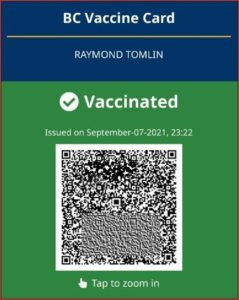
Strict British Columbia COVID-19 public health and safety protocols will be in place for in-person screenings, including mandatory mask wearing in screening rooms and common areas, and BC Vaccine Card proof that cinephile patrons have been vaccinated, before patrons will be granted access to the eight VIFF cinema venues.

VIFF executive director Kyle Fostner says he believes there’s a growing group of patrons who are ready to return to the theatre.

“Culturally, as an organization and as a community VIFF needs to have some kind of statement of intent around returning to cultural activity and to cinema,” Fostner says, pointing out that two local independent theatres, the Rio and the Cinematheque, have already been open for some time and attracting audiences.

Meanwhile, VIFF Expanded has partnered with two B.C. venues to present films in-cinema to British Columbians outside of the Lower Mainland, with 8 screenings scheduled at the Tillicum Twin Theatres in Terrace, and 12 VIFF films set to screen at the newly renovated Patricia Theatre in Powell River.

(Note: each film title — and more — throughout this column links to the VIFF website page)

Japanese-English director Will Sharpe’s The Electrical Life of Louis Wain, a whimsical Victorian biopic starring Benedict Cumberbatch and Claire Foy, was selected by VIFF Associate programmer Curtis Woloschuk as VIFF’s opening night film —  on Friday, October 1st, with Céline Sciamma’s exquisite Petite Maman — which débuted at the Berlinale earlier this year acclaim — and a favourite of Mr. Woloschuk’s, selected as VIFF’s closing night film, on Monday, October 11th.

The array of titles given special presentations assembles a collection of works by leading filmmakers spanning the globe, from …

    • One Second (China) by Fifth Generation filmmaker Zhang Yimou;

https://youtu.be/Ej7FSmzijNE

    • Memoria (Thailand/Colombia/U.K.) by Thai indie director Apichatpong Weerasethakul;

    • Drive My Car (Japan), Ryusuke Hamaguchi’s adaptation of a short story by author Haruki Murakami, available only as an in-person screening. A favourite of VIFF International Films programmer, Alan Franey;

    • Belfast (U.K.), an autobiographical film by British filmmaker Kenneth Branagh, recent winner of the Audience Award at the Toronto International Film Festival;

    • The Power of the Dog (Australia/New Zealand), the “other” Benedict Cumberbatch film at VIFF this year, and winner of the Silver Lion for Jane Campion as Best Director, at Venice 2021;

    • Bergman Island (France/Sweden) by French writer-director Mia Hansen-Løve;

“Seventeen VIFF films will be available as in-person screenings only,” VIFF’s International Films programmer Alan Franey told VanRamblings.

“And that includes Drive My Car, Ryûsuke Hamaguchi’s sombre drama about love and loss, that was for me an engrossing and exalting film experience, and a film not to be missed. Arising from concerns about piracy, I was unable to move various studios to release their films to our secure streaming VIFF Connect platform.”

As part of VIFF’s 40th anniversary celebrations, the festival will present a free online tribute talk. VIFF Leading Lights will spotlight Japanese auteur Kore-eda Hirokazu (Like Father, Like Son) in conversation with South Korean filmmaker Bora Kim (House of Hummingbird), whom Kore-eda chose as an emerging director to discuss filmmaking with.

Other speaking engagements at VIFF Talks will feature film professionals sharing their expertise, including documentary filmmakers Julie Cohen (My Name is Pauli Murray) and Jonas Poher Rasmussen (Flee).

On the industry side, online events include master classes with Mare of Easttown director Craig Zobel and The Suicide Squad editor Fred Raskin, as well as a talk by The Green Knight’s production designer Jade Healy.

Canadian productions receiving special presentations include the Indigenous sci-fi drama Night Raiders (Canada/New Zealand) by Cree-Métis director Danis Goulet, starring Vancouver’s Elle-Máijá Tailfeathers, and All My Puny Sorrows (Canada), director Michael McGowan’s adaptation of Miriam Toews’ 2014 novel.

More  VIFF 2021 highlights include VIFF AMP , the annual forum for music in film, which runs from October 8 to 10; VIFF Totally Indie Day on October 2nd, devoted to independent filmmakers and cinema; and the VIFF Immersed exhibition, October 1 to 11, to showcase virtual reality and augmented reality storytelling.

VIFF Ticket Info | VIFF Connect | In-Person | Passes | Tickets & Ticket Packs

As has long been the case, VIFF will offer a wide array of different ticket packages and passes: patrons can purchase an all-festival, all-access in-person pass for $725, while the VIFF Connect pass will be available for $110 for a household, $80 for an individual, with a $60 student rate. The four-ticket in-person pass price is set at $48, seniors $44, students, $32. Regular in-person admission will cost $15 – $17.

In 2021, patrons may enjoy the big screen cinematic experience, or watch from the comfort of their home, or mix and match to create a personal festival journey.

“VIFF’s lineup offers a plurality of perspectives, with powerful narratives from Indigenous filmmakers, poignant stories from female perspectives, and bold work that confronts critical issues such as colonialism, racism, and the climate crisis,” says Woloschuk. “The films VIFF programmers have selected testify to the power of creativity, reminding us: even when it’s darkest, we can dream.”

“I think the minute I see a VIFF screening of 100 appreciative audience members rapt in attention watching a VIFF film in-cinema it will be a victory,” enthuses Fostner, who adds that despite the ravages of the pandemic, VIFF remains strong.


The Vancouver International Film Festival is presented on the traditional and unceded territories of the Coast Salish peoples, and the xʷməθkʷəy̓əm (Musqueam), Skwxwú7mesh (Squamish), and səl̓ílwətaʔɬ (Tsleil‑Waututh) Nations.

COVID-19 | Twindemic | Run, Don’t Walk, To Get Your Flu Shot This Autumn

Dr. Brian Conway has advice for anyone thinking about getting a flu shot this fall.

“Run! Don’t walk to get your flu shot,” he said, speaking from his office at the Vancouver Infectious Disease Centre. “I think there is great consensus behind the statements that there will be a significant influenza season going forward.”

Getting your flu shot may do more than just protect you against the influenza virus — it may also prove to be protective against the most severe effects of COVID-19, according to an extensive new analysis presented online at the European Congress of Clinical Microbiology & Infectious Diseases (ECCMID) in August.

The study, titled “Examining the potential benefits of the influenza vaccine against SARS-CoV-2: A retrospective cohort analysis of 74,754 patients,” was published in the peer-reviewed scientific journal PLoS One on August 3rd. This was the largest study of its kind and analyzed deidentified patient records from around the world, which strongly suggested that the annual flu shot reduces the risks of stroke, sepsis, and deep vein thrombosis (DVT) in patients with COVID-19. Patients with COVID-19 who had been vaccinated against the flu were also significantly less likely to visit the emergency department or be admitted to intensive care.

“Only a small fraction of the world has been fully vaccinated against COVID-19 to date, and with all the devastation that has occurred due to the pandemic, the global community still needs to find solutions to reduce morbidity and mortality,” said senior study author Devinder Singh, M.D., a professor of clinical surgery at the Miller School.

“Having access to the real-time data of millions of patients is a powerful research tool,” added Dr. Singh, who conducted the study with medical residents Susan Taghioff and Benjamin Slavin, M.D., both of whom were lead authors. “Together with asking important questions, my team has been able to observe an association between the flu vaccine and reduced morbidity in COVID-19 patients.”

“Continued promotion of the influenza vaccine has the potential to help the global population avoid a possible ‘twindemic’ — a simultaneous outbreak of both influenza and coronavirus,” Taghioff said. “Regardless of the degree of protection afforded by the influenza vaccine against adverse outcomes associated with COVID-19, conserving global health care resources by keeping the number of influenza cases under control is reason enough to champion efforts to promote influenza vaccination worldwide.”

The egregious flu season researchers see looming on the horizon is due, in part, to last fall and winter when influenza was effectively eliminated in British Columbia and across Canada, thanks to COVID-19 health orders preventing gatherings and travel, while promoting physical distancing, mask-wearing and hand-washing.

But, with social life now returning to normal, zero flu last season will have consequences this season: the population is likely now more susceptible to the virus.

“People don’t have any built-up immunity that they might have [developed] from a flu season last year, or from getting their [flu] shots last year, or both,” said Conway. “So we’ll go from the best year on record for influenza to something other than that.”

Two companies, Moderna and Novavax, have announced they are working on a combined flu and COVID-19 vaccine, which Conway believes will be the future.

“There’s an expectation that COVID is going to be around for a while. Flu, obviously, has been around for a long while and will be around and we’re just going to be vaccinating people for both on a yearly basis,” Conway said. “But for now, please run and get your flu shot.”

The B.C. Centre for Disease Control said the flu shot is expected to be widely available by mid-October, either at your doctor’s office or through your local pharmacy.