Tag Archives: vancouver

#VanPoli | Homelessness + Housing | A Series | Part 4

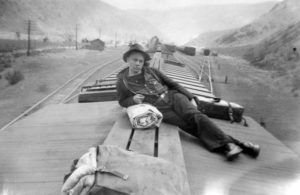
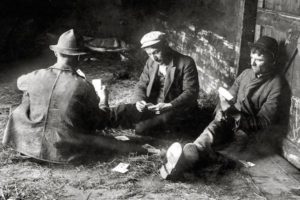
All of 13 years of age, in 1930 my father left his family farm in Saskatchewan, leaving behind his mother and five siblings — his father had died when he was three years of age — set to ride the rails for the next 9 years, alighting in the Annapolis Valley in the later summer to pick apples, working in every province across Canada, for no more than a meal and a roof over his head at night sleeping in a barn, more often than not taking shelter in a hobo camp somewhere adjacent to the railway tracks that span our nation, undernourished always, starving at other times, my father having joined a homeless generation of Canadian youth scrambling to stay alive in the midst of the Dirty 30s, doing the best that they could.

Until, as my father told me one autumn afternoon, sitting at his kitchen table …

“In early September of 1939, I was living in a hobo camp on the outskirts of Revelstoke, on my way to the Okanagan to pick apples. There was talk in the camp that something was up in Europe, that the German Army had invaded Poland. On September 10th, I was in town looking for food out back of a restaurant when I heard a bunch of kids, saw them running down the street, screaming into the air, “We’re going to war. There’s a war. We’re going to fight those dirty …

Next thing I knew, there was a hand on my shoulder, a man in a uniform. “Son,” he said to me, “we’re at war now, saw it comin’. I’m with the Army recruitment office just down the street. Why don’t you come with me, and we’ll get you all signed up. Three squares a day, a nice clean uniform, and you’ll get to see the world. No more living in hobo camps for you.

So, I did, I went with him, signed up. For the first time in almost a decade, things were looking up. After I signed my name on the dotted line, the sergeant handed me an army uniform, saying, “Find a place to put this on.” I ran back to the hobo camp, more excited than I’d been in I don’t know how long. There was a pond nearby the camp, I stripped off my tattered old clothes, jumped in the pond, got myself nice and wet, dried myself with my old clothes, and set about to get dressed up in my spanking new uniform. I don’t think I’d ever felt better in my whole life.”


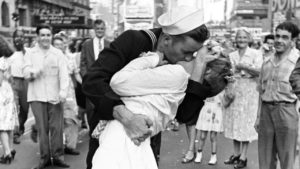
In 1945, returning members of our armed services were more than a little excited to be returning home

My father remained a private in the army for the next six years — having a Grade 1 education, and being unable to read tends to inhibit one’s advancement — before returning home with all of the other troops in the late summer of 1945, arriving in the port of Halifax, from whence he’d set off to fight the war six years previous.

My father, Jack, had heard much about life in Vancouver from those he’d served with overseas, so chose to make his way out west to build a life for himself.

Prior to the outbreak of World War II, 83% of Canadians lived in the rural areas of Canada, mostly as members of farming families, leaving only 17% of the population to reside in hub cities like Montréal, Toronto and Vancouver, with much lesser populations in the prairie cities, and provincial capitals. On the Lower Mainland, Richmond was called Lulu Island, and was largely a farming community, as was the case in what we now call the suburbs: Coquitlam, Surrey, and Maple Ridge,

Almost overnight after the war ended, the rural-urban mix in Canada was reversed.


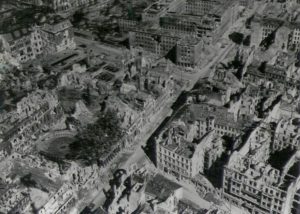
Berlin, post WWII: Statisticians calculated for every inhabitant there was 30 cubic metres of rubble

Following the end of the conflict overseas, with the industrial heartland of Germany, not to mention a great swath of Europe, and the production capitals of Japan leveled by the ravages of war, North America soon became the industrial heartland, and the bread basket, for the world. There were jobs aplenty across the North American landscape, as the U.S. & Canada became industrial powerhouses.

Most soldiers arriving home from Europe, rather than choosing to return to the farming communities from whence they had come prior to the outbreak of the conflicts in Europe and Japan, moved to the cities to make their fortune, many of them choosing to marry. Thus began the much vaunted baby boom, of which this writer is a member, born in 1950, and modern society as we still know it today.

Prior to the 1930s, most rural towns and cities across North America had within their midst indigent, homeless populations, but these were folks who were generally well known in their communities, boys who became men, men who’d lost their way and turned to alcohol to numb their pain. The homeless in these towns, and even in our cities, were well cared for by their contemporaries, who’d gone to school with these men many years prior, knew them from the time they were boys.

In every society throughout history, dating back centuries, there has always been 4% of the population who find themselves locked out of conventional society, women and men alone and without resources, perhaps suffering from some mental health disability, mostly uneducated, alone, without family or resources, and as conventional society would state, without the “spunk” that would help them to lead productive lives of meaning, to be  part of the conventional work-a-day world.


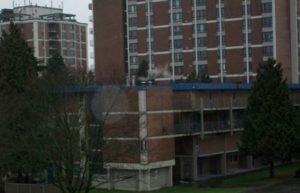
The Raymur Housing Project, just south of Raymur and East Hastings — social housing in Vancouver.

In the 1950s, in perhaps a more empathetic time, when we actually cared for one another, provincial government social planners spanning the nation, in concert with their federal government counterparts, set about to house the homeless by creating “urban social housing complexes” to house the provinces’ poorest citizens, who would be brought to the city. In doing so, Canadian provinces adopted the multiple family dwelling, or “apartment”, model as the housing form to shelter the indigent population. In U.S. cities like Detroit, we are much more apt to call these “urban social housing complexes” by a more colloquial name: ghettos.


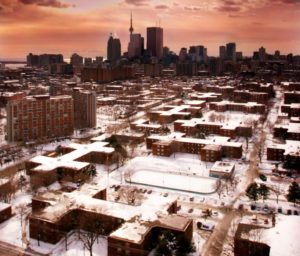
The Regent Park social housing community in Toronto, which expanded from the south Cabbagetown community in the Toronto of the 1930s, long one of the city’s worst slums, targeted by Toronto city planners for a grand urban renewal in the 1950s and 60s, which became known as Regent Park South.

As above, in Vancouver, the new community to house the poor was named The Raymur Project, where residents from across British Columbia were brought to Vancouver to live in the newly-conceived urban social housing complex.

Such projects, whether in Canada or the United States — in Toronto, Vancouver, Chicago, and New Orleans — proved abject, crime-ridden encampment failures.

Still and all, the homeless were off the streets, with a roof over their heads, pretty much hidden away from the eyes of conventional society, a forgotten population most people didn’t want to see, acknowledge or engage with on any level.

And so it remained through until the early 1980s, as we wrote on Tuesday.


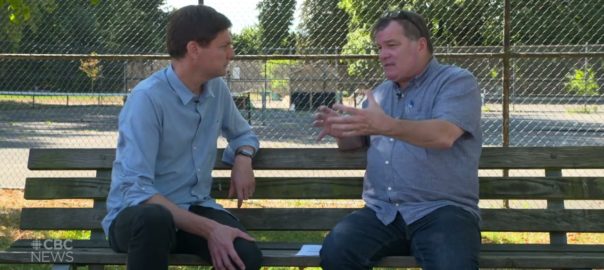
An interview with Premier-in-Waiting David Eby, conducted by CBC Early Edition host, Stephen Quinn

Thus far on VanRamblings’ four-part series on homelessness + housing, we’ve tracked the history of homelessness in B.C., from the 1930s forward until now.

We have touched on a modular housing model as a temporary “fix” for our current homeless crisis, and suggested that homelessness is a national issue of critical importance that requires the intervention of the federal government, working with the provinces, to address the ongoing issue of human misery on our streets.

In the interview with Premier-in-Waiting, David Eby, Stephen Quinn holds Mr. Eby’s feet to the fire, questioning him on the resolution to homelessness in our city and province. Mr. Eby is forthcoming about what he feels is necessary: build social housing, lots of it, transitioning our homeless / barely housed population out of sub-standard, one room single occupancy resident accommodation, or temporary shelters, into livable, one-bedroom furnished apartments — with a bed, kitchen, bathroom and living room, TV, internet and all the amenities — this housing to be located in every neighbourhood across our city, what yesterday we referred to yesterday as the “Finnish model” in Wednesday’s VanRamblings’ column.

On the day VanRamblings attended David Eby’s campaign launch to become British Columbia’s 37th Premier, the event held at the Kitsilano Neighbourhood House —where Mr. Eby gave one of the best, most moving and humane political speeches we’ve ever heard  — we wondered how Mr. Eby was going to position himself in order that he might retain power when the next B.C. election is called.

In 1996, BC New Democratic Pary leader Glen Clark positioned himself as a working man, a boy who grew up on the east side of Vancouver, who had fought all his life for better for all of us. A working class hero. Mr. Eby, whose father practiced law in Ontario as a partner in a prestigious law firm, and whose mother was a school principal could hardly pull off the Glen Clark’s “pulled myself up with my bootstraps” man of the people working class hero approach. What then for Mr. Eby?

“ICBC is dumpster fire.” “Money laundering in B.C. is artificially inflating housing prices.” “B.C. car insurance rates are too high … we’ll convert to no fault insurance, lower insurance rates, and provide a $400 rebate cheque to all B.C. motorists.”


David Eby, British Columbia’s Premier-in-Waiting Man of Action, ready to fix B.C. homelessness crisis

VanRamblings believes that British Columbia’s new “man of action” Premier, 45 years-young David Robert Patrick Eby will upon assuming the office of Premier of British Columbia declare a homelessness crisis emergency in our city and province.


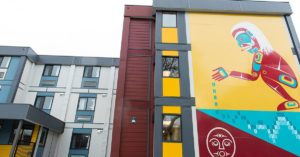
220 Terminal Avenue, the first temporary modular housing building constructed on City-owned land

In declaring a homelessness crisis emergency Mr. Eby will, as a temporary measure, order the construction of 1500 units of modular housing, to be built on city and provincial Crown land with all possible haste, on suitable sites across Vancouver, those modular housing sites to be occupied no later than the autumn of 2023.

Premier Eby will then appoint a Commission with the mandate of reforming the multi-billion service model that allegedly provides succour to those resident on the DTES, “a broken system,” Mr. Eby has said, that ill serves those in need.


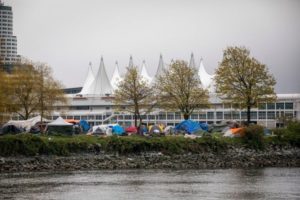
A tent encampment at Vancouver’s CRAB Park, which has maintained for two years. (Ben Nelms/CBC)

As a next order of business, VanRamblings believes that a Premier Eby will expedite the construction of social and affordable housing on city-owned (Vancouver is a creature of the provincial government), provincial Crown land, and in a co-operative agreement, on federally-owned Crown land, on a 66-or-99 year leasehold basis, ordering that the city of Vancouver will charge no development permit, or related fees, and that the approval process for construction of the social and affordable housing will occur sans City Hall red tape, and any measure of undue delay or intransigence on the part of the Planning, Urban Design and Development Services Department, lest the office of the Premier assume full responsibility for every aspect of the approval and construction of this necessary new housing.

#VanPoli | Homelessness + Housing | A Series | Part 1

Each and every year for the past two decades, and more, hundreds of new homeless persons arrive on our shores to call Vancouver their new home.

These homeless persons, arriving without any money or resources, come down to Vancouver from the north of our province, from the Okanagan, Vancouver Island or some other provincial locale. More of the newly arrived homeless make their way to Vancouver from the Prairies, Ontario, Québec or the Maritimes, more often than not having been provided with a bus / train or plane ticket furnished by their provincial social services Ministry, having been told, “Go west, where the skies are blue, the weather warm, the people friendly, and the streets are paved with gold.”

A surprisingly large contingent of Vancouver’s new homeless arriving in our city each year, somehow make their way across the U.S. borders to both the north and south, arriving (mostly) from California — but, as well, from a polygot collection of other U.S. states — as well as from Mexico, and Central and South America.

Then, there are Vietnamese, Thai, Indonesian or Filipino citizens who jump ship (or who were onboard for the long journey across the Pacific, as stowaways) to arrive in Vancouver, here to stay, they hope, here to make Vancouver their new home.

Upon arrival, these émigrés to our lustrous Pacific shores often make contact with one of the hundred or more outreach workers populating the downtown eastside, those angels of mercy helping the newly arrived find a place to stay, registering them for social assistance, or persons with disability coverage, making sure that they’re covered by B.C. Medical, ensuring their needs are otherwise looked after.

Then, among the newly arrived émigrés, there is the contingent who want to stay under the radar: the heavily drug dependent, and the drug dealers.

Apart from Vancouver’s (mostly) good weather, the other key reason this new homeless population moves to Vancouver relates to the ready availability of drugs. Vancouver is North America’s largest drug distribution centre. Heroin arriving from Afghanistan through Amsterdam will find its way to Vancouver, to be carried across the continent. The raw ingredients to make fentanyl arrives in Vancouver from China (the Canadian government long ago staunched the supply of raw fentanyl into Vancouver … now fentanyl has to be “mixed”, locally, in Vancouver).

Of the new arrivals each year, approximately one-third of the new “out of town” homeless population remain in Vancouver, many sleeping in doorwells, under park benches, in alley ways, in garages, loading bays, under bridges, in and around Jericho or Stanley Parks, or have found themselves shelter, or life in an SRO.

Many others make their way to municipalities across the Metro Vancouver region, mostly to Surrey and Burnaby, but as well to the Tri-Cities (Coquitlam, Port Moody and Port Coquitlam), Ladner, Langley and Richmond, Haney, Maple Ridge and Pitt Meadows, not to mention the North Shore.

A contingent of members of the Vancouver homeless population make their way into the Fraser Valley (as far out as Chilliwack, Agassiz and Hope) or over to Vancouver Island — mostly Victoria, Nanaimo and Duncan, but across the entire Island, as a whole — with a sizeable number heading to the Okanagan’s inviting climes.

A remaining number of homeless persons return home — with the provincial government, more often than not providing the fare home — having enjoyed (or not) their brief vacation on the west, with a smaller number deported or in jail.

All of the above is by way of saying, when the annual Homeless Count is conducted each March, the number of homeless persons always rises, sometimes by substantial numbers, and not because it’s persons — seniors, or others — who have found themselves evicted from their apartments because rents have become too high, or young people who have aged out of the care system (or lack thereof) provided by the province of British Columbia.

Rather, this is a sorry tale of human misery.

In some sense, then, the problem of resolving Vancouver’s homelessness crisis would seem irresolvable — the more housing that is built, the more modular housing structures constructed, the more hotels purchased by the province, the more SROs that are renovated by the province to make this kind of congregate housing livable, the more shelters that are made available, the more homeless persons who will arrive on our shores, this year, and  all the years beyond.

Today’s VanRamblings’ column is not prescriptive, nor do we attempt to provide historical context — we’ll do that later in the week, plus offer what we feel may be a short term fix to help alleviate the lives of human misery for persons who are living at a bare subsistence level,  as VanRamblings sets about to present an historical context dating back decades, through until today.

#VanElxn2022 | Ken Sim | ABC | The Underqualified Candidate for Mayor

In 2018, Ken Sim ran for Mayor under the NPA (Non-Partisan Association) banner, securing 48,748 votes, or 28.16% of the vote, barely losing his bid to become Vancouver’s political leader to former Burnaby South NDP MP, Kennedy Stewart, who won his first bid for civic office with 28.71% of the vote, with 49,705 ballots cast in his favour, achieving a winning status with only a bare 975 vote plurality.

As is often said, every vote counts.

Ken Sim is back again to run for the Mayor’s office in 2022, this time as the Mayoralty candidate for ABC (A Better City), a political party created a year ago, just in time for 2022’s Vancouver civic election. VanRamblings will write later about ABC, and the shenanigans that went into cause Mr. Sim to “switch” parties.

VanRamblings will make two statements at the outset of today’s post …

  • The election of Ken Sim as Vancouver’s next Mayor, supported by a majority ABC Council contingent would result in an unrecoverable nightmare scenario for Vancouverites that would destroy our beloved hometown, once and for all;
  • It is probable that Ken Sim believes he means well for our city. What we write today should not be seen as a personal “attack” on Mr. Sim, but rather a recording of why we believe he is unfit to become Vancouver’s next Mayor..

Next month, when we write about ABC, VanRamblings will explain our nightmare scenario comment, made directly above.

Last month, there was a secret meeting held at the Terminal City Club, Vancouver’s première downtown business club, or as Vancouver Magazine describes it …

“Like a pedigreed version of Snoopy’s doghouse: miraculously bigger on the inside than the out, with a fitness centre and a 25-metre mountain-gazing pool, boutique hotel, billiards room, 9 banquet rooms, 3 restaurants, the place where the hoi polloi go to dine and schmooze with their other rich folks contemporaries. The meet and greet club, where decisions that impact on the lives of all Vancouverites take place, hidden behind closed doors.”

… wherein our city’s wealthy elite had asked ABC founder and funder Peter Armstrong (former, longtime President of the NPA, and owner of the Rocky Mountaineer railroad company) to bring Ken Sim along in order that they might “interview / vet” him respecting his adequacy, or lack thereof, to become Vancouver’s next Mayor. At this point in time, these wealthy Vancouverites had “parked” their campaign-supporting monies. Peter Armstrong hoped that the meeting would result in them both opening their hearts and their pocket books.

Alas, it was simply not meant to be.

After the hour long meeting, Ken Sim was dismissed from the room where he’d been vetted, with Peter Armstrong staying behind to hear the reply of the “club”.

Here’s what the Terminal City power brokers had to say to Mr. Armstrong …

“Let’s get straight to the point, Peter. Where’d you find this guy? Yes, yes, we know that he ran for office in 2018, but did he learn nothing from his campaign in 2018? This guy couldn’t manage a popsicle stand, never mind a city with more than a half million people. Rarely has it been our displeasure to interview a candidate for office who is as inept, and clearly unqualified, as Mr. Sim. Suffice to say, there’ll be no money from us. We know that we’re not going to support that anti-development cretin, Colleen Hardwick. I suppose we’ll now have to turn our attention to Kennedy Stewart, who would seem the best bet, or perhaps the NPA’s John Coupar, or that Mark Marissen guy. You may leave now, Peter. You’ve wasted enough of our time.”

Peter Armstrong has more than enough wealth to fund Ken Sim’s bid to become Mayor of our city, and get a good number of ABC candidates elected to office.

Even so.

In May of this year, at a rally held at Vancouver City Hall to oppose implementation of the Broadway Plan, long the political eminence gris of right-of-centre politics in our city, Jolene came up to us and grabbed our right arm to pull us away from the crowd, because she had “things” she wanted to tell VanRamblings. To wit …

“Recently, I had a meeting with Ken Sim who, as you know, is running as ABC’s Mayoral candidate. Given the disarray the NPA currently finds itself in, despite how much I like John Coupar, I’ve set about to meet with each of the five Mayoral candidates, to determine which campaign I’ll support with my time and money.

I came out of that meeting disillusioned.

All Ken could talk about was how he wanted to ‘run the city like a business’. He had no conception of what would be required of him as Mayor, knew the names of none of the city’s senior staff, nor the various departments within City Hall, had nothing to say about the arts, homelessness, affordable housing, crime and public safety, or any other issue of importance to voters. All he kept harping on was, ‘I’m going to run this city like a business’. Not without my support, he won’t.”

In the interest of fairness, perhaps now is the time for VanRamblings to write …

In the 2018 election, we attended the S.U.C.C.E.S.S all candidates meeting in Chinatown, where then NPA (Non Partisan Association) Mayoral candidate Ken Sim was a featured speaker. When Mr. Sim got up to speak, he spoke extemporaneously and told the one hundred and fifty or so that had gathered, about his experience as an Asian man living in the City of Vancouver, the number of times he’d had racist epithets hurled at him, and how that had influenced him and how it has affected the conduct of his life, and as a citizen and husband and father. Ken Sim’s speech was humane, authentic and moving, his words landing with a troubled fidelity.

VanRamblings recorded that speech as a Facebook Live video, and had intended on returning home to convert the video for upload to YouTube, and placement on  VanRamblings — but, alas, the video disappeared into the ether, seconds after we attempted to publish the video on our Facebook page. There are very few days that go by when we fail to remember the tragedy of how much the loss of that video has meant to us. We would have loved to share that video in 2022.

None of what is written on VanRamblings today is meant as a personal attack on Mr. Sim’s character or integrity. Rather, it is to express VanRamblings’ concern that Ken Sim is unfit to become Vancouver’s next Mayor, that he lacks a fundamental understanding of civic governance and how the city operates, and although it might be said the he “could learn on the job,” we’ve had enough of that this term.

In 2022, and in this election cycle, we despair for our city, for the homeless that have taken shelter along East Hastings street, for all the renters and condo owners who have been denied ready access to our parks system because they’ve been turned over by our current Park Board to house those same homeless persons, we despair as to what will be wrought should the egregiously soul-and-city destroying Broadway Plan or the neighbourhood-destroying Vancouver Plan be implemented post the October 15th election.

We despair for those who cannot find affordable housing in our city, we despair for those who have been the victims of an ever burgeoning crime wave that has come to the fore in this post pandemic time — as if those who would mean us harm are trying to make up for lost time — and for all of those beleaguered citizens who have been victim to one of the hundreds of unprovoked attacks on their persons, we despair for all those who have had to leave Vancouver because it simply too damned expensive to maintain any kind of reasonable life in our city.

VanRamblings does not believe that Ken Sim has the answers to the the myriad issues that plague our city, nor even knows what those issues are, or that he has the tools and the skills to make the kinds of changes we need to make our city a more livable city for all. We would have much preferred that sitting ABC City Councillor Sarah Kirby-Yung was the competent, hard-working, skilled, innovative, convention-destroying Mayoral champion our city so desperately needs in 2022.

#VanElxn2022 | Colleen Hardwick | Vancouver’s Must-Elect Next Mayor

If we are to preserve our city for future generations, and not give it away wholesale to the greed of developers who would envelop Vancouver with massive 40, 50, 60 and 70 storey greenhouse gas-emitting, glass and steel, plynth and podium style towers, if we care for our neighbourhoods and all the residents who reside in those neighbourhoods, if we believe in democracy — as Mayor Kennedy Stewart, and all of the other sitting Vancouver City Councillors clearly do not, given their “we know all, we were elected to make decisions, we’re not interested in anything citizens might have to say, on any subject, at any time” ‘woke’, virtue signalling, elitist orientation to governing —  then come early October, there is only one Mayoral candidate, and only one political party, for whom you must cast your ballot: TEAM Mayoral candidate Colleen Hardwick, and her outstanding and diverse team of community activists, who will return your city to you, the citizens of Vancouver.

Why is VanRamblings, so early in the Vancouver 2022 civic election cycle, endorsing Ms. Hardwick for Mayor of Vancouver post election day, Saturday, October 15th, as well as endorsing each of every one of her strikingly well-qualified and community-oriented candidates for Vancouver City Council?

The answer to that question is easy, because …

  • Colleen Hardwick is far and away the most qualified candidate seeking the Mayor’s office in the 2022 Vancouver municipal election. Having all but completed her work on a PhD / the granting of her doctorate pending, says Ms. Hardwick, the focus of her studies in urban development (applied innovation). To be perfectly precise, cuz she’s detail oriented and truth-telling, Ms. Hardwick wrote to us after publication, stating “My work at UBC has been in Applied Innovation from the ISGP (Interdisciplinary Studies Graduate Program). Patrick is one of the faculty on my PhD Committee, which includes professors from several different departments. The innovation that I created is PlaceSpeak, the “unique geo-verification technology that connects participants’ digital identity to their physical location, ensuring that data collected is relevant and defensible for evidence-based decision-making.” Don’t know that you want to go there, but Masters is the level of Urban Planning and that is from SCARP. Penny Gurstein is also on my Committee.” Ms. Hardwick continues her work with her mentor, the esteemed professor Patrick Condon (who’ll be endorsing her upon his return from Massachusetts) — the James Taylor chair in Landscape and Livable Environments at UBC’s School of Architecture and Landscape Architecture . Quite simply there is no other Mayoral candidate in the 2022 Vancouver civic election who has a better grasp on urban planning, governance and community engagement than is very clearly the case with the creditable Colleen Hardwick.
  • Colleen Hardwick and TEAM have the only viable, realistic and achievable affordable housing programme, of all 10 of the parties running candidates in the 2022 Vancouver municipal election. We’ll write about the plan at length another time, but for some time now there’s been discussion within TEAM that a majority TEAM for a Livable Vancouver Council will work with senior levels of government to turn over on a leasehold basis up to 10 crown land properties located within the City of Vancouver each year, for the development of affordable housing co-operatives, to be developed through a revived relationship with the Community Land Trust, who would be the de facto project managers. In a TEAM-initiated plan, the city could both expedite the construction of ten 150-unit family housing co-ops each year — think the City Gate Housing Co-operative on Milross Avenue, the Roundhouse Housing Co-operative on Marinaside Crescent, in Yaletown, or the Railyard Housing Co-operative on Quebec Avenue at 1st, just east of the Olympic Village — all built at no expense to Vancouver citizens — while foregoing the 1 million dollars in development permit fees generally paid to the city for a building of such size, dating back to the time when Vision Vancouver signed an agreement back in 2022 with the Community Land Trust (this affordable housing plan is already city policy, that was allowed to lay dormant through lack of action by the current Vancouver City Council). Construction and materials cost: paid for through a combination of mandated developer Community Amenity Contributions and provincial and federal funds (both Prime Minister Trudeau and former B.C. Housing Minister, David Eby, have already signed off on all of the above). Cost to Vancouver citizens: zero. Cost of land: zero. Cost to Vancouver citizens for construction and materials: zero. A negotiation with the federal government would ensure that all subsidy monies for Co-op members would be paid for through the federal co-op housing subsidy fund. All monies paid by Co-op residents — after administrative, amenity payments and maintenance costs, as well as monies placed into a “replacement reserve fund” for major, future renovations — would be returned to the City to build supportive social housing, at no cost to citizens.
  • As part of TEAM’s public safety programme, there’s been discussion within the party about re-implementation of former Mayor Phillip Owen’s revolutionary, but simple Four Pillars Plan: prevention, treatment, harm reduction, and enforcement.
  • Mixed representation system. Ms. Hardwick and her TEAM are giving consideration to implementing a mixed representation system in the next Vancouver municipal election, a Mayor and five Councillors elected at large, with 5 other Councillors elected in five district neighbourhoods across the city.
  • Another key element of TEAM’s public safety programme could include the expansion of the VPD’s Car 87 programme — long a TEAM policy initiative, stolen by ABC’s Ken Sim recently — Car 87 teaming a Vancouver Police officer with a mental health professional, to help provide on-site assessments and intervention for people living with mental illness. Car 87 is the first programme of its kind anywhere in the world, each year saving dozens of the lives of citizens experiencing severe psychiatrist distress.

Two final important points, the first related to sustainable neighbourhoods: Colleen Hardwick and her TEAM candidates for Council believe that the massive tower construction programme envisioned by the Planning Department in Vancouver — the so-called Vancouver Plan, and the Broadway Plan — that would extend from Boundary Road to Blanca, from Burrard Inlet to the Fraser River,  is an absolutely unnecessary intrusion into the neighbourhoods which provide the livability of our city, and constitute the city we call home, the city we love.

Another note. In the current term of office, this Council has approved 110,000 new units of housing, some already under construction, and some set to begin construction soon. All while the Planning Department tells our citizens that 100,000 units of housing must be built by 2050 to house the incoming population. Hell’s bells — Vancouver City Council has already approved more housing than the Planning Department says is necessary. Sort of negates the need for the massive construction of towers on every street, in every neighbourhood, don’t you think?

Gentle density, consultation with those who live in the neighbourhoods across our city, not NIMBY-ism, but democratic engagement with citizens to construct community plans that would ensure the building of schools and public recreation centres, and the inclusion of parks and green spaces with space for small businesses along our neighbourhood arterials, with gently increasing density in every neighbourhood — not massive towers — while ensuring that every neighbourhood would be home, as well, to those in need, in a city meant to house, and will house, everyone.

And let us not forget, either, that while the population of Vancouver grew by 7.2% between 2016 and 2022, when new building construction added 7.8% more units in that same time period (in this neck of the woods, we call that an overbuilt city, an oversupply of housing), much of that population moved into Vancouver in the period between 2016 and early 2020 — in the past two years, starting with the pandemic, Vancouver has experienced a net out-migration of 100,000 of our citizens, who simply cannot afford to live in the most expensive city on the planet.

And, we need these towers, why? And who are they being built for?

Certainly not you and me, in a city of towers as envisioned by our NPA, Green, ABC, OneCity, Progress Vancouver and Forward Together civic political parties —  but hell no, not by a TEAM for a Livable Vancouver majority Council, and a steadfast Mayor Colleen Hardwick, who would fight for you every day of her term in office.

Importantly, as well, a majority TEAM Council would conduct a core review of city staffing levels, and services, in its first year of office. During his brief time as City Manager, Sadhu Johnston hired 1100 new middle-management staff, with executive assistants paid at $75,000 and management staff paid at $165,000, and up, annually. Many believe — and this belief extends to those working inside Vancouver City Hall — that Vancouver has an overstaffed, inefficient bureaucracy that serves as a driver of our city’s unsustainable 5.8% annual property tax increases. TEAM believes it to be likely that the core review will reveal that Vancouver employs a bloated middle management staff, and far from enough union workers — you know, the folks who do the actual work, who don’t push pencils around all day.

Let us not forget, either, that it was Vancouver City Councillor Colleen Hardwick who successfully moved to appoint an independent Auditor General in the City of Vancouver, Vancouver’s new auditor Mike Macdonell set to save the city tens of millions of dollars in non-essential expenditures, annually. Good job, Councillor!

To read TEAM policies on issues ranging from democratic engagement with Vancouver citizens, and the establishment of democratic advisory neighbourhood councils to inform Council decision-making; restoration of funding for our beleaguered parks and recreation system; pursuing reconciliation with our Indigenous peoples; health and safety for all Vancouver’s citizens; supporting the creative community, and so very much more, just click here for enlightenment.

Remember: when it comes time to cast your ballot in October, if you care about our city at all — and we know you do — the one, the only Mayoralty candidate, Colleen Hardwick, and the only Vancouver civic party you can, in all good conscience, cast your ballot for is TEAM for a Livable Vancouver, for a spectacular Sean Nardi, Grace Quan, Stephen P Roberts, Param Nijjar, Cleta Brown and Bill Tieleman — who constitute the hardest working, best informed team of candidates for Vancouver City Council you’ll find on Vancouver’s voting ballot come October.