Tag Archives: vancouver

#SaveOurParkBoard | Tender Moments of Change at Park Board, Pt 2

In 2012, Vancouver Mayor Gregor Robertson opined about the idea of scaling back Langara Golf Course and turning part of it into residential housing as part of the city’s broad new approach toward creating denser neighbourhoods.

“At this point it is debatable as to whether that is valuable green space,” the mayor said. “The public can’t access it, it is not biodiverse ,” as he went on to suggest that Langara is “underused”, that there may be “opportunities to transform that space, to maintain golf on that site, to increase public access, to increase public housing.”


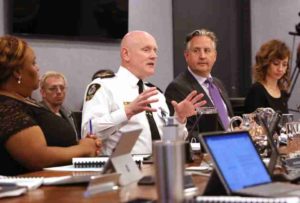
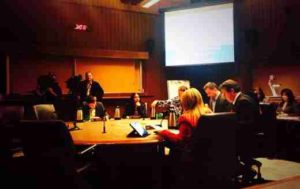
Pictured: Park Board Commissioners Melissa De Genova, John Coupar, Aaron Jasper, Constance Barnes, Niki Sharma & Trevor Loke. Commissioner Sarah Blyth had stepped out for a moment, during a break.
On July 9, 2012, the Vancouver Park Board met to consider the instruction of Mayor Gregor Robertson to “hive off half of Langara Golf Course for the development of low cost condominiums.”

City Manager Penny Ballem and Mayor Robertson’s Chief of Staff Mike Magee had, previous to the meeting, called in Vision Vancouver Park Board Commissioner Aaron Jasper to City Hall to demand he move a motion to redevelop the Langara Golf Course, in order that the Mayor’s wishes might be realized, that half of the golf course would be developed for housing.


Vision Vancouver Park Board Commissioner, Aaron Jasper, set to carry out the wishes of the Mayor

Subsequent to Aaron Jasper’s meeting with Ballem and Magee, in an interview with the media, Jasper suggested that the course could be downsized from 18 holes to nine holes, which would free the land for public park space.

Alternatively, Jasper pointed out that the course could be eliminated altogether to develop a full park in its place. Golfers would be redirected to the city’s two other golf courses, McCleery and Fraserview.

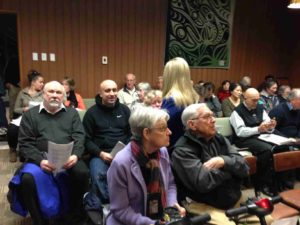
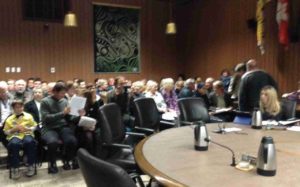
One hundred and fifty irate, activist members of the community turned up at the contentious July 9th meeting of Park Board — spanning every age group, from young pre-adolescent children to seniors, with members of the cultural and ethnic mosaic of the Vancouver well-represented among those who had gathered to oppose Mayor Robertson’s “vision” for a redeveloped Langara Golf Course.

More than two dozen speakers slammed the Vancouver Park Board that cool, mid-summer Monday evening, fearing they said that the city-owned Langara golf course might be changed into a park or affordable housing.

Many speakers, as well as Commissioner John Coupar, said they feared the motion to ask staff to compile usage and revenue figures for the city’s golf courses might be the first step toward turning Langara into a park or residential development.

“The way this has been rolled out, I think is a little scary,” Coupar said of the motion, which came after Mayor Gregor Robertson publicly questioned whether Vancouverites are best served by a golf course in the area.

The first speakers to present to the Park Board Commissioners that evening were two 23-year-old women of Chinese descent, who said the following after introducing themselves …

“The two of us grew up in the area surrounding the Langara Golf Course. We grew up in some degree of poverty, living a kind of hand-to-mouth existence. Our parents each ran business, one a small corner store, the other a dry cleaning business. We were often left to our own devices, alone, without much to do. This was in an age prior to social media, when cell phones — which we couldn’t have afforded anyway — were not a feature of life.

With the Langara Golf course nearby, and given that it was the only green space in the neighbourhood, we took to walking around the trails that surround the golf course. Soon, we were running around the golf course, and over the years, from age six through our teens, we continued to run around the trails surrounding Langara. Over time, our running skills were strengthened, we joined the track team at our high school, and not long soon after we were recommended by our PhysEd teachers to the Canada Olympic Committee.

Long story short, the both of us became Olympic gold medal winning runners at the 2008 Summer Olympics in Beijing. Later this month, we will both be competing again at the London Summer Olympics.

Were it not for the opportunity we were afforded to, over many, many years, to run around the track surrounding the Langara Golf Course, we most certainly would not have become Olympic gold medal winners. Langara is a critical resource to families like ours, a welcoming green space like no other. We do not want to see the Langara Golf Course developed into condominiums.

With all due respect to the Mayor, we are present here tonight to speak against the initiative moved by Commissioner Jasper, on behalf of Mayor Gregor Robertson.”

At the conclusion of the address of the two accomplished young women, applause broke out. Observers, and Park Board staff and Commissioners, could well see that the 150 members of the community who had arrived at the Park Board offices to oppose the initiative of the Mayor to develop the Langara Golf Course were heartened and moved by what they’d heard. A new feeling of hope permeated the room.

The next speakers up were two UBC climate scientists who spoke about climate change, making the case for the preservation of the Langara Golf Course …

“In its present form, as the ‘lungs of our city’, as a health resource for citizens not simply because of the recreational resource it provides, but for the vital role Langara plays in addressing the role of climate change in our city, preservation of the Langara Golf Course must be seen as a paramount consideration.”

The scientists were followed by a groups of baby boomer, Gen X and millennial age women who spoke about the safety that they were afforded in their daily walks on the trails surrounding Langara. “There are always eyes on us. We feel safe. Langara in its present form is an invaluable resource for us. Please do not develop the site.”

Next up: groups of young boys and girls, and seniors, who spoke about their love for golf, about how they could never afford the hundreds and thousands of dollars that would be required to join a private golf course, but that for as little as seven dollars they could afford several hours of play on the Langara Golf Course.

“Better that we should be outside and in the environment,” they averred, “than at home watching TV, or playing video games.”

And with that, the speakers / intervenors / community input portion of the Park Board Committee meeting drew to a close.


Aaron Jasper, Chairperson, Vancouver Park Board, 2012

During the course of the evening, several speakers who had presented to the Commissioners made mention of the fact that the Langara Golf Course was usable only six months of the year. Given the poor / virtually non-existent drainage on the course, users could not play the course when the autumn rainy season began, through the end of March, and sometimes April.

Without asking for remedy to such, Aaron Jasper had the following to say …

“I would like to make a motion asking staff to report back to the Board this upcoming early autumn, with recommendations and costing of installing a proper drainage system within the Langara golf course, such that the course might be used year-round. I would ask for the unanimous support from the Board for the motion I will put on the table.”

Aaron Jasper’s motion passed unanimously.


Sarah Blyth, multi-term Commissioner on the Vancouver Park Board

In a conversation VanRamblings had with former, multi-term Vision Vancouver Park Board Commissioner Sarah Blyth earlier this week, she told us the following …

“From time to time, my Vision Park Board colleagues and I found ourselves in conflict with the Mayor, with city staff and our Vision colleagues on Council. Never once, though, were we bullied by the City Manager or the Mayor’s Chief of Staff, and most certainly not by our elected Vision colleagues on City Council.

The Mayor and the Vision Councillors realized that we had been elected by voters to fulfill a mandate to preserve, protect and enhance Vancouver’s parks and recreation system, and to work on behalf of all the citizens of our city to maintain the best parks and recreation system on the continent.”

Did Aaron Jasper, and his Vision Vancouver colleagues on the Park Board, follow the “instruction” of Penny Ballem and Mike Magee to pass a motion that would lead to the halving, at best, of green space on the Langara golf course? No, no, they did not. Instead, as it turned out, in the autumn of that year, the Board unanimously approved a motion from Mr. Jasper to have installed a new drainage system — at a cost of $4 million — on the Langara golf course property, allowing golfers to use the course year-round, more than doubling the revenue derived from Langara, easily “repaying” the initial $4 million restoration expenditure.

And what was the political fallout for Vision Vancouver Park Board Commissioners Aaron Jasper, Trevor Loke, Sarah Blyth, Niki Sharma and Sarah Blyth?

Nada, zero, zilch.

The Vision Vancouver Commissioners on Park Board continued on representing the best interests of the citizens of Vancouver, unscathed and much admired.

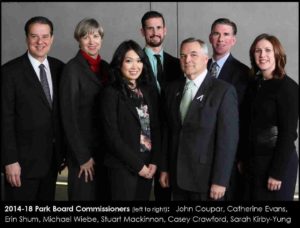
At the conclusion of the 2014 Vancouver civic election, as the incumbent Vision Vancouver Commissioners chose not to seek another term, Vision Park Board candidate Catherine Evans topped the polls, on a newly reconstituted Vancouver Park Board that saw Michael Wiebe and Stuart Mackinnon elected as Greens on the Board,  with Non-Partisan Association candidate John Coupar re-elected to a further term in office, joined by NPA colleagues Sarah Kirby-Yung, Casey Crawford and Erin Shum, the four emerging as the new majority on the Vancouver Park Board.

What is being left unsaid in this column? Yes, you’re right.


Vancouver Mayor / autocrat “play ball with me, and my office, or consequences will be severe” Ken Sim

Unlike the autocratic “if you step out of line, we’ll end you” ABC Vancouver administration of Mayor Ken Sim, the Vision Vancouver and the Non-Partisan Association Park Boards were left alone by the Boards of Directors of each long serving Vancouver political party, as well as their respective party’s colleagues / elected representatives on Vancouver City Council — free to do their jobs as they best saw fit, the jobs they had been elected to perform, unbidden and unscathed.


For part 1 of this series, click on the following link …

#SaveOurParkBoard | Tender Moments of Change at Park Board, Pt 1


Click / tap on the graphic above to sign  the Save Our Park Board Petition started by Sarah Blyth

#VanElxn2022 | Vancouver | Median Market Rental Rate | An Explanation

Each year, dating back to 1947, the Canada Mortgage and Housing Corporation

… a Crown Corporation of the Government of Canada, originally established after World War II to help returning war veterans find housing, CMHC since expanding its mandate to improve Canadians’ “access to housing”, the organization’s primary goals to provide mortgage liquidity, assist in the development of affordable housing, and provide unbiased research and advice to the Canadian government on the housing industry, which as of the second quarter of 2021 had assets in excess of CA$295 billion.

Each October, CMHC sets about to conduct the Rental Market Survey (RMS), during which time the Corporation gathers information on the primary rental market in urban areas with a population of at least 10,000. The primary rental market refers to privately-initiated structures intended to supply the rental market. The RMS specifically targets privately initiated structures with at least three rental units, which have been on the market for at least three months.

The Rental Market Survey is conducted primarily through site visits with the owner, manager, or building superintendent for all sampled structures. From 1996 through 2008, as part of our employment with the Canada Mortgage and Housing Corporation, VanRamblings was tasked with overseeing the collection of rental market information throughout the province of British Columbia, while working with economists employed in CMHC’s Pacific Regional Office to verify the collected information as part of an integrity check.


Vancouver median market rental rate, all bedroom types, 2009 – 2018

When the Rental Market Survey results are published — as early as late November, as late as mid-January — in each metropolitan area across Canada, the median market rental rate in each neighbourhood in each community is determined, and published. What does median market rental rate mean?

“Median Market Rent means the middle value of all monthly rents paid, inclusive of essential utilities, when placed in order of value for a designated market area, and by unit type.”

Let’s use Kitsilano as an example to better explain what is meant by median market rental rate. The October 2021 Rental Market Survey found the median market rental rate in the Kitsilano CMA (Census Market Area) was $1139 per month for a one-bedroom apartment, across all building types and date of construction, recording results in five year increments in buildings constructed from 1975 til now.

In other words, in late 2021, half of those resident in apartment rental accommodation in the Kitsilano CMA were paying less than $1139 each month to rent a one-bedroom apartment, while half of Kits apartment dwellers were paying more. In Kitsilano, as is the case elsewhere across the city, there are those who have been resident in an apartment building dating back to the mid-1970s, and are paying anywhere from $825 to $950 per month in rent.

By the same token, for newer apartment buildings, or in the case of new tenants moving into a vacated apartment, the landlord has seen fit to increase the rent — for say, an unfurnished one-bedroom apartment — to market rental rates as high as $2500 per month, or in some cases even higher.

As former Vision City Councillor Kerry Jang told CKNW talk show host Simi Sara  in 2013, “Affordable housing is something that somebody can afford.”

Awhile back, VanRamblings received a call from COPE City Councillor Jean Swanson, who asked us if we’d look into the definition of affordable housing, as it is defined in Metro Vancouver municipalities other than Vancouver. So, we did. This is what VanRamblings found: speaking with administrators in Planning Departments in each Metro Vancouver municipality, be it North Vancouver, Surrey or Port Coquitlam, we learned, in each case, “affordable housing in our community is defined as 20% below the median market rental rate, as determined by CMHC.”

Vancouver, and Vancouver alone, since Kerry Jang’s 2013 statement respecting the definition of affordable housing, has determined affordable housing as NOT 20% below the median market rental rate, but 20% below the market rate. In Kitsilano, to employ that neighbourhood as an example, 20% below the median market rental rate would be an affordable rent of $938 per month, whereas 20% below the current market rate would be $2000 per month — more than double the 20% below Kitsilano’s median market rental rate!

Since being elected to office in 2018, has any — and we mean, any — Vancouver City Councillor sought to adopt the definition of affordable housing, as it applies in every other Metro Vancouver municipality, determinant from the results of the conduct of CMHC’s annual Rental Market Survey? Jean Swanson, maybe? That dissembling “thinks she’s a socialist” saviour of our city (but not really), Christine Boyle?

Christine Boyle and most of Council voted for any and every project that had a so-called affordable rental rate component included. What does that mean in real life?

Let’s take the Jameson Development Corporation project, on the old site of the Denny’s, at Birch and West Broadway. Originally conceived of as a 16-storey purpose-built rental, when the Jameson family made the decision to include a 20% “affordable rental” component, Ms. Boyle and her Vancouver City Council colleagues agreed to allow the developer to build out at a skyscraper-like 28 storeys, in order to deliver 200 market rental homes, with another 58 “homes” to be geared to a person or household earning between $60,000 & $80,000 per year.

Upon completion, a 395 sq. ft one-bedroom on a lower floor of the Jameson project will be marketed at more than $3,000-a-month, which means an “affordable rental” will be available at $2400 each month, or $28,800 annually.

Let’s say you’re a beginning teacher, and you’re earning $60,000 a year. After taxes / CPP / EI deductions, and union dues to pay, in part, for a pension plan and benefits, your total net income would come in at around $45,000, less the $28,800 in rent + utilities — Hydro / Internet / TV / cell phone (say, another $250 a month)— at $3,000, never mind car insurance, gas and car repairs at another $3,000 annually … well, lucky, lucky beginning teacher, s/he will have a grand total of $10,000 remaining to pay for food, clothing, and entertainment — forget about dining out, vacations, never mind birthday presents and Christmas gifts for family and friends.

Nothing like paying 64% of your net income on a 395 sq. ft. supposedly “affordable” apartment on the 5th floor of the Jameson Birch Street project.

In 2022, Vancouver and Vancouver alone continues to define “affordable” as 20% below whatever the market will bear, shutting out tens of thousands of hard working Vancouver citizens — those working at minimum wage, those earning a living wage, or any single person earning the median income of $45,000 — from ever being able to afford to rent within the City of Vancouver.

At the upcoming all-candidates meetings in September, ask all those who are running for office to become a Vancouver City Councillor whether they will commit to ensuring that affordable housing in Vancouver is redefined as 20% below the median market rental rate as determined by CMHC’s annual Rental Market Survey.

And while you’re at it, ask these prospective candidates whether they will move to have rents in apartment buildings tied to the current rental rate — through a change to the Vancouver Charter — so when a tenant moves out, the owner / landlord can’t raise the rent to an unaffordable market rental rate.

One more thing: ask these prospective Vancouver City Councillors whether they’ll move to adopt Burnaby and New Westminster’s demoviction bylaw.

  • An affordable housing plan. The revival of the Community Land Trust relationship between Vancouver City Hall and the Co-operative Housing Federation of B.C., that would see the construction of 1500 new housing co-op homes built each year on city, provincial and federal Crown land, each of the next four years. An affordable housing plan that would expedite the construction of ten 150-unit family housing co-ops each year — think the City Gate Housing Co-operative on Milross Avenue, the Roundhouse Housing Co-operative on Marinaside Crescent, in Yaletown, or the Railyard Housing Co-operative on Quebec Avenue at 1st, due east of the Olympic Village — all built at no expense to Vancouver citizens — while foregoing the $1 million in development permit fees. Construction and materials cost: paid for through a combination of mandated developer Community Amenity Contributions and provincial and federal funds (both Prime Minister Trudeau and former B.C. Housing Minister, David Eby, have signed off on the above). Cost to Vancouver citizens: zero. Cost of land: zero. Cost to Vancouver citizens for construction and materials: zero. A negotiation with the federal government would ensure that all subsidy monies for Co-op members would be paid for through the federal co-op housing subsidy fund. All monies paid by Co-op residents — after administrative, amenity payments and maintenance costs, and monies placed into a “replacement reserve fund” for major, future renovations — would be returned to the City to build supportive social housing, at no cost to citizens.

You’ve got your work cut out for you over this next six weeks, as you and your neighbours hold those who would wish to be elected to City Council to account. Are these candidates for Council on your side, or are they on the side of an unacceptable status quo or worse, greed-oriented and deep in the pockets of the developers who are funding their campaigns for office?

#VanElxn22 | Tuning Out, Disengagement, and Low Civic Voter Turnout, Likely

When Canadians’ engagement with the news dropped significantly in 2021, the plunge was in some ways seen as inevitable.

The change in news consumption habits last year came after two years with no shortage of storylines — the arrival of the coronavirus pandemic, both a provincial and a federal election, the ongoing circus of the politics of Trump, and a nationwide reckoning over race, Indigenous relations and related police violence.

For many Canadians stuck at home, there was plenty of time to tune in.

However, the pace of news waned toward the end 2021, as did interest in the Liberal administration in Ottawa, and politics in general. The news cycle in 2022, comparatively, has more closely resembled the frenetic years of COVID, between the war in Ukraine, and existential threats to democracy and the planet.

Yet eight months into 2022, data collected by a Leger / Public Square Research poll shows Canadians are even more disengaged than they were this time last year, with a quarter of Canadians tuning out “too depressing” political news.

In fact, most Canadians who are tuning out the news say they’re doing so because the sheer negativity of what they read and hear is turning them off from politics.

According to the Leger poll, one-fifth of Canadians engage with political news “throughout the day,” while a third of Canadians engage with it daily and 22% engage with it a few times a week.

About a quarter of Canadians are almost entirely disengaged from the news, with 10% of Canadians actively avoiding political news, and 5% engaging with politics only through conversations with friends, with 10% reading the news only a few times a month.

Fifty percent of Canadians disengage, saying they’re “tired of the negativity in politics”, 38% saying the news is too depressing.

News engagement across all platforms in the first half of 2022 — website visits, news app sessions, cable viewership, and time spent on social media — is down compared to the first half of 2021. The steepest decline — 50 percent — pertains to engagement with news articles on social media, and probably stems from changes Facebook made to its news curation model.

Cable viewership news on CBC, CTV and Global 1 “is, on average, down 19% in prime time,” losses that skew heavily across all three news networks.

The Leger / Public Square Research poll also finds a mismatch between the issues dominating the headlines and what Canadians are concerned about. Only 16% of Canadians said they were concerned about the Pope’s visit to Canada and 35% said they were concerned about the backlog in immigration processing in Canada.

“The role of the news isn’t always to give people the news they want to hear,” says Heather Bastedo, who runs Public Square Research and produced the Leger survey for The Hub, the survey to which we are referring today. “But the media needs to make the connection to people’s lives with these stories. Most people aren’t flying out from Pearson, but the fact that the government can’t run things should be an issue.”

Thirty-four percent of Canadians said they’re concerned about long lineups at passport offices, while 21% said they simply don’t care.  The number one issue for Canadians is rising interest rates. Forty-five percent say they’re are very concerned about it, with 26% saying they’re somewhat concerned; 13% say it doesn’t affect them. The war in Ukraine is similarly pressing for Canadians. Forty percent of Canadians are very concerned, with another 35% somewhat concerned.

As might be expected, younger Canadians are least likely to be highly engaged news consumers, with only 13% Canadians aged 18 to 34 reporting that they read or listen to the news throughout the day, compared to 27% of people over the age of 55. Young people are less likely to be totally disengaged than people aged 35 to 54, though. Among Canadians under age 35, about 11% report having no interest in politics, compared to 14% of Canadians aged 35 to 54.

The numbers above underscore a collective weariness among the voting public.

Higher turnout in federal, provincial and civic elections is a reflection of vibrant, robust democratic practice. Conversely, low voter turnout depicts cynicism, apathy, anomie and alienation, triggering voters not to exercise their right to vote.

A representative democracy calls on citizens to participate in the electoral process. Many voters believe they know about likely election winners, and their single vote won’t make a difference. This is a classic example of a collective action problem.

In 2018, 39.4% of  the Vancouver public voted, a record voter turnout to be sure — which still meant that a whopping 60.6% of the voting public didn’t vote. Why?

  • Lack of interest. Not everyone tunes into the nightly news every evening. Some people are simply not interested in politics, others outright hate it. The last thing they want to do is research politicians or read about the latest election;
  • Lack of knowledge. Often coinciding with a lack of interest, many people also don’t know much about elections or politics. They’re not aware of who’s running, and sometimes they don’t even know there’s an election coming up;
  • Disillusionment. A thread of cynicism that runs through the Canadian electorate. Many believe their vote either doesn’t count or doesn’t matter, so why bother voting? In Vancouver, some of this has to do with the lack of a representational neighbourhood voting system (sometimes called a “ward system”). In addition, many potential voters feel it’s pointless to vote for parties and candidates, because they don’t believe that any of those parties or candidates represent their interests;
  • Voter fatigue. Even the most dedicated voter may feel worn down by the sheer number of names on the ballot, most of whom they don’t know. Additionally, long lines and difficulty voting may discourage individuals from going to the ballot box..

Low voter turnout is also evident from the fact political campaigns rely on data that serves to ignore popular voices on issues of importance, allowing candidates for office and their political parties to feel safe, ignoring the public will while failing to comply with even the most amorphous of campaign promises.

In these cynical times, most campaign managers, political parties and candidates know few people are going to turn out at the polls, so why bother crafting a message? In this scenario, amidst an abundance of voter fatigue, some political voices win, while most of the public — particularly those who choose not to cast a ballot — lose, getting government they don’t want, rather than government they need.

#VanElxn2022 | Plumping | Casting A Ballot for Only Your Chosen Candidates

There is no grand prevailing wisdom about how people should vote.

It’s hard enough to get people to show up at the polls as it is.

But once voters show up to cast their ballot, there are competing views about how we should cast our votes: in this case, to plump or not to plump.

As former Vancouver City Councillor Anne Roberts wrote on a chilly November 14th day, three weeks after Vancouver’s 2014 civic election …

“In the end, the vast majority of voters are going to do what they typically do in Vancouver’s dysfunctional at-large voting system: they’re going to vote slates. People will mostly select 5 to 8 Councillors from the party of their choice and then, perhaps, vote for one or two others. Given there are too many candidates and parties to become fully informed, it’s not a bad strategy.

That is, unless you know about plumping. For individual voters, plumping is really the only way to boost your voter power. Plumping is when you cast votes for your civic party of your choice, only, instead of the full 10. The advantage is you focus your voting power on the ones you really want to win, and don’t dilute the power of your vote by voting for someone who could end up beating your preferred candidates.”

Voter turnout in British Columbia civic elections is generally well below 40%.

In 2005, 32% of eligible voters cast their ballot in that year’s Vancouver civic election — when Non Partisan Association Mayor Sam Sullivan and a majority NPA Council were elected to office — with only 31% bothering to vote in the 2008 change civic election, which saw the newly formed Vision Vancouver civic party elected to a majority at Vancouver City Hall. By 2011, a  whopping 34% of eligible Vancouver voters found their way to the polls on election day, Saturday, November 19th.

Counting the Votes

Where there are multiple Council positions, 10 in Vancouver, to be filled, the votes on each ballot are counted as being of equal value to each other. Even though a voter might have a distinct order of preference among the candidates there is no mechanism for such preferences to be shown on the ballot.

Candidates are elected consecutively according to who receives the largest number of votes. There is no pre-determined percentage of the overall vote required to be gained before a candidate is elected so a candidate can be elected with a very much smaller percentage of the vote than under any other electoral system.

Plumping

Plumping allows voters to vote for fewer than the number of candidates to be elected. It permits voters to concentrate their voting power on those they support, rather than being constrained to also vote for those they oppose. Rather than voting for all 10 Council positions, a voter may choose to vote for simply one, two or more should they wish, in the City of Vancouver, where slates tend to run, voting only for your party of choice.

In Vancouver, the at-large system is in some ways opposite to the first-past-the-post system in the provincial and federal elections. At-large means there are no “neighbourhood ridings” — sometimes called wards — within the municipality or regional district, as is the case in every other province, save B.C..

Aside from casting one ballot for Mayor, voters will vote from a pool of candidates, and select form one candidate to however many candidates they choose to sit on Vancouver City Council, Park Board or School Board.

Eligible voters in the City of Vancouver are allowed to select as many candidates as there are seats on the respective councils, but should they?

In 2022, the answer to that question is a firm, “No”.

Having spoken with strategists working within the 10 civic parties offering candidates for election in 2022,  civic campaign managers are recommending their voters “plump their ballot” — voting only for the candidate(s) they really want to see elected. “Pro-plumping” strategists are telling their voters that giving a vote to someone you really don’t care about, simply to fill the ballot, weakens the position of those you really do want in. Too many votes for a candidate running with a party you don’t support not only weakens your vote for the candidates you want to see win on election night, it dramatically increases the likelihood that your favourite candidates may lose, as a broad swath of the limited number of voters expected to turn out in this year’s October municipal election, in casting a vote for an “add on” candidate enhances that candidate’s ability to actually triumph at the polls.

Even respected Vancouver civic affairs journalist, Charlie Smith, editor of The Georgia Straight, is recommending Vancouver voters “plump their vote”, in this instance when casting a ballot for candidates running for office to become a Board of Education trustee on the Vancouver School Board.

“The only sensible choice for supporters of mask mandates — and safer schools for the many kids with immunocompromised family members — is to only vote for Dr. Zeidler and withhold voting for the NPA, ABC Vancouver, Vision Vancouver, COPE, OneCity Vancouver, Green, Progress Vancouver, or any other party that’s putting candidates up for school trustee.

Voting for candidates other than Dr. Zeidler lessens her chance of winning and promoting actions that will save lives of school students, staff, and their families.”

Mr. Smith must have read Peter Babel’s Meridia article on bullet voting, which is what they — unsurprisingly — call plump voting down south …

Basically, bullet voting — also known as single-shot voting or plump voting — is a tactic used when voters who could vote for multiple candidates actually vote only for the one candidate whom they most want to see among the winners. Imagine a municipal election, for example, in which 65 candidates are running for ten open seats and voters can vote for only ten candidates. Ultimately, the election will produce 10 winners, yes, but using the bullet vote tactic the voter increases the total vote count for the candidate s/he most wants included among the 10 winners — without increasing the vote count of any of the other candidates running for office. By plumping their ballot, the voter strategically avoids inadvertently helping any other candidate gain more votes than the candidates they truly prefer, and whose win they want to secure more than any other.

Fans of plumping argue that most people are not familiar with enough candidates running to be able to cast completely informed votes.

So many people want to avoid casting ballots for people who aren’t necessarily deserving of that vote. All of which nicely plays into the hands of seasoned campaign strategists operating behind the scenes in this year’s Vancouver municipal election, but who are “in control” of this year’s all-important 2022 Vancouver municipal election campaigns.