#VanElxn2022 | Colleen Hardwick | Vancouver’s Must-Elect Next Mayor

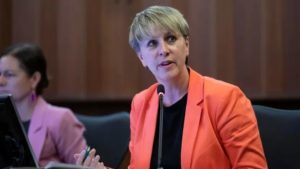
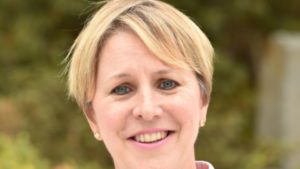
If we are to preserve our city for future generations, and not give it away wholesale to the greed of developers who would envelop Vancouver with massive 40, 50, 60 and 70 storey greenhouse gas-emitting, glass and steel, plynth and podium style towers, if we care for our neighbourhoods and all the residents who reside in those neighbourhoods, if we believe in democracy — as Mayor Kennedy Stewart, and all of the other sitting Vancouver City Councillors clearly do not, given their “we know all, we were elected to make decisions, we’re not interested in anything citizens might have to say, on any subject, at any time” ‘woke’, virtue signalling, elitist orientation to governing —  then come early October, there is only one Mayoral candidate, and only one political party, for whom you must cast your ballot: TEAM Mayoral candidate Colleen Hardwick, and her outstanding and diverse team of community activists, who will return your city to you, the citizens of Vancouver.

Why is VanRamblings, so early in the Vancouver 2022 civic election cycle, endorsing Ms. Hardwick for Mayor of Vancouver post election day, Saturday, October 15th, as well as endorsing each of every one of her strikingly well-qualified and community-oriented candidates for Vancouver City Council?

The answer to that question is easy, because …

  • Colleen Hardwick is far and away the most qualified candidate seeking the Mayor’s office in the 2022 Vancouver municipal election. Having all but completed her work on a PhD / the granting of her doctorate pending, says Ms. Hardwick, the focus of her studies in urban development (applied innovation). To be perfectly precise, cuz she’s detail oriented and truth-telling, Ms. Hardwick wrote to us after publication, stating “My work at UBC has been in Applied Innovation from the ISGP (Interdisciplinary Studies Graduate Program). Patrick is one of the faculty on my PhD Committee, which includes professors from several different departments. The innovation that I created is PlaceSpeak, the “unique geo-verification technology that connects participants’ digital identity to their physical location, ensuring that data collected is relevant and defensible for evidence-based decision-making.” Don’t know that you want to go there, but Masters is the level of Urban Planning and that is from SCARP. Penny Gurstein is also on my Committee.” Ms. Hardwick continues her work with her mentor, the esteemed professor Patrick Condon (who’ll be endorsing her upon his return from Massachusetts) — the James Taylor chair in Landscape and Livable Environments at UBC’s School of Architecture and Landscape Architecture . Quite simply there is no other Mayoral candidate in the 2022 Vancouver civic election who has a better grasp on urban planning, governance and community engagement than is very clearly the case with the creditable Colleen Hardwick.
  • Colleen Hardwick and TEAM have the only viable, realistic and achievable affordable housing programme, of all 10 of the parties running candidates in the 2022 Vancouver municipal election. We’ll write about the plan at length another time, but for some time now there’s been discussion within TEAM that a majority TEAM for a Livable Vancouver Council will work with senior levels of government to turn over on a leasehold basis up to 10 crown land properties located within the City of Vancouver each year, for the development of affordable housing co-operatives, to be developed through a revived relationship with the Community Land Trust, who would be the de facto project managers. In a TEAM-initiated plan, the city could both expedite the construction of ten 150-unit family housing co-ops each year — think the City Gate Housing Co-operative on Milross Avenue, the Roundhouse Housing Co-operative on Marinaside Crescent, in Yaletown, or the Railyard Housing Co-operative on Quebec Avenue at 1st, just east of the Olympic Village — all built at no expense to Vancouver citizens — while foregoing the 1 million dollars in development permit fees generally paid to the city for a building of such size, dating back to the time when Vision Vancouver signed an agreement back in 2022 with the Community Land Trust (this affordable housing plan is already city policy, that was allowed to lay dormant through lack of action by the current Vancouver City Council). Construction and materials cost: paid for through a combination of mandated developer Community Amenity Contributions and provincial and federal funds (both Prime Minister Trudeau and former B.C. Housing Minister, David Eby, have already signed off on all of the above). Cost to Vancouver citizens: zero. Cost of land: zero. Cost to Vancouver citizens for construction and materials: zero. A negotiation with the federal government would ensure that all subsidy monies for Co-op members would be paid for through the federal co-op housing subsidy fund. All monies paid by Co-op residents — after administrative, amenity payments and maintenance costs, as well as monies placed into a “replacement reserve fund” for major, future renovations — would be returned to the City to build supportive social housing, at no cost to citizens.
  • As part of TEAM’s public safety programme, there’s been discussion within the party about re-implementation of former Mayor Phillip Owen’s revolutionary, but simple Four Pillars Plan: prevention, treatment, harm reduction, and enforcement.
  • Mixed representation system. Ms. Hardwick and her TEAM are giving consideration to implementing a mixed representation system in the next Vancouver municipal election, a Mayor and five Councillors elected at large, with 5 other Councillors elected in five district neighbourhoods across the city.
  • Another key element of TEAM’s public safety programme could include the expansion of the VPD’s Car 87 programme — long a TEAM policy initiative, stolen by ABC’s Ken Sim recently — Car 87 teaming a Vancouver Police officer with a mental health professional, to help provide on-site assessments and intervention for people living with mental illness. Car 87 is the first programme of its kind anywhere in the world, each year saving dozens of the lives of citizens experiencing severe psychiatrist distress.

Two final important points, the first related to sustainable neighbourhoods: Colleen Hardwick and her TEAM candidates for Council believe that the massive tower construction programme envisioned by the Planning Department in Vancouver — the so-called Vancouver Plan, and the Broadway Plan — that would extend from Boundary Road to Blanca, from Burrard Inlet to the Fraser River,  is an absolutely unnecessary intrusion into the neighbourhoods which provide the livability of our city, and constitute the city we call home, the city we love.

Another note. In the current term of office, this Council has approved 110,000 new units of housing, some already under construction, and some set to begin construction soon. All while the Planning Department tells our citizens that 100,000 units of housing must be built by 2050 to house the incoming population. Hell’s bells — Vancouver City Council has already approved more housing than the Planning Department says is necessary. Sort of negates the need for the massive construction of towers on every street, in every neighbourhood, don’t you think?

Gentle density, consultation with those who live in the neighbourhoods across our city, not NIMBY-ism, but democratic engagement with citizens to construct community plans that would ensure the building of schools and public recreation centres, and the inclusion of parks and green spaces with space for small businesses along our neighbourhood arterials, with gently increasing density in every neighbourhood — not massive towers — while ensuring that every neighbourhood would be home, as well, to those in need, in a city meant to house, and will house, everyone.

And let us not forget, either, that while the population of Vancouver grew by 7.2% between 2016 and 2022, when new building construction added 7.8% more units in that same time period (in this neck of the woods, we call that an overbuilt city, an oversupply of housing), much of that population moved into Vancouver in the period between 2016 and early 2020 — in the past two years, starting with the pandemic, Vancouver has experienced a net out-migration of 100,000 of our citizens, who simply cannot afford to live in the most expensive city on the planet.

And, we need these towers, why? And who are they being built for?

Certainly not you and me, in a city of towers as envisioned by our NPA, Green, ABC, OneCity, Progress Vancouver and Forward Together civic political parties —  but hell no, not by a TEAM for a Livable Vancouver majority Council, and a steadfast Mayor Colleen Hardwick, who would fight for you every day of her term in office.

Importantly, as well, a majority TEAM Council would conduct a core review of city staffing levels, and services, in its first year of office. During his brief time as City Manager, Sadhu Johnston hired 1100 new middle-management staff, with executive assistants paid at $75,000 and management staff paid at $165,000, and up, annually. Many believe — and this belief extends to those working inside Vancouver City Hall — that Vancouver has an overstaffed, inefficient bureaucracy that serves as a driver of our city’s unsustainable 5.8% annual property tax increases. TEAM believes it to be likely that the core review will reveal that Vancouver employs a bloated middle management staff, and far from enough union workers — you know, the folks who do the actual work, who don’t push pencils around all day.

Let us not forget, either, that it was Vancouver City Councillor Colleen Hardwick who successfully moved to appoint an independent Auditor General in the City of Vancouver, Vancouver’s new auditor Mike Macdonell set to save the city tens of millions of dollars in non-essential expenditures, annually. Good job, Councillor!

To read TEAM policies on issues ranging from democratic engagement with Vancouver citizens, and the establishment of democratic advisory neighbourhood councils to inform Council decision-making; restoration of funding for our beleaguered parks and recreation system; pursuing reconciliation with our Indigenous peoples; health and safety for all Vancouver’s citizens; supporting the creative community, and so very much more, just click here for enlightenment.

Remember: when it comes time to cast your ballot in October, if you care about our city at all — and we know you do — the one, the only Mayoralty candidate, Colleen Hardwick, and the only Vancouver civic party you can, in all good conscience, cast your ballot for is TEAM for a Livable Vancouver, for a spectacular Sean Nardi, Grace Quan, Stephen P Roberts, Param Nijjar, Cleta Brown and Bill Tieleman — who constitute the hardest working, best informed team of candidates for Vancouver City Council you’ll find on Vancouver’s voting ballot come October.

#VanElxn 2022 | Five Candidates Vie to Become Vancouver Mayor | Part 1

In 2022, there are a record five serious-minded candidates intent on occupying the Mayor’s office following the October 15th Vancouver municipal election.

One of these stalwart persons of character and intent who would lead is …

Edward Charles Kennedy Stewart (born November 8, 1966), who has sat as Vancouver’s Mayor since being elected to office in a close fought race in 2018.

Recently, Mayoral candidate rival and current sitting Vancouver City Councillor Colleen Hardwick, was asked to say something nice about Mr. Stewart, for an article to be published later this month. Ms. Hardwick’s response, “He once played bass in a band.”  Which, if you come right down to it, pretty much encapsulates Mayor Stewart’s contribution to the life and politics of his adopted (he was born in Halifax) home town of Vancouver, over the course of the past, almost, four years.

In recent days, VanRamblings has referred to Mr. Stewart as hapless. But a more accurate description of his time as Mayor would be the following word …

Indeed, for much of the past four years, Mr. Stewart has proved an in absentia Mayor, rarely if ever around, absent from the public eye for much of the pandemic — except when he was whining to the press about how “Vancouver needs more money, the federal and provincial governments have to help us” … with, all the while, OneCity Councillor Christine Boyle and Green Councillor, Adriane Carr having gone rogue, demanding a 15% property tax increase, because “the pandemic presents us with a golden opportunity to address our climate emergency” … with nary a contrary word of disagreement heard from Mr. Stewart.

Where other Canadian mayors —  think Don Iveson in Edmonton, Naheed Nenshi in Calgary, John Tory in Toronto — pulled their respective Councils together to forward the cause of the citizens they’d been elected to represent, Mayors who not only acted like but were true, red-blooded statesmen in a time of crisis, Vancouver Mayor Kennedy Stewart — lacking any evident leadership skills or abilties — allowed a fractious Vancouver City Council to go hither, thither and yon pursuing their own political agendas, far too often at the expense of the public interest.

Stewart: unavailable to the press — a lesson he seems to have learned from former Conservative Prime Minister, Stephen Harper —  given over to near hourly meetings with various well-heeled developers (who would fund his re-election campaign), these greed merchants brought to the Mayor’s suite by former Vision Councillor Raymond Louie, who since the last Vancouver civic election has acted as an extremely well-paid lobbyist for Vancouver’s development industry.

The icing on the cake for Mr. Stewart’s tenuous (and we hope soon to end) era in the Mayor’s chair is the bastardized Burnaby by-law proposal wherein he’s promised the construction of affordable housing amidst the burgeoning greenhouse gas-emitting concrete-and-steel massive tower developments that will envelop the “Broadway Corridor” from Clark to Vine, from the Inlet to 16th Avenue …

In May 2019, Burnaby City Council adopted a ‘best in Canada’ tenant assistance policy that provides support for tenants displaced from rental buildings with 5-plus apartments, mandating developers cover tenants’ moving costs (up to $1,400), and pay the difference between a tenant’s current rent and the rent in the new building tenants move to while construction is underway, providing the …

Right of first refusal to displaced tenants to move into the replacement building once construction is complete, at the same rent as they paid before being displaced (subject only to the provincially mandated maximum annual increases), as well as mandating that developers will again have to cover moving costs when tenants move back into the new building.

Mr. Stewart’s affordable housing plan does not encompass the notion that developers would pay the difference between a tenant’s current rent and the rent in the new building tenants move to — where would tenants move to in their neighbourhood or in Vancouver, who’d been paying $1100 a month for their rent, where would they find such accommodation at a similar monthly rate … Spuzzum?

The other “flaw” in Mr. Stewart’s so-called “plan” is that tenants who would be displaced from their livable four or five storey buildings, where one-bedroom suites encompassed 700+ square feet, would upon completion of the new building return five years later to the  40-story purpose-built rental building where one-bedroom suites would encompass only a postage-stamp sized 395 square foot apartment.

Kennedy Stewart: the worst Vancouver Mayor since Jack Volrich’s greasily reductive, inauspicious, and best forgotten, late 1970s two-year term in office.

Last week, Mayor Kennedy Stewart held a press conference, to address the issue of the tent city along East Hastings, between Carrall Street and Main. There was in his demeanour a sense of frustration and melancholy, verging on defeat. For the first time in his 33-month tenure as Mayor, there was about him a humanity that, prior to that press conference, had not been previously witnessed by this reporter.

Here’s what Vancouver Mayor Kennedy Stewart had to say …

“For more than 3 years, my administration has worked in concert with all of our elected Councillors, city staff, the provincial and federal governments, as well as a myriad of social agencies to find a resolution to our ongoing homelessness problem.

As Mayor, I’ve been down to Hastings Street and spoken with some of those who are  resident in the tents that we see strewn along East Hastings. I’ve spoken with homeless advocates Fiona York and Sarah Blyth, asked them what my administration can do to alleviate the human misery we are witness to each and every day.

The answer is always the same: housing that will provide dignity. A home with a bedroom, a fully stocked kitchen, a living room with a sofa, a dining room, comfortable furniture, the amenities of life.

Having spoken with various senior administrators at B.C. Housing, I’ve been told that housing is on its way, but not until this autumn.

What to do now, though, in the midst of this housing crisis?

I am at my wit’s end as to how we, collectively as a society, how my administration, and the provincial and federal governments will resolve, once and for all, Vancouver’s homelessness crisis. I want to assure you that I, personally, my administration, our Vancouver City Councillors, city staff, and senior levels of government are working together to find resolution to the issue of the human misery to which we are witness each and every day.”

For the first time since he took office early in November 2018, Mayor Kennedy admitted that there was a homelessness crisis that he had previously not acknowledged, in as full and forthright and humane a manner as he did at his press conference last week. There was no whining, no “it’s not my fault, the federal government is not giving me the money I need”, no meaningless “woke” nostrums about how those who express a concern about tent cities are doing nothing more than engaging on an unwholesome and mean-spirited attack on the poor.

What there was, though: a display of humanity, how we’re all in this together, how resolving the issue of homelessness is a struggle we should all be engaged in.

A few more displays of humanity before the October 15th election, a fidelity in his speech, in his words and intent and, hell, Kennedy Stewart may well be re-elected to a second term of office, with realigned priorities and a new sense of purpose.

#VanElxn2022 | 10 Political Parties Running for Office in Vancouver in 2022

Two months from today, late in the evening of Saturday, October 15th, Vancouver voters will have elected a new civic government to a term in office, extending through until 2026, in the most critically important civic election in fifty years.

In the 2018 Vancouver municipal election — which saw Vision Vancouver swept from office after 10 years in power at Vancouver City Hall — voters were asked to choose between seventy-one candidates vying for ten City Council seats, a record number of candidates in a  Vancouver civic election, and reportedly the largest — and certainly most confusing — voting ballot ever compiled in any Canadian city.

Come October, when advance polls open, the civic ballot may well be even larger.

Today on VanRamblings, in the first of 30 or so columns we’ll publish leading up to the October 15th municipal election, we’ll provide a brief introduction to the 10 political parties which have registered candidates for office in Vancouver in 2022.

Note: Mayor Kennedy Stewart and all 10 City Councillors are seeking re-election.

The deadline for nominations is September 9, so more candidates could be added.

Over the course of the next two weeks, VanRamblings will provide in-depth insight into each of the political parties, their policies, and what the selection of the candidates for each party would portend for the post October 15th four year period.

VanRamblings columns will be informational, but also — as per usual in our writing —  pointed and snarkily opinionated to, we hope you’ll find, an entertaining degree. With a couple of exceptions, we’re not going to go after candidates — given that we have much respect for those who come forward to offer themselves up for public service — but will provide our usual idiosyncratic, dare we say caustic take on the 10 political parties serving up candidates for your appreciative delectation.

Suffice to say, what you’ll read on VanRamblings, you’ll find nowhere else.

VanRamblings will also provide insight into each of the five Mayoral candidates — yes, there are once again five Mayoral candidates seeking office in Vancouver’s 2022 civic election, with the NPA choosing Fred Harding as their new standard bearer, after longtime Park Board Commissioner John Coupar stepped down 9 days ago — and what their election to the Mayor’s chair would portend for the woebegotten, too often beleaguered and much put upon citizens of Vancouver.

The 10 Vancouver Civic Parties Offering Candidates in 2022

Forward Together (Mayor + 3 candidates): The name of the new party led by Mayor Kennedy Stewart, who is seeking re-election. Software engineer Russil Wvong; Harvard and MIT graduate Dulcy Anderson (someone whom we really like, having worked with her often in her capacity as Vancouver Point Grey MLA David Eby’s senior constituency assistant); and educator and accessibility advocate, Hilary Brown, are their Council candidates, with more potentially to be added.

ABC Vancouver (Mayor + 7 candidates): Sitting Vancouver City Councillors, elected in 2018 as NPA (Non Partisan Association) candidates, Vancouver East’s Rebecca Bligh, who sits on the Selection Committee at CIty Hall vetting candidates for the 33 advisory committees at City Hall; former School Board trustee and in her time working in the Ministry of Education in Victoria worked to create the SOGI programme, the inimitable Lisa Dominato; and long one of VanRamblings’ favourite electeds, the quite spectacular Sarah Kirby-Yung (you can thank her for the business-saving restaurant patios we all enjoy), are seeking re-election under the ABC banner in 2022, and are joined on the ballot by VanRamblings’ very good friend (and webmaster), Mike Klassen; former online news producer and reporter with Global B.C., Peter Meiszner; former VPD spokesperson, Brian Montague;Manager of Operations Engineering,  at B.C. Children’s Hospital, Lenny Zhou.

Ken Sim, who came in a close second in 2018, is ABC’s candidate for mayor.

Note should be made that VanRamblings will endorse ABC candidate Christopher Richardson — the finest man we know — for School Board. We’ll also be writing a feature piece, between now and election day, on the estimable Mr. Richardson.

TEAM for a Livable Vancouver (Mayor + 6 candidates): TEAM (The Electors’ Action Movement)  candidates for Vancouver City Council include former Vancouver Green Party Council candidate Cleta Brown, a former director of the Stephen Lewis Foundation, and a lawyer and investigator for British Columbia’s Ombudperson’s office; next, one of VanRamblings’ favourite candidates for a City Council seat in 2022, a director of the Fairview/South Granville Action Committee, recent Simon Fraser University MBA graduate, a bright, sharp as a pin advocate for neighbourhood community involvement in decision-making at Vancouver City Hall (in this neck of the woods we say: a social democrat), personable, possessed of humility (a political prerequisite for office, we believe), and as welcoming an individual as you’d ever want to meet, who would make — let’s face it — a great Vancouver City Councillor, the quite spectacular and must-elect Vancouver City Council candidate, the spectacularly talented Sean Nardi; in addition to Cleta and Sean, there’s a housing industry entrepreneur, par excellence, who has an abiding interest in green issues and fighting climate change, and will focus his campaign for office on housing affordability, business innovation, community wellness, and the underfunded and too often under supported arts community … Param Nijjar.

And let us not forget the no-nonsense Grace Quan, President and CEO at Hydrogen In Motion(H2M), and well … just read her LinkedIn profile to gain insight into why Ms. Quan is a must-elect for Vancouver City Council in 2022; Stephen P Roberts, who as Chief Operating Officer of a regional division in global investment banking managed multi-million dollar budgets and hundreds of staff, while heading up legal and compliance oversight, a longtime oenophile (i.e. a lover and connoisseur of wine), and ready to get to work post October 15th working on your behalf as a neighbourhood, community and dedicated environmental advocate; and last, but certainly not least, VanRamblings’ “next door neighbour” (he lives in the strata next door and to the west of VanRamblings’ housing co-op), longtime community advocate and just a general, all around fine human being, Bill Tieleman — another must, must, must elect to Vancouver City Council — the Director of Communications at the B.C. Federation of Labour in the 1980s, Director of Communications in the Glen Clark NDP government of the late 1990s, baseball fan (it’s a given that if you’re a social democrat, you must love baseball), and oenophile, as well, who has his own wine connoisseur website, WineBarbarian.ca

Sitting Vancouver City Councillor Colleen Hardwick is TEAM’s must, must elect candidate for Vancouver Mayor (about which we will go into detail another time).

Progress Vancouver (Mayor + 2 candidates): The name of one of the many (and fairly anonymous) new Vancouver civic partieswe’ll see if they register with voters in 2022this seeming passionate / vanity political project was created and is led by longtime federal Liberal political apparatchik, the handsome and gregarious, Mark Marissen who, after creating the YES Vancouver civic party in 2018 (Hector Bremner was their Mayoral candidate, the party barely registering at the polls that election year), decided to run for Mayor under the Progress Vancouver banner in 2022. So far, the party has announced two Council candidates, Mauro Francis, who defected from the NPA when John Coupar stepped down / was pushed out by the Board as the NPA’s Mayoral candidate, and standard bearer; and 2017 NDP candidate in Vancouver False Creek (who up until the last poll came in seemed certain to defeat former Vancouver Mayor, Sam Sullivan),  Morgane Oger, a human rights advocate, former Chair of the Vancouver District Parent Advisory Council, who sits on the City of Vancouver’s LGBTQ2+ Advisory Committee. VanRamblings likes, respects and admires Ms. Oger, who’ll definitely be on our recommended list come voting day.

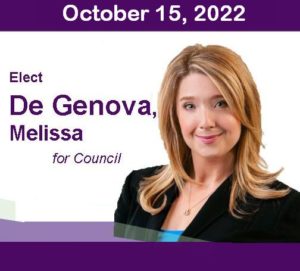
Non-Partisan Association (Mayor + 5 candidates): The poor, poor NPA. Seemingly a lost cause in 2022, despite their 45 years in power at Vancouver City Hall, dating back to the party’s conception in 1937. Incumbent Vancouver City Councillor, Melissa De Genova is seeking re-election and in 2022 is joined on the ballot by Elaine Allan, Cinnamon Bhayani, Ken Charko, and Arezo Zarrabian, all of whom we kind of like, if truth be told. John Coupar was the NPA’s Mayoral candidate, but no more. Fred Harding, Vancouver First’s Mayoral candidate in 2018 (he barely registered on voting day), will be announced today as the NPA’s replacement Mayoral candidate.

The Vancouver Green Party candidates for Vancouver City Council, School Board and Park Board

Green Party (5 candidates): A couple of weeks back, incumbent Vancouver City Councillor Pete Fry (who we believe will be re-elected to Council in a walk) introduced us to new VanGreen City Council candidate, Stephanie Smith (no, not that one … she’s pictured on the left above), a longtime labour and social justice activist who lives in Vancouver’s Downtown Eastside and is currently President of the Lore Krill Housing Co-op. We’re going to write a feature piece on Ms. Smith next month, but suffice to say for now that the entirely spectacular must-elect to Council Stephanie Smith is our favourite candidate for City Council in 2022.

Stephanie Smith is joined by incumbent City Councillors Adrianne Carr, Pete Fry (see above) and Michael Wiebe, as well as the outstanding Devyani Singh, all of whom we’ll be dedicating a grab bag column to at some point next month.

COPE (4 candidates): Incumbent Vancouver City Councillor Jean Swanson — who VanRamblings will be endorsing for Council come October — is seeking re-election. In 2022,  she is joined on the ballot by Breen Ouellette, Nancy Trigueros and Tanya Webking, all of whom we look forward to seeing on the campaign trail.

OneCity Vancouver (4 candidates):  One of the two Vancouver civic parties you must not vote for in 2022, run, run, run as fast as you can and far, far away from the Cult of Christine Boyle (she’s a current Vancouver City Councillor who you must not re-elect in 2022; we’ll explain why another time).  Joining Ms. Boyle on the ballot in 2022 are more must not elect newcomers to civic politics: the ever “woke” crew of  the reality-denying Iona Bonamis, Ian Cromwell and Matthew Norris.

OneCity Vancouver aka The Cult of Christine Boyle is not running a Mayoral candidate in 2022, but will support Vancouver Mayor Kennedy Stewart’s re-election.

Note, in passing: VanRamblings will enthusiastically support the re-election of Jennifer Reddy as a OneCity Board of Education trustee, and her outstanding colleague, Kyla Epstein, who we will champion (even if, as it appears, she doesn’t want us to … alas). We may endorse more OneCity School Board candidates.

Vision Vancouver (4 candidates): Hey, you thought they were dead? Naughty, naughty. Nope, Vision Vancouver is back with a vengeance in 2022, despite being unceremoniously ejected from civic office in 2018, this time out offering the Council candidacies of physician Honieh Barzegari (“hey, Canadian and B.C. governments: make it possible for Ms. Barzegari to continue in her profession as a family doctor, in Canada”); the don’t mess with her, longtime Vision Vancouver supporter, and outstanding communications specialist (and sort of impressive, we think) Lesli Boldt; current Park Board Chair and lifelong Green, Stuart Mackinnon (one of the two candidates running for office in 2022 you must not vote for under any circumstance); and Kits resident, parent of two teens, former CEO of the BC Non-Profit Housing Association and Chair of the BC Rental Housing Coalition, Kishone Roy. As is the case with OneCity Vancouver, a re-constituted Vision Vancouver is not running a Mayoral candidate in the current Vancouver municipal election, but instead will support the re-election of a hapless Mayor Stewart.

Note should be made that VanRamblings will enthusiastically support, and endorse, three Vision Vancouver School Board candidates: Aaron Leung, Steve Cardwell and Allan Wong, about whom we will write at some greater length during this civic election cycle.

Vote Socialist (1 candidate): New political party without a mayoral candidate.

Some days, there is no greater joy to be derived than reading Sean Orr’s long running column, Tea and Two Slices in Scout Magazine, founded by the late Andrew Morrison some two decades ago. Tea and Two Slices, and its author, Sean Orr, offer an anarchic but utterly humane (and often riotously funny) take on the issues of the day. In 2022, Sean has made a decision to transfer his words in print onto the political stage, as a truth teller ( an angry truth teller, but still …).

Unfortunately, and sad to say, Sean Orr is no Kshama Sawant, a Seattle City Councillor who ran for office in 2013 on a simple, achievable $15-an-hour minimum wage plan, ensuring a livable base wage rate for low paid workers. At the time, everyone thought she was mad, as she eked out a victory at the polls, defeating a longtime right-of-centre incumbent. In 2015, a $15-an-hour wage plan was passed by Seattle City Council, and implemented, Sawant’s “idea” proceeding to spread like wild fire across the United States, and across Canada. In 2022, a minimum wage of $15 and hour (or more; in B.C. , it’s $15.65, and due for a raise next June) was implemented in 2017, when the B.C. NDP formed government.

Sean Orr is Vote Socialist’s sole Council candidate for Vancouver City Council.

Although, Sean Orr’s prospects may not be good, the same cannot be said of Andrea Pinochet-Escudero, who VanRamblings will be endorsing as a Park Board Commissioner, to hold office over the next four years, should she win her bid for office, on October 15, 2022.

Note: In 2018, 26 Independents ran for office, while 16 candidates ran for Mayor.

star.jpg star.jpg star.jpg

If you’ve found any of what has been published today on VanRamblings confusing, the issues raised in this initial, comeback Vancouver civic affairs column and opinion piece will come into greater relief, and more orderly focus over the course of the next two months. We hope to see you here often over the next 62 days.

Tomorrow, VanRamblings will publish the first column in a four-part series introducing you to the five serious-minded Mayoral candidates seeking office in Vancouver, where — in order to help you keep your sanity — we’ll attempt to keep columns at under 1000 words (as requested by Straight editor, Charlie Smith).

Next week, VanRamblings will begin a series on why the current Vancouver civic election is the most crucial election held in our city since 1972, and how critically important it is you apprise yourself of the issues, and vote for the future you want.

American Crisis | The Devolution of Democracy

Over the course of the past six months, British Columbians have experienced a heat dome in late June that saw temperatures rise above 40° Celsius for more than a week, a summer wildfire season that saw the Interior town of Lytton burn to the ground, an autumn season of previously unheard of atmospheric rivers that flooded large areas of the Fraser Valley, and towns along the Thompson River that destroyed the town of Merritt, only to be followed by a winter season of record low temperatures and more snow across the province than experienced ever before.

And, at least for those of us who reside in British Columbia — where climatologists predict ever-worsening summer heat domes and wildfire seasons, ever more autumnal atmospheric rivers and even more devastating winter seasons of record low temperatures across the province — you’d be left to think that our present climate emergency is the worst of the problems facing us going into the future.

But you’d be wrong.

In point of fact, even more devastation is on the near horizon, this time social, political and economic, as well as climate-based, given what we are witnessing on a daily basis in the country just south of the Canadian border, in the United States.

Today marks the one-year anniversary of the insurrection that shook the very foundation of American democracy, the brief but devastating takeover of the halls of power of the American government forcing members of Congress, the Senate, and the Vice-President of the United States into hiding to protect their very lives.

Thomas Homer-Dixon, Canadian political scientist and author of the recently published Globe and Mail article, ‘The American polity is cracked, and might collapse. Canada must prepare’.

The United States could be under a right wing dictatorship by 2030, Canadian political science professor Thomas Homer-Dixon has warned, urging our country to protect itself against the “collapse of American democracy”.

“We mustn’t dismiss these possibilities just because they seem ludicrous or too horrible to imagine,” says Homer-Dixon, founding director of British Columbia’s Cascade Institute at Royal Roads University, in an article published recently in the Globe and Mail.

“In 2014, the suggestion that Donald Trump would become President would also have struck nearly everyone as absurd. But today we live in a world where the absurd regularly becomes real and the horrible commonplace.”

Homer-Dixon’s message is blunt: “By 2025, American democracy could collapse, causing extreme domestic political instability, including widespread civil violence. By 2030, if not sooner, the country could be governed by a right wing dictatorship.”

The author’s prediction centres on a Trump return to the White House in 2024, including Republican-held state legislatures refusing to accept a Democratic win.

“It’s not a matter of if but when: A civil war is on the way, as the United States is coming to an end,” writes Toronto-based historian Stephen Marche, in his new book, The Next Civil War: Dispatches from the American Future.

Marche observes that the United States is riven by a sectarian conflict that cannot help but end, at some point, in violence. By his projections, the inevitable civil war will be uncommonly vicious, pitting neighbour against neighbour. “It’s not just Donald Trump’s fault, though he certainly did his best to sow hatred and division,” writes Marche, noting that Trump was right when he said, “This country was seriously divided before I got here.”

Marche posits a number of scenarios around which a civil war could emerge: the assassination of a President; the seizure by local authorities of a bridge condemned as unsafe by federal officials, drawing militias from afar into armed conflict with the Army; a campaign of terror initiated by anti-government patriots, with dirty bombs less lethal than panic-inducing, countered by a government that will suspend First and Second Amendment rights to contain the violence.

In all of the above scenarios, the fuel is the deep chasm between two visions of America, one multi-ethnic, the other White supremacist. This chasm is full of antipathy and venom. “Hatred drives politics in the U.S. more than any other consideration,” Marche writes, and in the America of today, the middle ground has disappeared. What is to be done? Marche proposes a radical solution: Allow the South to break away into a largely impoverished theocracy, grant prosperous California and Texas their own nationhood, and let the rest of the country form a flourishing, wealthy blue-state democracy. “Disunion would be the death of one country,” he writes, “but it would be the birth of four others.” For other possible remedies, after reading Marche’s new book, start with Barbara F. Walter’s How Civil Wars Start.

A terrible storm is coming from the south, writes Homer-Dixon, and Canada is woefully unprepared. Over the past two years as Canada has turned its attention inward, distracted by the challenges of COVID-19, reconciliation, and the accelerating effects of climate change, while just below the 49th parallel the unraveling of a long cherished American democracy portends a threat to the American citizenry, and an even greater threat for Canadians across every part of our country.

“If Donald Trump is re-elected President in 2024, even under the most-optimistic of scenarios the economic and political risks to Canada would be innumerable,”  writes Homer-Dixon. “Driven by aggressive, reactive nationalism, Mr. Trump or one of his acolytes who could go on to win the American Presidency could isolate Canada continentally.”

“Under the less-optimistic scenarios, the risks to our country in their cumulative effect could easily be existential, far greater than any in our federation’s history. What happens, for instance, if high-profile political refugees fleeing persecution arrive in our country and the U.S. regime demands them back. Do we comply?”

“Trump and a host of acolytes and wannabes such as Fox News’ Tucker Carlson and Georgia representative Marjorie Taylor Greene, have transformed the Republican party into a near-fascist personality cult that’s a perfect instrument for wrecking democracy,” writes Homer-Dixon.

“Worse,” he writes, “Donald Trump may be just a warm-up act.”

“Returning to office, he’ll be the wrecking ball that demolishes democracy but the process will produce a political and social shambles,” writes Homer-Dixon. “Still, through targeted harassment and dismissal, he’ll be able to thin the ranks of his movement’s opponents within the state, the bureaucrats, officials and technocrats who oversee the non-partisan functioning of core institutions and abide by the rule of law.”

“Then the stage will be set for a more managerially competent ruler, after Mr. Trump, to bring order to the chaos he’s created.”

The consequences of the breakdown of the American system is only now beginning to be felt. January 6 wasn’t a wake-up call; it was a rallying cry. The Capitol police have seen threats against members of Congress increase by 107%. Death threats have become a standard aspect of the work life of every elected official. A third of poll workers in the U.S., in the aftermath of 2020, said they felt unsafe.

The United States has burned before. The Vietnam war, civil rights protests, the assassination of JFK and MLK, Watergate — all American national tragedies which remain in living memory. But the United States has never faced an institutional crisis quite like the one it is facing now. With most on the American right having abandoned faith in government, their politics is, increasingly, the politics of the gun.

The American right is preparing for a breakdown of law and order, but they are also overtaking the forces of law and order. Hard right organizations have now infiltrated so many police forces — the connections number in the hundreds — that they have become unreliable allies in the struggle against domestic terrorism. Anti-government patriots have used the reaction against Black Lives Matter effectively to build a base of support within law enforcement.

At this moment in the American crisis, the left has divided into warring factions seemingly incapable of confronting the seriousness of the moment. There are liberals who retain an unjustifiable faith that their institutions can save them when it is increasingly clear that they cannot. Then there are the educational and political elites dedicated to a discourse of willed impotence, not unlike pre-WWII America.

The right has recognized what the left has not: that the system is in collapse. The right has a plan: it involves violence and solidarity. They have not even repudiated the Oath Keepers. The left, meanwhile, has chosen infighting as their sport.

The United States must recover its revolutionary spirit. Does the country have the humility to acknowledge that its old orders no longer work? Does it have the courage to begin again? As it managed so spectacularly at the birth of its nationhood, during the Civil War of the 1860s, and again in 1932 with the election of Franklin Delano Roosevelt as President, the United States requires the boldness to invent a new politics for a new era. It is entirely possible that it might do so.

America is, after all, a country devoted to reinvention.