VanElxn2022 | The Green Party of Vancouver | Seek A Renewed Mandate

Truth to tell, VanRamblings has some affection for all the folks involved in the Green Party of Vancouver. Deep in our heart we believe that — although we may differ on policy orientation, from time to time — that the Vancouver Greens seeking re-election to Vancouver City Council come the evening of E-Day, Saturday, October 15th — that would be incumbents Pete Fry, Michael Wiebe and Adriane Carr — along with Green Party of Vancouver candidates, Stephanie Smith and Devyani Singh … both of whom we know, like and admire … have the best interests of the citizenry of Vancouver at heart, and as a group are well-meaning and informed folks of conscience who day-in and day-out make decisions — with humility and heart — employing their best judgement on matters placed before them.

On July 9th, at Khatsalano Days in the Kitsilano Vancouver neighbourhood, VanRamblings happened across Vancouver City Councillor Michael Wiebe, who was standing in front of the Green Party of Vancouver booth. Spotting us, smiling that big goofy and welcoming smile of his, he waved us over to speak with him.

Now for a little context: last autumn, VanRamblings wrote that Mr. Wiebe and his Green Party colleague, Pete Fry, constituted two members of the Three Misogynist Musketeers brigade on City Council (Mayor Kennedy Stewart was the third party in the unkind trio), arising from their untoward treatment of their fellow Councillor, Colleen Hardwick, during the course, and outside, of Council meetings.

As well, when respected municipal affairs lawyer Ray Young published a report in September 2020 recommending that Mr. Wiebe resign his seat on Council, arising from a perceived conflict of interest — a report filed at the request of then City Manager, Sadhu Johnston — VanRamblings wrote three withering columns demanding Mr. Wiebe’s immediate resignation of his seat on Council.

With the above in mind, VanRamblings (gingerly) approached Mr. Wiebe. Towering over us (VanRamblings is height-challenged), Mr. Wiebe gave us a fist bump, and told us how glad he was to see us, after which we engaged in — by far — the best, the most expansive, the most detailed, the most informed, and the most humane conversation on Vancouver civic politics we have had with anyone involved in #vanpoli, at any point over the past four years.

Colour us mightily impressed.

Mature of demeanour, Mr. Wiebe — who we’ve known well since his election as a Park Board Commissioner, in 2014 — quietly let us know that these past four years have proved a mighty learning experience for the novice Vancouver City Councillor, which newfound knowledge, over the course of the past 24 months, has translated into a much more settled and thoughtful approach to governance, than previously.

Suffice to say, VanRamblings came away from that day’s discussion with Michael Wiebe with a respect and admiration for him, such that we are giving serious consideration to endorsing his candidacy for re-election to Vancouver City Council.

In June, while attending VanRamblings’ good friend (and long, our blog’s much-beloved webmaster) Mike Klassen’s 60th birthday party (Mike is currently an ABC candidate for Vancouver City Council) at the Polish Hall on Fraser Street, we were surprised to see respected and hard-working Green Party of Vancouver City Councillor Pete Fry in attendance. Seems that Mr. Fry & Mr. Klassen have known one another dating back to their days writing for and working on Reverend Moonbeam’s (Darren Atwater’s) much-beloved Terminal City newspaper.

In the 90s, Pete — on this day, with a smile as big as all outdoors crossing his face, his eyes sparkling like the commencement of new day at sunrise, full of promise and intent for good —  was, he informed us, the Digiboy of fame and (not quite so much) fortune at Terminal City, and Mike Klassen long a much cherished colleague.

As we expected may have proved to be the case with Mr. Wiebe, there was the possibility, and perhaps not so remote a possibility, that upon spotting us in the Polish Hall, the affable and good-natured (not to mention, incredibly bright and principled) Mr. Fry might have wanted to punch our lights out, given the untoward provocations that he, from time to time, felt had been visited upon him by VanRamblings. Well, here we are today, in one piece, with no bloody nose.

Unpretentious, possessed of good humour, welcoming, friendly, gregarious of nature, articulate (no wonder the media in this town love him), humane and humble, possessed of an uncommon equanimity of presentation and spirit, VanRamblings has long liked, respected and admired Pete Fry — and although Mr. Fry is no particular fan of VanRamblings, either the person or the blog — our affection and respect for Pete Fry has not diminished one iota in all the years we’ve known him. VanRamblings liked Pete in the past & like and admire him through until this day.

As such, as with Mr. Wiebe, VanRamblings would consider endorsing Pete Fry’s re-election to Vancouver City Council, as a thoughtful and considerate candidate possessed of much integrity, who means well for the citizens of Vancouver, always.


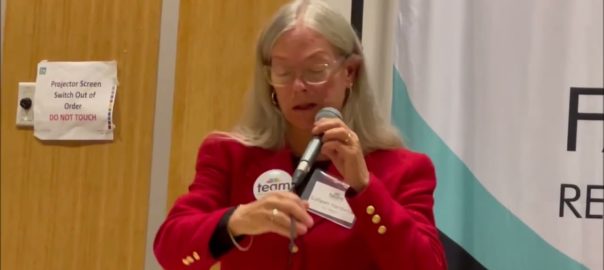
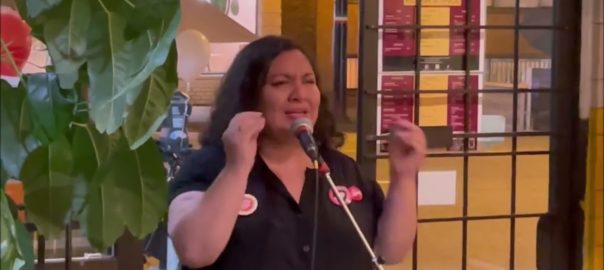
The 2022 Green Party of Vancouver campaign launch. Candidate speeches begin at 2:45.

Writing the above about Mr. Wiebe and Mr. Fry, we recognize that it is imcumbent on VanRamblings to set about to formally interview the two Green Party City Councillors — as we arranged last evening at the 2022 Green Party of Vancouver campaign launch — in order to give them voice, to provide each candidate for re-election a forum to have recorded why it is these outstanding Vancouver City Councillors feel they are deserving of your vote, and another term on Council (and, let’s face it, each of these fine candidates very much are worthy of your vote), and what it is they would see themselves accomplishing on a second term on Council.

#VanElxn2022 | Christine Boyle and OneCity’s Big Lie


The Cult of Christine Boyle‘s OneCity Vancouver plans to transform your once quiet neighbourhood.

Do you like the quiet street you live on, just a hop, skip and a jump from your local neighbourhood park and community centre, surrounded by neighbours who’ve become friends, with produce stores and cafés just up the street?

Well, with the release on Tuesday of OneCity Vancouver’s disastrous housing plan you can kiss your neighbourhood good-bye, as OneCity released a campaign platform that would mandate the construction of six-storey purpose-built rental housing in every neighbourhood, on every block, anywhere and everywhere across the city — a massive gift to Vancouver’s greed-driven development industry — sans any consultation with citizens, that …

“… would remove any semblance of a voice for neighbourhoods in the development process,” TEAM … for a Livable Vancouver Mayoral candidate, Councillor Colleen Hardwick told the Vancouver Sun’s Dan Fumano, as she blasted OneCity Vancouver’s poorly thought-out housing platform.

“The idea of Vancouverites discovering a massive building has been approved next to their home with “no notice, no public hearing, no opportunity to be consulted,” Ms. Hardwick fumed, “would be a disaster — right across the city. Not only that, it shows contempt for citizens, renters and homeowners, not to mention the democratic process, and community engagement.”

One City’s release of their egregiously simple-minded, anti-democratic and disastrous housing platform is a thoughtless re-tread of a proposal originally made by Councillor Boyle to Vancouver City Council in May 2021, a wrong-headed plan then, and one that was rightfully and soundly rejected by her Council colleagues.

In 2021, Ms. Boyle presented her 12-storey housing motion as “building co-ops” in every neighbourhood; her colleagues pointed out during debate  …

“The top 10 floors of the proposed ‘co-op’ building you advocate for in your motion constitute, in fact, market rentals, while the bottom two floors would be set aside at a still unaffordable 20% below the market rate. If these are “housing co-ops”, as you suggest, it would appear that you lack a fundamental understanding of what member-run housing co-ops are all about.”

Larry Benge, at the time the co-chair of the umbrella residents’ association that represents Vancouver’s 23 neighbourhoods — the Coalition of Vancouver Neighbourhoods — also weighed in on the controversy surrounding Councillor Boyle’s motion, stating “the loosening rules around social housing will drive up land values, resulting in gentrification and demovictions.”

“(Councillor Boyle’s motion) just throws the doors wide open for land speculation,” Benge told The Georgia Straight‘s Carlito Pablo in a May 19, 2021 interview, stating he found it to be “unbelievable” and the “height of naiveté” for anyone to think that simply because a development is “social housing” it will neither have any ability to set precedent, nor will affect land values.

In advance of the presentation of Ms. Boyle’s motion, the Coalition of Vancouver Neighbourhoods posted a statement online opposing the motion.

“This will increase development pressure, increase rental inflation, gentrification, demovictions, and displacements for existing older, more affordable rental buildings,” the Coalition wrote, noting existing rents in older buildings “tend to be much lower than new rentals, sometimes even lower than typical subsidized social housing rents, while existing older units are also generally larger.”


Illustration showing what a Vancouver side street could look like if OneCity’s proposed housing policy was to be implemented, allowing six-storey apartment buildings in all Vancouver residential neighbourhoods (ie … your neighbourhood). Image by Matthew Thomson/Matthew Thomson Design. Photo: Bryn Davidson, Lanefab Design

Here we are in 2022, and Christine Boyle — and her OneCity Council candidate colleagues — are still promoting The Big Lie, the pipedream, that by invading and destroying neighbourhoods across the city with the rampant construction of unaffordable, developer-friendly (read: they’re gonna make billions!) 16-storey apartment buildings, somehow Vancouver’s citizens will be better off, the unhoused and under-housed will have a roof over their heads, and comfort within Vancouver’s neighbourhoods, on every block across our city.

Poppycock. Hogwash. Balderdash — not to mention, a cruel provocation meant to cause harm to Vancouver citizens desperately in need of housing.

No opportunity for the public to be heard; no public consultation at local community centres; no input from the Vancouver Planning Commission, nor Vancouver’s Development Permit Board; no input from Vancouver’s Planning, Urban Design and Development Services Department; no hearings before City Council to adjudicate the proposed projects — just a rubber stamp of whatever the developer wants to build, on any block, in any neighbourhood, employing any building material, cladding and presentation to the street, all while ignoring every single aspect of the carefully considered, widely consulted, in-person engagements with citizens, agreed upon community plans for each of Vancouver 23 neighbourhoods … totally and utterly cast aside by The Cult of Christine Boyle’s OneCity Vancouver authoritarian housing plan, for developers.

#VanElxn2022 | Vancouver | Median Market Rental Rate | An Explanation

Each year, dating back to 1947, the Canada Mortgage and Housing Corporation

… a Crown Corporation of the Government of Canada, originally established after World War II to help returning war veterans find housing, CMHC since expanding its mandate to improve Canadians’ “access to housing”, the organization’s primary goals to provide mortgage liquidity, assist in the development of affordable housing, and provide unbiased research and advice to the Canadian government on the housing industry, which as of the second quarter of 2021 had assets in excess of CA$295 billion.

Each October, CMHC sets about to conduct the Rental Market Survey (RMS), during which time the Corporation gathers information on the primary rental market in urban areas with a population of at least 10,000. The primary rental market refers to privately-initiated structures intended to supply the rental market. The RMS specifically targets privately initiated structures with at least three rental units, which have been on the market for at least three months.

The Rental Market Survey is conducted primarily through site visits with the owner, manager, or building superintendent for all sampled structures. From 1996 through 2008, as part of our employment with the Canada Mortgage and Housing Corporation, VanRamblings was tasked with overseeing the collection of rental market information throughout the province of British Columbia, while working with economists employed in CMHC’s Pacific Regional Office to verify the collected information as part of an integrity check.


Vancouver median market rental rate, all bedroom types, 2009 – 2018

When the Rental Market Survey results are published — as early as late November, as late as mid-January — in each metropolitan area across Canada, the median market rental rate in each neighbourhood in each community is determined, and published. What does median market rental rate mean?

“Median Market Rent means the middle value of all monthly rents paid, inclusive of essential utilities, when placed in order of value for a designated market area, and by unit type.”

Let’s use Kitsilano as an example to better explain what is meant by median market rental rate. The October 2021 Rental Market Survey found the median market rental rate in the Kitsilano CMA (Census Market Area) was $1139 per month for a one-bedroom apartment, across all building types and date of construction, recording results in five year increments in buildings constructed from 1975 til now.

In other words, in late 2021, half of those resident in apartment rental accommodation in the Kitsilano CMA were paying less than $1139 each month to rent a one-bedroom apartment, while half of Kits apartment dwellers were paying more. In Kitsilano, as is the case elsewhere across the city, there are those who have been resident in an apartment building dating back to the mid-1970s, and are paying anywhere from $825 to $950 per month in rent.

By the same token, for newer apartment buildings, or in the case of new tenants moving into a vacated apartment, the landlord has seen fit to increase the rent — for say, an unfurnished one-bedroom apartment — to market rental rates as high as $2500 per month, or in some cases even higher.

As former Vision City Councillor Kerry Jang told CKNW talk show host Simi Sara  in 2013, “Affordable housing is something that somebody can afford.”

Awhile back, VanRamblings received a call from COPE City Councillor Jean Swanson, who asked us if we’d look into the definition of affordable housing, as it is defined in Metro Vancouver municipalities other than Vancouver. So, we did. This is what VanRamblings found: speaking with administrators in Planning Departments in each Metro Vancouver municipality, be it North Vancouver, Surrey or Port Coquitlam, we learned, in each case, “affordable housing in our community is defined as 20% below the median market rental rate, as determined by CMHC.”

Vancouver, and Vancouver alone, since Kerry Jang’s 2013 statement respecting the definition of affordable housing, has determined affordable housing as NOT 20% below the median market rental rate, but 20% below the market rate. In Kitsilano, to employ that neighbourhood as an example, 20% below the median market rental rate would be an affordable rent of $938 per month, whereas 20% below the current market rate would be $2000 per month — more than double the 20% below Kitsilano’s median market rental rate!

Since being elected to office in 2018, has any — and we mean, any — Vancouver City Councillor sought to adopt the definition of affordable housing, as it applies in every other Metro Vancouver municipality, determinant from the results of the conduct of CMHC’s annual Rental Market Survey? Jean Swanson, maybe? That dissembling “thinks she’s a socialist” saviour of our city (but not really), Christine Boyle?

Christine Boyle and most of Council voted for any and every project that had a so-called affordable rental rate component included. What does that mean in real life?

Let’s take the Jameson Development Corporation project, on the old site of the Denny’s, at Birch and West Broadway. Originally conceived of as a 16-storey purpose-built rental, when the Jameson family made the decision to include a 20% “affordable rental” component, Ms. Boyle and her Vancouver City Council colleagues agreed to allow the developer to build out at a skyscraper-like 28 storeys, in order to deliver 200 market rental homes, with another 58 “homes” to be geared to a person or household earning between $60,000 & $80,000 per year.

Upon completion, a 395 sq. ft one-bedroom on a lower floor of the Jameson project will be marketed at more than $3,000-a-month, which means an “affordable rental” will be available at $2400 each month, or $28,800 annually.

Let’s say you’re a beginning teacher, and you’re earning $60,000 a year. After taxes / CPP / EI deductions, and union dues to pay, in part, for a pension plan and benefits, your total net income would come in at around $45,000, less the $28,800 in rent + utilities — Hydro / Internet / TV / cell phone (say, another $250 a month)— at $3,000, never mind car insurance, gas and car repairs at another $3,000 annually … well, lucky, lucky beginning teacher, s/he will have a grand total of $10,000 remaining to pay for food, clothing, and entertainment — forget about dining out, vacations, never mind birthday presents and Christmas gifts for family and friends.

Nothing like paying 64% of your net income on a 395 sq. ft. supposedly “affordable” apartment on the 5th floor of the Jameson Birch Street project.

In 2022, Vancouver and Vancouver alone continues to define “affordable” as 20% below whatever the market will bear, shutting out tens of thousands of hard working Vancouver citizens — those working at minimum wage, those earning a living wage, or any single person earning the median income of $45,000 — from ever being able to afford to rent within the City of Vancouver.

At the upcoming all-candidates meetings in September, ask all those who are running for office to become a Vancouver City Councillor whether they will commit to ensuring that affordable housing in Vancouver is redefined as 20% below the median market rental rate as determined by CMHC’s annual Rental Market Survey.

And while you’re at it, ask these prospective candidates whether they will move to have rents in apartment buildings tied to the current rental rate — through a change to the Vancouver Charter — so when a tenant moves out, the owner / landlord can’t raise the rent to an unaffordable market rental rate.

One more thing: ask these prospective Vancouver City Councillors whether they’ll move to adopt Burnaby and New Westminster’s demoviction bylaw.

  • An affordable housing plan. The revival of the Community Land Trust relationship between Vancouver City Hall and the Co-operative Housing Federation of B.C., that would see the construction of 1500 new housing co-op homes built each year on city, provincial and federal Crown land, each of the next four years. An affordable housing plan that would expedite the construction of ten 150-unit family housing co-ops each year — think the City Gate Housing Co-operative on Milross Avenue, the Roundhouse Housing Co-operative on Marinaside Crescent, in Yaletown, or the Railyard Housing Co-operative on Quebec Avenue at 1st, due east of the Olympic Village — all built at no expense to Vancouver citizens — while foregoing the $1 million in development permit fees. Construction and materials cost: paid for through a combination of mandated developer Community Amenity Contributions and provincial and federal funds (both Prime Minister Trudeau and former B.C. Housing Minister, David Eby, have signed off on the above). Cost to Vancouver citizens: zero. Cost of land: zero. Cost to Vancouver citizens for construction and materials: zero. A negotiation with the federal government would ensure that all subsidy monies for Co-op members would be paid for through the federal co-op housing subsidy fund. All monies paid by Co-op residents — after administrative, amenity payments and maintenance costs, and monies placed into a “replacement reserve fund” for major, future renovations — would be returned to the City to build supportive social housing, at no cost to citizens.

You’ve got your work cut out for you over this next six weeks, as you and your neighbours hold those who would wish to be elected to City Council to account. Are these candidates for Council on your side, or are they on the side of an unacceptable status quo or worse, greed-oriented and deep in the pockets of the developers who are funding their campaigns for office?

Arts Friday | The Undeniably Cinematic Romance of Train Travel

[PROGRAMMING NOTE: VanRamblings won’t publish Saturday, Sept. 3rd thru Monday, Sept. 5. We’ll resume regular posting on Tuesday, Sept. 6th].

As a boy growing up in the 1950s and 60s, a part of each summer was given over to train travel with my mother and sister, to the Calgary Stampede, Edmonton’s Klondike Days, to Saskatoon or Regina, or out to Winnipeg.

There was nothing I cherished more than to arise at sunrise, standing between the trains cars, the summer prairie winds blowing across my face, as I gazed upon mile after mile of blonde fields of bluish green or mustard-yellow flowering and deeply scalloped gently rolling hills of oil-rich rapeseed.

All of which is to say, trains hold much for me in the recall of my life.

Cinema and trains go together like no other form of transport. Equal parts romantic and thrilling, they offer a sense of unequaled escapism.

Whether it’s the tearful goodbyes of Casablanca, the secretive affair of Brief Encounter, the epic crash of The Fugitive, the chase scenes of The General, the fateful encounter in Before Sunrise, the comings and goings of trains have been used to give metaphorical dynamism to countless films.

Trains are so popular that entire stories have been set on them.

This is due to the way they are able to keep action moving forward as its characters are forced to occupy the same physical space. From action thrillers to class commentaries to classic whodunnits, here are a few films set on a train that you’ll want to board should you be afforded the opportunity.

The Lady Vanishes (1938)

Perhaps the best of all Alfred Hitchcock’s British films, The Lady Vanishes tells the story of a young woman traveling across Europe who suddenly realizes her elderly traveling companion has disappeared. Containing endless twists as well as a pre-WW2 espionage subplot, The Lady Vanishes offers a delightful concoction that doubles as a study of British mannerisms, and the classic 1930s era of train travel.

The Commuter (2018)

Billed as an actioner, there are surprising depths to Jaume Collet-Serra’s train-based thriller The Commuter, starring Liam Neeson as a former police officer turned insurance agent who has just been laid off from his job, the majority of the film taking place on a Manhattan commute. While the thrills are thrilling and the action sequences accomplished, The Commuter has a socioeconomic depth that makes this Neeson’s most profound action film.

Unstoppable (2010)

As fast, loud, and relentless as the train at the centre of the story, Unstoppable is perfect popcorn entertainment — and proved to be director Tony Scott’s best movie in years, the narrative involving an unmanned runaway train carrying a cargo of toxic chemicals, and an engineer (Denzel Washington) and his conductor (Christ Pine) who find themselves in a race against time.

Murder on the Orient Express (1974)

Director Sidney Lumet’s agent called it “the dumb train movie” but the cast — Albert Finney as Hercule Poirot, and suspects including Lauren Bacall, Sean Connery, Martin Balsam, Jacqueline Bissett, John Gielgud, and Ingrid Bergman, who won the Oscar for Best Supporting Actress — gives this mystery the feel of a luxurious chocolate-box with few toffees. “Stylistically it had to be gay in spirit, even though it was about a murder,” Lumet said of the film.

Source Code (2011)

Finding the human story amidst the action, director Duncan Jones and a charming Jake Gyllenhaal craft a smart, satisfying sci-fi thriller about decorated soldier Captain Colter Stevens, who wakes up in the body of an unknown man on a commuter train, to discover he’s part of a mission to find a bomber.

Europa (1991)

Director Lars von Trier boxed himself into an expressionistic corner with this hyper-stylized thriller set aboard a German train in 1945. For all its visual razzle-dazzle, this tale of a trainee conductor contending with Nazi terrorists and a collaborationist boss is an oppressively claustrophobic ride. No wonder the lo-fi, wildness of the Dogme 95 revolution was just around the corner.

Before Sunrise (1995)

Richard Linklater’s Before movies span 20 years but it all began unassumingly enough onboard a train from Budapest. Jesse (Ethan Hawke) strikes up a conversation with Céline (Julie Delpy), then persuades her to disembark with him in Vienna to while away the evening and early morning before he catches his flight home to the U.S. Had she not fallen for his charms, audiences would have been deprived of one of films most enchanting trilogies.

Runaway Train (1985)

Jon Voight and Eric Roberts were both Oscar-nominated for playing hard-bitten convicts who steal a locomotive after a prison escape. Directed with an air of existential horror by Andrei Konchalovsky, Runaway Train — based on a 1966 screenplay co-written by Akira Kurosawa — emerged as a first rate genre film, and a hard-boiled action thriller that feels a bit like Speed on a train.

Snowpiercer (2013)

Revolution is in the air in Bong Joon-ho’s post-apocalyptic thriller set on a train that endlessly circles  a frozen and inhospitable Earth, carrying the last survivors of humanity — poor folk crammed into squalor at the back, rich ones whooping it up in first class with their own nightclub in front. There was enough fuel in the furnace to keep the idea burning through a Netflix series.

Strangers on a Train (1951)

The murderous “crisscross” trade-off proposed by Robert Walker to Farley Granger in Strangers on a Train may be hatched on a train but it’s telling that the actual climax occurs on an out-of-control carousel — the antithesis of the train, and anathema to any screenwriter, since all it does is go pointlessly round and round.

The General (1926)

Cinema has been coupled to train travel ever since the Lumière brothers screened their 45-second film from 1895 of a train arriving at La Ciotat station. Incredible to think that it was only 30 years later that Buster Keaton set to work on his staggeringly sophisticated silent Civil War action comedy, the story about a doleful train engineer who goes all out to save two objects of his affection — his engine and his sweetheart (Marion Mack).

https://youtu.be/4nj0vEO4Q6s

The Lumière brothers had it right — there is something undeniably cinematic about the locomotive. When it comes to train travel, you never know who might be onboard, and therein lies both its mystery and its thrill.