Category Archives: #VanPoli Civic Politics

Vancouver 2026 Mayoral Aspirant List Winnows

One month ago, the number of heavyweight pretenders to the throne that is the seat of power in the City of Vancouver, the head honcho so to speak, numbered 8.

Today, the number of serious-minded contenders to become Vancouver’s next Mayor come the evening of October 17th, 2026 has winnowed considerably.
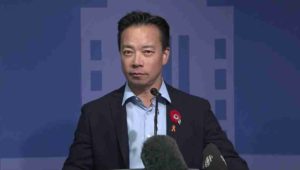
    • Ken Sim. Vancouver’s incumbent Mayor, elected with a record 85,732 votes, favoured by a plurality of 50.9% of those who cast a ballot in 2022, Mr. Sim’s popularity has waned significantly since the days of his first being elected to office. That is, if the internal poll recently conducted by his electoral party, ABC Vancouver, is to be believed. From closing the Renter’s Office at Vancouver City Hall to jettisoning the Fair Wage Programme implemented by the previous Council, to “scandals” respecting his tenure as Chairperson of Vancouver’s Police Board — a post he no longer holds — as well as converting a City Hall meeting room into a personal gym, and for the first three years of his term rarely turning up at Council meetings, and arriving at Council dressed in a T-shirt and sweat pants in the few times he did, any good will Mr. Sim generated in the early part of his term of office has all but evaporated. Mayor Ken Sim will have one heckuva time getting re-elected as Vancouver Mayor come late 2026 — not an impossibility, but a highly improbable outcome for the current Mayor.
    • George Affleck. First elected to office as a Vancouver City Councillor on Saturday, November 19th, 2011 as a candidate with the now moribund but once powerful Non-Partisan Association (NPA), Mr. Affleck won a second term of office on November 15, 2014, before retiring from civic politics in 2018. Mr. Affleck, a centre-right politician, one month ago had high hopes of displacing Ken Sim as the conservative voice at Vancouver City Hall, as Vancouver’s next Mayor, before — in recent days — deciding that Vancouverites were probably not open to electing another centre-right politician as Vancouver Mayor, given the fiasco that Ken Sim’s term in office has turned out to be. Buh-bye, George.
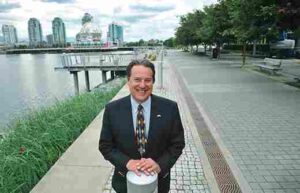
    • John Coupar. The former Chair of the Vancouver Park Board, and in 2018 — at least for a time — the NPA Mayoral candidate, Mr. Coupar was looking to challenge Mr. Affleck for the Mayoral nomination with a reinvigorated Non-Partisan Association, which held office at Vancouver City Hall from 1937 through 1972, and again from 1976 through 2002, and finally from 2005 to 2008. Saner heads prevailed, though, and the ineffable John Coupar decided instead to focus on provincial politics, to hold the NDP government’s feet to the fire.
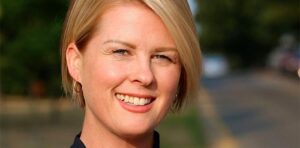
    • Rebecca Bligh. First elected to office under the banner of the Non-Partisan Association, before leaving the party with her other elected NPA colleagues — save Melissa De Genova — the first sitting Councillor to join the nascent, Ken Sim-head ABC Vancouver municipal party (the two were members of Landmark, a sort of cultish betterment organization) when she was elected for a second time (Mr. Sim dumped Ms. Bligh unceremoniously mid-term this term, which speaks highly of Rebecca Bligh’s integrity, given that she had consistently challenged the Mayor, and other sitting, elected members of his caucus), and recently re-elected to another term as President of the Federation of Canadian Municipalities), Ms. Bligh has long been one of our favourite politicos (her partner, Laura, is the first person we’ve run across in 50 years who, appropriately, with wit and a high degree of caring, keeps us in line … and boy oh boy, do we need that!), Rebecca Bligh is making a serious bid to become Vancouver’s next Mayor, with fundraising for her upcoming campaign well underway (note to readers: we apologize for the run-on sentence, but it is  part of VanRamblings’ writing stock and trade, as well). Ms. Bligh, then, is the third serious candidate to become Vancouver Mayor in 2026 we’re writing about today. We will write more about Ms. Bligh another day. For now, we wish her well.
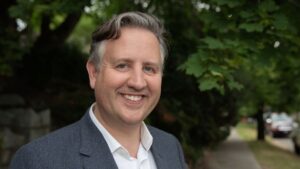
    • Kennedy Stewart. A political ghost from Vancouver’s recent past, Dr. Stewart (Mr. Stewart teaches in Simon Fraser University’s School of Public Policy), Kennedy Stewart served an undistinguished term in office as Vancouver Mayor, first elected municipally on October 20, 2018, but handily defeated by Ken Sim in his bid for re-election, on Saturday, October 15, 2022. A lifelong member of the New Democratic Party, Mr. Stewart served as a member of Parliament in Ottawa, with the New Democratic Party (NDP) of Canada from 2011 through 2018, when he announced his resignation in order that he might run for the Mayor’s office in Vancouver, where he emerged victorious. Sadly, though, Mr. Stewart garnered only 49,593 votes, or 29.48% of the vote, in 2022, losing to novice politico Ken Sim by a whopping 36,139 votes. Nonetheless, up until recently, Mr. Stewart believed that with the support of the provincial New Democratic Party and the unpopularity of incumbent Vancouver Mayor Ken Sim, in 2026 he could rise from the ashes, phoenix like, to once again emerge victorious as Vancouver Mayor, on Saturday, October 17, 2026. Although Mr. Stewart is right on the first count — Mr. Sim’s rampant unpopularity — on the second count, Mr. Stewart will find that provincial NDP support for his candidacy will not materialize (our provincial NDP has a preferred candidate for Vancouver Mayor, and it ain’t him). Neither will Mr. Stewart garner the support of the Vancouver & District Labour Council, who prefer the same candidate as B.C.’s New Democrats. Mr. Stewart’s candidacy is over before it’s begun.
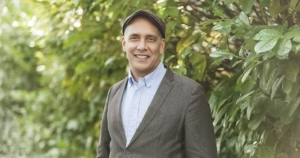
    • Pete Fry. Just two months ago, the two term Green Party of Vancouver City Councillor was being urged to put his hat in the ring to become Vancouver’s next Mayor … until it became clear that support from the Vancouver & District Labour Council for his candidacy would not be forthcoming, that another, preferred and very well funded and experienced Mayoral aspirant — who VanRamblings will write about tomorrow — had emerged, making a Pete Fry run for Vancouver Mayor, challenging, with victory a near impossibility. In 2026, Mr. Fry will run for a third term as Councillor, with the support of the VDLC.
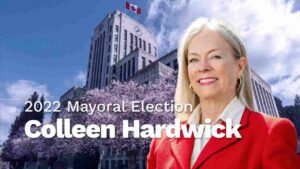
    • Colleen Hardwick. In 2018, Ms. Hardwick was elected to Vancouver City Council, coming in a respectable fifth with 47,747 votes, while running with the Non-Partisan Association. By the time 2022 rolled around, Ms. Hardwick had “switched” parties to TEAM (The Electors’ Action Movement) — TEAM for a Livable Vancouver, the Vancouver-based centrist political party that was formed in 1968 and held office for two elections, from 1972 to 1976, co-founded by Ms. Hardwick’s father, UBC Urban Geography professor Dr. Walter Hardwick, the party rekindled for the 2022 Vancouver municipal election. Ms. Hardwick ran for Mayor with TEAM in 2022, coming in a distant third with 16,769 votes, or 9.97% of the vote. Ms. Hardwick also ran in this year’s by-election, securing 17,352 votes, approximately half the votes of the two winning candidates, COPE’s Sean Orr (34,448) and OneCity Vancouver’s Lucy Maloney (33,732). In 2026, it is Colleen Hardwick’s intention to run for Mayor for a second time.  We will write about Ms. Hardwick at length, another day.

Reviewing the above, there are three serious-minded candidates left in the running for the Mayor’s chair in 2026: Ken Sim, Rebecca Bligh and Colleen Hardwick.

However, there is another serious candidate who has come forward and announced his candidacy for Vancouver Mayor, a candidate VanRamblings endorsed two months ago, a candidate who formally announced his candidacy for Mayor of Vancouver on July 3rd, a well schooled candidate with an enviable war chest, with a campaign manager already in place, a candidate VanRamblings believes will be overwhelmingly elected as Vancouver’s next Mayor on Saturday, October 17, 2026.
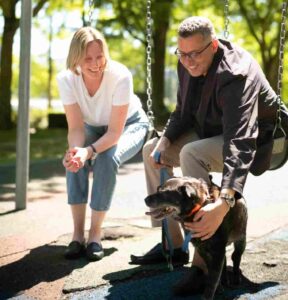

Ya just gotta vote for a married candidate for Vancouver Mayor who loves dogs (and parks)

VanRamblings will write about this well funded, well organized, energized mystery candidate for Vancouver Mayor tomorrow, who would seem to have the support of the Vancouver & District Labour Council as well as our provincial New Democratic Party, making him the odds on favourite to become Vancouver’s next Mayor in ’26.
VanRamblings Makes Its Triumphant Return, Again

After an interregnum of some 284 days since VanRamblings published last, today — Monday, August 18th, 2025 — marks VanRamblings inglorious return.

In the coming days, weeks and months, as per usual, most Mondays, Tuesdays, Wednesdays and Thursdays, we will publish our thoughts on all things municipal, provincial and federal politics, interspersed with columns on cinema (such as this Friday’s column on film festival season), and on the occasional Saturday, return to our semi-regular feature, Stories of a Life, and on Sundays, Sunday Music, where we will continue writing about our favourite 100 albums of all time.

Most of the next two weeks will be given over to writing about Vancouver’s municipal political scene, this week and part of next focusing on the probable Mayoral aspirants seeking office in order that they might install themselves in the spacious offices and luxurious living quarters located on the third floor at Vancouver City Hall (thank you, Dr. Penny Ballem), a home away from home for the Mayor.

In tomorrow’s column, VanRamblings’ focus will be on who, only a month ago, seemed to be the serious-minded Mayoral aspirants. Much has changed, though, over the past month, and the list of Mayoral aspirants has winnowed considerably, although a few of the usual suspects for Vancouver Mayor remain serious about making a bid for office on Saturday, October 17th, 2026.

A major focus of VanRamblings’ writing beginning next week through until October 12th will be, what for us, is the première arts event of the autumn season, the 44th Vancouver International Film Festival, which this year will run, in a somewhat truncated form, from Thursday, October 2nd through until Sunday, October 12th.

As far as we are able, we’ll attempt to keep the columns short, pithy, informational and full of our somewhat out on the edge opinions, bound to make some folks (usually the ones being written about) unhappy, while enlightening others in what we hope is an entertaining and provocative manner. As far as possible — given our advanced age (we’re 75 years of age now) and our general ill state of health (alas) — we’ll try to stay away from what once was our stock and trade: hyperbole, always fun to write but, perhaps now, a thing of VanRamblings’ ignominious past.

With the exception of Friday, September 5th — when, in the first person, we’ll write about our various health travails — we’ll continue to employ the third person voice on VanRamblings, which we know drives some people crazy, but there it is.

We look forward to your return tomorrow, and in the days, weeks and months hence, as we once again seek to build our loyal, and just plain great, readership — who want to know just what is going on in our municipal, provincial and federal governance, and the who, what and why of the decisions that impact our lives.

#BCPoli | BC NDP Will Implement a Dignified Province-Wide Supportive Housing Agenda

In British Columbia, Single Room Occupancy (SRO) units have long served as a last resort for many of the province’s most vulnerable individuals, including low-income residents, those with mental health challenges, and people grappling with homelessness.

However, these aging, often dilapidated buildings are increasingly unfit for human habitation. As such, there is an urgent need for the British Columbia government to transition vulnerable populations out of rundown SROs in Vancouver, Victoria and elsewhere, toward sustainable, supportive housing models.

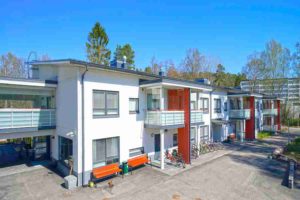
By providing care similar to the successful systems used in European countries like Finland, B.C. can address the root causes of homelessness, poverty, and social marginalization while promoting long-term well-being and social integration.

In a 2022 interview with B.C. Legislative reporter Katie DeRosa, then with the Vancouver Sun and now in the same role with the CBC, B.C.’s New Democratic Party Attorney General and Minister Responsible for Housing, David Eby — who was running to replace Premier John Horgan, who had resigned as Premier for health reasons, as leader of the BC NDP — had the following to say about the need for government to provide dignified supportive housing for members of British Columbia’s vulnerable populations living in communities across the province, and move these abandoned individuals out of rundown SROs …

Premier David Eby addresses need to transition people out of SROs

“There really hasn’t been a co-ordinated strategy or a plan about how we get out of the problems of Vancouver’s Downtown Eastside, Victoria and elsewhere. I think … putting an invisible fence around neighbourhoods and saying ‘this is the best we can do’ and just hope that things work out, it’s a strategy that will no longer carry us forward.” Eby said if he’s successful in his bid to replace Premier John Horgan … he’ll co-ordinate a long-term response to homelessness issues across the province, with the support and assistance from the federal government, our province’s towns and cities, and concerned groups.

In point of fact, Premier David Eby has committed to just that, copying the Finnish model that provides supported and affordable housing.

Juha Kaakinen, Finnish CEO of the Y-Foundation, providing low-cost housing to the homeless

“We had to get rid of the night shelters and short-term hostels we still had back then. They had a very long history in Finland, and everyone could see they were not getting people out of homelessness. We decided to reverse the assumptions,” says Juha Kaakinen, CEO of Finland’s Y-Foundation, which provides low-cost flats to homeless people across Finland.

The Deplorable Conditions of SROs

SROs, originally constructed as affordable housing for the working class, have deteriorated significantly over the decades. Many SRO units in cities like Vancouver, Victoria and Kelowna are plagued by chronic disrepair, pest infestations, poor heating and ventilation systems, inadequate plumbing, and a lack of basic sanitation. These environments are not only uncomfortable but dangerous, often exacerbating the mental and physical health challenges faced by their residents.

Research shows a strong correlation between poor living conditions and poor health outcomes, including increased rates of addiction, infectious diseases, and mental health crises. Furthermore, many SRO buildings are located in areas with high crime rates, compounding the risks for residents already facing social vulnerabilities. In essence, SROs have become a symbol of the failure to provide adequate housing and services to the people who need them most. Moving vulnerable individuals out of these dangerous environments is not only a moral imperative, but also a matter of public health and safety.

The Case for Supportive Housing

Supportive housing offers a more sustainable solution to the complex needs of the vulnerable populations currently residing in SROs. Unlike SROs, which often serve as temporary, stop-gap measures, supportive housing provides stable, permanent accommodations where individuals have access to social, medical, and psychological services on-site. This model addresses not only the need for safe and secure housing but also the underlying issues that contribute to homelessness and instability, such as mental health disorders, addiction, and unemployment.


The Globe and Mail’s Kerry Gold on how Finland is solving the problem of homelessness.

In European countries like Finland and Austria, supportive housing has proven to be remarkably successful. Finland, for instance, has implemented the “Housing First” model, which provides stable housing to homeless individuals as the first step toward addressing other social issues. This approach has reduced homelessness by over 50% since its introduction in 2008, with most formerly homeless individuals remaining housed long-term. Austria follows a similar model with an emphasis on affordable, long-term housing paired with social services, which has also led to positive outcomes for at-risk populations.

For B.C., adopting a comparable approach would mean transitioning away from crisis management in the form of emergency shelters or rundown SROs and toward long-term solutions that focus on stability, health, and empowerment.

Supportive housing projects, when coupled with services such as healthcare, employment training, and mental health support, help individuals reintegrate into society, reduce their dependence on public services, and lead more fulfilling lives.

Note should be made that Premier David Eby’s government alone has a long term strategy — that they have committed to implement in their next term of government —  to transition members of our vulnerable population out of rundown SROs and substandard accommodation into supportive housing

Cost Efficiency and Long-Term Benefits of Building Supportive Housing

One of the most compelling arguments for supportive housing is its cost-effectiveness. Studies from both Europe and North America demonstrate that investing in supportive housing ultimately saves governments money in the long run. Homelessness and inadequate housing impose significant costs on public systems, including healthcare, law enforcement, and emergency services.

For instance, individuals living on the streets or in unstable environments are more likely to require emergency medical attention, experience police interactions, or become involved in the criminal justice system. In contrast, when people are find safe haven and community in supportive housing, they use fewer emergency services and are better able to manage chronic health conditions, or avoid encounters with law enforcement. Finland’s Housing First model has shown that for every dollar spent on housing and support, the government saves approximately $2 in costs related to homelessness.

B.C., with its high cost of living and significant homeless population, faces similar challenges. Building and maintaining supportive housing units may initially require significant investment, but it will result in long-term savings by reducing strain on public health, criminal justice, and social services systems. Moreover, the social and economic benefits of helping individuals regain stability, employment, and health far outweigh the upfront costs.

In a government publication titled Lost in Transition, the cost of construction of thousands of supportive housing units would be made possible in part by the savings that would accrue from merging the 277 social services agencies on the DTES into 30 umbrella organizations.

Each of the 277 social agencies employs an Executive Director — at an average annual salary of $500,000 — Directors of Finance, Directors of Human Resources, Managers of Supported Housing, Property Managers and other senior administrative staff — each of these 247 individuals earning up to $375,000 annually — a duplication of services and administration funded by the province, Merging agencies would save more than $1 billion dollars annually that would helo to pay for the cost of building supportive housing on the DTES, and across the province.

The Lost in Transition report questioned if such duplication of services properly serves the interests of those who are resident, and cared for, on the DTES.

There was also recommendation in the Lost in Transition report that argued for the provincial appointment of a Commissioner who would oversee the reformation of the provision of services on the DTES, a person with the authority of a Deputy Minister who would report only to a provincially appointed Board of Directors, which would oversee the transition of the current service model, reporting as well as to the office of the Premier.

A Moral and Social Imperative of Providing Dignified Supportive Housing


Eby government planning to take co-ordination of housing provision for B.C.’s most vulnerable citizens

Finally, there’s a moral dimension to the issue.

In a society as wealthy and resource-rich as British Columbia, allowing vulnerable members of our population to languish in unsafe, unsanitary SRO units reflects poorly on social priorities.

The government has a responsibility — a responsibility recognized by those within the B.C.  New Democrat government — to protect its most vulnerable citizens, ensuring that these individuals have access to the basic necessities of life, including safe housing, healthcare, and social support.

Housing is not just a commodity; it is a human right.

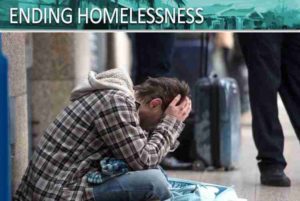
By moving away from the outdated, harmful practice of relying on SROs & instead investing in supportive housing, B.C. can take a meaningful step toward ending homelessness and improving the quality of life for our most marginalized citizens.

Relocating vulnerable populations out of rundown SROs and into supportive housing is not just a practical solution; it is an ethical and economic necessity.

In adopting the supportive housing model, British Columbia can — and will, with the re-election of an NDP government — address homelessness more effectively, reduce the long-term social, moral and medical costs associated with inadequate housing, while promoting a more inclusive and caring society.

The time to act is now, with the re-election of a David Eby-led government.

The benefits of the B.C. New Democrats’ approach to building dignified housing for our most vulnerable population will be felt for generations to come.

#VanPoli | Mayor Ken Sim and the Sadly Premature Death of ABC Vancouver


ABC Vancouver, the upstart Vancouver civic party that only 22 months ago ascended to super majority status at Vancouver City Hall, with mayoral candidate, businessman and novice politico Ken Sim achieving a record number of votes on election night, Saturday, October 15th, 2022, carrying seven Councillors on his coattails to victory, to dominate civic politics, in August 2024 is a municipal party — although once celebrated — very much in freefall and worrisome disarray.

In a recent conversation with a long serving, retired Vision Vancouver City Councillor, the Councillor told us of her many conversations with ABC Vancouver’s electeds, who have expressed to her — as has been the case with VanRamblings’ conversations with various ABC Vancouver electeds — a distress and a mournfulness at the goings on at Vancouver City Hall, in the main emanating from the Mayor’s office and his “bullying staff”, an unfortunate and disconcerting arbitrariness, a lack of consultation, respect and engagement (not to mention prior notice) involving a series of “surprising” dictums by Mayor Ken Sim.

None more surprising, of course, than the arbitrary and unilateral reversal by Mayor Ken Sim of ABC Vancouver’s commitment to, and support of, a much cherished Vancouver institution, the 135-year-old elected Vancouver Park Board.

Following a week-long sojourn in ABC Vancouver founder Peter Armstrong’s luxurious, well-appointed yacht up British Columbia’s west coast, Ken Sim arrived back in Vancouver in early December of 2023 to announce — with the shortest possible notice to his fellow ABC Vancouver electeds — of his intention to ask the province to change the city charter, to shift Park Board’s responsibilities to Council, in the process unilaterally eliminating our cherished 135-year-old elected Park Board.

Where else has Ken Sim and ABC Vancouver gone wrong, losing the support of a Vancouver populace who elected the civic party with so much hope for better?

  • Shuttering the Rental Office at Vancouver City Hall, established by the previous Council to help renters. Ken Sim and ABC Vancouver promised to transfer the funds  allocated to the Rental Office to TRAC — the Tenant Resource & Advisory Centre — in the process committing, as well, to move TRAC into a newly renovated, City-owned building on Howe Street, neither of which commitments have been fulfilled to date;
  • In the most unconscionable manner, scrapping Vancouver’s Livable Wage Programme that certified employers who provide services and supplies to the City of Vancouver pay a living wage of $25.68 per hour to their employees;
  • Increasing property taxes by the highest amount ever, in December 2022 by 10.7%, and in December 2023, by 7.5%. Note should be made that in Port Coquitlam, Mayor Brad West’s City Council raised the 2022 property tax by 3.55% and in 2023, by 5.58%, all while providing supportive and affordable housing, and a new community centre;
  • Restricting public access to Council decision-making by allocating only 3 minutes rather than 5 minutes to citizens addressing their concerns to Council, while disallowing Councillors the opportunity to ask clarification questions to speakers;
  • Committing to hiring 100 police officers, and 100 public health nurses for an expanded Car 87 mental health programme, fulfilling only the first part of ABC Vancouver’s commitment to the citizens of Vancouver.

More concerns about Ken Sim, in particular: Mayor Ken Sim has missed a full one-third of Council meetings during his 21-month tenure as Mayor. As of March of this year, Sim had been marked absent 222 times, including during the vote on one of his most significant campaign promises.

As Stewart Prest, a lecturer in political science at UBC, told CTV Vancouver …

“I think when we start to get to the range of missing one vote in three, it’s worth asking the question of whether the Mayor is actually showing up to do the job that he was primarily elected to do,” Prest said.

“The Mayor is elected, first and foremost, to represent Vancouverites at Council and if the Mayor is missing in action for a significant amount of those deliberations – even apart from casting the vote – if the Mayor is not there to offer his perspective, then there may be the appearance, if not the reality of not doing a crucial part of his job,” Prest told CTV News.

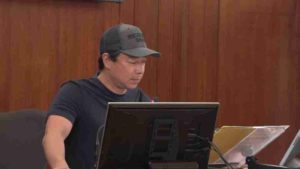
Concern was expressed recently when, presiding over an emergency Council meeting that would effectively stop the work of Vancouver City Hall’s Integrity Commissioner, Lisa Southern, Mayor Sim wore a baseball cap, T-shirt and light running shorts to Council, lessening the dignity of the office, as if somehow Mr. Sim is not the Mayor of Canada’s third largest city, but an interloper at City Hall.


Lisa Southern, Integrity Commissioner, City of Vancouver

Of course, attempting to shutter the office of the Integrity Commissioner, disallowing Commissioner Southern from investigating and weighing in, purportedly, to complaints leveled against the Mayor and members of his ABC Vancouver Council contingent, is only the latest “scandal” to befall Vancouver’s inept, part-time, decidely unserious, and let’s face it “not fit for the job” baseball cap wearing Mayor.

Former Vancouver Sun Managing Editor / publisher-editor of Business in Vancouver / 2014 candidate for Mayor of the City of Vancouver, Kirk LaPointe, weighs in on the Southern fiasco …

“What appeared to be a routine motion to get a third-party review of the mandate was amended at the meeting to propose freezing Southern’s work for an indefinite period until the review was complete. This isn’t standard practice while mandates are reviewed — usually, it’s just business as usual while the amendments are assembled — and critics immediately wondered if Council was just trying to silence the Commissioner and the complainants. (The Mayor’s chief of staff insists the review would be done swiftly.)

The amendment passed, but Council needed another recent meeting to amend the bylaw for its measure to take effect. Meantime, Southern got busy writing and releasing two reports arising from complaints. One complaint (from a Park Board Commissioner) alleged Sim and his officials tried to influence Park Board decision-making and leadership, and a second complaint (filed by Sim’s senior advisors) alleged two Park Board Commissioners contravened the City’s code of conduct by recording and sharing phone calls they made to one of them. Southern dismissed both complaints, but her reports on them splayed open the discordant municipal political culture.

It appeared we were headed for a work freeze, but on the day before the meeting, another complaint about the ABC Councillors landed with the Integrity Commissioner from an opposition Councillor, the Green Party’s Pete Fry (son of Liberal MP Hedy Fry). Details of the complaint aren’t yet public, but Fry decided to inform Councillors and the city manager of his complaint as it was filed. In doing so, he stymied Councillors from voting on the freeze of Southern’s work. After all, in being named in the complaint, they would have been conflicted and have to recuse themselves at least until the Commissioner’s office could investigate and rule on it.

Out of caution, Sim adjourned the meeting until late September, but not before chiding Fry and insisting again that his goal was an improved Integrity Commissioner’s office. Two things were most evident at the meeting: Sim’s frustration, and the surprising absence of two of his own ABC Councillors (ed. clearly unhappy, Lisa Dominato and Rebecca Bligh) from a meeting where one would think solidarity and attendance would be a whipped must.”

LaPointe raises further concerns, in writing …

“Last week, the ABC Vancouver Chair of the School Board, Victoria Jung, quit ABC Vancouver to sit an an Independent over the integrity issue; she may not be the last to leave, and each departure further fritters the momentum of the 2022 mandate most everyone thought would be so empowering.”

For some time now, there’s been a movement afoot to create a Unity Slate for the 2026 Vancouver municipal election that would be backed by the Vancouver District & Labour Council, such Unity Slate that could include Melody Ma, Council candidates from COPE (think Tanya Webking, Derrick O’Keefe), TEAM (Colleen Hardwick, Cleta Brown or Sean Nardi), former Vision Vancouver electeds (Overdose Prevention Society founder, Sarah Blyth and/or former Park Board Chair, Aaron Jasper), One City Vancouver (Dulcy Anderson and/or Tessica Truong),  Green Party electeds (Pete Fry and/or Adriane Carr), and former ABC Vancouver electeds, now Independents (Scott Jensen, and/or Laura Christensen / Brennan Bastyovanszky).

Unity Slate Mayoral candidates: BC NDP MLA Mable Elmore, or NDP MP Don Davies.