Category Archives: Vancouver Votes 2026

Kareem Allam Launches Campaign to Be Mayor of the City of Vancouver


Video provided courtesy of Bob Mackin / The Breaker News.

The information below is excerpted from an article by Nathan Caddell — son of Ian, one of VanRamblings’ best friends dating back to 1970, through until Ian’s untimely passing in 2012 at 63 years of age, far, far too young for him to leave the planet — the article published in 2023 in BC Business.

Kareem Allam was born in Vancouver to immigrants from Cairo in 1979. He spent a few years back and forth between Canada and Egypt before his family permanently moved to Richmond. After high school, he studied history at Simon Fraser University, where he found himself thrown into the political fray as a young man.

In 2005, Kareem played a pivotal role in helping Dianne Watts get elected as Mayor of Surrey, a popular and populist Mayor, and perhaps Surrey’s best Mayor ever. After that mayoral election win in 2005, Kareem worked for a number of organizations, including Terasen Gas (now FortisBC), the Vancouver Board of Trade and Fraser Health.

In 2011, Kareem took on the task of serving as Kevin Falcon’s deputy campaign manager for a BC Liberal leadership campaign in which Falcon narrowly lost to Christy Clark. “That was a bit gutting,” he recalls, noting that it was his first big loss.

About 10 years later — after Allam had spent some more years working at the aforementioned organizations as well as some time in Indigenous relations, Falcon called again. Andrew Wilkinson had just stepped down as leader of the BC Liberals after the party was trounced by the BC NDP.

“I think the party really didn’t do as well with Andrew as the leader — there was definitely a lot of intellectual capacity there, Andrew is brilliant,” says Allam. “But that ability to sort of connect was lost, which people in the party took for granted. That was what Christy [Clark] was really good at — one-on-one, she’ll make you feel like the most important person in the world.”

There was also what Allam refers to as a policy drift within the party, and he was worried that the caucus didn’t look or act like the rest of the province.

“The discussions I had with Kevin went right up the start of the race,” he remembers. “I’m like, Okay, if you run, we’ll put together a good team, we’ll win. The question is what’s going to happen next. Are you prepared for that with your family and everything?”

So, very quickly, I reached out and built the most diverse team I had ever been part of.

We wanted to signal where the party wanted to go. If you watch his campaign videos, he’s walking across rainbow crosswalks, talking about how his values haven’t changed, but his perspective has.

“It was the remaking of the image. I think it appealed to the party — let’s become younger, more urban, more progressive. It resonated in the Chinese and South Asian communities, too.”

Many Vancouverites only first heard of Kareem Allam’s name in the aftermath of the 2022 Vancouver municipal election, but current City of Vancouver Mayor Ken Sim had actually tried to recruit him for his first shot at the mayor’s chair in 2018.

“Ken asked me to run his campaign three times, I said no three times,” says Allam. “I was at a point in my career where I just wasn’t ready to take it on.” He also had his worries about the NPA: “The party had drifted to the right, and that’s just not where I or Vancouver voters were and will never be.”

In 2022, with three of the former NPA councillors joining Sim under a new party banner ABC, or A Better City — some of Sim’s closest friends, who had helped on the Falcon campaign, started calling Allam. “I was like, No guys, I’m really burnt out,” he says with what can only be described as a perpetually exhausted laugh.

Living downtown, the “sense of urban decay” encouraged Allam to eventually take on the job.

“Just starting to see people in mental health distress on the street,” says Allam. “A lot more needles, excrement, windows being shattered, all signs of a mental health crisis. Because of my time at Fraser Health, I recognized immediately what the solution was: Car 87, a mental health programme run by Coastal Health and the Vancouver Police Department that partners police officers with mental health nurses. These programmes work, there’s no doubt they work. So I went, Okay, I’m going to take this campaign on and this is what I’m going to bring to the city—100 cops, 100 mental health nurses.”

There were also key promises around housing permitting and child care.

“We played it dead centre in terms of ideology,” says Allam. “At least that’s what we tried to do. We acknowledged immediately that nine of the 11 Vancouver ridings are NDP ridings. If we didn’t get people who voted for John Horgan, no way were we going to win the election … We won almost the entire city, we won Oppenheimer Park, which nobody predicted.”

Asked whether there’s one thing that binds his campaigns together, Allam cites his status as a perceived outsider.

“This is a space that’s dominated by rich white people from the west side,” he says. “When I started in politics in the early 2000s, Arabs weren’t the most popular people. When some of the bigger campaigns were getting pulled together, they’d go, What are we going to do with Kareem, oh, you can manage the ethnics. I made the decision early on that, okay, I will do that. I built great relationships with the South Asian and Chinese communities… You want me to be in charge of the ethnics, okay great, now the ethnics are in charge of you.”

Vancouver Liberals Mayoral candidate Kareem Allam in his own words.

Vancouver Liberals, Building a Civic Party Destined to Govern

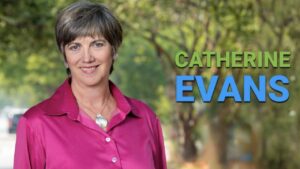
Yesterday, VanRamblings received the following e-mail from our friend and neighbour Catherine Evans — founding member and soon-to-be Vice-President of the Vancouver Liberals, multi-year Chairperson of the Vancouver Public Library Board of Directors, dedicated Vancouver Park Board Commissioner, David Eby’s appointed liaison with Vancouver City Hall on Mayor Ken Sim’s proposal to dissolve an elected Vancouver Park Board (a hateful job she told VanRamblings, also telling us she’d lost a number of friends arising from her appointment by David, to whom she is loyal), and multi-year senior constituency assistant in federal Liberal Minister of the Crown Joyce Murray’s office (where she did much good for many many people) and now, as we say above, a founding member, and soon-to-be Vice-President of, Kareem Allam’s upstart Vancouver Liberals municipal party, as the party — VanRamblings predicts — rolls to victory at the polls next year.

Here’s what Catherine wrote to us — and many many others — yesterday …


This week we learned that Vancouver City Hall will pay out $800,000 in severance to the separated former City Manager, Paul Mochrie.

This is simply OUTRAGEOUS. An $800,000 payment on Ken Sim and ABC Vancouver’s watch is unacceptable.

We have to put an end to these golden parachutes at Vancouver City Hall.

Did Ken Sim and ABC make the decision to fire the city manager? We don’t know.

Did they approve this $800,000 payment to bring in a new city manager who will follow their directions? Again – unclear.

But one thing is for sure: this is $800,000 that is being taken away from front-line programmes like cleaning up our streets, cracking down on money laundering, and enhancing community centre programmes.

It’s not surprising Ken Sim didn’t bat an eye at an $800,000 severance payment. After all, he tried to fire the city Integrity Commissioner while he was under investigation.

This culture of entitlement at Vancouver City Hall must end.

When you elect a Vancouver Liberal council in 2026, you can be sure it will.

We need to fix City Hall — and that starts with defeating Ken Sim and his ABC Council, when voters go to the polls next year for Vancouver’s 42nd civic election.

Join the Vancouver Liberals team today.

Thank you,

Catherine Evans
Founding Member, Vancouver Liberals

Human Compassion. Caring for Our Most Vulnerable in the City of Vancouver.

A truly compassionate and caring city is measured not by the prosperity of its wealthiest citizens, but by how it treats its most vulnerable.

In Vancouver, the obligation to provide supportive housing and shelter for those without a home, for seniors, for veterans, and for persons with disabilities is not a matter of charity — it is a moral and civic responsibility. No one should be left to struggle on the streets or in unsafe, unstable conditions when we have the collective capacity to do better.

Supportive housing is more than just a roof over someone’s head. It is the foundation of dignity, stability, and health. For people living with mental illness, addictions, or physical disabilities, housing linked with services can be the difference between despair and recovery.

For seniors and veterans, many of whom have given so much to our communities, supportive housing ensures they are not left behind in their later years, but instead live with safety, respect, and connection.

The crisis of homelessness in Vancouver has reached levels that demand urgent action. Yet, municipalities cannot solve this challenge alone. That is why partnership with provincial and federal governments is critical.

The City of Vancouver must continue to press senior levels of government for sustainable investments in housing, shelter, and wraparound supports. With co-ordinated effort, resources, and political will, we can build more non-market housing, expand emergency shelter capacity, and provide permanent solutions that end the cycle of homelessness rather than simply managing it.

This obligation is not just about bricks and mortar; it is about values. If we claim to be a city defined by compassion, equity, and justice, then our policies must reflect that claim. The measure of a city’s greatness lies in how it uplifts its most vulnerable residents. Vancouver has the opportunity — and the responsibility — to lead the way in showing that no one is disposable, that everyone deserves a home, and that together, across all levels of government, we can create a city where compassion is more than a slogan, but a lived reality.

The Job of a Journalist, to Comfort the Afflicted and Afflict the Comfortable

For journalists covering politics, and this very much includes VanRamblings, few tasks are more fraught than writing critically about political figures they have come to know well, respect, or even like.

In recent days, VanRamblings has been critical of Mayor Ken Sim, who we know and — to be perfectly frank, we — like (in the days to come, we will publish a supportive story of Mayor Sim). VanRamblings take no great pleasure in writing critically, or negatively, about a political figure, be it Mayor Sim, or Premier David Eby.

The above said, we acknowledge that the craft of political journalism demands objectivity, independence, and an unwavering commitment to the public interest.

Yet, the human element of this work cannot be denied. Political reporters often spend years in the company of the same politicians — interviewing them in hallways and offices, sharing off-the-record conversations, and at times even developing bonds of mutual trust. Against this backdrop, when a journalist is faced with reporting something unflattering, or deeply critical about a politician with whom they have built a rapport, the weight of the responsibility can feel crushing.

The essence of the journalist’s dilemma is a tension between personal loyalty and professional duty. On one hand, the journalist is human, and to knowingly cause another person pain — especially a hard working public figure who has chosen a career in public office — can feel cruel. On the other hand, journalism’s higher calling is to serve democracy by ensuring that those in power are held accountable.

As Finley Peter Dunne memorably wrote in his 1902 book Observations by Mr. Dooley, the role of the press is “to comfort the afflicted and afflict the comfortable.” That phrase has endured because it distills the moral purpose of journalism: to give voice to the powerless while scrutinizing the powerful. Political figures, by definition, fall into the category of the comfortable.

This mission often collides with the personal relationships that naturally develop between journalists and politicians. When a journalist covers a politician for years, the proximity can foster understanding and even admiration. A journalist may see the long hours, the sacrifices of family life, and the sincere desire by the political figure to substantively improve the lives of constituents who placed them in office.

Such observations humanize politicians, stripping away the caricatures often presented in the media. In turn, politicians may confide in journalists, trusting them with context, nuance, and moments of vulnerability that rarely make it into print, or onto your screen. Out of this closeness, empathy grows. And empathy, while essential in making reporting fair and textured, can also — from time to time — soften a journalist’s willingness to strike hard when the facts demand it.

To manage this tension, ethical journalists rely on principles that act as guardrails.

The first is the unwavering primacy of the public interest. However difficult, the journalist (and that includes VanRamblings) must remember that their ultimate loyalty is not to politicians, but to readers, viewers, and the democratic system itself. The second is transparency: by disclosing potential conflicts of interest and being open about their methods, journalists reinforce their credibility. The third is fairness. Criticism need not be cruel; it must be grounded in facts, and contextualized with nuance. In this way, the journalist can both honour their human empathy and fulfill their professional obligation.

Still, even within ethical frameworks, the emotional toll for the journalist is real.

Journalists who publish critical stories about politicians they respect may face strained relationships, loss of access, or even feelings of guilt. Yet this hardship is part of the profession. Indeed, it is in navigating these very difficulties that journalism earns its claim to being a cornerstone of democracy. If members of the press flinch from their duty, those in power would operate with impunity, and the public would be left in the dark.

The adage attributed to Dunne — “comfort the afflicted and afflict the comfortable” — serves as a guiding light precisely because it acknowledges the discomfort inherent in journalism. It is easier to flatter than to confront, easier to protect relationships than to risk them. But journalism is not meant to be easy. It is meant to be honest, courageous, and unyielding in the face of power.

For the journalist who must write critically about a political figure they admire, the pain is real, but the obligation is greater. In choosing to afflict the comfortable, even when it means hurting someone they know and admire, the journalist ultimately fulfills the noblest promise of their profession.