Category Archives: Pop Culture

#VIFF2024 | Four More Films to Be Celebrated at This Year’s Film Festival


The 43rd annual Vancouver International Film Festival, running from September 26th thru October 6th

In this second of a series on the upcoming Vancouver International Film Festival, as we did last Friday, once again today we will present four more films for you to put on your VIFF 2024 film schedule, films to take in and appreciate, films you will love, and films that will change your life immeasurably for the better.

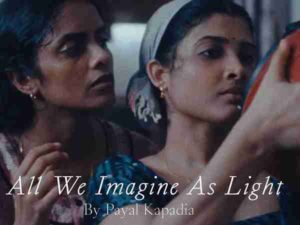
All We Imagine As Light
Saturday September 28th
9:30pm, Vancouver Playhouse

Tuesday October 1st
3pm, Vancouver Playhouse

Tickets available online for the Saturday screening. Just click on this link.

Tickets available online for the Tuesday screening. Just click on this link.

Grand Prix winner, Cannes 2024

In last week’s edition of the IndieWire Screen Talk podcast, co-host Anne Thompson — for 40 years a luminary in the film business, the beloved editor of what was once upon a time the recognized standard in journalistic film coverage,  Premiere magazine, and long Hollywood’s most accurate Oscar prognosticator — Anne Thompson enthusiastically expressed that All We Imagine As Light is her favourite film this year, the film she enthused: “an exquisite, spellbindlingly hypnotic, and poignantly lyrical symphonic film that transcends form and style, and a film of enriching humanity and gentleness, languorous eroticism, joy and sadness, presented throughout with an epiphanic, captivating beauty rarely seen on film.”
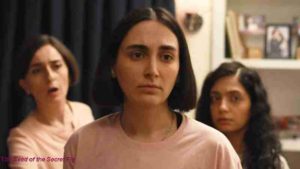
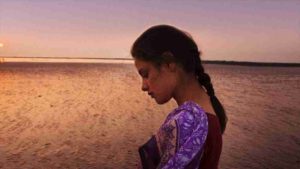
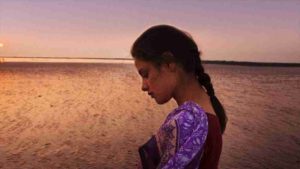
All We Imagine As Light relates the story of the lives of three women nurses who are front and centre in director Payal Kapadia’s luminous Mumbai-set drama. Prabha works long hours to avoid thinking about her husband, who left for Germany long ago and eventually stopped calling, while two of her colleagues are struggling with troubles of their own. Winner of the Grand Prix at Cannes this year (an historic first for an Indian film), the film offers a moving portrait of resistance and camaraderie, and a VIFF 2024 film that finds beauty and solace in the unlikeliest of places.

No Other Land
Saturday, September 28th
3:30pm, SFU Woodwards

Tuesday, October 1st
6:30pm, Fifth Avenue Cinema
Auditorium 3

Tickets available online for the Saturday screening. Just click on this link.

Tickets available online for the Tuesday screening. Just click on this link.

Best Documentary Award, Berlin 2024

A vital and wrenching documentary about Israel’s often barbaric efforts to expel a Palestinian community, co-directed by a collective of Israeli and Palestinian filmmakers, No Other Land offers a ground-level view of an occupation in action in this must-see, award-winning documentary.

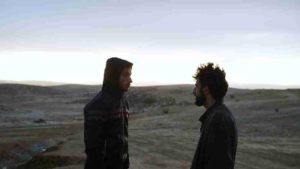
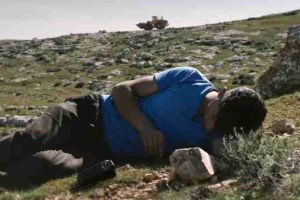
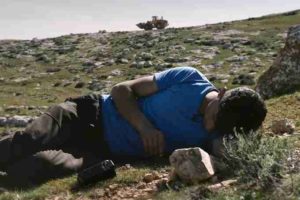
A painfully human story, the film tracks Basel Adra, a young Palestinian activist from Masafer Yatta on the southern West Bank, and the mass expulsion of his community that has been his lifelong reality. Faced with the systematic demolition of homes and schools, carried out to make room for an Israeli military training ground, residents confront a painful choice: either move away and relinquish their land or endure and try to rebuild.

With the help of Yuval Abraham, an Israeli journalist, Adra documents the evictions and organizes protests against them, even as the pair’s unequal personal situations hang over their work together. No Other Land is a vérité project and a witness testimony. It operates within the logic that visual evidence will galvanize the public to acknowledge the brutality faced by Palestinians.

Given the conditions of its production, No Other Land would be vital even in a more ragged form. But the filmmaking here is tight and considered, with nimble editing that captures the sense of time at once passing and looping back on itself. The intense, jolting impact of the film’s intense sequences of Palestinian-Israeli confrontation — often shot on phone cameras, to the consternation of army officials, and violent enough to shock many complacent fence-sitters on the issue into angry awareness — is balanced with more composed, observational scenes of Adra, his family and his neighbours trying to live an everyday life on ground that keeps getting pulled out from under them.

Hope is fading that the next generation might retain their ancestral land; if they do, they’ll likely inherit Adra’s activism with it.


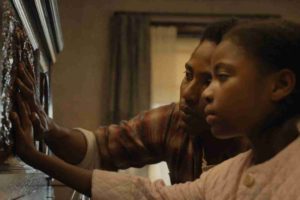
John David Washington and Skylar Smith in Malcolm Washington’s Telluride hit, The Piano Lesson.

The Piano Lesson
Monday September 30
6pm, Vancouver Playhouse

Tickets available online. Just click on this link.

Denzel Washington executive produces an adaptation of a major American play by August Wilson, directed by one son (Malcolm) and starring another (John David).

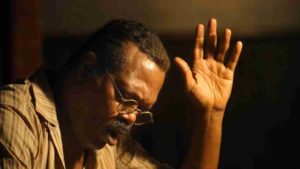
A world première at the just wrapped 2024 Telluride Film Festival, where the film débuted to an appreciative reception, Wilson’s tome centres around a unique piano currently under the watch of Bernice (Danielle Deadwyler), a single mother who lives in a Pittsburgh home she shares with her Uncle Doaker (Samuel L. Jackson reprising his Tony Award-nominated performance). Her relative peace is disturbed by the arrival of her brother Boy Willie (John David Washington) and his slightly naive friend Lymon (Ray Fisher) from Mississippi. She soon discovers that Boy Willie’s intentions do not align with her own.

At its core, The Piano Lesson is about a family attempting to come to terms with the long repercussions of slavery. Like almost all of Wilson’s work, it is a quintessentially American story peppered with characters that should resonate and spark conversation for decades to come. And, like many of Wilson’s literary contributions, translating it into the medium of cinema was no easy task. That Washington’s adaptation is the most successful so far, and in the context of his first film, no less, should be duly celebrated.

The End
Friday, October 4th
9pm, Vancouver Playhouse

Sunday, October 6th
9pm, Vancouver Playhouse

Tickets available online for the Friday screening. Just click on this link.

Tickets available online for the Sunday screening. Just click on this link.

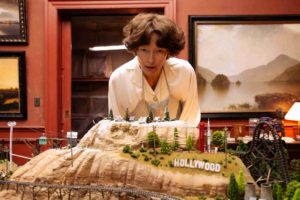
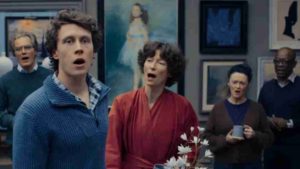
Another hit at the Telluride Film Festival arriving on our shores at VIFF 2024 in early October, Tilda Swinton and Michael Shannon sing for their lives in Joshua Oppenheimer’s post-apocalyptic musical, as the director of the acclaimed and memorably bizarre nonfiction film, 2012’s The Act of Killing — an account of the genocide in Indonesia, in which he famously persuaded the killers to re-enact their crimes on camera in gaudy cinematic vignettes — leaps into fiction with this staggering meditation on how we live with ourselves at the end of the world.
For a film whose slow-accumulating power doesn’t fully sink in until its final moments (a sweet refrain that’s all the more arresting for its anticlimactic conviction), The End doesn’t waste any time to put its cards on the table. The world as we know it is over. Something — or a chain reaction of somethings, most of them presumably climate-related — has spread across the surface of the Earth, destabilizing human civilization and making our planet unlivable. Hey, maybe British Columbia’s climate change denying leader of our province’s Conservative Party, John Rustad, oughta take in a screening of this film — you never know … it could open his eyes, and save us from four interminable years of “There’s no climate emergency. It’s all a hoax” rhetoric, and maybe save our planet, and our children’s lives.

Music | Top 100 Albums | Azure Ray | Dream Pop

Dream pop duo Azure Ray — composed of Orenda Fink and Maria Taylor — employ graceful harmonies, patient folksy song structures, and touches of electronic production to create otherworldly songs that balance tranquility and intensity.

Their self-titled 2001 début created serene sonic landscapes unusual in the pop idiom, the duo employing piano and guitar, highlighted with cello and violin arrangements, the songs on their eponymous first album presented with delicate vocals, some barely above a whisper, the pain in their vocals ever present in their lyrics as they sing of remembrances and of loss and heartbreak.

The pair met at the age of 15 while attending the Alabama School of Fine Arts in Birmingham. Together, they fronted a band called Little Red Rocket, which released two CDs, Who Did You Pay (1997) and It’s in the Sound (2000), with the band breaking up shortly after the release of the latter album.

Orenda Fink and Maria Taylor decided to head out to Athens, Georgia, striking out to find a career, forming Azure Ray soon after arrival in their new home.

“My boyfriend had just died and we had written all of these songs that were helping us cope with everything. We had a night where all of our friends and family got together. We played those songs, which later would turn into the songs on our first Azure Ray record, which we released shortly thereafter,” says Taylor.

Their self-titled début album is a quiet, gentle set of lovely and soul-searching songs that incorporate elements of folk, pop, and light electronica.

Following the unexpected death of Taylor’s boyfriend, the two musicians used songwriting as a method of coping with their grief. The intensity of that loss informed the mournful tone of the group’s earliest work in 2001, and would carry through in their sound to some degree from that point on.

The song Sleep was later featured in the 2006 Academy Award-nominated movie The Devil Wears Prada, featuring Anne Hathaway.

In February 2015, Taylor Swift included Sleep on a six-song “breakup playlist” made for a fan via her official Tumblr account.

Camilo Arturo Leslie in Pitchfork had this to say about the début album …

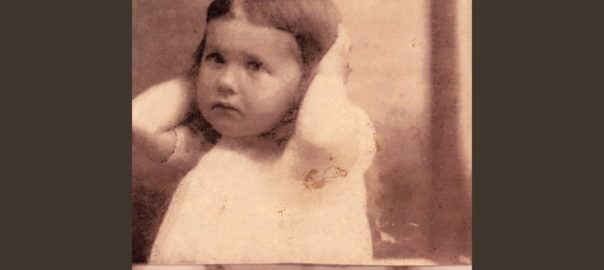
Their album cover is simple: just an old, sepia-toned photograph of a little girl. She looks like my grandmother as a child. Nostalgia and melancholy rub off the liner notes and stain your fingertips. The little girl clutches her palms to her ears and wears an inscrutable expression that vacillates from pouty to fearful to verge-of-tears, depending on what mental angle you hold it at.

Azure Ray’s indie music aesthetic is built on pretty, easy-on-the-tympanum pop acoustic guitar strumming. No fuzz, no indigestible chords, just polished production and evocative arrangements. Lap steel guitar, cello, violin, church bells, piano, brass, and tape loops make appearances on these 11 tracks.

The draw of their music is, of course, the duo’s vocals, Azure Ray’s gentle trills offering a haunting balance between the ethereal and corporeal, as well as an understated,  yet distinct feminine strength, not unlike the early music of Linda Ronstadt.

Indie label-ghetto obscurity has kept Azure Ray from attaining massive popularity.

But an indie-ghetto habitué such as yourself shouldn’t have any trouble digging up a copy of Azure Ray’s début CD, or maybe a vinyl copy.

Red Cat Records on Main Street, or Zulu Records on West 4th Avenue, if they don’t have it in stock, could certainly order it for you.

Beautiful, expertly crafted pop songs keep a room in your heart’s hotel (under an assumed name, naturally).

You could also listen to Azure Ray on Spotify, or Apple or Amazon Music, or purchase their music from either of the two latter providers of digital music.

Music Sundays | Top 100 Albums | Todd Rundgren’s Auspicious 1972 Début

Dating back to the late 1960s, through until today, I have often found employment as a music critic.

One of the great delights of my young life was to walk onto the property of Warner Bros. or Capitol Records, and be taken into the warehouse in behind the offices, leaving the premises with one hundred or more new albums, all ready to return to the home Cathy and I shared at Simon Fraser University.

From those days til today, my love for music, for discovering new music has known no bounds, as will remain the case through the end of my days.

Of course, I was very lucky — as were all members of the boom generation — to grow up in the era of The Beatles, and the rush of new music coming out of the UK, and down south out of Los Angeles. These were halcyon days of discovery, more often than not enhanced by the intake of cannabis (there is hardly any greater joy than listening to music stoned).

One of my early discoveries was Todd Rundgren, whose music career began in 1967 at the age of 19 with the Philadephia-based garage rock band, Nazz.

Over the next four years, Nazz released three albums, all to little acclaim, prompting Rundgren to leave the group, move to New York, and educate himself in the fine arts of audio engineering and production.

Upon arriving in New York, Rundgren was soon signed by Ampex Records, where he began work producing for various rock groups of the day.

1972 proved to be a critically important year for Todd Rundgren.

After signing with Bearsville Records — a recording studio started in 1969 by legendary music impresario Albert Grossman, manager of Bob Dylan, The Band, and Janis Joplin — Rundgren’s musical career took off into the stratosphere.

A few years back, a friend asked me, “So, what kind of music do you like?”

Today’s post constitutes one of a series of columns I’ve been writing on the Top 100 début albums of the past 75 years, music that has both changed and informed my life, my love of almost all musical genres also knowing no bounds.

I love life. I love music.

Today’s Music Sunday column tracks the early work of Todd Rundgren, and his multi-platinum solo, self-produced début album, Something/Anything?

Early in 1972, soon after signing on with Albert Grossman, one Friday afternoon early in the year, Todd Rundgren was in the Bearsville Studio offices for a pre-production meeting for his upcoming album the studio intended to record. All went well at the meeting, and at the 5 o’ clock hour, as the cleaning crew arrived, Grossman prepared to close the studio for the weekend.

Rundgren said, “I’ll have the cleaners let me out. I’m heading to the washroom.” Everyone bid their adieu, going home to their families.

But not Todd Rundgren. Instead, Rundgren hid out in a closet and slept for four hours, readying himself for the marathon production weekend ahead.

The cleaners left shortly before 9pm, when a sleepy Todd Rundgren emerged from his closet home. What occurred over the next fifty-seven and one half hours is part of rock and roll history.

From 9pm on that Friday night, until 6:30am Monday morning, Todd Rundgren wrote, produced, mixed, sang and played guitars, keyboards and all other instruments to produce the groundbreaking multi-platinum, multi-Grammy award winning hit machine, Something/Anything?

Every voice is Rundgren’s, every instrument played by the nascent songwriter-singer-producer, Rundgren over the weekend innovating on the recently acquired 8-track production studio equipment in ways previously unheard of and unimagined, writing a new chapter in the ongoing history of rock ‘n roll.

Twenty-five songs on a two disc album, recorded at a rate of under one fully produced song every three hours. When Bearsville Studio staff and executives arrived at their offices on Monday morning, they found Rundgren passed out, a master tape, track list and album cover art work on the console.

Over the next three weeks, working with Rundgren, studio engineers fine-tuned the 25 songs, the double Something/Anything? album released to critical acclaim in April 1972, out-selling every other album that year.

Something/Anything? spawned a half dozen chart topping hits, including I Saw the Light, and a remake of the Nazz near-hit Hello It’s Me, which shot to No. 5 in the week it was released. As a reminder: both songs featured Todd Rundgren producing, as well as on all vocals and instruments.

It Wouldn’t Have Made Any Difference was the third smash hit off Something / Anything? to top the Billboard charts in the early autumn of that year.

A dozen years later my children and I lived together at SFU with a woman, a younger doppelgänger for my now ex-wife, dubbed by my friends, and referred to by my children as Cathy 2 — as my friends said, “the sane Cathy,” and so she was.

One day when I was off teaching class, Cathy 2 put on the Rundgren album.

When I arrived home to our two-bedroom apartment at Louis Riel House, Cathy 2 greeted me, smothering me in kisses, excitedly exclaiming …

“Raymond, Raymond, I’ve spent the entire afternoon listening to Todd Rundgren’s Something/Anything? It’s gorgeous, it’s groundbreaking, I’ve never heard anything like it. I think I’m in love with Todd Rundgren!”

And so she was, and so should we all be.

On a closing note, and to provide a bit more background on Todd Rundgren.

In 1972, Rundgren began a relationship with model Bebe Buell. During a break in their relationship, Buell had a brief relationship with Aerosmith’s Steven Tyler, which resulted in an unplanned pregnancy.

On July 1, 1977, Buell gave birth to Liv Tyler, the future model and actress.


Todd Rundgren raised actress Liv Tyler as his daughter for the first 18 years of her life. Even when she became aware that Steven Tyler was her father, she maintained Rundgren as one of her two fathers.

To protect the child from Tyler’s drug addiction, Buell claimed that Todd Rundgren was the biological father, and named the child Liv Rundgren, Todd Rundgren raising her as his daughter.

At age fifteen, Liv learned that Steven Tyler was her biological father.

Even so, Liv Tyler still calls Todd Rundgren her father, and still maintains a very close relationship with the now 76-year-old musician.

#Cinema | Ageless Auteurs Veteran Directors Set The Standard in Hollywood


81-year-old Academy Award winning American director Martin Scorcese

In an industry often perceived as dominated by youth and the next big thing, the continuing contributions of directors over 65 years of age are a testament to the timeless nature of cinematic storytelling.

Far from being sidelined, these seasoned filmmakers bring a depth of experience, wisdom, and a unique perspective that enriches the cinematic landscape.

Hollywood and global cinema alike benefit immensely from their ongoing work, as they challenge the norms and push creative boundaries well into their later years.

Mark Twain once quipped, “Age is a case of mind over matter. If you don’t mind it, it doesn’t matter.”

When you consider the work of acclaimed American director Martin Scorsese, age certainly isn’t making a difference.

After landing 10 Oscar nominations for last year’s historical crime epic Killers of the Flower Moon, the 81-year-old director has mapped out his next several projects. Sources say he plans to shoot two films back to back: the first about Jesus, the second a Frank Sinatra biopic.

Scorsese isn’t the only director from the over-75 set who is doing some of his most ambitious work.


Adam Driver and Nathalie Emmanuel star in Francis Ford Coppola’s new film, Megalopolis

The Cannes competition lineup this year featured three of his compatriots: 85-year-old Francis Ford Coppola (with Megalopolis), 81-year-old Canadian director David Cronenberg (The Shrouds), and 77-year-old Paul Schrader (Oh, Canada).

Their productive later years are remarkable considering Hollywood hasn’t always been kind to aging auteurs — Billy Wilder (Some Like It Hot, The Apartment), for instance, spent his final two decades struggling to get one more movie produced.

“I’m sure most artists want to keep working, but sometimes you’re not fortunate enough, lucky enough, good enough to stay in the arena,” Schrader, who wrote the screenplay for Scorsese’s seminal 1976 film Taxi Driver, told journalists at Cannes.

“And if you don’t have that creative motivation, you’re just gonna get called out as an emblem of something that used to be. But I had to keep working. I had some COVID health problems, and every time I thought that I might die, I would get a new idea.”

At 86, Ridley Scott is literally staying in the arena.


86-year-old British director Ridley Scott readies for the release of a sequel to his 2000 film, Gladiator

Footage from his long-awaited return to the Colosseum for a Gladiator sequel emerged as a favourite at CinemaCon this year, where Paramount showed epic scenes to movie theatre executives, dominating the headlines out of Las Vegas.

Perhaps because Scott continues to work with top-notch below-the-line crew members, the swords-and-sandals saga, which stars Paul Mescal and Denzel Washington, looked more finished seven months ahead of its November 22 release than some superhero tentpoles on opening night.

“Ridley Scott is the master of creating the kinds of movie spectacles that the cinematic experience was created for and is among the most tenacious and vibrant auteurs working today,” Paramount CEO Brian Robbins told the crowd at the April 11 presentation. Robbins told those gathered that he will be working with Scott on his next movie, a Bee Gees biopic for Paramount.


77-year-old celebrated American director, Steven Spielberg, readies to film his next movie

For his part, Steven Spielberg, at age 77, is also staying busy. Spielberg is reportedly already at work on his next project, a UFO film based on his own original idea. David Koepp is writing the screenplay, sources say.

But maybe no feat of career longevity is as impressive as that of Clint Eastwood.
The 93-year-old director just wrapped postproduction on Juror No. 2.

Insiders say Warner Bros. is thrilled by what it has seen of the Nicholas Hoult thriller about a murder trial juror who realizes he may be at fault for the victim’s death. If the film is ultimately embraced, that will offer a fitting plot twist considering several studios passed on the low-risk, low-budget film.


Clint Eastwood began his career in Hollywood in 1954, 70 years ago this year. And he’s still active!

Even at 93, Eastwood should never be counted out.


87-year-old British auteur Ken Loach’s latest film, The Old Oak — released earlier this year — has emerged as one of VanRamblings’ favourite films of 2024. A must-watch. Available On Demand.

Across the Atlantic, British director Ken Loach, 87, remains a powerful voice in cinema. Renowned for his socially conscious films, Loach’s most recent work, The Old Oak won accolades at Cannes in May, the title referring to the last pub standing in a once thriving mining village in northern England, a gathering space for a community that has fallen on hard times.

Other notable directors of an age …

Margarethe von Trotta, 81. The leading New German Cinema director just released her latest, Ingeborg Bachmann — Journey Into the Desert.

Werner Herzog, 81. The acclaimed German director has been making films since the 1960s.

Stephen Frears, 82. The British director of The Queen and Dangerous Liaisons, released The Lost King earlier this year.

Brian De Palma, 83. The Untouchables and Carrie director is in pre-production for his next film, Sweet Vengeance, a murder mystery.


Master Japanese filmmaker, and co-founder of Studio Ghibli, 82-years-young Hayao Miyazaki

In Japan, Hayao Miyazaki, co-founder of Studio Ghibli, at 82, is once again coming out of retirement to direct How Do You Live?

Miyazaki’s films, characterized by their imaginative storytelling and profound emotional depth, have left an indelible mark on animation and global cinema. Miyazaki’s return to filmmaking is eagerly anticipated by fans worldwide, underscoring the lasting impact of his creative genius.

The continued success of these directors challenges ageist assumptions within the industry and society at large.

Their work exemplifies how experience can enhance artistic expression, offering rich, nuanced narratives that often elude younger filmmakers. Moreover, their ability to adapt to technological advancements and changing audience tastes underscores their relevance in a rapidly evolving industry.

These directors also serve as mentors and role models, guiding the next generation of filmmakers. Their careers offer valuable lessons in perseverance, adaptability, and the relentless pursuit of excellence. The stories they tell and the methods they employ reflect decades of accumulated knowledge and insights, providing a treasure trove of learning for aspiring directors.

In a broader sense, the ongoing contributions of directors over 65 highlight the importance of diversity in storytelling.

Just as the industry has made strides toward greater inclusivity in terms of race, gender, and sexuality, recognizing and valuing the contributions of older filmmakers is crucial. The work of elder directors adds richness and diversity to the cinematic tapestry, ensuring that film remains a medium that reflects the full spectrum of human experience.