Category Archives: Pop Culture

#BCPoli | The Impact of The Age of Grievance and Complaint Culture in 2024

The age of grievance and the culture of complaint have become defining features of contemporary political discourse in Canada and beyond.

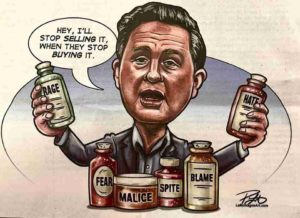
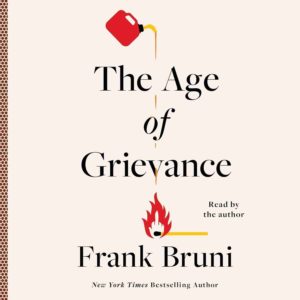
In Frank Bruni’s The Age of Grievance, the New York Times’ Opinion columnist and Duke University professor, outlines how political figures have weaponized grievances to galvanize support, shift public sentiment, and redirect anger into votes.

This culture of dissatisfaction, cynicism, and victimhood has seeped into the Canadian political landscape, informing the strategies of major conservative figures, including Pierre Poilievre, the leader of the Conservative Party of Canada, and John Rustad, leader of the Conservative Party of British Columbia.

Understanding how this age of grievance shapes political campaigns is crucial to grasping the shifting nature of voter behaviour, particularly as it pertains to the rise of far-right or populist sentiments.

Pierre Poilievre and the Politics of Grievance

Poilievre has skillfully harnessed the culture of grievance as a key political strategy.

At the heart of Poilievre’s appeal is his ability to frame issues as part of a broader narrative where everyday Canadians have been wronged by government elites, bureaucrats, or a distant political class. By positioning himself as the voice of “common sense,” he taps into frustrations felt by many Canadians — whether it’s over affordability, housing, inflation, or perceived loss of personal freedoms.

Bruni’s The Age of Grievance highlights how figures like Poilievre manipulate these sentiments to create a sense of urgency.

Poilievre frequently paints a picture of a country under siege by wokeism, government overreach, and inflationary policies. He taps into a sense of national victimhood, where Canadian values and identity are under attack, positioning himself as the solution to restore these lost values. This isn’t merely a campaign tactic, but a broader effort to reshape Canadian political consciousness.

Bruni notes that “in a grievance-fueled culture, anger becomes the rallying cry, and solutions are often secondary to the preservation of outrage.”

This applies perfectly to Poilievre’s style.

His criticism of Prime Minister Justin Trudeau’s handling of the economy, energy policy, and pandemic restrictions follows a pattern of inflaming grievances rather than offering concrete, nuanced solutions. In doing so, Poilievre consolidates support not by offering optimism, but by fanning the flames of dissatisfaction.

British Columbia and the Politics of Complaint

In British Columbia, the age of grievance has similarly found fertile ground.

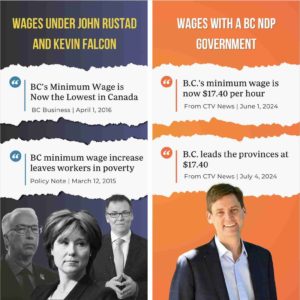
The current provincial election has become a battleground for competing narratives of grievance, with John Rustad of the BC Conservative Party emerging as a central figure exploiting this atmosphere for political gain.

British Columbia, a province often associated with progressive politics, has seen increasing polarization. The polarization between the BC New Democratic Party (NDP), which has governed for years, and rising conservative forces, such as Rustad’s BC Conservatives, reflects the influence of a growing culture of dissatisfaction. Voter frustration over affordability, housing crises, healthcare shortages, and environmental policies has coalesced into a broader sense of disillusionment with the political establishment.

Rustad’s campaign has capitalized on this sense of grievance, positioning his party as the “real alternative” to the governing NDP.

Rustad frames the government as “out-of-touch elites” who care more about woke policies, such as climate action, than about the daily struggles of British Columbians. In echoing Poilievre’s national campaign strategy, Rustad paints a picture of a province where citizens have been ignored and betrayed by the government. By presenting himself as the antidote to this betrayal, he has tapped into a well of voter dissatisfaction.

As Bruni notes, “leaders who exploit grievances do not seek resolution, but rather fuel the perception of perpetual crisis, ensuring that discontent becomes a permanent political currency.” Rustad’s campaign exemplifies this. He doesn’t offer a transformative vision for British Columbia but rather sustains a sense of crisis — over taxes, land use, or environmental regulations — that keeps grievances alive.

The Grievance Mindset and Populist Shift

The age of grievance has had a marked impact on voter behaviour, not only in British Columbia but across North America.

Many voters who feel alienated or left behind by the status quo are drawn to conservative or even far-right parties that exploit their frustrations. This is evident in how Rustad’s party, much like Poilievre’s federal campaign, attracts voters by offering simple answers to complex problems, such as opposing carbon taxes or claiming that crime and drug use are rampant due to “soft-on-crime” policies.

Bruni warns that in such a grievance-driven environment, “voters can be seduced by voices that promise a return to simpler times, even when those promises are illusory.” This has been true for British Columbia voters who, dissatisfied with the NDP’s handling of the housing crisis or healthcare system, may turn toward a party that doesn’t represent their best interests but resonates with their frustrations.

The age of grievance thus contributes to a political atmosphere where voters are more likely to make choices based on anger or cynicism rather than long-term policy benefits. This phenomenon explains why populist and even far-right movements, which exploit dissatisfaction but offer few concrete solutions, have gained traction even among voters who might otherwise support progressive policies.

David Eby and the Progressive Response

For David Eby and the British Columbia New Democratic Party, the challenge is how to counter this grievance-fueled narrative.

The key may lie in offering a vision of hope and forward-thinking solutions, rather than merely responding to grievances with defensive rhetoric. As Bruni suggests, “the antidote to grievance is not more grievance, but a reassertion of optimism and constructive action.”

Eby’s task is to convince voters that their frustrations — though real — are best addressed through thoughtful governance, rather than reactionary policies.

By focusing on housing, healthcare, and climate action, David Eby can remind voters that while grievances may persist, real solutions require sustained effort and collaboration. Moreover, Eby must highlight the dangers of grievance politics, pointing out that figures like Rustad are more interested in sustaining voter anger than in solving the province’s problems.

The age of grievance has become a dominant force in both federal and provincial politics in Canada. Conservative leaders like Pierre Poilievre and John Rustad have capitalized on this culture to galvanize support, while progressive parties like the B.C. New Democrats must find ways to navigate this political landscape without succumbing to the cynicism that defines it.

By offering solutions that go beyond complaint, leaders like David Eby can potentially counter the divisive forces that have emerged in this era of grievance-driven politics, and form government post Election Day, on Saturday, October 19th.

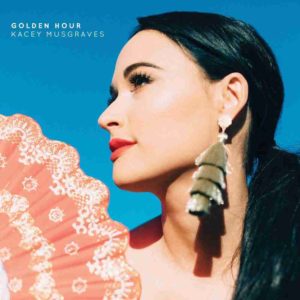
Sunday Music | Kacey Musgraves | 2018’s The Golden Hour Album | Top 100 of the Past 75 Years

Kacey Musgraves, born on August 21, 1988, in Golden, Texas, is one of contemporary music’s most original and respected voices, known for her ability to craft lyrics that are witty, vulnerable, and unflinchingly honest.

Musgraves’ unique blend of traditional country roots, modern sensibilities, and genre-defying experimentation has positioned her as a standout in both the country and pop music scenes.

Musgraves’ breakthrough came with her major-label début album Same Trailer, Different Park in 2013. The album featured the single Merry Go ‘Round, a melancholy portrayal of small-town life, and the cheeky, rebellious anthem Follow Your Arrow, which encouraged people to live authentically regardless of societal norms.

Her lyrics, which tackled themes of non-conformity, marijuana use, and same-sex relationships, were bold for the country genre, known for its traditional values. However, her authenticity resonated with listeners, earning comparisons to past pioneers like Willie Nelson and Dolly Parton.

Musgraves’ rise to prominence in the early 2010s established her as a sharp lyricist and a trailblazer in country music, and her 2018 album Golden Hour cemented her status as a cross-genre force, earning her critical acclaim and commercial success.

While Musgraves had already earned significant acclaim with her earlier albums, it was Golden Hour that catapulted her to a new level of fame.

Released in March 2018, Golden Hour marked a departure from her previous work, blending country with elements of pop, disco, and electronic music. The result was a dreamy, genre-blurring collection of songs that felt both fresh and timeless. Musgraves has referred to the album as her “space country” project, reflecting its expansive sound and experimental approach.

Much of Golden Hour was influenced by Musgraves’ personal life, particularly her relationship with then-husband Ruston Kelly.

The album’s themes of love, heartache, and self-discovery resonated with listeners across genres. Songs like Slow Burn and Butterflies captured the warmth of new love, while tracks like Space Cowboy and Happy & Sad explored the bittersweet and often contradictory nature of human emotions.

Kacey Musgravesthird album goes down so smoothly that it might not even scan as a total reinvention. Throughout Golden Hour, the East Texas singer-songwriter is radiant, awestruck, taking the scenic route to the bar just for the hell of it.

After Musgraves’ previous two albums, which felt like they were cut from the same home-sewn flannel cloth, in 2018 she ventured beyond the front-porch hum of country music. On Golden Hour, Musgraves employed strings, vocoders, disco beats. And if this sounds like a left turn for the lovable cynic who once characterized the world as an absurd beauty contest, a bad party, and a toxic boys’ club, well, that’s kinda the point.

Since 2015’s Pageant Material, the then 29-year-old singer-songwriter has changed her perspective.

On Golden Hour, everything sprawls and swells and gushes, a gaping sky that makes the sonic landscapes of her previous albums feel like mere set dressing. The result is Musgraves’ most accessible record and her most ambitious, a magnetic, comfortable culmination of her pop and country instincts.

The album’s production, handled by Musgraves alongside Daniel Tashian and Ian Fitchuk, was a critical element of its success.

The lush arrangements, ethereal synths, and subtle country flourishes created a sonic landscape that felt both intimate and expansive.

Golden Hour was a striking departure from mainstream country music, which at the time was dominated by bro-country and pop-country trends. Instead, Musgraves embraced a more eclectic and nuanced sound that allowed her to transcend genre boundaries.

This genre fluidity was key to Musgraves’ crossover success.

Kacey Musgraves stands out in the crowded landscape of modern music arising from her ability to remain true to herself while pushing boundaries. Her lyrics are clever, often laced with humour, but they never shy away from exploring the depths of human emotion.

In a world where many artists feel pressure to conform to commercial trends, Musgraves’ authenticity is refreshing. Her refusal to be boxed into any one genre has allowed her to build a diverse fan base, and her music continues to resonate with listeners across demographics.

As a result, she has become a symbol of creative freedom and artistic integrity in an industry that often prioritizes marketability over originality.

In Golden Hour, Kacey Musgraves created a work of art that transcended the limitations of genre, and in doing so, she solidified her place as one of the most innovative and respected artists of her generation.

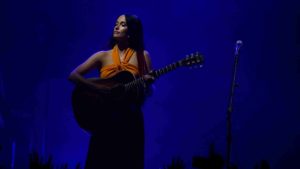
Now, here’s some good news: Kacey Musgraves will play Rogers Arena in Vancouver this upcoming Thursday, September 19th, with the concert getting underway at 7:30pm. Ticket prices range from $73.80 to $247.40.

#VIFF24 | VanRamblings’ Vancouver International Film Festival Column

The 43rd Annual Vancouver International Film Festival

Since opening in 1981, with a handful of films in just one theatre — the lost and lamented Ridge Theatre, at 16th and Arbutus — the Vancouver International Film Festival has taken on a vital role for local filmmakers and film lovers.

As it celebrates its 43rd anniversary this year, today VanRamblings will provide insight into the award-winning films that will screen at VIFF this year, as well as provide information on this year’s venues, ticket acquisition, and more.

With 150 feature films running over 11 days, although VIFF 2024 isn’t as complex as once was the case — as it runs from September 26th thru October 6th, it’s now shorter than the 16 day length it maintained for many years — navigating the sprawling festival can still be a little daunting.

VIFF is best approached like a multi-country overseas vacation: with pre-planning, and lots of it.

What movies to choose?

On viff.org , you’ll find films organized by programme (Showcase, Panorama, Vanguard, Northern Lights, Insights, Spectrum, Portrait and Altered States) by country of origin, by genre, and  by director. See what intrigues you!

Also, check to see which films have a guest attending (noted on each film’s individual page), which might mean an interesting Q&A.

You can also peruse the hard copy VIFF guide, which will soon be available at your favourite local bookstore, at regional and neighbourhood libraries and the nine venues where films will be screened, as well as at coffee shops across the Metro Vancouver region. Note should be made that the most accurate and up-to-date  information about guests is available online only.

Award-Winning Must-See Films

(Underlined titles of films link to the VIFF page for the film, which will provide you with more information on the film, as well as allow you the opportunity to buy tickets for the film, if you’re of a mind to do so).

Anora. Sean Baker’s Anora won the Palme d’Or at Cannes, in the director’s most searing and shattering film yet, with a breakout performance from Mikey Madison. Not to mention, a thoroughly fun and provocative time at the movies.

All We Imagine as Light. Grand Prix winner, Cannes 2024. IndieWire’s Anne Thompson says this film is her favourite this year, as she exclaims: “All We Imagine is an exquisite, spellbindingly hypnotic, a poignantly lyrical film that transcends form and style, full of enriching humanity and gentleness, joy and sadness and languorous eroticism, with a captivating beauty rarely seen on film.”

The Seed of the Sacred Fig. Iranian director Mohammad Rasoulof’s Special Jury and FIPRESCI Prize winner at Cannes offers a mesmerizingly gripping parable in which paranoia, misogyny and rage of the Iranian state are mapped seamlessly onto an ordinary family unit.

Conclave. Oscar nominees Ralph Fiennes and Stanley Tucci lead a brilliant ensemble cast in All Quiet on the Western Front director Edward Berger’s adaption of Robert Harris’ high-stakes drama, in which Cardinals gather at the Vatican to elect a new Pope, the film emerging as a psychologically complex morality tale.

The End. Tilda Swinton and Michael Shannon sing for their lives in Joshua Oppenheimer’s post-apocalyptic musical, with the director offering a staggering meditation on how we live with ourselves at the end of the world.

No Other Land. Best Documentary Award, Berlin 2024. A vital and wrenching documentary about Israel’s often barbaric efforts to expel a Palestinian community, co-directed by a collective of Israeli and Palestinian filmmakers, No Other Land offers a ground-level view of an occupation in action.

How and where do I buy tickets?

The easiest way to purchase tickets is to go online to viff.org, put the name of the film you’re interested in in the search engine, and click on Buy — from there it’s easy, allowing you to print your tickets at home. Or, you can call the Festival Infoline at 604-683-3456 from noon til 6 p.m. daily through October 6th. (Online is quicker.) Note that there is a service charge for online and phone orders: $1 per single ticket, up to $8 per order.

Required by the provincial government (because VIFF films screen unrated) you’ll need to purchase a one-time $2 VIFF membership.

Tickets can be purchased at the venues, as well, during operating hours. As of September 26th, all festival venues (VIFF Centre, The Chan Centre for Performing Arts, The Cinematheque, Fifth Avenue Cinemas, Cineplex International Village, The Orpheum, The Rio Theatre, SFU Goldcorp, and The Vancouver Playhouse) will have a box office open daily, one hour before the day’s first screening.

How early do I have to show up?

If you’re picky about where you sit, the earlier the better: An hour isn’t too early for a film that’s popular. But even if you don’t mind being in the back (or front) row, show up at least 15 minutes before showtime: At the 10-minute mark, unoccupied seats are counted and sold to those in the standby line.

What line do I stand in?

Each VIFF screening will have three separate queues: a pass-holder line (for those with passes hanging around their necks), a ticket-holders line (for those with tickets in hand) and a rush line. Standby tickets, for screenings that are sold out, go on sale 10 minutes before showtime, at full price.

Stand in the wrong line at your peril. (There will be signage, and helpful VIFF volunteers in VIFF T-shirts, if you’re confused.)

Can I bring my lunch?

Technically, no; VIFF venues do not allow outside food. Theoretically, yes, if you’re discreet about it. (Or just eat while waiting in line.)

Can I save a seat for a friend?

If you’re saving a seat at a sold-out screening, you might be asked to relinquish it if your friend is late, so tell them not to be.

What about bus routes and parking?

Translink / Coast Mountain buses are the best way to get around, although most of the venues are within walking distance of one another. Skytrain will whisk you to The Rio in no time flat. There’s parking at Cineplex International Village, but you’re going to want to check in with Festival staff (they’ll be wearing bright yellow VIFF T-shirts) to register your vehicle.

What about crowds?

There will be crowds, particularly at the better-known films; not a lot you can do about that. Maybe you’ll meet somebody nice in line; it happens often. Weekday screenings generally have shorter lines, particularly for less well-known films.

Music | Top 100 Albums | Imogen Heap Creates A Career, and Endures

Imogen Heap has the kind of fame that’s mostly invisible.

Throughout her three decades long career, the Grammy Award-winning British musician has merged intimate, sweet, stirring vocals fused with gently sweeping electronic soundscapes into lilting, alluring, pulsating and ethereal synthesized, yet organic pop that is uniformly and captivatingly gorgeous. Perhaps not the best known music artist, Imogen Heap maintains a loyal fan base that encompasses both her devoted listeners, and music critics across every continent on the planet.

Thus, Imogen Heap has managed to build herself a successful, if low key, career that has endured for the past quarter century and more, as she remains true to herself, a self-produced artist popular on the indie concert circuit across the globe.

Born Imogen Jennifer Jane Heap in London, she was raised in Essex, where she studied classical piano from a young age, writing songs in her early teens.

While attending boarding school in her mid-teens, Imogen Heap discovered alternative pop/rock, Euro-pop, and electronica, a musical mixture that effectively ended her desire to become a classical instrumentalist.

In the musical era of the 1990s when talented, attractive young female artists were breaking out into momentous world wide fame — think, Britney Spears, Fiona Apple, Tori Amos, Aaliyah and Alanis Morissette, to name just a few outstanding artists — record companies were on the lookout for upcoming new talent.

Thus, a young 17-year-old Imogen Heap was discovered, promoted and ferried across the globe to meet music critics in major cities across North America.

VanRamblings was invited to an intimate concert featuring Ms. Heap that took place on a late evening in 1993, in the basement of the Georgia Hotel, where a gangly young Ms. Heap played a handful of songs she’d written, after which the music critics on hand were afforded an opportunity to meet with her for an interview, accompanied by a local Warner Bros. A&R rep, in a room just off the concert stage.

Long story short, Imogen Heap’s début release was not a hit, the album fading into history, and, should you look online, not included in Ms. Heap’s discography.

Although Imogen Heap’s 1998 album iMegaphone received some acclaim — Ms. Heap’s music reflecting influences including Kate Bush, Annie Lennox, and Björk —  the album did not sell well, as Ms. Heap lost her contract with Almo Sounds.

All was not lost, though, as Ms. Heap’s transcendently lovely vocals caught the attention of Guy Sigsworth, Madonna’s producer at the time — who produced one of the songs on iMegaphone —  who kept in touch with her after the album’s release.

In 2000, Guy Sigsworth suggested a collaboration.

In the early 2000s, Heap and Sigsworth began working together, sharing equal responsibilities in the collaborative project Frou Frou.

Despite the duo’s lighthearted name, Frou Frou utilized electronics to create an atmospheric, dreamy, and nuanced sound. MCA/Universal signed the group in 2001, and Heap temporarily put her solo career on hold.

Frou Frou released the album Details in 2002.

MCA/Universal arranged for a global concert series for Imogen Heap to support the album. Details sold like mad for Frou Frou across the European continent, becoming a massive hit for the duo, with the song Let Go topping the charts, while also being included on the award-winning Garden State soundtrack.

The success of Frou Frou allowed Imogen Heap to return to her first love: a self-produced, solo career. As Ms. Heap continued to tour across North and South America, and Europe, Frou Frou became a hit only on the European continent, most particularly in France, where Imogen Heap became a certified star.

Frou Frou and Details never took off anywhere else on the planet, save Europe, although the success of the album did serve to pay Heap’s bills, while allowing her to refocus on her career as a solo artist.

From 2003 through 2005, Imogen Heap taught herself the intricacies of the complex music production software Pro Tools (also used by Finneas O’Connell in the production of Billie Eilish’s début album).


Track 2, Goodnight and Go, from Imogen Heap’s 2005 smash hit album, Speak for Yourself.

By 2004, Frou Frou had disbanded, as Heap turned her attention to creating her first, fully self-produced album, which would become the massive hit, Speak for Yourself, which she produced over the period of a year and a half in her kitchen, responsible for every intimate detail of the album.


Track 5, Hide and Seek, from Imogen Heap’s 2005 smash hit album, Speak for Yourself.

The first smash hit off of Speak for Yourself, which sold wildly across the globe, gaining immense radio play, was Hide and Seek, the song rising to number one on the indie charts across Europe, and North and South America. Hide and Seek stops the show midway through; it’s expressly designed to make you come to a dead stop on your drive or walk like it did when it popped up in The O.C.

An a cappella blend of Heap’s hyper-layered pipes, it’s sonic trickery makes the song lap itself; there’s so much synthetic beauty in there that it comes off sounding organic anyway. Besides, it’s uniformly gorgeous; no beat required.


Imogen Heap’s voice, an ephemeral elastic thing that more often than not disappears into the music, as is very much the case with Just for Now, Track 9 on Ms. Heap’s 2005 album, Speak for Yourself.

Speak for Yourself ends with the rather melancholy The Moment I Said It, the song notable for its contrasting melodies that hint at greater possibilities in the future.


Track 12, The Moment I Said It, from Imogen Heap’s 2005 smash hit album, Speak for Yourself.