Category Archives: Canada

#CdnPoli | Why Did Prime Minister Justin Trudeau Call a Summer Election?

The most frequently asked question over the course, and throughout the duration, of the summer election called by the Prime Minister: why did Justin Trudeau call a needless summer election — particularly when, on Election Day, the final electoral result was a continuing minority Liberal government?

Internal Liberal Party polling conducted last spring, and throughout the summer, registered Justin Trudeau and the Liberals with a 45% approval rating, with Trudeau one of the most well-liked and respected Canadian Prime Ministers since Confederation. In the summer, within the Prime Minister’s office, the pressure on Trudeau to call a snap election was immense.

Prior to the 2021 federal election, the Liberal Party held 154 seats in a Parliament of 338 members. Pragmatically, what that meant for the Liberals was that all of the Committees of the House had majority Opposition party participation, and more importantly, decision-making power that could be — and more often than not was — wielded by the Opposition as a cudgel to serve their own partisan interests: the Conservatives, NDP, Bloc Québécois, and Greens, those parties less interested in the welfare of the Canadian people than scoring points against the government.

As they did during the election, in a display of rank partisanship and future, hoped-for increased electoral success,  and possibly government, the elected members of Erin O’Toole’s Conservative Party and Jagmeet Singh’s NDP colluded to make the life of the government as miserable as possible, using the committees not simply to hold the government to account, but to do all in their power to create an impression that Justin Trudeau’s government was both ‘do nothing’, and corrupt.

Little wonder Prime Minister Justin Trudeau wanted to call a summer election.

Why did Justin Trudeau call a summer election, then? To recap …

  • Throughout the first 8 months of the year, the Liberals had been riding high in the polls, Canadians grateful for the quick action by Prime Minister Justin Trudeau to secure the economy, through the introduction of CERB for Canadians who found themselves out of work due to the pandemic; the introduction of both a seniors grant for the poorest seniors, and an ongoing monthly supplement to the Canada Child Benefit to help families weather the storm of the pandemic; and the introduction of any number of business support programmes to keep the Canadian economy afloat. And, of course, securing the tens of millions of COVID-19 vaccine doses that would keep Canadians safe, and help over time to bring COVID-19 to an end. Thus far, more than 60 million doses of the mRNA Pfizer, Moderna, and the AstraZenica and Janssen vaccines have been administered to Canadians 12+, with millions more doses to be made available for children aged 5 to 12 years;
  • Focus on the economy and the health of Canadians rather than continue to allow the Conservatives and the NDP to play the sort of unproductive partisan politics that not only made the life of the government more difficult, but in having to respond to the partisanship of the Tories and the NDP on the Committees of the House, inhibited the Liberals from governing as effectively as the government deemed necessary, and to serve the best interests of all Canadians. A majority government, had that been the result of the September 20th election, would have made the life of the government easier, while still allowing the Opposition to hold the government to account.

In respect of the Trudeau government not being able to secure a majority, make no mistake: Shachi Kurl cost the Liberals a majority government.

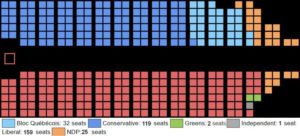
Going into the English Leaders’ debate, the Bloc Québécois had lost their footing, with all polls showing them unable to retain more than 10 seats in Parliament, for a loss of 22 seats. The support of Québeckers had moved virtually wholesale to hometown boy Justin Trudeau and his Liberal party — which looked to pick up most of the lost Bloc seats, propelling them to a majority government. Then Ms. Kurl asked a damnedly poorly phrased question concerning Québec Bill 21 — banning Québec citizens from wearing religious symbols, and mandating that one’s face be uncovered to give or receive specific public services — the contentious nature of her question propelling the Bloc into a stratospherically high 32-riding seat count, costing the Liberals their much sought after majority.

One final point: the opportunity to exercise our franchise, to go to the polls and cast our ballot in seclusion, to hold our government to account, is central to our nation’s democracy. No election held in Canada, or elsewhere, is ever unnecessary. The opportunity to go to vote in an election is both our democratic right, and at the core of our democracy. Following a 35-day election period, Canadians went to the polls, and collectively decided that a continuing minority government for the Liberals would be for all of us the best possible outcome, and voted accordingly.
#CdnPoli | The 44th Session of the Canadian Parliament Begins Today

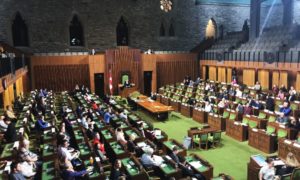
The ‘new’ House of Commons is located in what used to be the outdoor courtyard of the West Block on Parliament Hill, while the decade-long renovation of the Centre Block Commons building  takes place

The 44th session of Canada’s Parliament officially commences today, followed by a Speech from the Throne on Tuesday at 9 a.m. PST, to be read by Governor General Mary Simon, who will lay out Prime Minister Justin Trudeau’s key priorities for his minority Liberal government.

From the last, pre-election, Parliament to this, the Liberals gained 5 seats, the Conservatives lost 2 seats, the Greens lost 1 seat, there’s now one independent, and the Bloc Québécois stand pat at 32 seats

The clock is ticking on the Liberal promise to introduce a host of bills — including the introduction or reintroduction of at least eight bills — within the first 100 days of their new mandate, and the year-end session of Parliament.

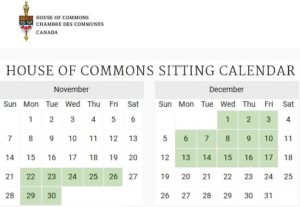
The government will sit for only 24 days to get things done in the Commons before the clock runs out on Feb. 3 — with the first two days essentially lost since they’ll be devoted to electing a Speaker, and delivering a throne speech..

The Commons is scheduled to sit for four weeks before breaking for the holiday season on December 17th. MPs won’t return to Ottawa until January 31st.

If the Liberals intend to keep their promises for the first 100 days — and they insist they do — that spells a crammed legislative agenda for the few weeks the House of Commons will be sitting before the new year.

“We have a very aggressive agenda to get to in the coming weeks and that’s what we’re focused on,” government House leader Mark Holland said last week following the Liberals’ first post-election caucus meeting.

Here’s what’s on the government agenda in the next 24 sitting days …

    • Implement last month’s announcement on more targeted emergency aid benefits for individuals & sectors hardest hit by the COVID-19 pandemic;
    • Pass a bill to impose criminal sanctions on anyone who blocks access to vaccine clinics, hospitals, testing centres and abortion clinics, or anyone who seeks to intimidate or harass health care workers, keeping a promise made by Trudeau as anti-vaccination protests ramped up during the recent, late summer election campaign;
    • An important bill, with NDP support, would provide 10 days of paid sick leave for federally regulated workers, a measure triggered by the pandemic;

    • A bill will be re-introduced  to ban the traumatizing practice of forcing a person to undergo “conversion therapy” aimed at altering their sexual orientation or gender identity. Although Conservatives spun out debate on the ban last time and more than half of the Tory caucus voting against the initiative, banning conversion therapy is strongly supported by all other parties;
    • Combat online hate, including hate speech, terrorist content, incitement to violence, child sexual abuse and non-consensual distribution of intimate images. New legislation will make social media platforms accountable for the content they host;
    • Reform the criminal justice system to address the disproportionate incarceration of Black and Indigenous people: the elimination of mandatory minimum sentences for less serious crimes and greater use of conditional sentences, such as house arrest, counselling or treatment, for people who do not pose a threat to public safety;
    • Safeguard Canada’s critical infrastructure, including 5G networks, to preserve the integrity and security of national telecommunications systems.

    The platform also commits the government to a host of other non-legislative tasks within 100 days, including appointing a new federal housing advocate, holding a summit on restarting cultural industries, and working with provinces and territories to create a national paid sick leave plan.

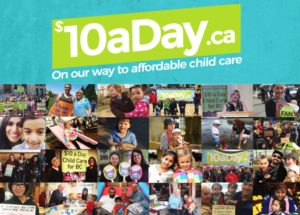
    And, of course, completing the task of bringing all provinces and territories on board for the government’s much needed, and long overdue economic, feminist and family equity issue — $10-a-day national child care.

    More tomorrow on the 44th session of the Canadian Parliament.

#VanPoli | Meet Vancouver’s Next Mayor | Jody Wilson-Raybould

Vancouver’s next Mayor, Jody Wilson-Raybould, principled and a voice for our city, and our nation

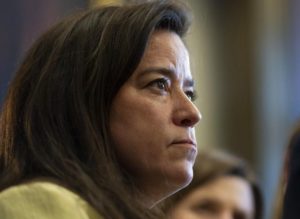
The woman pictured above, former federal Liberal Minister of Justice and Attorney General, Jody Wilson-Raybould — although something of a polarizing political figure, and although she has yet to announce her bid to become Vancouver’s next Mayor — come Saturday, October 15th, 2022 will become Vancouver’s 41st Mayor.

Possessed of great integrity — for which she is justly famous, and highly regarded — incredibly bright, accomplished, articulate and human in a way one rarely finds in the political realm, Jody Wilson-Raybould will likely announce her bid for the Mayor’s chair in early 2022, not out of any cynical calculation, but because Ms. Wilson-Raybould is a protector of our land, our city, and possessed of the kind of integrity that is all too rare in Vancouver politics — which is to say, she’s not involved in politics to enrich her bank account, or find herself beholden to developer interests — but honestly believes that she possesses the innate knowledge on the functioning of government and how best to achieve one’s policy goals, the heart, the humanity and the wit essential to emerge not just as the leader of our city, but a leader across our nation, as Vancouver’s necessary voice on the national stage.

VanRamblings believes that Ms. Wilson-Raybould will announce her candidacy for Mayor in the new year, following a series of meetings with the membership of the Coalition of Progressive Electors — represented by Jean Swanson on Council — and OneCity Vancouver, represented on Council by Christine Boyle.

Given that Ms. Wilson-Raybould is known for doing her homework, and given that affordable housing and human-scale development in Vancouver are key issues of concern for the voting electorate, Ms. Wilson-Raybould will also seek out the learned counsel of Patrick Condon, the James Taylor chair in Landscape and Livable Environments at the University of British Columbia’s School of Architecture and Landscape Architecture, among a host of other academics who care deeply for our city, including Simon Fraser University’s Andy Yan and Josh Gordon, and UBC’s Scot Hein, a highly-regarded former city planner.

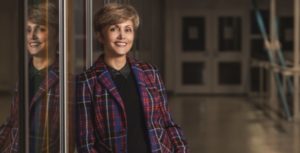
Calgary’s new and first woman Mayor, Jyoti Gondek

Calgary’s new Mayor Jyoti Gondek — the first female Mayor in the city’s history, who on her way to victory, defeated 26 challengers to replace outgoing Mayor Naheed Nenshi; Montréal’s re-elected Mayor Valérie Plante, who defeated incumbent mayor Denis Coderre in 2017, trouncing him again last month.

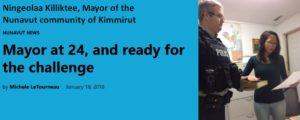
In Nunavut, the Nunavut News stated a new trend had emerged in the territory of young women in politics, as 24-year-old Ningeolaa Killiktee was elected Mayor of Kimmirut, and Pam Gross as Mayor of Cambridge Bay. In the Northwest Territories, one media outlet stated that “Female candidates swept the municipal elections in the NWT,” and the CBC reported the victories of female Mayoral candidates in Hay River, Inuvik, Fort Smith and Yellowknife.

Canadian feminist and Mayor of Ottawa, Charlotte Whitton, was the first woman Mayor of a major city in Canada, serving from 1951 to 1956 and again from 1960 to 1964. Whitton was a Canadian social policy pioneer, leader and commentator, as well as a journalist and writer.

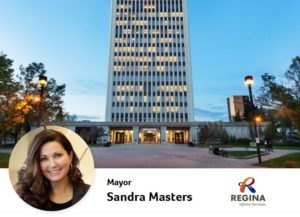
Janice Rhea Reimer became the first female Mayor of Edmonton, Alberta, serving in that capacity from 1989 until 1995. Saskatchewan Mayor Sandra Masters was sworn in as Regina’s 35th Mayor, after having swung to victory as the next year city’s first elected female Mayor, on November 23rd, 2020.

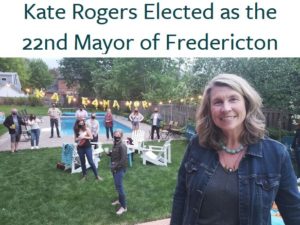
Kate Rogers elected as Mayor of Fredericton in 2020, the first woman to hold the position

Toronto Mayors June Rowland & Barbara Hall, Montréal’s Valérie Plante, Edmonton’s Janice Reimer, Regina’s Sandra Masters, Calgary’s Jyoti Gondek, Ottawa’s Charlotte Whitton, Cambridge Bay’s Pam Gross & Kimmirut’s Ningeolaa Killiktee, Halifax’s Moira Leiper Ducharme (1991-1994), Charlottetown’s M. Dorothy Corrigan, St. John’s Suzanne Duff, and Fredericton, New Brunswick’s current Mayor, Kate Rogers — all duly-elected Mayors of Canadian cities.

Whither Vancouver?

Every Mayor of Vancouver, from Malcolm A. MacLean in 1886, through until Kennedy Stewart today, have been white men of privilege more often than not elected to serve the monied interests of our city. Why is it that in 135 years, the good citizens of Vancouver have never seen fit to elect a woman as Mayor of our city, when almost every other city in Canada has seen fit do do so?

In all likelihood, Vancouver City Councillor Colleen Hardwick will throw her hat into the ring to become Vancouver’s next Mayor.

Rumour has it, too, that former Vision Vancouver Councillor Andrea Reimer is considering a bid to become Vancouver Mayor. VanRamblings’ sources have told us Coalition Vancouver’s Wai Young is set on running for office, as Mayor, in next year’s Vancouver civic election.

Andrea Reimer, former Vision Councillor (l); Adriane Carr, Green Party; Wai Young, Coalition Vancouver

The Green Party of Vancouver’s Adriane Carr is also reportedly considering a run for Vancouver’s top elected office next year.

And there remains to this day, the persistent rumour that current populist and well-schooled Vancouver City Councillor Sarah Kirby-Yung may also run for office as Mayor in next year’s municipal election.

A surfeit of qualified women candidates for Mayor of Vancouver, any one of whom would well represent our city, should she be elected to the office of Mayor in the 2022 Vancouver civic election, only 321 short days from today.

#VanPoli | Housing & Development | Making The Vancouver Plan Irrelevant, Pt. 1

Vancouver Planning Staff and Developers Set to Turn Vancouver into Manhattan West

A core element of Colleen Hardwick’s successful 2018 run for office as a Vancouver City Councillor was the need for the city to draft a visionary planning document — to be called The Vancouver Plan — a bold, comprehensive and inclusive city-wide, neighbourhood and heritage community development plan for all residents living in the City of Vancouver, a 30-year plan that would focus on creating opportunities to integrate new housing, recreation centres, jobs, and amenities across our city.

As a first order of business early in her inaugural term of office, working with three term Vancouver City Councillor, Adriane Carr, Councillor Hardwick seconded a pioneering motion that would have staff employed within the Planning Department at Vancouver City Hall draft The Vancouver Plan (initial title, the City-Wide Plan) document, towards the creation of a livable, affordable and sustainable city, a single, city-wide plan that would guide future growth consistent with key community priorities, a guide to our city’s future growth …

  • The provision of affordable housing in all of Vancouver’s 22 neighbourhoods;
  • Working on a meaningful climate action plan, and environmental sustainability;
  • The provision of well-paying jobs city-wide & in neighbourhoods + economic growth;
  • Prioritizing public and active transportation needs for Vancouver residents;
  • Arts & culture, and the provision for related community amenities;
  • Infrastracture, including community pools, ice rinks and recreation centres.

Public input would be sought in The Vancouver Plan engagement process, which continues through until this day.

The final draft document of The Vancouver Plan is set to be presented to the public and to members of Vancouver City Council in early spring of 2022.

In the video above, the narrator of the visionary Vancouver Plan intones …

“Now more than ever, it’s important to reduce our use of carbon fuels, and adapt to climate change. To advance these big ideas, we need to rethink our low density neighbourhoods. To that end, we could help shape future growth more in major transit areas. New housing, jobs, child care centres, and public plazas would be built along these transit corridors.”

Remembering for just a moment that The Vancouver Plan is far from having completed its community engagement process, and is not due to be presented to both the public and Vancouver City Council until spring 2022, this past Wednesday, November 3rd, the Planning Department presented The Broadway Plan to the members of Vancouver City Council, a fait accompli document that will add 50,000 new residents along the Broadway corridor, framed by Vine Street to the west, 1st Avenue to the north, Clark Drive to the east, and 16th Avenue to the south.”

As reported in The Daily Hive Vancouver by civic affairs reporter Kenneth Chan …

“The emerging direction of the densification strategy calls for increasing Central Broadway’s population by up to 50,000 to about 128,000 residents — an increase of 64% compared to 78,000 residents today. This would be achieved by growing the number of homes in the area from over 60,000 today to up to 90,000 units, with much of this is intended to be more affordable forms of housing.

Added office, retail, restaurant, institutional, and creative industrial spaces would grow the number of jobs from 84,400 today to up to about 126,000 jobs.”

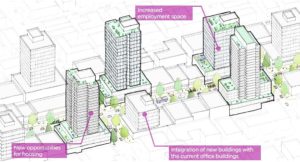
The residential and employment targets outlined above would occur over a period of the next 30 years, through until 2050. Tower heights between 30 and 40 storeys will be built in areas around the stations. Shoulder areas adjacent to the immediate area surrounding the stations — generally within a two or three block radius — will see height allowances of 20 to 30 storeys.

Example of a “Centre” area near the future South Granville Station, November 2021. (City of Vancouver)

Example of “Shoulder” areas along Broadway in the Broadway Plan, November 2021. (City of Vancouver)

More details on the “Broadway Plan” may be found both in Mr. Chan’s story in The Daily Hive, and John Mackie’s story in The Vancouver Sun.

The question has to be asked: if the reasoned, thoughtful and neighbourhood resident consulted 30-year visionary document, titled The Vancouver Plan, is not due to be presented to Vancouver City Council until spring 2022, why are the members of Vancouver City Council being asked by the City Planning Department to approve The Broadway Plan as early as next week, on either November 16th, 17th or 18th?

And why, if The Vancouver Plan is a city-wide and neighbourhood visionary development plan for Vancouver as we head towards 2050, why is the City Planning Department taking a piecemeal approach to presenting any number of development plans in the pipeline to Council now — months in advance of the presentation of The Vancouver Plan to the public & members of Vancouver City Council?

Tomorrow on VanRamblings, we’ll present 1) several more “visionary” large scale developments currently in the Vancouver development pipeline — of which you may not be aware — that are destined to have a major impact on the livability of our much cherished Vancouver home; 2) a continued exploration of VanRamblings’ ongoing thème du mois — “A city for whom? Benefiting whose interests?”; and 3) whether the tens of thousands of housing units set to be built as envisioned in proposed Vancouver development plans to be presented to Council even before the final draft of The Vancouver Plan will be made public, will result in an overbuilt city that will cater explicitly to wealthy and offshore investment interests and their developer friends, rather than to the implicit and explicit interests of Vancouver residents living in the 22 neighbourhoods across our city.

The 70+ storey Bay Parkade development — due east of the Hudson’s Bay Company, and sandwiched between Seymour and Richards streets — one of seven 65+ storey downtown developments approved by Vision Vancouver (the first two, the Shangri-la Hotel on Georgia, and its neighbour across the street, Holborn’s “Trump Tower”), the Bay Parkade development will be presented to Council for approval sometime before the 2022 Vancouver civic election.