
Tag Archives: film industry

#Cinema | The Tyranny of the Tomatometer: How Aggregated Scores Are Killing Cinema Going

There was a time — not that long ago — when moviegoing required curiosity.

You read a few critics, maybe listened to a friend’s recommendation, and decided whether to spend two hours in the dark discovering something new.

Today, that act of discovery has largely been replaced by a single number. Before many people even consider seeing a film, they glance at a percentage on Rotten Tomatoes, or a numerical score on Metacritic. If the number is high, the film is deemed worth watching. If it is low, it might as well not exist.

The result is one of the most profound — and least discussed — transformations in the modern film industry.

Review aggregation has quietly reshaped the way audiences choose movies, the way studios finance them, and even the kinds of films that get made. In the process, it has flattened audience taste, suffocated mid-budget filmmaking, and helped create the blockbuster monoculture that now dominates cinema.

The Reduction of Criticism to a Number

Film criticism once thrived on disagreement. One critic might celebrate a bold experiment while another dismissed it as indulgent. That tension created a conversation around movies.

Aggregators ended that conversation by reducing criticism to arithmetic. On Rotten Tomatoes, reviews are translated into a simple binary: “fresh” or “rotten.” The site’s famous Tomatometer then calculates the percentage of critics who gave a positive review.

In practice, this system erases nuance. A film that receives dozens of mildly positive reviews can achieve a dazzling 90% score, even if no critic thought it was particularly great. Meanwhile, a polarizing masterpiece that divides critics — half loving it, half hating it —might end up with a mediocre score.

The number becomes the narrative.

And because audiences increasingly rely on that number to decide what to watch, a film’s reputation is often determined before the public has even seen it.

The Self-Fulfilling Prophecy of Success

Hollywood has noticed. In fact, studios have been obsessing over Rotten Tomatoes scores for years.

The industry’s anxiety became obvious during the summer of 2017, when several heavily marketed films opened far below expectations after receiving poor Tomatometer scores. Studios privately blamed Rotten Tomatoes for undermining their marketing campaigns, while highly rated films like Wonder Woman benefited from glowing scores and exceeded expectations at the box office.

Films are now judged almost instantly by their aggregated scores. A low rating can create a perception of failure before opening weekend even begins. A high rating can generate momentum and headlines. Either way, the number becomes a self-fulfilling prophecy.

Once audiences internalize the logic of the score, they begin to behave accordingly: avoiding films with bad numbers and flocking to those with good ones.

The Crushing of the Mid-Budget Film


Kristen Stewart and Andrew Garfield on the red carpet at the Independent Spirit Awards ceremony

The biggest casualty of this culture is the mid-budget movie — the $20-$60 million drama, thriller, or adult comedy that once formed the backbone of Hollywood.

These films depend heavily on word-of-mouth and critical reception. That means they are far more vulnerable to aggregated scores than massive franchise films with huge marketing budgets. In fact, research suggests Rotten Tomatoes has a greater effect on smaller or independent movies than on major blockbusters.

For a mid-budget film, a weak score can be fatal. It discourages audiences from giving the movie a chance and convinces studios that similar projects are too risky.

The lesson Hollywood has absorbed is simple: if audiences are choosing movies based on numbers, studios should make films that are least likely to receive negative numbers.

The safest way to do that is to make movies audiences already know.

Sequels. Franchises. Superheroes.
The Homogenization of Taste

Aggregated scores quietly reshape the psychology of moviegoers themselves.

When audiences use a single metric to choose entertainment, they gravitate toward consensus. The safest choice becomes the one everyone else appears to like.

Over time, this process homogenizes the marketplace. Films that aim for broad approval — competent, inoffensive entertainment — perform better in aggregated scoring systems than films that take risks or challenge viewers.

The result is a feedback loop: audiences follow the scores, studios follow the audiences, and the entire system rewards safe mediocrity.

Gaming the System

Once numbers became powerful, the temptation was to manipulate them.

Studios now carefully manage early screenings to influence aggregated scores. Positive early reactions can create a high initial rating that attracts audiences before more critical reviews appear. In some cases, marketing campaigns have even tried to boost a film’s rating by selectively promoting favorable critics or delaying negative reviews.

Meanwhile, user scores on sites like Metacritic and Rotten Tomatoes can be distorted by organized campaigns known as “review bombing,” where groups flood a site with extreme ratings for political or cultural reasons unrelated to the film itself.

When the system becomes a battlefield of manipulated numbers, the illusion of objectivity collapses.

Yet the numbers remain.

Cinema as Data
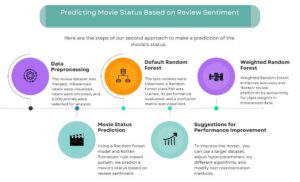
Perhaps the most troubling consequence of aggregation culture is philosophical.

Cinema is an art form built on subjectivity. The experience of a film is deeply personal —shaped by mood, taste, memory, and emotion. Turning that experience into a percentage suggests a false precision.

And so cinema — one of the most expressive art forms ever invented — has been reduced to a metric.

Rediscovering Curiosity
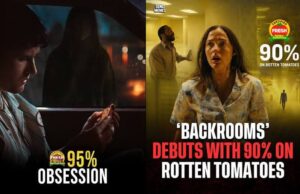
The tragedy is not that Rotten Tomatoes and Metacritic exist. Aggregating reviews can be useful. The tragedy is how completely those scores have come to dominate the conversation.

A score should be the beginning of exploration, not the final verdict.

If the future of cinema is decided by percentages alone, the industry will continue drifting toward the safest, most predictable movies imaginable.

And the next generation of great films — the strange, polarizing, risky ones that critics initially disagree about — may never get the chance to exist.
The tyranny of the Tomatometer is not just changing how we judge movies.

It is quietly changing which movies get made at all.

#ArtsFriday | Artificial Intelligence and Its Impact on the Film Industry

Artificial intelligence (AI) is quickly becoming a game-changer in the film industry. From script writing and casting to special effects and distribution, AI is transforming the way movies are made and seen.

While there are many benefits to using AI in filmmaking, there are also potential downsides that need to be considered.

What impact will AI (artificial intelligence) have on Hollywood?

Who better to answer that question than ChatGPT, a thrilling but scary chatbot developed by OpenAI.

When VanRamblings asked ChatGPT about AI‘s potential impact on the film industry, it made the following points (note: only the single, numbered paragraphs represent the ChatGPT input):

1. Scriptwriting: AI can be used to analyze existing screenplays and create new ones, potentially leading to more efficient and cost-effective screenwriting.

In addition, Netflix co-CEO Ted Sarandos recently told Business Insider’s tech reporter, Stephanie Palazzolo.

“Employing AI to create new scripts will help filmmakers deal with this task more efficiently. Being fed with large amounts of data in the form of movie scripts, machine learning algorithms analyze the data, learn from them, and come up with unique scripts. This makes the process much faster, saving significant time and resources for filmmakers.”

Sarandos went on to state, “Artificial Intelligence will also be used for analyzing scripts that will be made into a film. AI algorithms can study the script storyline, bring forward possible questions, uncertainties, and suggestions, thus making the process of script analysis much easier and faster.”

2. Pre-production: AI can be used to streamline the pre-production process, saving time and resources, including casting, location scouting and storyboarding.

“AI has great potential to simplify the pre-production process by helping to plan schedules, find locations that best fit the storylines and support in other preparatory processes,” says Disney chief, Bob Iger. “Implementing AI will automate the planning of shooting schedules according to the availability of actors that will save time, and increase efficiency.”

In addition, AI systems can analyze the locations described in screenplays and recommend  sites for shooting the scene, saving resources in location scouting.

Even now, AI is being used to improve the accuracy and efficiency of casting decisions. AI-powered platforms can analyze a vast amount of data, including past performance data and social media activity, to predict which actors are most likely to be successful in a given role. This can help casting directors make more informed decisions and save time and resources.

3. Special effects: AI can be used to create more realistic and immersive special effects, potentially reducing the need for practical effects and saving time and money in post-production.

AI is currently being used to enhance visual effects (VFX) in Marvel films. Machine learning algorithms have been trained to recognize and classify different objects in a scene, making it easier and faster to add VFX elements, saving time and money for VFX studios, as well as enhance the overall quality of the film.

4. Audience analysis: AI can be used to analyze audience data and preferences, helping studios make more informed decisions about which films to greenlight and how to market them.

Monica Landers, founder and CEO of StoryFit, acknowledges the peculiarity of using AI to evaluate audience connections with narratives or characters.

Says Landers, “Warner Bros. has turned to Cinelytic AI-based platform to predict the success of its movies and box office receipts. 20th Century Fox has integrated the Merlin system that uses AI and machine learning to match movies to particular genres and audiences, as well as provide complete demographics for any movie.”

5. Distribution: AI can be used to personalize movie recommendations for viewers and optimize distribution strategies, potentially leading to higher ticket sales and revenue.

University of Southern California film professor Siranush Andriasyan, in a recently published research paper, writes …

“Film studios have been using AI for effective advertising and promotion. Analyzing different factors such as audience base, actors’ popularity across the globe, film studios may plan their campaigns according to certain locations where they expect the highest interest from the audience. For example, 20th Century Fox has developed the Merlin Video neural network to predict the success of promotional videos.”

There are, however, potential downsides to the use of AI in the film industry, says retired USC Berkeley film studies professor, Eric Ironside.

One major concern, he states, is the potential for AI to replace human jobs. As algorithms become more advanced, there’s a risk they could replace human casting directors, screenwriters, and VFX artists, leading to film industry job losses.


Response to deal | SAG-AFTRA President Fran Drescher and Duncan Crabtree-Ireland, Chief Negotiator

“If you want to get hired, you have to be ready to consent to be replicated, so there are people who are out there saying that consent at the time of engagement is coercion because they won’t hire you unless you give them those rights,” Shaan Sharma, an alternate member of the Screen Actors Guild negotiating committee told Rolling Stone.

AI cloning set to impact the film industry, and jobs in Hollywood

“And it’s only those with considerable leverage that will have the ability to say no to the replication, but still be hired. That really concerns me because most members don’t have the leverage to say no at the time of engagement.”

Another potential downside is the loss of human creativity and personal touch. While AI algorithms can generate new stories and make accurate predictions, they may lack the unique perspective and emotional depth that comes from human creativity. This could lead to a homogenization of storytelling and a decrease in the overall quality of films.

For years, the idea that computers and data could play a role in filmmaking was considered anathema in Hollywood, where personal taste, charisma and talent were viewed as key to success.

In recent years, film industry skepticism about AI has lessened, suggests Largo.ai founder Sami Arpa, in part because streaming platforms such as Netflix and Amazon have thrived by using technology to guide decision making. Both use complex, jealously guarded algorithms to recommend content for their audiences, and analyze audience data to underpin their commissioning and acquisition decisions.

Make no mistake: AI is set to change the film industry in profound ways, from data analysis to virtual production.

While there are concerns about the impact of AI on the industry, it is clear that AI is here to stay, and it will continue to transform the way films are produced, distributed and consumed by moviegoers.

Those who are willing to embrace AI and learn to work with it will be at the forefront of this transformation, shaping the future of the film industry.