
Tag Archives: british columbia new democratic party

#BCPoli | B.C. NDP Advertising Fails, and Necessary Remedies


B.C. NDP ads that have not resonated with a public anxious for change — whatever change might mean.

The 2024 provincial election in British Columbia is proving to be a pivotal moment for the British Columbia New Democratic Party (B.C. NDP), as they seek to retain power under the goal-directed, activist leadership of Premier David Eby.

However, their campaign ads have faced criticism for failing to connect with the electorate, especially at a time when voters are deeply concerned about housing, inflation, and health care. As British Columbians head to the polls, with advance voting already underway, the B.C. NDP needs to urgently revamp their messaging to effectively counter the rising threat posed by the possible, and increasingly likely, election of a  B.C. Conservative Party majority government on October 19.


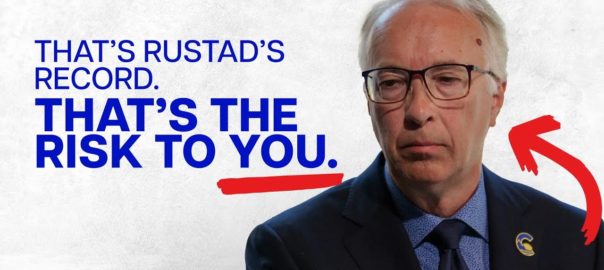
To access the “John Rustad is a career politician” British Columbia New Democratic Party ad click here.

One of the B.C. NDP ads that has been running almost continually since long before the actual campaign got underway on September 21st, is the “John Rustad is a career politician, with a history of costing you more,” an ad that has driven CHEK-TV / Business in Vancouver Legislative reporter Rob Shaw around the bend.

Rob Shaw is anxious to point out that Mike Farnworth, B.C.’s Minister of Public Safety and Solicitor General before dissolution of the Legislature, has served in the Legislature dating back to 1997, when then B.C. NDP Premier Glen Clark appointed Mr. Farnworth Minister of Municipal Affairs and Housing — a full eight years before Mr. Rustad entered the Legislature, as the MLA for Prince George–Omineca.

Where does the B.C. NDP get off, then, calling John Rustad a “career politician”?

One of the main critiques of the B.C. NDP’s 2024 campaign ads is that they have failed to boldly and effectively address the key concerns of voters across British Columbia, particularly around housing affordability and rent control.

Let’s take a look at the “rent cap” legislation brought in by populist, working class B.C. NDP Premier John Horgan in 2019, in response to a B.C. Rental Housing Task Force report, written by and presented to the Premier by B.C. NDP Member of the Legislature representing Vancouver-West End, Spencer Chandra Herbert.

Prior to January 2019, the rent increase formula was inflation plus two per cent.

Premier John Horgan told a full session of the Legislature in the spring of 2019 that rent increases of inflation plus two per cent was “simply not sustainable for renters, many of whom are on fixed incomes, to see their rent increase by more than inflation each and every year.” Premier Horgan then brought in legislation that capped rents at the rate of inflation that was passed by the House.

By far the number one concern that has been expressed to VanRamblings, in the lines we’ve waited in at this year’s 43rd edition of the Vancouver International Film Festival, on the street when we’ve run into friends, or in coffee shops around town is the proposal of B.C. Conservative Party leader John Rustad to remove rent caps that he considers to be a burden to landlords.

One longtime friend and professional associate told VanRamblings the following:

“For the past 25 years, I have lived in an apartment in Burnaby, where the rent has gone up most years. Even so, thanks to the NDP’s rent cap legislation — given how out of control the rental market has become in recent years — my rent is still an affordable $850 per month, given my long tenure. The resident who recently moved into the apartment next door to me pays the market rent for his apartment of $1575 a month. Should John Rustad revoke the NDP’s rent cap legislation, I expect that my rent will go up 10% a year until I am paying more than double what I’m paying now, as the landlord increases my rent to the market rate. I don’t know what I’d do in such a circumstance. I’d be in dire, unconscionable straits, and would have to consider moving out of town.”

The story above is writ large across the entire province of British Columbia, as 600,000 renters would find themselves in the same dire circumstance as my friend.

The response of the B.C. NDP “not on your side government” to the egregious circumstance that will befall renters should a John Rustad-led Conservative Party be elected to government:  a namby-pamby ad that glosses over the rent cap removal topic, underplaying its impact — if it addresses the consequences of the rent cap removal (which it utterly fails to do) at all — should John Rustad’s commitment to the landlord class — over renters — come to pass post the October 19th election.

That’s our David Eby for ya.

Playing it right down the middle, doesn’t want to appear too radical, doesn’t want to upset landlords — heaven forbid! — while he leaves hundreds of thousands of renters to hang out to dry. Mr. Eby: you are going to have to decide whose side you’re on: the landlord class, or all those British Columbians who pay rent.

What’s it gonna be, sir?

The B.C. New Democrats, with a little more than two weeks to go before Election Day, are going to have to decide whose side they’re on, in a way their lacklustre campaign has utterly failed to do as the 2024 provincial election has unfolded.

Enough with those ineffectual ads the B.C. NDP have run the first two weeks of the campaign, ads that woefully ill serve the interests of potential B.C. NDP voters.

What the B.C. NDP must do: run saturation ads featuring British Columbians from across the province, addressing in stark terms the impact that removal of the rent cap will have on their family: British Columbians in every region of the province, British Columbians in every age and cultural demographic, real “live” human beings — you know, the British Columbians the B.C. NDP campaign has steadfastly ignored to date. Stop with this arrogant, condescending top-down nonsense.

Does the B.C. NDP brain trust not see how wildly effective the ads are that are being run by the Democratic Party in Washington state, just below our border, ads that really resonate, ads that always, always, always feature Washingtonians warning their fellow citizens about the perils that would occur should Republicans be elected to lead state government? Why are we not seeing those kinds of ads here?

Let’s hear from real British Columbians — not an anonymous voice over in an ad.

All ads to be run by the B.C. New Democrats in the final two weeks of the campaign must feature British Columbians warning their fellow citizens on what a John Rustad government would mean to the quality of their lives, and their children’s lives, covering a range of topics: climate change — which Mr. Rustad effectively denies, John Rustad’s plans to ban books in public schools to stop what he considers to be “indoctrination” by teachers, the revocation of the SOGI 123 legislation that protects vulnerable tweens and teens enrolled in our public education system, a John Rustad-led government that would not build affordable housing co-ops on Crown land as proposed by David Eby’s NDP government, and so very much more.
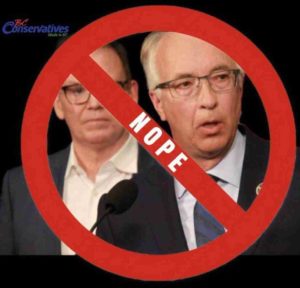
Make no mistake: vulnerable British Columbians are going to die, who otherwise might live, should John Rustad be elected to government come October 19th.

That is a message that will resonate with voters, if told properly and bluntly.

#BCPoli | Affordable Housing Plan | Part 2 |
BC New Democratic Party

Premier David Eby and the B.C. New Democratic Party (NDP) have developed a comprehensive housing plan aimed at addressing British Columbia’s escalating affordability crisis. The second plank in the B.C. NDP’s housing plan specifically targets individuals and families earning between $30,000 and $88,000 annually, aiming to provide affordable co-operative housing on a large scale.

The B.C. New Democrats’ housing plan emphasizes the use of municipal, provincial, and federal Crown land for the construction of housing co-ops, offering long-term leases — typically on a 66-or-99 year leasehold basis — to keep costs down.


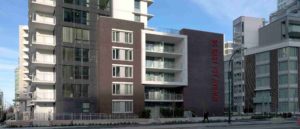
The Railyard Housing Co-operative, built on Crown land, 135-units, with bachelor-1-2-3-and-4 bedroom units, priced well below the market. Includes two child care centres, with spaces for up to 130 children.

Additionally, municipalities would forego development fees — saving up to $1.5 to $4.5 million, depending on the size of the housing co-op, and number of units — significantly reducing the cost of building, thereby allowing these newly-built housing co-op homes to remain affordable for middle-income earners.

The strategy to build co-operative housing on government land is a notable aspect of the B.C. NDP’s approach to solving the housing crisis.

Co-operative housing, which offers more stability and community engagement than traditional rental housing, is a model where residents collectively own the housing but do not own individual units.

This model has proven successful in other parts of Canada and Europe, providing long-term affordability and community-driven management.

One of the key elements of the plan is its focus on affordability through leasehold arrangements on public land.


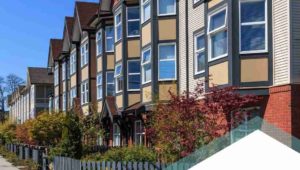
A town house-style housing co-operative built on Crown land in Vancouver’s River District

By leasing land rather than selling it outright to developers, the government can ensure that the affordability of these homes is maintained for generations. The 66- or 99-year lease term provides security for families and individuals, allowing them to build long-term roots without the fear of skyrocketing rent or property values.


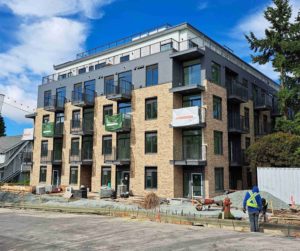
The 65-unit purpose built rental building at 2nd and Larch in Vancouver, with 14 studio, one, two and three-bedroom units set aside at CMHC’s median market rental rate, at $1000 – $1250 per month

The B.C. NDP has also introduced a provincial mandate that requires all new purpose-built rental housing to allocate 20% of units at the Canada Mortgage and Housing Corporation (CMHC) median market rental rates.

These CMHC rates are typically much lower than the market rates in hot real estate markets like Vancouver and Victoria.

By ensuring that a portion of new rental units are priced affordably, the provincial government hopes to address the growing rental affordability gap.

This is particularly significant as purpose-built rental housing often commands higher rents than older rental stock, leaving many renters — especially families — struggling to find affordable, stable homes.

In addition to building new housing, the B.C. NDP has a long-standing policy of purchasing existing apartment buildings to preserve affordable housing.

By acquiring older buildings, the government prevents private developers from converting them into luxury condos or raising rents beyond the means of current tenants. This approach has been lauded for ensuring that affordable housing remains available across municipalities, where market pressures often push lower-income residents out of desirable urban areas.

Premier David Eby has stated that the B.C. NDP will continue this strategy, helping to protect vulnerable renters from displacement due to real estate speculation.

In stark contrast, John Rustad’s B.C. Conservative Party has yet to present a comprehensive housing plan. The absence of a clear policy to address the affordability crisis leaves many wondering how the party intends to tackle one of the most pressing issues facing British Columbians.


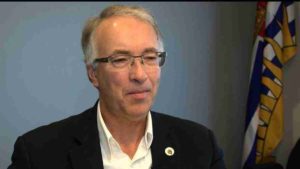
Premier David Eby addresses a gathering of real estate and urban development professionals Thursday, Sept. 12, 2024, at the Paradox Hotel Vancouver | Photo: Rachel Thexton

Premier David Eby believes the B.C. Conservatives should release more particulars of their housing policies, with the October 19th election just over one month away.

Speaking at a meeting of real estate and urban development professionals last Thursday, the B.C. NDP leader said voters deserve to know what exactly the Conservatives intend to do on housing if they win a majority in the upcoming vote and form a new government.

“I would like to know what the Conservative housing plan is,” Eby told the audience at an industry event hosted by Urban Land Institute BC. “I think for housing to be on the ballot for people, they have to actually understand what their choices are that are coming forward.”

While Rustad has criticized the B.C. NDP for their housing initiatives, he has offered little in the way of a concrete solution. The B.C. Conservatives’ silence on this issue is particularly concerning given the housing crisis’s impact on the province’s middle- and lower-income families.

Moreover, the B.C. Conservative Party’s proposals related to rental housing would exacerbate the housing affordability problem.

Rustad’s party advocates for removing the cap on rent increases, a move that would disproportionately harm renters, particularly those on fixed or lower incomes.

Without rent control, landlords would have the freedom to increase rents at will, further straining families who already struggle to afford housing. This policy would worsen inequity in a rental market that already heavily favours landlords.

Additionally, the B.C. Conservatives have proposed further empowering landlords, potentially reducing tenant protections and making it easier for landlords to evict tenants or raise rents. This shift would create an even more unequal dynamic between landlords and tenants, where renters — many of whom are low- or middle-income families — would have little recourse against rent hikes or evictions.

Families relying on affordable rental housing would be hit hardest, with fewer options to find stable, affordable homes.

— David Eby (@Dave_Eby) September 16, 2024

In contrast, Premier David Eby’s B.C. NDP housing plan aims to strike a balance between affordability and housing supply, ensuring families earning between $30,000 and $88,000 can access housing without being priced out of the market.

David Eby’s emphasis on co-operative housing, along with the mandate for affordable rental units in new developments, represents a long-term strategy to combat housing unaffordability in British Columbia. This stands in direct opposition to the B.C. Conservatives’ pro-landlord, anti-renter policies, which would likely lead to higher rents, more evictions, and an exacerbation of the housing crisis.

The contrast between the B.C. NDP and the B.C. Conservatives on housing is stark.

While the B.C. NDP have laid out a multi-faceted plan that seeks to provide affordable housing to middle-income families, protect renters, and increase housing supply, Rustad and the B.C. Conservativesoffer a vision that favours landlords, weakens tenant protections, and risks pushing more families into housing insecurity.

As the housing crisis continues to dominate the political landscape in British Columbia, voters will need to decide which approach best addresses their needs — an inclusive, affordable, multi-faceted housing strategy, or a hands-off market approach that prioritizes developers and property owners over renters.


The B.C. NDP’s Housing Plan, Part 1 — Dignified Supportive Housing