Stories of a Life | Redux | Raymond | Late No More

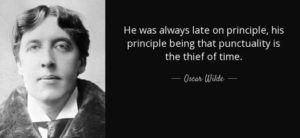
In the early 1980s, I was perpetually late on almost every occasion where I was depended upon to be on time. At the time, being on time was not a priority for me.

Now, as  has been suggested by psychologists, lateness may be interpreted as a sign of passive-aggressive behaviour, a faithless statement to those who are waiting for you to arrive, that your time is more valuable than theirs.

Most people won’t bear a grudge if you’re five minutes late — but to be more than five minutes late, when people might start getting annoyed with you is a whole different kettle of fish. Let’s face it, to mature adults lateness betrays a lack of respect and consideration for those who you are inconveniencing with your lateness.

In the inverse, although being late may well be considered as an insult to others, it also serves to undermine the person who is late.

Psychologists suggest that lateness betrays a lack of emotional intelligence on the part of the person who is consciously or unconsciously “choosing” to be late, as an indication of a distinct lack of self-knowledge, will power, or empathy.

Or, it may be that the person who is late has set unrealistic goals, or underestimated the time that it takes to travel from one place to another.

There may even be a more perfidious reason for being late, than mere mediocrity. Sometimes it involve anger and aggression, and at other times self-deception. Lateness may be interpreted as treacherous anger expressed as passive-aggressive behaviour, a vigorous means of expressing aggression covertly, and doing so without incurring the full emotional and social costs of a more overt aggression.

It may be, too, that the person who is late feels inferior or unimportant, being late a way to impose themselves on a situation by attracting attention, if even it is negative attention, even going so far as to “overtake” an event, situation or proceeding.

Sometimes, being late is your unconscious (intuition) telling you that you don’t actually want to be there, or that it would be better for you not to be there — for instance, it could be that a meeting (or even a job) is not the best use of your time, or that arriving at your destination on time will work against your best interests.

Still, there are few habits as infuriating as someone making us wait.

Despite what may be running through your mind as you’re kept waiting again, it’s unlikely your friends or colleagues who are persistently late are just being selfish.

“Lateness is really a commonly misunderstood problem,” says Diana DeLonzor, author of Never Be Late Again, who has conducted research on the perpetually tardy. “Yes, it’s a rude act, but I’ve interviewed hundreds of people and the vast majority of late people really dislike being late, they try to be on time, but this is something that has plagued them throughout their lives.”

In 1982, an event occurred in my life that ended my lateness forever.

Now, in my contemporary life and with rare exception, I always arrive on time — or, more often than not, early. When I arrive early, I tend to hold back on knocking on the door or depressing the buzzer, until the exact minute of my proposed arrival time occurs — and over the course of the past 42 years, I’ve felt all the better for it.
In the autumn of 1982, having finished work on my Masters, I found myself employed in a suburban Metro Vancouver school district as a secondary school English and Drama teacher.

When I’d visited my mother one mid-autumn weekend, she invited me for dinner in her North Vancouver condominium apartment, in the coming week. “Arrive at 5pm, Raymond,” she said to me. “You know I like to eat dinner early.”
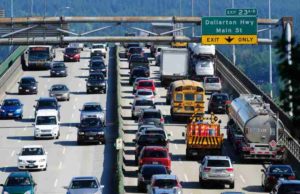
On the mid-week day of the appointed dinner date, I skeddaddled out of the school at 3:45pm, a little later than I’d planned, but I figured that seventy-five minutes to travel from the Tri-Cities to North Vancouver should get me to my mother’s house in good time. Such, however, proved not to be the case. Traffic was particularly bad on Highway One that day — there was an accident on the Ironworkers Memorial Bridge that slowed my travels, as traffic moved along at a crawl.

Note should be made, the event being related occurred in pre-cell phone days.

So, there I was stuck in traffic with no way to contact my mother to let her know I’d likely be a few minutes late.

Long story short, I arrived at my mother’s door at 5:20pm — late for sure, but I had a good reason, or so I thought. I knocked on the door.

My mother’s newest boyfriend, a tall, clearly fit, imposing man used to getting his own way — a retired commander in the Canadian Armed Forces Navy, as it happens — glowered at me standing in the hallway as I made my way into my mother’s home, whereupon he grabbed me, shoved me up against a wall and lifted me off the ground, my feet dangling below me, and set about to lecture me on how rude I’d been in arriving late, that on behalf of my mother, he wasn’t having any of it.

“This is the last time you’ll be late for any event, ever, for any reason,” he roared at me, my feet still dangling below me. “From here on in, not only will you arrive on time, you will arrive early — but wait until the appointed time to make contact with those with whom you are to meet. You will plan all of your excursions and travels, and in so doing will always leave more than enough time in order that you might arrive at your destination not just on time, but early. Do I make myself clear to you?”

I nodded my head meekly, and said quietly, “Yes sir, I do.”

And, you know what?


Visiting the Grandview-Woodland neighbourhood of my youth, where I have many friends

From that day to this, I have always made a point of leaving early, allowing myself at least an extra half hour of traveling time, often more — as when I’m traveling to Vancouver’s east side from my Kitsilano home to visit a friend for lunch or dinner,  or a couple of beers,  or a saunter through the Grandview Woodland neighbourhood, or for any other reason when I’m meeting with a valued acquaintance.


#ArtsFriday | Artificial Intelligence and Its Impact on the Film Industry

Artificial intelligence (AI) is quickly becoming a game-changer in the film industry. From script writing and casting to special effects and distribution, AI is transforming the way movies are made and seen.

While there are many benefits to using AI in filmmaking, there are also potential downsides that need to be considered.

What impact will AI (artificial intelligence) have on Hollywood?

Who better to answer that question than ChatGPT, a thrilling but scary chatbot developed by OpenAI.

When VanRamblings asked ChatGPT about AI‘s potential impact on the film industry, it made the following points (note: only the single, numbered paragraphs represent the ChatGPT input):

1. Scriptwriting: AI can be used to analyze existing screenplays and create new ones, potentially leading to more efficient and cost-effective screenwriting.

In addition, Netflix co-CEO Ted Sarandos recently told Business Insider’s tech reporter, Stephanie Palazzolo.

“Employing AI to create new scripts will help filmmakers deal with this task more efficiently. Being fed with large amounts of data in the form of movie scripts, machine learning algorithms analyze the data, learn from them, and come up with unique scripts. This makes the process much faster, saving significant time and resources for filmmakers.”

Sarandos went on to state, “Artificial Intelligence will also be used for analyzing scripts that will be made into a film. AI algorithms can study the script storyline, bring forward possible questions, uncertainties, and suggestions, thus making the process of script analysis much easier and faster.”

2. Pre-production: AI can be used to streamline the pre-production process, saving time and resources, including casting, location scouting and storyboarding.

“AI has great potential to simplify the pre-production process by helping to plan schedules, find locations that best fit the storylines and support in other preparatory processes,” says Disney chief, Bob Iger. “Implementing AI will automate the planning of shooting schedules according to the availability of actors that will save time, and increase efficiency.”

In addition, AI systems can analyze the locations described in screenplays and recommend  sites for shooting the scene, saving resources in location scouting.

Even now, AI is being used to improve the accuracy and efficiency of casting decisions. AI-powered platforms can analyze a vast amount of data, including past performance data and social media activity, to predict which actors are most likely to be successful in a given role. This can help casting directors make more informed decisions and save time and resources.

3. Special effects: AI can be used to create more realistic and immersive special effects, potentially reducing the need for practical effects and saving time and money in post-production.

AI is currently being used to enhance visual effects (VFX) in Marvel films. Machine learning algorithms have been trained to recognize and classify different objects in a scene, making it easier and faster to add VFX elements, saving time and money for VFX studios, as well as enhance the overall quality of the film.

4. Audience analysis: AI can be used to analyze audience data and preferences, helping studios make more informed decisions about which films to greenlight and how to market them.

Monica Landers, founder and CEO of StoryFit, acknowledges the peculiarity of using AI to evaluate audience connections with narratives or characters.

Says Landers, “Warner Bros. has turned to Cinelytic AI-based platform to predict the success of its movies and box office receipts. 20th Century Fox has integrated the Merlin system that uses AI and machine learning to match movies to particular genres and audiences, as well as provide complete demographics for any movie.”

5. Distribution: AI can be used to personalize movie recommendations for viewers and optimize distribution strategies, potentially leading to higher ticket sales and revenue.

University of Southern California film professor Siranush Andriasyan, in a recently published research paper, writes …

“Film studios have been using AI for effective advertising and promotion. Analyzing different factors such as audience base, actors’ popularity across the globe, film studios may plan their campaigns according to certain locations where they expect the highest interest from the audience. For example, 20th Century Fox has developed the Merlin Video neural network to predict the success of promotional videos.”

There are, however, potential downsides to the use of AI in the film industry, says retired USC Berkeley film studies professor, Eric Ironside.

One major concern, he states, is the potential for AI to replace human jobs. As algorithms become more advanced, there’s a risk they could replace human casting directors, screenwriters, and VFX artists, leading to film industry job losses.


Response to deal | SAG-AFTRA President Fran Drescher and Duncan Crabtree-Ireland, Chief Negotiator

“If you want to get hired, you have to be ready to consent to be replicated, so there are people who are out there saying that consent at the time of engagement is coercion because they won’t hire you unless you give them those rights,” Shaan Sharma, an alternate member of the Screen Actors Guild negotiating committee told Rolling Stone.

AI cloning set to impact the film industry, and jobs in Hollywood

“And it’s only those with considerable leverage that will have the ability to say no to the replication, but still be hired. That really concerns me because most members don’t have the leverage to say no at the time of engagement.”

Another potential downside is the loss of human creativity and personal touch. While AI algorithms can generate new stories and make accurate predictions, they may lack the unique perspective and emotional depth that comes from human creativity. This could lead to a homogenization of storytelling and a decrease in the overall quality of films.

For years, the idea that computers and data could play a role in filmmaking was considered anathema in Hollywood, where personal taste, charisma and talent were viewed as key to success.

In recent years, film industry skepticism about AI has lessened, suggests Largo.ai founder Sami Arpa, in part because streaming platforms such as Netflix and Amazon have thrived by using technology to guide decision making. Both use complex, jealously guarded algorithms to recommend content for their audiences, and analyze audience data to underpin their commissioning and acquisition decisions.

Make no mistake: AI is set to change the film industry in profound ways, from data analysis to virtual production.

While there are concerns about the impact of AI on the industry, it is clear that AI is here to stay, and it will continue to transform the way films are produced, distributed and consumed by moviegoers.

Those who are willing to embrace AI and learn to work with it will be at the forefront of this transformation, shaping the future of the film industry.

#BCPoli | Premier David Eby’s 2nd Worst Nightmare Unfolding


Mario Canseco’s Research Co poll released on January 31, 2024 places the BC NDP in first place

Premier David Eby’s second worst nightmare continues to unfold less than nine months before the 2024 British Columbia provincial election.

David Eby’s worst nightmare, of course, would be a repeat of the 2001 British Columbia election, when voters went to the polls, leaving only two seats from the NDP majority government that held power from 1991 through 2001. From 2001 through 2005, Joy McPhail & Jenny Kwan held the fort for B.C.’s New Democratic Party. Failure on that scale in 2024 would be unimaginably devastating.

In fact, there is a 2001 provincial election scenario that is, at present, unfolding in British Columbia, but it is a redux version of 2001, where the B.C. New Democratic Party has gained the confidence and largesse of British Columbia voters — seeming to give David Eby, and the BC NDP, an overwhelming majority — and where the renamed name B.C. Liberal Party — now inaptly named, B.C. United — look to be wiped out as a political force in our province, as they seem set to retain a mere six seats in the Legislature, in a house where 93 Members of the Legislature will sit.

Below, we’ll get to why the above scenario is Premier Eby’s 2nd worst nightmare.


Sonia Furstenau, Green Party of British Columbia leader, changing ridings before the 2024 election

On the last day of January 2024, Sonia Furstenau announced to the world that she is giving up on British Columbia politics, that she’s frustrated, fed up, worn out, is devastated that British Columbians have failed to support her tenure as leader of the Green Party of B.C.,  her integrity, her hard work and that of her Green Party colleague, Adam Olsen, and that a very centrist British Columbia electorate have thrown their support to a centrist British Columbia New Democratic Party under the leadership of David Eby, and cast her and her Green Party of British Columbia aside, and no longer want her in place to challenge a B.C. NDP government.

Did Sonia Furstenau voice the (fictional) concerns raised above, yesterday?

No. But she might as well have.


Beacon Hill Park, in Victoria

For, you see, Ms. Furstenau announced Wednesday that in the upcoming 2024 provincial election, rather than run again in the very safe Green Party supporting riding of Cowichan Valley, which she has held comfortably since 2016, instead Ms. Furstenau has chosen to devastate her Green Party supporters and the voting electorate in the Cowichan Valley, by announcing that come this autumn, she will run for office in the riding of Victoria-Beacon Hill — perhaps the safest NDP seat in the province — where she will challenge popular incumbent, Grace Lore, the current Minister of Children and Family Development in the David Eby government.

Note should be made that due to redistribution, Ms. Furstenau’s riding was divided in half, statistically giving the B.C. NDP a three-to-one advantage in the new ridings should she decide to run in either of the two new ridings. Pulling out of the political fray in the Cowichan Valley where she believes she cannot win, in favour of certain defeat in Victora-Beacon Hill, to VanRamblings seems to be a Hobson’s choice.

The above said, we wish Ms. Furstenau well in her political “retirement”, because most assuredly she will not win re-election come this Saturday, October 19th.

VanRamblings imagines after clearing her office she will take some time off, vacationing with her husband, perhaps returning in the spring to supply teach in her Cowichan Valley school district, where the administration will be over the moon to have her back in the fold, given the dire shortage of teachers in our province.


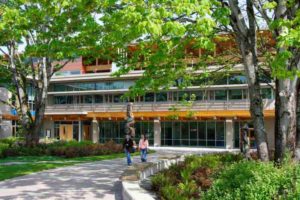
Vancouver Island University, entrance to the Cowichan campus administration office

Returning to teaching will also afford Ms. Furstenau to put in the time necessary to raise her pension to 80% of her annual average teachers’ salary of $90,000+ — whether she resumes her teaching career in the Cowichan Valley, or her “new home” in British Columbia’s capital city, where she would be closer to family.


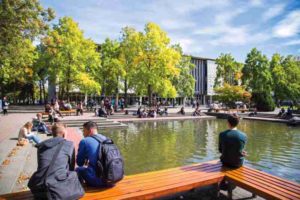
The University of Victoria

Upon retirement at age 65, Ms. Furstenau will live in comfort financially, her home paid off, her teachers’ pension  paying handsomely, supplemented by her Member of the Legislature / leader of the Green Party of BC provincial government pension. In addition, we also expect Vancouver Island University’s Cowichan campus, or should Ms. Furstenau remains in Victoria, the University of Victoria will want to bring her on staff as an instructor, to conduct an evening class or two.

If seeing his current 57-member strong New Democratic Party caucus reduced to two seats, as was the cataclysmic case in 2001, is the nightmare electoral scenario that David Eby fears most (an event unlikely to unfold), as we’ve written previously, securing 80 seats in the Legislature is certainly a nightmare electoral October 19th scenario that our Premier is hoping against hope will not unfold.

Why? As we’ve written previously, and will write again many times in the months to come: with 57 seats in the Legislature, including the Premier’s own Vancouver Point Grey riding seat, British Columbia’s beloved, soon-to-be-a-father for the third time (come June!), the Premier is perfectly content with 57 seats, a comfortable majority, just the right number of seats in the House to portion out Ministers, Parliamentary Secretary and House Speaker jobs,  keep his caucus members busy, keeping them happy, as well, as this “extra work” affords each of the members of the NPD caucus additional salary to their $115,045.93 annual MLA compensation.

Much more than a 57-seat win, and the Premier faces undesired “trouble”, cuz there are no more additional, well-paying jobs for him to give out, leaving the “extra NDP MLAs” largely disenfranchised, and at loose ends with themselves.

Next thing you know, a rump group of B.C. Dippers will hive off from the provincial party to form their own — say, five member, environmentally-minded, opposed to LNG and fracking — B.C. political party, affording them the “extra monies” they heretofore had been denied. Politics, lemme tell ya, it ain’t for the faint of heart.


Kevin Falcon, leader of B.C. United, and decidedly on the right, B.C. Conservative leader, John Rustad

Politically in British Columbia, we seem to be living in a redux period.

In 1991, as “Premier” Rita Johnson — when disgraced Socred Premier Bill Vander Zalm  resigned from office, the party chose Ms. Johnson as their leader, and Premier — championed the Social Credit party during that year’s provincial election, she not only lost government and 47  legislative seats, the Social Credit Party came in a distant third, the Social Credit Party finis / the Socreds dead, far from phoenix-like, after nearly 41 years in power, the party wiped out, and gone forever.

Once the cabal who run this province removed 1991’s Liberal leader, Gordon Wilson — who secured 17 seats for the B.C. Liberals, a revived B.C. Liberal party became the political standard-bearer for our province’s capitalist forces, an all-too-willing Gordon Campbell made leader, who in 2001 went on to become Premier.


Global BC’s Richard Zussman reports on B.C. United leader Kevin Falcon + the Greens’ Sonia Furstenau

Kevin Falcon, once a well-thought-of activist Minister in the Gordon Campbell government, will soon become the undertaker for the B.C. Liberal renamed B.C United Party, as this capitalist, free market party — whatever it’s name — will soon be but a fading memory on the political landscape of British Columbia provincial politics.


British Columbia’s Legislative Assembly

As for B.C. Conservative Party leader, John Rustad, as the far right gains power across the globe — in Canada, that would be federal Conservative Party leader, Pierre “The Destroyer” Poilievre (“Canada is broken. It’s all Justin Trudeau’s fault,”), as well as Alberta Premier Danielle Smith, Saskatchewan Premier Scott Moe, and New Brunswick Premier Blaine Higgs — steps gingerly into the political vacuum left by a mortally wounded B.C. United Party, Rustad would seem to be on track to become, perhaps, the Leader of Her Majesty’s official loyal Opposition, in the post election, post October next session of the British Columbia Legislature.

#SaveOurParkBoard | Vancouver | Grassroots Democracy at Its Best


Erin Shum | community centre advocate | One of Vancouver’s best ever Park Board Commissioners

In Mayor Ken Sim’s mad dash to eliminate the independent, elected and very much esteemed Vancouver Park Board,  over the past weeks there have been many issues that have been shunted to the side in the current debate surrounding the efficacy of an elected Park Board or, most egregiously, not considered at all.

As an overreaching, autocratic ABC Vancouver civic administration seeks to move inexorably forward in their shameful quest to eliminate an elected Park Board, Mayor Ken Sim seems intent on creating the conditions that will give an already overworked gaggle of Vancouver City Councillors even more work to do than is the already the case, respecting Vancouver City Council’s overstuffed civic agenda, such that no reasonable human being could possibly give the necessary consideration of the critically important issues that would come to the fore were our elected Vancouver City Councillors —  in addition to all of their other time consuming work — to take sole authority over Vancouver’s Board of Parks and Recreation.

There simply ain’t enough hours in the day.

Today on VanRamblings, we will set about to elucidate one threat to civic democracy in Vancouver that has, to date, been overlooked by the media, and most certainly not considered nor addressed by a contumacious Vancouver City Council.


Vancouver’s Killarney Community Centre, with a community pool and ice rink available to members

One of the important responsibilities of an elected Vancouver Park Board Commissioner is to fulfill their elected duty to act as liaisons to various Community Centres across the city — as assigned by the Park Board Chair — to attend the monthly meetings of the community centre Board of Directors, listen to what the elected directors have to say, and once back at the Park Board table advocate for each of the community centres to which they have been assigned responsibility.


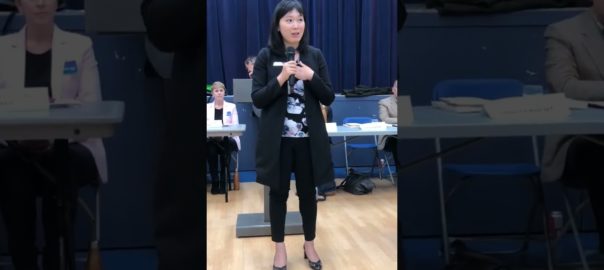
Vancouver Park Board Commissioner Erin Shum, re-election bid, 2018 Vancouver municipal election

In all the years of VanRamblings’ coverage of Vancouver Park Board we are aware of no finer, no harder working, no more well-respected liaison to the community centres to which she had been assigned than was the case with Park Board Commissioner Erin Shum, a shining star in Vancouver’s political firmament.

In our many conversations over the years, Ainslee Kwan, President of the Killarney Community Centre’s Board of Directors, had nothing but praise for the work ethic, the integrity for all that she did, and most especially for Erin Shum’s commitment to community engagement, as well as her steadfast advocacy for Vancouver citizens living in every neighbourhood across our city, to create an environmentally sustainable and more livable city in which all of us might live, where we might raise our children with adequate green space and vibrant community centres.

From its founding in 1887 through 1955, Vancouver’s elected parks advocacy board was called the Board of Park Commissioners, for that was what they were, Commissioners responsible only for oversight of Vancouver’s lush, verdant parks.

In 1955, the Vancouver Board of Park Commissioners became the Vancouver Board of Parks and Recreation, which it remains to this day.

Prior to 1955, neighbourhood associations built and ran neighbourhood-owned and operated community centres, in most neighbourhoods across our city. From the early 1950s through 1955, the Board of Park Commissioners engaged in a negotiation with the neighbourhood associations across Vancouver to cede jurisdiction to what would become the Vancouver Board of Parks and Recreation.


The Kitsilano War Memorial Community Centre, a facility for all ages and abilities, offering childcare, special needs activities, a youth centre, seniors’ lounge, ice rink, fitness centre, and outdoor pool.

Central to the final negotiation which led to the creation of the new Vancouver Board of Parks and Recreation was the commitment of the Park Board Commissioners to involve the community centre associations as partners in the decision-making that impacted their community centres. In addition, the new body would assume fiscal responsibility for the operation of community centres, committing as well to a greatly expanded number of community centres, such that every neighbourhood would be well-served with vigorous community centres.

Now, imagine if you will, each of the 10 Vancouver City Councillors pictured above taking on a liaison position with two or more of Vancouver’s 24 community centres, committing to attending the monthly meetings of the community centre boards of directors, and advocating for the community centres for which they have been assigned liaison responsibility. At present, community centre association boards have regular, direct, in-person liaison with elected Park Board Commissioners.

Lemme tell ya: it ain’t gonna happen. The more likely circumstance …

Vancouver City Council’s autocratic, anti-democratic ABC Vancouver majority Council contingent, should they succeed in their quest to eliminate Vancouver’s cherished, 133 -year-old elected Park Board, will also more than likely dissolve the Boards of Directors of  each of Vancouver’s 24 community centres, making it all the easier to sell off Vancouver’s community centres to private developer interests, which developers will then seek to build unaffordable condominium or rental housing on the lush green space adjacent to our existing community centres.

Bad enough that ABC Vancouver wants to destroy the Vancouver Park Board, Metro Vancouver’s last bastion of grassroots civic democracy — even worse, perhaps, that ABC Vancouver will, in all probability, remove the voices of neighbourhood residents entirely in the decisions that impact not only on the recreational needs of those living in each of Vancouver’s 23 neighbourhoods, but from the decision-making that impacts on the livability of the neighbourhood they call their home.

These are sad, desperate days for the citizens of Vancouver, all across our city.

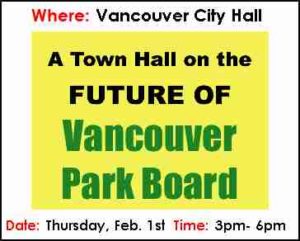
Advance registration to attend the Town Hall is required.

Click on this link to register.