Category Archives: VanRamblings

Be Kind, Be Gentle, and Act With Compassion and Love

VanRamblings had originally intended to publish a debrief of Vancouver’s 2022 civic election today, but arising from some untoward chatter online, a few very good friends who care about the writer of this blog have advised us to take a break for a least a day, and take the time to enjoy a walk along Spanish Banks, a cycle around the city, and a meal out with friends — so, that’s what we’re gonna do.

Tuesday, VanRamblings will weigh in on the provincial NDP leadership race — almost certain to make at least some people unhappy, but when is that not the case with what some read on VanRamblings? Many people appreciate the writing; others would wish this blog forever deleted. Alas. We seem to live in a troubled world.

Wednesday, VanRamblings will weigh in on Vancouver’s civic election, and what the meaning may be for the citizenry of Vancouver, our province and our country.

Thursday, we may or may not publish — but probably will.

We’re going to take a three week break from posting, and will commence posting to VanRamblings again in the week of November 7th, the date when our newly-elected and returning Vancouver City Councillor will be sworn in at their Inauguration Ceremony at The Orpheum Theatre, and both the new crop of electeds at the Vancouver School Board (swearing in at the VSB Board Room, followed by cake and beverages in the cafeteria), and at Park Board — swearing in at Van Dusen Botanical Gardens — both events at 7pm.

Commencing on Monday, November 7th, VanRamblings will publish two to three times a week, covering everything municipal, provincial and federal politics, to tech — our new iPhone 14 Pro Max will be arriving soon —  to new music (or music we love), and also intend to recommence writing Stories of a Life. We’re intent on covering myriad other subject matter that piques our interest, as well.

Autumn is on its way very soon.


Sunny, warm, almost summer-like weather will soon give way to chillier and wetter days, and more time inside the warmth of our homes. VanRamblings will be your steady companion through the coming days, weeks and months.

As per last year, our plan is to continue writing through the end of the year. After that we may, or may not, take a break. At this point, given everything that’s going on in the world around us, we’ll probably slog on, if only to exorcise our detractors.

For now: be kind, be gentle, and act with compassion and love, always.

Arts Friday | VanRamblings’ Annual VIFF Introductory Column

The 41st Annual Vancouver International Film Festival

The Vancouver International Film Festival returns to theatres after two years of a predominantly virtual, COVID-influenced online film festival.

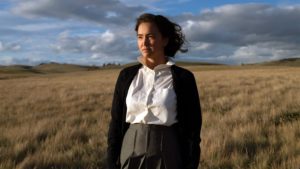
Opening on Thursday, September 29th, the Festival’s Gala Presentation features a celebrated Indigenous film, Bones of Crows — a hit at the Toronto International Film Festival this year — by Métis filmmaker Marie Clements, who tells an epic story of survival during a shameful period in Canadian history, a powerful indictment of the abuse of Indigenous peoples and a stirring story of extraordinary resilience and resistance.

Fearless in its denunciation of centuries of oppressive policies by Canadian governments and institutions, Bones of Crows is also a memorable paean to the resilience and determination of those who survived the residential schools — and those who sought to bring their oppressors’ crimes to light.

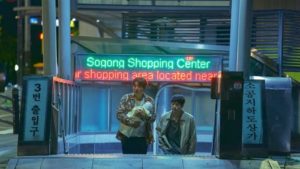
The Festival will close 11 days later, on October 9th, with a Gala Presentation of VIFF favourite, South Korea’s Hirokazu Kore-eda, Broker, a sprawling crime story about a baby kidnapping scheme starring Song Kang-ho (Parasite), winner of Best Actor at Cannes earlier this year.

Winner of the Palme d’Or in 2018 for Shoplifters and winner of the Jury Prize five years before that for Like Father Like Son, the writer-director once again displays great empathy for characters who are trying to put their lives in order, examining their predicaments from every possible angle and ultimately guiding them into a position where they can do the right thing.

Unfolding over a truncated 11 days (rather than its pre-pandemic customary length of 16 days), the Festival will again feature a virtual online presence, though not every one of the 135+ feature films and 102+ shorts will be available virtually.

In total, twenty-four films will screen online through VIFF Connect.

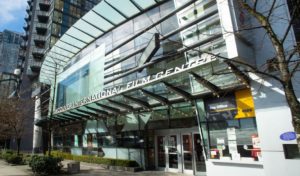
In person, meanwhile, as was the practice in the pre-pandemic times, VIFF’s theatres where all 135+ feature films and 102+ shorts will screen, include …

The VIFF digital Festival Guide is now available; click on the preceding link.

The free, glossy printed Festival guide is available across Metro Vancouver, at libraries, coffee shops, and bookstores, and all your favourite local haunts.

Although the Festival is smaller than in past years, the film programme categories will look familiar: Panorama, the main Festival film feature programme curated by Alan Franey and PoChu AuYeung, showcasing 90 carefully curated narrative films arriving from across the globe.

Northern Lights features the next wave of Canadian and Indigenous storytellers; while Insights, the always illuminating documentary programme, this year will incorporate the Spectrum programme, a collection of innovative nonfiction filmmaking; and then there’s Portraits, a kaleidoscope of ground-breaking artists, great performances, and cultural icons; and, Altered States, 8 challenging and  bizarre films the constitute VIFF’s 2022 late night series.

In last week’s, award winning VIFF films in 2022 featuring the work of Oscar-winning director Sam Mendes, who brings his latest film, Empire of Light to VIFF; Martin McDonagh’s masterful, surprisingly poignant, and dazzlingly designed and performed, The Banshees of Inisherin; Corsage, Austrian filmmaker Marie Kreutzer’s biopic about late 19th century Empress Elisabeth.

More Special Presentations? How about Korean filmmaker Park Chan-wook’s Best Director Prize winner at Cannes this year, Decision to Leave, which offers a teasing, tantalizing neo-noir genre piece about a homicide detective who falls in love with the widow of an apparent suicide. There’s Mia Hansen-Løve’s quietly miraculous One Fine Morning, a balm of a film and another glorious showcase for the director’s light touch when dealing with complicated emotions.

VIFF’s Director of Programming Curtis Woloschuk told VanRamblings VIFF programmers curated a record number of films that emerged after the pandemic — half of VIFF’s films in  2022 feature first time filmmakers!

“There were over 4,000 films that our programming team watched and considered this year that leave us more educated and illuminated about the world we live in.”

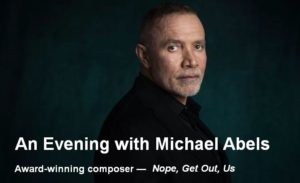
In addition to the many screenings, VIFF Talks boasts visiting artists like Deborah Lynn Scott — responsible for clothing actors in films ranging from Titanic to the new, upcoming Avatar: The Way of Water  — who will present a masterclass on costume design. Kate Byron, who just led production design on Olivia Wilde’s Don’t Worry Darling, will give a masterclass on production design. And, Michael Abels, the composer for director Jordan Peele’s Get Out, Us, and Nope will make a special performance and speaking engagement with the Vancouver Symphony Orchestra on October 6th.

The VIFF Amp Symposium on Music in Film is set to run October 6th to 9th.

In other new and expanded initiatives, VIFF Executive Director Kyle Fostner told VanRamblings that, for the first time, the Vancouver International Film Festival will offer free memberships for persons 19 to 25 years of age, free access to Indigenous peoples, and more free offerings to community groups.

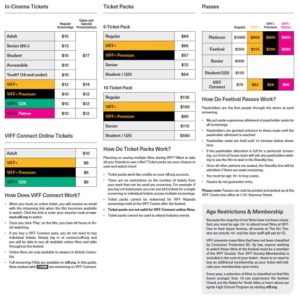
Individual tickets prices remain what they’ve been for years: $15 for any screening, except Special Presentations, which costs $17 for the award-winning future Oscar contenders, with reduced prices for seniors & youth.

VIFF passes and packages are also available again this year. A full Festival pass costs $350, with a senior rate at $300, and a youth rate of $120. There’s a 6-ticket pack at $84, and a 10-ticket pack available at $135. As was the case in 2020 and 2021, the VIFF Connect virtual online Festival pass will cost $70.

The VIFF Infoline, staffed by volunteers, is available 7 days a week, from noon til 7pm. Simply call (604) 683-3456 to have any question you have answered.

#VanPoli | Homelessness + Housing | A Series | Part 4

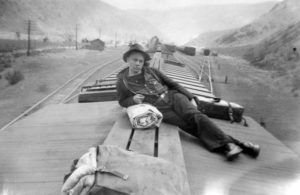
All of 13 years of age, in 1930 my father left his family farm in Saskatchewan, leaving behind his mother and five siblings — his father had died when he was three years of age — set to ride the rails for the next 9 years, alighting in the Annapolis Valley in the later summer to pick apples, working in every province across Canada, for no more than a meal and a roof over his head at night sleeping in a barn, more often than not taking shelter in a hobo camp somewhere adjacent to the railway tracks that span our nation, undernourished always, starving at other times, my father having joined a homeless generation of Canadian youth scrambling to stay alive in the midst of the Dirty 30s, doing the best that they could.

Until, as my father told me one autumn afternoon, sitting at his kitchen table …

“In early September of 1939, I was living in a hobo camp on the outskirts of Revelstoke, on my way to the Okanagan to pick apples. There was talk in the camp that something was up in Europe, that the German Army had invaded Poland. On September 10th, I was in town looking for food out back of a restaurant when I heard a bunch of kids, saw them running down the street, screaming into the air, “We’re going to war. There’s a war. We’re going to fight those dirty …

Next thing I knew, there was a hand on my shoulder, a man in a uniform. “Son,” he said to me, “we’re at war now, saw it comin’. I’m with the Army recruitment office just down the street. Why don’t you come with me, and we’ll get you all signed up. Three squares a day, a nice clean uniform, and you’ll get to see the world. No more living in hobo camps for you.

So, I did, I went with him, signed up. For the first time in almost a decade, things were looking up. After I signed my name on the dotted line, the sergeant handed me an army uniform, saying, “Find a place to put this on.” I ran back to the hobo camp, more excited than I’d been in I don’t know how long. There was a pond nearby the camp, I stripped off my tattered old clothes, jumped in the pond, got myself nice and wet, dried myself with my old clothes, and set about to get dressed up in my spanking new uniform. I don’t think I’d ever felt better in my whole life.”


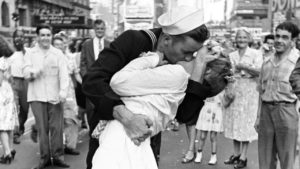
In 1945, returning members of our armed services were more than a little excited to be returning home

My father remained a private in the army for the next six years — having a Grade 1 education, and being unable to read tends to inhibit one’s advancement — before returning home with all of the other troops in the late summer of 1945, arriving in the port of Halifax, from whence he’d set off to fight the war six years previous.

My father, Jack, had heard much about life in Vancouver from those he’d served with overseas, so chose to make his way out west to build a life for himself.

Prior to the outbreak of World War II, 83% of Canadians lived in the rural areas of Canada, mostly as members of farming families, leaving only 17% of the population to reside in hub cities like Montréal, Toronto and Vancouver, with much lesser populations in the prairie cities, and provincial capitals. On the Lower Mainland, Richmond was called Lulu Island, and was largely a farming community, as was the case in what we now call the suburbs: Coquitlam, Surrey, and Maple Ridge,

Almost overnight after the war ended, the rural-urban mix in Canada was reversed.


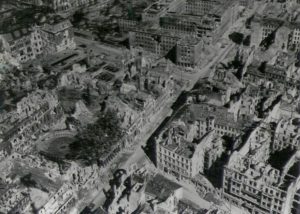
Berlin, post WWII: Statisticians calculated for every inhabitant there was 30 cubic metres of rubble

Following the end of the conflict overseas, with the industrial heartland of Germany, not to mention a great swath of Europe, and the production capitals of Japan leveled by the ravages of war, North America soon became the industrial heartland, and the bread basket, for the world. There were jobs aplenty across the North American landscape, as the U.S. & Canada became industrial powerhouses.

Most soldiers arriving home from Europe, rather than choosing to return to the farming communities from whence they had come prior to the outbreak of the conflicts in Europe and Japan, moved to the cities to make their fortune, many of them choosing to marry. Thus began the much vaunted baby boom, of which this writer is a member, born in 1950, and modern society as we still know it today.

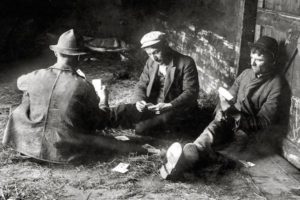
Prior to the 1930s, most rural towns and cities across North America had within their midst indigent, homeless populations, but these were folks who were generally well known in their communities, boys who became men, men who’d lost their way and turned to alcohol to numb their pain. The homeless in these towns, and even in our cities, were well cared for by their contemporaries, who’d gone to school with these men many years prior, knew them from the time they were boys.

In every society throughout history, dating back centuries, there has always been 4% of the population who find themselves locked out of conventional society, women and men alone and without resources, perhaps suffering from some mental health disability, mostly uneducated, alone, without family or resources, and as conventional society would state, without the “spunk” that would help them to lead productive lives of meaning, to be  part of the conventional work-a-day world.


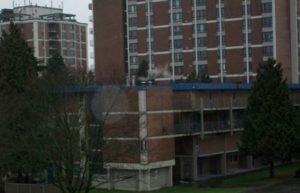
The Raymur Housing Project, just south of Raymur and East Hastings — social housing in Vancouver.

In the 1950s, in perhaps a more empathetic time, when we actually cared for one another, provincial government social planners spanning the nation, in concert with their federal government counterparts, set about to house the homeless by creating “urban social housing complexes” to house the provinces’ poorest citizens, who would be brought to the city. In doing so, Canadian provinces adopted the multiple family dwelling, or “apartment”, model as the housing form to shelter the indigent population. In U.S. cities like Detroit, we are much more apt to call these “urban social housing complexes” by a more colloquial name: ghettos.


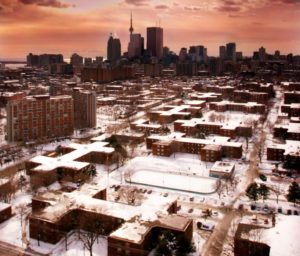
The Regent Park social housing community in Toronto, which expanded from the south Cabbagetown community in the Toronto of the 1930s, long one of the city’s worst slums, targeted by Toronto city planners for a grand urban renewal in the 1950s and 60s, which became known as Regent Park South.

As above, in Vancouver, the new community to house the poor was named The Raymur Project, where residents from across British Columbia were brought to Vancouver to live in the newly-conceived urban social housing complex.

Such projects, whether in Canada or the United States — in Toronto, Vancouver, Chicago, and New Orleans — proved abject, crime-ridden encampment failures.

Still and all, the homeless were off the streets, with a roof over their heads, pretty much hidden away from the eyes of conventional society, a forgotten population most people didn’t want to see, acknowledge or engage with on any level.

And so it remained through until the early 1980s, as we wrote on Tuesday.


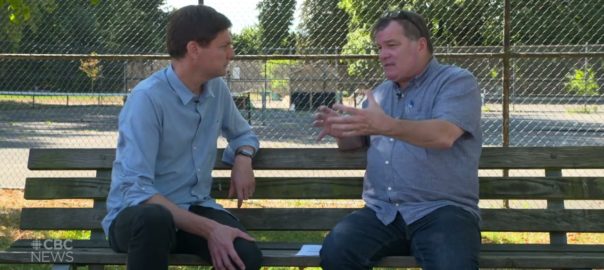
An interview with Premier-in-Waiting David Eby, conducted by CBC Early Edition host, Stephen Quinn

Thus far on VanRamblings’ four-part series on homelessness + housing, we’ve tracked the history of homelessness in B.C., from the 1930s forward until now.

We have touched on a modular housing model as a temporary “fix” for our current homeless crisis, and suggested that homelessness is a national issue of critical importance that requires the intervention of the federal government, working with the provinces, to address the ongoing issue of human misery on our streets.

In the interview with Premier-in-Waiting, David Eby, Stephen Quinn holds Mr. Eby’s feet to the fire, questioning him on the resolution to homelessness in our city and province. Mr. Eby is forthcoming about what he feels is necessary: build social housing, lots of it, transitioning our homeless / barely housed population out of sub-standard, one room single occupancy resident accommodation, or temporary shelters, into livable, one-bedroom furnished apartments — with a bed, kitchen, bathroom and living room, TV, internet and all the amenities — this housing to be located in every neighbourhood across our city, what yesterday we referred to yesterday as the “Finnish model” in Wednesday’s VanRamblings’ column.

On the day VanRamblings attended David Eby’s campaign launch to become British Columbia’s 37th Premier, the event held at the Kitsilano Neighbourhood House —where Mr. Eby gave one of the best, most moving and humane political speeches we’ve ever heard  — we wondered how Mr. Eby was going to position himself in order that he might retain power when the next B.C. election is called.

In 1996, BC New Democratic Pary leader Glen Clark positioned himself as a working man, a boy who grew up on the east side of Vancouver, who had fought all his life for better for all of us. A working class hero. Mr. Eby, whose father practiced law in Ontario as a partner in a prestigious law firm, and whose mother was a school principal could hardly pull off the Glen Clark’s “pulled myself up with my bootstraps” man of the people working class hero approach. What then for Mr. Eby?

“ICBC is dumpster fire.” “Money laundering in B.C. is artificially inflating housing prices.” “B.C. car insurance rates are too high … we’ll convert to no fault insurance, lower insurance rates, and provide a $400 rebate cheque to all B.C. motorists.”


David Eby, British Columbia’s Premier-in-Waiting Man of Action, ready to fix B.C. homelessness crisis

VanRamblings believes that British Columbia’s new “man of action” Premier, 45 years-young David Robert Patrick Eby will upon assuming the office of Premier of British Columbia declare a homelessness crisis emergency in our city and province.


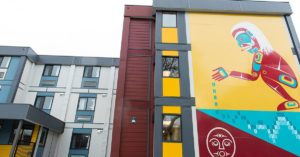
220 Terminal Avenue, the first temporary modular housing building constructed on City-owned land

In declaring a homelessness crisis emergency Mr. Eby will, as a temporary measure, order the construction of 1500 units of modular housing, to be built on city and provincial Crown land with all possible haste, on suitable sites across Vancouver, those modular housing sites to be occupied no later than the autumn of 2023.

Premier Eby will then appoint a Commission with the mandate of reforming the multi-billion service model that allegedly provides succour to those resident on the DTES, “a broken system,” Mr. Eby has said, that ill serves those in need.


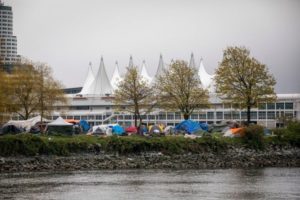
A tent encampment at Vancouver’s CRAB Park, which has maintained for two years. (Ben Nelms/CBC)

As a next order of business, VanRamblings believes that a Premier Eby will expedite the construction of social and affordable housing on city-owned (Vancouver is a creature of the provincial government), provincial Crown land, and in a co-operative agreement, on federally-owned Crown land, on a 66-or-99 year leasehold basis, ordering that the city of Vancouver will charge no development permit, or related fees, and that the approval process for construction of the social and affordable housing will occur sans City Hall red tape, and any measure of undue delay or intransigence on the part of the Planning, Urban Design and Development Services Department, lest the office of the Premier assume full responsibility for every aspect of the approval and construction of this necessary new housing.

#Holidays | Bah Humbug! | 2021 Christmas Lights Tour

When VanRamblings began our first annual Christmas Lights Tour 50 years ago, the residences along every block of the city of Vancouver and the whole of the Lower Mainland was alight in Christmas light decorations, whole stretches of blocks where every homeowner had strung lights on the balconies around their homes, and on their lawns, competing with their next door neighbours and the neighbours across the way to take the community prize for best residential light display.
That was then, this is now. Much has changed.

Over the past 50 years, fewer and fewer homeowners have taken the time and trouble to put up Christmas light displays around their home. Back in the day, there were no Christmas LEDs available, so putting up residential Christmas decorations proved to be a costly seasonal expense, often topping $1000. For the past 20 years or so, LEDs have been all the rage — more environmentally sound, and much less costly — yet fewer light displays.

In 2021, VanRamblings’ recommendation to our readers: take a walk, or a drive, around your neighbourhood, and you’re likely to see a surprising number of residential light displays — which is what we found to be the case this year, across all 23 Vancouver neighbourhoods.

                                             Sutton Place Christmas tree

As in past years, our Christmas Lights Tour begins with the downtown hotels.

The photo above of a decorated Christmas tree was taken at the Sutton Place Hotel on Burrard Street. In the 1990s, when the hotel was named Le Meridien, and the General Manager was the diehard romantic, Louis Daniel, the hotel went out of its way to create a festive environment in the hotel.

Each year, the chef created an entire chocolate village in the front lobby, featuring a huge chocolate village table, and a continuation of the chocolate village all along the south wall at the entrance to Le Meridien. The remaining area in the lobby and the seating area north of the lobby was filled with a riot of lustrous Christmas trees.

That was the 90s, this is now. No more chocolate displays, no ‘huge’ trees, and many fewer of them. Even before COVID this was the case. One supposes fiscal times were tough even pre-COVID, and the first things to go were the chocolate villages, and the riot of huge Christmas trees. Alas.

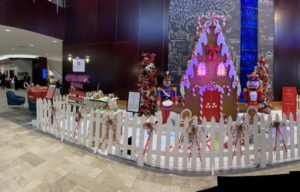
  Hyatt Regency Hotel Gingerbread display, located at the entrance to the lobby

Next, it was a stroll down an almost deserted Burrard Street (amidst the supposed hustle and bustle of the Christmas shopping season) to the Hyatt Regency Hotel at Georgia Street, to see if the hotel had come through with their annual Metro Vancouver public and private school-created Gingerbread villages. As was the case last year, again this year, aside from the gingerbread display you see above — created by Hyatt Regency staff, one would suspect — there were no gingerbread village displays to be found. Must be this new Omicron variant that’s been spreading so wildly this past week, or so.

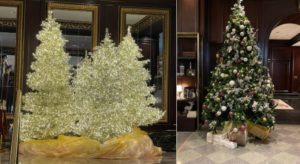
Hotel Georgia Christmas tree in the lobby of the hotel. Don’t miss the optical illusion art on the wall.

Next it was to the Hotel Vancouver, and then to the Hotel Georgia. In the past, the Hotel Georgia set up a free hot chocolate bar every visitor to the hotel might enjoy. Not this year, or last. There’s still the optical illusion art work on the wall in the lobby area to admire, and the trees you see in the photo above.


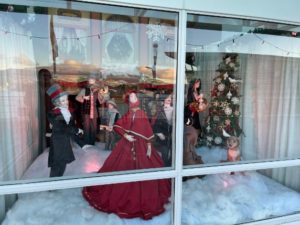
View of Stanley Park, from the concourse of Canada Place. Don’t miss the Woodwards window displays.

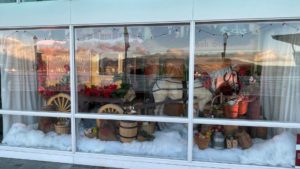
Next on the gloriously sunny and clear-skied Thursday, December 16th, it was to Canada Place to see the Woodwards window displays, and to admire the view from the concourse. VanRamblings could continue to bah hug! our way through this portion of the tour, and comment on the fact that neither the Pan Pacific Hotel nor the Fairmont Hotel had bothered to create any kind of festive atmosphere in their hotels, and once again this year there were no 25′ decorated corporate Christmas trees in the Canada Place open area — but we won’t do that, because we’re in an upbeat and festive mood!

As always, the Woodwards windows — which VanRamblings enjoyed as a child — were spectacular if, as our friend commented, “more than a bit colonialist in their presentation.” Still and all, free, something to behold, and a must-see.

We got back into our comfy and spacious EVO sedan car (with heated seats!) — although we had tried to secure one of EVO’s fleet of Kia Niro EV’s, of which there are only four in a fleet of 2500 EVO vehicles, but were unsuccessful. Next year maybe.

As the Christmas Lights Tour is supposed to be a free event, as we drove by the Christmas Market at Jack Poole Plaza we noticed the line was long, and entrance to the Market was fiscally dear — so we drove on to see the row houses in the 100 block of Victoria Drive that were all lit up last year. Not this year.

We drove to Victoria Park, where last year we noticed that the entire 1800 block of houses along Kitchener Street were lit up with Christmas decorations galore. Not in 2021. The same proved true along Victoria Drive from East 3rd Avenue south — with no light display surrounding the house at 12th and Semlin Drive, either. A minor disappointment, as we made the decision to drive along the residential streets of Grandview Woodland, from Victoria Drive and East 2nd through to East 8th Avenue, and up to Nanaimo Street. There were  in the neighbourhood a pleasing number of residential Christmas light displays, so our festive holiday lights needs were more than met, we found.

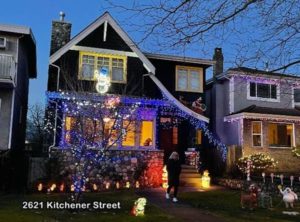
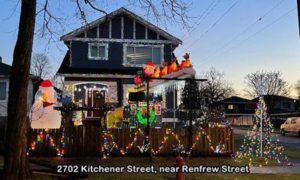
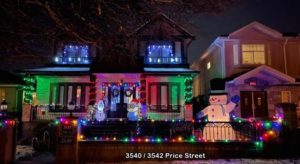
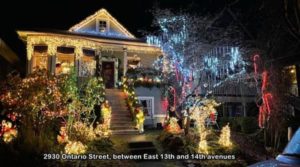
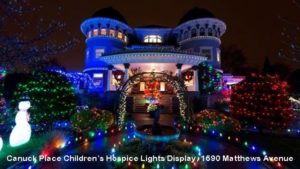
We next drove through East Vancouver (see photos above), along Kitchener Street, up Rupert Street to Price Street, then over to Ontario Street just west of Main Street, and finally to Canuck Place west of Granville Street.

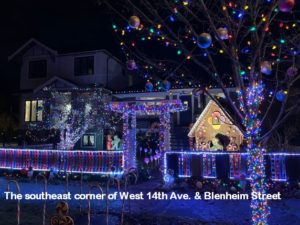
We continued our Christmas Lights Tour drive through Vancouver, as we drove through Vancouver’s neighbourhoods towards Canuck Place (always a delight!) — although, this year, there is no entrance to the grounds, as in past years —  but we did run across the home pictured above that was not on our Lights Tour last year. In fact, we found that the entire 3200 block of West 14th Avenue was completely lit up. There are also a great number of holiday light displays west of Waterloo Street, from West 11th Avenue to West 14th Avenue.

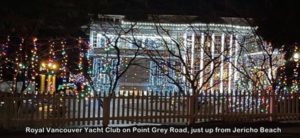
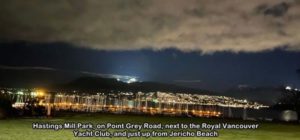
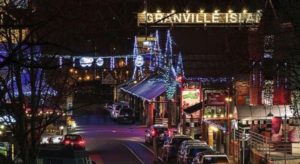
We continued our drive, now over to the Royal Vancouver Yacht Club light display, then to Granville Island, and downtown past the St. Paul’s Hospital Lights of Hope display, to English Bay, and then on to the Bright Nights display — which we were disappointed to find this year requires a purchased-in-advance $13 ticket that both gains you entrance into the Firefighters Holiday Lights Display, and a ride on the Christmas train. VanRamblings is of a parsimonious nature (we had our $10 in hand to donate to the Firefighters Burn Fund), and given that by this time we were famished, we decided to drive over the Lion’s Gate Bridge towards the Cactus Club at Park Royal, where we both enjoyed nutritious bowls of goodness.

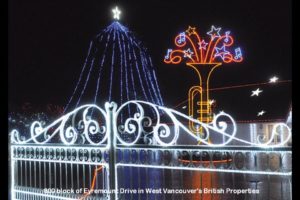
Preparing for our drive out to Horseshoe Bay along Highway 1 — which affords an eagle’s eye view of Metro Vancouver — we first ‘stopped in’ at the 800 block Eyremount in the British Properties, where we were wowed by the Christmas Lights Display. On the way back from Horseshoe Bay along the lower road of Marine Drive, right next to the water and then along and through Dundarave, we next decided to take in the lights of North Vancouver, which may be found in the Google Maps display just below.

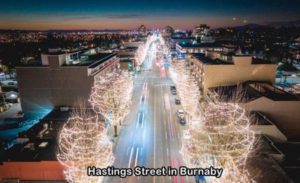
Traveling over the Ironworkers Memorial Bridge we took the turn off, and headed towards Hastings Street where the street was all lit up.

As the hour was late, and my Lights Tour companion was fading — with Google Maps on his smartphone, he had acted as the navigator throughout, and did a darn fine job — prior to heading home we stopped in for a late night hot chocolate at Timmie’s, after which we returned to our respective homes.

When conducting the Christmas Lights Tour from the mid-1980s through the mid-1990s, Megan (VanRamblings’ very decided ‘knows her own mind, knows what she wants’ daughter, 8 years of age in 1985), along with her brother Jude decided that the Christmas Lights Tour would begin at 3pm, when they were let out of school, and last until the wee hours of the next morning, usually around 4 a.m., when we took in not just the whole of Vancouver, but the entirety of the North Shore, Burnaby, New Westminster, the Tri-Cities, and then over the Port Mann bridge to Surrey — the ability to get by on only four hours sleep a night, and get a second wind to take us through the night, but one salutary feature inherited from their loving and devoted papa.

If you wish to go further afield than what we’ve outlined above, take a look at the second half of VanRamblings’2020 Christmas Lights Tour guide.

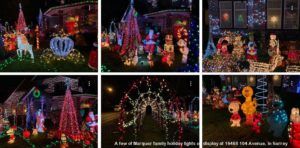
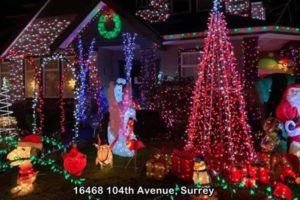
On a final note, should you click on the 2020 Christmas Lights Tour guide, you’ll find the following festive home in Surrey, near Guildford.

Flavio Marquez, the homeowner of 16468 104 Avenue, in Surrey, wrote to VanRamblings awhile back to say …

In 2021, my family has built an even larger holiday lights display, with many more lights and more lawn decorations than last year. During the holiday season in 2020, we raised over 1,400 lbs of food and almost $1,800 in cash donations. With the support of your readers — who we would very much like to see visit our home this year — we hope to do even better in 2021!

Again this year, my family has created a Facebook photo album (click on preceding link) that will provide your readers with even more insight into what we’ve been able to achieve.

Hoping your family, and all of your readers’ families, enjoy the merriest of Christmas seasons. Merry Christmas, and may the New Year fulfill all of your fondest wishes.

Thank you, Flavio! And thank you to all VanRamblings readers. Wishing you a very Merry Christmas, and the happiest & most rewarding holiday season.