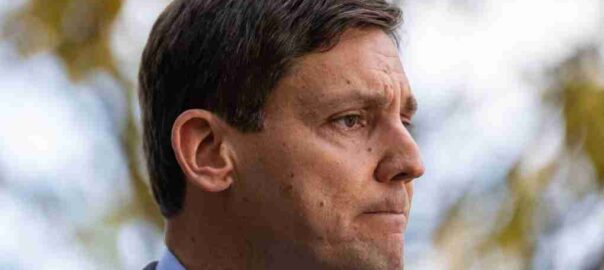
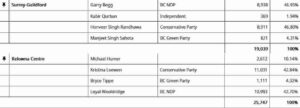
As Premier David Eby prepares to announce his new Cabinet on November 18th, the selection process is particularly dynamic, especially pending judicial recounts in three British Columbia ridings that will take place this upcoming weekend.
With a significant reshuffle required due to retirements, re-election losses, and a pressing need to address evolving provincial issues, David Eby’s appointments will shape the next phase of the B.C. New Democratic Party’s (NDP) governance.
Premier Eby must balance geographic and gender considerations following an election in which a record number of women were elected — but the government lost considerable ground outside of the Lower Mainland and Vancouver Island.
The Premier must also find MLAs to replace Cabinet ministers who either retired before the election or were defeated.
Education Minister Rachna Singh; Minister of Water, Land and Resources and Minister Responsible for Fisheries, Nathan Cullen; Agriculture Minister Pam Alexis; Minister of State for Infrastructure and Transit, Dan Coulter; and Minister of State for Sustainable Forestry Innovation, Andrew Mercier, lost their re-election bids.
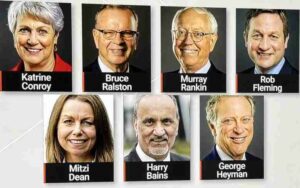
Finance Minister Katrine Conroy; Forests Minister Bruce Ralston; Indigenous Relations Minister Murray Rankin; Transportation Minister Rob Fleming; Minister of State for Child Care, Mitzi Dean; Labour Minister Harry Bains; and Environment Minister George Heyman are the big names to retire at the end of the past term.
Nearly half of the 27 Cabinet members Eby had before the election are not returning to government.
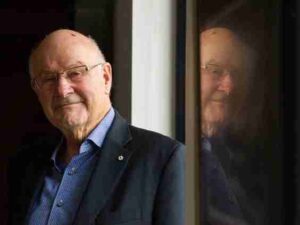
Former NDP Premier Glen Clark says he’s concerned that Premier David Eby will struggle to give rural B.C. a voice because the party won only five seats outside the Lower Mainland and Vancouver Island. Photo by Jason Payne / PostMedia Group
Glen Clark, NDP Premier from 1996 to 1999, told PostMedia’s Alec Lazenby that he’s concerned that Eby will struggle to give rural B.C. a voice because the party won only five seats outside the Lower Mainland and Vancouver Island. All 15 returning ministers are from those two regions.
Clark said at least two or three of the five NDP MLAs outside the major urban centres will need to be given a role in Cabinet. The five are Steve Morissette of Kootenay-Monashee, Harwinder Sandhu of Vernon-Lumby, Brittny Anderson of Kootenay Central, Tamara Davidson of North Coast-Haida Gwaii, and Randene Neill of Powell River-Sunshine Coast.
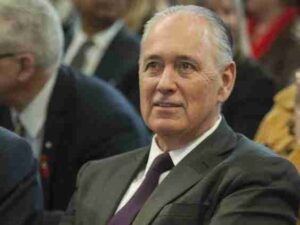
Former NDP Premier Mike Harcourt expects Premier David Eby’s Cabinet will be much smaller than his last one. Photo by Arlen Redekop / PostMedia Group
Another consideration has to be the reduced size of the NDP majority, says former NDP Premier, Mike Harcourt, giving Eby a smaller number of MLAs to work with.
Mike Harcourt, who was Premier of British Columbia from 1991 to 1996, said it will be important to place the experienced ministers in key portfolios such as finance, health, public safety and the attorney general’s office.
Harcourt cited Public Safety Minister Mike Farnworth as a prime example and believes Jobs Minister Brenda Bailey would make a “very capable finance minister.”
Based on political signals and Eby’s policy priorities, here’s a look at some of the most likely and impactful Cabinet appointees.
Key Appointments in Vancouver and the Lower Mainland
David Eby’s Cabinet will likely reflect Vancouver’s strong support for the B.C. NDP, where they won 12 out of 13 seats.
A probable first-time appointee is Christine Boyle, who captured a decisive 62% of the vote in Vancouver-Little Mountain. Boyle, with deep ties to the Eby family and significant experience in climate advocacy, is poised to become Minister of Climate Change and the Environment. This would align her environmental background with the B.C. NDP’s efforts to address climate-related challenges.
In Vancouver-Yaletown, retired Vancouver Police Department Inspector Terry Yung secured his seat and is an anticipated addition to the Cabinet as Minister of Public Safety and Solicitor General. Yung’s experience in law enforcement is likely to align well with Eby’s agenda on community safety and public order. Veteran MLA Mike Farnworth, who previously held this role, may take over as Minister of Finance, a shift that would leverage his decades of experience in government.
In Vancouver-South Granville, incumbent Brenda Bailey has proven herself as an effective Minister in Eby’s prior government and is likely to retain her Cabinet position, or become the NDP’s new Finance Minister, as Mr. Harcourt suggests.
Health, a demanding and highly scrutinized Ministry, is expected to see a shift, with longtime Health Minister Adrian Dix moving to another post after overseeing the Ministry since 2017. Bowinn Ma, who has significantly bolstered the B.C. NDP’s presence in North Vancouver, is widely anticipated to take over Health, bringing fresh energy to a complex portfolio.
Regional Diversity and Inclusion of Rising Stars
Beyond the immediate Vancouver area, Eby’s Cabinet will reflect strategic regional representation. In the Interior, Harwinder Sandhu, one of the five BC NDP MLAs to be elected outside the Lower Mainland, Vancouver Island, and the Sunshine Coast, is almost guaranteed a Cabinet role. Her appointment would emphasize the BC NDP’s commitment to rural regions, showcasing representation in government.
Of course, as Glen Clark suggests, consideration must also be given to Steve Morissette (Kootenay-Monashee); two-term MLA for Kootenay Central, Brittny Anderson, who we think may have an inside track to becoming a junior Minister, or Minister of State; newly-elected B.C. NDP MLA, Tamara Davidson, who represents the riding of North Coast-Haida Gwaii; not to mention, retired, high profile broadcaster Randene Neill (Powell River-Sunshine Coast), who we think is a lock for an important portfolio in the first full-term of a David Eby government.
Burnaby, a steadfast NDP stronghold, will likely see several (re)appointments.
Anne Kang, re-elected in Burnaby Centre, could remain as Minister of Municipal Affairs. In Burnaby North, Janet Routledge has a chance to join the Cabinet, while Paul Choi, newly-elected in Burnaby South-Metrotown, could also be considered as Premier Eby aims to add fresh perspectives.
In Delta North, Ravi Kahlon will almost certainly continue as Housing Minister, an area of critical focus for the Eby government given the housing crisis across British Columbia. Housing remains a top issue for Eby, who himself made housing reforms a central part of his platform. A stable and experienced presence like Kahlon will be crucial to advancing these policies, especially in urban centres.
Focusing on Surrey and the Broader Metro Vancouver Region
Surrey, a key battleground in the recent election, remains strategically important to Premier David Eby, especially given the loss of some NDP seats there.
Should Garry Begg retain his seat following the judicial recount in Surrey-Guildford this weekend, he is expected to be a top pick for Cabinet to strengthen representation in this fast growing city. Additionally, newly-elected MLAs Amna Shah in Surrey City Centre and Jessie Sunner in Surrey Newton are strong contenders for Cabinet appointments. Eby’s attention to Surrey signals an understanding of the city’s growing political and economic influence in the province.
Reappointments and Strategic Shifts on Vancouver Island
On Vancouver Island, Grace Lore, who held the Minister of Children and Family Development portfolio, is highly likely to be reappointed given her success in Victoria-Beacon Hill and experience in child welfare issues. Lana Popham, a veteran minister, is also expected to retain a Cabinet position, either continuing in her tourism and cultural portfolio or perhaps taking on a new challenge.
Sheila Malcolmson, who has effectively led the Ministry of Social Development and Poverty Reduction, is another probable reappointment following her victory in Nanaimo-Gabriola Island. Jodie Osborne, in the Mid Island-Pacific Rim riding, will likely be reappointed to the Ministry of Energy, Mines and Low Carbon Innovation, continuing her work on sustainable energy initiatives in British Columbia.
Gender Parity and Representation in Eby’s New Cabinet
With 31 out of 47 elected B.C. NDP members being women, there is a strong case for gender parity within the new Cabinet — with the possibility that two-thirds of the members of his new Cabinet will be women, reflecting their strength within the B.C. NDP caucus — a principle Eby has consistently championed. If the projected appointments proceed, Eby’s Cabinet will reflect a representative cross-section of the province, with an emphasis on female leaders in key ministries.
This commitment to gender parity aligns with Eby’s broader goal of promoting inclusivity within his government, thereby setting a standard for future Cabinets.
Notable Exclusions and Potential Surprises
While Vancouver-based MLAs dominate many of the Cabinet roles, some veterans may be left out. Spencer Chandra Herbert, who has represented Vancouver’s West End since 2009, and veteran B.C. NDP MLA Mable Elmore, representing Vancouver-Kensington, may not secure Cabinet spots due to the high concentration of Vancouver representatives. These omissions may underscore the difficult balancing act Eby faces as he strives to achieve both gender and regional representation.
Langford-Highlands’ Ravi Parmar, a relatively newcomer into the MLA ranks, elected from John Horgan’s former riding, might also be considered for Cabinet. Parmar’s inclusion would help strengthen Vancouver Island’s representation and honour Horgan’s legacy, which remains influential within the BC NDP.
A Cabinet for a New Political Era
In crafting his new Cabinet, Premier Eby aims to assemble a team that can tackle B.C.’s most pressing issues, from housing and health care to environmental sustainability and public safety. The mix of experienced veterans like Farnworth and Popham with rising stars such as Boyle and Ma reflects Eby’s commitment to balancing continuity with innovation.
The emphasis on regional and gender representation, coupled with a focus on critical ministries, positions this Cabinet to address the complexities of governing a diverse province. Moreover, by incorporating leaders from various backgrounds — public safety, municipal governance, environmental activism — Premier Eby’s Cabinet can approach these issues from fresh perspectives, creating policy solutions his government aims to resonate with a broad swath British Columbians.