Category Archives: Politics

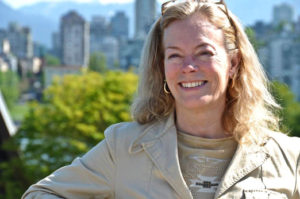
#VanPoli | A Friendship | Vancouver City Councillor Colleen Hardwick


First term Vancouver City Councillor and 2022 Mayoral hopeful, Colleen Hardwick

In 2013, a group of community activists came together to Save Kits Beach, a community-led environmental response to a Vision Vancouver proposal to run a 12-foot wide asphalt bike path through Hadden and Kitsilano Beach parks.

Although I had known Colleen in the years prior to 2013 — both as an arts reporter writing about the film industry, in which she was involved, as well as working with her father, the late Dr. Walter Hardwick, in the late 1980s / early 1990s on the Livable Region Project — it was not until 2013 that Colleen and I came to know each other better, working on Save Kits Beach, when we first became true friends.
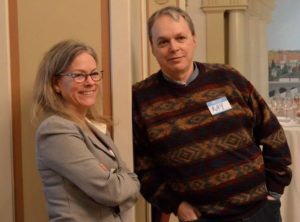
In mid-2016, when I was diagnosed with hilar cholangiocarcinoma, Colleen gave me a call one morning, and in her inimitable, straightforward manner exclaimed boldly to me over the phone, “If you’re going to beat this thing, Raymond, you’re going to need a spiritual element in your life. I’ll be picking you up this coming Sunday morning at 10 a.m. to take you to church!”

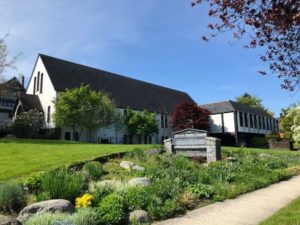
During the course of the telephone call Colleen revealed to me that she, too, had earlier been diagnosed with cancer, and that she was still in recovery, as was a good (and mutual) friend of ours, Tina Oliver — who was still receiving treatment. If you know Colleen, you know that there’s no refusing her when she has her mind set, so that next Sunday morning, I dragged myself out of my sick bed, and the two of us headed off to Fairview Baptist Church — where I gratefully attend to this day.
Quite obviously, Colleen was right — for despite my terminal cancer diagnosis, I am still here today, grateful to be alive, and thankful for Colleen’s friendship.
Over the years, Colleen had spoken with me about making a run for Vancouver City Council. In 2014, she created A Better City, the name of the nascent Vancouver political party since “appropriated” for the upcoming 2022 Vancouver municipal election by former Non-Partisan Association President, Peter Armstrong — without permission, of course, with not even a call, text or e-mail posted / made to Colleen.


A Better City, a political party created by City Councillor Colleen Hardwick in 2014

After much thought and discussions with friends, Colleen made the difficult decision not to make a bid for elected office in 2014, under the ABC banner.

All that changed,  however, in 2018, when Peter Armstrong approached and pleaded with Colleen to run for Vancouver civic office under the Non-Partisan Association (NPA) banner — about which she had significant misgivings, not the least of which was the lack of a nomination process.

Having run with the NPA in the 2005 Vancouver municipal election, where she placed 14th after a hard fought campaign, Colleen decided to take Peter up on his offer to fund her civic election campaign, as he all but assured Colleen of her election to Vancouver civic office on October 20.

In fact, Colleen placed a very respectable fifth place in the hard fought 2018 Vancouver civic election, where she would sit as one of five Non-Partisan Association City Councillors — all women —  the others: second term Councillor Melissa De Genova, Lisa Dominato, Rebecca Bligh, and barely squeaking onto Council, former Vancouver Park Board Chairperson, Sarah Kirby-Yung.


Vancouver City Councillor Colleen Hardwick looks askance at a Council colleague

In the five weeks following her election as a City Councillor, then City Manager Sadhu Johnson arranged an orientation for the newly-elected Councillors, during which time the Councillors became intimately familiar with how the city works, with visits to each of the City’s departments, from Planning to Engineering, and Transportation, and beyond, including instruction on City “processes”. During the orientation, the Councillors got to know one another well.
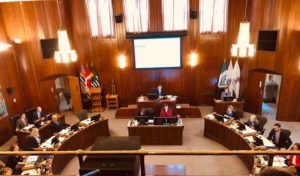
At the Council table, to Colleen’s right sat Christine Boyle, and to her left, Pete Fry. Colleen already knew Pete, but apart from what I had written about Christine during the course of the 2018 Vancouver civic election, was not all that familiar with Ms. Boyle, and what she “brought to the table.” From the outset, Christine let it be known that each and every one of us is living on the stolen lands of the Coast Salish peoples, raising issues of indigenous relations with novice Vancouver City Councillor, Colleen Hardwick.

Quite an education it proved for Ms. Hardwick, who came to like, respect and admire her principled, younger, distaff Council colleague.

As it happens, there was to be no “mutual admiration society” extant between the two nascent Vancouver City Councillors. Christine Boyle implicitly and explicitly let it be known — with a viciousness that Colleen found both perplexing and unsettling — that she despised Colleen and all that she “stood for”, that she would not work with her, had no interest in developing any kind of working relationship with her more mature Council colleague, that she considered Colleen to be a “right winger” and would set about to make Colleen’s life on Council “a living hell.”

And thus the Christine Boyle-created narrative of Colleen Hardwick as a morbid, unredeemable and entirely loathsome “right winger” was born.

As proved to be the case over the next two years, Vancouver City Council’s chief  dissembler — Christine Boyle — was more than true to her word.

Even more, when other of Colleen’s City Council seatmates saw how vicious was the treatment Colleen was being afforded by Christine Boyle, the three men on Council (Mayor Kennedy Stewart, and Green Councillors, Pete Fry and Michael Wiebe) — or as I like to refer to them, the Three Misogynist Musketeers — were only too happy to pile on the train of hate throwing rotten fruit at Colleen, with Christine Boyle handing them the fetid, putrid projectiles.

On two occasions in December 2019, at the end of our regular Sunday church service, Colleen threw herself into my arms, crying and inconsolable, that when I was able to settle her down was told by her that sitting on Council had become too much. The hateful treatment she was afforded at every Council meeting, most particularly by Christine Boyle, but also by Mayor Kennedy Stewart and Councillors Pete Fry and Michael Wiebe, was more than she could bear, it was unrelenting.

Never had she been so miserable, at any point in her life, she cried out.

As it happens, I attended the OneCity Vancouver AGM later in the month of that December, making contact with Christine, telling her how much Colleen had admired her in their early days on Council, how much she had learned from Christine, how grateful Colleen was for the humanity Christine brought to the issue of our relations and collective obligation to our Indigenous peoples.

While staring daggers at me as I made my exclamatory statement, Christine harrumphed, spitting out “I’m not interested,” then briskly walked away.

And this was at a pre-Christmas / Hannukah celebration by a whole passel of OneCity Vancouver members — just about the kindest, most welcoming, generous and socially conscious, as well as activist people you’d ever want to meet.

In March 2020, when a decision was to be made — arising from the demands of the just declared pandemic — Council decided that until further notice that Council meetings would be held virtually through WebEx. Both Councillors Boyle & Fry posted bitter tweets deriding Ms. Hardwick, with Pete tweeting, “At least I don’t have to sit next to that whack job anymore,” referring to Colleen.
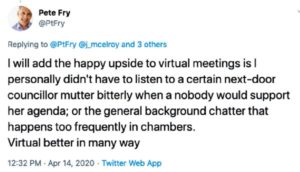
A tamped down Pete Fry tweet deriding Councillor Colleen Hardwick

That original tweet has since been deleted. The sentiment and ill-regard remains.

Later, when Christine Boyle — the Chairperson of Council’s Selection Committee — insisted that independent Councillors Melissa De Genova and Sarah Kirby-Yung resign their positions on Council Advisory Committees (which they did … to this day it befuddles me as to why Melissa, by far the toughest person on Council, puts up with Christine’s hateful nonsense, with nary a response to Ms. Boyle’s myriad provocations), and when Ms. Kirby-Yung, Ms. De Genova and Ms. Dominato recommended Councillor Hardwick for a position on the expanded Selection Committee, Christine Boyle cried long and loud that she would not sit on a Selection Committee with … well, let’s not record what the Councillor actually said, but it weren’t pretty, it weren’t kind, and it certainly wasn’t collegial, nor professional.

The Mayor finally had to intervene in response to Councillor Boyle’s childish tantrum, and appointed Councillor Hardwick to the Selection Committee.

All of the above is by way of saying that I’ve had it up to here with the ill treatment Colleen has been afforded on City Council — enough’s enough!

And, no, this is not Raymond Tomlin riding in on his white steed to rescue the damsel in distress. On her most emotionally fraught day, Councillor Colleen Hardwick is 100x tougher than I am, have ever been, or will ever be. Colleen hardly needs my “help” — my friendship and loyalty, maybe, but just that.
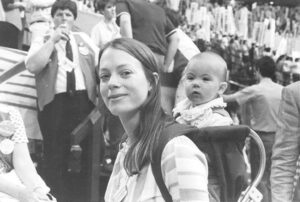

Colleen Hardwick and her daughter,  at the 1984 Liberal Party leadership convention 

Let me state for the record: Colleen Hardwick is not a right-winger — as a lifelong member of the Liberal party, and as a multi-term member of the Vancouver Centre Liberal riding executive, Colleen has always been a left-of-centre Liberal, from the time she fought for child care, when in 1984 she attended the Liberal leadership convention, when child care was hardly on anyone’s agenda, but it was on hers, Colleen has always remained a progressive, yet reasonable and centrist Liberal, very much in the mold of former Liberal Prime Minister Pierre Elliott Trudeau, a political leader she has greatly admired all of her adult life.

#VanPoli Politics | The Pending Chaos of the 2022 Vancouver Civic Election

In somewhat under a year — Saturday, October 15, 2022 to be exact — the next Vancouver municipal election will take place, when a Mayor and 10 City Councillors will be elected to civic office at Vancouver City Hall in our fair city by the sea.

Although VanRamblings will not commence intensive coverage of Vancouver’s next civic election until sometime in the spring of 2022, there is enough going on politics-wise in our city to comment on the state of municipal political affairs — which is what VanRamblings will set out to do over the next couple of weeks.

Why all the hubbub about Vancouver politics in the autumn of 2021?

When our NDP provincial government brought in legislation governing the conduct of municipal elections — limiting / eliminating third party advertising in the three months prior to the election date, while also limiting the expenditure of monies each civic party, and candidate, could spend towards the goal of achieving civic office — the doors were left wide open to spend any amount of money in the civic arena prior to the exertion of British Columbia’s civic election “restriction date”.

Thus you have A Better City mayoral candidate Ken Sim — who in the 2018 Vancouver civic election ran as Mayoral candidate for the Non-Partisan Association, coming within 1,000 votes of becoming our city’s Mayor — holding a campaign kickoff and fundraiser this past Wednesday at Chinatown’s Floata Seafood Restaurant, where all of Vancouver’s esteemed civic reporters were on hand to nosh on food, and otherwise kibbitz with one another and attendees at this swish municipal affairs soirée. That Peter Armstrong (Mr. Sim’s main financial backer, who introduced Sim to civic politics), he sure does know how to put on a feed.

Current Vancouver Mayor Kennedy Stewart has announced that he’ll seek re-election in 2022. Longtime political fixer and campaign strategist extraordinaire, Mark Marissen, has announced his bid for Mayor, as has current Park Board Commissioner John Coupar. Vancouver City Councillor Colleen Hardwick has also served notice that she will seek the Mayoral nomination with  a reinvigorated TEAM (The Electors Action Movement) civic party — that’s five mayoral candidates.

VanRamblings believes that the 2022 Vancouver municipal election will prove to be the ugliest and most divisive civic election ever waged in our west coast burgh, that there’ll be no end of bad behaviour from the myriad candidates putting their names forward in the hope of gaining office and tenure on Vancouver City Council, that OneCity Vancouver — and more particularly, OneCity Vancouver’s resident ‘mean girl’ Council mainstay, Christine Boyle — will run a vicious campaign of unrivaled and unmitigated class warfare against the parties and candidates OneCity has already successfully defined as “right wing”, with the media buying into this condemnable nonsense hook, line and sinker. Alas — it was always thus. ?

Decision 2021 | Post Mortem, Part 3 | Wretched & Sad Woebegone Tories


Buh-bye, Erin —   don’t let the door hit you in the keester on your way out.  ?

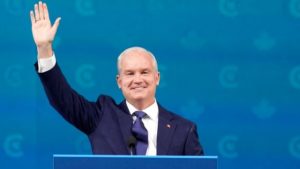
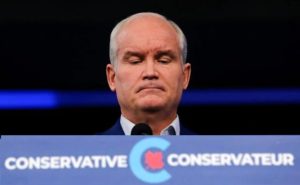
Poor Erin O’Toole. The Tory leader is just hours, days or — at the very outside — weeks away from being deposed as leader of Canada’s Conservative Party.

Politics, can be a cruel and unforgiving mistress — particularly, when victory has been spurned. Winning two fewer seats in 2021 than Andrew Scheer achieved in 2019? The knives currently lodged in O’Toole’s back must hurt something fierce.

Erin O’Toole accused of betraying Conservatives. Faces leadership challenge.

The headline above was a Wednesday front page story in The Globe and Mail.

Bert Chen, an elected Ontario national council member, told the Globe’s Laura Stone & Ian Bailey that “many party members are upset with Mr. O’Toole’s attempt to make the party appear more centrist, which they believe resulted in the Tories’ loss of seats in Monday’s vote, as well as diminished support in urban areas.”

“The feedback from the members … is that Erin has betrayed their trust, and that Erin’s leadership based off of these results is a failure, and he needs to go,” Mr. Chen said in an interview with The Globe.

“Accountability and integrity are central to what Conservatives want out of a leader, which is why we don’t like Justin Trudeau. But Erin O’Toole has demonstrated he’s no better than Justin Trudeau.”

The Globe reports that Mr. Chen has launched an online petition to trigger a review of Mr. O’Toole’s leadership. The Conservative Party’s constitution says the national council is responsible for conducting referendums in response to valid petitions.

After the election, Erin O’Toole told party members that he, too, was disappointed with the Tories’ performance, and promised to launch a review of the party’s electoral strategy — but Mr. Chen said he doesn’t trust Mr. O’Toole’s review, and that the Conservative leader has not been contrite enough in his public comments about the election loss, adding that he was concerned that “Mr. O’Toole’s hardline comments about China had made Chinese-Canadians feel uncomfortable.”


Ousted Richmond, B.C. Tory MP Kenny Chiu says supporters ‘abandoned’ him in the 2021 election

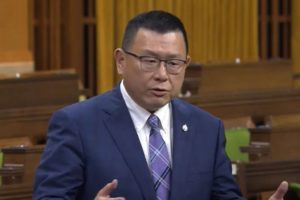
Both Richmond Conservative MPs — Kenny Chiu, in Steveston-Richmond East, and Alice Wong, in Richmond Centre — lost their seats on election night to their Liberal Party challengers, 34-year-old Wilson Miao and Parm Bains, respectively.

As reported in the South China Morning Post

“Weeks after being comfortably elected in Steveston-Richmond East, one of Canada’s most ethnically Chinese electorates, Chiu was back in his birthplace of Hong Kong as an international monitor for the city’s district council elections.

He would go on to become Vice-Chair of Parliament’s subcommittee on international human rights, which sanctioned Chinese individuals and entities over alleged human rights violations in Xinjiang.

But now, after less than two years as an MP, Chiu is out, having suffered a hefty swing against him of 8.3 percentage points in Monday’s election.

The Chinese government sanctioned Chiu for his role on the rights committee, with China’s ambassador, Cong Peiwu, launching a thinly veiled attack on the Conservative. Chiu’s Tory colleague and fellow Hong Kong immigrant Alice Wong — a Tory MP since 2008 — suffered an even worse swing of 11.9%, in what was previously a Conservative stronghold. In total, the Tories lost 4 Lower Mainland seats.

Disaster looms unless the Conservative party (re)discovers what it stands for

Erin O’Toole won the Conservative Party leadership in 2019 in part because Tory members believed he could make the same sort of inroads in the GTA (Greater Toronto Area) that Stephen Harper had in three successive elections.

In fact, the Liberals once again all but swept the GTA, with the Conservatives winning only a paltry and dispiriting 7 of 78 GTA seats, including Tory leader Erin O’Toole’s Durham seat. On a bleak night, gay Conservative icon, Melissa Lantsman (pictured above) — soon to become a star in the Tory caucus, and in the House of Commons (who’ll be entertaining as all get out) — managed to hang onto the Thornhill seat previously occupied by outgoing former Tory Minister, Peter Kent.

In general, Canada’s Conservative Party supports conservative social & economic policies & values, a strong federal system of government — while leaving the provinces alone in their areas of jurisdiction —  and the use of Canada’s armed forces in international peacekeeping missions — or, as the party states on its website …

The Conservative Party of Canada is founded on the principles of peace and freedom on the world stage; responsible management of taxpayers’ money; a welcoming land of refuge for the world’s persecuted and afflicted; the defence of clean Canadian technologies; and a clear understanding of responsibilities between levels of government.

In 2021, what values do members of the Conservative Party cherish, and what policies would members like to see implemented? Erin O’Toole proposed cutting the Liberal child care plan — to save billions of dollars of taxpayer money, he said — but then proposed a Conservative Party spending budget of well over $100 billion dollars, exceeding by more than $20 billion the Liberal Party spending plan.

So, any measure of fiscal responsibility and reduced government spending would seem not to be on the Conservative Party agenda, in 2021, or anytime soon.

During the Election, O’Toole flip flopped on gun control, climate change, abortion, and pandemic and spending policy — for anyone following the Election closely, their heads were left spinning, so frequent were the changes made on the fly to the Tory platform, angering the party’s base, and causing confusion among Canadians.

In 2021, is the Conservative Party the Progressive Conservative Party of old — the safely centrist and socially progressive tweedledum to the Liberals tweedledee, when it was difficult to tell one neoliberal party from the other — or is the Conservative Party of today, at its very heart and in the main, the raucous amalgam of western-based and socially and fiscally conservative Reform Alliance members that Stephen Harper managed to cobble together with Progressive Conservatives in 2003 as the new (sans Progressive) Conservative Party of Canada?

Although Erin O’Toole spoke with Stephen Harper each day of the campaign — Harper wanted to stay out of the Election fray for fear of alienating potential voters — the current, Erin O’Toole-led iteration of the Conservative Party seems to be suffering from a crisis of identity, far too left and spend thrifty for the Reform Alliance members in their party, and not nearly as progressive on social issues as many Tory members feel is warranted in the much-changed world that is 2021.

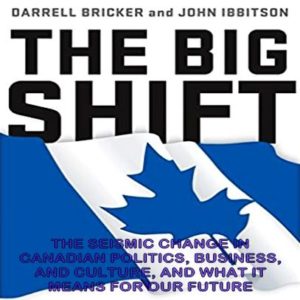
Conservative-minded Globe and Mail columnist John Ibbitson and Ipsos-Reid CEO Darrell Bricker wrote in their book, The Big Shift, that the 21st century belongs to the Conservative Party as much as the 20th century belonged to the Liberal Party.

But they’re wrong, dead wrong.

In fact, the Conservative Party is a corporatist political party in its death throes, with a group of neanderthal malcontent members who want to reclaim a world that never was, a Trumpian, nearly all white nirvana where men ruled the roost, and women stayed home barefoot and pregnant, raising the kids, and making fer damn sure, her husband’s dinner was on the table when he got home from work.

History moves inexorably forward, and change for the better always occurs

On Monday, April 15, 1912, after striking an iceberg during her maiden voyage from Southampton to New York City, the British passenger liner, the Titanic, sank in the frigid waters of the North Atlantic. More than 1500 women, men and children — out of an estimated 2,224 passengers and crew onboard that fateful night — died a watery death in the deadliest peacetime sinking of a cruise ship to date.

All but a handful of the third class passengers in the below decks died, while almost all of the passengers traveling in the top decks, first class accommodation managed to get off the ship and onto the boats and life rafts — of which there were far too few to meet the needs of all of the passengers onboard, going on to live productive lives. Not so for the families of the passengers traveling in third class.

For weeks, months and years following the sinking of the Titanic, the New York Times published hundreds of stories on the rank indifference of a society that would allow the “lower classes” to die with nary a consideration, while better valuing the lives of the first class passengers, most of whom survived — unlike the poor children, women and men in the below decks. The furor that was raised by the New York Times’ relentless years-long coverage of the tragedy of the sinking of the Titanic lead to fundamental and substantive change in societies across the world, and a re-definition of a person’s worth, not determined by the money or position s/he held but rather by the character and the familial bonds common to all people.

Over the past century, unions organized workers, creating a new and vibrant middle class; access to a post secondary education expanded dramatically across the population, creating opportunity; women not only got the vote but the feminist movement that began a century ago blossoms through until this day, making the lives of girls and women that much better, with access to opportunity a fundamental tenet of the rise of the cause of women and girls; members of the LGBTQ2+ population have come out of hiding, so that today we celebrate the community daily, same sex marriage is a common feature of western society, and annually in small & large communities, we participate in Pride Day parades and ceremonies.

Which is all by way of saying: history moves inexorably forward, as it always has.

We are not going back to the mean old days of a Stephen Harper, a Mike Harris or a first-term Gordon Campbell, and neither will Canadians elect a regressive Conservative Party to the halls of power in Ottawa. Before the end of the century, private property will have become a thing of our unjust past, as co-operative and community-owned housing becomes the order of the day, and the norm; rights will continue to expand, as we recognize that the exercise of our rights entails a responsibility to the larger community around us; women, men, children, persons of colour, minority and immigrant communities will all work together, as we achieve our goal of an inclusive and more just society that serves the interests of all.

And, yes, that means the New Democratic Party will become Canada’s political party of the 21st century, our country’s natural governing party, consigning a still progressive but not progressive enough Liberal Party as a perpetual opposition party — or, more likely, proportional representation will carry the day, in order that all Canadian voices might be heard, Canada still very much in the years to come a leading progressive country, dedicated to social and economic justice for all.


Decision 2021 | Post Mortem, Part 2 | NDP | Despicable, Disingenuous, Unconscionable


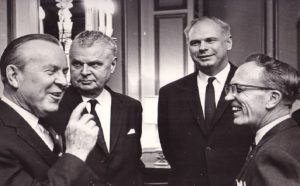
(Left to right) | The Right Honourable Lester B. Pearson, 14th Prime Minister of Canada; the Right Honourable John Diefenbaker, 13th Prime Minister of Canada;  Paul Hellyer, Canada’s Minister of National Defence; and the Honourable Tommy Douglas, Leader of the New Democratic Party of Canada from 1961 until 1971. (From: The Shaw Family collection of photographs.). Circa 1962.

On Thursday, August 3rd 1961, Tommy Douglas resigned as Premier of the province of Saskatchewan to become the first leader of the federal New Democratic Party (NDP), a formal alliance between the Co-operative Commonwealth Federation (CCF) and organized labour. As the left’s most eloquent spokesman, Tommy Douglas was able to inspire and motivate both the members of his nascent federal political party and the working women and men he sought to represent in the halls of power in Ottawa, and in Parliament.

Tommy Douglas, as the architect of Canada’s cherished medicare health care system, is considered by many to be a Canadian hero.

From Thursday, June 15th, 1944 — when, as leader of the CCF, he won 47 of 52 seats in the Legislative Assembly of Saskatchewan, forming our nation’s first social democratic government — Tommy Douglas set about to …

  • Create the only publicly owned electrical power corporation, providing inexpensive power to all regions of his province;
  • Create Canada’s first publicly owned automotive insurance service;
  • Create a large number of crown corporations, replacing private sector interests;
  • Legislate the unionization of the public service;
  • Create a programme to offer taxpayer-funded hospital care to all citizens — the first in North America;
  • Introduce medical insurance reform in his first term, gradually moving the province towards universal medicare, which was adopted in Saskatchewan in 1960, and enacted into law by his successor, Woodrow Lloyd in 1962;
  • Pass a Saskatchewan Bill of Rights, protecting fundamental freedoms and equality, preceding the adoption of the Universal Declaration of Human Rights by the United Nations by 18 months.

Upon becoming leader of the federal New Democratic Party, Mr. Douglas was congratulated by then Conservative Prime Minister of Canada John Diefenbaker — a fellow, lifelong resident of Saskatchewan — and the Leader of the Opposition, the head of the Liberal Party since January 16, 1958, Lester B. Pearson, a 1957 recipient of the Nobel Peace Prize for his role in resolving the Suez Crisis in 1956.

Over the years, John Diefenbaker had opposed each and and every initiative introduced and passed into law by the CCF government of Tommy Douglas. Tommy Douglas accepted the leadership of the NDP, stating, “What I would wish for one, I would wish for all — and, for me, that means the adoption of a national health care programme for all Canadians” — which is what Mr. Douglas set about to achieve.

Working collaboratively with Lester Pearson, when Mr. Pearson became Canada’s 14th Prime Minister on April 8th, 1963, Tommy Douglas worked closely with the new Prime Minister to bring about a pan-Canadian Medicare system, resulting in 1966 with the passage into law of a publicly-funded and administered, comprehensive, accessible hospital and medical services health insurance plan covering all Canadians, from coast to coast to coast, from that day to this.

Working collaboratively and co-operatively with NDP leader Tommy Douglas, during his tenure as Prime Minister, Mr. Pearson launched not just progressive policies such as universal health care, but as well, the Canada Student Loan Programme, and a universal social programme particularly close to Tommy Douglas’ heart, the Canada Pension Plan, introduced and passed into law in 1965.

There is much to be achieved when progressive parties work closely together, in the spirit of forwarding and promoting the social and economic interests of Canadian women, men and children — working to achieve a just Canada for all.


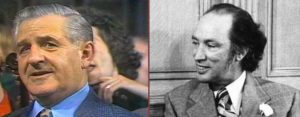
New Democratic Party leader David Lewis & Liberal Prime Minister Pierre Elliott Trudeau, circa 1972

On Saturday, April 24, 1971 David Lewis became the 2nd leader of the federal New Democratic Party of Canada, following Tommy Douglas’ resignation as NDP leader.

On September 2nd, 1972, Prime Minister Pierre Elliott Trudeau called an election, and on Election Day, October 30, 1972, failed to secure a majority, losing 38 seats in Parliament, requiring the support of David Lewis and the New Democratic Party — which had increased its seat count from 25 to 31 — in order to govern.

David Lewis and Pierre Trudeau sat down in the days and weeks following the 1972 federal election, negotiating the implementation of two programmes that would prove critical to the interests of working people, to Canada’s youth, to families, and for the creative classes across Canada …

1. An affordable housing programme, which became “a made in Canada solution to the provision of affordable housing”, a co-operative housing programme that provided affordable housing to more than 130,000 Canadian families in its first decade, and …

2. A federal jobs programme mainly geared towards youth, a multi-faceted jobs programme geared to serve the interests of a lost generation of seemingly unemployable Canadian youth — which became the Local Initiative Programme (LIP), the Local Employment Assistance Programme (LEAP), and the Youth Employment Programme (YEP) — the three programmes providing billions of dollars in funding for jobs programmes for youth to initiate “entrepreneurial” projects, ranging from the creation of food, farm and wholesale import food co-operatives, child care centres, community-based furniture / automotive / and recycling programmes, as well as the creation of innovative theatre companies across Canada, providing funding to actors and support theatre staff, directors and subsidy funding for the creation of arts centres, such as the Vancouver East Cultural Centre (“The Cultch”).

New Democratic Party leader David Lewis and Prime Minister Pierre Elliott Trudeau worked closely together between 1972 and 1974, when Mr. Trudeau called a federal election on May 8, 1974, re-gaining a majority government two months later, on July 8, 1974, when his government won 32 additional seats. Between October 30, 1972 and May 8, 1974, David Lewis and Mr. Trudeau worked collaboratively and co-operatively together in the interests of the Canadian people, setting aside partisan concerns, developing an enduring respect and admiration for one another — as had been the case with their predecessors, Tommy Douglas and Lester B. Pearson. Although Mr. Lewis was leader of the fourth Opposition Party in Parliament — as is the case with Jagmeet Singh and the NDP today — and while Mr. Lewis held Mr. Trudeau to account in the House of Commons, not once did Mr. Lewis ever allow his criticism of the Liberal government to devolve (as Jagmeet Singh has) into personal attacks full of invective against the Liberal Party leader.

During their terms as leaders of the federal New Democratic Party of Canada, both Tommy Douglas and David Lewis — great Canadian leaders, both — achieved much good for the people of Canada, as they set aside corrosive, soul destroying and ruinous partisanship and the damaging and annihilating politics of personal destruction, in favour of co-operation and collaboration to bring about a more just and economically fair Canada that might serve the interests of all Canadians.

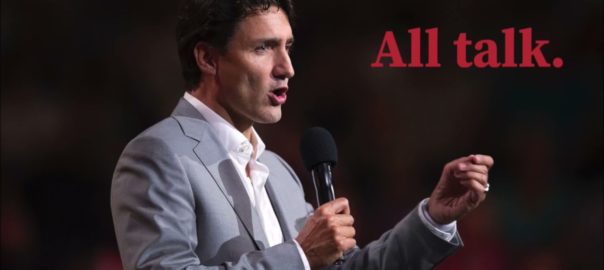
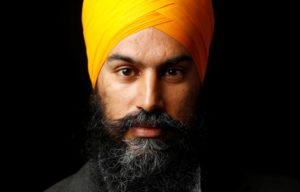
And now we come to the NDP ‘attack’ era of Jagmeet Singh, in the year 2021.

Now, let’s take on the points raised in the NDP ad above.

Seniors care. On August 19, 2021, Prime Minister Trudeau made what was called an historic announcement

“Today we heard a detailed commitment from Justin Trudeau that would lift-up working women and bring PSWs greater economic security with a $25 minimum wage,” said Sharleen Stewart, president of SEIU Healthcare. “Leadership at the federal level directly in support of our healthcare heroes is nothing short of historic for working women in the elder care economy.”

“We cannot allow Canadian seniors to go without dignified care. That is why introducing and passing the Safe Long-Term Care Act is so essential to ensuring higher quality care standards for our most elderly moms and dads,” added Stewart.

In addition, the Trudeau government brought in programmes to support seniors by passing legislation establishing new national standards in seniors care, while also legislating programmes that will act to ensure seniors can remain in their homes longer, with new, universal support programmes. Rather than doing nothing, as the ad above suggests, the Trudeau government enacted legislation that …

  • Raised wages for personal support workers, including a guaranteed minimum wage of at least $25 per hour;
  • Will train up to 50,000 new personal support workers;
  • Doubled the Home Accessibility Tax Credit, which will provide up to an additional $1,500 to help seniors stay in their homes longer by making them more accessible;
  • Improved the quality and availability of long-term care home beds;
  • Continued to implement strict infection prevention and control measures, including through more provincial and territorial facility inspections for long-term care homes;
  • Developed a Safe Long Term Care Act collaboratively with the provinces and home care providers to ensure that seniors are guaranteed the care they deserve, no matter where they live.

Meanwhile, the Prime Minister has stated that his government will introduce legislation this next term that will raise the corporate taxes paid by Canada’s “largest and most profitable” financial services firms, raising the corporate income tax rate by three percentage points — from 15 per cent to 18 per cent — on all bank and insurance earnings over $1 billion. Mr. Trudeau has stated repeatedly that his government will not tolerate “sophisticated tax planning or profit-sharing” by companies looking to dodge the new measures, promising the introduction of legislation that would “target anti-avoidance rules” to ensure the companies “pay their fair share.”  Working with the provinces, the federal government will set about to strengthen and enhance the powers of the federal Financial Consumer Agency of Canada to protect the financial — and house purchasing — interests of Canadians.

Justin Trudeau has stated that enacting universal, single-payer public pharmacare is not off the table for his government. Prior to introduction of such legislation, in their most recent term of office, the government introduced and passed drug pricing measures, explicitly designed to tamp down Canada’s rising pharmaceutical costs, and expanded the mandate of the independent Patented Medicine Prices Review Board — to “protect consumers by ensuring that the prices of patented medicines are not excessive.” At the explicit instruction of the Trudeau government, the Board has removed the United States as a comparator, instead relying on seven comparator countries, including Germany, France, Italy, the United Kingdom, Sweden and Switzerland, where drug prices are much cheaper.

One is left to wonder, if the three ads the New Democratic Party ran in this most recent election are so misleading, what else are the NDP lying to Canadians about?

As stated previously, Jagmeet Singh and the NDP focused their ads and their ire exclusively on Justin Trudeau and the Liberal Party, without ever making reference to the Conservative Party’s record of homo-and-transphobia, their anti-vaxx rhetoric, their egregious position on rescinding the ban on assault weapons, the Tories’ proposed re-introduction of the Northern Gateway pipeline which, apart from blowing Canada’s climate action goals out of the water, would see tanker traffic carrying raw bitumen from the Alberta oil sands down B.C.’s west coast, not to mention, the Conservatives’ truculent position on women’s reproductive rights!

Meanwhile, by seeming to offer support and succour to Erin O’Toole and the Conservatives in the 2021 election, the New Democratic Party expressed no concern whatsoever on the Tories proposed rescinding of the national child care programme the Trudeau government had negotiated with 8 provinces and territories, or the elimination of the Canada Child Benefit in favour of a tax credit that would benefit only the wealthy. The NDP were also mum on the re-introduction of a ban on conversion therapy covering all LGBTQ2+ Canadians, as an early priority for a Liberal minority government were it to be re-elected.

The NDP spent a record $25.8 million over the course of the past five weeks trying to convince Canadians to vote for them — raising their seat count in Parliament by one. $25.8 million dollars for one additional seat, and achieving a mere 17.7% share of the vote, while Jagmeet Singh blatted on about “When, on September 20th, the NDP form government” … what a ludicrous idea, and how demeaning a message to Canadians, who the NDP clearly thought to be fools, if they believed for one moment that the NDP had a hope in hell of forming government.

On Tuesday, Jagmeet Singh faced questions about his leadership over the party’s one-seat gain, despite being in a much stronger financial position for this campaign than the one in 2019.

Asked by the Toronto Star’s Alex Ballingall if Mr. Singh felt secure in his leadership that produced only one additional seat, the NDP leader projected confidence with a wide smile and unambiguous, “Yes.”

Reporters in a scrum with Jagmeet Singh also noted that the NDP targeted Justin Trudeau with negative attacks throughout the campaign and up until the final day, undermining trust in the Prime Minister. In response, Jagmeet Singh doubled down on his — clearly unproductive and wildly ineffectual — campaign approach, which included calling Mr. Trudeau an “abject failure” and “bad for Canada.”

The New Democratic Party federal leader, Jagmeet Singh, told reporters …

“My words, the NDP attack ads, and what some have called the vicious, personal nature of the NDP campaign towards Mr. Trudeau won’t cause any damage to a future negotiation strategy with the re-elected Prime Minister. Everything I said was true. I’m going to stand behind it 100%,” said Mr. Singh. “But when, or if, I meet with the Prime Minister, let me be clear: I’m going to tell him, ‘You messed up’. Even given my relentless attack on Mr. Trudeau and his Liberal team, I believe that together we can get things done for Canadians.”

Maybe former broadcaster Tamara Stanners has the right idea …