Category Archives: Politics

#BCPoli | B.C. NDP Advertising Fails, and Necessary Remedies


B.C. NDP ads that have not resonated with a public anxious for change — whatever change might mean.

The 2024 provincial election in British Columbia is proving to be a pivotal moment for the British Columbia New Democratic Party (B.C. NDP), as they seek to retain power under the goal-directed, activist leadership of Premier David Eby.

However, their campaign ads have faced criticism for failing to connect with the electorate, especially at a time when voters are deeply concerned about housing, inflation, and health care. As British Columbians head to the polls, with advance voting already underway, the B.C. NDP needs to urgently revamp their messaging to effectively counter the rising threat posed by the possible, and increasingly likely, election of a  B.C. Conservative Party majority government on October 19.


To access the “John Rustad is a career politician” British Columbia New Democratic Party ad click here.

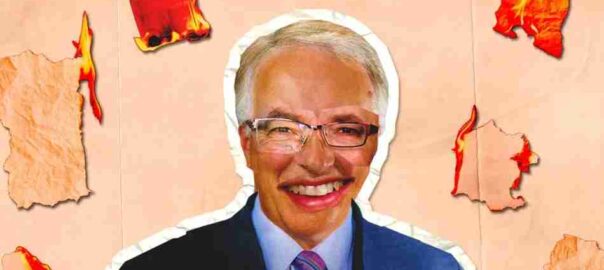
One of the B.C. NDP ads that has been running almost continually since long before the actual campaign got underway on September 21st, is the “John Rustad is a career politician, with a history of costing you more,” an ad that has driven CHEK-TV / Business in Vancouver Legislative reporter Rob Shaw around the bend.

Rob Shaw is anxious to point out that Mike Farnworth, B.C.’s Minister of Public Safety and Solicitor General before dissolution of the Legislature, has served in the Legislature dating back to 1997, when then B.C. NDP Premier Glen Clark appointed Mr. Farnworth Minister of Municipal Affairs and Housing — a full eight years before Mr. Rustad entered the Legislature, as the MLA for Prince George–Omineca.

Where does the B.C. NDP get off, then, calling John Rustad a “career politician”?

One of the main critiques of the B.C. NDP’s 2024 campaign ads is that they have failed to boldly and effectively address the key concerns of voters across British Columbia, particularly around housing affordability and rent control.

Let’s take a look at the “rent cap” legislation brought in by populist, working class B.C. NDP Premier John Horgan in 2019, in response to a B.C. Rental Housing Task Force report, written by and presented to the Premier by B.C. NDP Member of the Legislature representing Vancouver-West End, Spencer Chandra Herbert.

Prior to January 2019, the rent increase formula was inflation plus two per cent.

Premier John Horgan told a full session of the Legislature in the spring of 2019 that rent increases of inflation plus two per cent was “simply not sustainable for renters, many of whom are on fixed incomes, to see their rent increase by more than inflation each and every year.” Premier Horgan then brought in legislation that capped rents at the rate of inflation that was passed by the House.

By far the number one concern that has been expressed to VanRamblings, in the lines we’ve waited in at this year’s 43rd edition of the Vancouver International Film Festival, on the street when we’ve run into friends, or in coffee shops around town is the proposal of B.C. Conservative Party leader John Rustad to remove rent caps that he considers to be a burden to landlords.

One longtime friend and professional associate told VanRamblings the following:

“For the past 25 years, I have lived in an apartment in Burnaby, where the rent has gone up most years. Even so, thanks to the NDP’s rent cap legislation — given how out of control the rental market has become in recent years — my rent is still an affordable $850 per month, given my long tenure. The resident who recently moved into the apartment next door to me pays the market rent for his apartment of $1575 a month. Should John Rustad revoke the NDP’s rent cap legislation, I expect that my rent will go up 10% a year until I am paying more than double what I’m paying now, as the landlord increases my rent to the market rate. I don’t know what I’d do in such a circumstance. I’d be in dire, unconscionable straits, and would have to consider moving out of town.”

The story above is writ large across the entire province of British Columbia, as 600,000 renters would find themselves in the same dire circumstance as my friend.

The response of the B.C. NDP “not on your side government” to the egregious circumstance that will befall renters should a John Rustad-led Conservative Party be elected to government:  a namby-pamby ad that glosses over the rent cap removal topic, underplaying its impact — if it addresses the consequences of the rent cap removal (which it utterly fails to do) at all — should John Rustad’s commitment to the landlord class — over renters — come to pass post the October 19th election.

That’s our David Eby for ya.

Playing it right down the middle, doesn’t want to appear too radical, doesn’t want to upset landlords — heaven forbid! — while he leaves hundreds of thousands of renters to hang out to dry. Mr. Eby: you are going to have to decide whose side you’re on: the landlord class, or all those British Columbians who pay rent.

What’s it gonna be, sir?

The B.C. New Democrats, with a little more than two weeks to go before Election Day, are going to have to decide whose side they’re on, in a way their lacklustre campaign has utterly failed to do as the 2024 provincial election has unfolded.

Enough with those ineffectual ads the B.C. NDP have run the first two weeks of the campaign, ads that woefully ill serve the interests of potential B.C. NDP voters.

What the B.C. NDP must do: run saturation ads featuring British Columbians from across the province, addressing in stark terms the impact that removal of the rent cap will have on their family: British Columbians in every region of the province, British Columbians in every age and cultural demographic, real “live” human beings — you know, the British Columbians the B.C. NDP campaign has steadfastly ignored to date. Stop with this arrogant, condescending top-down nonsense.

Does the B.C. NDP brain trust not see how wildly effective the ads are that are being run by the Democratic Party in Washington state, just below our border, ads that really resonate, ads that always, always, always feature Washingtonians warning their fellow citizens about the perils that would occur should Republicans be elected to lead state government? Why are we not seeing those kinds of ads here?

Let’s hear from real British Columbians — not an anonymous voice over in an ad.

All ads to be run by the B.C. New Democrats in the final two weeks of the campaign must feature British Columbians warning their fellow citizens on what a John Rustad government would mean to the quality of their lives, and their children’s lives, covering a range of topics: climate change — which Mr. Rustad effectively denies, John Rustad’s plans to ban books in public schools to stop what he considers to be “indoctrination” by teachers, the revocation of the SOGI 123 legislation that protects vulnerable tweens and teens enrolled in our public education system, a John Rustad-led government that would not build affordable housing co-ops on Crown land as proposed by David Eby’s NDP government, and so very much more.

Make no mistake: vulnerable British Columbians are going to die, who otherwise might live, should John Rustad be elected to government come October 19th.

That is a message that will resonate with voters, if told properly and bluntly.

#BCPoli | Where the B.C. New Democratic Party Campaign Has Failed, Pt. 1

As of this writing, David Eby’s British Columbia New Democratic Party and John Rustad’s Conservative Party of B.C. are, according to the latest polling, in a statistical dead heat in their respective bids to form the next government in our province.

The 2024 British Columbia New Democratic Party (B.C. NDP) campaign has faced criticism for its perceived ineffectiveness and inability to connect with the broader concerns of British Columbians, in a campaign that has clearly not resonated with a broad swath of voters, leaving the B.C. NDP campaign in the doldrums.

Despite Premier David Eby’s personal appeal — which he emphasizes in campaign materials, with images of his family and messages of hope for future generations — the B.C. NDP campaign has failed to effectively counter the momentum that has been building for weeks for John Rustad’s upstart, unschooled B.C. Conservatives, failing to effectively respond to critical issues like the rate-of-inflation cap on rents, which Rustad has said a  B.C. Conservative government would repeal and revoke.

Today on VanRamblings, we will seek to address one of the primary weaknesses of the B.C. New Democrat’s current campaign for office.

Tomorrow, we’ll look at the B.C. NDP’s poorly designed and executed advertising strategy, and the B.C. NDP’s broader inability to engage with British Columbians.

On Friday, we’ll offer some prescriptive fixes for the B.C. NDP’s failing campaign.


David Eby’s 2017 campaign office opening, attended by more than 400 constituents and supporters

Campaign offices located in a neighbourhood within the Riding

There was a time when the New Democratic Party was a grassroots party.

No longer, it seems.

In 2024, as a “cost saving measure” the B.C. New Democrats have chosen not to open easily accessible neighbourhood riding offices available to the public. Instead, the NDP campaign team made the wrong-headed decision to create campaign offices that would accommodate candidates running in six different ridings.


David Eby in attendance at his tiny “campaign office” — which he shares with 5 other NDP candidates

In 2024, David Eby shares a tiny, largely inaccessible and out of the way campaign office, a campaign office outside of the ridings of Vancouver-Yaletown NDP candidate Terry Yung, Vancouver-South Granville NDP MLA Brenda Bailey, Vancouver Quilchena NDP candidate Callista Ryan, Vancouver-Little Mountain NDP candidate Christine Boyle, and Vancouver-West End MLA, Spencer Chandra Herbert.

Seems the B.C. New Democrat brain trust arrived at the conclusion prior to the outset of the 2024 B.C. NDP campaign that John Horgan’s 2020 B.C. NDP online campaign proved to be such a wild success — with the B.C. NDP electing 57 MLAs — clearly, an online campaign out of necessity, arising from the fact that in 2020 the world was in the throes of the deadly COVID-19 pandemic, the prevailing wisdom:

“Hey, it worked once, and worked very well. Let’s try it again in 2024, and save ourselves some big bucks in the process, money we can pour into media buys.”

What tragic, non-thinking, utterly wrongheaded campaign destroying nonsense.

In case you were wondering senior B.C. NDP campaign folks, in 2024 we are no longer in the midst of a deadly pandemic.

Sure, COVID is still around, but for the most part, folks have stopped wearing masks, and getting together in enclosed spaces has once again become de rigeur.

Stalwart members of the New Democratic Party would relish the opportunity to get together with the friends they’ve made in their riding over the years — camaraderie and human contact counts for something, y’know. But the brain trust running the 2024 NDP campaign, well … they’ve got better ideas, it would seem. Alas.

In each of the four David Eby campaigns VanRamblings has worked on, in 2011 and 2013 managed by the incredible and monumentally-skilled Kate Van Meer-Mass, and in 2017 by the equally wonderful Gala Milne (no 2020 campaign manager required, arising from the pandemic), here’s how things worked, effectively and well.

    • We’ll use 2017 as an example. Gala Milne, as we say above, very effectively managed David Eby’s 2017 campaign for office. Danika Skye Hammond co-ordinated and inspired the 400 outside volunteers — who were out door knocking from early morning til 8pm, as well as those delivering pamphlets and other campaign literature, and arranging daily, well-attended burmashaves — while Chris did the same for the 200 inside volunteers, operating the phone room 9am til 9pm daily, responsible for ensuring David Eby signs were delivered four times a day, while overseeing inside volunteers.
      In addition, there was a media team (social media, photo and videographers), a fundraising team, office staff, and a crew who kept the troops fed.

At David Eby’s campaign office opening in 2017, four hundred constituents and supporters attended at the campaign office, collectively with thousands of dollars in their pockets to donate to David’s campaign. The enthusiasm for David’s re-election was palpable — 400 people who would spend the next four weeks getting the vote out, and supporting David Eby’s re-election bid in any way the could.

in 2024, at David Eby’s out of the way campaign office opening, constituents were not invited to attend at the tiny space outside of the riding. Only the candidates, their spouses and their children, and campaign staff were allowed to attend.

What a godawful B.C. NDP campaign mistake, foregoing the invaluable and necessary opportunity to inspire constituents, and to raise thousands of dollars.

In 2011, 2013 and 2017, David Eby’s campaign office was a magnet for community participation in his election, and later for re-election.

You could feel the enthusiasm and good will from inside the campaign office wafting out into the street, and from there throughout the neighbourhood. Hundreds of people came by, dropped into the office, chatted, ate some of the food Susan Walsh prepared (Susan — whose husband Michael Walsh, the lead film critic at The Province for 40 years, passed on January 3rd this year — was told her services would not be required this year, a cruelty beyond all measure, in our estimation).

    • VanRamblings worked a 4-hour front desk shift midday Monday through Friday, and sometimes on the weekend, this in addition to attending burmashaves, going door knocking, delivering literature, and distributing David Eby campaign signs. David Eby’s campaign office was abuzz with activity at least 12 hours a day. Folks came in off the street to ask questions, to see if arrangements could be made to meet with David — such requests almost always accommodated.Constituents picked up their David Eby campaign sign, or two.
      And most wonderfully of all, people came in off the street — even people who didn’t live in the riding — to drop off $200 in cash, or $500 in bills, which they were only too glad to hand over in support of the re-election of “that wonderful young man, David Eby.” Of course, as we together filled out all of the proper forms — campaign staff would have been apoplectic if we didn’t follow Elections B.C. donation guidelines — we must have raised five to ten thousand dollars each week of the campaign, just from folks walking in off the street.

This was grassroots, community-involved election campaigning at its very finest.

But not in 2024. No siree. The B.C. NDP campaign team is saving money, don’tcha see, while destroying grassroots, riding by riding constituent enthusiasm for their candidates, where everything is done online.

We ordered two David Eby campaign signs 9 days ago. When they hadn’t arrived by last Thursday, we contacted the office (by e-mail, of course, because there’s no talking to real human beings in the 2024 B.C. NDP campaign), and here we are on Wednesday, October 2nd, and no David Eby signs for VanRamblings to put up.

Should the British Columbia New Democrats lose this election — which seems to be a real possibility — it will have occurred, at least in part, as a consequence of the arrogant and condescending decision by the senior B.C. NDP campaign team to “combine” campaign offices, rather than opening an accessible campaign office in each constituency, a maladroit decision of immense and regrettable proportion.

Politics is a people business. The B.C. New Democratic Party campaign for office in 2024 seems not to understand this fundamental principle of politics.

#BCPoli | A Troubling Race in Vancouver-Point Grey

In the 2024 British Columbia election, Premier David Eby is once again seeking re-election in his home riding of Vancouver-Point Grey, a constituency known for its progressive values and highly educated voters.


To read Vote Mate candidate profiles of the Vancouver-Point Grey candidates, click here.

David Eby, leader of the British Columbia New Democratic Party (NDP) since November 2022, is facing several challengers, but the one drawing the most controversy is Paul Ratchford, the B.C. Conservative Party candidate.

Mr. Ratchford’s incendiary, partisan remarks about his now fellow B.C. Conservative candidate Elenore Sturko, a former B.C. United MLA, have raised concerns about homophobia and intolerance, potentially shaping the tone of the election campaign in Vancouver-Point Grey, and beyond.

In response to Ms. Sturko’s victory in the Surrey South by-election in 2022, Mr. Ratchford called the just elected MLA a “woke, lesbian, social justice warrior.”

Such language immediately triggered a backlash.

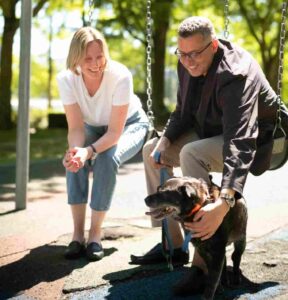
Ms. Sturko — a wife, a mother, and a high profile longtime spokesperson for the Surrey RCMP detachment, as well as a novice candidate in 2022 running with the recently renamed B.C. United political party  — was, as may be seen in the photo above, decidedly over the moon at her victory in the Surrey South riding.

Who, with any degree of integrity and humanity would seek to impinge in a partisan manner on Ms. Sturko’s good fortune in Surrey South, with a cruel comment on what must have been a joyous and halycon night for Elenore Sturko?

Ratchford, in referring to someone’s sexual orientation as part of a derogatory attack plays into harmful stereotypes and marginalizes the LGBTQ community.

The following day, Mr. Ratchford escalated his rhetoric by calling Ms. Sturko a “groomer,” a term long used in anti-LGBTQ narratives to falsely suggest LGBTQ individuals are trying to influence or “recruit” children into their community.

These remarks are not just harmful to Ms. Sturko, who has since joined the B.C. Conservative Party —  in 2024, running in the riding of Surrey-Cloverdale — but also to the broader LGBTQ community, and voters at large.

The “groomer” trope is especially damaging as it revives debunked homophobic and transphobic fears that still resonate in some corners of society.

Employing such a term in modern political discourse reflects an effort to exploit those fears, polarizing communities and harming vulnerable individuals.


L-r, candidates for office in Vancouver-Point Grey: David Eby, Paul Ratchford & Devanyi Singh

For candidate Paul Ratchford running to unseat David Eby in Vancouver-Point Grey — an urban riding that has historically voted for progressive candidates — such comments are likely to alienate a significant portion of the electorate.

Vancouver-Point Grey is home to a socially conscious, diverse population that places a high value on inclusivity and equality.

The area has a substantial LGBTQ population, and its voters are likely to be repelled by the kind of divisive rhetoric Mr. Ratchford has employed.

Residents of the Vancouver-Point Grey riding, many of whom work in education, health care, and in the public service, are generally attuned to the implications of such inflammatory language, recognizing its potential to incite hate and discrimination. Mr. Ratchford’s injurious remarks will likely reinforce perceptions of the B.C. Conservative Party as out of touch with Vancouver-Point Grey’s values.

In addition to offending the LGBTQ community, B.C. Conservative candidate Paul Ratchford’s comments are also problematic for the broader electorate.

Many voters in Vancouver-Point Grey prize civility and fairness in politics.

Personal attacks, particularly those based on sexual orientation, are viewed as inappropriate, but also as distractions from substantive policy discussions.

While issues like housing affordability, health care, and climate change dominate the concerns of Point Grey and Kitsilano residents, Mr. Ratchford’s rhetoric may be seen as a diversion that detracts from addressing these pressing issues.

Given the gravity of his comments, the question arises: Has Paul Ratchford apologized to Elenore Sturko, now his fellow B.C. Conservative candidate, for his earlier hurtful and incendiary remarks?

As of yet, no public apology has been issued.

The absence of an apology underscores the broader challenge facing the B.C. Conservative Party under John Rustad’s leadership.

While Elenore Sturko’s defection to the B.C. Conservatives suggests the party is attempting to broaden its appeal, Mr. Ratchford’s explosive comments stand in stark contrast to this effort, signaling internal contradictions within the party.

At the upcoming all-candidates meeting in Vancouver-Point Grey, where both Paul Ratchford and incumbent Member of the Legislature David Eby will share the stage, Premier Eby is likely to address these remarks head-on.

As a strong advocate for human rights and social justice, David Eby could seize the moment to challenge Mr. Ratchford’s intolerant views, framing the contest as a battle between progressive values and regressive intolerance.

David Eby’s response would resonate with the riding’s electorate, many of whom value inclusion and equality as fundamental principles of good governance.

Given David Eby’s calm demeanour and legal expertise, Mr. Eby will likely approach the issue with a measured tone, appealing to voters’ sense of fairness while subtly highlighting the unsuitability of his opponent.

Meanwhile, the B.C. New Democratic Party’s “war room” has proven adept at capitalizing on their opponents’ missteps.

With the release of footage earlier this week of B.C. Conservative leader John Rustad’s controversial views on COVID vaccines and his insinuation that Dr. Bonnie Henry’s rationale for decisions taken on how to fight COVID and keep British Columbians safe was, in his estimation, tied to efforts to ensure “population control,” … well, it’s entirely plausible the NDP might have additional material that could further undermine Mr. Ratchford’s credibility.

If the B.C. NDP possesses video of Paul Ratchford making similarly offensive comments about the LGBTQ community, they could release it strategically to reinforce the narrative that the B.C. Conservative Party harbours intolerant views.

Such a revelation would almost certainly derail Mr. Ratchford’s campaign, making it difficult for him to gain traction in a riding like Vancouver-Point Grey.

Ultimately, Paul Ratchford’s controversial remarks about Elenore Sturko are likely to be a significant liability in his campaign to unseat David Eby.

In a riding that embraces diversity and progressive values, Paul Ratchford’s mean-spirited and untoward commentary is out of sync with voters’ priorities.

As a result, Paul Ratchford’s contemptuous remarks could serve to strengthen David Eby’s chances for re-election, as voters in Vancouver-Point Grey seek a representative who reflects their commitment to tolerance, respect, and inclusivity.

The upcoming all-candidates meeting will offer a pivotal moment for these dynamics to play out in real time, potentially sealing the fate of Mr. Ratchford’s candidacy.

#BCPoli | Ridings in Contention | North Shore, Vancouver, Richmond, Burnaby and New West

As the 2024 British Columbia election campaign heats up, key ridings across the North Shore — comprised of West Vancouver, and North Vancouver — Vancouver city proper, Richmond, Burnaby, and New Westminster have come into focus.

These regions, traditionally home to strong B.C. New Democratic Party and B.C. Liberal (transformed into the now defunct B.C. United) representation, in 2024 are witnessing fierce competition, especially with the rise of the insurgent B.C. Conservative Party under leader John Rustad.

The political dynamics across these urban and suburban ridings will play a crucial role in determining whether Premier David Eby’s B.C. NDP holds onto power, or John Rustad’s B.C. Conservatives, alongside a surfeit of former B.C. United candidates, now identifying as Independents — given the demise of B.C.  United — in the 2024 British Columbia election, can carve out a significant share of the electorate.

The North Shore: West Vancouver-Sea to Sky | West Vancouver-Capilano | North Vancouver-Lonsdale | North Vancouver-Seymour

The North Shore, with its blend of affluence and environmental activism, is often seen as a bellwether for middle-class urban voters.


To read Vote Mate candidate profiles of the West Vancouver-Sea to Sky candidates, click here.

In West Vancouver-Sea to Sky, B.C. NDP candidate Jen Ford, a Whistler municipal Councillor, faces stiff competition from B.C. Greens candidate Jeremy Valeriote, and B.C. Conservative candidate, Yuri Fulmer. This riding is marked by its environmentally-conscious electorate, which aligns with Valeriote’s strengths, particularly given his party’s history in the riding. However, the B.C. NDP, buoyed by Ford’s local reputation and the B.C. NDP’s progressive climate policies, could make inroads. The wildcard here is Fulmer, representing the B.C. Conservatives, who may attract right-leaning voters disillusioned with B.C. United’s recent collapse.

Moving to West Vancouver-Capilano, the race is even more complex.

High profile Independent Karin Kirkpatrick, formerly a B.C. United MLA, is mounting a well-funded, high energy campaign. Her decision to run as an Independent threatens to split the centre-right vote, complicating the path for the B.C. Conservatives’ Lynne Block, who also faces competition from another Independent, Jaclyn Aubichon, who insists she is the true B.C. Conservative candidate. The B.C. NDP’s Sara Eftekhar and the B.C. Greens’ Archie Kaario are hoping this division on the right opens a narrow path to victory, but Kirkpatrick’s sterling local reputation and deep ties to the riding make her the likely frontrunner.

In North Vancouver-Lonsdale, B.C. NDP incumbent Bowinn Ma, a high-profile Minister and advocate for housing and transit, remains a strong contender. However, with the B.C. Conservatives fielding a serious challenge —  in the form of David Splett, a seasoned Chartered Professional Accountant with over 30 years of international experience in financial and operational management within large organizations — in this suburban riding, Ma will need to fend off attacks on affordability and public safety. In North Vancouver-Seymour, NDP MLA Susie Chant faces a similar battle. Both North Shore ridings are typically competitive, but the fragmentation on the right may play to the B.C. NDP’s advantage here, as Ma and Chant can leverage their incumbency and the government’s progressive record.

Richmond: Crime and Economic Uncertainty

Richmond, a traditionally right-leaning suburb, delivered an unexpected triumph for the B.C. NDP in 2020 when they claimed three out of four ridings.

In Richmond-Queensborough, B.C. NDP incumbent Aman Singh faces an uphill battle, with crime emerging as a central issue. Steve Kooner of the B.C. Conservatives is making crime and public safety the core issues of his campaign, hoping to appeal to voters frustrated with perceived rising crime rates. Global B.C.’s Richard Zussman has identified this riding as a bellwether riding, and suggests that this riding could determine whether David Eby or John Rustad form government post October 19th election night. To win, Aman Singh will need to hold onto the diverse coalition that propelled him to victory in 2020, to retain his seat.

In Richmond-Steveston, NDP MLA Kelly Greene is in a similarly tough race. Her challengers include former B.C. United candidate Jackie Lee — who was an incredible fundraiser for B.C. United, but now running as an Independent Mr. Lee doesn’t have access to the monies he raised — and B.C. Conservative Michelle Mollineaux. Still and all, Mr. Lee is a known quantity. Kelly Greene won a squeaker in 2020; in 2024, with the vote on the right split, it would seem likely that with a fragmented opposition, Greene’s incumbency may give her an edge. Still and all, as is the case in Richmond-Queensborough, crime, alongside economic uncertainty, will dominate the conversation in Richmond-Steveston.

Unless the B.C. NDP can respond to crime and public safety effectively, Ms. Mollineaux could emerge victorious on election night.

However, in Richmond Centre — where former B.C. United candidate Wendy Yuan is mounting a high profile, effective campaign, with an army behind her to help get out the vote (they’ve already identified they’re vote, which is important), again with a split on the right, incumbent B.C. NDP candidate Henry Yao could take the riding on election night. In Richmond-Bridgeport, the resurgence of the B.C. Conservatives, especially with former B.C. United MLA Teresa Wat now running under Rustad’s Conservative banner, adds unpredictability. Wat’s candidacy is especially notable, as she could potentially recapture her base from the splintered B.C. United, making Richmond a pivotal region on election night.

Vancouver: An NDP Stronghold Under Threat?

Vancouver has been the bedrock of B.C. NDP support in recent elections, but the emergence of the B.C. Conservatives has introduced uncertainty, especially in ridings like Vancouver-Quilchena, where the departure of B.C. United leader Kevin Falcon has left the field wide open for the B.C. Conservative’s Dallas Brodie, who is assured of victory in this affluent, traditionally right-leaning riding. A significant win for the B.C. Conservatives that could signal broader gains across the city.

Global B.C.’s Richard Zussman has called Vancouver-Yaletown a top 10 riding to watch on election night. The two candidates: two time Vancouver City Councillor Melissa De Genova running with the B.C. Conservatives, and retired Vancouver Police Department Inspector, Terry Yung, running with the B.C. NDP. Read the riding profile we published on September 4th for extensive insight into this riding.

In Vancouver-South Granville, Brenda Bailey, a prominent Minister in the Eby government, is running for re-election. She faces B.C. Conservative candidate Aron Lageri, whose campaign could tap into growing frustrations over housing and crime. Ms. Bailey will win this riding, the demographic data leaning heavily NDP.


For insight into the Vancouver-Little Mountain race, click here.

Meanwhile, in Vancouver-Little Mountain, Vancouver City Councillor Christine Boyle, having secured the B.C. NDP nomination in a hard fought contest with former Vision Vancouver City Councillor, Andrea Reimer, is running against former Vancouver Park Board Chair John Coupar, one of the first potential candidates B.C. Conservative leader approached to run with his nascent B.C. Conservative Party. This race highlights the ongoing battle for progressive votes in the city, with Boyle’s deep connections to local politics providing her an advantage, although Coupar’s early recruitment by Rustad signals a strong conservative push, and a likely Cabinet position for Mr. Coupar should the Conservatives form government.

Vancouver-Langara also warrants attention, with B.C. NDP candidate Sunita Dhir running against controversial B.C. Conservative Bryan Breguet. Breguet’s inflammatory comments on race and crime have made this a particularly charged contest. The NDP hopes to capitalize on his divisiveness to hold the riding.

One of the most competitive ridings is Vancouver-Fraserview, where long-serving NDP MLA George Chow, a longtime B.C. NDP Minister, is being challenged by B.C. Conservative Jag S Sanghera. If the B.C. Conservatives manage to turn this election into a wave election, Fraserview could flip — as it did in 2013, when B.C. Liberal Suzanne Anton won the riding, going on to become Attorney General in the administration of B.C. Liberal Premier Christy Clark. The B.C. Greens’: a perennial Green candidate and teacher, Françoise Raunet is unlikely to mount a serious challenge.

VanRamblings will focus on Premier David Eby’s Vancouver-Point Grey riding, at the top of tomorrow’s column, in a post which may or may not explore ridings in contention in Surrey-Delta, the Tri-Cities out to Chilliwack, north of the Fraser River, and ridings in contention in the Fraser Valley. At this point, we think we’re gonna get carried away writing about the contest in Vancouver-Point Grey.

One candidate has some ‘splain’ to do.

Burnaby and New Westminster: NDP Heartland in Flux?

Burnaby has been a stronghold for the B.C. NDP, but cracks may be appearing.

Burnaby-North, where incumbent Janet Routledge is running for re-election, is particularly vulnerable. Her B.C. Conservative opponent, entrepreneur Michael Wu, could pose a serious challenge, especially if the election turns into a wave election for the Conservatives. The other Burnaby ridings, such as Burnaby Centre and Burnaby South-Metrotown, are more secure for the NDP, although shifting voter demographics and discontent over housing affordability make these ridings worth watching on election night.

Jennifer Whiteside, B.C. NDP candidate in New Westminster-Coquitlam

In New Westminster-Coquitlam, NDP MLA and Minister in the Eby government, Jennifer Whiteside, looks secure in her seat, with the B.C. Conservative’s Ndellie Massey and B.C. Greens’ Maureen Curran unlikely to mount significant threats. However, New Westminster’s stability may not reflect broader trends if the B.C. Conservatives make gains across the province.

Will Urban British Columbia Hold the Key to Victory?

As the election progresses, the urban ridings: the North Shore, Vancouver, Richmond, Burnaby and New Westminster will be critical election determinants.

While the B.C. NDP remains strong in these areas, the resurgence of the B.C. Conservatives and the presence of well-funded Independents introduce volatility.

Should the B.C. Conservatives succeed in turning the election into a wave election, or even a tsunami election, many of the ridings we have written about today — long considered safe ridings for the B.C. NDP — could be up for grabs.

On Election Night, Saturday, October 19th, these key battlegrounds will likely tell the story of whether David Eby can hold onto government, or if John Rustad’s insurgent campaign can propel the B.C. Conservatives to power.


2024 British Columbia Provincial Election | Regional Riding Analysis

Part 1 | Vancouver Island | Five Ridings in Contention, and Subject to Change

Part 2 | The Interior, the North and the Kootenays | Battleground Ridings


The Hotel Pacifico podcast will broadcast daily, Monday thru Friday, throughout the 2024 election

The good folks at Air Quotes Media’s Hotel Pacifico podcast — featuring Mike McDonald, Christy Clark’s campaign manager in 2013; Geoff Meggs, Premier John Horgan’s Chief of Staff; and Kate Hammer, a former Globe and Mail British Columbia legislative reporter — will “broadcast” on the B.C. Election each day, Monday through Friday. Find the latest episode above.

VanRamblings will post the podcast, for your edification and enjoyment.