Category Archives: Essay

Sunday Music | Kacey Musgraves | 2018’s The Golden Hour Album | Top 100 of the Past 75 Years

Kacey Musgraves, born on August 21, 1988, in Golden, Texas, is one of contemporary music’s most original and respected voices, known for her ability to craft lyrics that are witty, vulnerable, and unflinchingly honest.

Musgraves’ unique blend of traditional country roots, modern sensibilities, and genre-defying experimentation has positioned her as a standout in both the country and pop music scenes.

Musgraves’ breakthrough came with her major-label début album Same Trailer, Different Park in 2013. The album featured the single Merry Go ‘Round, a melancholy portrayal of small-town life, and the cheeky, rebellious anthem Follow Your Arrow, which encouraged people to live authentically regardless of societal norms.

Her lyrics, which tackled themes of non-conformity, marijuana use, and same-sex relationships, were bold for the country genre, known for its traditional values. However, her authenticity resonated with listeners, earning comparisons to past pioneers like Willie Nelson and Dolly Parton.

Musgraves’ rise to prominence in the early 2010s established her as a sharp lyricist and a trailblazer in country music, and her 2018 album Golden Hour cemented her status as a cross-genre force, earning her critical acclaim and commercial success.

While Musgraves had already earned significant acclaim with her earlier albums, it was Golden Hour that catapulted her to a new level of fame.

Released in March 2018, Golden Hour marked a departure from her previous work, blending country with elements of pop, disco, and electronic music. The result was a dreamy, genre-blurring collection of songs that felt both fresh and timeless. Musgraves has referred to the album as her “space country” project, reflecting its expansive sound and experimental approach.

Much of Golden Hour was influenced by Musgraves’ personal life, particularly her relationship with then-husband Ruston Kelly.

The album’s themes of love, heartache, and self-discovery resonated with listeners across genres. Songs like Slow Burn and Butterflies captured the warmth of new love, while tracks like Space Cowboy and Happy & Sad explored the bittersweet and often contradictory nature of human emotions.

Kacey Musgravesthird album goes down so smoothly that it might not even scan as a total reinvention. Throughout Golden Hour, the East Texas singer-songwriter is radiant, awestruck, taking the scenic route to the bar just for the hell of it.

After Musgraves’ previous two albums, which felt like they were cut from the same home-sewn flannel cloth, in 2018 she ventured beyond the front-porch hum of country music. On Golden Hour, Musgraves employed strings, vocoders, disco beats. And if this sounds like a left turn for the lovable cynic who once characterized the world as an absurd beauty contest, a bad party, and a toxic boys’ club, well, that’s kinda the point.

Since 2015’s Pageant Material, the then 29-year-old singer-songwriter has changed her perspective.

On Golden Hour, everything sprawls and swells and gushes, a gaping sky that makes the sonic landscapes of her previous albums feel like mere set dressing. The result is Musgraves’ most accessible record and her most ambitious, a magnetic, comfortable culmination of her pop and country instincts.

The album’s production, handled by Musgraves alongside Daniel Tashian and Ian Fitchuk, was a critical element of its success.

The lush arrangements, ethereal synths, and subtle country flourishes created a sonic landscape that felt both intimate and expansive.

Golden Hour was a striking departure from mainstream country music, which at the time was dominated by bro-country and pop-country trends. Instead, Musgraves embraced a more eclectic and nuanced sound that allowed her to transcend genre boundaries.

This genre fluidity was key to Musgraves’ crossover success.

Kacey Musgraves stands out in the crowded landscape of modern music arising from her ability to remain true to herself while pushing boundaries. Her lyrics are clever, often laced with humour, but they never shy away from exploring the depths of human emotion.

In a world where many artists feel pressure to conform to commercial trends, Musgraves’ authenticity is refreshing. Her refusal to be boxed into any one genre has allowed her to build a diverse fan base, and her music continues to resonate with listeners across demographics.

As a result, she has become a symbol of creative freedom and artistic integrity in an industry that often prioritizes marketability over originality.

In Golden Hour, Kacey Musgraves created a work of art that transcended the limitations of genre, and in doing so, she solidified her place as one of the most innovative and respected artists of her generation.

Now, here’s some good news: Kacey Musgraves will play Rogers Arena in Vancouver this upcoming Thursday, September 19th, with the concert getting underway at 7:30pm. Ticket prices range from $73.80 to $247.40.

#VIFF24 | VanRamblings’ Vancouver International Film Festival Column

The 43rd Annual Vancouver International Film Festival

Since opening in 1981, with a handful of films in just one theatre — the lost and lamented Ridge Theatre, at 16th and Arbutus — the Vancouver International Film Festival has taken on a vital role for local filmmakers and film lovers.

As it celebrates its 43rd anniversary this year, today VanRamblings will provide insight into the award-winning films that will screen at VIFF this year, as well as provide information on this year’s venues, ticket acquisition, and more.

With 150 feature films running over 11 days, although VIFF 2024 isn’t as complex as once was the case — as it runs from September 26th thru October 6th, it’s now shorter than the 16 day length it maintained for many years — navigating the sprawling festival can still be a little daunting.

VIFF is best approached like a multi-country overseas vacation: with pre-planning, and lots of it.

What movies to choose?

On viff.org , you’ll find films organized by programme (Showcase, Panorama, Vanguard, Northern Lights, Insights, Spectrum, Portrait and Altered States) by country of origin, by genre, and  by director. See what intrigues you!

Also, check to see which films have a guest attending (noted on each film’s individual page), which might mean an interesting Q&A.

You can also peruse the hard copy VIFF guide, which will soon be available at your favourite local bookstore, at regional and neighbourhood libraries and the nine venues where films will be screened, as well as at coffee shops across the Metro Vancouver region. Note should be made that the most accurate and up-to-date  information about guests is available online only.

Award-Winning Must-See Films

(Underlined titles of films link to the VIFF page for the film, which will provide you with more information on the film, as well as allow you the opportunity to buy tickets for the film, if you’re of a mind to do so).

Anora. Sean Baker’s Anora won the Palme d’Or at Cannes, in the director’s most searing and shattering film yet, with a breakout performance from Mikey Madison. Not to mention, a thoroughly fun and provocative time at the movies.

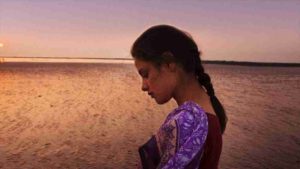
All We Imagine as Light. Grand Prix winner, Cannes 2024. IndieWire’s Anne Thompson says this film is her favourite this year, as she exclaims: “All We Imagine is an exquisite, spellbindingly hypnotic, a poignantly lyrical film that transcends form and style, full of enriching humanity and gentleness, joy and sadness and languorous eroticism, with a captivating beauty rarely seen on film.”

The Seed of the Sacred Fig. Iranian director Mohammad Rasoulof’s Special Jury and FIPRESCI Prize winner at Cannes offers a mesmerizingly gripping parable in which paranoia, misogyny and rage of the Iranian state are mapped seamlessly onto an ordinary family unit.

Conclave. Oscar nominees Ralph Fiennes and Stanley Tucci lead a brilliant ensemble cast in All Quiet on the Western Front director Edward Berger’s adaption of Robert Harris’ high-stakes drama, in which Cardinals gather at the Vatican to elect a new Pope, the film emerging as a psychologically complex morality tale.

The End. Tilda Swinton and Michael Shannon sing for their lives in Joshua Oppenheimer’s post-apocalyptic musical, with the director offering a staggering meditation on how we live with ourselves at the end of the world.

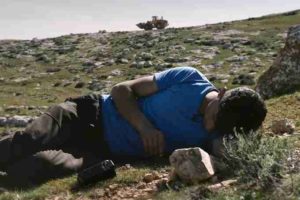
No Other Land. Best Documentary Award, Berlin 2024. A vital and wrenching documentary about Israel’s often barbaric efforts to expel a Palestinian community, co-directed by a collective of Israeli and Palestinian filmmakers, No Other Land offers a ground-level view of an occupation in action.

How and where do I buy tickets?

The easiest way to purchase tickets is to go online to viff.org, put the name of the film you’re interested in in the search engine, and click on Buy — from there it’s easy, allowing you to print your tickets at home. Or, you can call the Festival Infoline at 604-683-3456 from noon til 6 p.m. daily through October 6th. (Online is quicker.) Note that there is a service charge for online and phone orders: $1 per single ticket, up to $8 per order.

Required by the provincial government (because VIFF films screen unrated) you’ll need to purchase a one-time $2 VIFF membership.

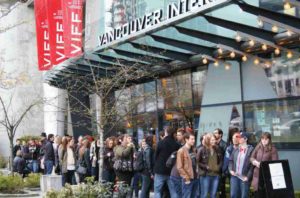
Tickets can be purchased at the venues, as well, during operating hours. As of September 26th, all festival venues (VIFF Centre, The Chan Centre for Performing Arts, The Cinematheque, Fifth Avenue Cinemas, Cineplex International Village, The Orpheum, The Rio Theatre, SFU Goldcorp, and The Vancouver Playhouse) will have a box office open daily, one hour before the day’s first screening.

How early do I have to show up?

If you’re picky about where you sit, the earlier the better: An hour isn’t too early for a film that’s popular. But even if you don’t mind being in the back (or front) row, show up at least 15 minutes before showtime: At the 10-minute mark, unoccupied seats are counted and sold to those in the standby line.

What line do I stand in?

Each VIFF screening will have three separate queues: a pass-holder line (for those with passes hanging around their necks), a ticket-holders line (for those with tickets in hand) and a rush line. Standby tickets, for screenings that are sold out, go on sale 10 minutes before showtime, at full price.

Stand in the wrong line at your peril. (There will be signage, and helpful VIFF volunteers in VIFF T-shirts, if you’re confused.)

Can I bring my lunch?

Technically, no; VIFF venues do not allow outside food. Theoretically, yes, if you’re discreet about it. (Or just eat while waiting in line.)

Can I save a seat for a friend?

If you’re saving a seat at a sold-out screening, you might be asked to relinquish it if your friend is late, so tell them not to be.

What about bus routes and parking?

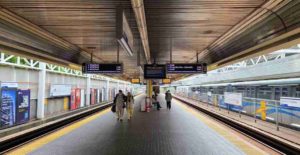
Translink / Coast Mountain buses are the best way to get around, although most of the venues are within walking distance of one another. Skytrain will whisk you to The Rio in no time flat. There’s parking at Cineplex International Village, but you’re going to want to check in with Festival staff (they’ll be wearing bright yellow VIFF T-shirts) to register your vehicle.

What about crowds?

There will be crowds, particularly at the better-known films; not a lot you can do about that. Maybe you’ll meet somebody nice in line; it happens often. Weekday screenings generally have shorter lines, particularly for less well-known films.

#BCPoli | BC NDP Will Implement a Dignified Province-Wide Supportive Housing Agenda

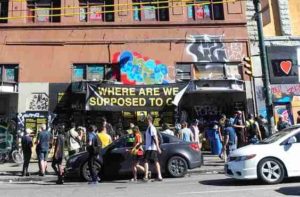
In British Columbia, Single Room Occupancy (SRO) units have long served as a last resort for many of the province’s most vulnerable individuals, including low-income residents, those with mental health challenges, and people grappling with homelessness.

However, these aging, often dilapidated buildings are increasingly unfit for human habitation. As such, there is an urgent need for the British Columbia government to transition vulnerable populations out of rundown SROs in Vancouver, Victoria and elsewhere, toward sustainable, supportive housing models.

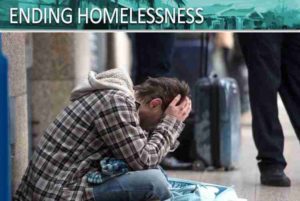
By providing care similar to the successful systems used in European countries like Finland, B.C. can address the root causes of homelessness, poverty, and social marginalization while promoting long-term well-being and social integration.

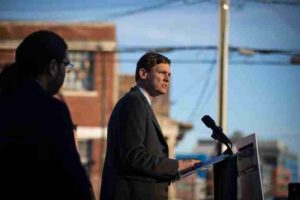
In a 2022 interview with B.C. Legislative reporter Katie DeRosa, then with the Vancouver Sun and now in the same role with the CBC, B.C.’s New Democratic Party Attorney General and Minister Responsible for Housing, David Eby — who was running to replace Premier John Horgan, who had resigned as Premier for health reasons, as leader of the BC NDP — had the following to say about the need for government to provide dignified supportive housing for members of British Columbia’s vulnerable populations living in communities across the province, and move these abandoned individuals out of rundown SROs …

Premier David Eby addresses need to transition people out of SROs

“There really hasn’t been a co-ordinated strategy or a plan about how we get out of the problems of Vancouver’s Downtown Eastside, Victoria and elsewhere. I think … putting an invisible fence around neighbourhoods and saying ‘this is the best we can do’ and just hope that things work out, it’s a strategy that will no longer carry us forward.” Eby said if he’s successful in his bid to replace Premier John Horgan … he’ll co-ordinate a long-term response to homelessness issues across the province, with the support and assistance from the federal government, our province’s towns and cities, and concerned groups.

In point of fact, Premier David Eby has committed to just that, copying the Finnish model that provides supported and affordable housing.

Juha Kaakinen, Finnish CEO of the Y-Foundation, providing low-cost housing to the homeless

“We had to get rid of the night shelters and short-term hostels we still had back then. They had a very long history in Finland, and everyone could see they were not getting people out of homelessness. We decided to reverse the assumptions,” says Juha Kaakinen, CEO of Finland’s Y-Foundation, which provides low-cost flats to homeless people across Finland.

The Deplorable Conditions of SROs

SROs, originally constructed as affordable housing for the working class, have deteriorated significantly over the decades. Many SRO units in cities like Vancouver, Victoria and Kelowna are plagued by chronic disrepair, pest infestations, poor heating and ventilation systems, inadequate plumbing, and a lack of basic sanitation. These environments are not only uncomfortable but dangerous, often exacerbating the mental and physical health challenges faced by their residents.

Research shows a strong correlation between poor living conditions and poor health outcomes, including increased rates of addiction, infectious diseases, and mental health crises. Furthermore, many SRO buildings are located in areas with high crime rates, compounding the risks for residents already facing social vulnerabilities. In essence, SROs have become a symbol of the failure to provide adequate housing and services to the people who need them most. Moving vulnerable individuals out of these dangerous environments is not only a moral imperative, but also a matter of public health and safety.

The Case for Supportive Housing

Supportive housing offers a more sustainable solution to the complex needs of the vulnerable populations currently residing in SROs. Unlike SROs, which often serve as temporary, stop-gap measures, supportive housing provides stable, permanent accommodations where individuals have access to social, medical, and psychological services on-site. This model addresses not only the need for safe and secure housing but also the underlying issues that contribute to homelessness and instability, such as mental health disorders, addiction, and unemployment.


The Globe and Mail’s Kerry Gold on how Finland is solving the problem of homelessness.

In European countries like Finland and Austria, supportive housing has proven to be remarkably successful. Finland, for instance, has implemented the “Housing First” model, which provides stable housing to homeless individuals as the first step toward addressing other social issues. This approach has reduced homelessness by over 50% since its introduction in 2008, with most formerly homeless individuals remaining housed long-term. Austria follows a similar model with an emphasis on affordable, long-term housing paired with social services, which has also led to positive outcomes for at-risk populations.

For B.C., adopting a comparable approach would mean transitioning away from crisis management in the form of emergency shelters or rundown SROs and toward long-term solutions that focus on stability, health, and empowerment.

Supportive housing projects, when coupled with services such as healthcare, employment training, and mental health support, help individuals reintegrate into society, reduce their dependence on public services, and lead more fulfilling lives.

Note should be made that Premier David Eby’s government alone has a long term strategy — that they have committed to implement in their next term of government —  to transition members of our vulnerable population out of rundown SROs and substandard accommodation into supportive housing

Cost Efficiency and Long-Term Benefits of Building Supportive Housing

One of the most compelling arguments for supportive housing is its cost-effectiveness. Studies from both Europe and North America demonstrate that investing in supportive housing ultimately saves governments money in the long run. Homelessness and inadequate housing impose significant costs on public systems, including healthcare, law enforcement, and emergency services.

For instance, individuals living on the streets or in unstable environments are more likely to require emergency medical attention, experience police interactions, or become involved in the criminal justice system. In contrast, when people are find safe haven and community in supportive housing, they use fewer emergency services and are better able to manage chronic health conditions, or avoid encounters with law enforcement. Finland’s Housing First model has shown that for every dollar spent on housing and support, the government saves approximately $2 in costs related to homelessness.

B.C., with its high cost of living and significant homeless population, faces similar challenges. Building and maintaining supportive housing units may initially require significant investment, but it will result in long-term savings by reducing strain on public health, criminal justice, and social services systems. Moreover, the social and economic benefits of helping individuals regain stability, employment, and health far outweigh the upfront costs.

In a government publication titled Lost in Transition, the cost of construction of thousands of supportive housing units would be made possible in part by the savings that would accrue from merging the 277 social services agencies on the DTES into 30 umbrella organizations.

Each of the 277 social agencies employs an Executive Director — at an average annual salary of $500,000 — Directors of Finance, Directors of Human Resources, Managers of Supported Housing, Property Managers and other senior administrative staff — each of these 247 individuals earning up to $375,000 annually — a duplication of services and administration funded by the province, Merging agencies would save more than $1 billion dollars annually that would helo to pay for the cost of building supportive housing on the DTES, and across the province.

The Lost in Transition report questioned if such duplication of services properly serves the interests of those who are resident, and cared for, on the DTES.

There was also recommendation in the Lost in Transition report that argued for the provincial appointment of a Commissioner who would oversee the reformation of the provision of services on the DTES, a person with the authority of a Deputy Minister who would report only to a provincially appointed Board of Directors, which would oversee the transition of the current service model, reporting as well as to the office of the Premier.

A Moral and Social Imperative of Providing Dignified Supportive Housing


Eby government planning to take co-ordination of housing provision for B.C.’s most vulnerable citizens

Finally, there’s a moral dimension to the issue.

In a society as wealthy and resource-rich as British Columbia, allowing vulnerable members of our population to languish in unsafe, unsanitary SRO units reflects poorly on social priorities.

The government has a responsibility — a responsibility recognized by those within the B.C.  New Democrat government — to protect its most vulnerable citizens, ensuring that these individuals have access to the basic necessities of life, including safe housing, healthcare, and social support.

Housing is not just a commodity; it is a human right.

By moving away from the outdated, harmful practice of relying on SROs & instead investing in supportive housing, B.C. can take a meaningful step toward ending homelessness and improving the quality of life for our most marginalized citizens.

Relocating vulnerable populations out of rundown SROs and into supportive housing is not just a practical solution; it is an ethical and economic necessity.

In adopting the supportive housing model, British Columbia can — and will, with the re-election of an NDP government — address homelessness more effectively, reduce the long-term social, moral and medical costs associated with inadequate housing, while promoting a more inclusive and caring society.

The time to act is now, with the re-election of a David Eby-led government.

The benefits of the B.C. New Democrats’ approach to building dignified housing for our most vulnerable population will be felt for generations to come.


#BCPoli | Election 2024 Kindness as a Core Value in the Political Realm

Recently, VanRamblings was afforded the opportunity to meet Dallas Brodie, the B.C. Conservative Party candidate in the riding of Vancouver-Quilchena.

Ms. Brodie, when she approached VanRamblings, told us that one of her campaign workers had made mention to her that we had recently written about her on our blog. Ms. Brodie followed up her initial comment to us by saying, “I read several articles on your blog. You’re a very good writer. Thank you for what you do!”

Now, did Ms. Brodie have to be kind, greet us with a warmth of character and a disarming and engaging complimentary élan?

Nope, she didn’t — particularly given that we’re an opinionated sort of fella, and chances are that Ms. Brodie read some VanRamblings commentary or other with which she was not necessarily in agreement (apparently, Ms. Brodie and VanRamblings, we are told, do not share a “political philosophy” .. alas).

Nonetheless, Dallas Brodie was invariably kind during the few minutes we spoke with one another — in an often too contentious world defined by an unwholesome divisiveness, VanRamblings came away from our encounter hopeful and heartened.

VanRamblings takes this opportunity to congratulate Dallas Brodie on her pending win in the Vancouver-Quilchena riding, where we feel quite assured that she will more than ably represent the concerns and interests of her grateful constituents.

The Role of Kindness as a Core Value in Politics

In an era where political discourse is often dominated by divisiveness, hostility, and polarization, the concept of kindness might seem quaint or naïve.

When we examine the foundational purpose of politics — the organization of society for the common good — kindness emerges as a practical and necessary value.

At its core, kindness represents empathy, respect, and a genuine concern for others. When woven into the fabric of political practices, kindness fosters collaboration, promotes inclusivity, and enables the pursuit of justice and equality.

Kindness must be viewed not as a weakness, but as an essential guiding principle in the development of government policy, and political conduct.


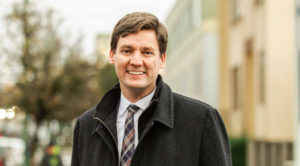
Premier David Eby, one of the kindest, most empathetic persons VanRamblings has ever known, a man  committed to social and economic justice, and a robust full employment economy.

In the 17 years we have enjoyed a political alliance with David Eby, we have always found him to be kind, not just to VanRamblings, but to everyone who comes into his orbit. David Eby is one of the kindest, most empathetic and entirely decent persons we have ever known, possessed of a beneficent social conscience, and as you may have noticed since he became Premier, a grassroots, democratic pragmatism that reflects the best interests of those he serves.

VanRamblings very much believes in the concept of “dancing with the one that brung ya.” As such, we’ll work diligently on David’s upcoming campaign.

Kindness as a Tool for Justice and Equity

Kindness in politics also has a powerful role in advancing justice and equity.

At its core, political decision-making is about determining how resources, rights, and opportunities are distributed within society. When kindness is embedded in this process, it ensures decisions are made with empathy for our most vulnerable populations.

In practical terms, policies that reflect kindness take into account the well-being of all citizens. The commitment to social and environmental justice is not an act of charity but an acknowledgment of our shared humanity.

The importance of kindness in addressing issues like climate change cannot be overstated. Climate change disproportionately affects the poorest and most vulnerable communities.

A kind approach to environmental policy prioritizes the well-being of future generations and ensures that those who are least responsible for climate change are not left to bear its worst consequences. By fostering and promoting a sense of responsibility, political leaders who prioritize personal and social kindness (and equity) can guide the world toward more sustainable and just solutions.


John Coupar, a candidate for the B.C. Conservative Party, in the Vancouver-Little Mountain riding.

We had written on VanRamblings last week that we’ll be endorsing John Coupar — a past Vancouver Park Board Chairperson, and current Conservative Party of British Columbia candidate — in his bid to win the newly-created Vancouver-Little Mountain riding in the upcoming provincial election.

For maximum exposure, VanRamblings’ plan will be to publish our formal endorsement of Mr. Coupar early next month, a couple of weeks away from British Columbia’s October 19th provincial election date.

As we have written on social media, at least in part (and for us, an important part) of our endorsement of John Coupar arises from the fact Mr. Coupar, in the time we have known him, has always been one of the kindest, most open and most welcoming human beings we have ever encountered.

Which is not to say that John Coupar isn’t a take no guff, tough but fair-minded man of conscience, a man possessed of integrity and great character, a man who while not suffering fools gladly will stand up always for and behind what he believes is right and just, and serves the best interests of the community, and those he has been elected to serve and represent (which means, of course, all of us).

Kindness as a core value in politics is not just an idealistic aspiration; it is a pragmatic approach to creating a more just, equitable, and functional society.

By humanizing political dialogue, building trust, and promoting co-operation, kindness can repair the fractures in our political systems and enable leaders to address the pressing issues of our time with empathy and clarity.

Kindness in politics is a reflection of strength — the strength to listen, to compromise, and to fight for a society where all individuals are treated with dignity.